Camellia japonica

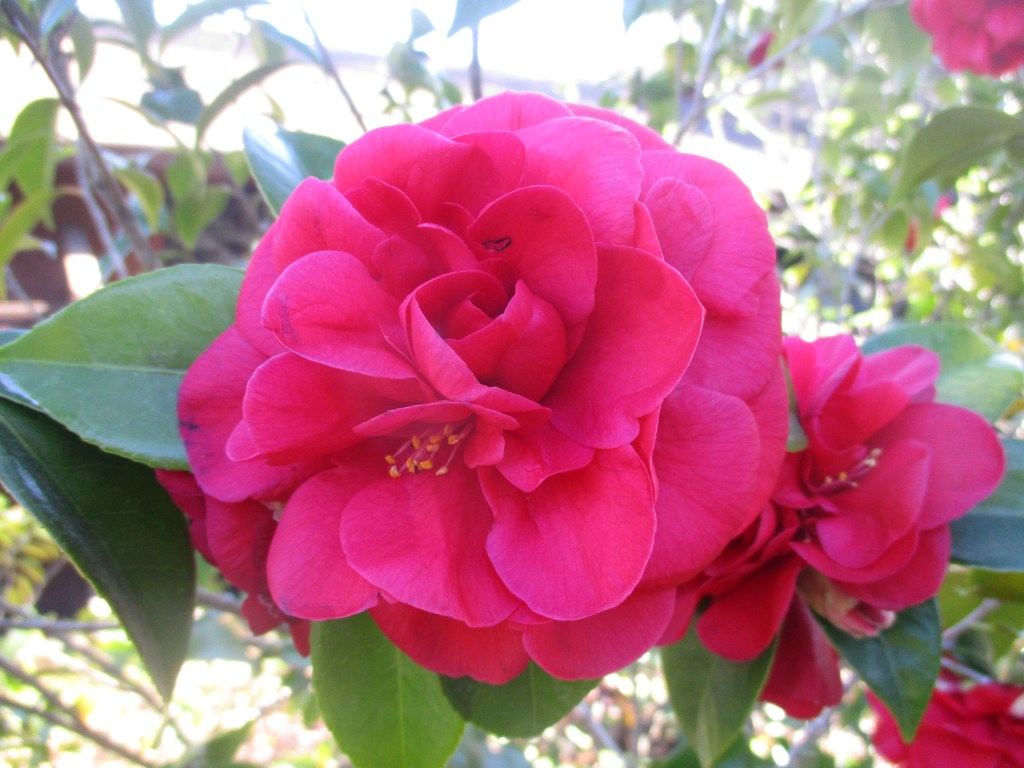
Camellia bloom before the flowers or early spring.

After centuries of breeding, there are more than two thousand cultivars of Camellia japonica! Additionally, there are more than a thousand cultivars of both Camellia sasanqua, with smaller but more profuse flowers, and comparably rare Camellia reticulata, with fewer but garishly big flowers. This does not even include the more than a hundred other specie of camellia found in the wild throughout East Asia.

It is obviously difficult to generalize about so many different personalities. Actually though, the glossy and slightly serrate leaves of almost all Camellia japonica are surprisingly similar. Also, most grow into rounded shrubs that are happy to stay below first floor eaves. Only a few grow into small trees, and only after many years. All prefer rich soil and regular watering.

The flowers that bloom late in winter are the most distinguishing characteristics of the many cultivars. The largest can get more than four inches wide. Flower form is remarkably variable (and can be described as single, semi-double, double, formal double, paeony, anemone or rose). Many have prominent yellow stamens. Color ranges from pure white to red, with every shade of pink in between. Picoteed, striped and blotched flowers are not uncommon.
Cecile Brunner Rose

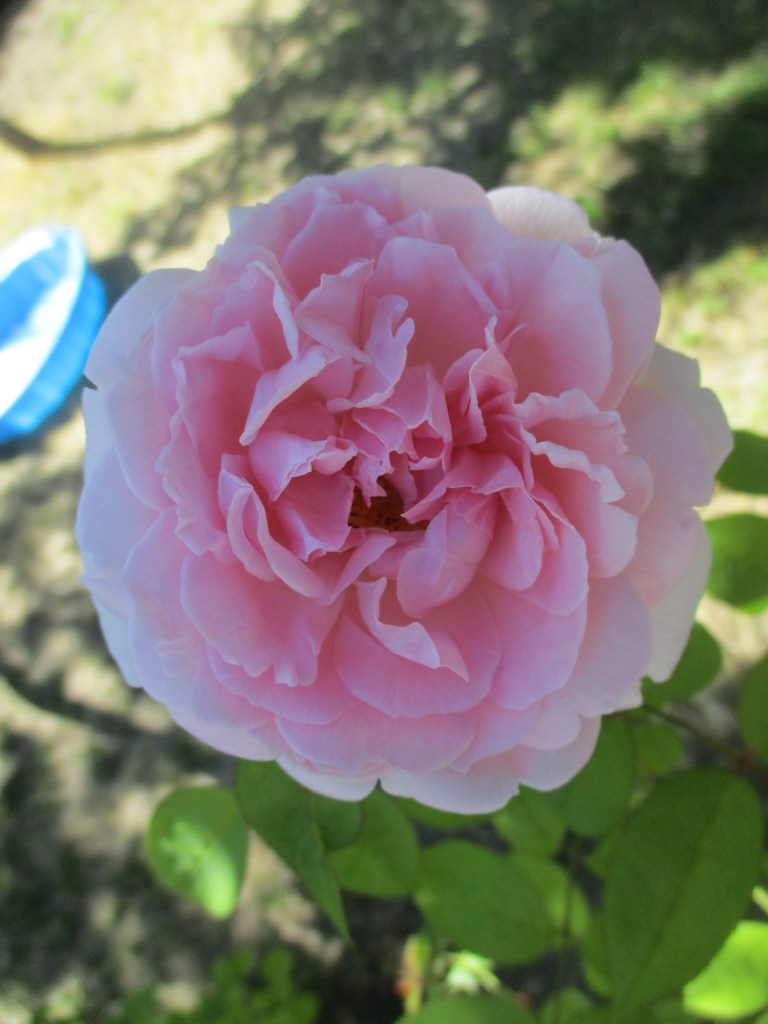
Cecile Brunner rose is elegantly simple.

Few modern rose cultivars are as tolerant of neglect as Cecile Brunner rose. Furthermore, few recover as efficiently from renovation after many years of neglect. Old overgrown thicket growth that might be unsightly while bare through winter can be spectacular in bloom. Alternatively, it does not mind aggressive pruning, even if only stumps remain. It easily regenerates with fresh new canes.

Bloom is nicely profuse early in summer. The individual fluffy pink flowers are not much more than two inches wide, but are rarely alone. They develop in big and possibly billowy clusters. The faint fragrance is easy to ignore, but appealing to some. After primary bloom, subsequent bloom is sporadic. Green stems are less prickly than stems of most other roses. Foliage is rather light green.

Shrubs are vigorous but compact. They may not get much taller than two feet. Most stay less than four feet tall. However, there are actually a few cultivars that are known as ‘Cecile Brunner’. Those that are most familiar are climbing types that can easily get higher than twenty feet. Their bloom is sparse after profuse early summer bloom. Some might bloom rather profusely again for autumn.

English Boxwood

English boxwood is a classic formal hedge.

Good old fashioned boxwood hedges really look silly if just a single missing plant get replaced with a different cultivar (cultivated variety) or specie. Most of the older boxwood hedges are the traditional, but somewhat yellowish Japanese boxwood. Most middle aged hedges are a relatively newer cultivar that is a bit greener. Modern boxwood hedges are more likely a cultivar of English boxwood, Buxus sempervirens.

English boxwood resembles Japanese boxwood, but has slightly narrower leaves that produce a slightly more objectionable aroma when shorn or otherwise disturbed. These opposite (paired) glossy leaves are only about a quarter to half an inch wide and about twice as long. The color is slightly darker with a more ‘olive’ tone. Wild English boxwood in Europe can grow as small trees. Most garden varieties are fortunately much shorter and more compact, which is why they are so popularly shorn into small formal hedges. They also do well as topiary. ‘Aureo Variegata’ is variegated with nicely contrasting cream colored leaf margins.

Grapefruit

Grapefruit originated as an unlikely hybrid.

Citrus have been in cultivation for centuries. Most breeding and selection was intentional. Even the strange breeding of orange and lemon for the familiar ‘Meyer’ lemon was deliberate. Grapefruit, Citrus X paradisi, is a peculiar one though. Its parents were unknown when it mysteriously appeared in Barbados in about 1750. It is now known to be a hybrid of orange and pomelo, both exotic.

The original grapefruits were ‘white’ grapefruits, with tart and pale yellowish flesh. ‘Pink’ grapefruits, with milder flavor, and blushed flesh, appeared a century and a half later, in about 1906. Those with rich pink flesh are known as ‘red’ grapefruits. Some mildly flavored modern white grapefruits are hybrids of grapefruit and pomelo. Such breeding makes them 75% pomelo and 25% orange.

Both modern and traditional white grapefruit trees are more vigorous than pink and red grapefruit trees. Dwarf white grapefruit trees grow slowly, but might eventually get more than fifteen feet tall. Standard trees can get as big as shade trees. They are too productive for home gardens. Pink and red grapefruit trees rarely get taller than eight feet. Grapefruit foliage is evergreen and lustrous.

Manzanita

Shrubby manzanitas develop sculptural stems with shiny cinnamon brown bark.

There are more than a hundred specie of Manzanita, Arctostaphylos spp., that range in size and form from creeping ground covers to small trees that can get almost twenty feet tall. (They are more commonly known by their cultivar names than by their specie names.) Arctostaphylos ‘Emerald Carpet’ is as the name implies a nice low groundcover for dry slopes. Arctostaphylos ‘Doctor Hurd’ is a shrubby small tree that is often pruned to expose strikingly sculptural trunks that are as smooth and rich brown as a chestnut.

Abundant trusses of tiny ‘urn’ shaped flowers bloom about now. Almost all are pale white. A few are pale pink. The subsequent red berries typically get eaten by birds before anyone else sees them. The evergreen foliage is quite dense. Individual leaves are rather small and disproportionately thick.

Manzanita should be planted while small, because larger plants are more susceptible to rot. New plants want to be watered to prevent desiccation until they disperse their roots. If planted in autumn, they get enough water from rain through winter (typically), so that they only want occasional watering through the following spring and summer. Once established, they do not want much water at all, and can be damaged by fertilizer. The happiest plants are satisfied with what they get from rain after they get established.

Dwarf Alberta Spruce

Dwarf Alberta spruce is densely conical.

Of all the live Christmas trees available, the dwarf Alberta spruce is perhaps the most practical. It is a shrubby little tree with a big name, Picea glauca ‘Albertiana’ ‘Conica’. (‘Albertiana’ is typically omitted.) It is a dwarf cultivar of white spruce that grows very slowly. It takes many years to potentially get eight feet tall and half as wide at the base. Wild white spruce can grow a hundred feet tall.

The main disadvantage of the dwarf Alberta spruce as a live Christmas tree is the very dense foliage. It almost seems to be artificial. The small needles are only slightly bristly, and finely textured. Otherwise, dwarf Alberta spruce can remain potted as a Christmas tree for several years. It stays sufficiently compact to return to the home annually. It just does not want to be indoors for too long.

The strictly conical form of dwarf Alberta spruce is a distinctive feature in the garden. A pair of trees elegantly flanks a doorway or walkway. A row of evenly spaced trees instills formality to a linear border of bedding plants. Although they do not get too broad, they should have enough room to grow naturally. Pruning for confinement or clearance compromises their naturally symmetrical form.

Mugo Pine

Mugo pine is more shrubby than tree like.

Most shrubs and many perennials get larger than the diminutive mugo pine, Pinus mugo. The most common type grows very slowly as a dense and rounded mound only a few feet tall and maybe twice as wide. Only a very old specimen might reach an eave. The paired dark green needles are about one or two inches long. The symmetrical brown cones are a bit shorter. Mugo pine is also known as Swiss mountain pine and because of a misprint in the eighteenth century, mugho pine. Although native to mountains in Europe, mugo pine is most popular in Japanese gardens and for bonsai. Because it grows so slowly, it can be happy in planters and large pots. In large urns of regularly changed flowering annuals, it can be a nice permanent and evergreen centerpiece.

Apricot

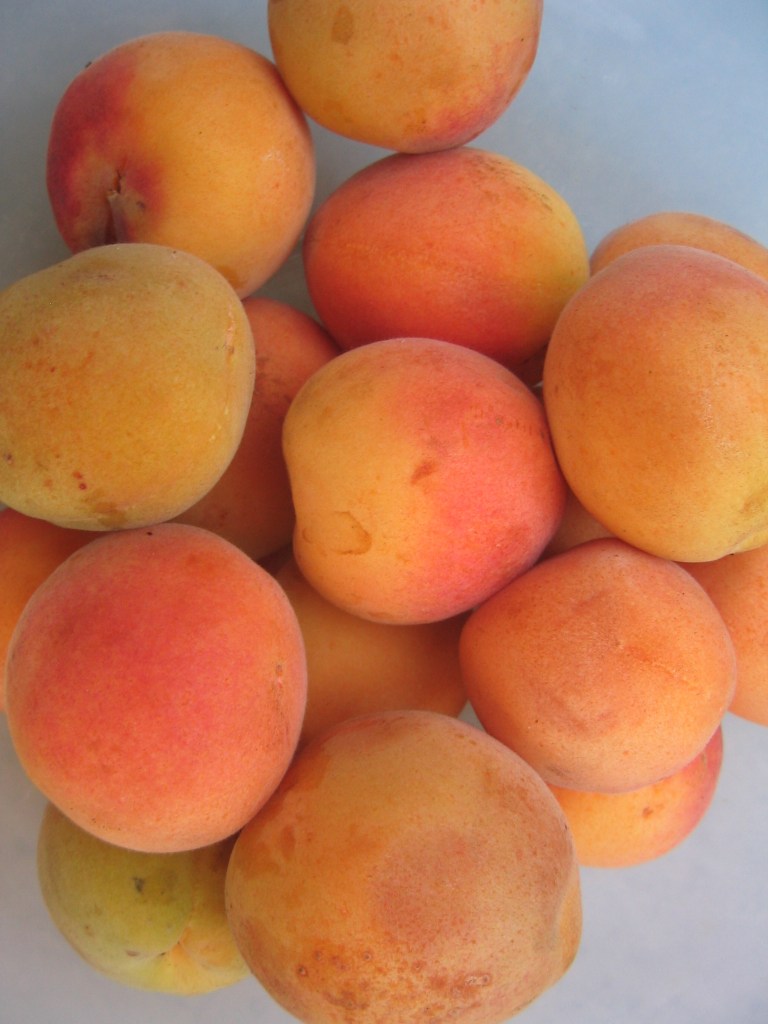
Apricot trees get planted in winter.

Apricot has major history in California. For a very long time, it was the main agricultural commodity is several regions, particularly the Santa Clara Valley. It remains a significant commodity within portions of the San Joaquin Valley. Urban sprawl replaced orchards in other regions. However, apricot trees now inhabit some urban gardens. The climate here is as ideal for them as it ever was.

Garden variety apricot trees are not quite like orchard trees. Dwarfing rootstock keeps them somewhat more compact. They might otherwise grow taller that twenty feet. Production is best during the first three decades or so, before they begin to slowly deteriorate. Orchard trees are already due for replacement by then. Many more cultivars are practical for home gardens than for orchards.

Apricot trees, which are mostly of the species Prunus armeniaca, are certainly not ‘low maintenance’. They require specialized pruning annually, while dormant for winter. Otherwise, they produce more fruit than they can support. New trees are unlikely to produce any fruit during their first season. The deciduous foliage falls neatly in autumn. White or slightly blushed spring bloom is striking.

Common or Soft Rush

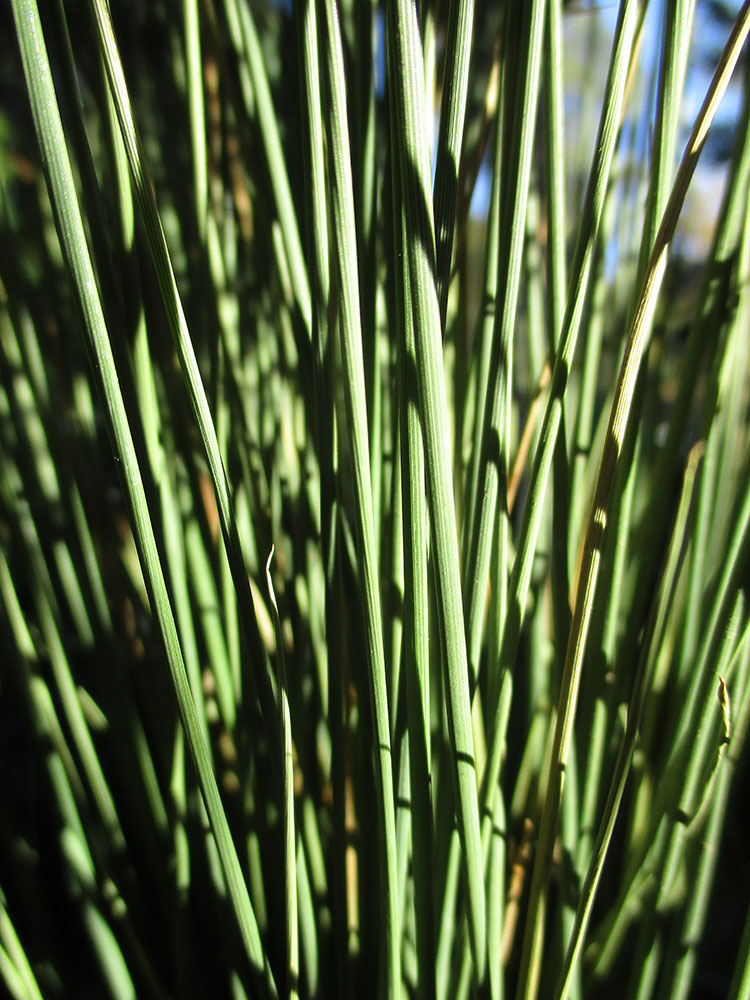
Physiologically, common rush is more interesting than it looks.

There was nothing common or soft about Rush, the innovative hard rock band of the seventies and eighties. Juncus effusus is only known as soft rush because the spiky and sharply pointed ‘foliage’ appears to be stiff, but is actually quite soft. It is common because in has such a vast natural range, including North America, Europe, Asia, Africa and Australia. It does not like hard rock, but instead prefers rich and moist soil, and will even be happy in soil that is too damp for other plants. Common rush tolerates a bit of shade but prefers good exposure. Because winters are too mild to freeze it back to the ground naturally, overgrown or discolored common rush can be cut down and then left to regenerate as winter ends.

The distinctive ‘foliage’ is not actually foliage. The minute leaves are unimpressive brown scales that do not do much at the base of each of the many upright green stems that function like foliage. The top six inches or so of each of these spike like stems is actually a bract that extends above the dangling but uninteresting tan or dingy yellow flowers that hang to the side. Collectively, the stems and bracts form distinctively sculptural clumps that radiate upward and outward. Healthy clumps are not much more than three feet high and wide.

Plum

Plums are better fresh than dried.

Only recently, and only to be more marketable, dried prunes attained the status of dried plums. Prunes and plums are actually two different types of fruit. Prunes are European fruits that dry nicely, but are not popular as fresh fruits. Plums are Japanese fruits that are best while fresh, but do not dry well at all. Because plums have less of a sugar content, they are likely to mold before they dry.

Plum is of the genus Prunus, just like prune and the other stone fruits. Stone fruits all contain large seeds, which are known as stones. Plums are ‘clingstone’, because the flesh of the fruit clings to the stones within. Prunes are ‘freestone’. Their stones separate easily from the flesh. The most popular plums are purplish or burgundy red. Others are blueish purple, red, orange, yellow or green.

Plum trees grow fast while young, and require aggressive pruning while dormant through winter. Otherwise, they get overwhelmed with fruit, and too tall to facilitate harvest. Even semi-dwarf trees can get almost twenty feet tall. They are spectacular in prolific white bloom. Small bare root trees that are now becoming available adapt to a new garden more efficiently than larger canned trees.