 We really should be growing more of what grows well here. This is as relevant in other regions as it is in the Santa Clara Valley. Some regions have a lot more to choose from. There are always limitations too. Tropical plants do not survive the winters of New England. Apples and pears want more winter chill than they can get in San Diego.
In California, we do not have enough water to go around. Well, that is not completely true. Much of that misconception is political, which is none of my business. Much of it is that there are just too many people living here and sharing a limited resource. Much of it is that many of the too many people living here waste water on, among other things, gardening.
Many of the urban areas of California are in chaparral climates, which means that there is not much rain. Los Angeles and some other urban areas are full blown desert, which means that rain is quite minimal. My former neighborhood in the western Santa Clara Valley got about a foot of rainfall annually. It was considered to be chaparral. Trona, in the Mojave Desert, gets about four inches of rain annually.
However, few people in chaparral or desert regions landscape their homes accordingly. Some limit their ornamental plants to natives. Others limit their choices to plants from chaparral or desert climates, even if not native. Yet, most of us grow plants and lawns that really have no business in chaparrals or deserts, and we do so excessively.
Well, enough of that rant. There are many plants that really should be more popular here.
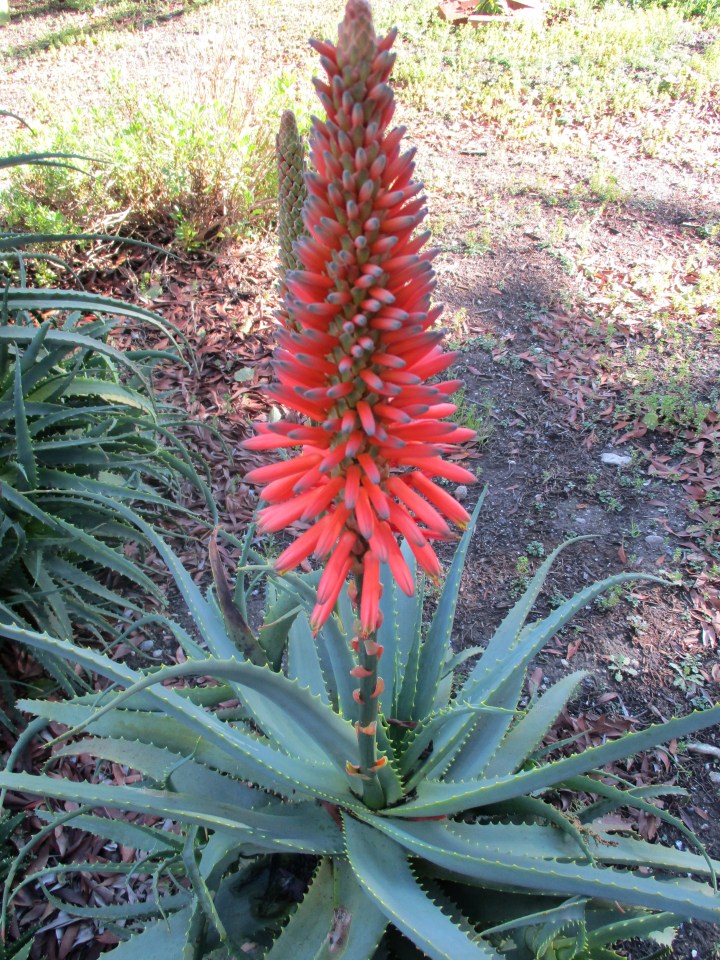
Aloes are a perfect example. Although many are from more tropical climates, most do not need to be watered too much. Some prefer minimal watering through summer. After winter rains, they produce fresh new succulent foliage in spring, and bloom reliably. Many have flashy orange or yellow flowers on striking vertical spikes. As plants grow, superfluous shoots can be separated and planted wherever more of the same plants are desired.
Smaller aloes are quite dense and mounding, with tight rosettes of stout leaves. Larger types with more open growth can get six feet tall. A few grow into small trees, with thick trunks that might be distended or buttressed at ground level. Leaves might have pronounced teeth along the margins, and most are spotted to some degree.
Everything about aloes is striking. They have prominent and colorful bloom. The distinctive succulent foliage is bold and unique. The larger aloes even have sculptural form.
Aloes are ideal for planters and pots because their roots are so complaisant and undemanding. They are rarely bothered by insects or disease. They are so easy to propagate that cuttings or pups can be acquired from friends or neighbors who are already growing them.
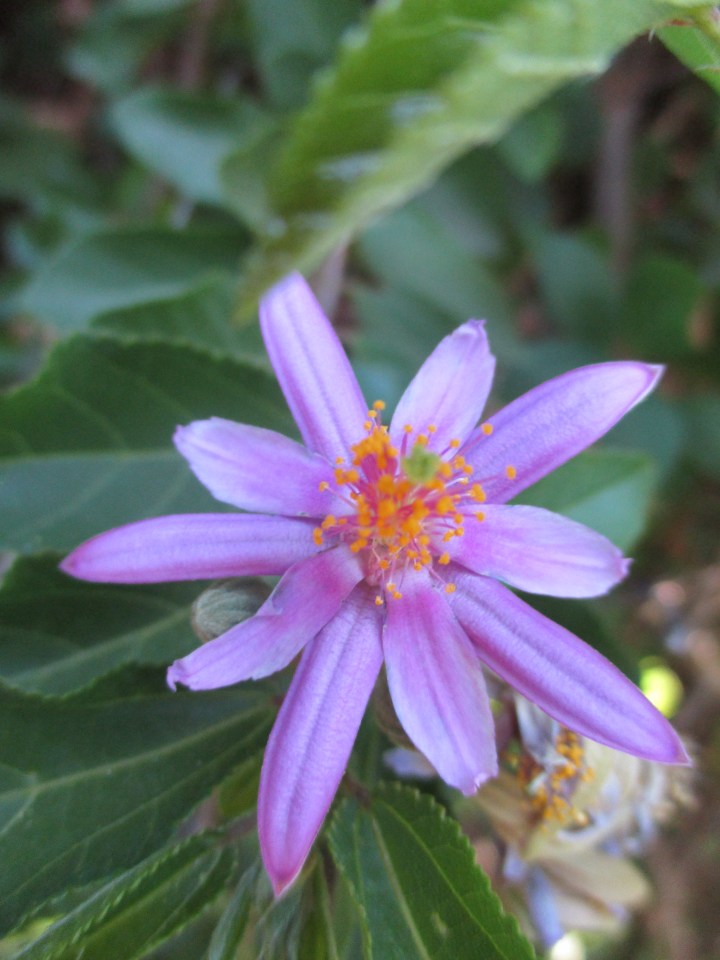 It is really an evergreen shrub with limber stems; but lavender starflower, Grewia caffra, can work almost like a rambling vine. It does not actually climb or grip anything. Like the canes of a climbing rose, it can be tied onto a trellis or fence as an espalier. As a free standing shrub, the arching stems should be pruned selectively. Shearing deprives them of their natural form, and inhibits bloom.
 Yuccas are almost as useful as aloes are for gardening in chaparral or desert climates. I say ‘almost’ because most are not quite as friendly. The leaves are outfitted with nastily sharp tips. It is how they protect themselves from grazing animals in the wild, but it is not such an advantage in home gardens. Some actually have the potential to be dangerous where someone could bump into them. The leaves of Joshua tree can puncture leather. Some types of yucca get so big that they make it difficult to avoid their nasty leaves, even if planted in the background.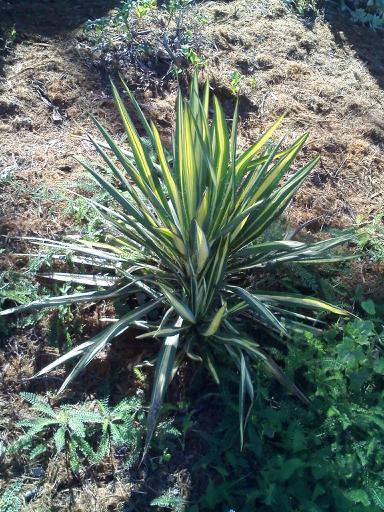
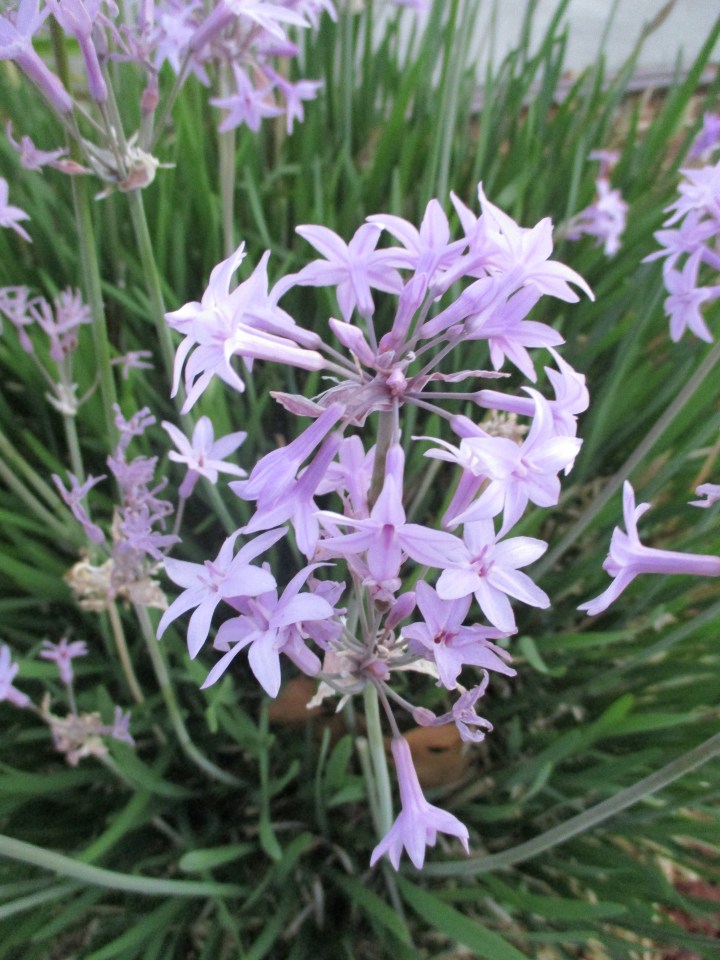 Some flowers are better left in the garden rather than cut and brought in. Society garlic, Tulbaghia violacea, looks like it would be an ideal cut flower, with nice bare stems. The aroma suggests otherwise. It smells something like a strongly aromatic combination of onion and garlic. Even in the garden, it might be a good idea to keep it at a distance. Deer and rabbits do not mess with it.
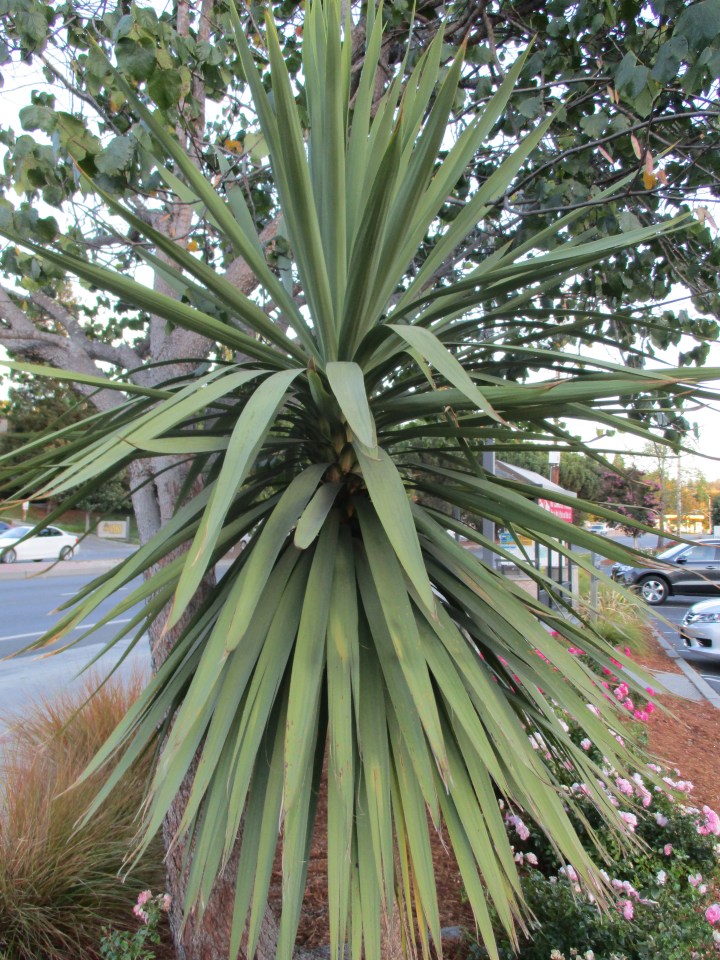 Dracaena palm, Cordyline australis, is not a palm at all. It is more closely related to yuccas. (Incidentally, a few yuccas are also inaccurately known as palms as well, but that is another story.) The simple specie that grows taller than a two story house is rare nowadays. It develops a high branched canopy of evergreen olive drab foliage. The three inch wide leaves are about three feet long.
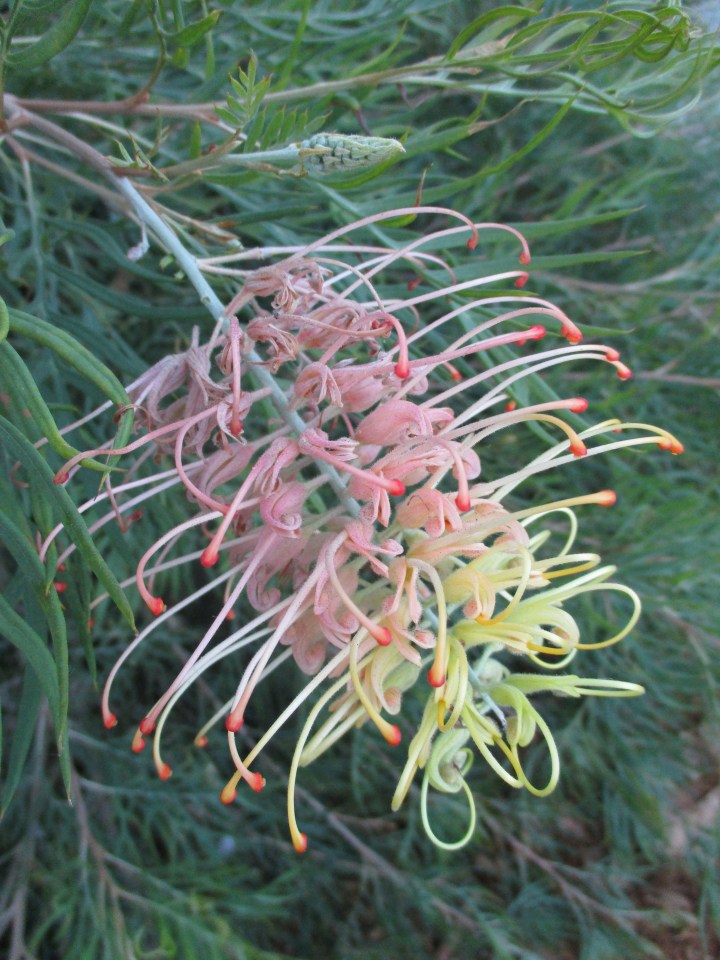 No one knows for certain who the parents were, so the hybrid Grevillea ‘Peaches and Cream’ lacks a species designation. (If it is important, the parent are most likely Grevillea banksii and Grevillea bipinnatifida.) It is an evergreen shrub that gets about four feet high and wide, with intricately lobed light green foliage. Individual leaves are about four inches long and two inches wide.
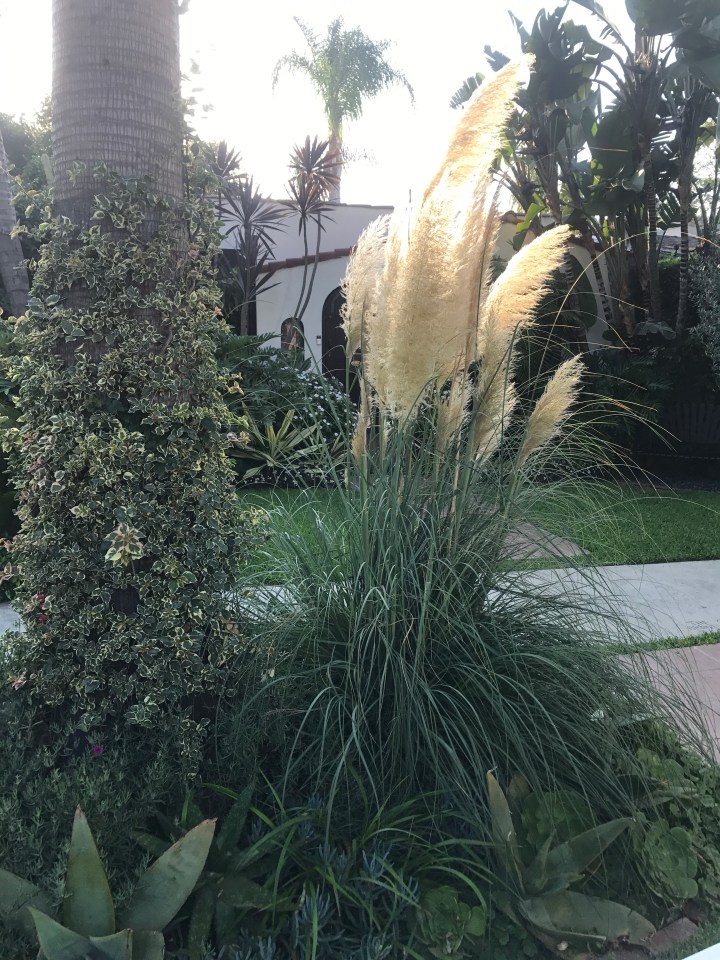 Modern garden varieties of pampas grass found in nurseries are generally non-invasive. Their flowers are described as ‘sterile’, and therefore unable to produce seed. What that really means is that they are exclusively female, and unable to produce seed without male pollinators. However, they have the potential to be pollinated by naturalized pampas grass, and sow a few hybrid seed.
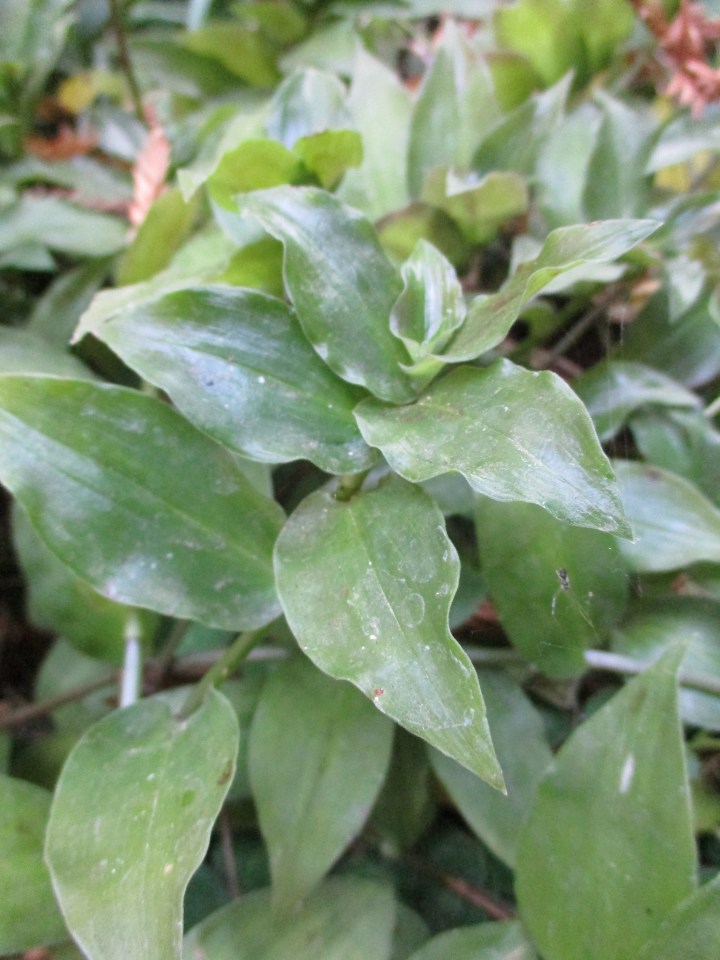 It could not have survived out in the desert for forty years. Wandering Jew, Tradescantia fluminensis, would have desiccated before its first summer. Well watered gardens are a completely different situation. Wandering Jew can become invasive and mix with other more desirable ground covers, only to die back and turn dark brown through winter. It starts over the following spring.
 After many centuries of cultivation, myrtle, Myrtus communis, has not changed much. It was one of the more traditional plants for formally shorn hedges in Victorian gardens. It functions somewhat like a drought tolerant boxwood. Unshorn plants can grow as gnarly small trees not much higher than the eaves. ‘Compacta’ gets only about three or four feet high and wide, even without pruning.
 No other big tree has trunks as sculptural as those of the California sycamore, Platanus racemosa. They bend and groove so irregularly, seemingly without direction, that it is a wonder that old trees in the wild eventually get a hundred feet tall. Some trees have a few trunks. The mottled beige bark is quite striking both in the shade of the broad canopy, and while trees are bare in winter.
 Tony Tomeo