 Where winters are more wintry, garden enthusiasts get to brag about their snowdrops as they emerge and bloom through melting snow. Diminutive white flowers against a backdrop of white snow may not look like much to us. We have more colorful flowers through winter, without the snow. Their kind of snowdrops, Galanthus specie, need more winter chill than they would get here anyway.
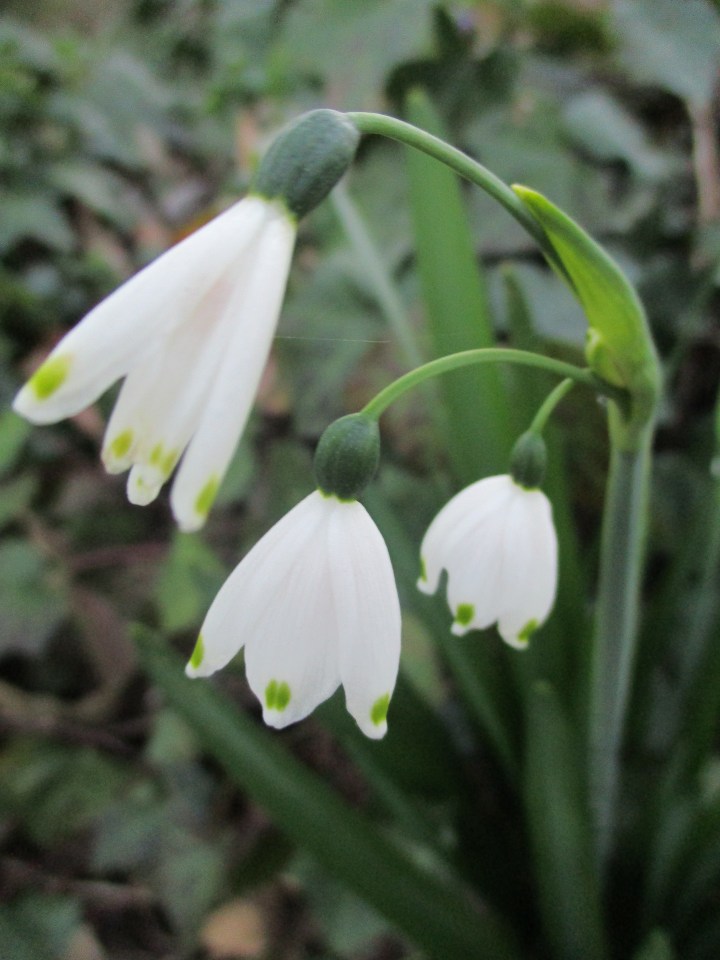
We have our own kind of snowdrops though. Leucojum aestivum does so well without significant winter chill that it can naturalize, and sometimes shows up in well watered gardens and riparian areas without being planted intentionally. Leucojum vernum is similar, but blooms with only single or paired flowers, rather than three or more small and pendulous flowers on each arching stem.
The rubbery leaves are about half an inch wide and a foot tall. They stand rather vertically, and can get nearly twice as tall if they need to grow through groundcover. The flower stalks are about the same height, and with the weight of the drooping flowers, might lean a bit outward from the foliage. Each flower has six white tepals with a yellowy green spot near the tip. All plant parts are toxic.
 Fans of the Brady Bunch might recognized agonis, Agonis flexuosa, from the front yard of the Brady Residence. That particular tree was rather dark olive green, and might have grown two or three feet annually to reach the upstairs eaves. Most of the popular modern cultivars are darker bronze or burgundy, and probably stay a bit shorter, but attain the same elegant and slender form.
 As a group, aloes really deserve more respect. Many will naturalize and thrive with only occasional watering through summer. Candelabra aloe, Aloe arborescens, wants a bit more water than most other aloes, but not much. It looks like a sensitive jungle plant, but is surprisingly durable, and very easy to propagate. Any pruning scraps can be plugged wherever new plants are desired.
 The bright red berries of late cotoneaster, Cotoneaster lacteus, that ripen in autumn may not be as profuse or as bright red as those of firethorn, but they last longer, and even into winter. Birds strangely seem to avoid them. Although the clustered small berries can look just like firethorn berries, they are usually less shiny, and darker red. Clusters of tiny pale white flowers bloom in spring. The small evergreen leaves have a nice glossy and veined texture on top, with hazy gray or tan tomentum (fuzz) below. The grayish brown bark of old stems resembles that of apple or pear trees.
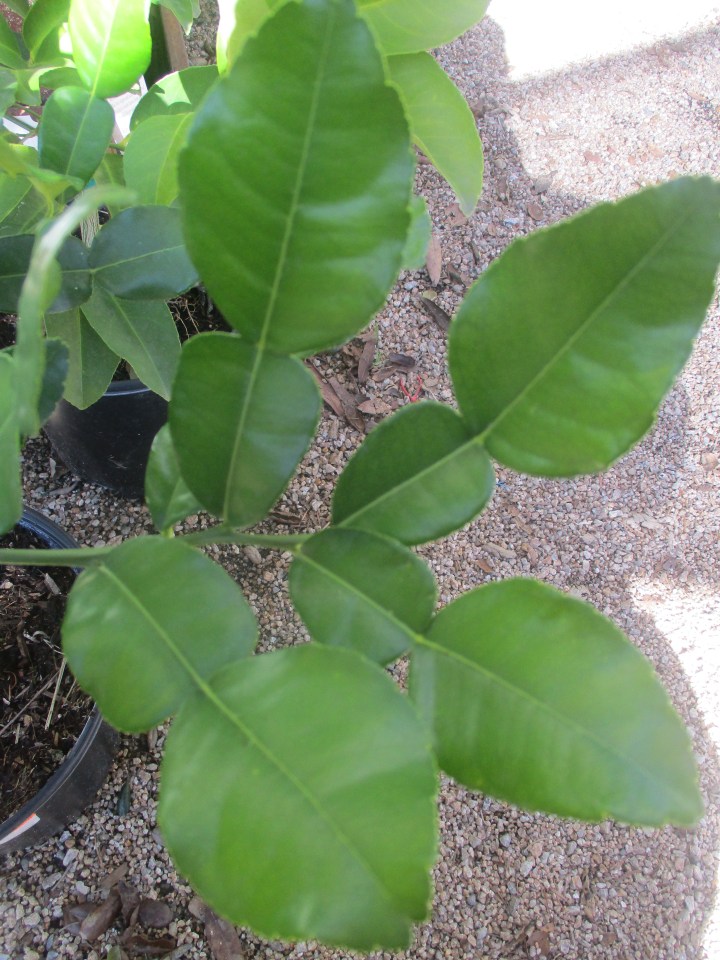 Of all the weird citruses available, this is one of the strangest. Makrut lime, Citrus hystrix, is not grown for its ugly wrinkled fruit. The rind and the juice are only rarely used for culinary or medicinal purposes. The important part of makrut lime is the aromatic foliage, particularly the modified petiole ‘wings’ that look like leaves. Fresh or dried, they are popular in the cuisine of Southeast Asia.
 Most of the brachyscome found in nurseries nowadays are the annual Brachyscome iberidifolia. Perennial species are rare. The name is still often spelled as ‘brachycome’, without the ‘s’, as it had been spelled for decades. Although it is a warm season annual, brachyscome is also popular now because it can bloom better through the locally mild winters than the warmth of mid summer.
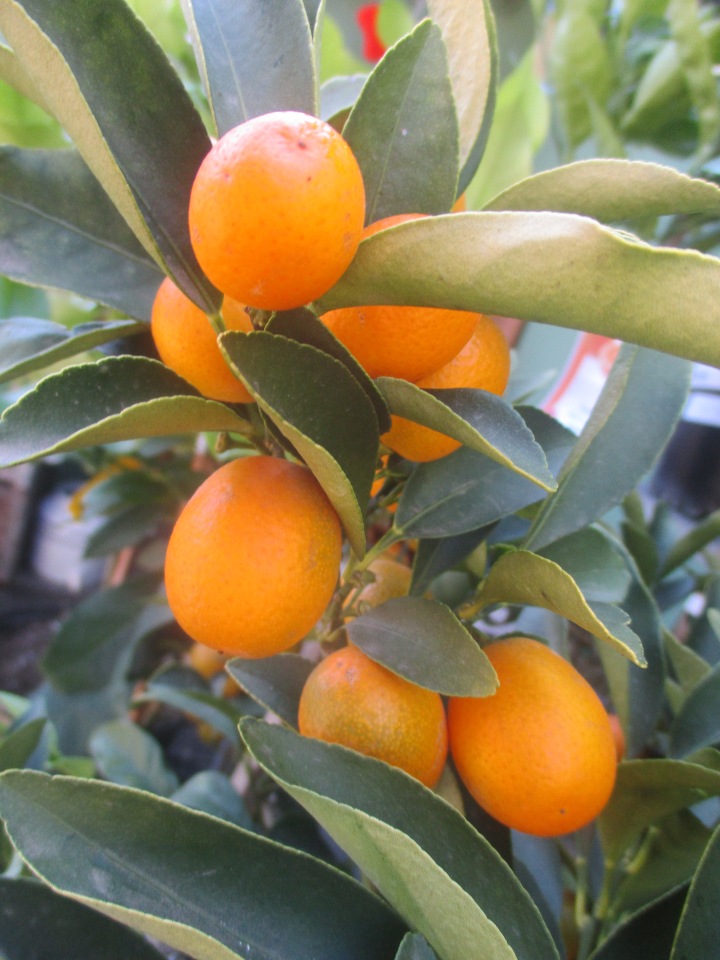 Tet, on February 16, will be the Vietnamese New Year’s Day for the Year of the Dog! Any year associated with the dog must be pretty excellent. Anyway, potted and fruited kumquat trees are very traditional decorations for Tet. Although less popular than orange and lemon trees, they are the most compact of the citrus trees, so are therefore the most adaptable to compact home gardens.
 Like euryops daisy, sweet pea shrub and New Zealand tea tree, the blue hibiscus, Alyogyne huegelii, blooms whenever it wants to, even if it wants to bloom sporadically through winter. It should bloom more abundantly in phases though spring and summer, but even that is difficult to predict. The three inch wide flowers are lavender blue, but can be rich purple or white. Pink is very rare.
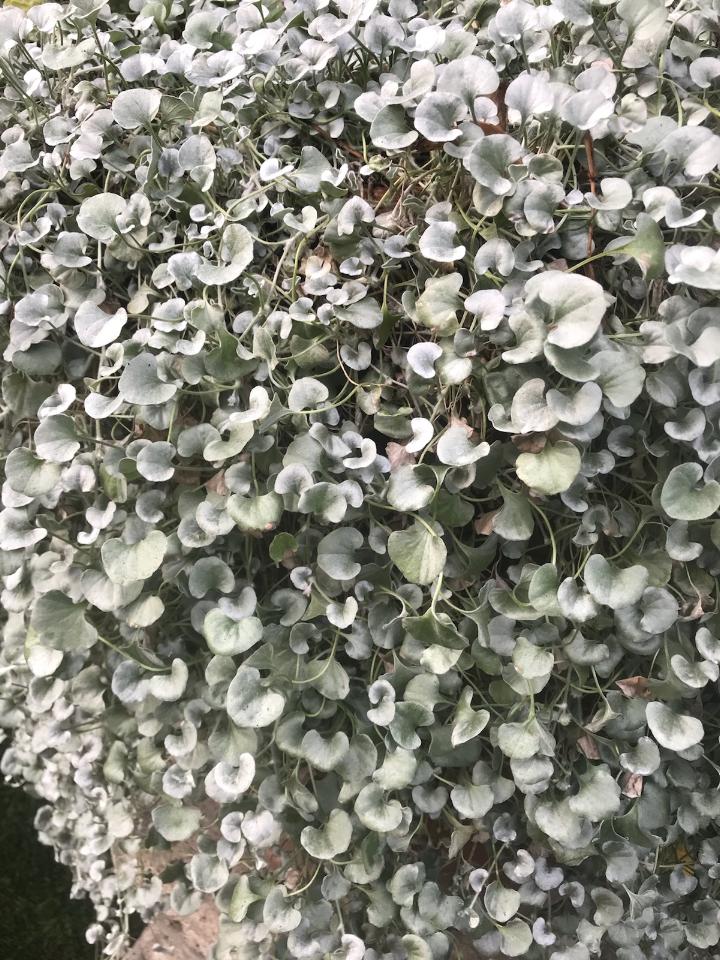 No one seems to know what ever happened to old fashioned dichondra lawns. Everyone seemed to like them, especially those of us who dislike turf grasses. Somehow, they became passe and very rare. The formerly common dichondra that such lawns were made of is now merely a resilient weed in turf lawns. But wait! We have not heard the last of this resilient and appealing perennial.
 It may not always bloom profusely, but sweet pea shrub, Polygala fruticosa, blooms sporadically through most of the year. Even when not much color is evident from a distance, a few flowers can likely be found on closer inspection. For some reason, bloom seems to be quite colorful now. Bloom phases should be more profuse in spring and summer. The pea flowers are soft purplish pink.
