Ah, reblogging; it reminds me that I stopped blogging a very long time ago.
Horridculture – Post Office
Even after mentioning several times that I must discontinue blogging and reblogging, I feel terribly guilty about not posting anything for today. However, for the first time, there is nothing more than a few of the most recent articles to reblog, and nothing new to post. So, here is one of the recent aticles.
Palm Springs

No, not ‘the’ Palm Springs. It is merely a concept for a new garden. It may not begin to develop for quite a while, and certainly will not begin prior to when the rainy season begins this autumn.
Palms and redwoods do not mix. Technically, they can, but they look silly together. However, there are a few young palms here, and there will be more in the future. Some are very important to me. The pair of Mexican fan palm seedlings came from the mature specimen that Brent scattered some of his brother’s ashes under in front of his home at the Jungalow. The windmill palm came from the childhood home of two of my best friends from the fourth grade. The rare hesper palm was a gift from a now deceased friend. It was stolen and then recovered.
Palm Springs may be developed to accommodate the various palms within their own space, away from the redwoods. The preferred location is a small and relatively mildly sloped plateau on an otherwise steep hillside, where oaks and chaparral species grow wild. A natural spring, if tapped, may be able to provide adequate irrigation. Otherwise, water is available reasonably nearby. Other lush or jungly species can also inhabit this garden. This includes heliconia, giant bird of Paradise, canna, calla, blue ginger, cup of gold vine, Philodendron selloum, four cultivars of angel’s trumpet and three distinct species of bamboo palm that are already here. The garden would not be visible from either of the nearby roads until some of the palms get very tall a few decades later. I doubt that anyone would mind if they could see such odd vegetation anyway.
Ultimately, Palm Springs could be like a bit of Southern California within its own confined oasis almost hidden above the redwoods.
Horridculture – Dumpster View
Ah, a reminder of how were were unable to work three years ago when this article posted.

 Location – Locations – Location
Rather than addresses, most of the guest cabins at the conference center where I work for part of the week, have delightfully horticultural names; such as Camellia, Lupine, Holly, Dogwood, Huckleberry, Strawberry and Cottonwood. Others have names that are suggestive of idyllic locations, such as Meadowbrook, Creekwood and Rustic Dell. Then, . . . there is ‘Dumpster View’.
Dumpster View is not actually a guest cabin, or a lodge, or any building that any of the guests would ever see. It is part of our maintenance shops buildings. Although large, these building are outfitted with only a few windows. The largest building has only a single window for an office. The smaller building has only four windows. Two of the windows have a view only of dumpsters.
The picture above shows the view from the window in the galley. It was what I saw as…
View original post 155 more words
Bad Wine
Sadly, the historic Chilean wine palm of the second illustration is now gone.
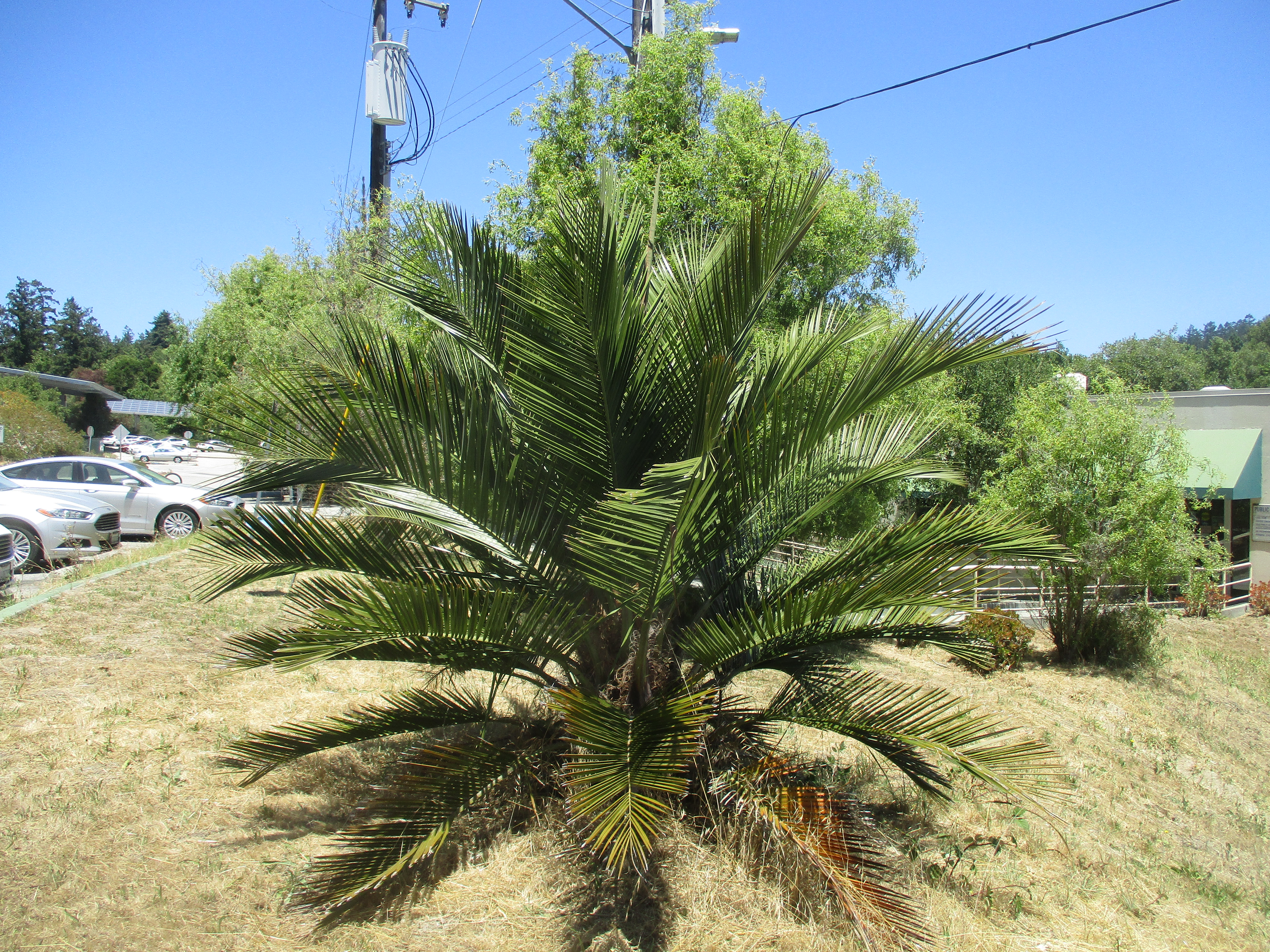 I believe that this is a young Chilean wine palm, although I am not certain.
Italian Americans, particularly Californians, are expected to be experts in regard to wine. I am not. I can not explain it. I dislike wine, especially the best of it. It smells and tastes like rotten grapes. When I learned that Chilean wine palms were, and might still be, decapitated for the collection of their sap, from which wine is made, I learned yet another reason to dislike wine.
This little Chilean wine palm, Jubaea chilensis, pictured above, lives just a block or so away from the bad date palm that I wrote about last Sunday. No one here will try to make wine from its sap. The utility cables that seem to be too close in the background actually pass with plenty of clearance to the right, so will not be a problem in…
View original post 174 more words
Fine China
This little Chinese maple has been enjoying its new and improved but still sheltered exposure for the past three years.
 Before: There was not much hope for the Chinese maple underneath this mess.
It will be just fine. The Chinese maple that I mentioned earlier this morning sustained surprisingly minimal damage when part of a bay tree fell onto it. The situation initially seemed hopeless prior to the removal the heavy debris that was pressing the diminutive Chinese maple downward. Yet, the little tree somehow regained its composure, and is expected to recover.
The little Chinese maple was always rather sparse in the shade of the surrounding forest. Also, it exhibited an asymmetrically sculptural form. That is likely normal for the species within its natural environment, where it lives as an understory tree (within the shade or partial shade of larger forest trees). The distinctive form and open canopy were part of its allure.
As the debris was removed, most of the stems of the Chinese maple sprang back into…
View original post 178 more words
Horridculture – Solar Power
If I remember correctly, this red gum was cut down very shortly after I got this picture.
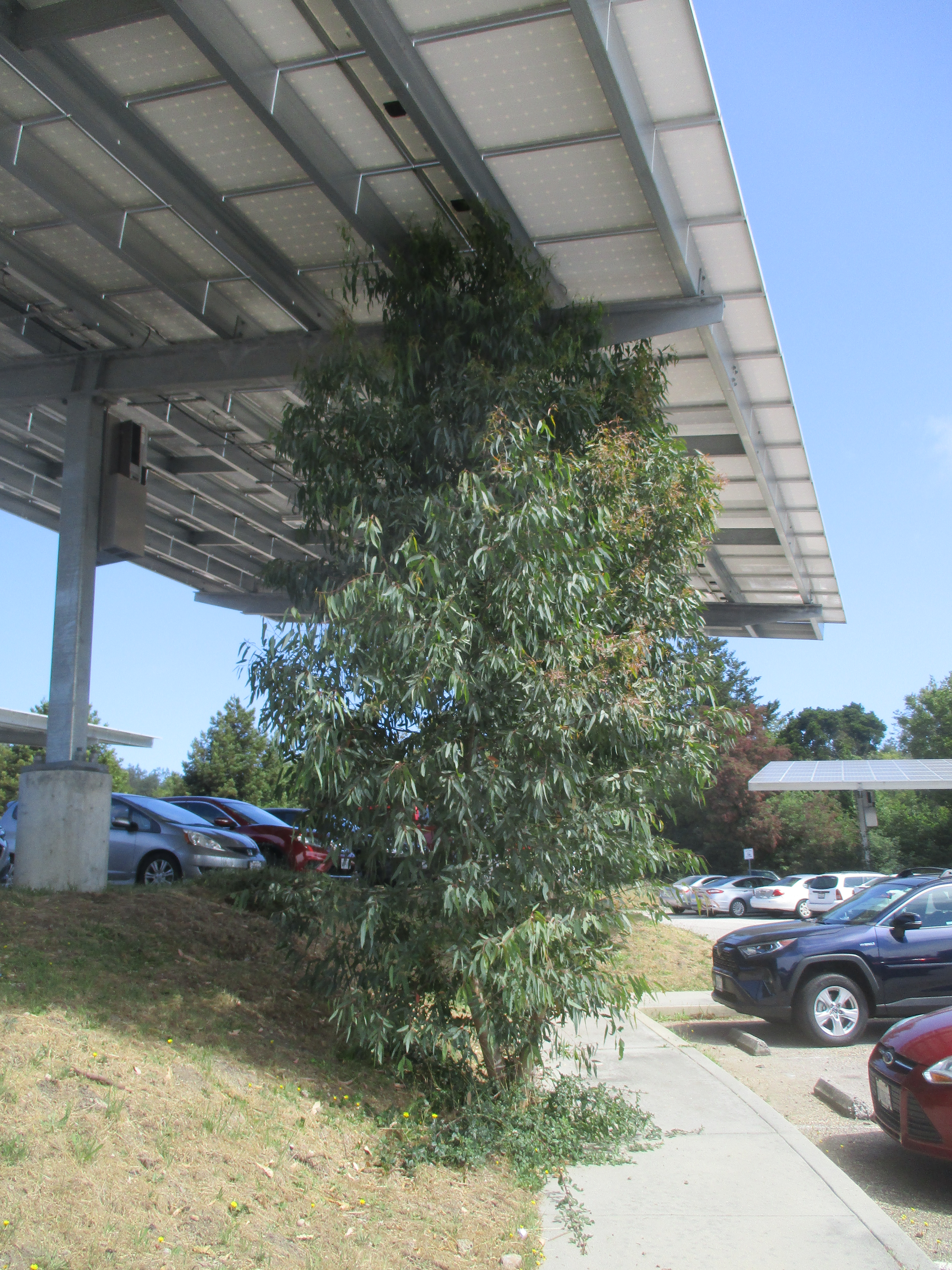 This gives a new meaning to ‘shade tree’.
Leaves are the original solar panels. They collect solar energy, and convert into useful resources. Some of those resources get converted into other resources that are good for human consumption, such as fruit, vegetables, lumber, firewood and oxygen. However, one resource that leaves do not produce is electricity.
That is why the big solar array pictured above was installed over a big parking lot. There are a few of these arrays in this parking lot, and more in other nearby parking lots. Many trees were cut down to accommodate them. People who work nearby can use the electricity more than they could use vegetation, or anything that vegetation could produce within this area.
Shade trees are nice over parking lots, but are not necessary over a parking lot that is shaded so thoroughly by such big solar arrays. After parking during rainy…
View original post 158 more words
Bad Date
Since posting this article three years ago, I noticed that some of the male pollinators from former date orchards were recycled as exclusively male groves for isolated landscapes between Los Angeles and Las Vegas, and between Los Angeles and Phoenix (which, incidentally, is named for the species). Some were installed around highway interchanges. Some are at resorts.
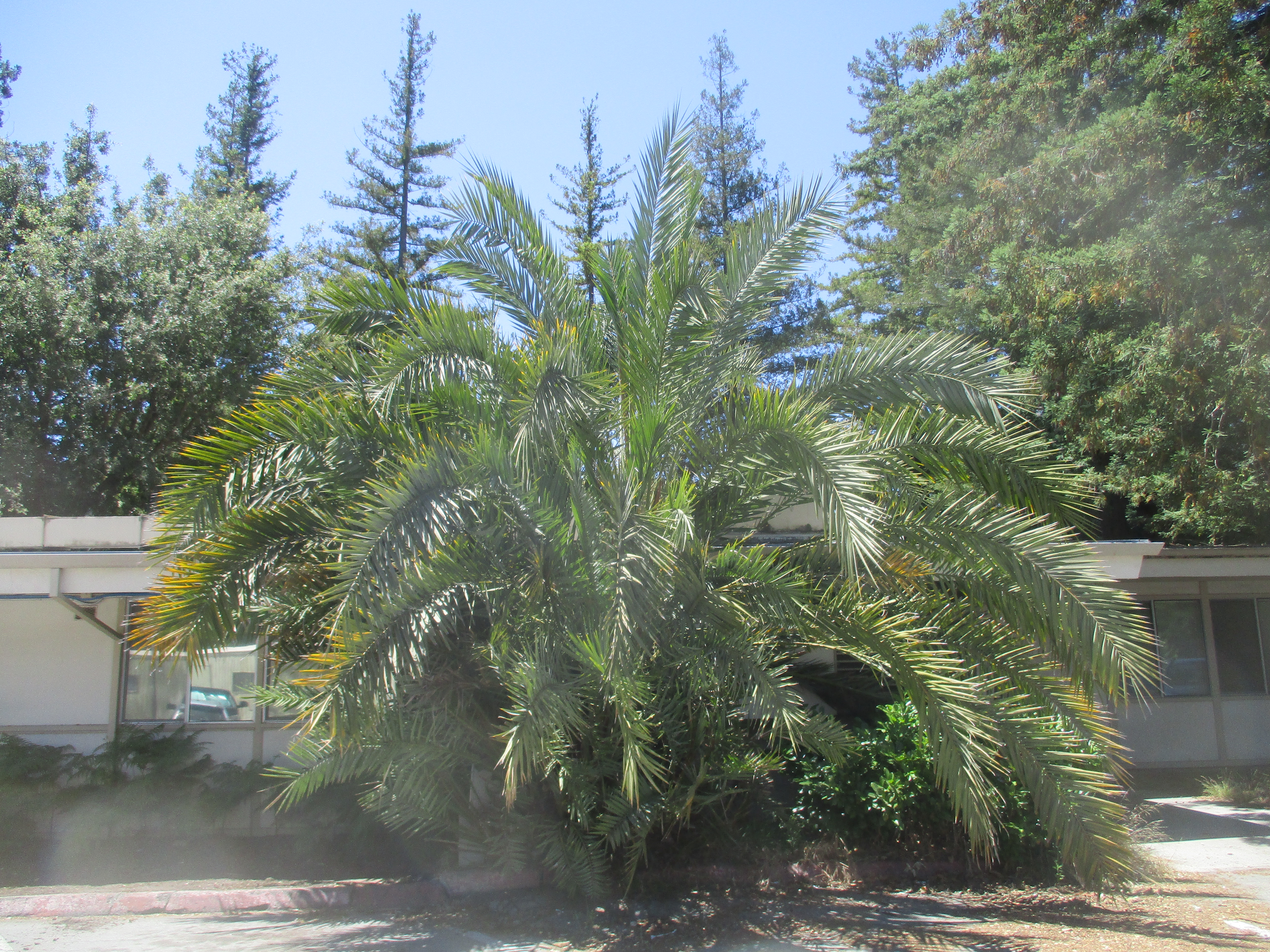 No one likes a bad date.
Date orchards that were displaced by the expansion of urban sprawl around Las Vegas in the 1990s were the source of the many recycled mature date palms that briefly became popular for large scale landscapes at the time. Most of the trees within the orchards were female, with only a few male pollinators. (Pollinators can live remotely, where they provide pollen for dusting.)
Male trees were undesirable anyway, at least in conjunction with female trees. They are taller and lankier, with less pendulous foliage, so are less visually appealing. More importantly, they pollinate female flowers so that they make fruit. Of course, in orchards, fruit is very important. In landscapes, it is just a mess. Without male pollinators, female trees produce no messy fruit.
Consequently, most male trees were not recycled. Some were installed singly, or in exclusively male colonies, in landscapes that were…
View original post 160 more words
Weeds?
Well, I do like English daisy infesting big lawns. Does that count?
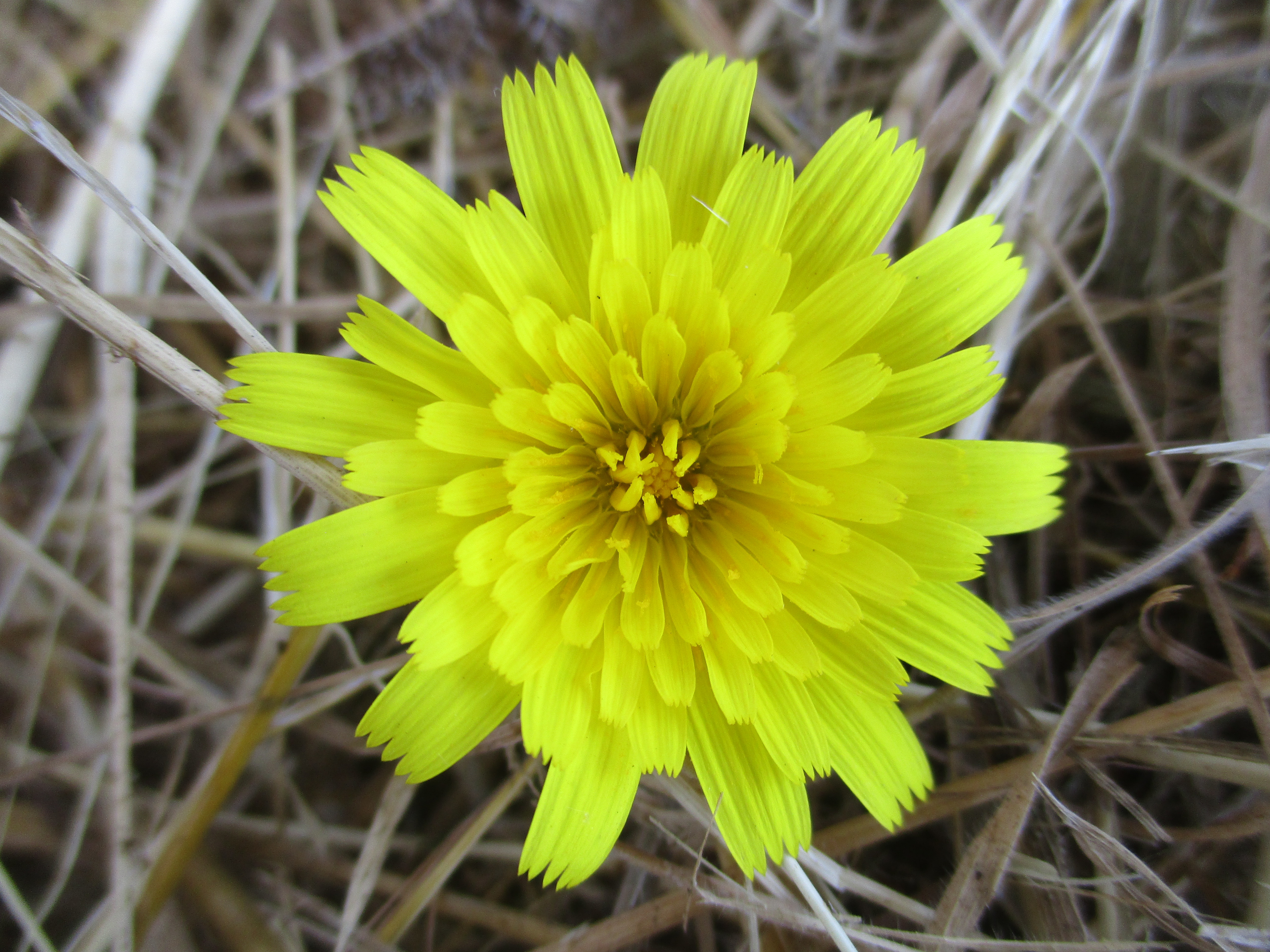 Although I can not be certain, I believe that this is prickly lettuce.
Pretty weeds do not get my attention like they do for others. They look too much like weeds to me. If I want to appreciate them, I must do so with intention. Sometimes, I do actually try. I did happen to notice these two weeds. However, now that I got their pictures, I have no use for either of them. Neither is readily useful for the gardening column. I will just share them here.
The yellow flower pictured above is most likely prickly lettuce. I really do not know. I know it as yellow chicory; but chicory does not bloom yellow. Some people think of it as dandelion, since the flowers are similar. These flowers stand much higher though, with only minimal foliage below. For the picture, I plucked this flower and stuck it in the ground…
View original post 169 more words
Horridculture – Weed Whackers
This is one recycled episode of Horridculture that did not get a happy ending within the past three years. The prickly pear never recovered as it was cut down with every weed whacking procedure, and eventually succumbed to decay and died. I did not know that prickly pear could be killed!
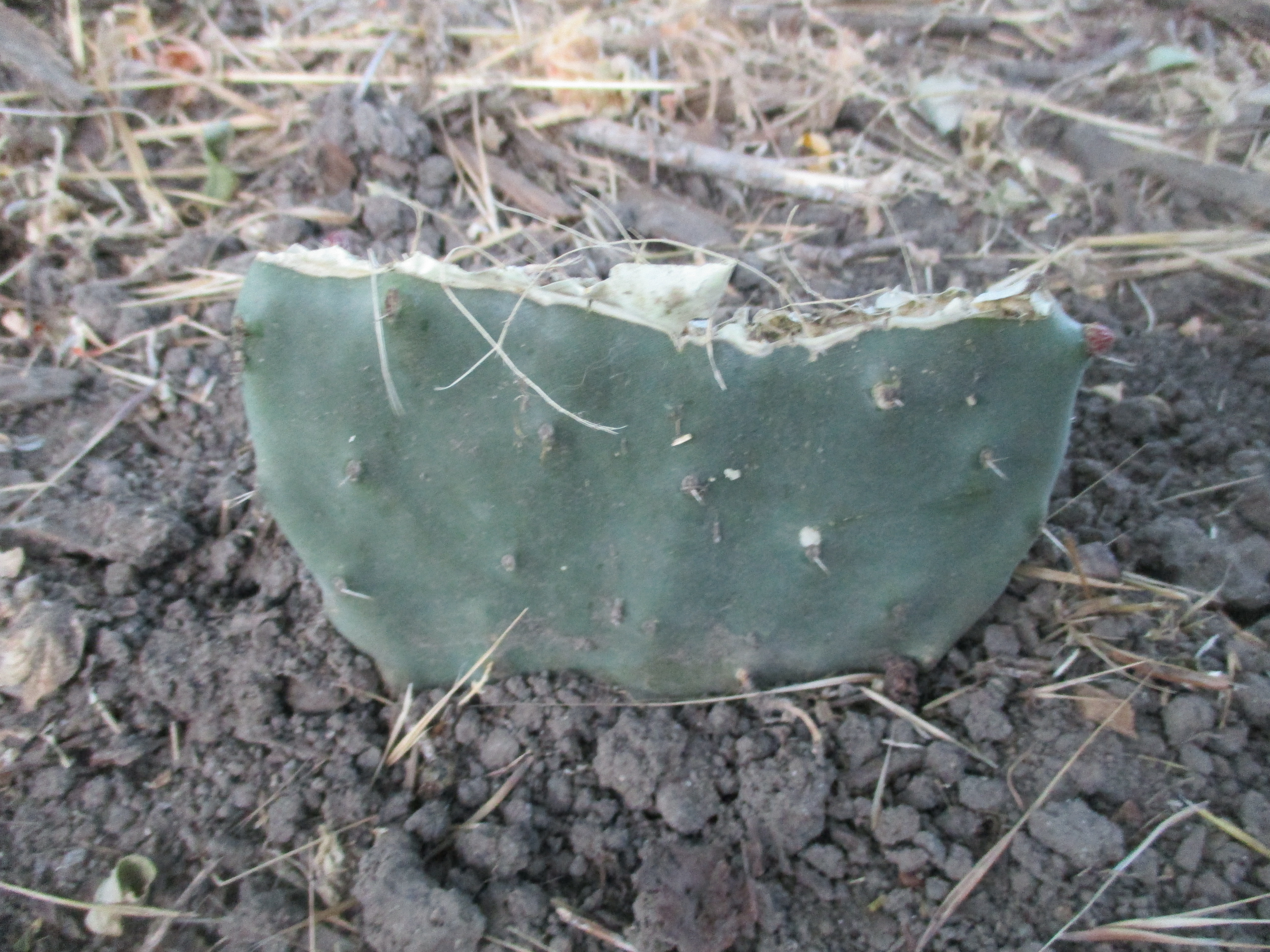 This must be the better half.
This neatly sliced prickly pear is too silly to rant about. There is another just like it. Two others were not sliced, as if, after the first two, someone realized that there was more to the roadside meadow than combustible dry grass. The prickly pear were put out there just last winter. They each extended only a single pad half a foot or so above grade, so were obscured by the grass.
Realistically, the damage is minimal and tolerable here. The priority of the crew who performed the vegetation management was to cut down all the combustibles. They did an efficient job of it. They did not expect to encounter anything that had been intentionally installed out there, or even any desirable vegetation. Besides, this prickly pear will recover as if nothing happened.
Unfortunately, damage caused by weed whackers is rarely so innocuous. Weed…
View original post 156 more words
 Tony Tomeo