Wind Pollinated Flowers Are Worse For Allergies

Have you ever wondered why it is sometimes difficult to know which flowers cause the worst allergies at any particular time? It is for the same reason that it can be difficult to find the flowers that produce the most fragrance. They simply do not need flashy colors to attract pollinators. Fragrant flowers instead use fragrance to attract pollinators. Flowers that are the worst for allergies simply put less effort into attracting pollinators, since they prefer to get their pollen delivered by wind. Yes, wind; it is one hundred percent natural and absolutely free.

Pollen than is designed to be dispersed by wind seems to perform just as well without it, by floating through the air, which is like ‘diet wind’. Unlike the pollen of big colorful flowers that is heavy and sticky in order to adhere to pollinators, pollen that is designed to be dispersed by wind (or diet wind) is extremely finely textured and abundant. Since it is not so directly and efficiently delivered between flowers, it gets everywhere and into everything, with the hopes that some of it, if even just a few particles, will reach the flowers that it wants to pollinate.

Pollen that primarily relies on wind for dispersion is like all those millions of bulk mailing fliers that get mailed out to everyone so that one or two or perhaps a few might reach someone who might actually be interested in getting one. Pollen from big flashy flowers are more like fancy Christmas cards that we send directly to friends, family and neighbors, but would be too expensive to send to millions of uninterested people. The problem is that like so much junk mail that clogs mailboxes, wind dispersed pollen is too abundant, which makes it a serious problem for those who are allergic to it. There is no escape when it fills the air.

The many wind pollinated plants that bloom in secret are the worst for pollen production. Unremarkable flowers of pines, cypress and cedars are among the worst. Acacias and eucalyptus are nearly as bad; but at least some have colorful bloom. Although hedged privets are not often able to bloom (because their flower structures get shorn off), privets that are allowed to grow into trees produce wicked pollen, even at a young age. Wild grasses may not seem like they would be much of a threat in urban landscapes, but their pollen travels for many miles to find victims.

Unfortunately, there is no way to control all the plants that produce objectionable pollen. We can only contend with those in our own gardens and be aware of what else is out there in the neighborhood.

Horridculture – Neglected Seedling

Three years later, I can now say that this little seedling was happily productive.

tonytomeo's avatarTony Tomeo

P00603-1 They are so cute when they are young.

This was not planned very well. Actually, it was not planned at all. While sorting through the seed for a vegetable garden, I found a can of seed for winter squash that was a few years old. They might be close to five years old. I really do not remember. I did not expect them to be viable, but did not want to discard them without at least trying to test them for viability.

Rather than just put them in damp rag for a few days, I plugged a few seed into a spider plant on a windowsill, and forgot about them. I really did not expect to see them again. When the first one emerged, I though it was a weed, so plucked it out. When I realized what it was, and that it came out intact, I felt badly for…

View original post 214 more words

Lemon Cypress

Lemon cypress foliage is mildly aromatic.

Monterey cypress is a famously rugged tree that inhabits harshly exposed coastal cliffs. It grows fast to get big and gnarly with age. Lemon cypress, Hesperocyparis macrocarpa ‘Goldcrest’, is a more civilized cultivar. It might potentially grow nearly forty feet tall, but at less than a foot annually. Vertical trunks support compact and relatively columnar form.

Lemon cypress foliage is densely evergreen, with tiny and tightly set scale leaves. New spring growth is impressively cheery yellow. It fades somewhat to yellowish chartreuse through summer. If the weather gets cool enough through winter, the foliage can get a bit more amber. The foliar aroma is coincidentally slightly lemony, to match the foliar color.

Once established, lemon cypress does not require much more than occasional pruning. It is satisfied with only infrequent irrigation, and might survive with none at all. Actually, it is susceptible to rot with generous or frequent irrigation. ‘Goldcrest Wilma’ is susceptible to foliar diseases within its even denser foliage. It stays compact enough for pots though (Incidentally, Hesperocyparis was Cupressus.)

Stakes And Binding For Trees

Binding merely straightens developing tree trunks.

Few trees that inhabit home gardens begin their residency as nature intended them to. Most are exotic, from other ecosystems, regions and climates. Almost all initially grew in nurseries, with their roots confined to cans of soilless media. Most rely on pruning and binding to develop straight and tall trunks. In the garden, most rely on stakes for stability.

Nursery stakes are different from landscape stakes. They support the developing trunks of young trees as they grow in nurseries. They can do the same for very young trees that grow directly into home gardens. Such stakes do not stabilize trees. Within confinement of nursery cans, they can not extend into the soil below. They guide trunk development.

Some young trees with very limber trunks rely on constrictive binding to nursery stakes. Most trees need only loose binding. Ideally, binding should be as loose as possible, and is only temporary. Trunks that move with wind are less reliant on support as they mature. Once straight trunks develop, temporary nursery stakes should no longer be necessary.

Landscape stakes stabilize new trees after installation into a garden. Most of such trees lack stability while their roots are initially very confined. Root dispersion stabilizes trees as they mature. Landscape stakes are only temporary during this process. They should not be so constraining that trees rely on them for support. They must be sturdy though.

As important as it is for many trees, staking can interfere with trunk development. It limits motion from wind that stimulates trunk expansion and root dispersion. Timely removal of stakes when no longer needed promotes healthier development. Yet, some very limber trees may briefly need both nursery and landscape stakes. Timing of removal is critical.

Small trees may need only a single landscape stake after installation. Larger trees may need a pair of stakes. Some stout trees may need no stake at all. Ties that loosely attach trees to stakes should cross over between the trees and stakes. This forms a figure eight pattern that limits abrasion between trees and stakes. Short nails can hold ties in place.

Riots

Perhaps this post from three years ago should stay in the past. Perhaps it was more appropriate for the Horridculture rants on Wednesdays. Well, if there is any good news, the palms are fine.

tonytomeo's avatarTony Tomeo

P80204 This is one of the several Canary Island date palms that Brent Green saved from poachers on the embankment of the Santa Monica Freeway.

Since I began posting my gardening column articles here, and supplementing with blog posts, I have deviated from horticultural topics only a few times. I will now do it again. I had earlier selected a horticultural topic for this post. It will wait for now.

Brent Green, my colleague down south, called me on the telephone to tell me to watch the news. I did so, but only briefly. It was just too crazy. So far, I have made a point of saying nothing about Coronavirus. I said nothing about those who protest the violation of their right to spread disease that will kill others. I mentioned nothing about the racist murderers in Minneapolis.

Now I see that people are senselessly rioting and looting in several…

View original post 174 more words

Fung Lum

This is a bit off topic, but this old article reminds me that when I happen to go to the neighborhood where Fung Lum formerly was, I can not remember where Fung Lum was located. I recognize almost nothing in that formerly familiar neighborhood.

tonytomeo's avatarTony Tomeo

P00530KAcer robustum, Chinese maple?

Fung Lum was an architecturally imposing Chinese restaurant in Campbell years ago. It was more famous for the facade of the building than for the food. Although the food was purportedly excellent, not everyone ate there. Everyone in town knew the building though. It was prominently situated right on Bascom Avenue, at a time when the region was still somewhat suburban.

The meticulously pruned and groomed landscape in the minimal space between the ornate facade and sidewalk was mostly rather low so that it did not obscure the architecture. The tallest features were strategically situated to be unobtrusive. Except for only a few of what seemed to be big, sprawling but low profile Japanese maples, there were no other significant maple trees.

‘Fung Lum’ means ‘maple grove’. Commercials on the radio said so. When I was a kid, I therefore expected to see at least…

View original post 195 more words

Six on Saturday: Hollywood II

These ‘Six on Saturday’ are even more outdated than my ‘Six’ that were outdated for last Saturday. They were taken at the same time, but are presently a week later. I really want to post them anyway though. I do not get to Southern California often, although some of these species also happen to be native here. All of this vegetation is native to, and grows wild within the Hollywood Hills, and specifically at the Bronson Caves, where I got these pictures. I brought back a few exotic species from the region, but did not take pictures of them. I can get pictures of them at any time, and they are not distinctive to Hollywood.

1. Clarkia bottae, punchbowl godetia was featured in my garden column. Now that I see it in bloom, I sort of wonder if it is what I thought, back in school, was evening primrose.

2. Eriophyllum confertiflorum, golder yarrow is merely my guess for the identity of this bright yellow wildflower. The floral trusses are smaller and rounder than they should be.

3. Eriophyllum confertiflorum, golden yarrow sort of looks like this. Well, I sort of think it does. I really can not remember. This is a bit farther back from the same bloom above.

4. Opuntia phaeacantha or Opuntia littoralis, prickly pear is probably the same species as the big herd that I got a picture of for last week. This is a closeup, but of another herd.

5. Romneya coulteri, matilija poppy is also known as fried egg poppy because the floppy white flowers with big yellow centers look like fried eggs. These were at least six feet tall.

6. Salvia mellifera, black sage is one of my favorite wildflowers here because I recognize it and its alluringly pungent foliar aroma from almost everywhere that I have ever lived.

This is the link for Six on Saturday, for anyone else who would like to participate: https://thepropagatorblog.wordpress.com/2017/09/18/six-on-saturday-a-participant-guide/

Transvaal Daisy

Transvaal daisy is very popular within the floricultural industries.

After rose, carnation, chrysanthemum and tulip, the fifth most popular cut flower is the Transvaal daisy, which is also commonly known as the gerbera daisy, Gerbera hybrida.  The composite (daisy-like) flowers are typically about three to four and a half inches wide, in bright shades of yellow, orange, red, pink and white, with dark centers. They stand several inches high on bare stems, adequately above the lower, coarsely textured foliage. Transvaal daisies can bloom well for a month or more as potted houseplants in sunny spots, but rarely survive more than two months indoors. If planted in a sunny but not too harshly exposed spot in the garden as they begin to deteriorate, they can sometimes recover and continue to bloom as short lived perennials. They need good drainage but uniform moisture in organically rich soil.

Physics of Exposure

Pavement reflects glare and enhances harsh exposure, which can roast small plants.

How can so many colorful annuals and perennials be so surprisingly happy in the many large pots on the sidewalks in front of downtown shops? Downtown does not seem like it should be so comfortable to them, with all the concrete, glass, stucco and all sorts of other reflective surfaces to enhance the harsh exposure. Yet, the buildings and street trees instead provide a bit of shade to soften exposure and hold in a bit of ambient humidity. Some areas are even too dark for many plants.

Exposure is as important to selection of appropriate plants as climate and soil (or potting media) are. Plants that need full sun exposure will not perform like they should in partial shade. Those that want partial shade may get roasted by too much sunlight.

Walls, fences, and windows to the north can enhance the harshness of exposure by reflecting glare. To the south, they can conversely limit exposure with shade. Such structures to the west increase morning warmth but provide shelter from afternoon heat. To the east, these features are not so advantageous, since they shade morning sun, but enhance afternoon heat. Pavement adds to glare without providing any shade.

As if this is not confusing enough, there are  many more factors to consider. Coarsely textured or darkly colored surfaces do not reflect glare as severely as smooth or lightly colored surfaces do. Broad eaves, like those that adorn classic ranch style architecture, not only add more shade, but also limit reflected glare from walls below. Taller buildings, like two story Victorian houses, create more shade than single story Spanish colonial houses with flat roofs. Even shade trees are variable, ranging from the dark evergreen shade of Southern magnolia, to the light deciduous (absent through winter) shade of silk tree.

Most plants do well within a significant range of exposure, between full sun and partial shade. A few, like agaves, yuccas, oleanders and most eucalyptus, are resilient to harsh exposure, but would not survive significant shade, and would look tired in even partial shade. Even fewer, like ferns, fuchsias, impatiens and Japanese aralia, tolerate darker shade (although none survive in complete shade), but would get roasted if too exposed. Shade, reflected glare, and anything that might affect exposure must be considered in the selection of appropriate plants for each particular application.

Horridculture – Stinky Flowers

Three years later, this particular dragon lily is right outside, and continues to bloom annually. It remains canned until I find an appropriate situation for it, and even then, it will likely remain potted for containment. I do not want it to naturalize.

tonytomeo's avatarTony Tomeo

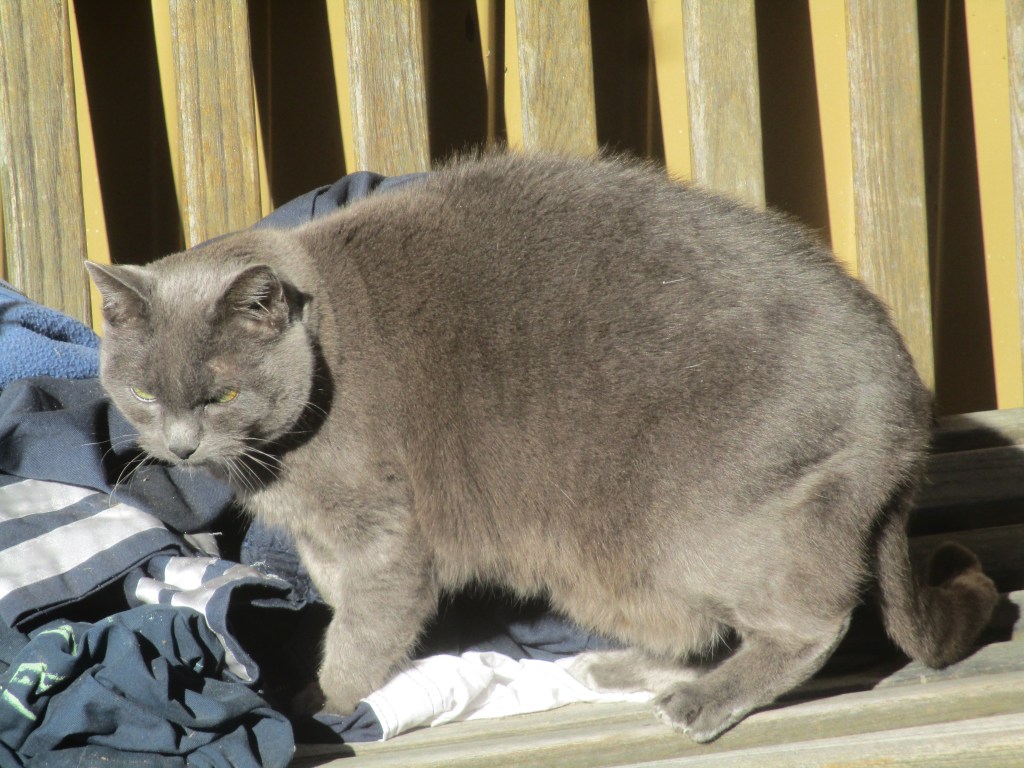
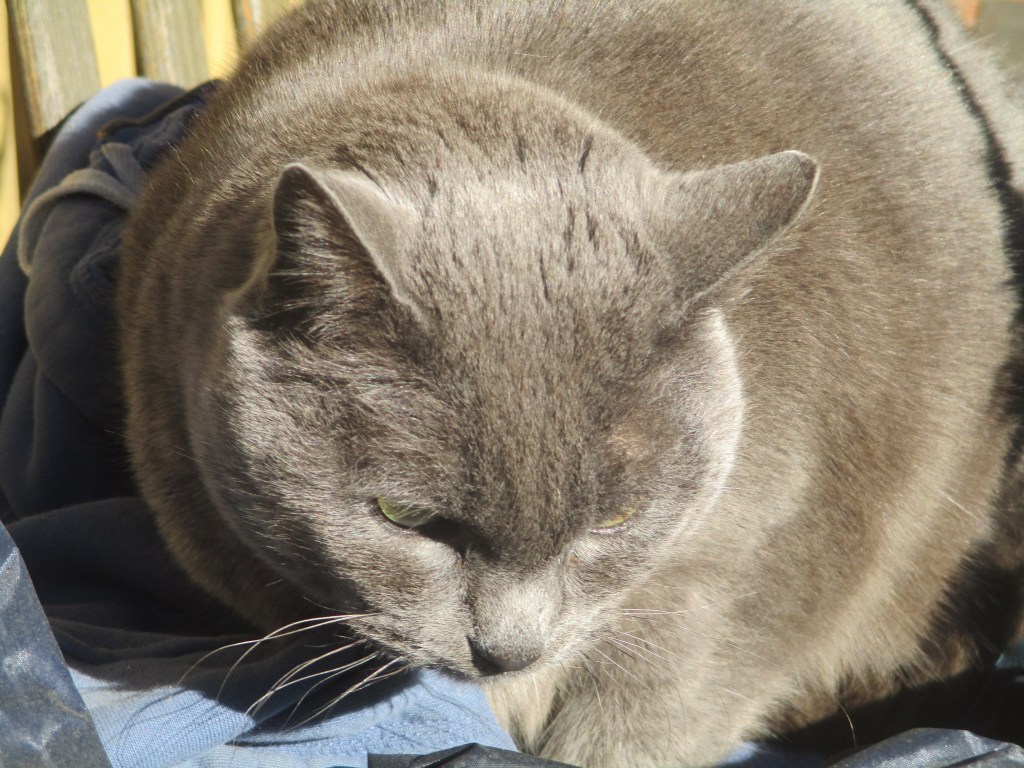
P00527-1 Rhody was not impressed, and he is an expert on fragrance.

Dracunculus vulgaris – dragon lily. It was featured in the gardening column for next week, both as an illustration for the main topic, and as the ‘highlight’ species. It is as unappealing as the name and the pictures suggest, but it sure is interesting. It has several more equally unappealing common names. We know it as ‘death arum’ because that is the first name we came up with.

Besides, it smells like death. Yes, it stinks. It does so to attract flies for pollination. Actually, it attracts quite a few annoying insects. I can not explain why, but insects who congregate around stinky flowers are as unappealing as the fragrance that draws them. They are certainly very different from the appealing bees and butterflies who pollinate flowers with appealing fragrance.

The first of these death arums mysteriously appeared in…

View original post 179 more words