Live Christmas Trees Eventually Grow Up

Small coniferous trees do not stay small for long.

One of the problems with driving my favorite vehicles that were old long before I learned to drive them is that I spend considerable time waiting for a bus or walking. The cool thing about that is that I get to seem so much scenery that I would otherwise drive past. While waiting nearly an hour for a bus at the Cavallero Bus Terminal in Scott’s Valley, I went across the street to see the landscape of the somewhat new Post Office, which has actually been there for many years now.

The landscape is a bit sparse in front (I think because of architectural modifications after the landscape was designed), so was outfitted with recycled live Christmas trees. Although none of these particular trees seem happy in the local climate or sandy soil, I had wanted to get better acquainted with them for some time. They are an odd assortment of spruce and fir that are rare here.

The more typical concern with the more common live Christmas trees is not that they are not well suited to local climates and soils, but that they actually do too well and grow much larger than expected. Except for the small rosemary, holly and English ivy ‘trees’, most coniferous evergreen live Christmas trees are young pines that get remarkably large; and some waste no time doing it! The most common live Christmas trees are Italian stone pines, which happen to be the two very large and broad trees in Blaney Plaza in downtown Saratoga!

Canary Island pines, which had been more common than they are now, do not get quite as broad, but do get very tall and messy. Years ago, Aleppo, Eldarica and Monterey pines all took their turns being popular live Christmas trees. Each of them grows large enough to require significant garden space.

This is of course not a problem for the few live Christmas trees that happen to get planted where they have plenty of space. However, those that get planted where they do not have room to grow can cause serious problems. Because they seem so cute and innocent while they are young, and are so often expected to stay cute and innocent, many often get planted dangerously close to houses, where they can displace porches, walkways and even foundations! Large pines, particularly Italian stone pines, are also too messy and potentially combustible (if not pruned and groomed regularly) to be too close to houses.

Sadly, large pines do not like to stay in containers too long. They can be pruned for a few years, but eventually get congested roots. (Bonsai techniques of root pruning can maintain even the largest types of pines in containers indefinitely, but not many of us know these techniques.) Small pines, like Austrian black, Japanese black and Scott’s pine (which has no relation to Scott’s Valley), as well as other small coniferous evergreens, like certain junipers, can stay in containers much longer, but these are the sort that are small enough to get planted in the garden, so do not necessarily need to stay in containers anyway.

If space is not sufficient, pines and other live Christmas trees that eventually get too large really should be given to friends and neighbors who have space to accommodate them. Fortunately, most do not require much attention once they get established after two years or so.

Horridculture – Tree Preservation Ordinances

Sadly, the tree that my former next door neighbor wanted to protect has since been damaged by a so-called ‘tree service’, and another on the fence line has been removed, . . . without a permit.

tonytomeo's avatarTony Tomeo

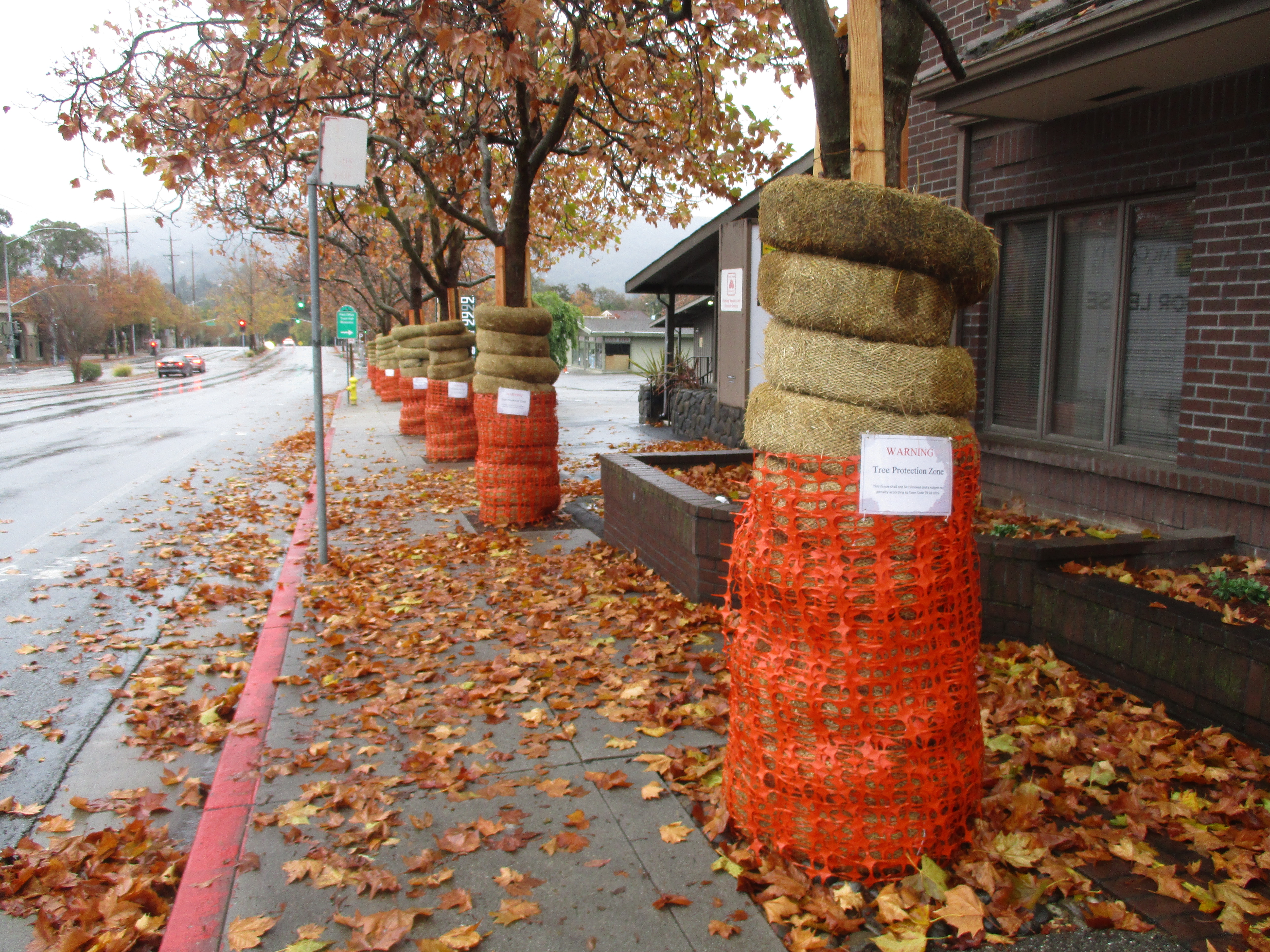
P00108 Padding should protect these London plane street trees from minor altercations with machinery that will be used to demolish the associated buildings and construct new buildings.
Much of my work involves inspection of trees to assess health, stability and structural integrity, and subsequent composition of associated arborist’s reports to document such assessments. These reports are necessary for the issuance of permits to remove mature trees within many municipalities. They are only effective for that purpose if they recommend and justify removal.

If there is nothing wrong with the health, stability or structural integrity of subject trees, removal might be justified for other reasons. For example, the removal of superfluous trees might be justified if it would promote healthier development of remaining trees. Trees that disperse roots that are beginning to damage adjacent infrastructure might likewise need to be removed.

It seems like it is too much to be concerned with…

View original post 176 more words

English Walnut

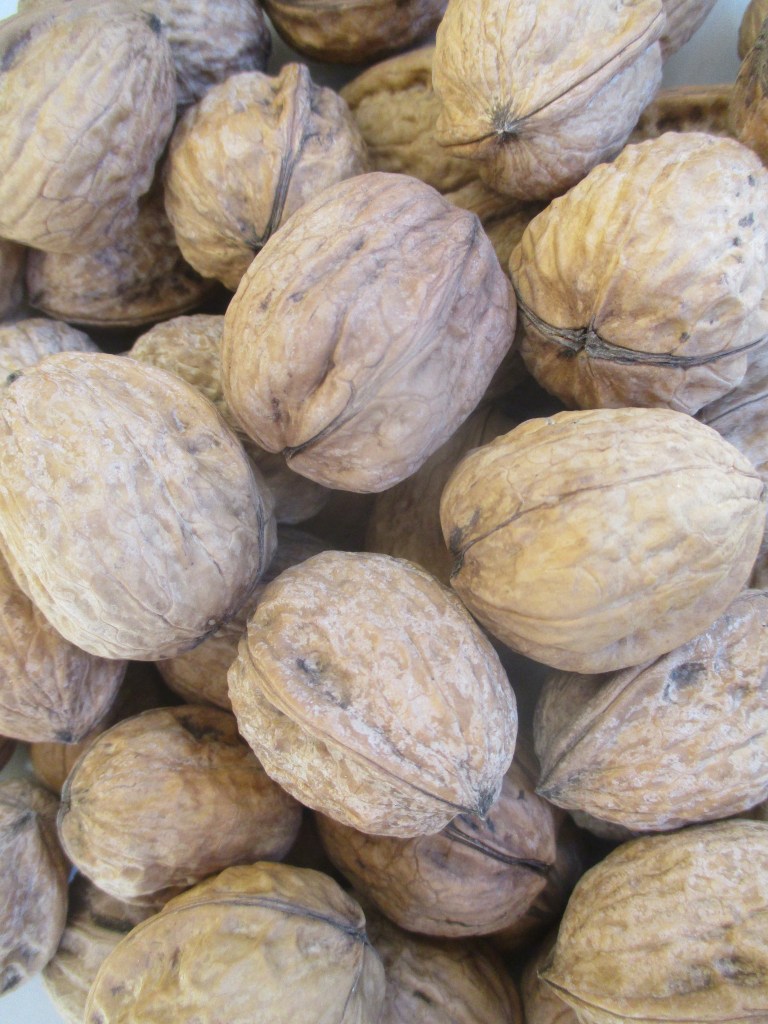
English walnuts are popular among squirrels.

It has been in cultivation for several thousands of years. Throughout that time, it escaped cultivation to naturalize in many regions between the Balkans and the Himalayas. It most likely originated from a much smaller natural range within Persia. An interesting certainty of its dubious original range is that English walnut, Juglans regia, is not actually English.

English walnut likely arrived at Spanish Missions of California prior to 1800. It became a major agricultural commodity of both the Sacramento Valley and the San Joaquin Valley. A few old trees survive within urban areas that were formerly orchards of the Santa Clara Valley. Newer trees are unfortunately rare within home gardens because they get messy.

English walnut trees rarely grow more than forty feet high and wide here. Their abundant foliar, floral and fruit debris is toxic to young plants though, and stains hardscapes. Each type of debris sheds during a different season. Squirrels might claim most or all nuts, but drop shredded hulls. The deciduous and pinnately compound leaves can be a foot long.

Bare-Root Stock Arrives For Winter

Bare roots might fail to impress.

Spring is overrated. It is obviously the best season for planting warm season vegetables and bedding plants. It is the most colorful season with more flowers in bloom. There is so much more to gardening though. Most plants prefer autumn planting. Some prefer winter planting. That is why this present bare-root season will be so relevant all through winter.

Dormancy is an advantage to stressful procedures such as planting. Spring bulbs prefer autumn or early winter planting while they are most dormant. For the same reason and to avoid late frost, summer bulbs prefer later winter planting. It should be no surprise that so many deciduous woody plants likewise prefer dormant planting during bare-root season.

Bare-root season is simply when bare-root stock becomes available for planting through winter. Unlike more familiar canned (potted) stock, bare-root stock lacks the medium that it grew in. Their roots are literally bare. Most bare-root stock awaits purchase at nurseries with its roots resting within damp sand. Roots of some are bagged within damp sawdust.

Bare-root stock is innately more practical than typical canned stock. It is significantly less expensive. It is much less cumbersome, and therefore easier to transport from nurseries. Planting is easier within much smaller planting holes. Formerly bare roots disperse new roots into their garden soils more efficiently than crowded formerly canned root systems.

Deciduous fruit trees and roses are the most popular of bare-root stock. Most of such fruit trees are stone fruits and pomme fruits. Stone fruits include almond, apricot, cherry, plum, prune, peach and nectarine, as well as their unusual hybrids. All stone fruits are species of the genus, Prunus. Pomme fruits include apple, pear, Asian pear and perhaps quince.

Fig, pomegranate and persimmon trees should also be available. So should grapevines, currants, gooseberries, blueberries and various cane berries. Strawberries, rhubarb and asparagus are perennials that are available bare-root. Except for almond, most nut trees, including English walnut, pecan, filbert or chestnut, may be available only by mail order. Most mail order catalogs are online now.

Rain Shadow

Hey, it is coincidentally raining as I schedule this to reblog.

tonytomeo's avatarTony Tomeo

P91222Hollywood is famous as the Cinema Capital of the World. Niles was its predecessor. Both are within regions of remarkably diverse scenery that is so important to cinema. Mountains, deserts, chaparrals, forests, lakes and big cities are conveniently nearby. There are not many places in the World with such a thorough mix of geography and climate. California really does have it all.
It is a challenge for gardening though. The stone fruits that grow so naturally in the Santa Clara Valley are not quite as productive just a few miles to the South in the Santa Cruz Mountains. The pears and apples that do so well in the Santa Cruz Mountains are not quite as happy in the Santa Clara Valley. Species that want a good chill in winter do not want to be in Los Angeles.

On the coastal side of the Santa Cruz Mountains, just outside of Felton…

View original post 150 more words

Growing Problem

It is even more of a problem three years later.

tonytomeo's avatarTony Tomeo

P91221KRecycling plant material is practical and gratifying. We do quite a bit of it here. Back in September, I briefly wrote about recycling laurustinus that was removed from an area that was about to be landscaped, and relocated to other sites where it can grow into functional informal hedges. We were able to use something that was a problem in one location as an asset somewhere else.
We will be doing more of this sort of recycling now that the rainy season has started. Right now, the plants that need to be removed are as dormant as they get, so do not mind getting dug as much as they would have while they were still active. Rain helps settle them in at their new locations. A few get canned and stocked into the nursery, to be planted into new landscapes later.

Some of what gets recycled was intentionally installed in…

View original post 254 more words

Six on Saturday: Sale

We do not spend much on plant material here. Actually, I purchase nothing. Removal of excessive vegetation is more of a priority than adding more. We purchased quite a bit of plant material this last week only because it was so very inexpensive from a supplier that is closing for business. All of it is new to our landscape. New Zealand tea tree is common locally, but was somehow never installed here. We got a single #15 specimen, although I did not add a picture of it here. We would prefer to install all of the new material early in the rainy season. By local standards, the weather is too cool to do so comfortably.

1. Frost happens here also. Fortunately, it is not too severe. This is the coolest spot in the region. Rhody should not mix randomly capitalized letters like this. ‘E’ should match ‘e’.

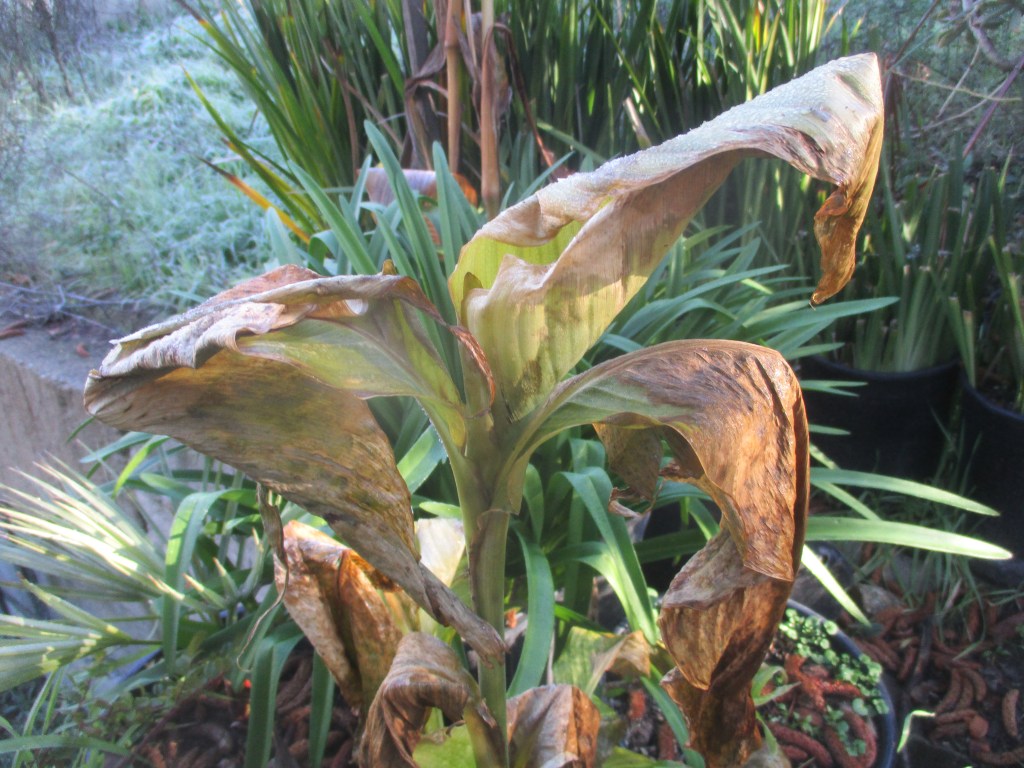
2. Canna ‘Red King Humbert’ melts when the weather gets this cool, even without frost. It is already trying to replace this foliage, so might melt again, but will be fine by spring.

3. Dicksonia antarctica, Tasmanian tree fern could perform better than the rather pekid Australian tree ferns in a cool and riparian landscape. We got only a single #5 specimen.

4. Physocarpus opulifolius, ninebark is the first that I have ever met! It is bronzed, but I do not remember its cultivar. It is too cool to go look now. We got twelve #15 specimens.

5. Pinus mugo, mugo pine looks like a smaller and greener version of mature specimens of dwarf white pine of last week. They eventually get bigger. We got thirty #5 specimens.

6. Picea abies ‘Nidiformis’, bird’s nest spruce will not be combined with mugo pine here. I was warned about their redundancy of form last week. We got forty-two #5 specimens!

This is the link for Six on Saturday, for anyone else who would like to participate: https://thepropagatorblog.wordpress.com/2017/09/18/six-on-saturday-a-participant-guide/

Mondo Grass

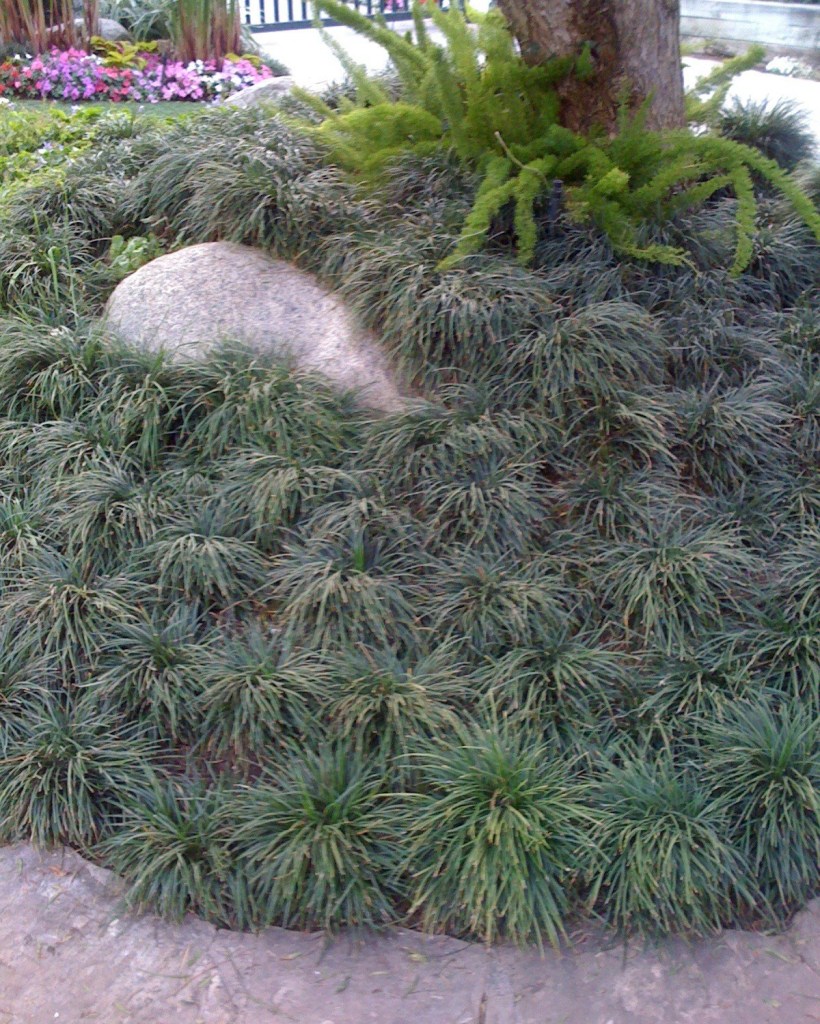
This simple green (unvariegated) mondo grass has been doing well.

The thick clumps of evergreen grass-like foliage of mondo grass, Ophiopogon japonicas, make a nice lumpy ground cover for small spaces. Because it is rather tolerant of shade, and actually prefers partial shade to full sun, it works nicely under Japanese maples or highly branched overgrown rhododendrons. It gets only about half a foot deep. Narrow stems with small pale purplish blue flowers that bloom in summer are not too abundant, and are generally obscured below the foliage, but can actually get taller. ‘Silver Mist’ is variegated with white.

New plants are easily produced by division of large clumps. Overgrown or tired looking clumps can be shorn down at the end of winter, before new growth begins. Slugs and snails can be problematic.

Arborists Are Physicians Of Trees

This specimen would be a challenge for an arborist.

(This article is recycled from a decade ago.)

Pasadena sustained the worst of the damage caused by the strongest Santa Ana Winds in three decades. Huge piles of debris from broken trees are much more than can be removed any time soon. Falling debris and trees damaged many roofs, cars and anything else that happened to get in the way.

Other towns and neighborhoods throughout the area, particularly those at the base of mountains, also sustained major damage. At the same time, severe winds ravaged the San Francisco and Monterey Bay Areas as well, particularly in the Santa Cruz Mountains and the hills of the East Bay.

Some of the damage caused by wind in urban areas might have been less disastrous if trees had gotten the respect and attention that they deserve. Some trees develop structural deficiencies that need to be corrected by pruning, either to eliminate the problems, or at least to decrease the strain exerted onto the structurally deficient parts. A few trees that become unstable as they mature may likewise need to be pruned or even removed.

It is not always possible to prune trees to remove all structural deficiencies without damaging the affected trees more, or causing more structural problems to develop. For example, major pruning to remove all parts that may get blown down by wind, such as pollarding or ‘topping’, may seem to be effective for the short term, but actually stimulates the development of vigorous secondary growth or watersprouts that are disproportionately heavy and even more likely to tear off from the older limbs.

Structural pruning more often involves thorough reduction of weight and wind resistance. Weight of foliage and stems directly applies leverage against unions where smaller stems are attached to the larger stems from which they originate. Wind resistance adds more leverage as foliage gets blown about by wind. Thinning obviously removes significant weight, and also decreases wind resistance to allow wind to blow though the affected canopies.

Besides helping to compensate for structural deficiency, structural pruning is also beneficial to potentially unstable trees for the same reasons. However, unstable trees typically need even more reduction of weight and wind resistance. Some of the most unstable trees and those that are deteriorating need to be removed because their instability cannot be accommodated.

During winter, while deciduous trees are bare, evergreen trees are more susceptible to wind damage, obviously because they retain their weight and wind resistance through winter while the weather is the most severe. Unstable trees become even more destabilized as rain softens the soil. Regardless of the potential for susceptibility to wind damage, this would be a good time of year to get any needed tree maintenance done, prior to any more windy and rainy winter weather.

Arborists certified by the International Society of Arboriculture are the most qualified to identify potential structural problems or instability, and to prescribe corrective procedures. A list of certified arborists can be found at the website of the International Society of Arboriculture at http://www.isaarbor.com.

Horridculture – That Blows!

Well, of all the infuriating ‘Horridculture’ posts, this is one of the silliest.

tonytomeo's avatarTony Tomeo

P91218-1Blowers put the ‘blow’ in ‘mow, blow and go’. They really blow! The only power tool used by so-called ‘gardeners’ that is more detestable to the rest of us is the power hedge shears, and that claim is contestable. Some consider blowers to be worse because they are so obnoxiously noisy, and generate so much dust. Some municipalities have outlawed the use of the noisiest sorts.

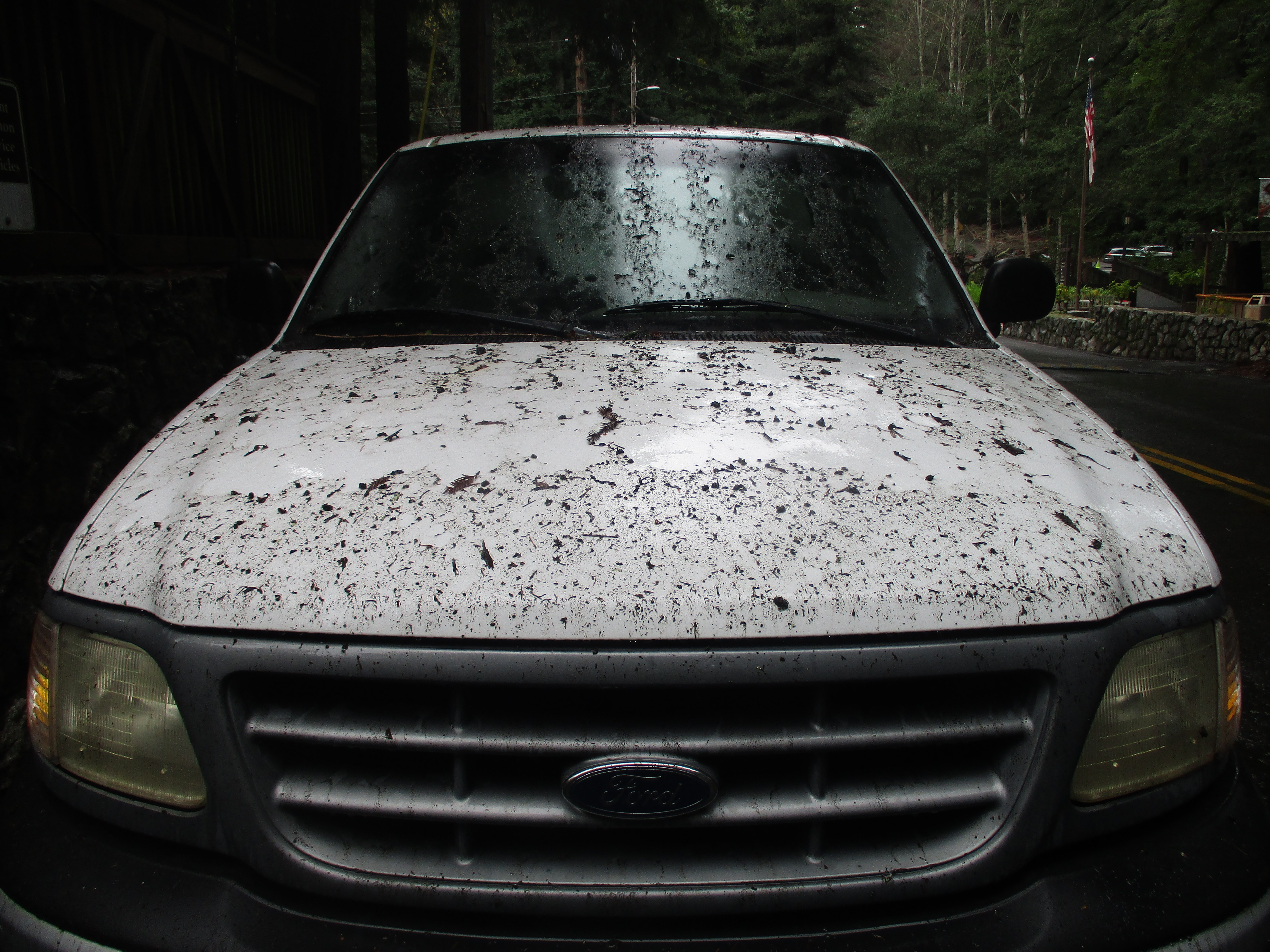
The mess on the hood and windshield in the picture above was not actually caused by blowers. The picture below shows the bridge that was power washed above. Oops. I should have been suspicious that no one wanted that parking space. Anyway, this picture was just too funny to not share; . . . and I happen to lack pictures of the sorts of dusty messes that blowers can stir up.

Where I lived in town, the so-called ‘gardeners’ who ‘maintained’ the apartment buildings…

View original post 266 more words