The seed is not really bad. At least I do not think that it is. It is merely misunderstood. Perhaps it would be more accurate to say that it is simply unidentified. I really do not know what it is. I do not say that very often, especially about seed that I bother to collect to sow elsewhere. I believe that it is of American bellflower, Campanula americana. If not, it is very closely related.
It appeared in part of one of the landscapes at work. Because it looked like some sort of campanula, we left it to see what it would do. It got quite tall, but never started to look like something we did not want to take a chance on. We were rewarded for taking the risk when it bloomed with these elegant spikes of small sky blue flowers. That was a little more than a…
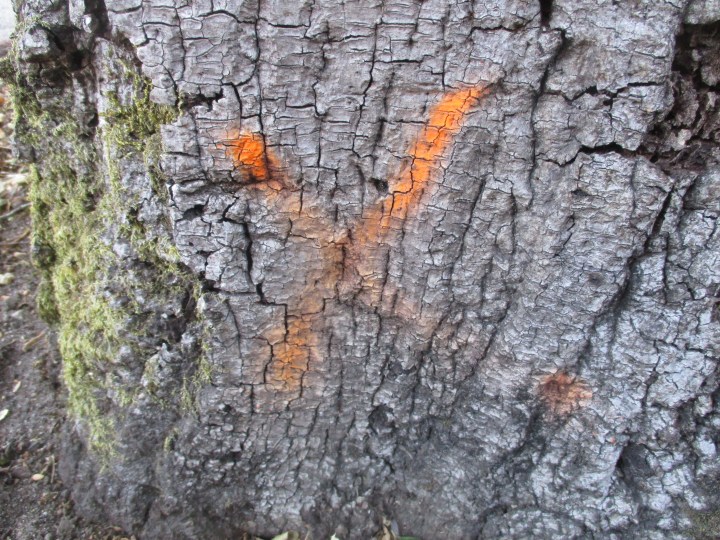
The arborists for whom I worked generally tagged only trees that needed to be removed. They did not want to apply pain to trees that would remain within their respective landscapes. Other inspecting arborists who work for various utility establishments generally tag trees with single dots of particular colors that indicated the need for particular procedures, or to indicate which utility cable is most relevant to the need for such procedures. Such dots are not too obtrusive for trees that needed pruning for clearance of utility cables, but would remain within their respective landscape.
Horticulture is not all about growing things. If everyone was out planting trees, the World would eventually be overwhelmed with forest. It is sometimes necessary to cut trees down. There are several at work that we have been wanting to cut down for quite a while. Some are structurally deficient enough to eventually become hazardous, which is unacceptable in public spaces.
Even here among some of the oldest trees in the World, nothing last forever. Coast live oak, like that in the picture above, has potential to survive for centuries, but eventually succumbs to decay and disease. If fact, this particular specimen is doing it right now. If not cut down soon, it will eventually fall onto an adjacent building and a parking lot below. Its days are numbered.
Literally, it will be cut down on Monday morning, along with a few other coast live oaks and bay laurels in…
Bananas are getting to be a bit too abundant here nowadays. I certainly do not mind. All will go to good homes after winter. Coincidentally, to obtain one copy of ‘Golden African’ banana, I was about to violate my rule against purchasing any plants, when four pups of an unidentified banana became available. Because I expect fruit to be of inferior quality, I am not at all discriminating about cultivar. I can try ‘Golden African’ later if these four pups are somehow unsatisfactory. The smaller fruitless bananas that are producing pups were already here. So were the cannas, which are incidentally related to bananas. Ginger should have been included. Two species live here. (Links for 1, 2 and 3 are the same.)
1. Canna musifolia, which is one of three that grew from runty seed, produces this oddly striated foliage. It was too small in August to show with other foliage on Six on Saturday.
2. Canna musifolia, with scrawny pastel orange bloom and bronzed foliage, produces an abundance of seed, including one that grew into the seedling with striated green foliage.
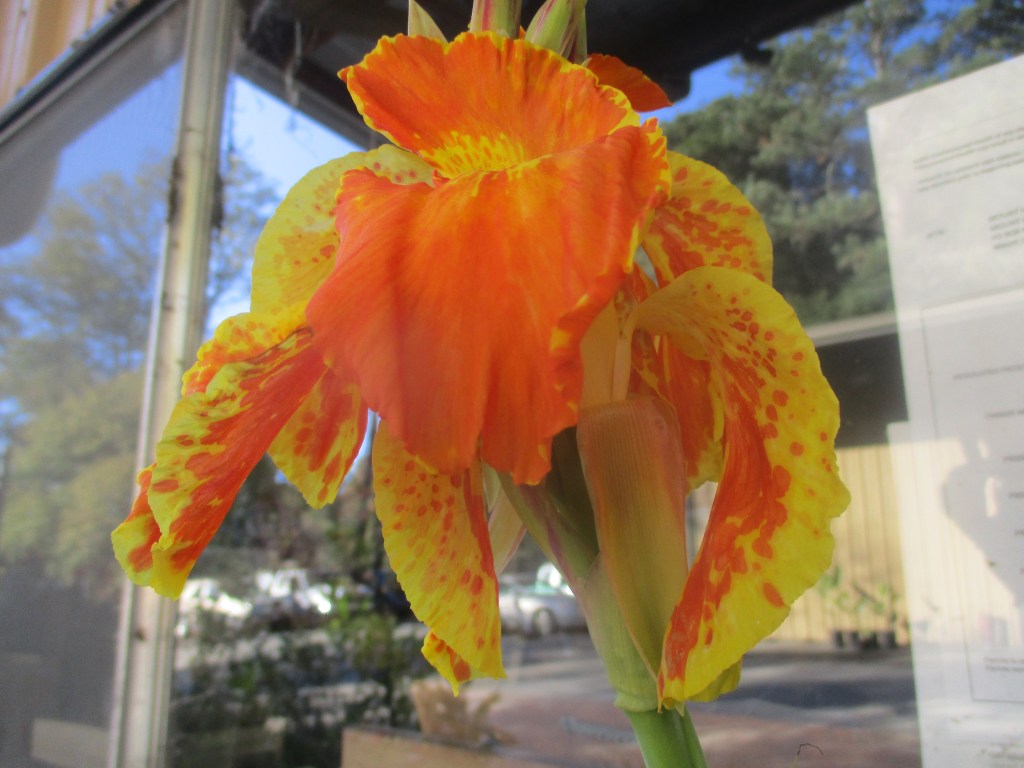
3. Canna flaccida is not really Canna flaccida as I had hoped. Otherwise, it would be too genetically stable for this defiant specimen to add orange to its exclusively yellow bloom.
4. Musa basjoo may not be Musa basjoo either. Its identity is merely a guess. Of the two that stayed here, this one had three pups, shed one, but continues to fatten up these two.
5. Musa basjoo that initially lacked pups is more than compensating for the other’s loss, by producing two more pups. We could get six of these technically unidentified bananas!
6. Musa acuminata pups of unidentified cultivar arrived only recently. The smallest pup in front lacks rhizome, so is unlikely to survive. The other four are large and exemplary!
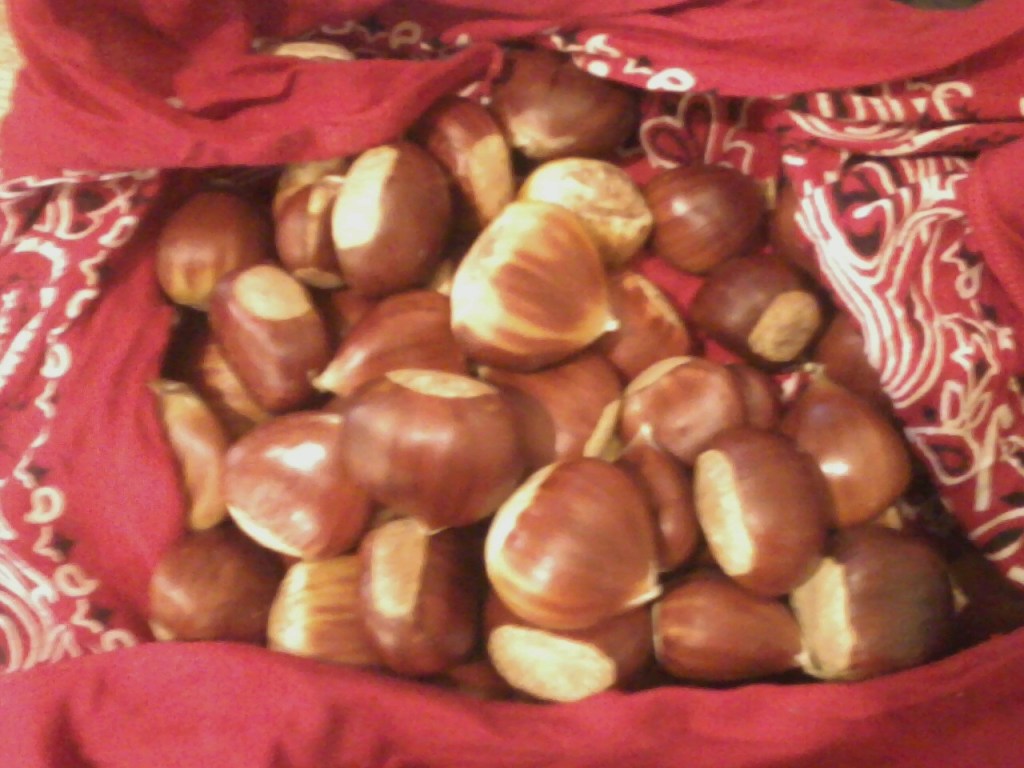
These chestnuts that may later be ‘roasting on an open fire’ are now falling from the trees that produced them over summer.
Of all the nut trees that are actually quite easy to grow, the chestnut, Castanea (various specie and hybrids), has somehow become the most obscure. It probably lost popularity while native forests in eastern North America were being annihilated by rampant disease (which never became such a threat in the west), but may be unpopular simply because it can get so big. Mature trees are regularly more than seventy feet tall and nearly as broad.
Chestnut trees are productive for those who like the nuts, but simply very messy for those who do not. The smooth meaty nuts are contained within offensively spiny husks known as ‘burrs’. A few varieties of chestnuts fall freely from the burrs. Most need to be separated from their burrs even after they fall to the ground. The evenly serrate leaves will soon be turning amber gold or brown for autumn.
The class of 1985 epitomized the ‘Decade of Decadence’ with the raddest of styles in the wildest of colors. My generation is perhaps more familiar than any other with the pursuit of senseless fads and trends. Now that it is about a quarter of a century later, many of us continue such indulgences in our gardens.
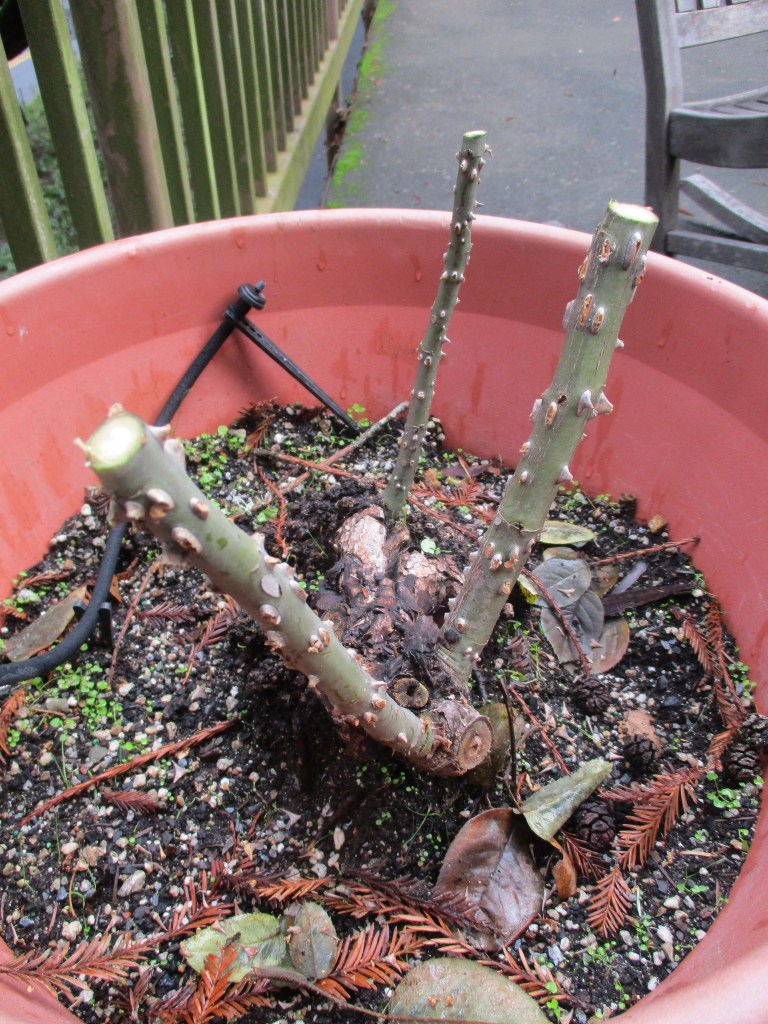
Container gardening has become a fad that, despite its practicality for all sorts of applications, has become so common that it actually makes gardening more work than it should be. Modern homes are built with expansive porches and walkways that are designed to accommodate large urns and other planters, instead of more modest and proportionate porches and walkways that leave more space for planting things in the ground around them. Runoff from the planters stains pavement and rots decking. Besides, all the clutter of planters looks like a garage sale.
For balconies, roof gardens or wherever exposed soil is otherwise unavailable, container gardening may be the only option. Containers also help with plants that need to be moved to sheltered spots during frost. However, few plants are as happy in containers as they would be in the ground. Contrary to popular belief, it is better to amend inferior soil in the ground than to grow plants in potting soil within pots.
Where pots or other containers are necessary, they should either be shaded, or otherwise insulated from the heat of the sun. The black vinyl cans that plants arrive from the nursery in are not only unappealing, but can get warm enough in the sun to roast roots. Yet, they are both obscured and shaded simply by getting placed within slightly larger urns or planters.
Other thin plastic pots can transfer heat like black vinyl, but tend to be cooler because they are most often lighter colors that absorb less heat from sunlight. Thicker materials, such as terracotta, are better insulated. Roots prefer the porosity of unglazed pots, although some glazed pots can stay cooler. Plants within containers are often able to provide their own shade by cascading out over the edges, or spreading out above.
Yet, more substantial plants that provide more substantial shade still need to be complaisant to confinement. Plants that need to disperse their roots will never be comfortable in containers. Neither will plants that are not conducive to pruning, but want to grow into large shrubs or trees.
Contrarily though, some plants that get relocated from dry situations do appreciate thorough soaking prior to installation into their new situation, or at least very thorough soaking once in the ground.
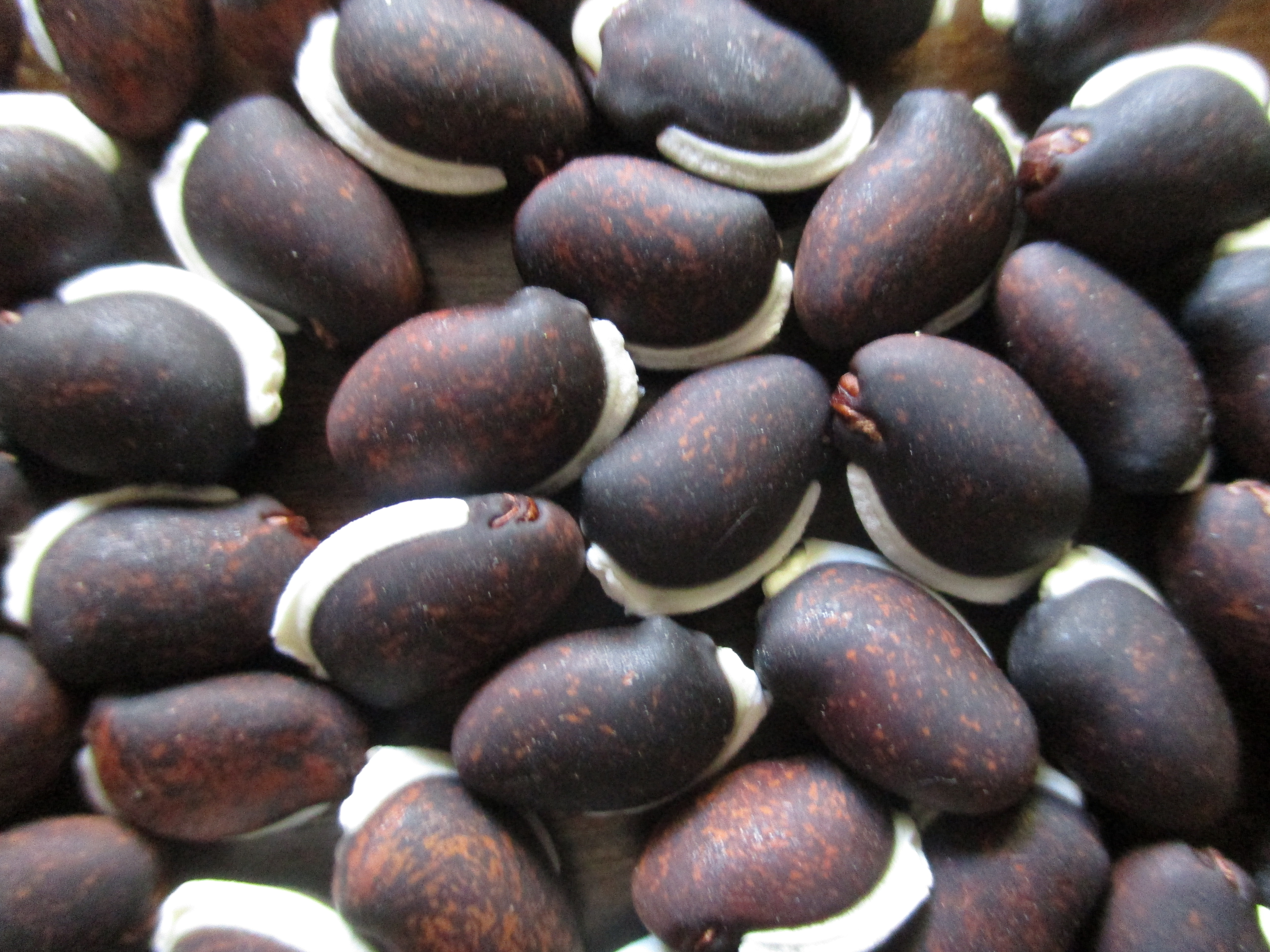
Hooey! It’s a bunch of hooey! Sweet pea seed that gets sown this time of year for next spring does NOT need to be soaked before sowing. In fact, unless there is some strange species of plant that has become that dependent on human intervention, NO seed need to be soaked prior to sowing. Not only is the technique completely unnecessary, but it is completely unnatural as well.
Think of it. In the wild, plants grow, bloom and produce seed. This seed does what it can to disperse and get into or onto the soil to germinate and grow into new plants to repeat the process. Some seed appeal to squirrels for burial. Some prefer to be partly digested by animals who eat their tasty fruit. Heck, some are reluctant to germinate until heated by a cleansing forest fire.
Plants employ quite a range of techniques to disperse their seed…
This might be the most spectacular and most reliable of autumn foliage available locally. Sweetgum, Liquidambar styraciflua, begins to develop a brilliant blend of yellow, orange and red in response to the earliest mild chill of autumn. It defoliates slowly to retain much of its colorful foliage through the earliest rain and wind of winter, and perhaps even later.
Sweetgum leaves are palmate, and about four inches wide, with five pointed lobes. One very rare cultivar has hierarchically lobed leaves, with lobes on lobes. Another has blunt lobes. Some cultivars as well as individual trees favor particular foliar colors for autumn. ‘Burgundy’ exhibits more dark red color than typical, and retains foliage later than typical.
Mature trees can grow fifty feet tall, but are not very broad. They can get taller and lankier to compete with other tall trees. Their upright form conforms to grove arrangement within large landscapes and parks. Unfortunately, their aggressive roots can displace concrete. Their branches can be structurally deficient. Their spiky and hard fruit can be obnoxious.
Colorful foliage is always present. After all, green is a color, even without any other color or variegation. Defoliation of deciduous foliage during autumn reveals evergreen foliage beyond, even if fading through winter. Immediately prior to defoliation though, deciduous foliage of quite a few species temporarily becomes spectacularly colorful autumn foliage.
Whether deciduous or evergreen, foliage that is most colorful during spring and summer contains chlorophyll. Regardless of how variegated, reddish, purplish, yellowish or other color it might be, it is also green to some degree. It could not be photosynthetically active otherwise. Colorful autumn foliage exhibits brighter color as its chlorophyll decomposes.
Autumn foliage is most spectacular where it is native, such as New England. Much more of it inhabits forests than home gardens. It is not spectacular within forests here because only a few sparsely dispersed native species produce impressive foliar color for autumn. Its naturally local scarcity likely contributes to its limited popularity within home gardens.
Locally mild weather also limits the popularity as well as the potential of autumn foliage. Many of the most colorful maples of New England merely turn blandly pallid yellow prior to hastily premature defoliation here. However, several other species develop exemplary foliar color in response to minor chill, and seem to be as happy here as in New England.
Chinese pistache, sweetgum, flowering pear and ginkgo are four trees that most reliably provide autumn foliage here. Crape myrtle is a smaller tree that is almost as reliable, and blooms splendidly for summer. Persimmon gets as colorful as Chinese pistache, with an abundance of fruit. Boston ivy is a vine with color that is comparable to that of sweetgum.
Of course, even the most appealing of plants are not perfect. Their innate characteristics are relevant to selection. For examples, trees occupy significant space. Ginkgo becomes bright yellow, but without any other color. Sweetgum produces obnoxiously prickly fruits. Flowering pear is susceptible to fireblight. Boston ivy clings to surfaces and ruins siding, paint and fences.
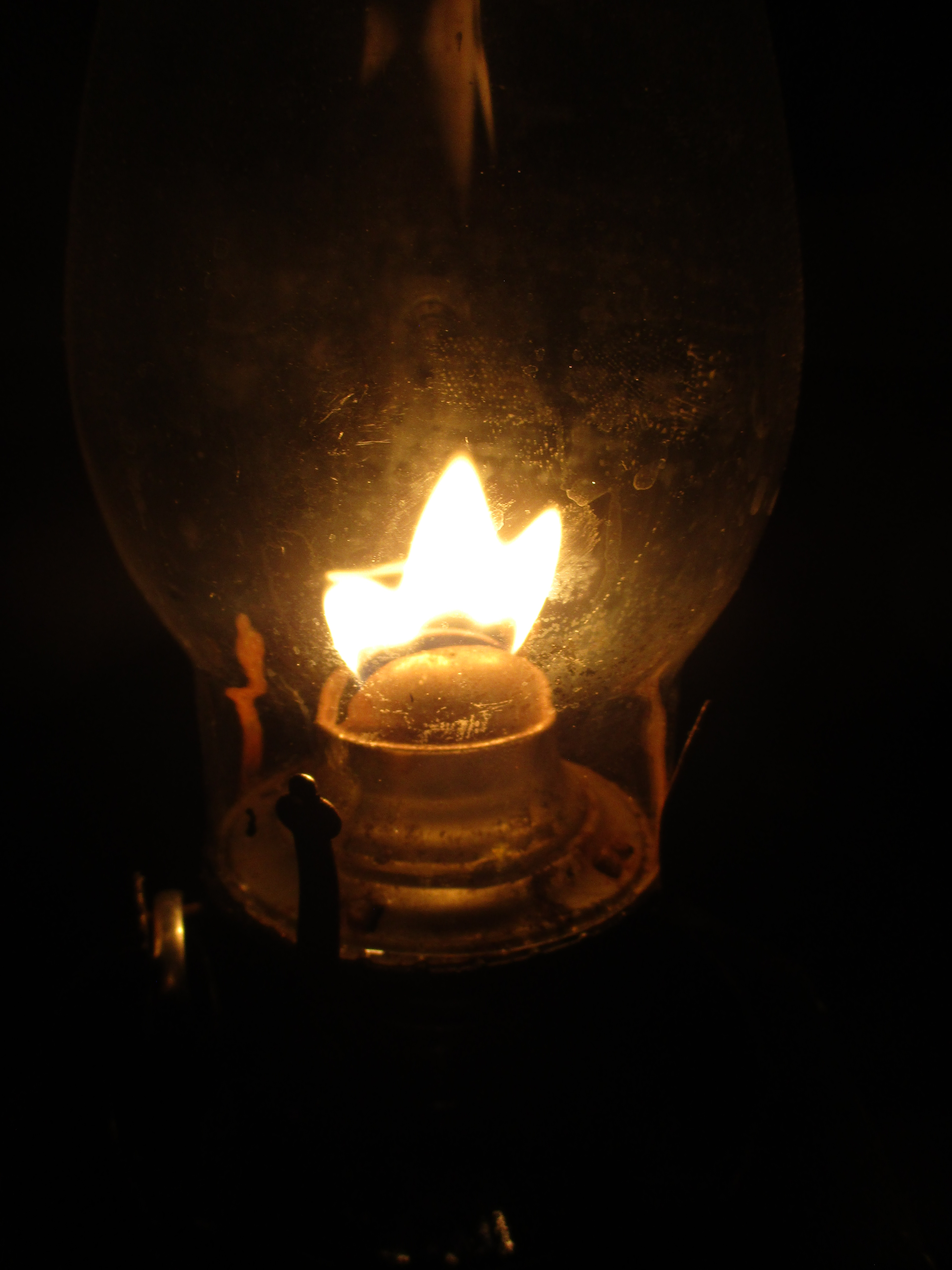
The electricity is still on here at 8:20 p.m.. I just turned the lights off to get the cool picture above. The outages in this region were scheduled to begin twenty minutes ago, so the electricity could be disconnected here at any moment. I may not finish writing and scheduling this to post later at midnight before that happens. So, if you are not reading this presently, you know why.
Before you waste another second thinking about that, I will tell you now that it makes no sense.
Scheduled electrical outages are now one of the consequences of living in this excellent place. We live with trees. Some of these trees are the biggest in the World. Some are very combustible. Regardless of the diligence of those who prune trees to maintain clearance from utility cables, big trees are likely to drop limbs onto cables, causing sparks that can ignite…
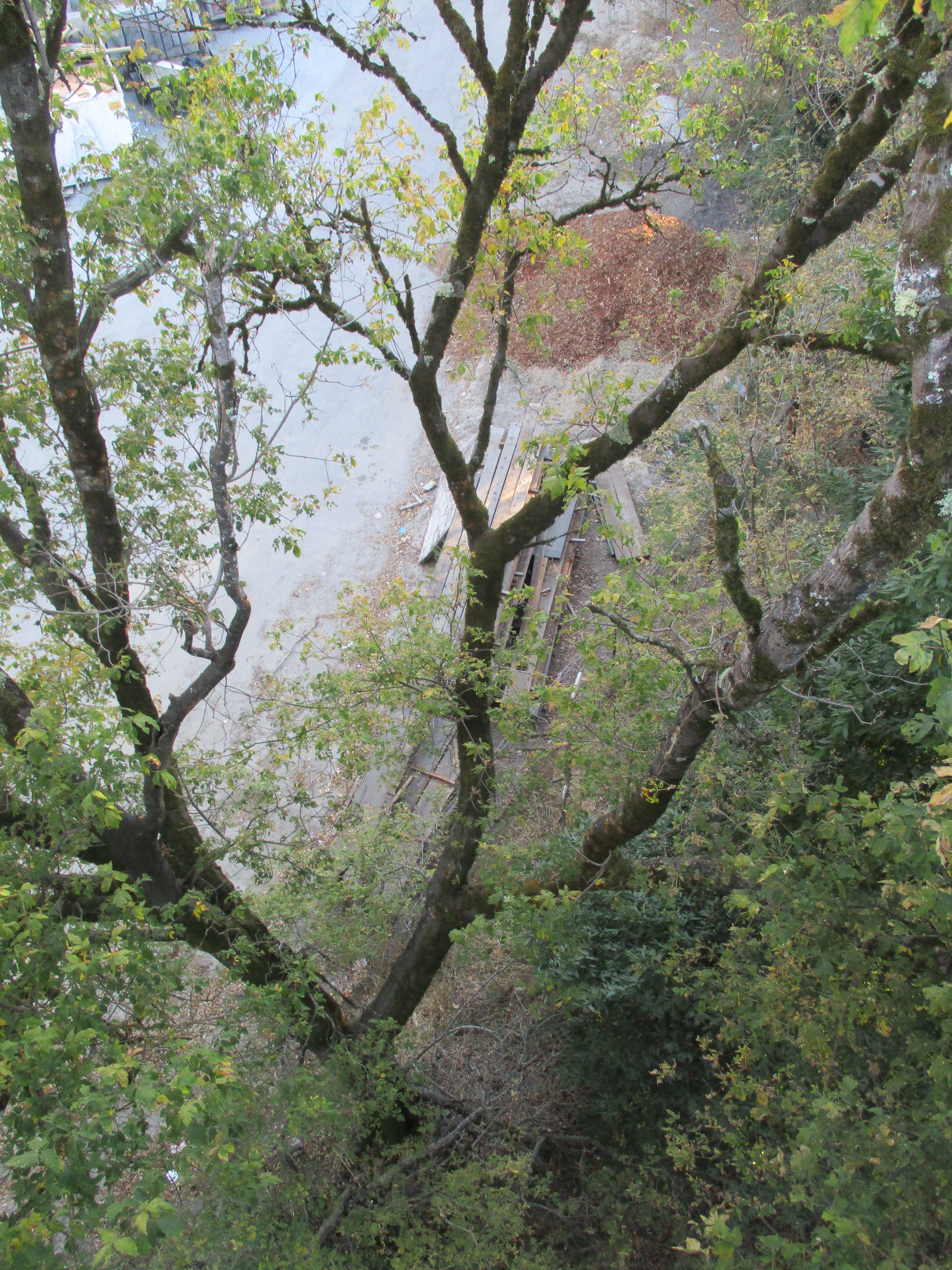
Arborists see trees very differently from how most of us see them. They know their trees very intimately, and by botanical name. Arborists know how big particular trees get, both tall and wide, and if they are likely to develop structural deficiency or aggressive roots. They can tell us which are deciduous, which are evergreen, and which are messy with foliage, bloom or fruit.
Some arborists are happy to divulge a bit of history of some trees, whether exotic or native. They might tell us where the exotic trees came from, and why they were imported. Some trees were brought for timber. Some were brought for fuel. Some were imported just because they were pretty. Some naturalized, and now impose on the natural ecosystem. Natives try to adapt.
Since they know the innate characteristics of trees, arborists know what their cultural preferences are. They know that some are understory trees…

 The seed is not really bad. At least I do not think that it is. It is merely misunderstood. Perhaps it would be more accurate to say that it is simply unidentified. I really do not know what it is. I do not say that very often, especially about seed that I bother to collect to sow elsewhere. I believe that it is of American bellflower, Campanula americana. If not, it is very closely related.
 Horticulture is not all about growing things. If everyone was out planting trees, the World would eventually be overwhelmed with forest. It is sometimes necessary to cut trees down. There are several at work that we have been wanting to cut down for quite a while. Some are structurally deficient enough to eventually become hazardous, which is unacceptable in public spaces.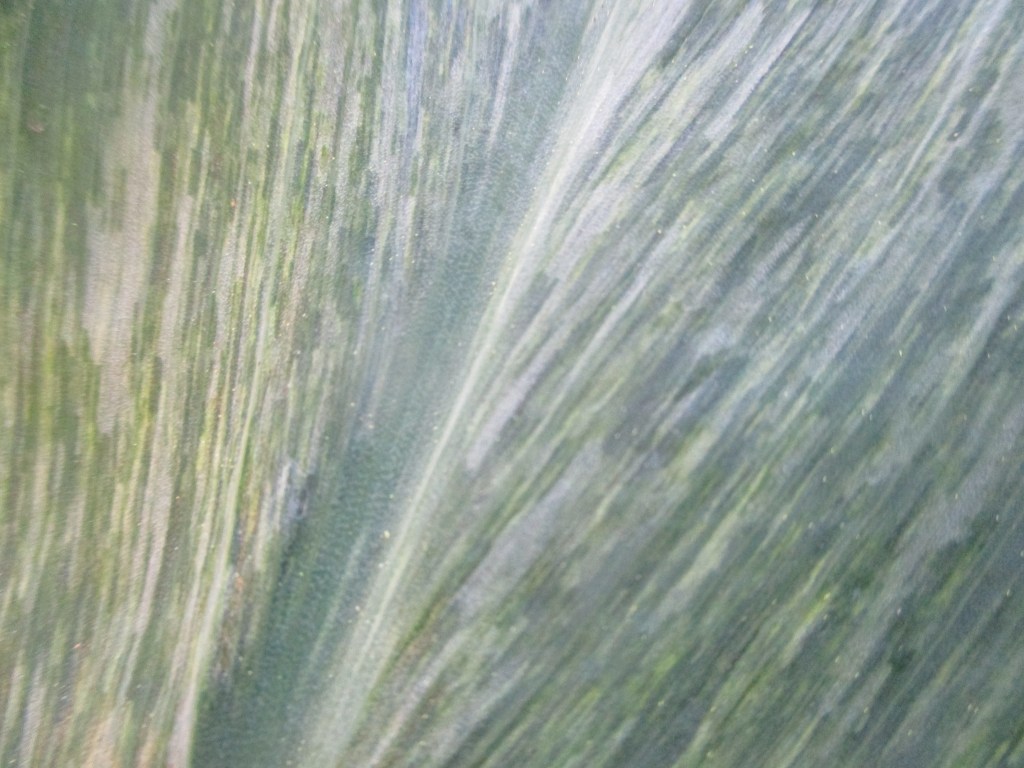



 Hooey! It’s a bunch of hooey! Sweet pea seed that gets sown this time of year for next spring does NOT need to be soaked before sowing. In fact, unless there is some strange species of plant that has become that dependent on human intervention, NO seed need to be soaked prior to sowing. Not only is the technique completely unnecessary, but it is completely unnatural as well.

 The electricity is still on here at 8:20 p.m.. I just turned the lights off to get the cool picture above. The
  Arborists see trees very differently from how most of us see them. They know their trees very intimately, and by botanical name. Arborists know how big particular trees get, both tall and wide, and if they are likely to develop structural deficiency or aggressive roots. They can tell us which are deciduous, which are evergreen, and which are messy with foliage, bloom or fruit.
 Tony Tomeo