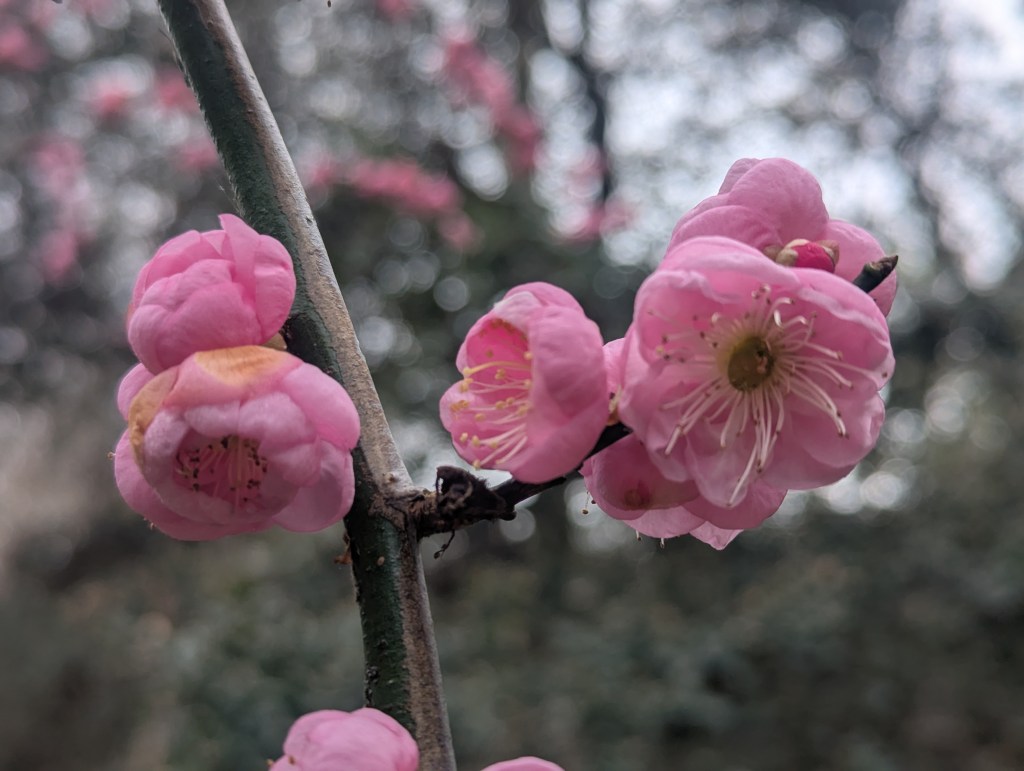
Sunday Best – Flowering Apricot
This is why hummingbirds do not need to leave for the winter here. By the time autumn flowers finish blooming, a few sustaining winter flowers begin their bloom.
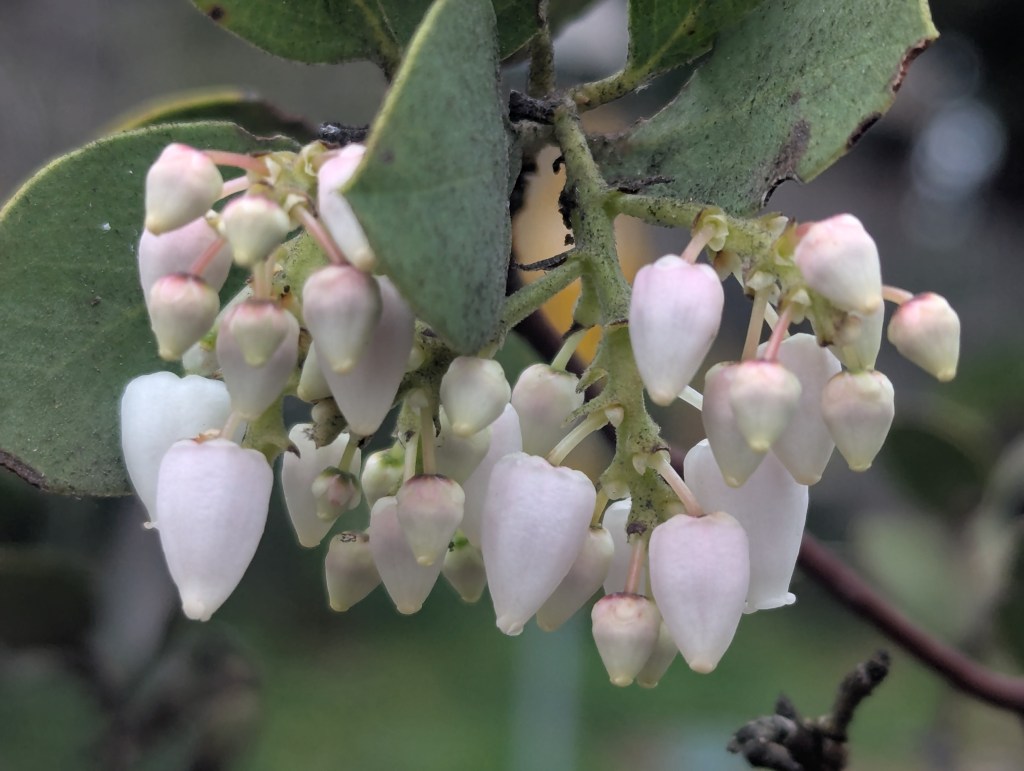
1. Arctostaphylos densiflora ‘Howard McMinn’ manzanita is the common cultivar of an uncommon species from Sonoma County to the North. It continues to bloom until April.
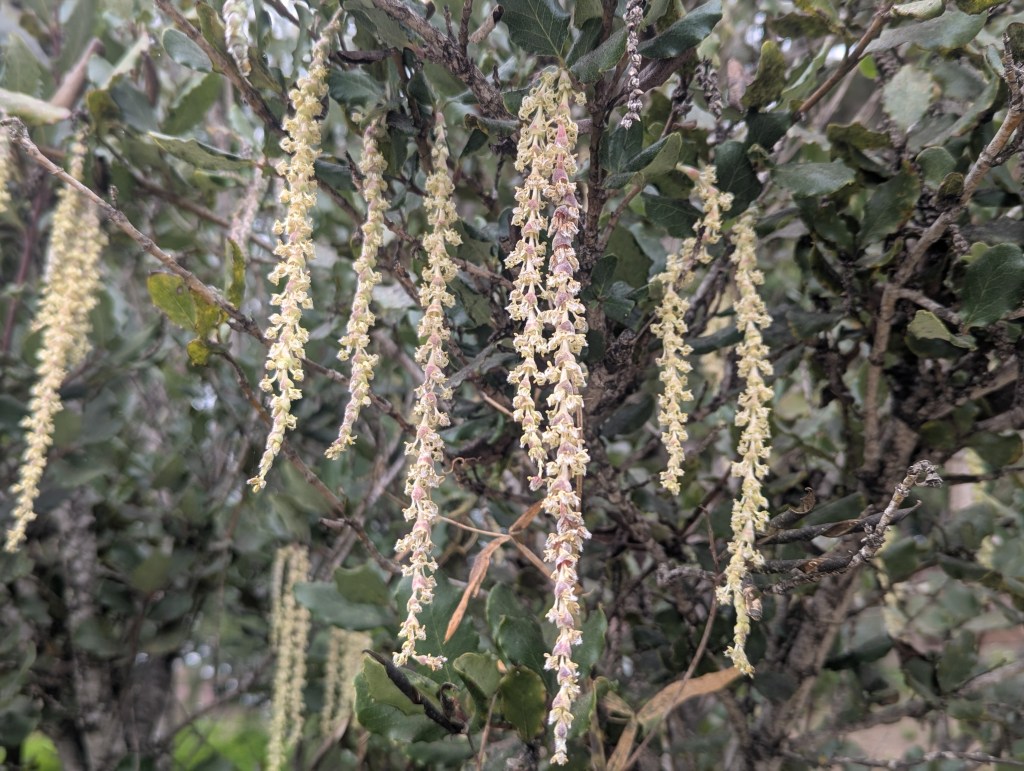
2. Garrya elliptica, silk tassel is native. This particular specimen and a few others in the landscapes were installed, though. They are surprisingly messy to work with and prune.
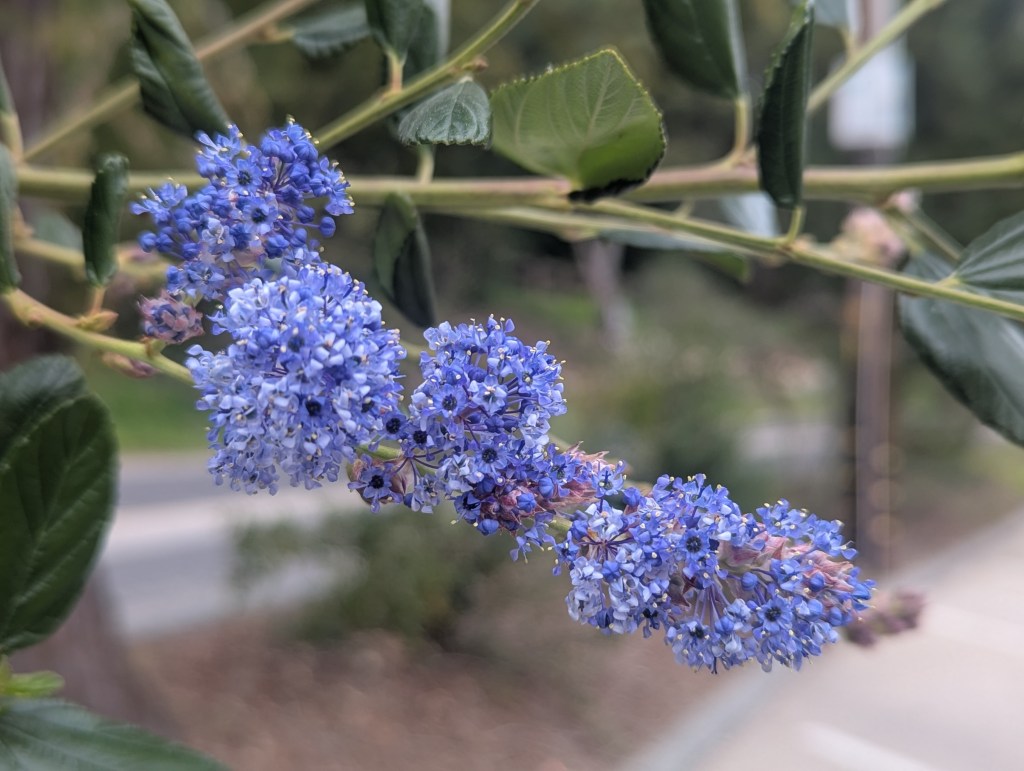
3. Ceanothus thyrsiflorus, California lilac is also native. I suspect that those that inhabit the landscapes were also installed. Their spacing is not haphazard enough to be natural.
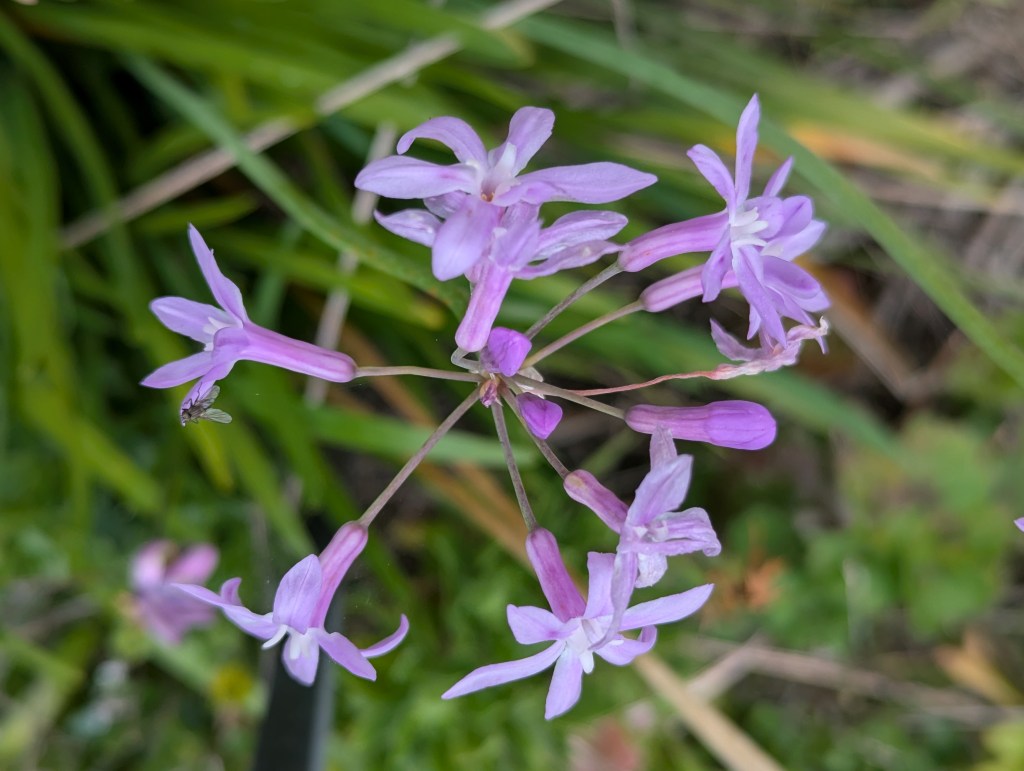
4. Tulbaghia violacea, society garlic is at its best for winter, not because it blooms more, but because it does not smell as objectionable as it will during warmer summer weather.
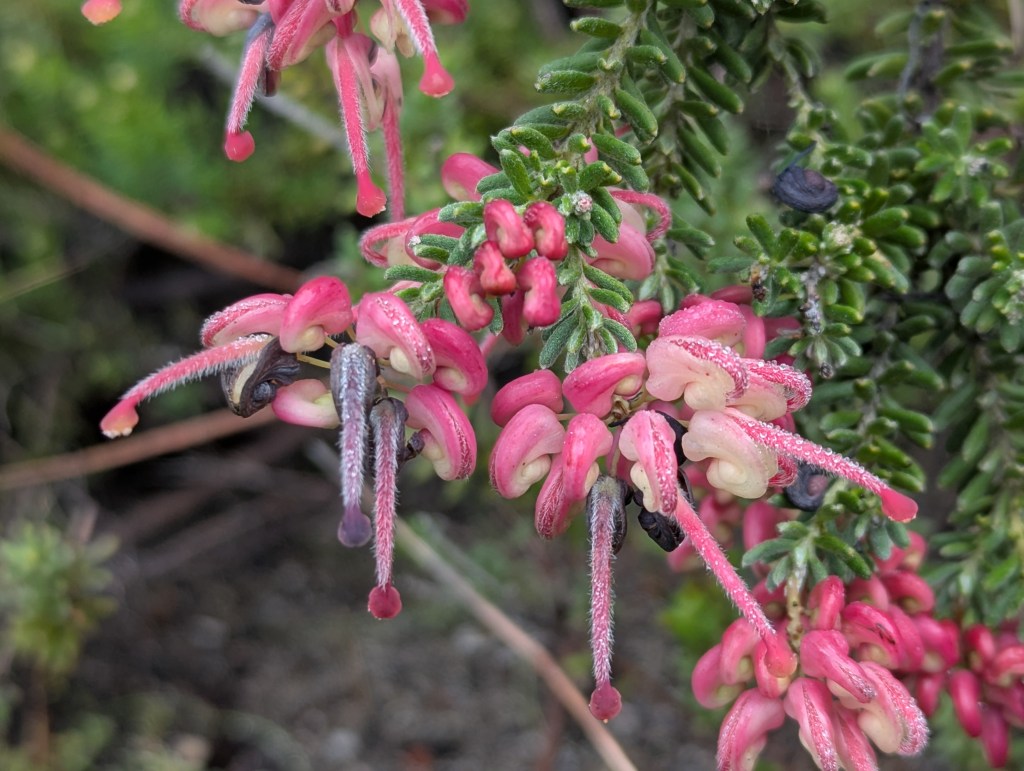
5. Grevillea spp. lost its identity. It seems to bloom continually. I can not remember ever seeing it without at least some bloom. Hummingbirds are very fond of it, especially now.
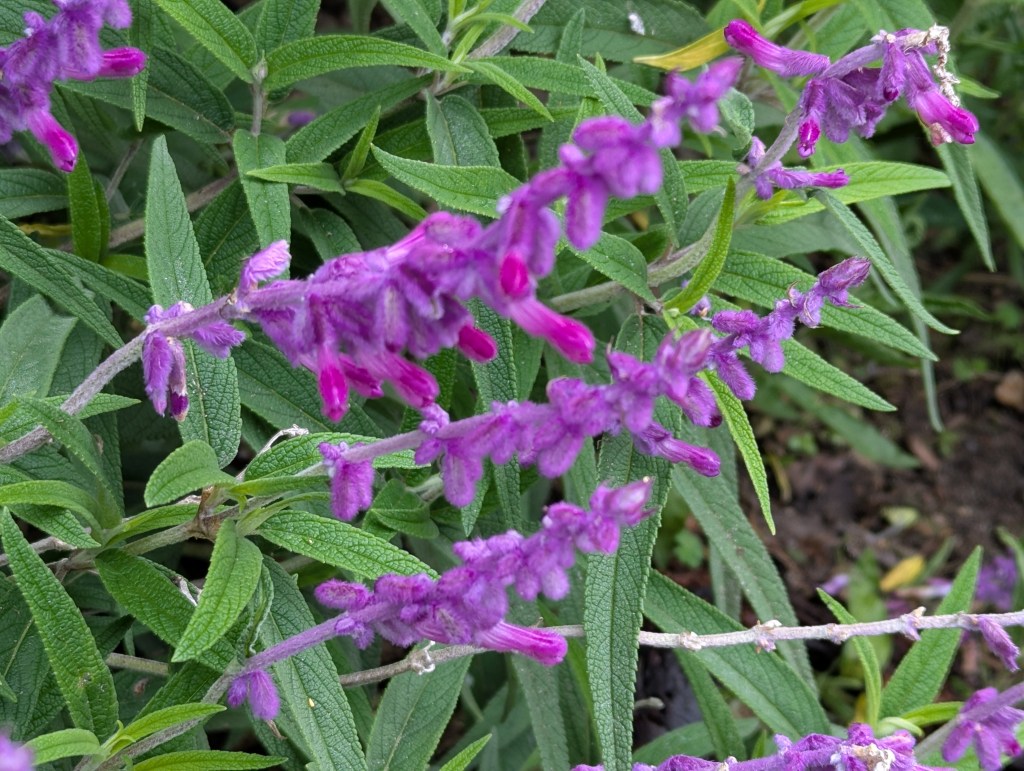
6. Salvia leucantha, Mexican blue sage bloom is fuzzy, but not quite as fuzzy as it seems to be in this unfocused picture. The camera was more interested in the foliage behind it.
This is the link for Six on Saturday, for anyone else who would like to participate: https://thepropagatorblog.wordpress.com/2017/09/18/six-on-saturday-a-participant-guide/
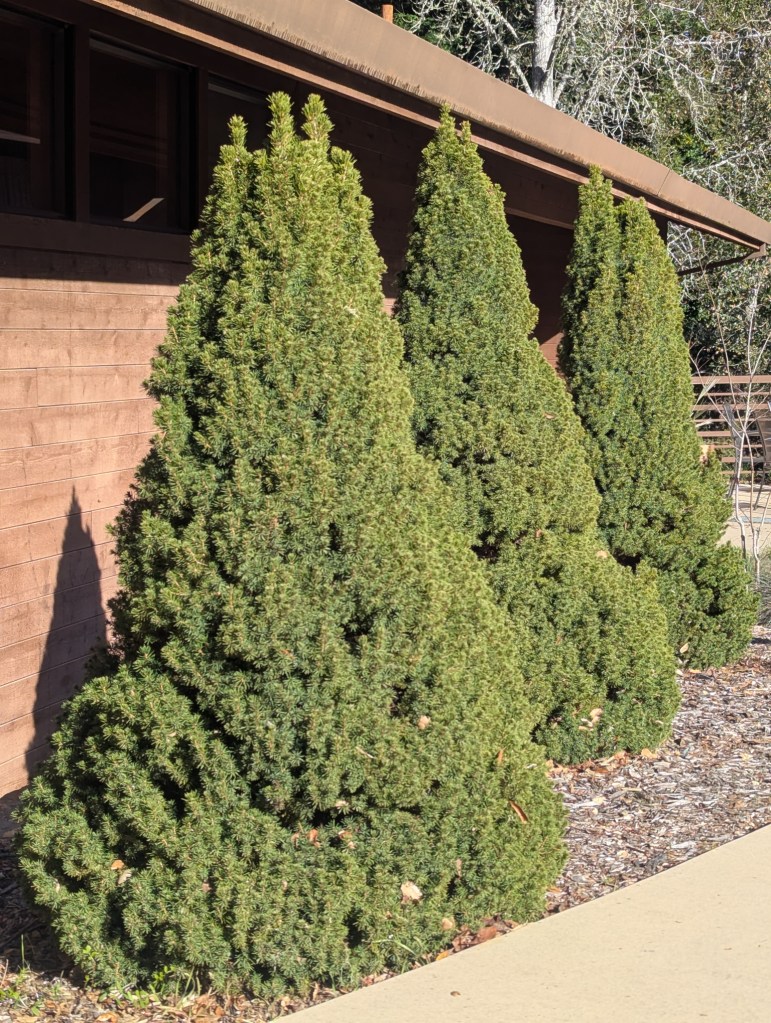
It is a diminutive tree with a big name. Picea glauca var. albertiana ‘Conica’ is commonly known as dwarf Alberta spruce. It is a type of white spruce that grows more as shrubbery than as a tree. After many years, it may be only eight feet tall and four feet wide with strict conical form. Because of its form and tame growth, it is practical as a live Christmas tree.
Potted specimens may remain potted for several years. They maintain their conical form quite naturally without shearing or pruning. Their finely textured needles are only slightly bristly. Their primary disadvantage as a Christmas tree is their foliar density. They do not extend lateral stems for Christmas ornaments to dangle from. Their foliar aroma is slight.
Dwarf Alberta spruce is splendid for formal landscapes. Alternatively, it can instill a bit of formality or symmetry into otherwise relaxed landscapes. Although it does not grow very wide, it should have room to grow. Pruning or shearing for containment compromises its strictly conical form. Potted specimens rely on frequent irrigation, but are not demanding.

Cut Christmas trees are the epitome of cut foliage. They grow on farms until harvest, like most other cut foliage. They then beautify homes and other interior spaces for Christmas. Ultimately, they become compost or green waste. Live Christmas trees are very different. They also grow on farms, and beautify interior spaces, but are living, evergreen conifers.
They are supposed to be the more sustainable option. Ideally, some live Christmas trees function as such for multiple years. A few are actually appropriate to home gardens when they grow too big to bring in. Realistically though, most live Christmas trees grow too fast and too large. Some actually become more of an environmental detriment than an asset.
Furthermore, live Christmas trees are actually less sustainable than cut Christmas trees. Cut Christmas trees grow on plantations where they need merely irrigation and fertilizer. Live Christmas trees require plastic pots, synthetic growing medium and more fertilizers. They only become sustainable after several years of reliable service as Christmas trees.
Among live Christmas trees, the more expensive sorts are typically the most sustainable. Various spruces grow slowly enough to remain potted and symmetrical for several years. They are more expensive because they take so long to grow to marketable size. As they outgrow their pots, most are proportionate to home gardens. Few grow as big shrubbery.
A few compact cultivars of fir and even pine are about as sustainable as spruces. Lemon cypress, Eastern red cedar and arborvitae are more conducive to shearing. Even as they grow faster, they can remain confined to pots for quite a few years. Afterwards, they might fit well into a garden. If not, they can be given to neighbors who can accommodate them.
Cheap, overly common and pre-decorated live Christmas trees are the least sustainable. Almost all are Italian stone pine or Canary Island pine. A few might be Aleppo pine. They may be pretty while new, but do not perform well for long as potted plants. However, they grow much too large for compact home gardens. Their long term options are very limited. Big trees require big landscapes.

Perhaps flowers were not the best subjects. They are quite scarce about now.
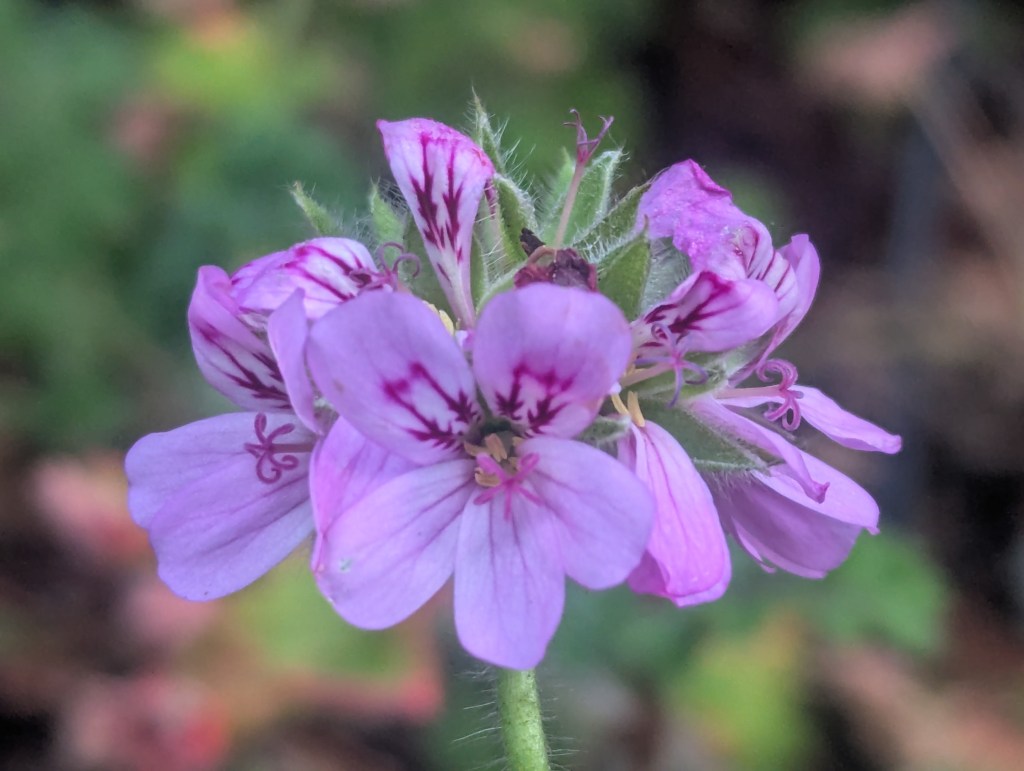
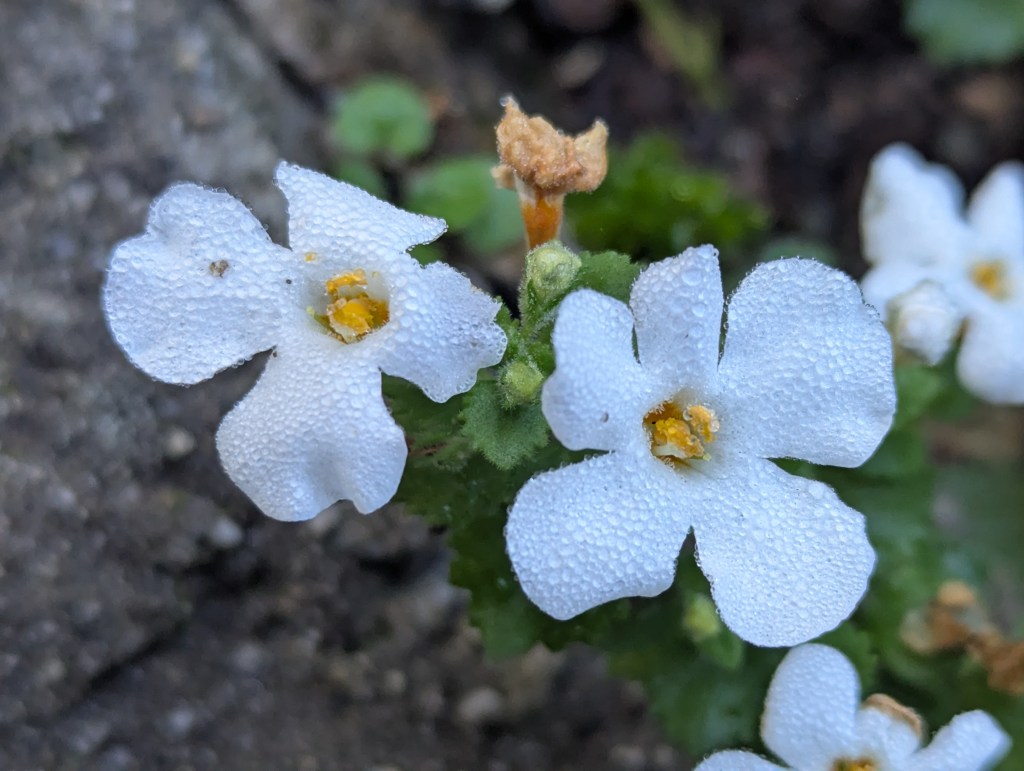
1. What is this? It grows like ground cover. Although it has not yet bloomed profusely, it blooms with a few flowers continually. I am not keen on it, but I want to know what it is.
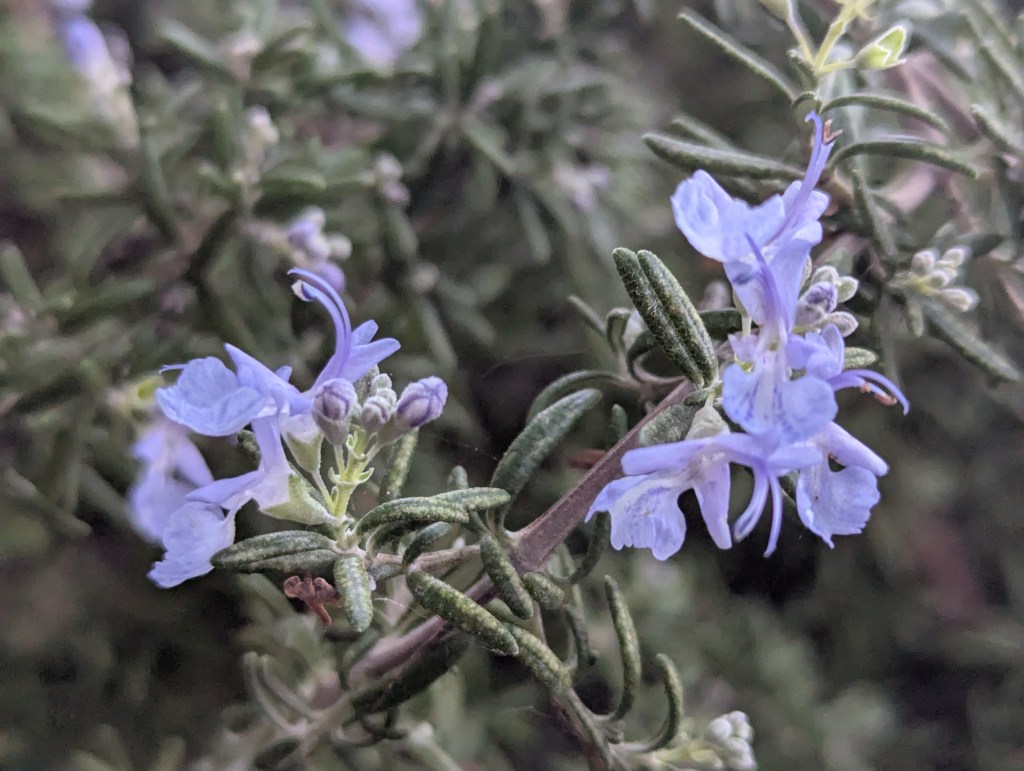
2. Rosmarinus officinalis ‘Prostratus’, trailing rosemary blooms a bit less during winter, but seems to never be completely without bloom. Hummingbirds are pleased with these.
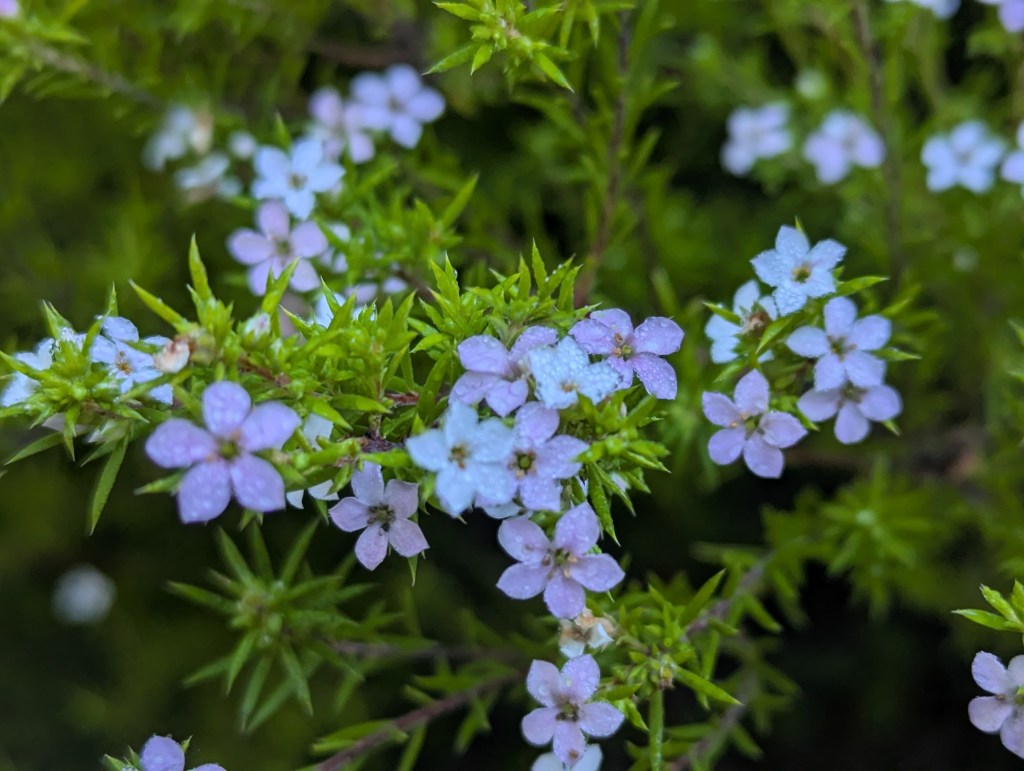
3. Coleonema pulchellum ‘Sunset Gold’ breath of Heaven probably should have stopped blooming by now; but I must not complain if it insists on blooming right through winter.
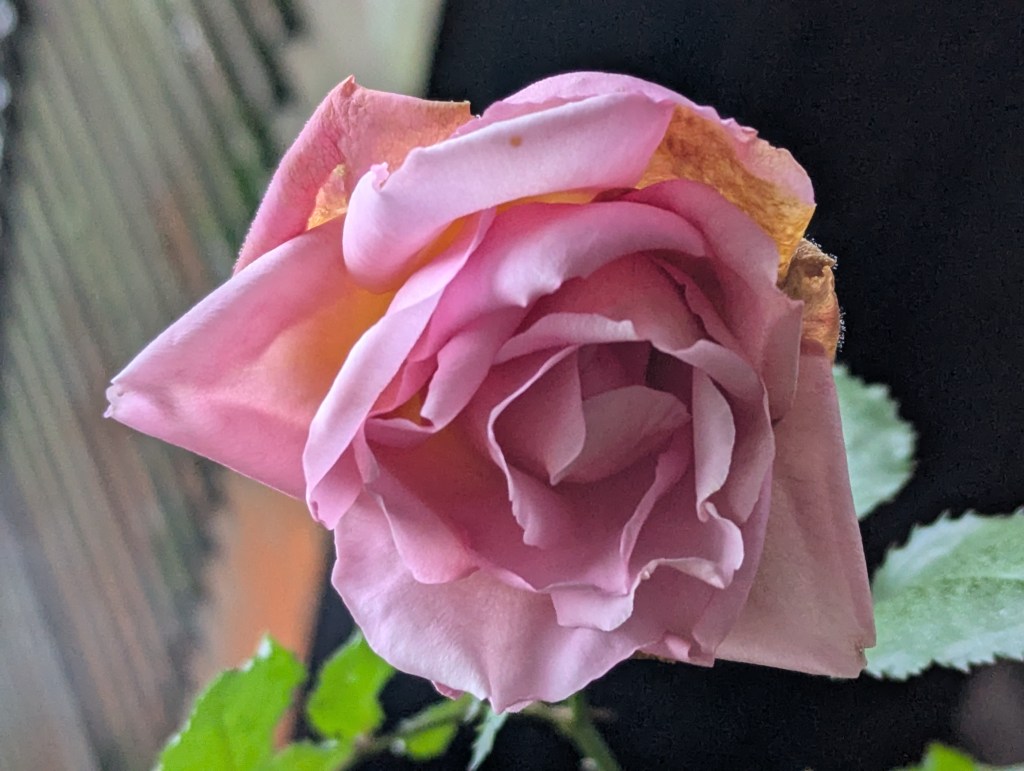
4. Rosa spp., rose bloom is finally succumbing to wintry weather. I do not know if this is because of the earlier rain or more recent chill. Other roses have been pruned for winter.
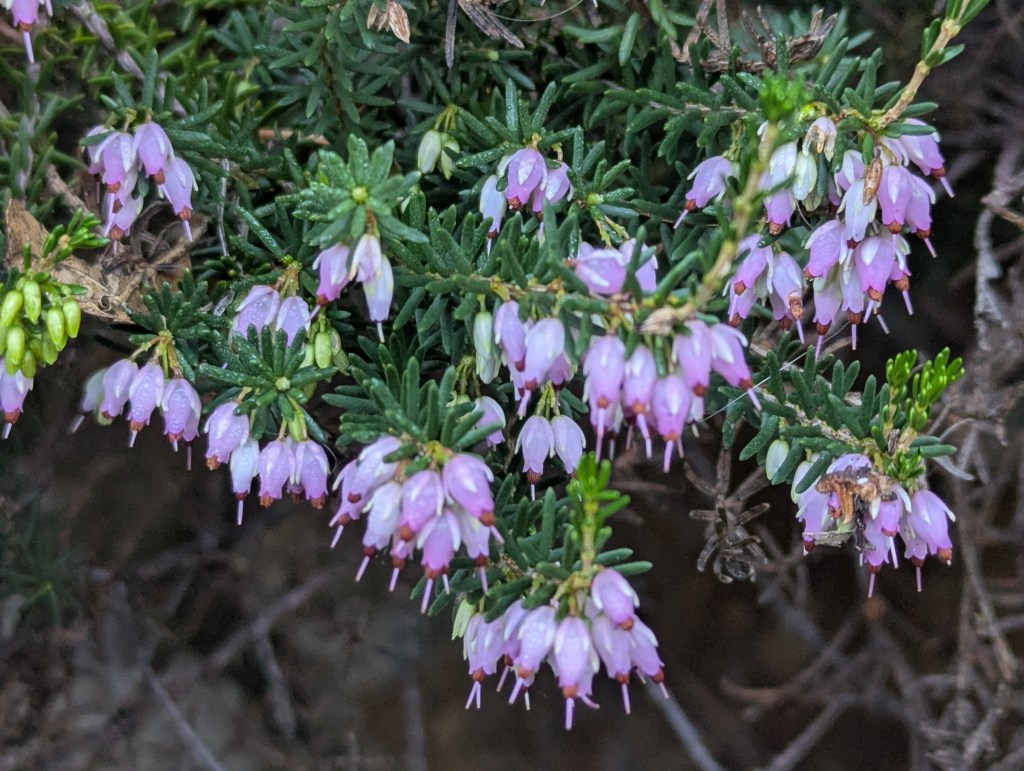
5. Erica spp., heath is happy to bloom through winter and perhaps into spring. I have no idea what cultivar this is, and I do not remember when it started blooming in November.
6. Rhody has been absent from Six on Saturday for quite a while. He is not easy to take a good picture of. This week though, it might have been easier than finding a sixth flower.

This is the link for Six on Saturday, for anyone else who would like to participate: https://thepropagatorblog.wordpress.com/2017/09/18/six-on-saturday-a-participant-guide/
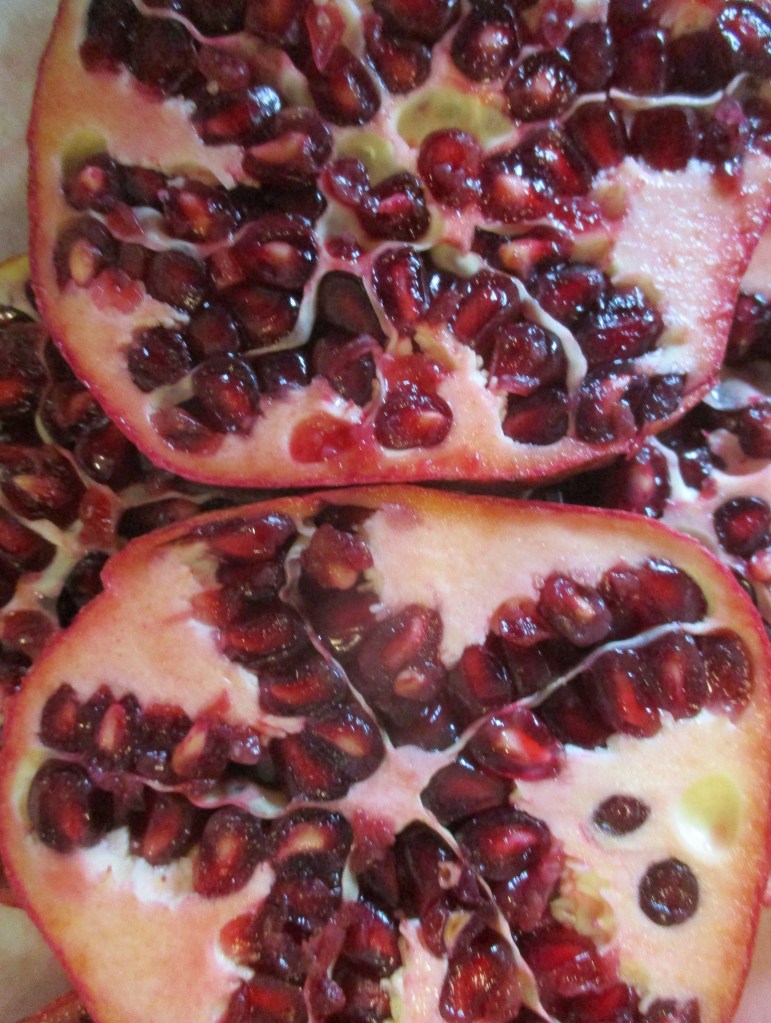
Not many fruit trees have been in cultivation for as long. After several thousands of years of breeding, there are quite too many cultivars to count. Pomegranate, Punica granatum, is now common in many regions throughout the World. It is particularly productive within Mediterranean climates, including locally. Bare root trees are now available in nurseries.
Without pruning, old trees can grow fifteen feet tall, with dense and thorny thicket growth. Fruit is easier to collect from tamer trees that are subject to regular thinning and pruning. Individual trees typically develop a few trunks, but can have only one. They may survive for centuries. Ruddy orange flowers bloom for spring. Foliage yellows prior to defoliation.
Pomegranate fruit ripens so late during autumn that it can linger after autumn defoliation. It is generally brownish red. Individual fruits are about three or four inches wide, but may be wider. They contain hundreds of seeds, which are surrounded by juicy and succulent flesh. Such flesh is generally garnet red, but might be purplish, pinkish or even colorless. Flowers are edible too.

Now, it is a bit more official. I have an appointment at 11:00 tomorrow morning, Tuesday, January 13, for the first episode of the KPCR Garden Report. I do not yet know if it will merely be recorded for later broadcast, or if it will be broadcast directly, but I suspect that it will be broadcast directly. More information about the KPCR Garden Report is cited by the recycled article below:
November 5, 2025 – Nothing is official yet. I am hopeful, though. I am currently in training to establish a new Garden Report on Pirate Cat Radio KPCR-LP 92.9 FM in Los Gatos, KMRT-LP 101.9 FM in Santa Cruz, KVBE-LP 91.1 in Portland, and online at KPCR.org. For me, it is daunting. However, those training me are confident of my ability. I have no problem talking about horticulture for an hour. My difficulty is operating the necessary electronics. It is not much, and actually looks quite simple. I am just not comfortable with it. I am intent on doing what I must, though. I miss my former Garden Report gardening shows on KSCO 1080 AM in Santa Cruz and KBCZ 89.3 FM in Boulder Creek. Ultimately, I would like to post recordings of the new Garden Report here on the blog, or at least post links to such recordings. I am told that is not difficult to do, if I record the shows, which is apparently standard procedure. I still need to find “intro” music for the beginning and end of each show, but I believe that I have a source for that. Goodness, although I know this should be easy, I am nervous!
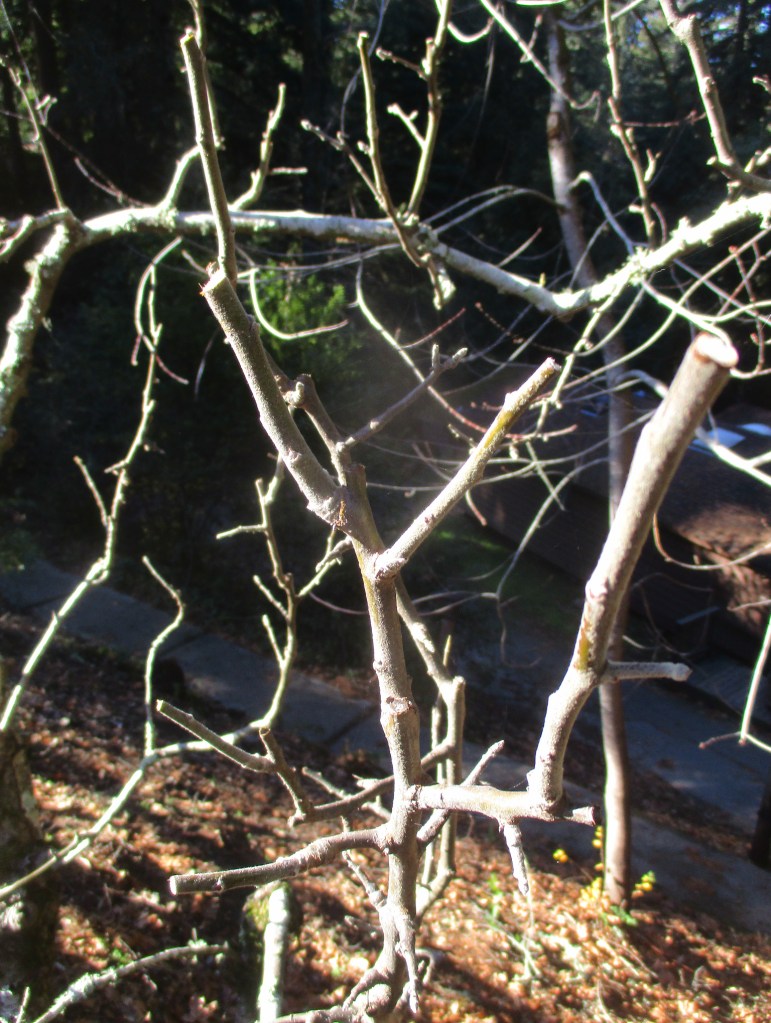
Bare root season begins now because bare root stock is so efficiently dormant for winter. Dormancy is the same reason that this is now also time for dormant pruning of fruit trees. It is comparable to anesthesia for surgery. Affected fruit trees waken from dormancy after winter with no idea of what happened. They then resume growth as if nothing happened.
Dormant pruning is important because of the unnatural breeding of most fruit trees. They have been bred to produce unnaturally large and unnaturally abundant fruit. Their fruit is so excessive that they can not support all that they could produce. Dormant pruning both limits production and concentrates resources. Resulting fruit is less abundant but bigger.
Bigger, better but less abundant fruits collectively weigh less than overly abundant fruits. Furthermore, dormant pruning improves structural integrity of affected trees. So, affected trees are able to support more weight but must support less. Ideally, they should need no propping for limbs that are too heavy with fruit. Limbs should not break from their weight.
Dormant pruning also directs and stimulates growth. It should prevent stems from getting so high that their fruit is beyond reach. Actually, most fruit should be within reach from the ground without a ladder. Vigorous growth is more resistant to pathogens than congested and less vigorous growth. There are actually quite a few advantages of dormant pruning.
Stone fruit trees and pome fruit trees are popular types that need dormant pruning. Stone fruit include apricot, cherry, nectarine, peach, plum and prune. They need similar pruning but to varying degrees. Peach needs more severe pruning because its fruit is so big and heavy. Cherry needs less aggressive pruning. Apple, pear and quince are all pome fruit.
Deciduous fruit trees are quite demanding, and reliant on timely dormant pruning. Those who would like to grow them should first be aware of their cultural requirements. Diligent research of pruning technique is helpful. Practical and annual experience is even better. Each year, it is an opportunity to observe how subject trees respond to dormant pruning.