This is the second year that I will not compete in the Jam & Jelly Competition of the Santa Cruz Mountains Harvest Festival. The Festival was canceled last years because of the ‘situation’. I simply do not have enough time for it this year.
There were barely enough blue elderberries left this late in the season for the blue elderberry jelly that should have won the blue ribbon at the Harvest Festival. It’s a long story.
After the main supplier of blue elderberries was removed to widen the driveway that it was next to many years ago, I started collecting blue elderberries from other wild shrubs on roadsides about town. At the time, the berries were very abundant. No one else was collecting them, and the doves did not come down to eat them until later in the season. A friend eventually asked me why I was collecting the berries. I informed him that they could be used just like the black elderberries that grow wild in Eastern North American and Europe. He decided to make wine and booze with them, and payed others for whatever they could harvest. The berries were much more…
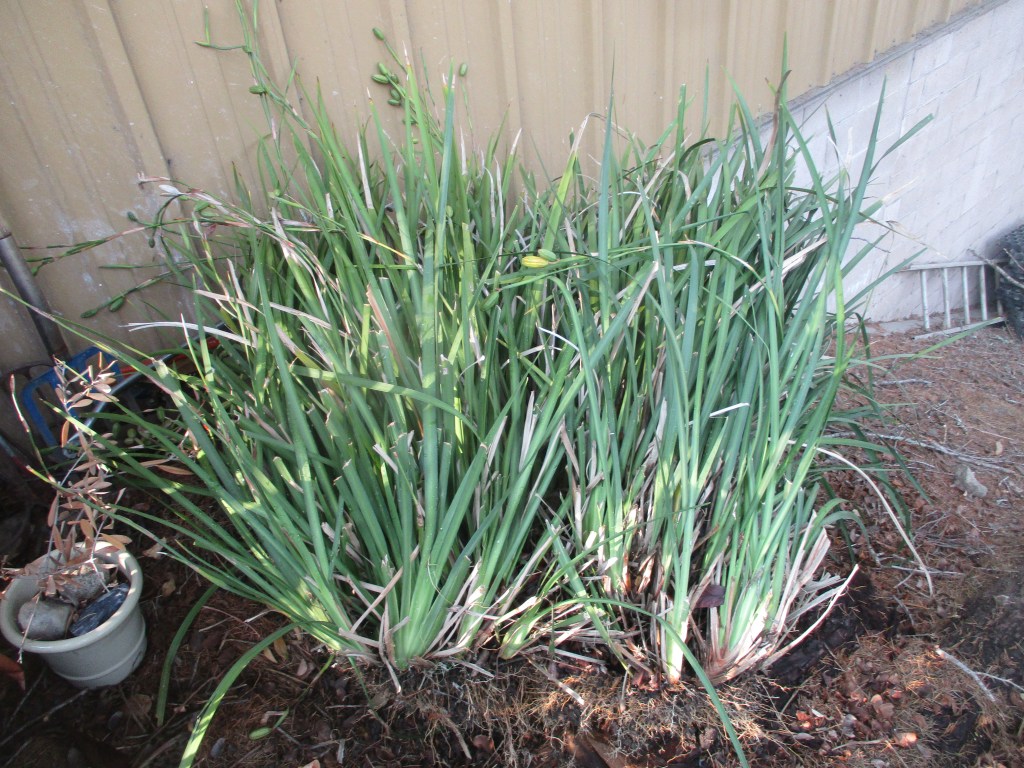
It can become a bad habit in the garden, and migrate into neighboring gardens and landscapes, and even farther. My ‘Australia’ canna was acquired only a few years ago, so has not gotten too far, yet. The African iris (Morea iridioides) seems voluminous, but took nearly three decades to get like that. Montbretia and white violet really should not be recycled any more than they have been already though. They are just too invasive. Agapanthus and Amaryllis have potential to become habitual, but fortunately for me, have been manageable. Amaryllis are not overwhelming. Agapanthus have been useful since I started recycling them.
1. Canna indica ‘Australia’ is one of the very few plants that I actually purchased. A neighbor of my downtown planter box requested bronzed foliage. After a few years, it needed to be thinned.
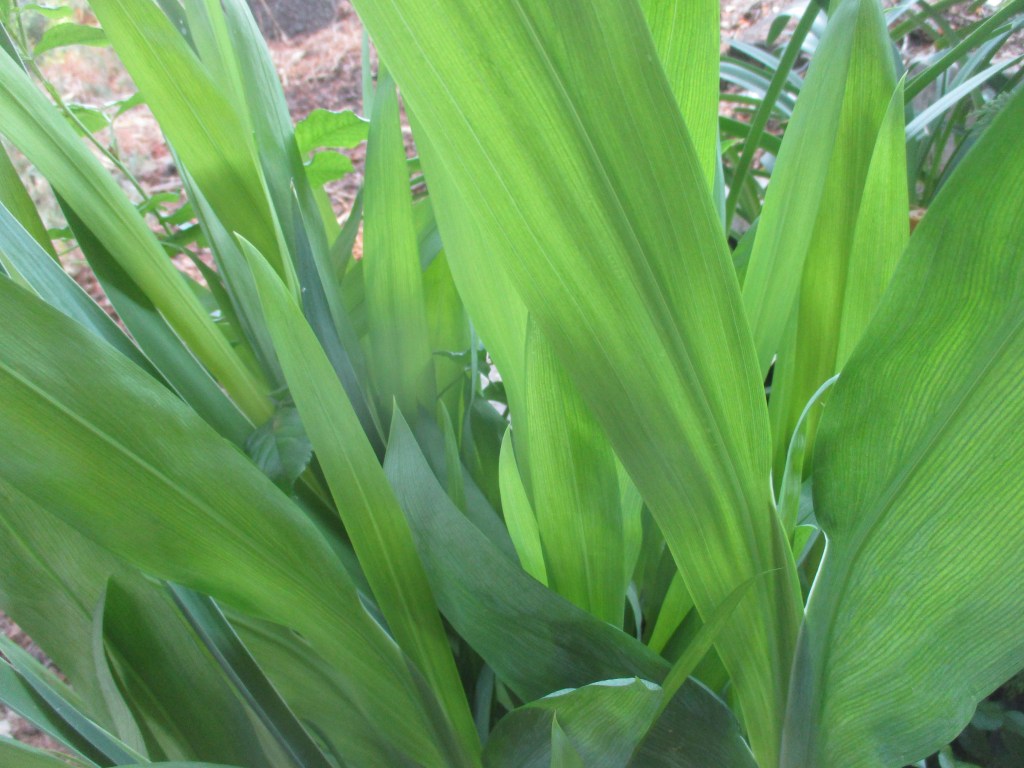
2. Morea iridioides was another purchase, back in the 1990s. It was in a #1 (1 gallon) can back then. It got so overgrown than it needed to be removed, so will now get divided into many more.
3. Crocosmia masoniorum is probably the same common montbretia that grows as a weed here, but seems to have much bigger leaves. I found it growing wild at my Pa’s home in about 1980.
4. Agapanthus orientalis has been with me since 1978, when a neighbor had me remove it from her garden. These copies of that original were planted nearby years ago, and recently removed.
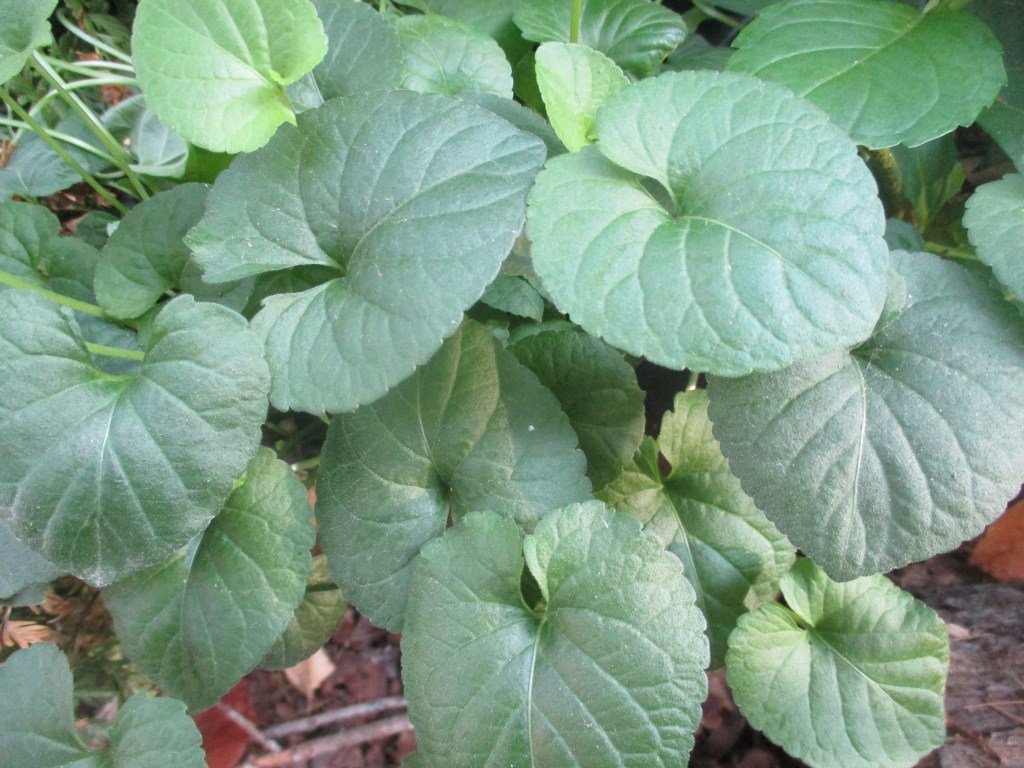
5. Viola sororia ‘Albiflora’ came from my Grandmother’s garden in the late 1970s. I still have copies of them, but might discretely allow them to go extinct. They are just too invasive to recycle.
6. Amaryllis belladonna is mundane and naturalized. However, these came from the garden of my great Grandmother in about 1980. I need no more here, but recycle these in my own garden.
This is the link for Six on Saturday, for anyone else who would like to participate:
The advantage of cyclamen, Cyclamen persicum, is nonconformity. Bloom begins in autumn when there are not many other flowers to provide color, and continues until spring. Cyclamen then defoliate and go dormant through summer while most other plants enjoy the warm weather. Even their red, pink, white, purple or salmon flowers are inside out, with petals flared back. The flowers can stand as high as six inches, just above the somewhat rubbery foliage. The rounded leaves are mostly dark green with silvery or gray marbling
If used as annuals for one season, cyclamen are uniform enough for bedding. However, if later overplanted with warm season annuals and allowed to stay through summer dormancy, regeneration the following season is variable, with larger and smaller plants, and some that do not survive. As perennials, cyclamen therefore work best in mixed plantings, where variety is not a problem. Cyclamen should be planted with their tubers about halfway above the soil level, and should not be mulched. Soil should be rich and drain well.
Warm season annuals are now passé. Cool season annuls, such as these violas, are in.
Now that it is time for cool season annuals, it is difficult to remove warm season annuals if they are still blooming and healthy. that is probably why so many of us prefer mixed plantings, where cool season annuals can be added as needed to replace warm season annuals as they deteriorate. Some warm season annuals that are actually perennials, like wax begonia and busy Lizzie (impatiens), can be cut back and overplanted with cool season annuals, so that some might regenerate next spring as the cool season annuals finish. Petunias may be looking overgrown and tired, but are at least easier to remove without guilt.
Pansies and smaller but closely related violas are probably the two most popular of cool season annuals. They work something like petunias, but for autumn and winter. They are commonly grown in uniform beds, but work just as well in mixed plantings. There are not many colors that can not be found in pansies, although only a few of the more popular varieties can be found at any particular nursery. Some are ‘solid’ colors. The most familiar varieties have those funny ‘faces’ that pansies are known for.
The various primroses require a bit more effort because deteriorating flowers need to be removed. They can also be a problem for the few who are allergic to them (like poison oak). Like the warm season annuals that can survive as perennials through winter, some primroses, particularly English primrose, can survive through summer as perennials. English primrose displays bright cartoon shades of almost any color. Fairy primrose are more commonly pastel shades.
Stock has an intense and distinctively rich fragrance. Taller types are excellent cut flowers, but are not so practical for uniform beds. Even shorter types are probably best in mixed plantings, or in borders with lower flowers in front. The single or double flowers can be white, pink, purple and almost red.
Ornamental cabbage and kale are grown for bold rosettes of colorful pink, white or pink and white foliage. The shades of pink range from soft light pink to rich purplish pink and almost red bright pink. Cabbage provides more color. Kale has more variety of foliar texture. Ironically, both look rather weedy, and should be removed as they begin to bloom in spring.
Chrysanthemum are strikingly colorful cool season flowers, but rarely bloom as uniformly as they do when first planted. Because they bloom so profusely, they need to be groomed frequently. If they get what they want, they can perform for several years, blooming all sorts of shades of yellow, orange, red, pink, purple and white. Chrysanthemum also displays a broad range of flower structures and sizes, from minute to jumbo.
Sweet William, Iceland poppy, calendula and alyssum are also in season. Yellow or orange calendula, with single or double flowers, is best through autumn, but may mildew by winter. Alyssum is white or subdued shades of pink or purple, and is actually good throughout the year, and can self sow indefinitely.
Throughout my career as a horticulturist, I have worked in more public landscapes than most. Some of these landscapes were in some of the most notorious neighborhoods of the San Francisco Bay Area and the Monterey Bay Area. Yes, I have found some rather strange items strewn about, including a few that necessitated telephone calls to local law enforcement. Yet, I have never once found a single used syringe.
Syringes are more commonly known as ‘needles’ by those who fear them. We are sometimes warned about them, particularly in areas where the sorts of people whom we are supposed to fear might have left them strewn about, whether or not these fearsome people actually use syringes. If found, such syringes are dangerous because they are used to inject illicit narcotics, and are consequently contaminated with the blood of those who use them. Such blood is always assumed to be infected…
Simple old fashioned New Zealand flax, Phormium tenax, has been popular on the West Coast for as long as anyone can remember. Big specimens are prominent in old pictures of Victorian era gardens. The upright and olive drab foliage gets as high as ten feet, and as broad as fifteen feet. Bronzed and variegated cultivars stay somewhat more compact.
Modern cultivars of New Zealand flax might be Phormium colensoi, or hybrids of the two species. They are generally even more compact, with more colorful foliage. Foliage may be olive green, greenish yellow, brownish bronze, rich reddish bronze or striped with like colors. Some bronze sorts are striped with tan or pink. ‘Yellow Wave’ has floppier foliage.
New Zealand flax is a tough evergreen perennial. Its long and narrow leaves can be too fibrous to cut without scissors. These leaves grow as tall as they do from clumping basal rhizomes. Interestingly rigid floral stalks stand slightly higher than the foliage, with yellow or red bloom. After bloom, these floral stalks can be a delightful and bold dried cut flower, and work well with pampas grass bloom.
Weather is not quite as warm as it had been. Warm days do not last quite as long as they did earlier in summer. Afterward, the longer nights get a bit cooler. Technically, autumn is only a few days from now. Although seasonal changes are mild, and a bit later here than in other regions, they eventually catch up. Plant activity has already been getting slower.
Seasonal changes keep gardening interesting. Plants that are now growing slower than earlier may need less attention. However, some need more attention, precisely because they are growing slower. Some of the work that was so important through summer should conclude until spring. Some of the work that will be important through winter begins now.
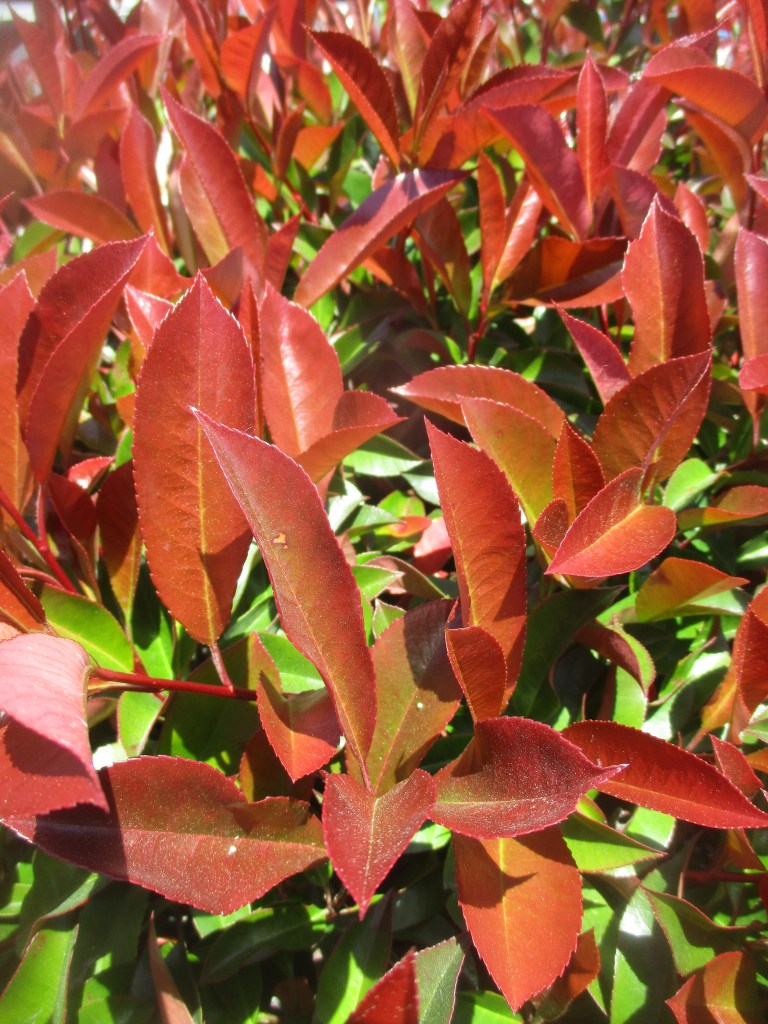
Although evergreen, photinia and pittosporum hedges do not do much between now and next spring. If shorn too late, new growth develops slowly, and may become shabby as a result of cooler and rainier weather later. Late pruning of citrus stimulates vigorous newer growth that may be sensitive to frost through winter. Lemons are particularly susceptible.
Conversely, dormant pruning can begin as deciduous foliage starts to fall. Although most roses and fruit trees supposedly prefer to wait until winter, they may soon be too dormant to notice if pruning is a bit premature. This is partly why autumn is the season of planting. Mostly dormant plants are more resilient to discomforts than they would be while awake.
New Zealand flax, lily of the Nile, African iris and other rugged perennials are conducive to division now. They will soon be about as dormant as they get, but will want to disperse roots for winter anyway. They resume growth before winter ends, so want to be ready for it. Once rainier and cooler weather resumes, they will need no watering until next spring.
Fertilizer should be passe soon also. Most plants consume less nutrients through cooler weather. Besides, many nutrients are less soluble, and therefore less available to plants while the weather is cool. Turf, cool season vegetables, cool season annuals, and some small palms are a few exceptions that could benefit from minor applications of fertilizers.
If you watch Southpark, you shouldn’t.
If you do anyway, you shouldn’t admit to it.
If you happen to know someone who watches Southpark, you might have heard indirectly about Kenny. He dies in every episode. Actually, he typically dies a few times in each episode, and typically does so violently. Experts claim that there are two episodes of Southpark in which Kenny does not die, but proof is all too conveniently scarce.
There is also an opossum named Kenny. Like Kenny of Southpark, Kenny the opossum dies in every episode. Apparently, Kenny startled someone who was working too intently in the garden to notice his approach on top of a fence directly behind where this unnamed someone was working. This unnamed someone grabbed a stick and clobbered Kenny right across the backside. Although the blow was not terribly aggressive, and not intended to be harmful, Kenny surprisingly died violently…
Just about everything in this picture is icky! This species of pampas grass, Cortaderia jubata, is one of the most aggressive and noxious of the invasive exotic specie that have naturalized here. It seems to be incarcerated behind the weathered cyclone fence with barbed wire on top. The big water tank is is a harshly stark background. The tired old Douglas firs and ponderosa pines to the left and right seem to be unhappy here. The small coast live oak that is at least trying to make a more cheerful appearance is only oppressed by the surroundings. Only the clear blue sky above lacks the ick factor.
What is not visible in the picture is that there is no other flora in the area. Most of the area is covered with a thick layer of gravel to prevent vegetation from getting established close to the water tank. Weeds that…
As a result of prioritizing our efforts within the landscapes at facilities that have been in use through summer, landscapes at unused facilities have been neglected. It would be embarrassing if anyone else were here to see the results. Those who maintain the other infrastructure have mentioned that these neglected areas resemble ghost towns. Flowers continue to bloom without any assistance. Also though, weeds continue to grow and toss seed for the next generation. There is so much to catch up on. What is worse is that I will not be working here much until November, and will be gone again in February.
1. While no one is looking, lily of the Nile continues to bloom into the middle of September. I was not here to see it, but I suspect that this particular colony was not blooming on time for July.
2. Kahili ginger is blooming too, but right on schedule. This is obviously a substandard bloom. I am impressed nonetheless. It was not expected to bloom at all. It was just planted over winter.
3. Otherwise, most of the bloom here is that of weeds. Strangely, I do not remember anyone pulling weeds from the pavement before. Could the formerly constant traffic have inhibited them?
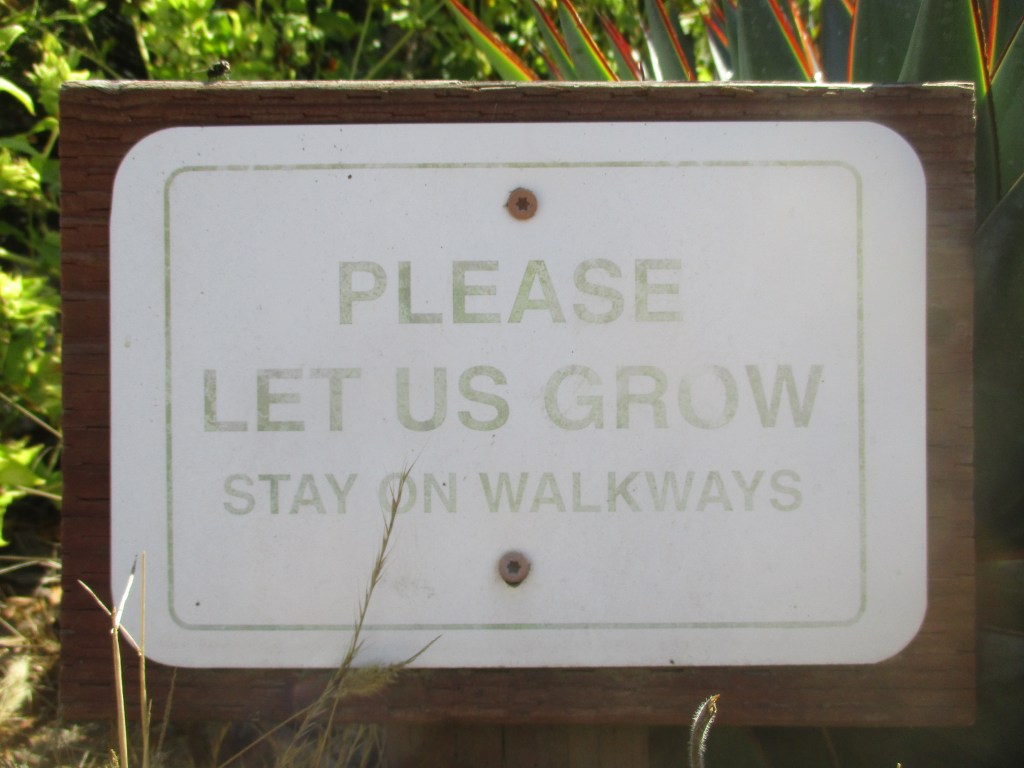
4. Should this say “PLEASE LET US GROW ON WALKWAYS” or maybe “PLEASE LET US STAY ON WALKWAYS”? Regardless, I am impressed by the ability of weeds to compose a sentence.
5. Grapes would certainly be easier to reach if they grew on neglected, hanging vines like these. Unfortunately, if left long enough to produce fruit, these vines would become a tangled thicket.
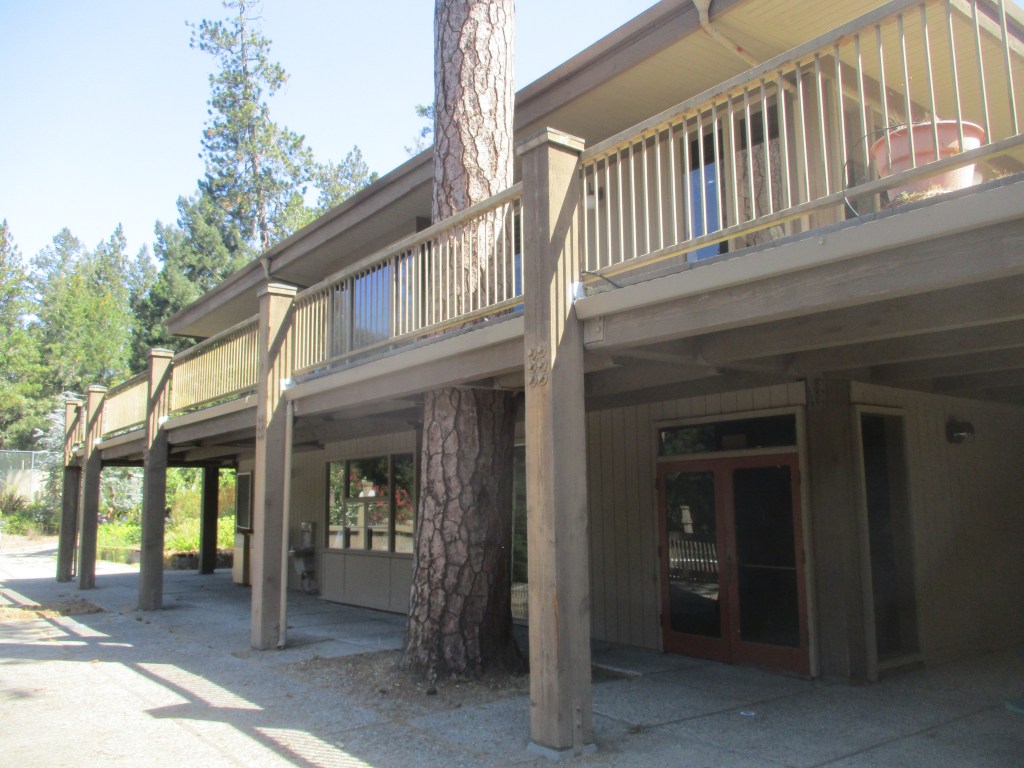
6. Goodness! This is what happens when a ponderosa pine seedling grows under a deck, and no one is here to pull it out before it grows right through! The weed problem here is now serious!!!
This is the link for Six on Saturday, for anyone else who would like to participate:

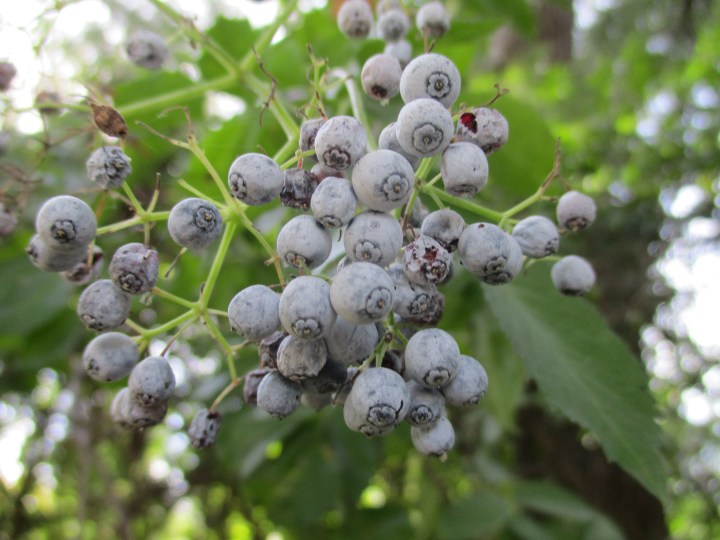 There were barely enough blue elderberries left this late in the season for the blue elderberry jelly that should have won the blue ribbon at the Harvest Festival. It’s a long story.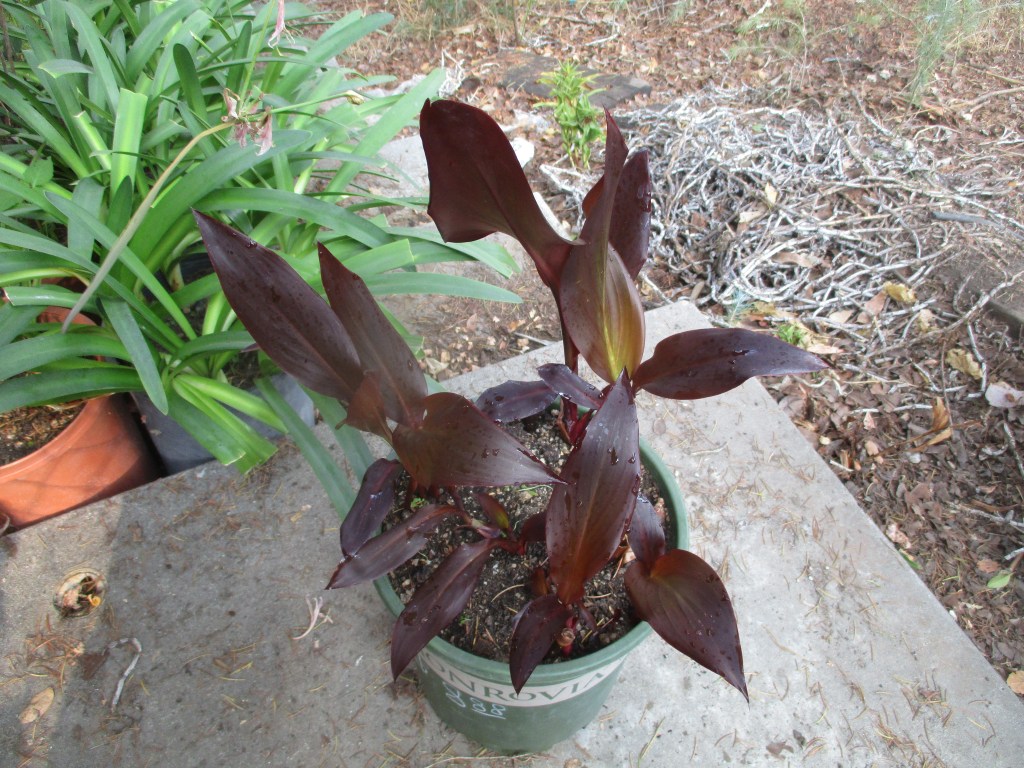



 Throughout my career as a horticulturist, I have worked in more public landscapes than most. Some of these landscapes were in some of the most notorious neighborhoods of the San Francisco Bay Area and the Monterey Bay Area. Yes, I have found some rather strange items strewn about, including a few that necessitated telephone calls to local law enforcement. Yet, I have never once found a single used syringe.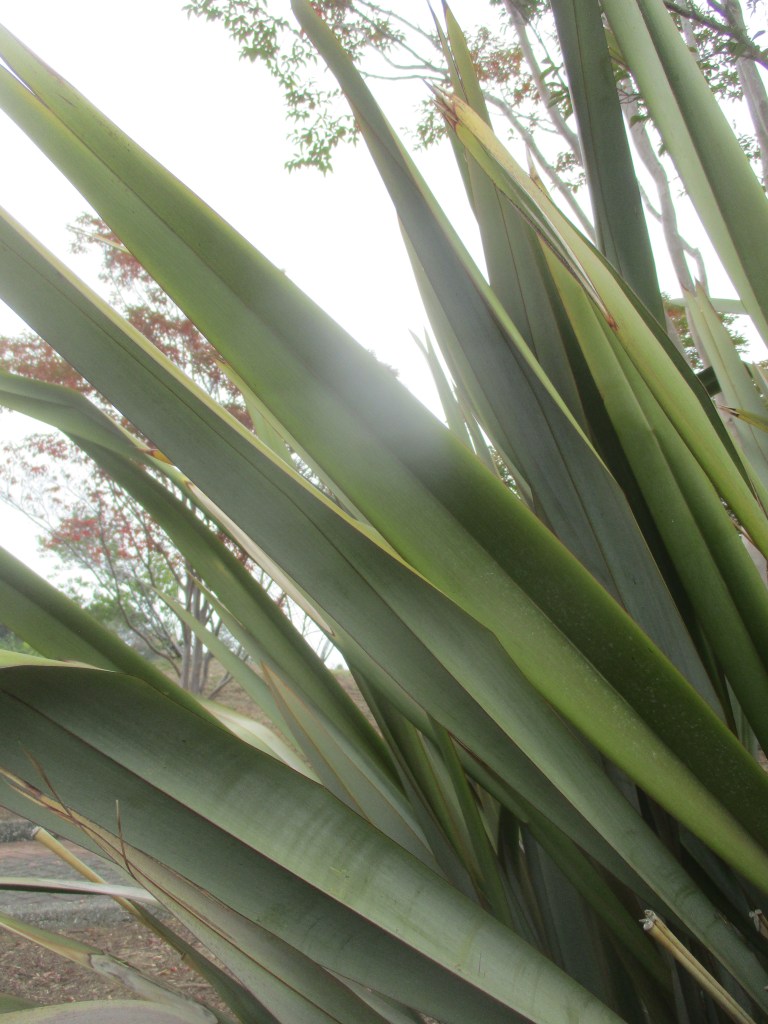
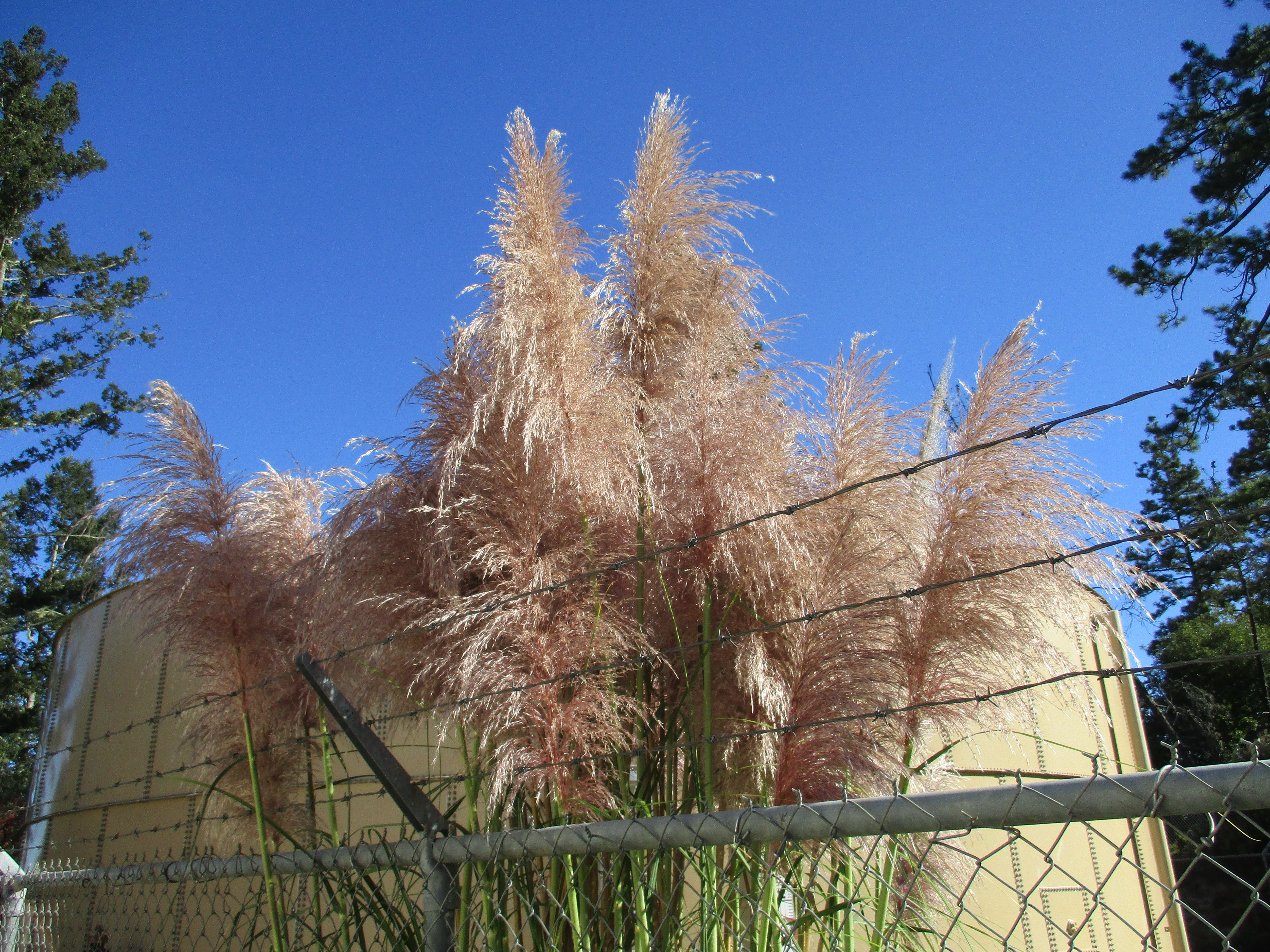 Just about everything in this picture is icky! This species of pampas grass, Cortaderia jubata, is one of the most aggressive and noxious of the invasive exotic specie that have naturalized here. It seems to be incarcerated behind the weathered cyclone fence with barbed wire on top. The big water tank is is a harshly stark background. The tired old Douglas firs and ponderosa pines to the left and right seem to be unhappy here. The small coast live oak that is at least trying to make a more cheerful appearance is only oppressed by the surroundings. Only the clear blue sky above lacks the ick factor.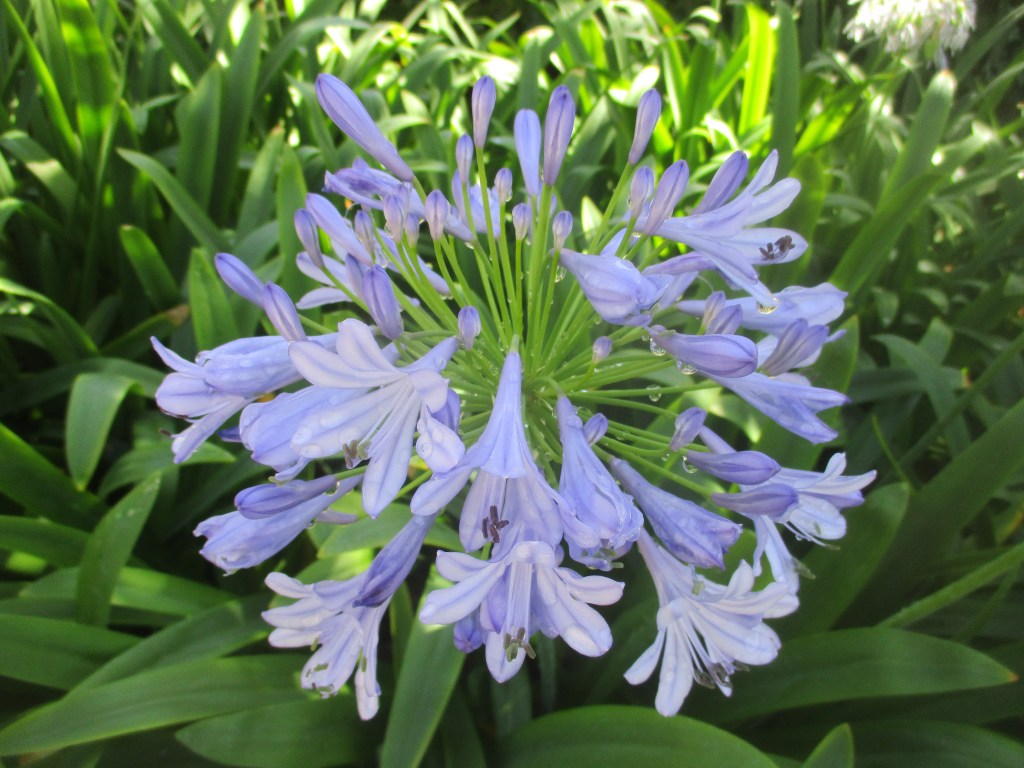



 Tony Tomeo