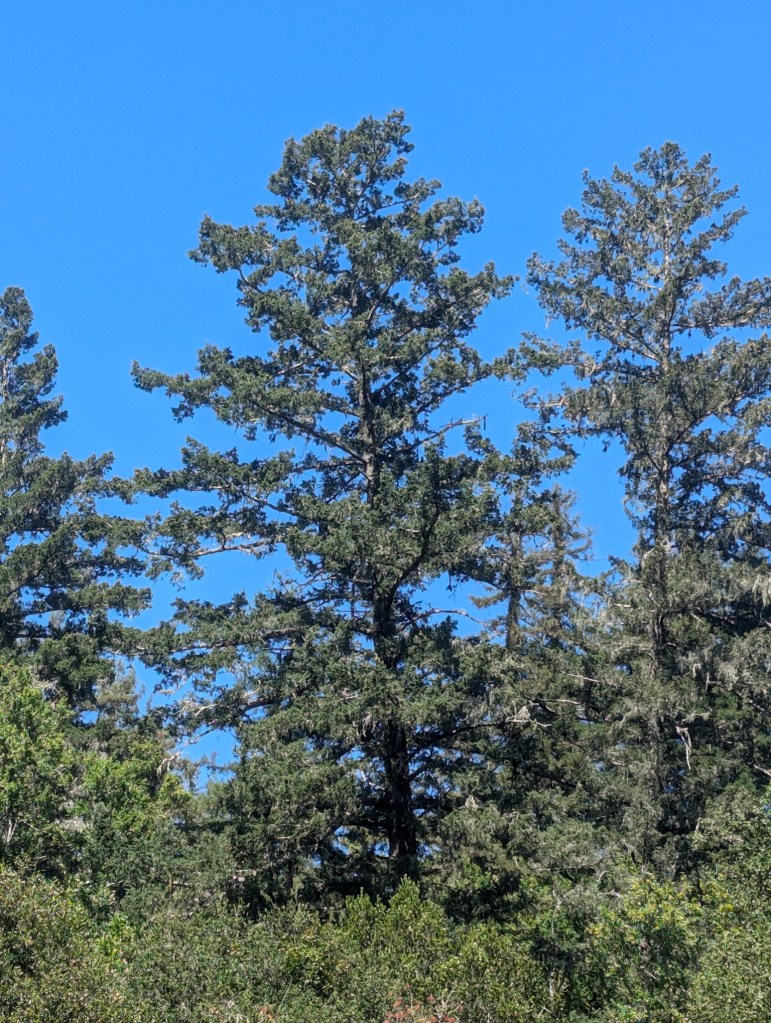
Within home gardens, Douglas fir, Pseudotsuga menziesii is very rare. So is the bigcone Douglas fir, Pseudotsuga macrocarpa of Southern California. However, they are not rare in the wild. Sometimes, suburban or rural home gardens develop around them. They can be awkward to accommodate. They are magnificent trees, but simply grow much too big.
Contrary to its rarity among home gardens, Douglas fir is actually common within homes. after all, most houses are constructed mostly of Douglas fir lumber. Most Christmas trees here are plantation grown Douglas fir. It is a major lumber plantation commodity in Chile, Argentina, New Zealand and Europe. Douglas fir is the Official State Tree of Oregon too.
Douglas fir is a grand tree in the wild. Old trees can grow more than two hundred feet tall with trunks eight feet wide! Their limbs may extend more than thirty feet from their trunks. It is obviously disproportionate for home gardens. Its soft evergreen foliage is delightfully aromatic, though. Its flattened, two-ranked needles are less than an inch and a half long. The female cones exhibit uniquely lacy scales.
Soil saturation is detrimental to trees for a few reasons. Excessive irrigation is almost as problematic, even without saturation. Chronic excessive moisture compromises stability by inhibiting deep root dispersion. Instead, it promotes shallower root buttressing. It may compromise structural integrity, too. It is generally the cause of spontaneous limb failure.
Spontaneous limb failure is exactly what it implies. Its spontaneity is what makes it more hazardous than limb failure caused by wind. It happens while the weather is calm, warm and perhaps humid, when least expected. Limbs might sag and produce cracking noises immediately prior to falling. However, they quite often fall suddenly and without warning.
Spontaneous limb failure is associated more with gravity than wind. It occurs as vigorous stems literally grow faster than they can support. Warm weather accelerates foliar growth that increases weight. A lack of wind and perhaps enhanced humidity inhibit evaporation from foliar surfaces. Inhibition of evapotranspiration limits weight loss during weight gain.
Deciduous trees are generally more susceptible to spontaneous limb failure. Sweetgum, willows, poplars and elms are particularly vulnerable. A few evergreen trees are likewise susceptible, though. They include coast live oak, Monterey cypress and a few eucalypti. Fruit trees exhibit spontaneous limb failure if they can not support the weight of their fruit.
The potential for spontaneous limb failure is rarely obvious. Limbs of some types of trees may visually appear to be too heavy or floppy. Limbs of Monterey pine, for example, may lean to one side if they sag prior to failure. However, valley oak, carob and sycamore are notorious for concealing their weaknesses. Even arborists can not predict all limb failure.
Wild trees within new landscapes are particularly vulnerable to spontaneous limb failure. They are not accustomed to irrigation through otherwise arid summers. Some can adapt as landscapes with irrigation develop around them. Others overindulge and become too heavy for their own trunks or limbs to support. New trees adapt to irrigation as they grow.
Purple is not as easy as white. White is either white or not white. Purple can be bluish or reddish. I am not totally certain if all Six of these are purple or lavender, which is merely pastel purple.
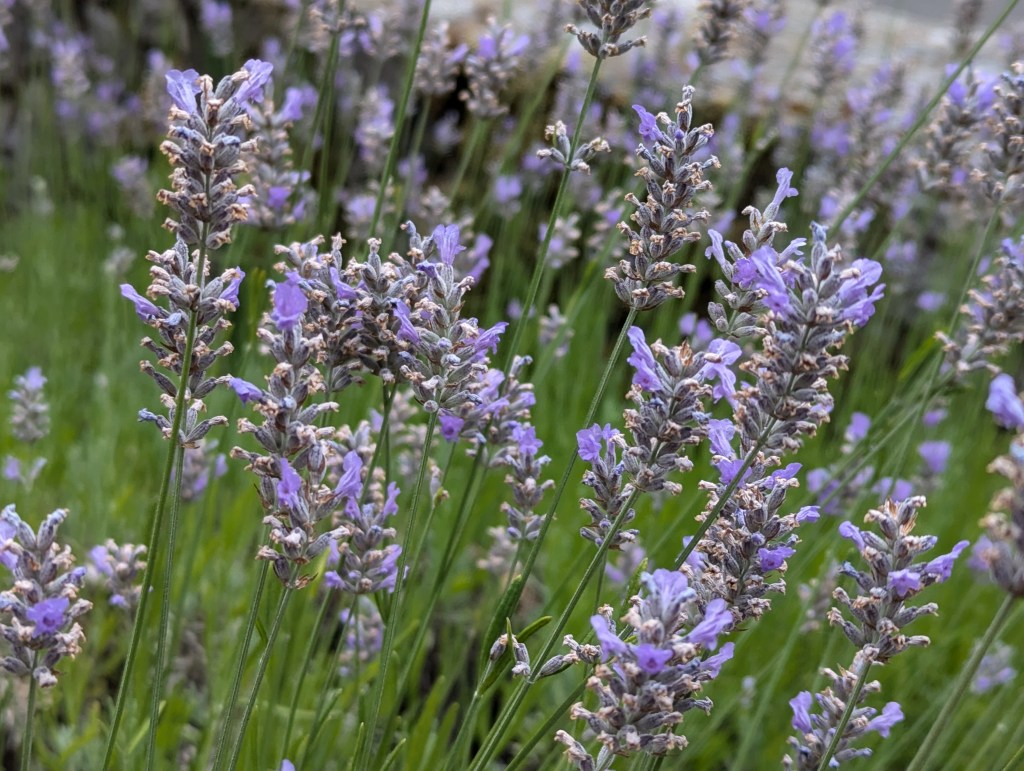
1. Lavandula angustifolia, English lavender blooms, as its name suggests, with lavender floral color, which is really just pastel purple. It looks blue to me, though. I do not know what cultivar this is, but it has survived here longer than lavender should be expected to.
2. Phlox paniculata, garden phlox also blooms lavender, although it looks pink to me. It is a feral progeny of the already feral garden phox with pure white bloom that I posted a picture of last Saturday. Although white is my favorite, I find this odd variant appealing.
3. Lobularia maritima, sweet alyssum also resembles its white counterpart that I posted a picture of last week, but is not a progeny of it. It is a common garden variety, although I do not remember its name. It survived through last winter for another summer season.
4. Lantana montevidensis, trailing lantana survives within a badly neglected landscape. It really is worthy of consideration for other sunny and warm landscapes here. Lantana camara also performs well in an adjacent landscape, and was recently added to another.
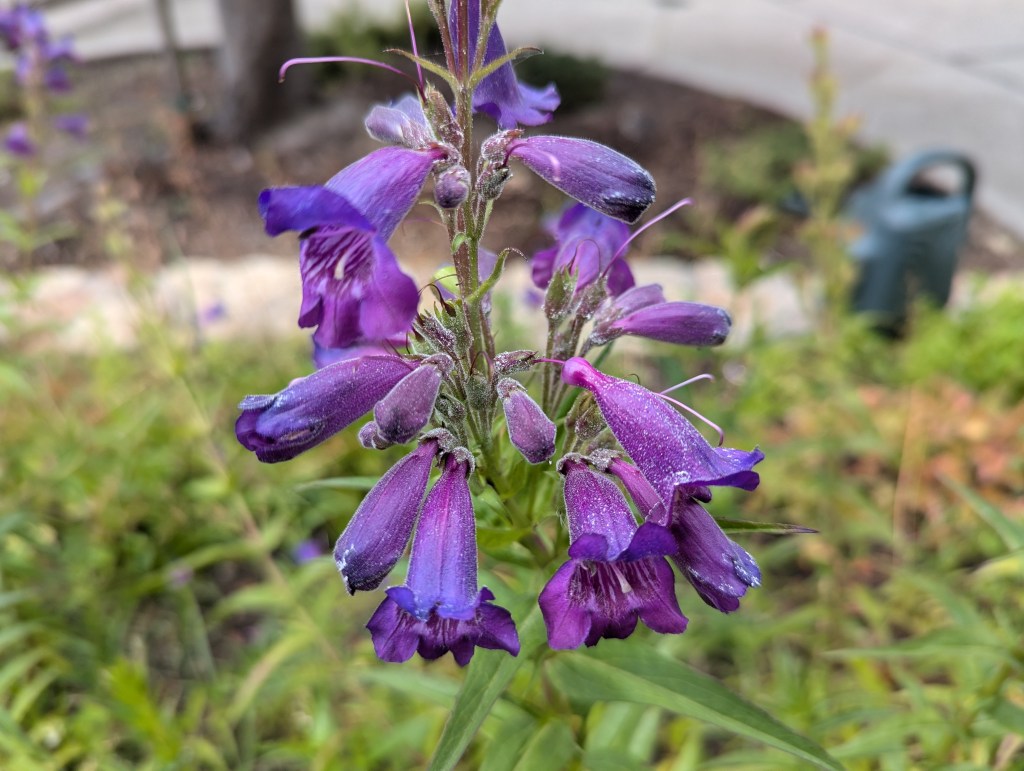
5. Penstemon gloxinioides, beard tongue blooms sparsely for now only because it is new in this particular situation. It grew from several rooted bits that were separated from old specimens as they were cut back last winter. These might produce similar bits next year.
6. Petunia X hybrida, petunia is always reliable for bright color through summer. These have been growing somewhat slowly this year only because the weather has been so mild and even weirdly cool sometimes. Gophers consumed quite a few in a landscape nearby.
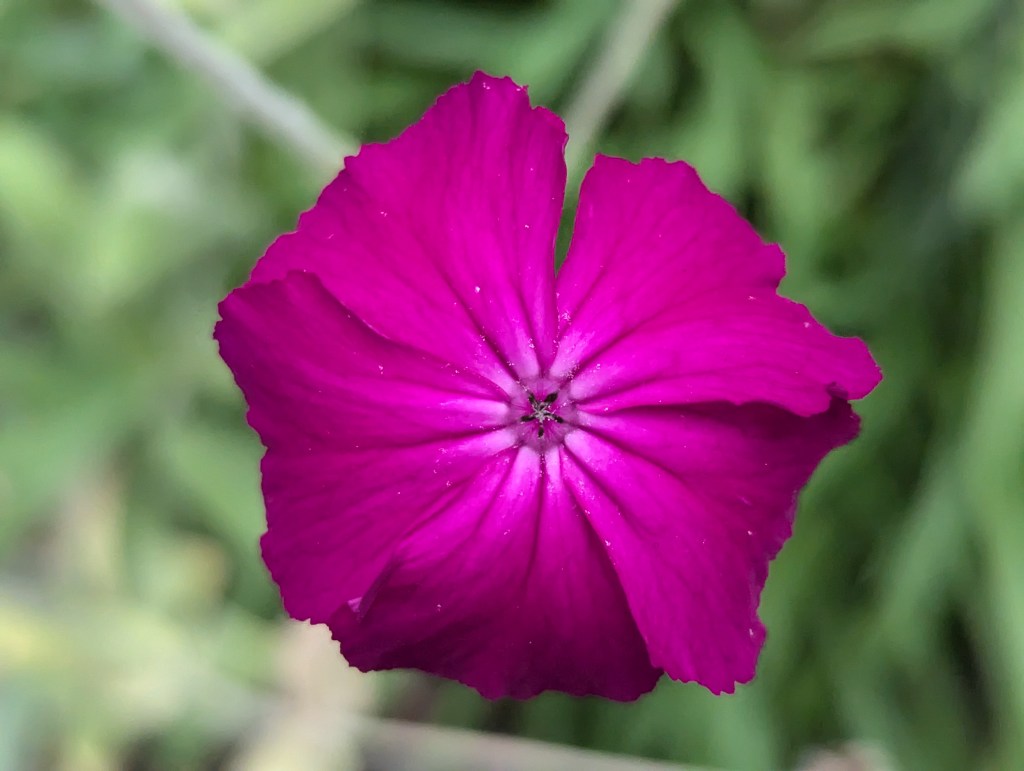
The pinkish magenta of rock purslane bloom is almost obnoxiously bright.
In Santa Cruz and coastal areas down to Los Angeles and San Diego, rock purslane, Calandrinia spectabilis (grandiflora) has been popular for only a few years. It is still somewhat uncommon here in the Santa Clara Valley. Because of the ambiguity of its Latin species name, it is most commonly known simply by its genus name of Calandrinia.
Moderate watering is best. On the coast, rock purslane only needs water occasionally through the driest summer weather. It should recover readily from winter frost damage. Partial shade is not a problem, but may limit profusion of bloom. Harsh exposure or reflected glare can actually roast the tender succulent foliage.
From about now through autumn, limber, two foot tall stems suspend strikingly bright magenta flowers above the low, grayish evergreen foliage. The fragile leaves are neatly arranged in terminal rosettes. Foliage, stems, flower stalks and all parts are sensitive to traffic, and can even get broken by a cat sneaking through the garden. Broken bits and pieces of stem root very easily to make new plants, though.
There are not many colors that bearded iris can not provide.
If I could select my favorite color for the flowers in the garden, they would all bloom white. There is no more perfect color. White may be bright or pale, but lacks the many shades that other colors have. There is no need to select between deep blue or sky blue, bright yellow or pastel yellow, purple or lavender. White is simply white.
The main problem with white, or any other color, is that no color is the right color for every situation. Also, some flowers are simply not at their best in white. Camellias, oleanders and fruit trees look great in white. However, nearly white marigolds, sunflowers and nasturtiums are interesting oddities that are excellent in the right spot, but are not nearly as flashy as the more traditional bright yellow and orange shades are.
My two favorite geraniums are actually reddish orange and fuchsia pink, and really look horrid in bloom together. They are my favorites nonetheless, because I have been growing them since my sophomore year at Prospect High School! I have taken cuttings with me whenever I relocated since then. I enjoy the garden too much to grow things that I do not enjoy.
Flower colors probably should be compatible with the colors and architecture of associated residences and other buildings, as well as the neighborhood. Yet, we all have different tastes. It is more important to grow flowers with the colors that we enjoy, even if they are not exactly perfect for their particular situations. Fortunately, compatible colors are more likely to also be enjoyable.
White happens to be useful in shaded areas, or with an abundance of deep green, such as wax privet hedges. White brightens an area, even in conjunction with other colors. It also softens richer colors like purple or red.
Darker shades of purple, red and blue should be out in the open, since they can make shaded areas seem even darker. Lighter shades, including lavender and pink, can work almost anywhere. True blue happens to be uncommon among flowers, even though the very common lily of the Nile is typically blue.
Yellow and orange seem at home in sunny spots, and also brighten shaded spots if not overdone. Yellow contrasts with purple. Orange contrasts with blue. Orange marigolds and cobalt blue lobelia might look odd in abundance, but can be striking as a border to a perennial or annual bed. Many of us like a random mix of any color; but too much mix over a large area can look like a garage sale of colors. Black, gray and brown flowers are rare and mostly grown by those of us who really appreciate them; since they look quite odd in the wrong situations. Black hollyhock, pansy and bearded iris are perhaps the best blacks, while other black flowers are not so convincing. Gray iris are still quite rare. Brown sunflowers are becoming more popular.
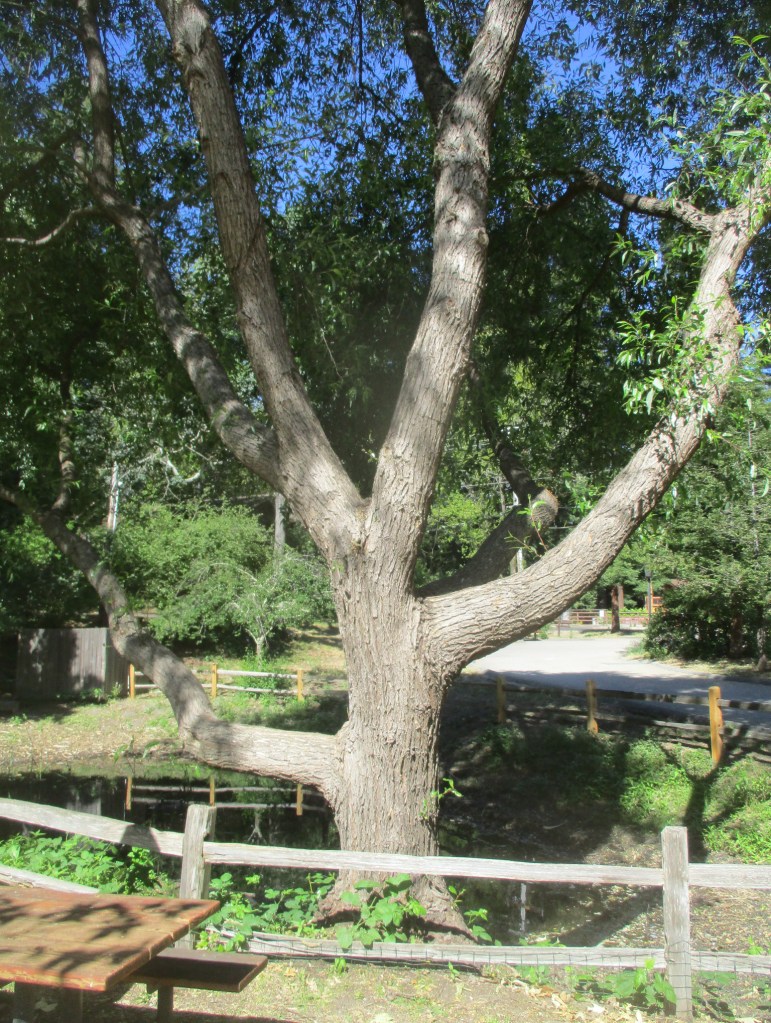
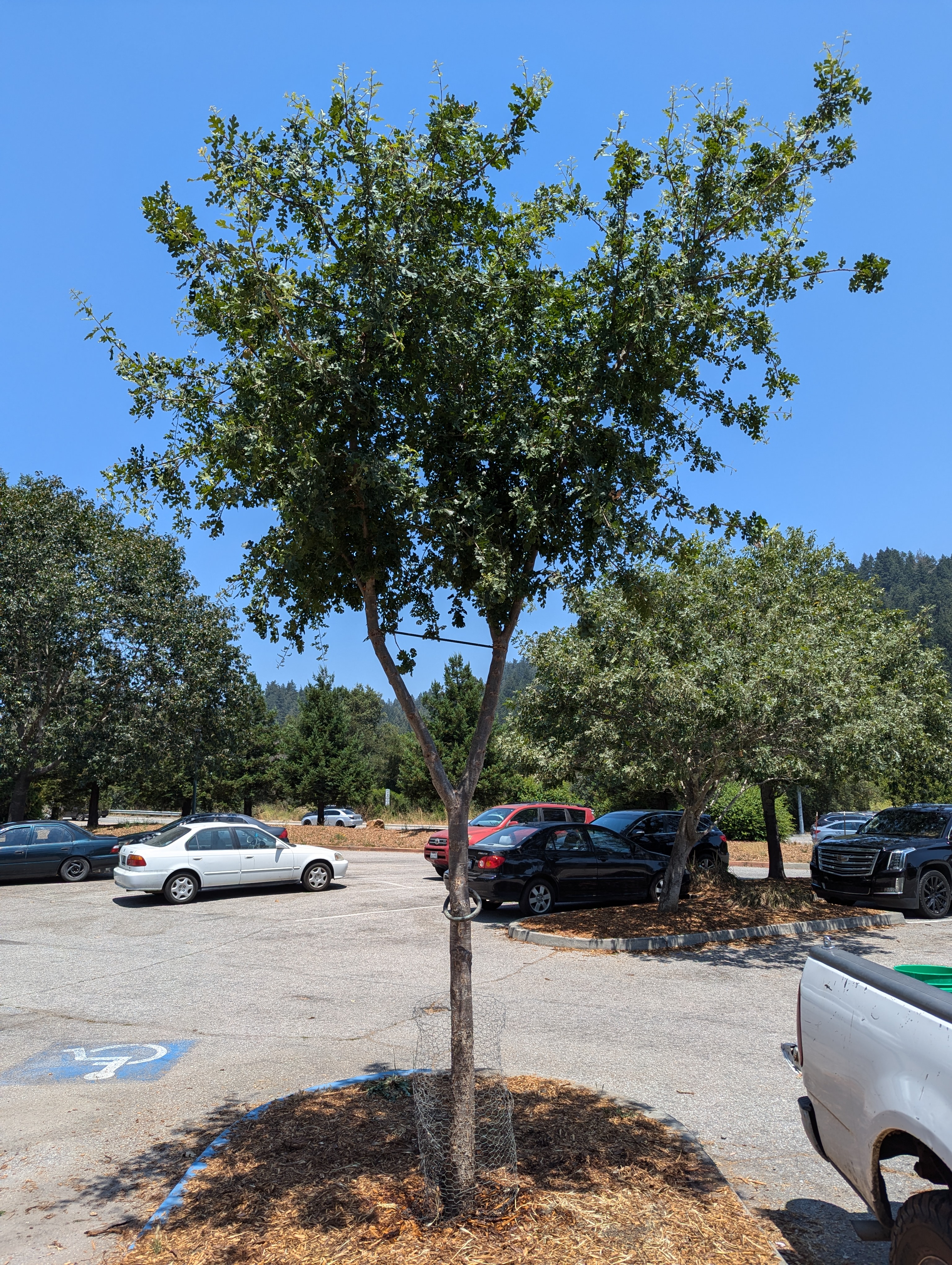
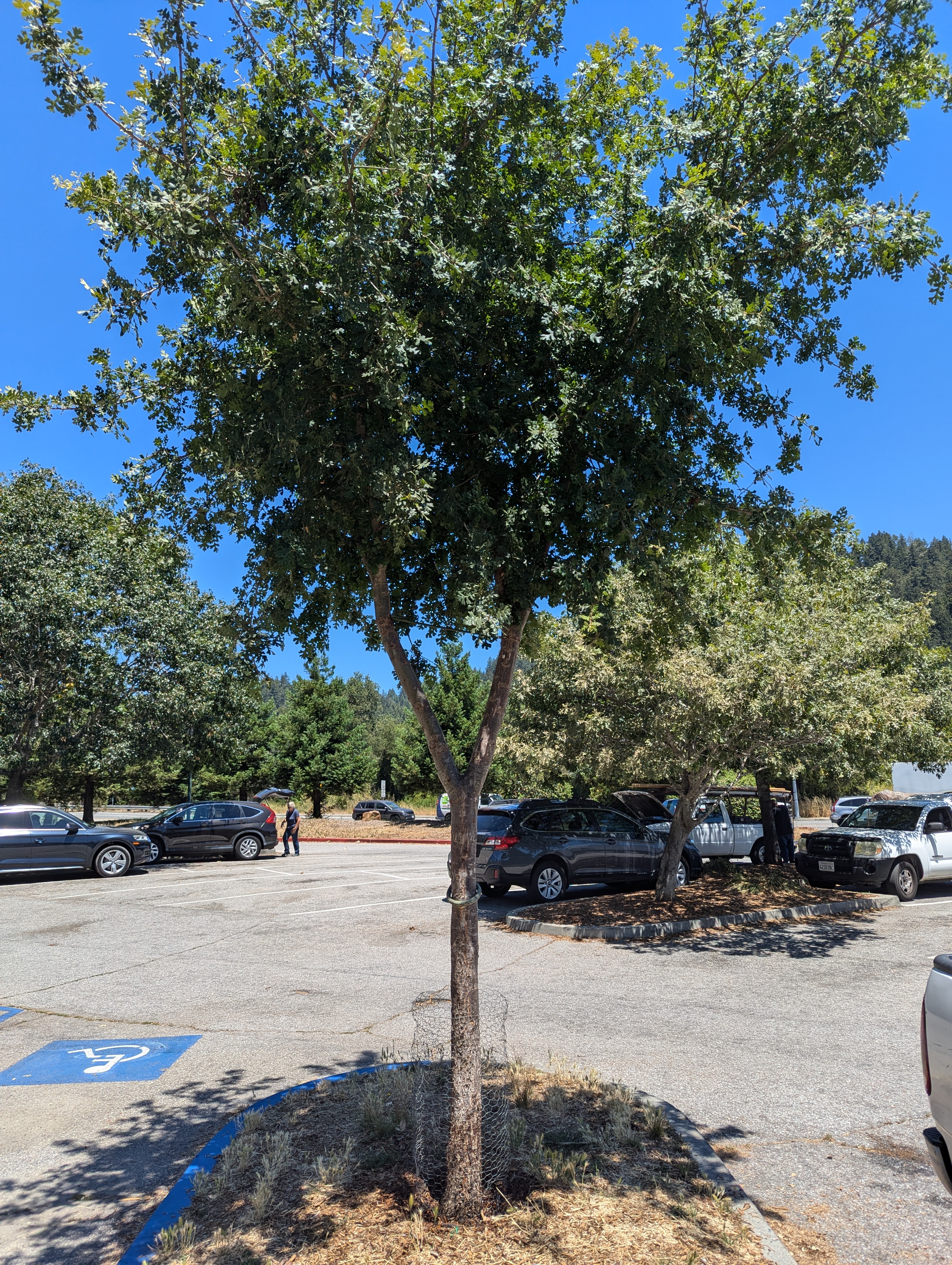
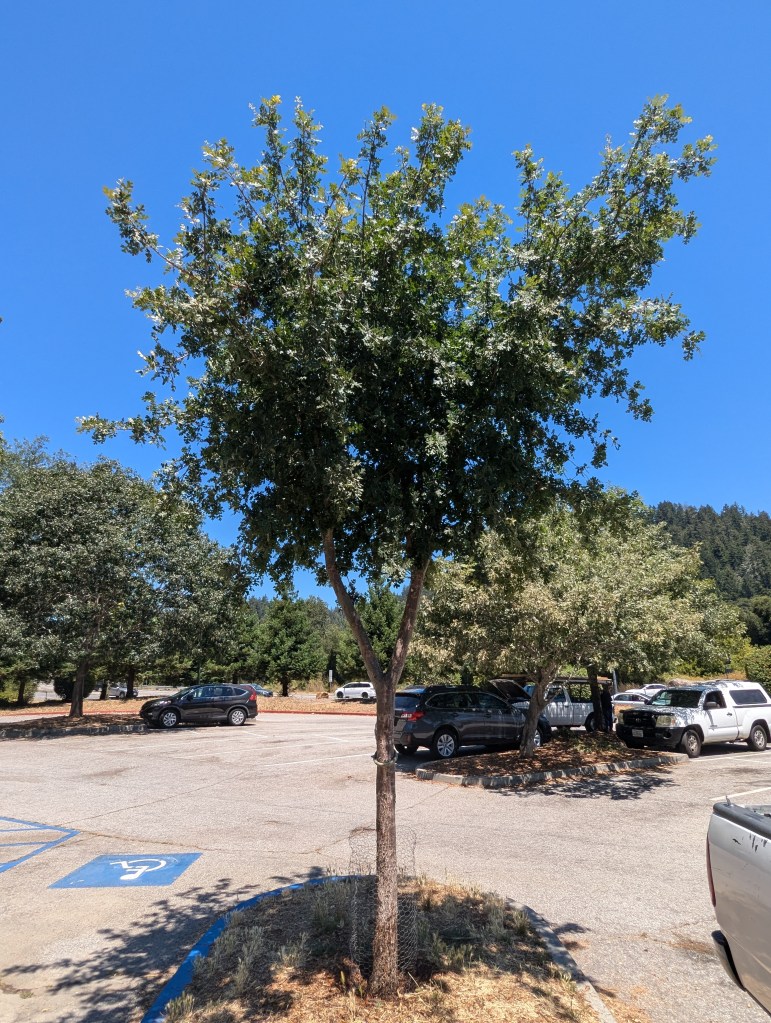
The young Memorial Tree in Felton Covered Bridge Park continues to grow at an impressive rate. It is still as remarkably healthy as it has always been. Now that the canopy has been directed upward and over the surrounding parking lot, it is maintaining adequate clearance without intervention. There is not much more to say about it. I suppose that I should conduct these updates in autumn, after growth has finished for the year, but prior to defoliation. For now, I will conform to the tradition of posting this update for the middle of July, as I have done for the past few years, but may also post another later, like I did last year. I was amazed by how much growth developed within the seven weeks between those two updates of July 12 and August 30 last year. Since the Tree is now too big for the size of pictures that I had been taking of it, I should zoom out for subsequent pictures as I did for the picture below, to show all of its expanding canopy. If I had planned it better, I should have taken a picture of the tree every summer from the same vantage.
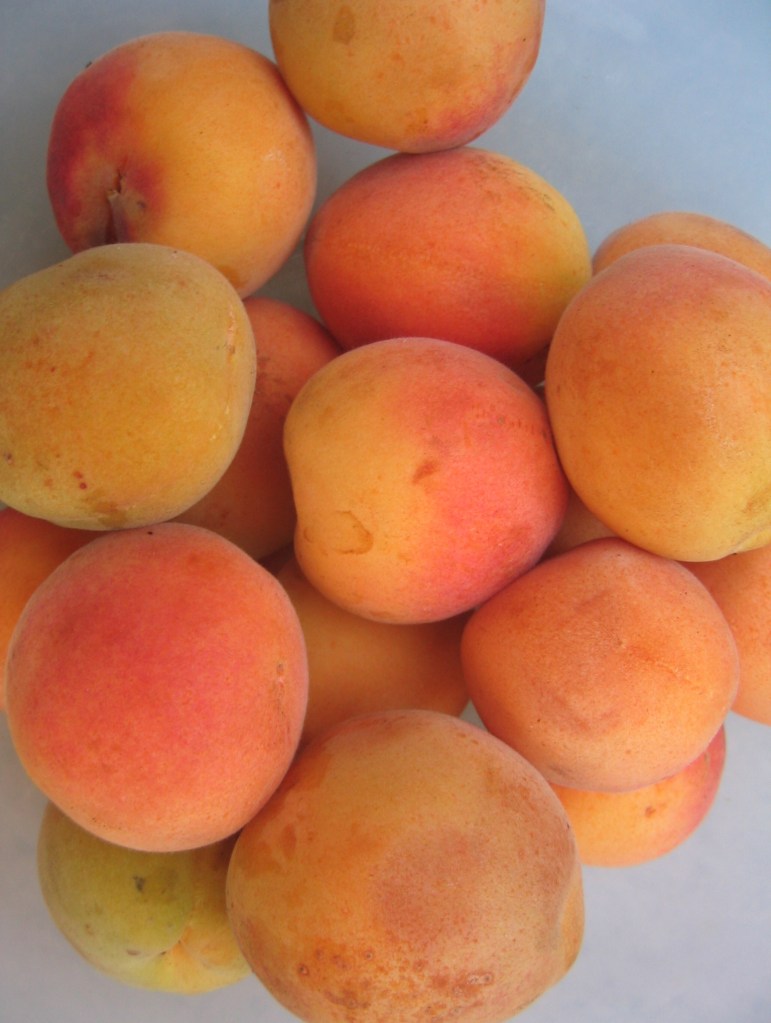
Apricot trees, which are mostly of the species Prunus armeniaca, have history here. Vast apricot orchards formerly inhabited the Santa Clara Valley. Many remain as a significant industry of the San Joaquin Valley. Apricot trees are both famously reliable and famously productive here. If they can not inhabit orchards, they can be as happy in home gardens.
Home garden apricot trees are not quite the same as orchard trees. Most are grafted onto dwarfing rootstock to stay more compact than orchard trees. More cultivars are popular in home gardens than in orchards. Regardless, even relatively compact home garden trees need dormant pruning in winter. Otherwise, they provide more fruit than they can support.
Apricot trees change with the seasons. They are strikingly bare while dormant for winter. Their profuse white bloom is spectacular for early spring. Their rich green foliage mostly obscures their fruit as it ripens through early summer. It then turns cheery yellow before it defoliates in autumn. Home garden trees should be about ten feet tall with good pruning. Fruit is difficult to reach in overgrown trees.
Wildlife is not the only menace to home garden fruits, nuts and flowers. All sorts of insect pathogens want their share also. Old fashioned nonselective insecticides can be helpful, but can leave toxic residue. They also eliminate beneficial insects that might help control pathogens. Integrated pest management, or simply IPM, is likely a more practical option.
Integrated pest management involves biological, cultural and physical pathogen control. Biological control can involve introduction of beneficial insects that consume pathogens. Ladybugs or lacewings are available from certain nurseries, for control of certain insects. However, doing nothing but allowing beneficial insects to proliferate naturally may work.
Some types of integrated pest management are standard procedure for home gardening. Cultural control may be as simple as growing varieties that are resistant to certain pests. This also involves not growing varieties that are susceptible to locally problematic pests. Sanitation is merely removal of detritus that some pathogens proliferate or overwinter in.
Physical or mechanical integrated pest management can be as simple as picking snails. Copper tape as a barrier to exclude snails and slugs is more involved but more effective. Sticky barriers, like ‘Tanglefoot’, prevent ants from cultivating aphid. (Ants cultivate aphid for sustenance.) Then, wasps, which are a biological control, control the aphid naturally.
Integrated pest management also includes various insect traps. Wasp traps use bait, like pheromones or sweet aroma, to attract stinging insects. Although they are not a problem for vegetation, stinging insects complicate gardening. Thrip traps attract thrip with yellow color, and trap them in glue. Apple maggot traps resemble developing apples, with glue.
Chemical pesticides are not beyond the realm of integrated pest management. However, such pesticides should be as nontoxic as possible. Furthermore, they should target only very specific pathogens. Although modern pesticides are safer than old fashioned types, they are still poison. They have significant potential to interfere with natural ecosystems.






 Tony Tomeo