Six on Saturday: White Again

Giant bird of Paradise may not look so good in its picture, but started the trend for these Six for this Saturday. White is my favorite color.

1. Strelitzia nicolai, giant bird of Paradise did not pose for a good picture, but impresses with its fancy bloom nonetheless. It bloomed nicely last year too, just three months after getting relocated from another garden. It is still canned, so is not even in the ground yet.

2. Nerium oleander, oleander reminds me that, contrary to the mild weather, it really is the middle of summer. This particular oleander was so overgrown and shabby from bad pruning for many years that it was coppiced. It worked so well that we could do it again.

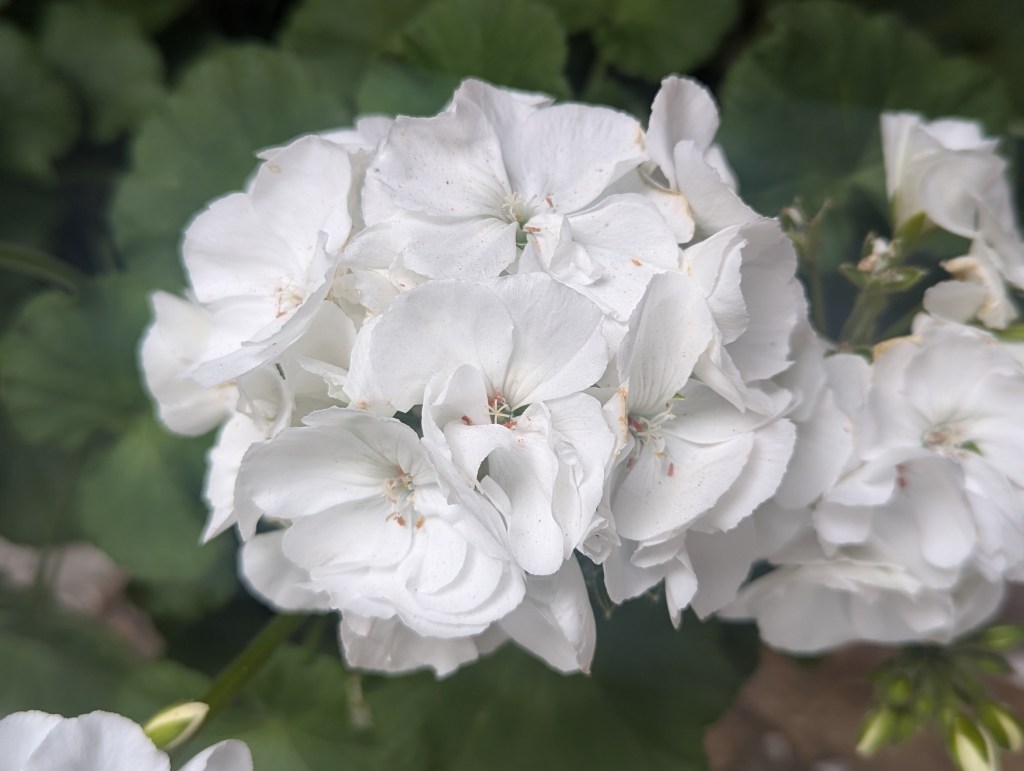
3. Pelargonium X hortorum, zonal geranium is a short term perennial, but provides too many replacement cuttings for extinction. I do not know how long it has been here, but I do enjoy propagating it now, not just because it blooms white, but also because it is easy.
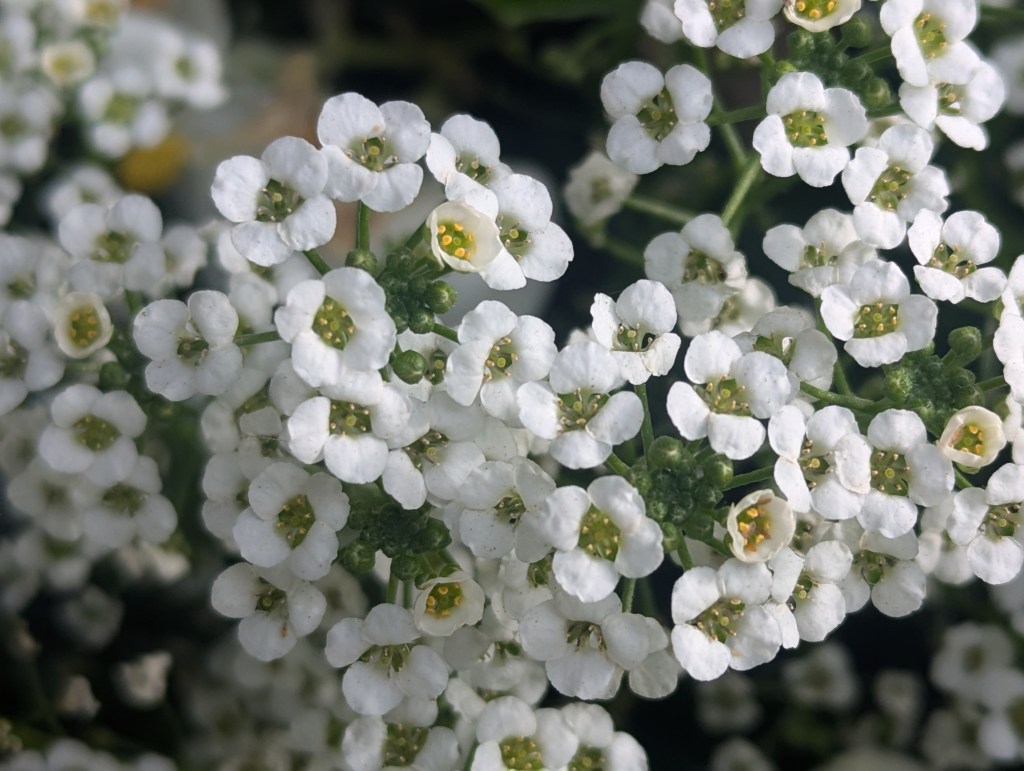
4. Lobularia maritima, sweet alyssum has been here a bit longer than expected also, but is not as perennial as zonal geranium. It was planted as a warm season annual early last summer. Because wax begonia is growing around it, it will not be replaced, but removed.
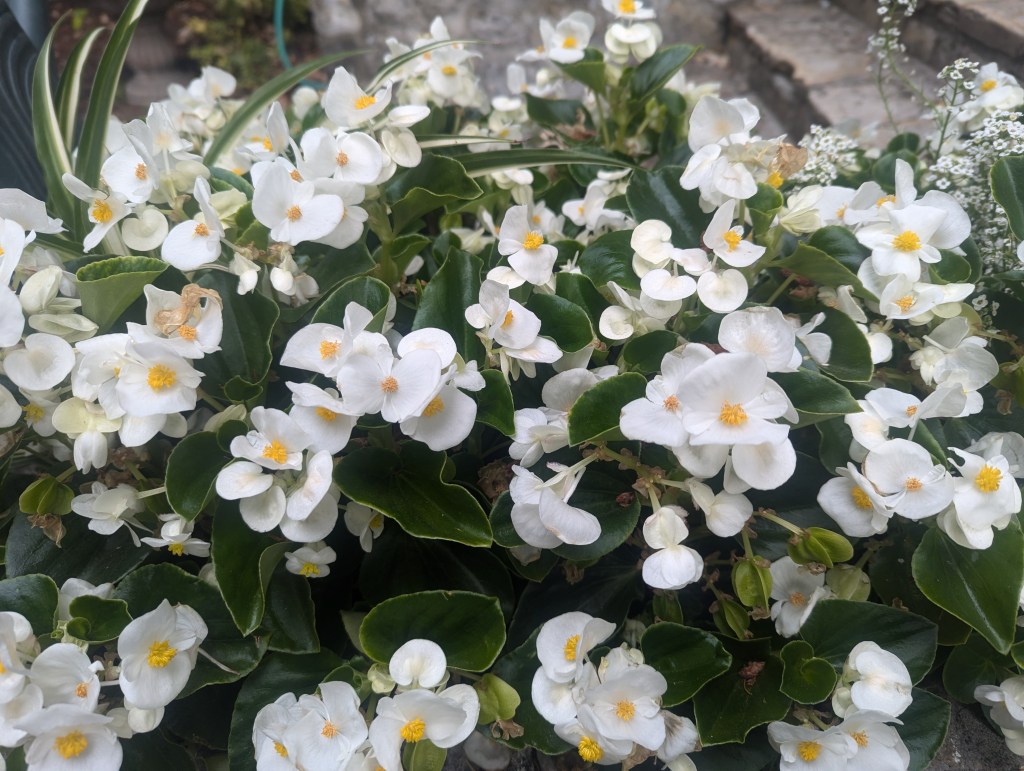
5. Begonia X semperflorens cultorum, wax begonia has been doing remarkably well now that it has its planter boxes within planter boxes to exclude aggressive redwood roots. It has been growing slowly but surely since last summer, so it now needs no replacements.
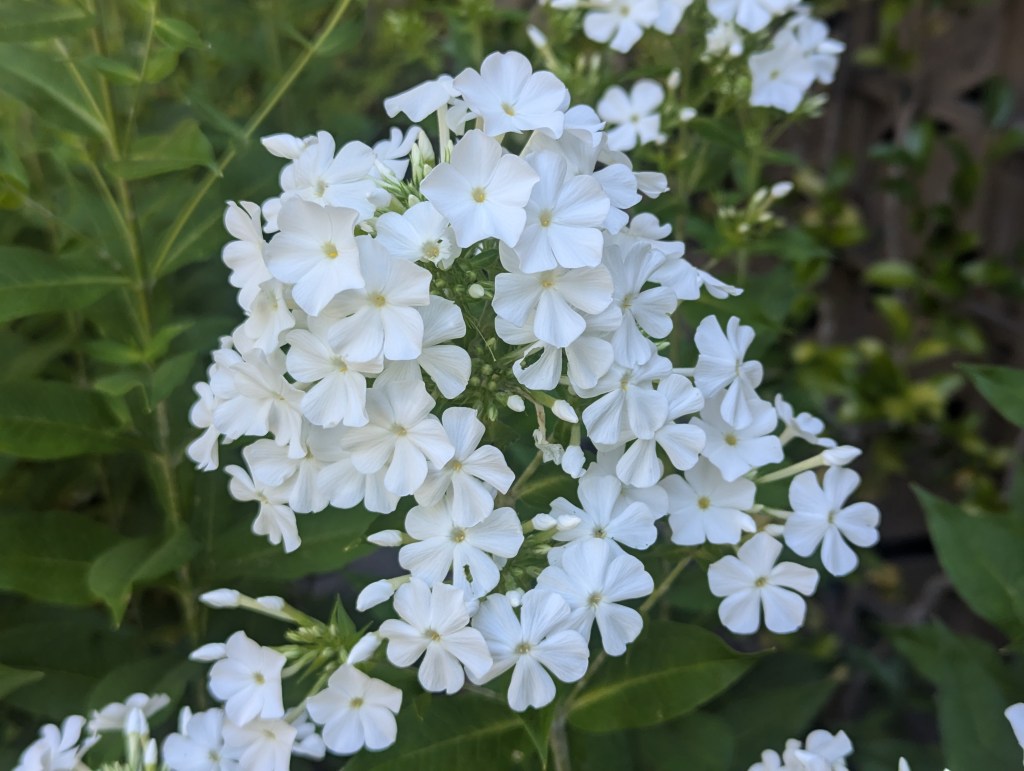
6. Phlox paniculata, garden phlox self sowed from an unknown source several years ago. It continued to self sow with such vigor that we thought it could become invasive. Then, it unexpectedly became docile, and now grows only where it is an asset to the landscape.
This is the link for Six on Saturday, for anyone else who would like to participate: https://thepropagatorblog.wordpress.com/2017/09/18/six-on-saturday-a-participant-guide/
Catalpa

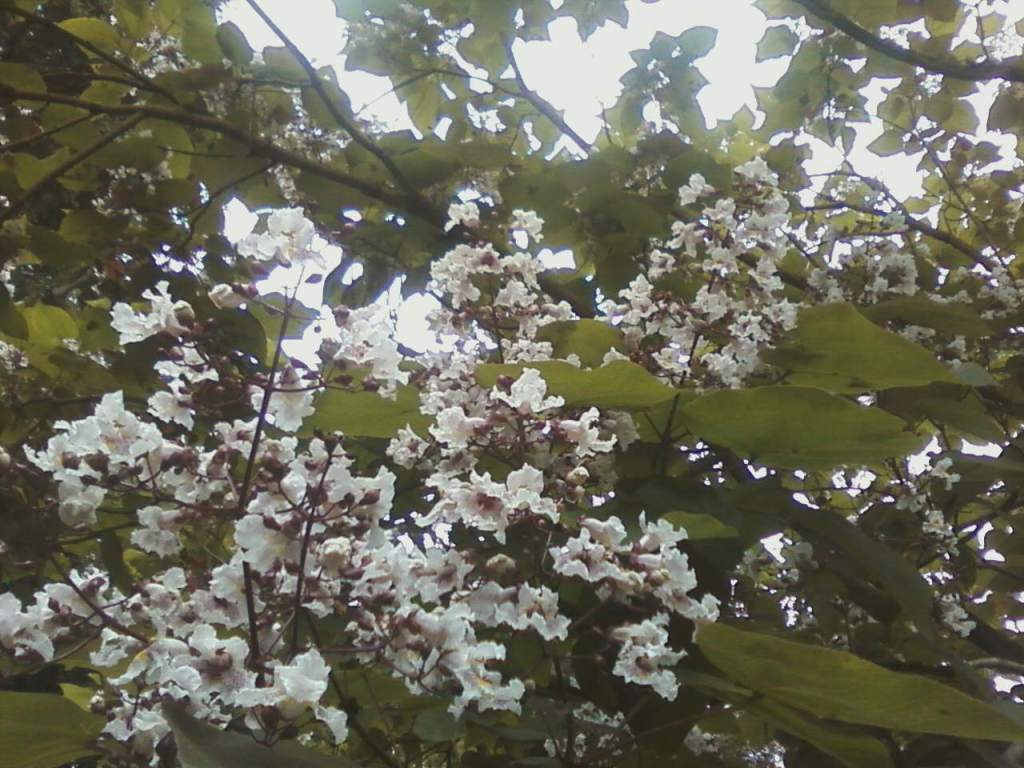
Catalpa bloom may be too high to see.

Those who know trees mostly agree that the more traditional catalpa, Catalpa speciosa, from the Midwest is the best catalpa, with soft leaves between half and a full foot long. In late spring or early summer, impressive upright trusses suspend an abundance of bright white, tubular flowers with yellow or tan stripes and spots at their centers. Individual flowers are as wide as two inches. Mature trees can be taller than forty feet and nearly as broad.

From the Southeast, Catalpa bignonioides, is a bit more proportionate to urban gardens though, since it only gets about seventy five percent as large, with leaves that are not much more than half as long. The flowers are also smaller, and not quite as bright white, but are more abundant than those of Catalpa speciosa are. The stripes and spots at their centers are slightly more colorful purplish brown and darker yellow.

Both catalpas can be messy as their flowers fall after bloom.  Fortunately, the big leaves are easy to rake when they fall in autumn. Long seed capsules that look like big beans linger on bare trees through winter.

Catalpa speciosa is almost never seen in modern landscapes, and not exactly common even in older Victorian landscapes around downtown San Jose. A few remarkable specimens remain as street trees in older neighborhoods of Oakland, Burlingame and Palo Alto. Most young trees were not planted, but instead grew from seed from older trees that are now gone.

Catalpa bignonioides is actually quite rare locally. A few old but healthy specimens can be seen around downtown Felton, with a few younger trees that grew from seed around the edges of town. Trees in Golden Gate Park in San Francisco are not as happy because of cool and breezy summers and mild winters.

Warming Summer Weather

Dog Days!

My great grandfather could remember more summers in Sunnyvale than anyone else. He knew how unique every summer was and continues to be. Some summers are uncomfortably hot from beginning to end. Last summer though, was the coolest in recorded history!

Warm summers are of course best for the fruits and vegetables that like warmth. Peaches, grapes, tomatoes and rhubarb in my great grandfather’s garden always got the best flavor during warm weather. Warm but not too hot weather early in summer made the best ‘Bing’ cherries on my grandmother’s tree in Santa Clara.

Although cool summers are more comfortable for dogs, cats and people, they are not quite as conducive to growing fruits and vegetables. It is still too early to know what this summer will be like, but even though it is now getting warm, the warmth is developing late. The past spring was remarkably mild, with rain lingering later than it typically does.

Consequently, some fruits and vegetables, as well as some flowers and trees, are developing slowly. Peaches may be a bit smaller than they typically are, with slightly milder flavor. Rhubarb should have good flavor because of recent warm weather, but may develop a bit late because it got a late start.

Tomatoes are perhaps expressing the most dissatisfaction with the mild weather. Even tomato plants that were put out in the garden early in spring have grown slowly, and are not nearly as productive as they typically are by the beginning of summer. Some are not yet producing!

Fortunately and unfortunately, the weather has gotten significantly warmer. This may be uncomfortable for us; but is a party for the formerly bored tomato plants. Warmth of course promotes bloom and fruit production, and enhances flavor. If they get what they need, tomato plants that seemed sickly in the past may suddenly grow like weeds.

They should waste no time making up for lost time. Even if mild weather continues into summer like it did last summer, it will still get warmer than it has been. Maturing tomato plants will want more water and fertilizer (if used) as they get larger, and the weather gets warmer.

Tree of Hippocrates

Platanus, or sycamore, supposedly derives its botanical name from the Greek word “platys”, which means “broad”, and describes its wide leaves. However, some believe that its name was derived from “Plato”, who lectured about philosophy within the shade of a sycamore grove, rather than an olive orchard, outside of Athens. The Tree of Hippocrates, is an individual Platanus orientalis that was planted centuries ago, supposedly where Hippocrates lectured about medicine under a much older tree of the same species. Trees grown from cuttings and seed from the Tree of Hippocrates have been shared with medical institutions, schools and libraries all over the World. One seedling was planted at Dominican Hospital in Santa Cruz in 1968. Until only the last few years, it had been pollarded in an exemplary manner, which left no twigs for me to get cuttings from during winter. Only last summer, a gardener left me a few twigs, which I plugged as early cuttings. Of course, most succumbed to summer warmth. Some of the survivors did not root through winter. Now, though, there are four surviving rooted cuttings! So, we have four copies of a seedling of the second Tree of Hippocrates! Does that count for anything?

Plum

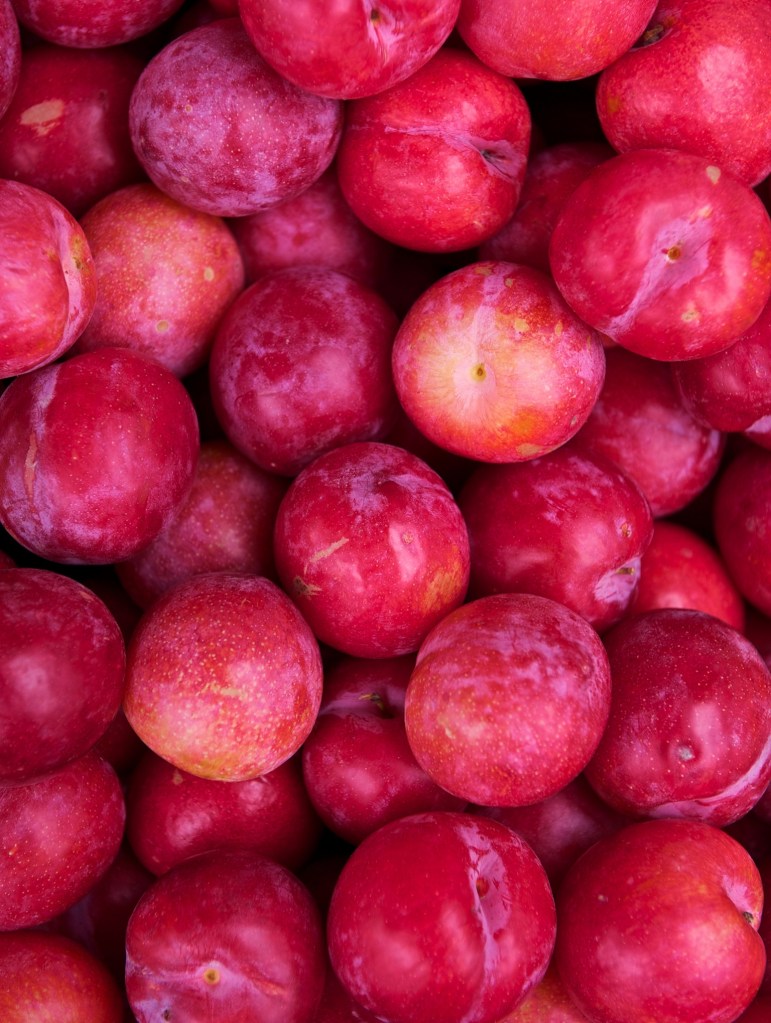
Plums are now ripening for summer.

Prunes are not merely dried plums. They are European fruits which, although very edible fresh, are also popular for drying. Their significant sugar content inhibits mold during the drying process. Plums, Prunus domestica, are of the same species, but are of Japanese origin. They are quite popular fresh, but are more likely to mold than dry like prunes can.

Besides their lower sugar content, plums are a bit bigger and rounder than most prunes. Prunes are ‘freestone’, so their flesh separates from their seeds when ripe. Old fashioned plums are ‘clingstone’, so their flesh adheres to their seeds when ripe. The most popular plums are maroon or purple. Others are red, yellow, orange, green, blue or almost black.

Almost all plum trees within home gardens are semi dwarf. Although they do not grow as big as orchard trees, they can grow twenty feet tall. They require specialized aggressive dormant pruning during winter. Otherwise, they become shabbily overgrown with most of their fruit out of reach. Their prolific and bright white bloom is spectacular for early spring.

Protecting Fruit From Hungry Wildlife

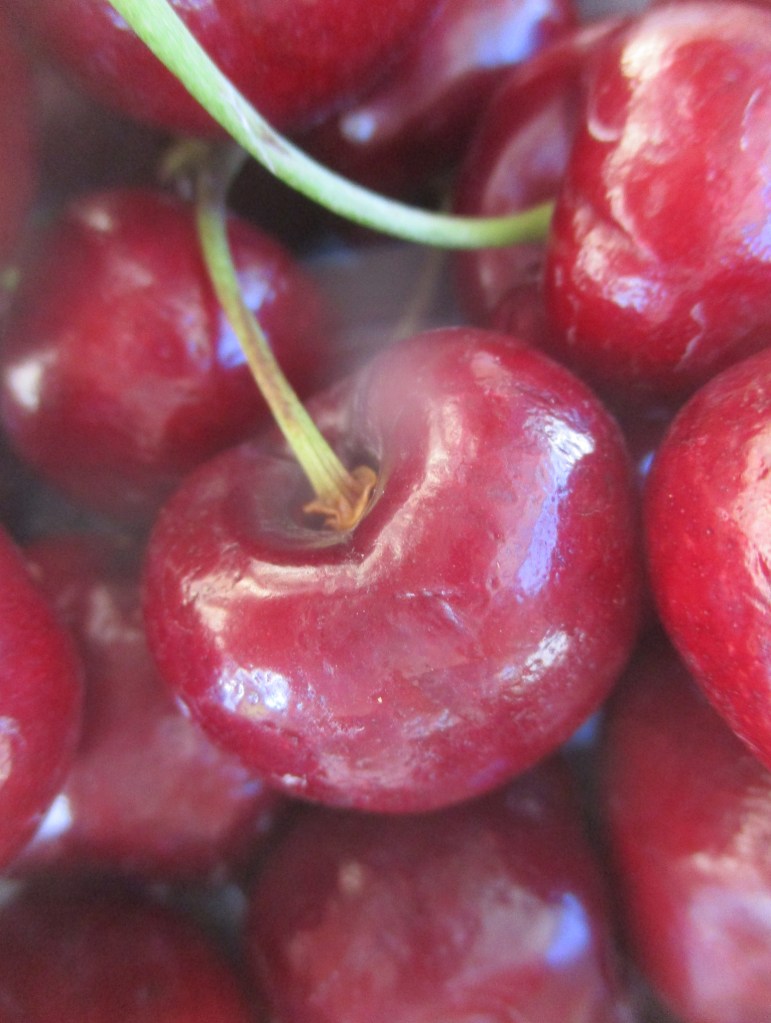
Cherries are too tempting for birds.

Dormant pruning of deciduous fruit trees last winter should finally be proving its benefits. Such pruning enhances tree vigor and resilience to disease. As importantly, it enhances fruit and nut quality. Birds, squirrels and perhaps other wildlife are unfortunately noticing. Protecting fruit as it ripens may seem to be impossible. Sharing might not be acceptable.

The problem with sharing is that most wildlife is greedy. Wildlife that is not greedy can be too generous by inviting their friends over to indulge. They may not consume everything, but might damage all that they can not consume. Protecting fruit does not deprive wildlife of sustenance that they require for survival. It merely diverts their exploitation elsewhere.

The problem with protecting fruit is that it can seem futile. Even if wildlife could read, they would not comply with signs telling them to keep out. Cats and dogs can not chase them all away, and can not be there to try all the time. Techniques that are somewhat effective for some wildlife are not effective for all wildlife. However, some techniques are effective.

Protecting fruit requires some degree of familiarity with whomever wants to exploit it. Not many deterrents are effective for all of them. Netting is only effective for marauding birds, but not rodents, who can chew through it. Because it is so difficult to install, and worse to remove, other options are better anyway. Flash tape repels some birds rather effectively.

Protecting fruit from squirrels is more challenging. Tree trunk baffles can only be effective if there is no other access to the subject trees. They are useless if squirrels can jump into low limbs from the ground or adjacent trees. Growing rosemary, lavender or mint around fruit trees is supposedly a mild deterrent. However, it obstructs maintenance of the trees.

Plastic snakes or owls might be effective for protecting fruit from both squirrels and birds. Plush toys might be as effective since squirrels and birds do not recognize them as safe. However, such effigies eventually become uselessly familiar without frequent relocation. Squirrels and birds may not seem to be very intelligent, but they are not too stupid either.

Six on Saturday: More Unexpected Surprises

Several of these Six were featured here before, and some only recently. They continue to surprise.

1. Musa ingens, oem, or giant highland banana, produced two pups. This is the larger of the two. Although I was told that this is oem, I am not certain. It behaves like the species in some ways, but not others. For example, oem should only occasionally produce pups.

2. Heuchera sanguinea, coral bells does not look coral to me. This looks like simple red. I think of coral as more orangish pink. Is that correct? I can not complain, since I prefer this color. Some of the fancy foliar cultivars here bloom with colors other than coral too.

3. Canna X generalis ‘Cannova Mango’ canna and feral Antirrhinum majus, snapdragon that I posted pictures of two weeks ago are blooming even better together now. Why are some of the best flowers as unplanned as these were? Perhaps I should unplan for more.

4. Helenium autumnale, tickseed was yellow last week. This is literally the same flower. Is this new color orange or red? Was it supposed to be this color, or is this what happens to yellow flowers as they fade? I will need to see how the other two varieties bloom later.

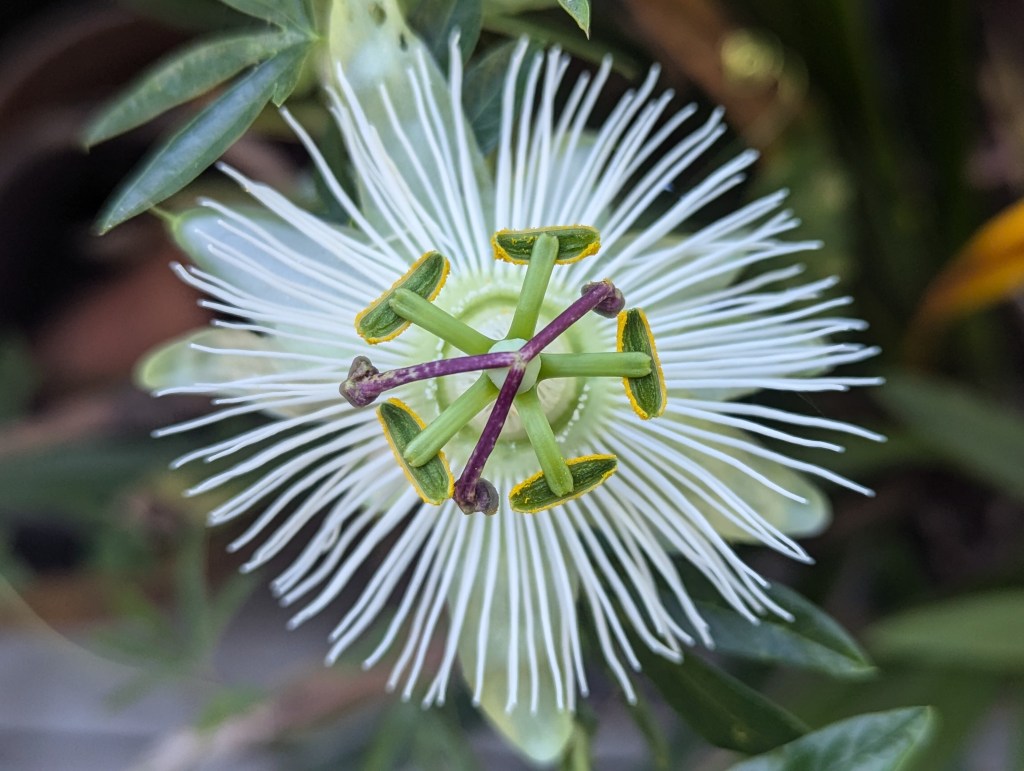
5. Passiflora caerulea ‘Constance Elliott’ passion flower smells like pineapple guava, but only briefly. Its fragrance is gone before I can get someone else to confirm the similarity. The garishness of this bloom does not last very long either. This flower is wilted by now.

6. Rhody rarely cooperates for pictures. He should though, since he is who we all want to see here for Six on Saturday. I would post six pictures of him weekly if he would allow it. Perhaps I should have gotten a picture of Heather too. She cooperates more for pictures.

This is the link for Six on Saturday, for anyone else who would like to participate: https://thepropagatorblog.wordpress.com/2017/09/18/six-on-saturday-a-participant-guide/

Giant Reed

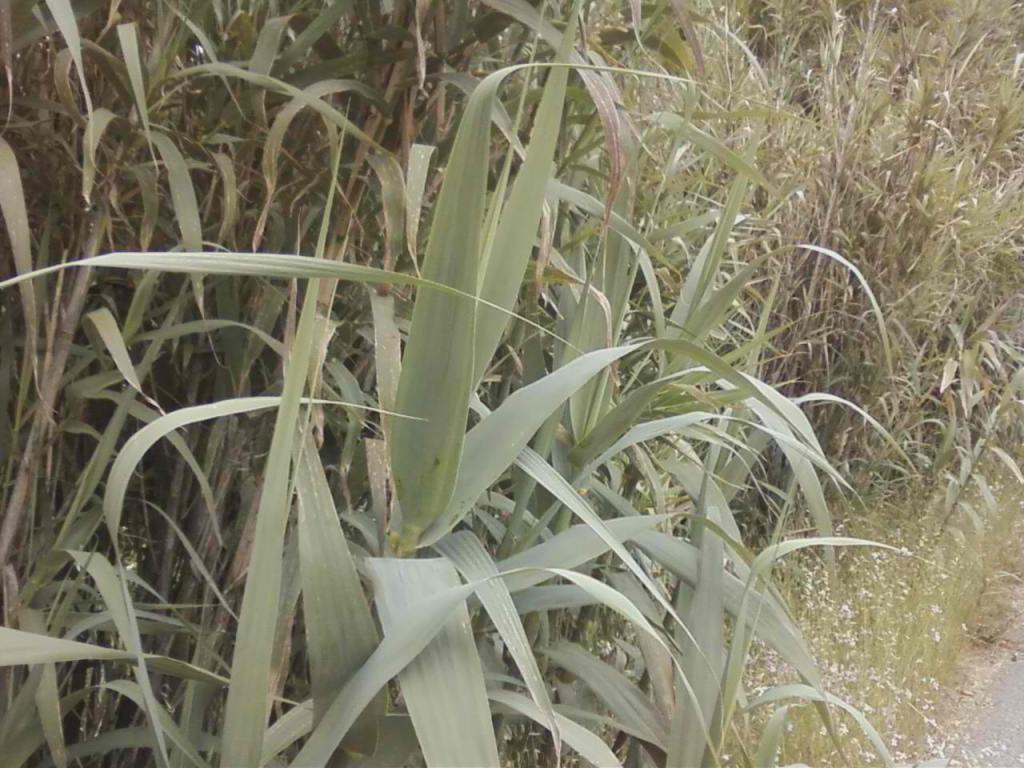
Giant reed is a horrid weed within many ecosystems.

The earliest infestations of giant reed, Arundo donax, that clogged tributaries of the San Joaquin and Sacramento Rivers supposedly grew from pieces used as packing materiel for cargo from China. It was simply dumped into the rivers as cargo was unloaded in port cities like Stockton and Sacramento. How it got to China from its native range in the Mediterranean is unclear.

Because it is so aggressive and invasive, giant reed is almost never found in nurseries. In many rural areas, particularly near waterways, it is listed on the ‘DO NOT PLANT’ list. However, giant reed can sometimes be found in old landscapes where it was planted before it became so unpopular. It can also grow from seed in unexpected places.

Once established, giant reed can be difficult to eradicate or even divide. It spreads by thick rhizomes that resemble the stolons of bamboo, but not quite as tough. It is often mistaken for bamboo. Where it gets enough water, it can get nearly thirty feet tall, with leaves about two feet long.

Where it can be contained and will not become an invasive weed by seeding into surrounding areas, giant reed can provide bold foliage that blows softly in the breeze. ‘Versicolor’ (or ‘Variegata’) has pale yellow or white variegation, and does not get much more than half as tall as the more common green (unvariegated) giant reed. Incidentally, the canes of giant reed are used to make reeds for musical instruments.

Grasses

There is more to grasses than turf.

The most familiar lawn grasses can not do what the many other grasses and grass like plants do in a garden. Lawns are mown into submission so that they can function like carpet in outdoor rooms. They certainly have their appeal and practicality, although they require very regular maintenance and generous watering.

Other ornamental grasses are grown like more common perennials, to provide appealing foliage, flowers, forms, textures and ‘motion’ as they move in even slight breezes. Most require significantly less water and maintenance than lawns do. Sedges, rushes and papyrus, although not grasses, function like grasses around ponds and in areas that are too damp for grasses to be happy.

Giant reed, pampas grass and bamboo are all notorious as invasive weeds. Giant reed and pampas grass appear and grow voraciously in some of the worst places that their seeds can get into. (Giant reed should not be planted anywhere near waterways or riparian environments.) Bamboo is not nearly as prolific, but spreads aggressively by stolons (subterranean stems) that grow very fast and potentially reach several feet.

However, where they can be contained, these three are the boldest of their kind. Giant reed grows like large types of bamboo, but fluffier, with broader undivided leaves. Pampas grass develops into big mounds of graceful foliage with billowy white or pinkish flower plumes. (Pampas grass leaves can cause nasty paper cuts, though.) The many different types of bamboo provide a variety of graceful foliage; and many provide striking form with their rigid canes. Some bamboo are low and compact. Most are tall and elegant.

Dwarf blue fescue is among the smaller ornamental grasses, forming round tufts of soft but seemingly bristly blue foliage that resembles dense bundles of pine needles. Fountain grass is considerably larger, with green or purplish foliage, and flower plumes that look like kitten tails. Hair grass is so softly textured that it barely supports its own weight, and often lays gently on the ground or leans onto other plants.

Except for giant reed, pampas grass and the various bamboos, most ornamental grasses do not need much attention. Some look better if they get cut back before they start to grow at the end of winter. Others should get their fading flowers removed. A few are deciduous, so die back over the winter. Grasses are otherwise easier to care for than any lawn and many other perennials.