
Sunday Best – White Asiatic Lily
Too much is blooming now for pictures of foliage, bark, trees, vines, shrubs or any other horticultural subject matter. I got these pictures before yesterday, so they are technically still spring bloom.
1. Gladiolus X hortulanus, gladiolus looks silly alone. It was the first to bloom. All others are in small colonies that developed from reliably perennial bulbs, which were originally components of a mixed batch. I would not have expected any to be so reliably perennial.

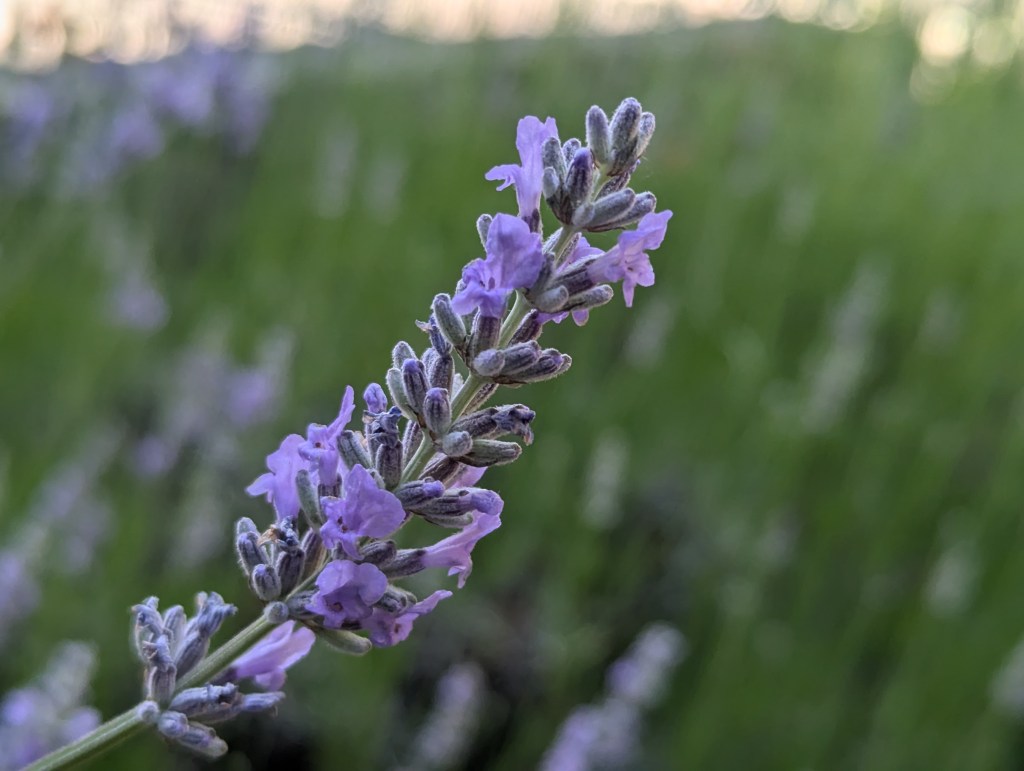
2. Lavandula angustifolia, English lavender has similarly lasted longer than expected. It was already a few years old several years ago, when I predicted its natural demise within two years. A feral specimen of Spanish lavender coincidentally grew from a seed nearby.
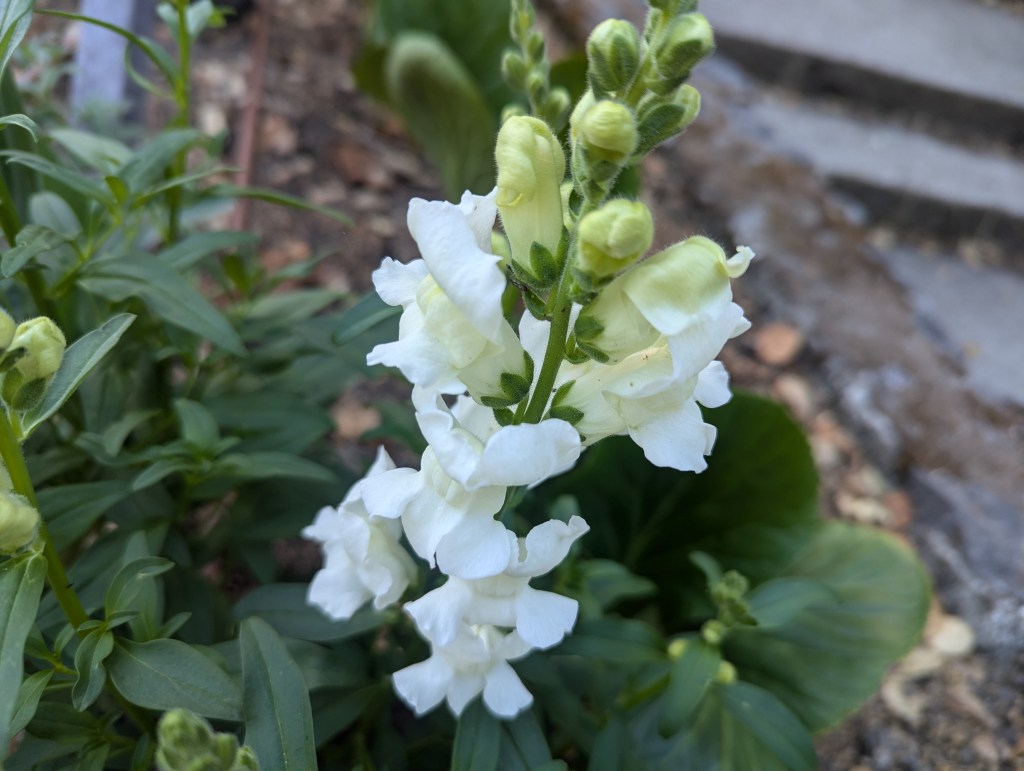
3. Antirrhinum majus, snapdragon is also feral. All within its colony bloom white. Those of another feral colony all bloom yellow. However, the parents of both colonies bloomed with mixed colors of the same variety. I can not complain, but I wonder what happened.
4. Celosia argentea, plumed cockscomb blooms with these red, orange or yellow flames. The chartreuse foliage in the background is coleus. They are a good example of why I do not procure annuals at work. I have difficulty with such striking color, texture and form.

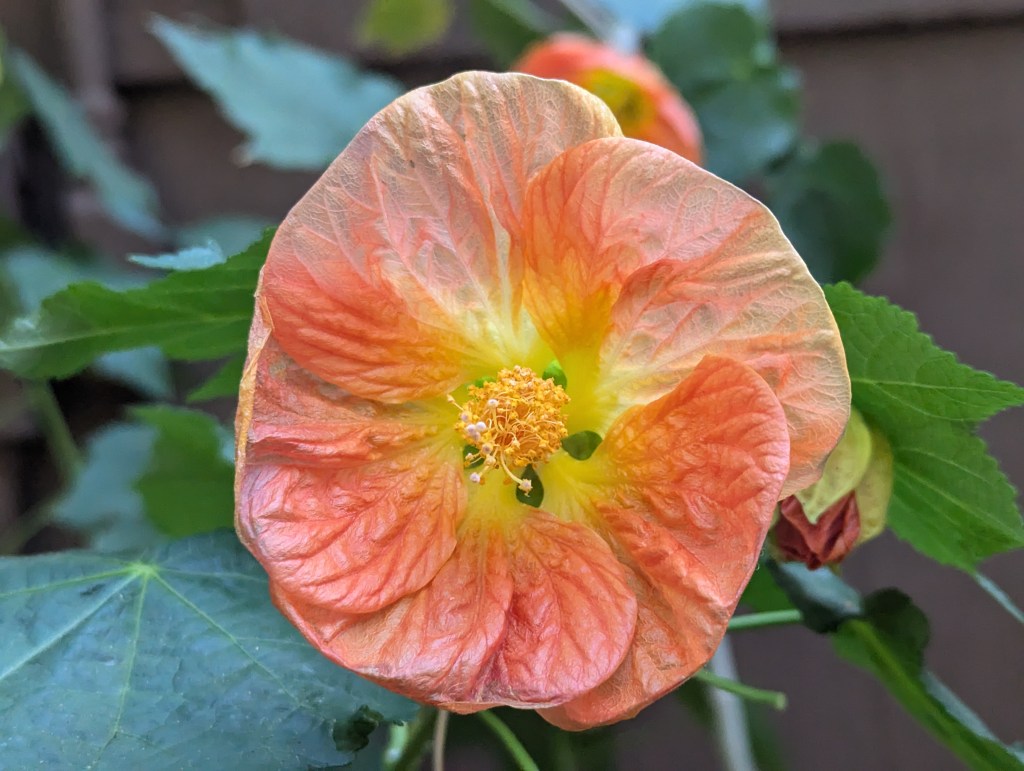
5. Abutilon X hybridum, Chinese lantern is an awkwardly lanky shrub that will not stop blooming. I would like to prune it down to perhaps improve its density, but do not want to interfere with its bloom schedule. It has been here for many years, and might be feral.
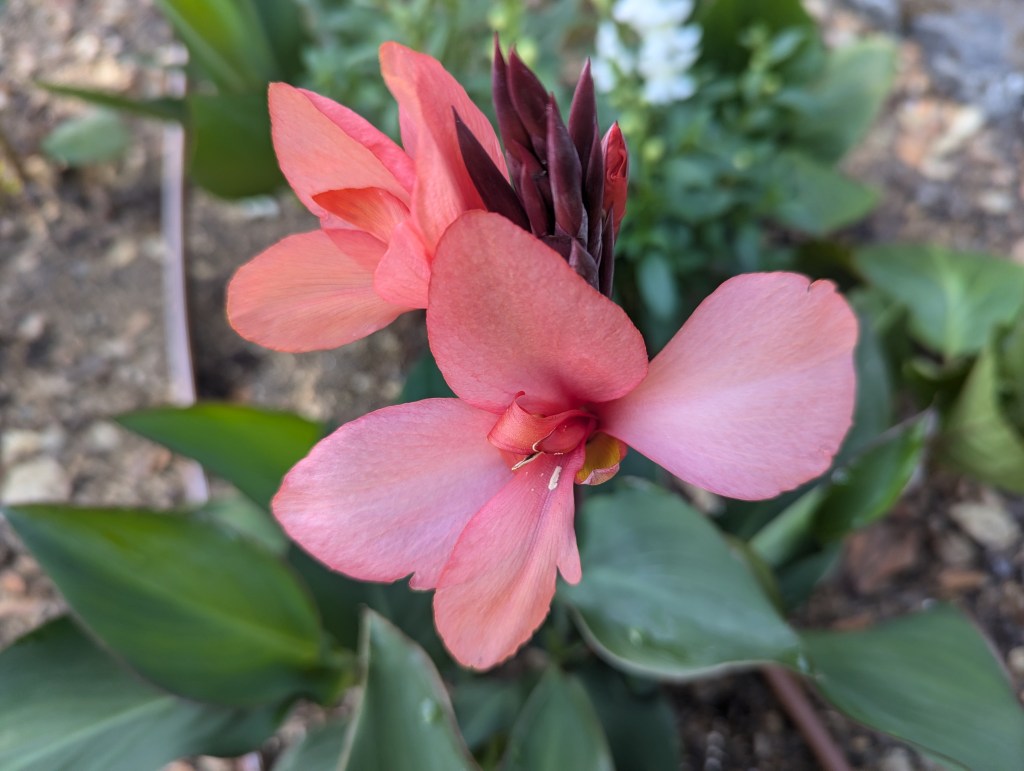
6. Canna ‘Cannova Mango’ canna is not my favorite cultivar, but has too many attributes to discredit. It begins blooming before any other canna here. It blooms more abundantly than any other canna here. I know of no one else who dislikes this color as much as I do.
This is the link for Six on Saturday, for anyone else who would like to participate: https://thepropagatorblog.wordpress.com/2017/09/18/six-on-saturday-a-participant-guide/

Just like other types of false cypress, the Sawara false cypress, Chamaecyparis pisifera, naturally gets much larger than its many cultivars that are sometime grown in gardens for their colorful and interestingly textured foliage. Although not large trees, they can get nearly thirty feet tall in wild groves in Japan. Most garden varieties stay less than ten feet tall, and some stay much shorter.
‘Cyano-Viridis’ (‘Boulevard’), with feathery blue green foliage, is one of the more popular cultivars. It grows slowly to more than six feet tall and broad. ‘Filifera’ has very different foliage, with tightly fitting scale leaves on limber cord shaped branches. It stays a bit shorter but can get a bit broader. ‘Mops’ is similar to ‘Filifera’, but stays about a foot and a half tall and broad. ‘Filifera Aurea’ and ‘Golden Mops’ are just like ‘Filfera’ and ‘Mops’, but with yellow foliage.
Reflected glare or harsh exposures can burn foliage. Full sun is not a problem, unless enhanced by glare from surrounding pavement or lightly colored walls. Partial shade is not a problem either, but compromises foliar color, particularly yellow.
Shearing or major pruning deprives false cypress of their naturally appealing forms and textures. They should therefore get plenty of space for their mature size, and get trimmed lightly for shape only when necessary.

Many dwarf plants are very practical. The many different dwarf cultivars (cultivated varieties) of false cypress that are grown for their interesting forms, textures and foliar colors are much more proportionate to home gardens than similar specie in the wild, which are big enough to get harvested for timber. Oranges are easier to reach on dwarf trees than on standard trees, which get as big as shade trees.
However, not all plants should be bred to be dwarfs. Dwarf Southern magnolias certainly have their appeal for tight spots, but do not make as much shade as larger trees do. Compact cultivars of crape myrtles (although not actually dwarfs) take too much time to grow above truck traffic to be practical as street trees.
Many classic annuals and perennials are likewise bred to be too compact to be as practical as they were in the past. Annie of Annie’s Annuals in Richmond refers to this all too common practice as ‘boinkification’. It makes many blooming plants more marketable and resilient to shipping and installation, but deprives them of their natural form and elegance.
Short annuals and perennials certainly have their place. Lobelia, sweet alyssum, dwarf marigolds and petunias are fine along walkways and in pots with other larger plants. They also work well as bedding plants for a profusion of color. Yet, there is all too often too much of a good thing. Some flower beds are simply so big and plain, that it would be just as colorful to paint an area orange instead of planting so many marigolds.
Taller flowering annuals like nicotiana (flowering tobacco), cosmos and zinnias add depth behind lower growing annuals. Dahlias are perennials that can accomplish the same thing. Some of the older and less common varieties of familiar bedding plants that have not been so boinkified also work well. There are even petunias that can get two feet tall and wide! These taller plants also provide cut flowers; which is something that boinky plants are not so good at.
Boinkification also compromises fragrance and aroma. Bedding dianthus have almost no fragrance at all; unlike the old fashioned dianthus and carnations that had such distinctive spicy fragrance. Modern zonal geraniums are more colorful than classic varieties, but their foliage is not quite as aromatic.
Not only does increased foliar density of boinky plants promote the proliferation of many diseases and pests; but the genetic violations necessary for boinkification interfere with resistance to diseases and pests!
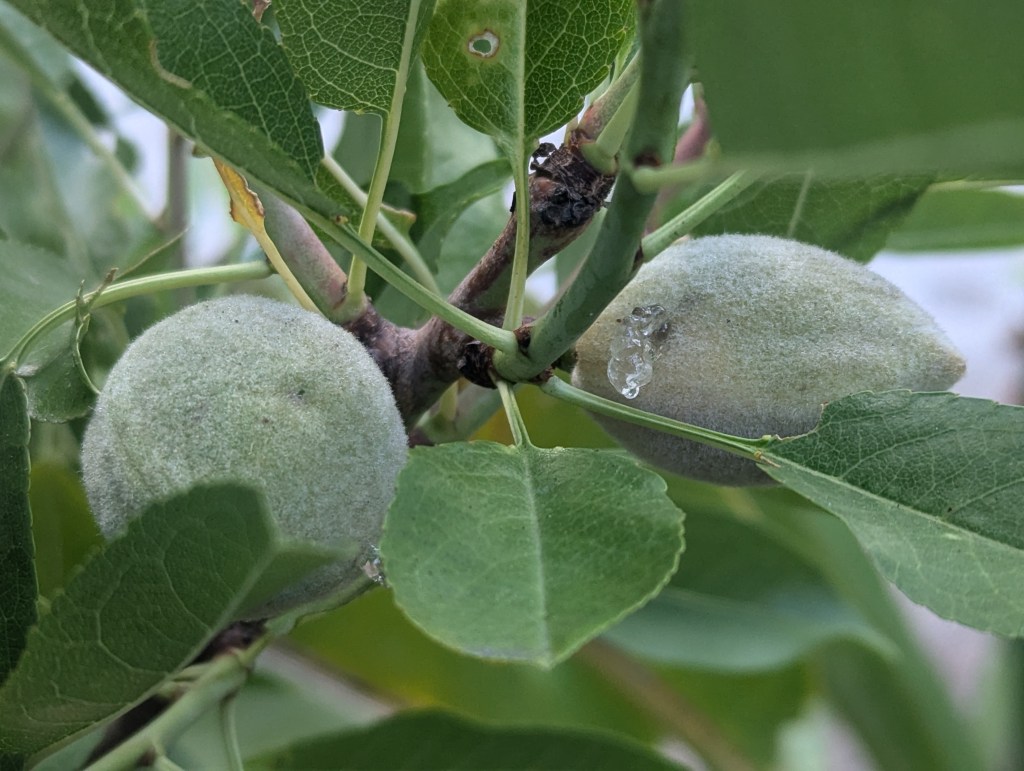
Pote-8-o or pote-aht-o? Tome-8-o or tome-aht-o? Ape-ricot or app-ricot? Pee-can or pi-kahn? What about “almond”? This is different from the distinction of plums and prunes. It is a matter of pronunciation. Is “almond” pronounced like “salmon” or “common”? Those who grow them, and likely know better than the rest of us, commonly pronounce it like “salmon”. Most of the rest of us pronounce it like “common”. The nuts are harvested by machines that shake them from their trees, which supposedly shakes the ‘ell out of them, which sort of makes sense. Although the “l” is silent within both pronunciations, it might be slightly more so within the “common” pronunciation. Everything associated with almonds prior to harvest, such as their orchards, trees, bloom, unharvested nuts and their collective industry, commonly employs the “salmon” pronunciation, in which the “l” may be slightly less silent. Everything associated with harvested and processed nuts and their products, which are what most of us are familiar with, more commonly employs the “common” pronunciation. For the pair of trees in my garden, I use the “salmon” pronunciation. For their nuts, I use the “common” pronunciation.
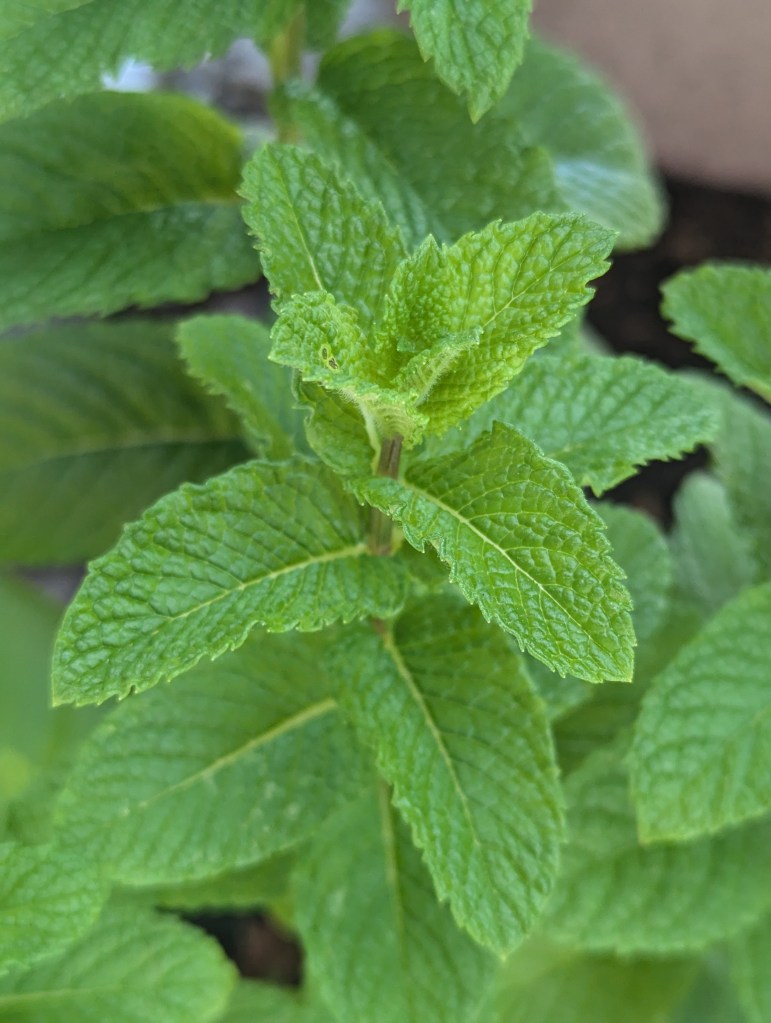
Propagation is not a problem for mint, Mentha spicata. It grows very easily from cuttings, even in water. Alternatively, it grows efficiently from division of its dense network of basal stolons. A more likely problem is its potential invasiveness. It spreads everywhere it finds water, even into other vegetation. Therefore, it is more popular in pots than in the ground.
Mint is as popular for its herbal or culinary application as for its aesthetic appeal. Various cultivars and hybrids provide various flavors and aromas of mint. It is handsome alone in pots, or can mingle nicely with annuals, perennials or herbs. It is a traditional component of mixed window boxes. With containment it can be a splendid small scale ground cover.
Mature growth is generally less than a foot high. It can sprawl almost three feet high onto low shrubbery, though. Occasional shearing, particularly after winter, maintains tidier and lower growth. Paired evergreen leaves are about two inches long, with serrated margins. Slender floral spikes of tiny white or pink flowers may get slightly shabby during summer if not shorn.
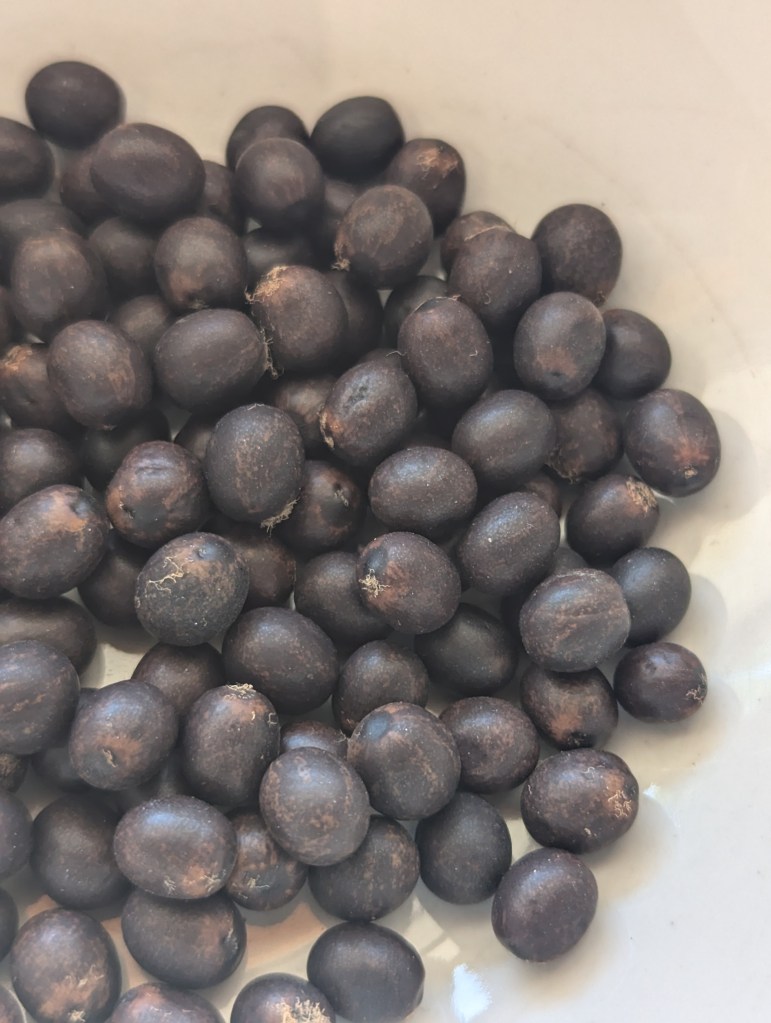
Seed is the most familiar option for producing new garden plants. Division of perennials, especially overgrown colonies, is another familiar technique. More substantial plants are easier to grow from cutting or layering. Propagation is any process of producing plants. It is how nurseries generate such plants. Some techniques are practical for home gardens.
Propagation by seed is the most practical for most annuals. It is also practical for several perennials and woodier plants. However, not all seed is true to type. Some may become progeny that is different from its parents. After a few generations, ‘Jewel Mix’ nasturtiums revert to orange and yellow bloom. Progeny of most variegated plants lacks variegation.
Propagation by division is more practical for many perennials that form distinct colonies. This includes crowded bulbs. It entails separation of portions of such colonies, or merely single rhizomes. Such portions need only enough root to grow as new plants. Progeny of division are genetically identical to their single parent plant. They therefore do not revert.
Propagation by cutting is the most common technique of propagation among nurseries. It involves cutting pieces of stems and compelling them to grow roots in rooting media. For small scale home garden applications, some of such stem pieces can root in water. Such pieces, or cuttings, are genetically identical to their original parents. They can not revert.
Layering is rather similar to propagation by cutting. Stem pieces remain attached to their original parents during the process though. Burying a portion of stem with its tip exposed stimulates root growth where it is buried. Such stems eventually develop enough roots to sustain themselves after separation. Layering is practical for producing just a few copies.
Propagation is certainly more involved than these brief descriptions imply. It may involve other techniques. Grafting involves assembly of two or more distinct cultivars onto single plants. Rootstock grows from seed, division, cutting or layer. Scions are buds or stems of other cultivars. They graft onto the rootstocks to become the upper portions of the plants.

A few late bloomers are making up for lost time. Hydrangea, although late, is somewhat earlier than it typically is. Bluegum is not blooming, but contributes its own sort of color with bark.
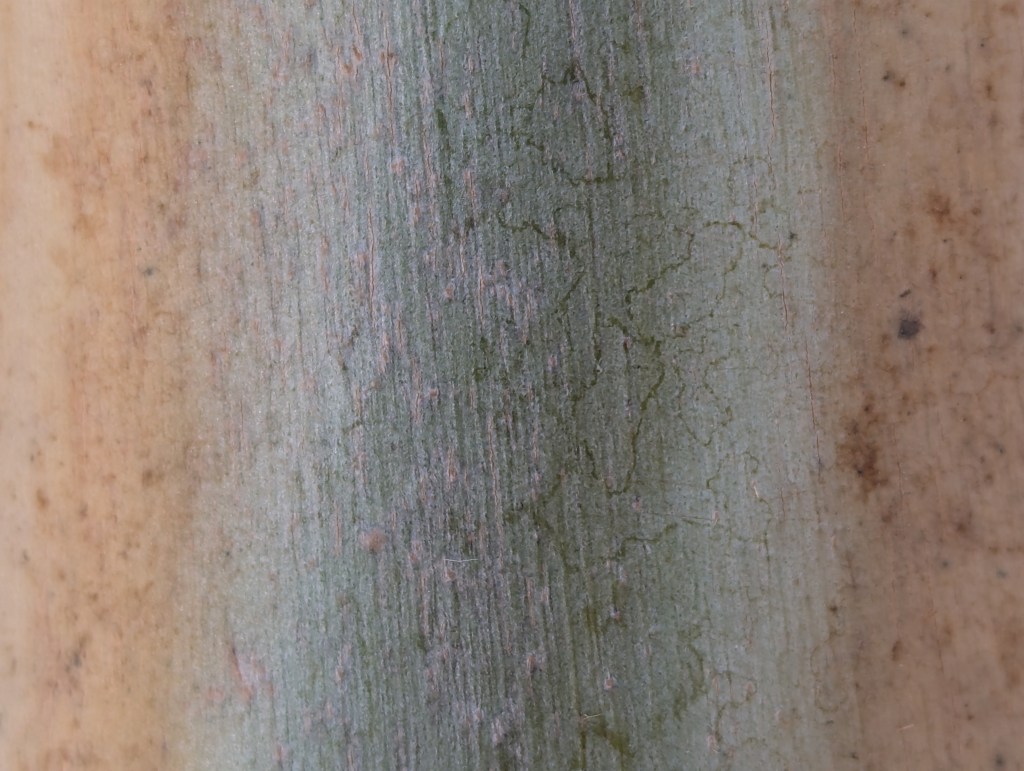
1. Eucalyptus globulus, bluegum remains canned because it grows too big too vigorously to go into the ground. Ultimately, it will likely need to be destroyed. For now, it provides both aromatic juvenile foliage and pretty adult foliage. It also has pretty watercolor bark.
2. Yucca recurvifolia, curve leaf yucca is known as Yucca gloriosa var. tristis now. What was wrong with its former botanical name? Its boring common name should be changed instead. Anyway, I am impressed that it is blooming so soon after relocation last winter.

3. Hibbertia scandens, guinea gold vine grew like a weed from a cutting last year, and is now beginning to bloom for the first time. This is the first of many flower buds to unfurl. Its bloom was expected, but its profusion is unexpectedly impressive. It remains canned.

4. Hemerocallis fulva, daylily was similarly expected to bloom and is similarly blooming with unexpected profusion. I have no idea what cultivar this is, but I suspect that it may be the straight species. We grow just one other daylily cultivar, and it is relatively docile.

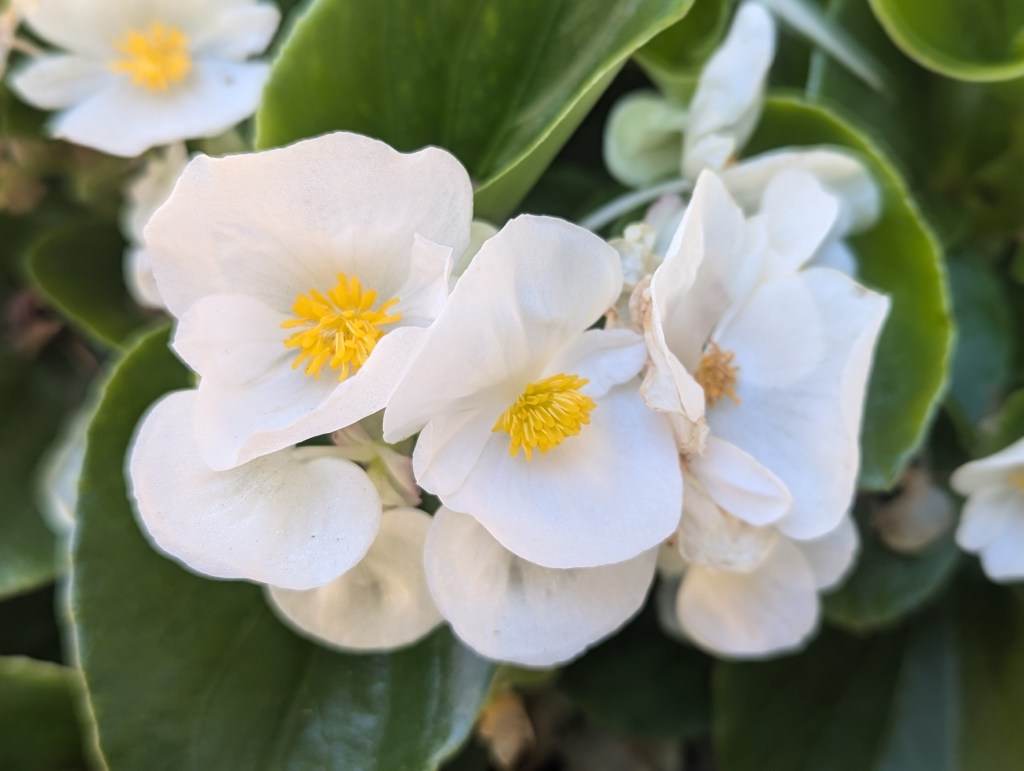
5. Begonia semperflorens-cultorum, wax begonia had languished for years in its planter box full of aggressive redwood roots. It now grows much more happily in its new planter box within its old planter box, which is elevated on cinder blocks above an empty space.
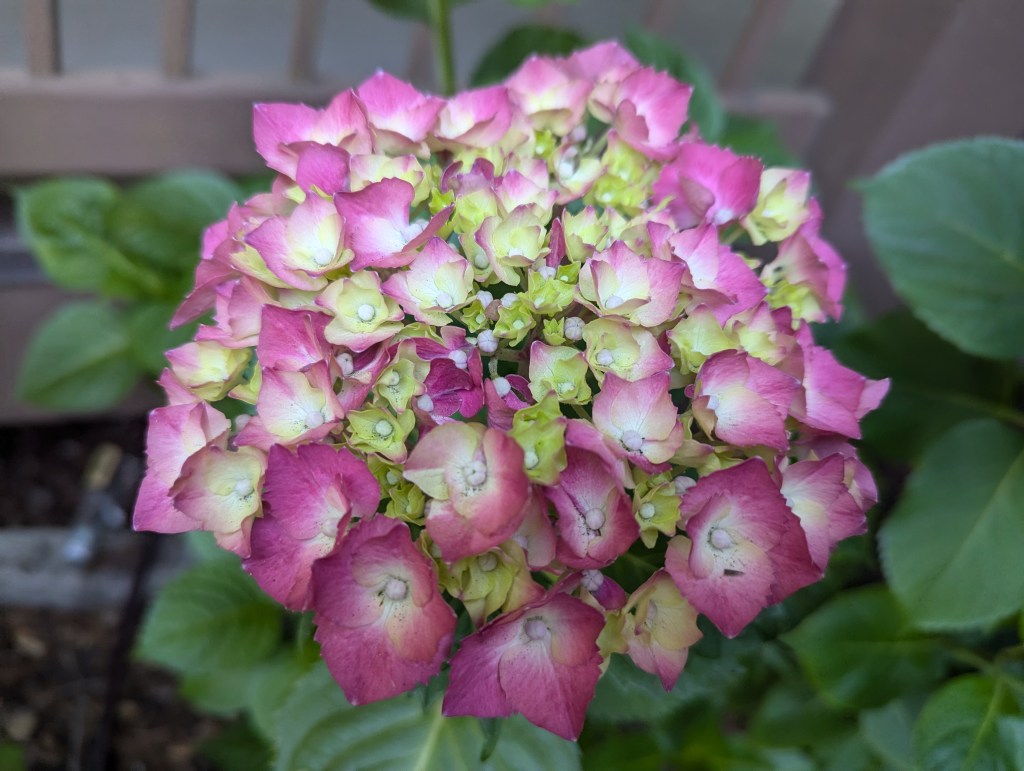
6. Hydrangea macrophylla, hydrangea typically blooms later on axillary stems because I prune the terminal buds off with winter dormant pruning. My concern was that, if I left the canes intact as I should, they would flop over. They are flopping, but it was worth it.
This is the link for Six on Saturday, for anyone else who would like to participate: https://thepropagatorblog.wordpress.com/2017/09/18/six-on-saturday-a-participant-guide/
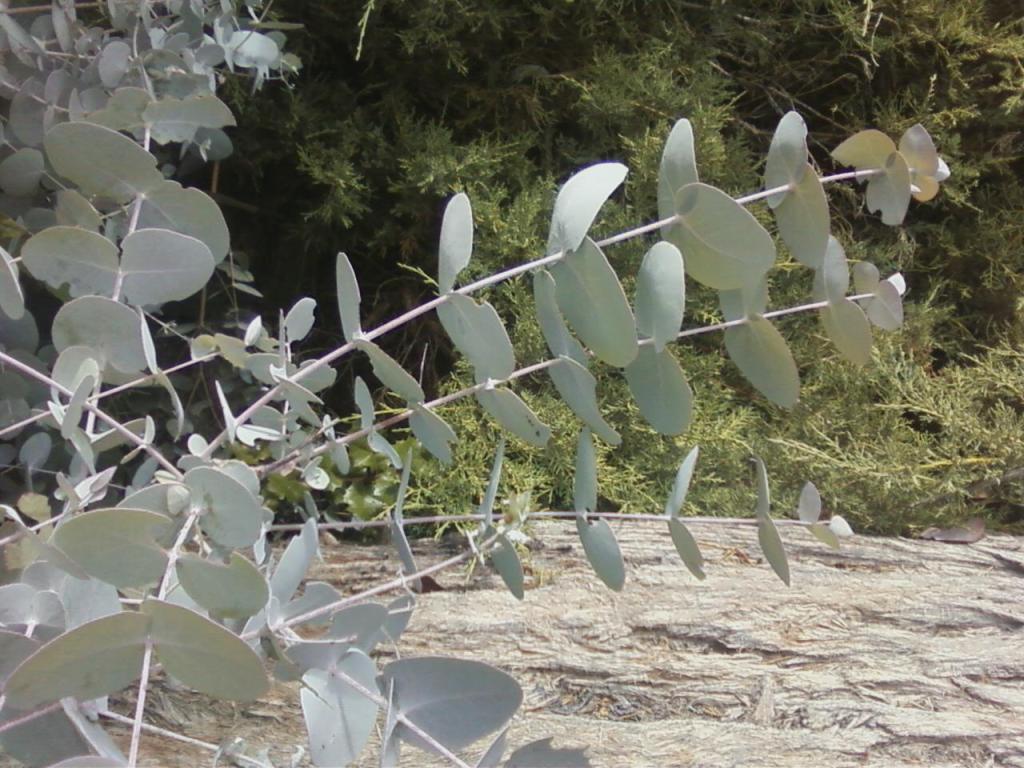
The bulky trunk and limbs, and shaggy bark of silver mountain gum, Eucalyptus pulverulenta, seem like they should be associated with a more imposing tree. Mature specimens are rarely more than twenty five feet tall. Those that try to get taller often fall over or break apart because they are unable to support their own weight, particularly if watered too generously. Aggressive pruning in spring and summer limits size, and also promotes an abundance of silvery juvenile foliage, which is popular as cut foliage.
Juvenile leaves are round and sessile (without petioles or stalks), and arranged in strict four-ranked formation. (Each pair of opposite leaves alternates with similar but perpendicular pairs.) Adult foliage is almost lanceolate (lance shaped) and not quite as silvery. Small, white, staminate flowers (without obvious petals) bloom between leaves from autumn through winter. Young stems have peeling bark.
Like almost all eucalypti, silver mountain gum gets established most efficiently and grows best if planted while small. They are actually best grown from seed, which can sometimes be obtained online. The next best option, which is actually least common, is #1 (1 gallon) trees. #5 (5 gallon) trees are typically the smallest trees available. Larger trees are likely to have problems dispersing their roots. Once established, silver mountain gum needs no fertilizer or watering.
 Tony Tomeo