Horridculture – Rocky XXIV . . . or XXV . . . or XXVI . . . Oh, I can not count them all.

another sequel

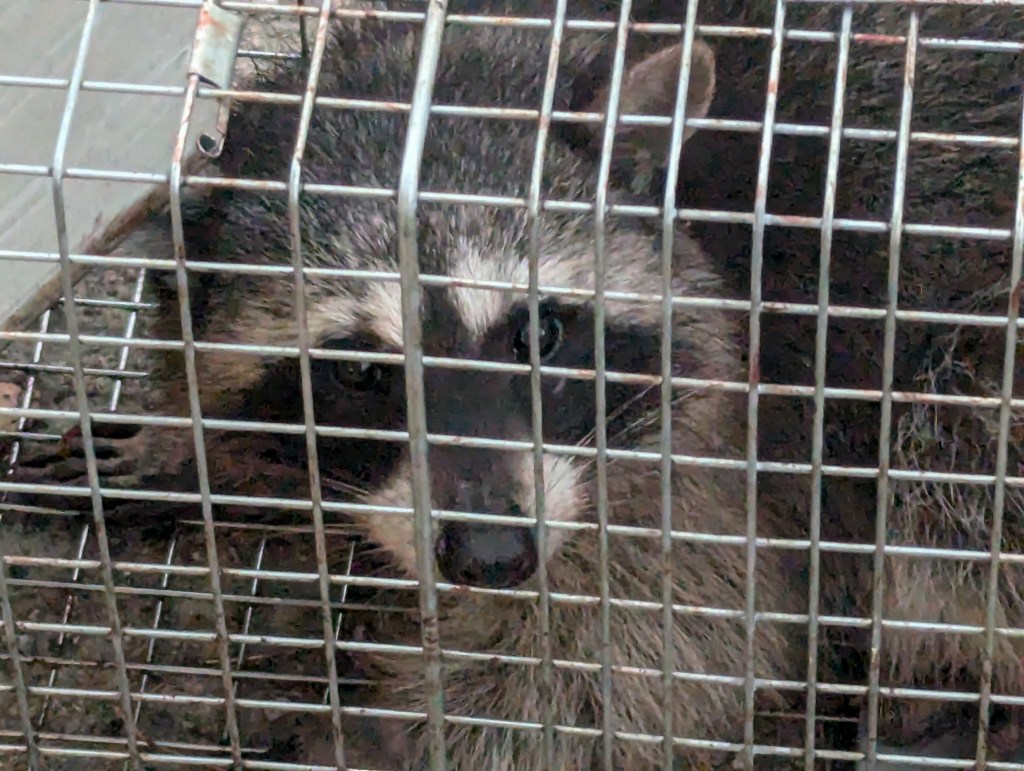
Winters are not very cold here. Otherwise, I might have assembled a fur coat. Instead, relocation of furs has been more practical than utilization. Besides, without exception, all were already in use when I encountered them. Actually, they were not relocated merely because I had no practical use for them, but, more importantly, because relocation was significantly less inconvenient to those who were wearing them at the time. Of course, it was not totally convenient either. That was sort of the objective. The inconvenience of relocation is a deterrent to those who wear the furs, who identify as racoons. They are unwelcome here. I realize that they eat mollusks and rodents; but neither mollusks nor rodents are problems here. I do not grow much vegetation that mollusks find to be appealing. Heather the kitty who identifies as a feline person is too proficient at deterrence of rodents to have use for any assistance. Actually, Heather is one of the two primary reasons that it is necessary to relocate raccoons. Rhody is the other. Unfortunately, raccoons have potential to become impolite or even dangerously hostile with my canine and feline housemates. Relocation does not permanently eliminate them, but it annoys them enough that, by the time they return, they are much more careful about avoiding us and our space. Also, their impressionable associates seem to learn from their examples. Because they can not be relocated off of the property, they go less than a mile away. So far, that seems to be sufficient. I do not know how long it takes for them to return, but I suspect that it takes quite a while. After this most recent relocation, I do not expect another relocation to become necessary until members of the most recent generation mature enough to become a problem.
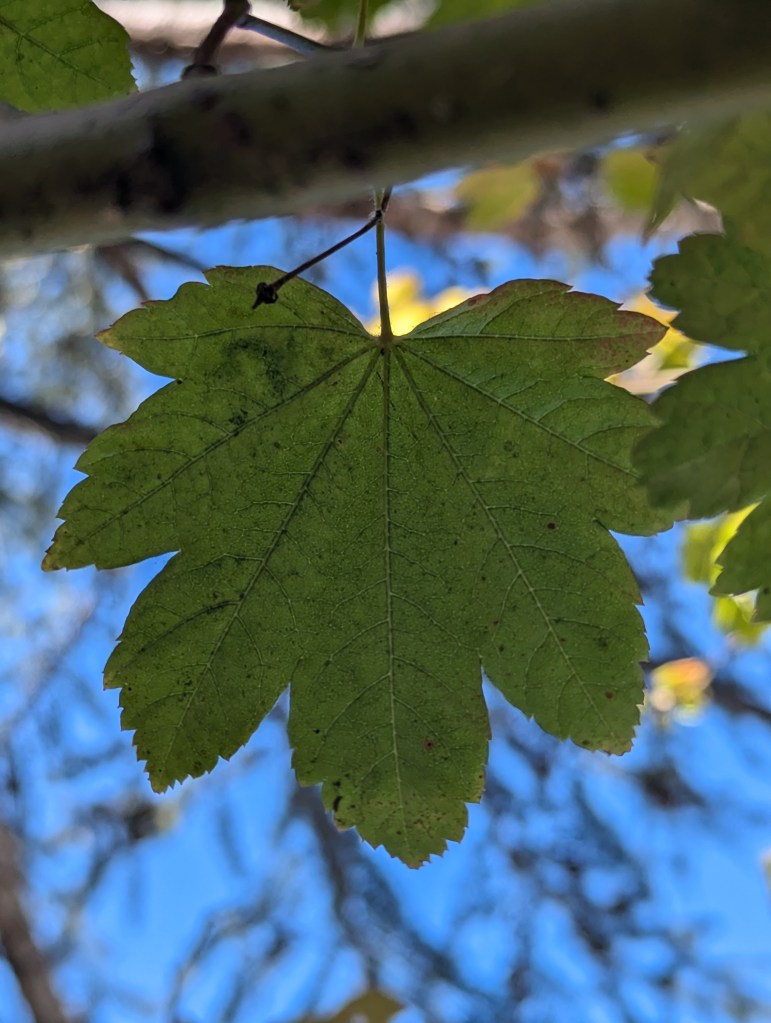
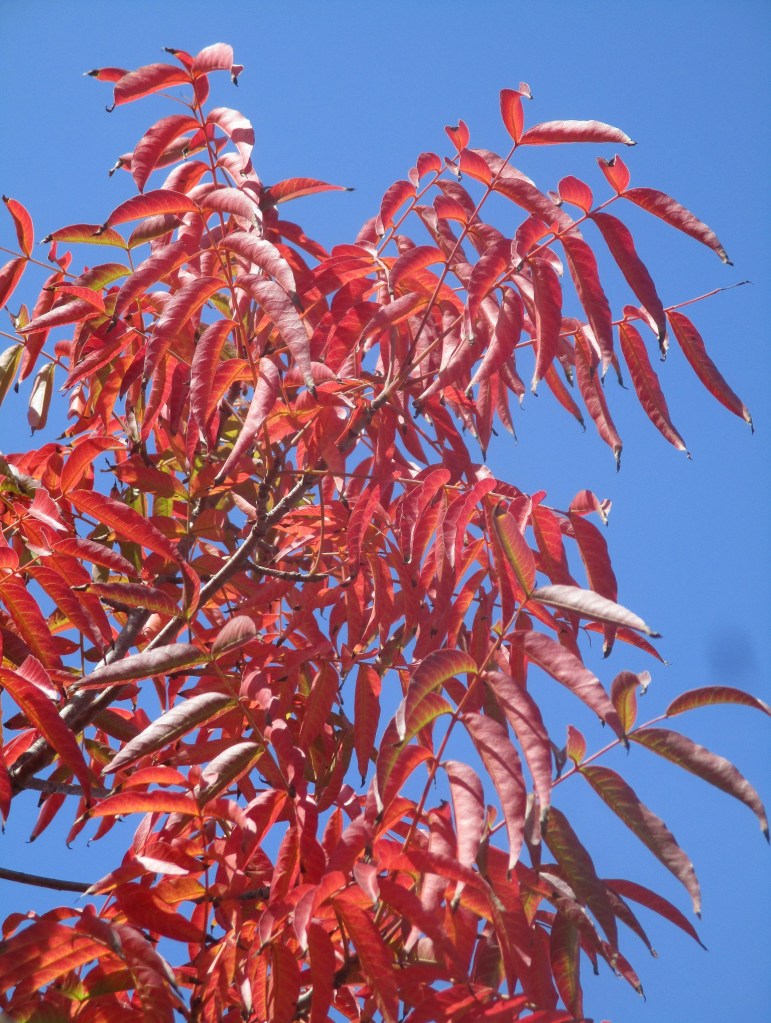
Vine Maple

Vine maple works like Japanese maple.

Japanese maples became so popular for their novelty that they are no longer novel. The diversity of their many cultivars is their primary appeal now. Vine maple, Acer circinatum, lacks such diversity, but is actually more novel. It is native from Mendocino County to the southwestern corner of British Columbia. Yet, it is very rarely available at nurseries here.

Vine maple has not been in cultivation for nearly as long as Japanese maple has. This is why its diversity is limited to not much more than a dozen cultivars. Its cultivars are even rarer than the simple species. Only a few ever become available, and almost exclusively by online purchase. Consequently, with very few exceptions, they are initially very small.

Vine maple grows somewhat like Japanese maple, typically with a few sculptural trunks. With regular pruning, it can stay as short as ten feet. It rarely grows more than twenty feet tall. The lobes of its palmate leaves are wider than those of Japanese maple. Leaves are only about three inches long and wide. Foliage develops bright orange color for autumn.

Fall Foliage Is Gaining Color

Minor chill can initiate major color.

Fall foliage is underappreciated here. It is not naturally prominent enough to suggest that it should be otherwise. Most native vegetation is evergreen. Most that is deciduous turns simple hues of yellow, without much orange or red. Some just gets shabby and brown as it defoliates with minor chill. Native vegetation does not represent total potential, though.

Contrary to common beliefs, local weather is not too mild for fall foliage to develop color. Only a few locally rare deciduous species need cooler weather for such color. Only a few deciduous species prematurely shed too much to develop their color for fall. Colorful fall foliage really could be more prominent within gardens than it is. It merely is not a priority.

Many home gardens here are within suburban or urban situations. Evergreen vegetation is therefore useful for privacy or to obscure undesirable views. Winter weather is not cold enough for evergreen shade to make it significantly colder. Some believe that deciduous vegetation is messier than evergreen vegetation. Some find it less appealing while bare.

Actually, evergreen foliage is generally more persistently messy than deciduous foliage. Although it sheds less abundantly, it does so more continuously through longer seasons. Some never stops shedding. Ultimately, the quantity of its detritus is at least comparable to that of deciduous foliage. Deciduous foliage sheds more profusely, but does so briefly.

Efficient shedding could be an incentive for deciduous vegetation. Sunnier conditions for winter could be another, whether or not it adds a bit of warmth. The color of fall foliage is obviously worthy of consideration also. Some types are more colorful than others. Some are more reliable than others. Ultimately, there is quite a bit of fall foliage to choose from.

Sweetgum, pistache and flowering pear develop the most exquisitely colorful fall foliage. Their color ranges from bright yellow, through orange, to deep red. Sweetgum is messier than the others, but only because it retains its fall foliage longer. Crape myrtle is smaller, but comparably colorful. Ginkgo is quite reliable for exceptionally brilliant yellow foliage, early in fall.

Off Color – Very Variable Variegation

‘Stuttgart’ canna

Reversion among vegetation is the loss of an aberrative genetic characteristic, such as variegation or bronze foliar color. Because most genetic aberrations that are susceptible to reversion are disadvantages, reverted growth generally performs more efficiently, and displaces remaining genetic aberrative growth. For example, because its variegated portions lack chlorophyll, variegated foliage is less vigorous than foliage that is not variegated. Therefore, if not removed, unvariegated reverted foliage is likely to grow faster and replace variegated foliage. This ‘Stuttgart’ canna leaf seems to have done the opposite of reversion, by exhibiting such extreme variegation that all green color is lacking. Fortunately, it is not as bad as it looks. This is merely very variable variegation. Just as a few leaves may be completely green without actually reverting permanently, a few leaves are extremely variegated, and on rare occasion, a few, such as this leaf, may lack any obvious green color. Leaves that developed after and above this leaf exhibited more typical variegation with both green and white. Otherwise, this particular cane would not survive for long without chlorophyll for photosynthesis. The flowers are unaffected because they derive their floral color from pigment rather than chlorophyll. White redwood foliage can survive without chlorophyll only because it can rely on resources provided by the normal growth with green foliage that it is attached to, almost parasitically. Such growth is considered to be albino, but because it merely lacks chlorophyll rather than pigment, it is technically not albino. Furthermore, it is technically not variegated, since it is so completely white, without any green chlorophyll. Oh, this is more complicated than it should be. It is probably better to simply appreciate appealing genetic aberrations such as white, variegated or other colorful foliage. ‘Stuttgart’ canna will not refresh its variegated foliage until the end of winter.

Messy Mast

This is the mess that remains after acorns get raked or blown off pavement.

Masting is a technique that oaks and many other genera use to both outsmart and exploit squirrels and other wildlife that both consumes and disperses their seed. For several years, oaks here produce enough acorns to sustain a population of squirrels that is limited by their production of acorns. It may not seem to be very effective, since the squirrels consume almost all of the acorns, leaving very few or none to grow into new trees. Then, every several years, the same oaks collectively produce a ‘mast’, which is a crop of acorns that is too excessive for the limited population of squirrels to consume as thoroughly as they typically do. Squirrels instinctually bury many of the surplus acorns anyway. Because they do not return to dig and eat all of their buried acorns, some acorns grow as new trees. This is how the oaks sustain those who disperse their seed, but also get them to disperse their seed without eating all of it. Mast crops of acorns supposedly typically precede exceptionally rainy winters. So far, the mast this year is only coinciding with a messy situation with drippy nut disease. It is caused by bacterial infection of wounds that are caused by filbert weevils, filbert worms or other insects that damage developing acorns. Consequently, squirrels are ignoring many of the unusually abundant but damaged acorns, leaving icky messes of infected acorns and the goo that they exude. When it eventually arrives, the first rain will make this mess even messier. Later rain should rinse some of it away. It is impossible to know how successful this mast will be, since it is impossible to know how many viable acorns will actually contribute to the abundance and grow later, and how many will merely contribute to this unusually messy mast.

Six on Saturday: Firsts & Lasts

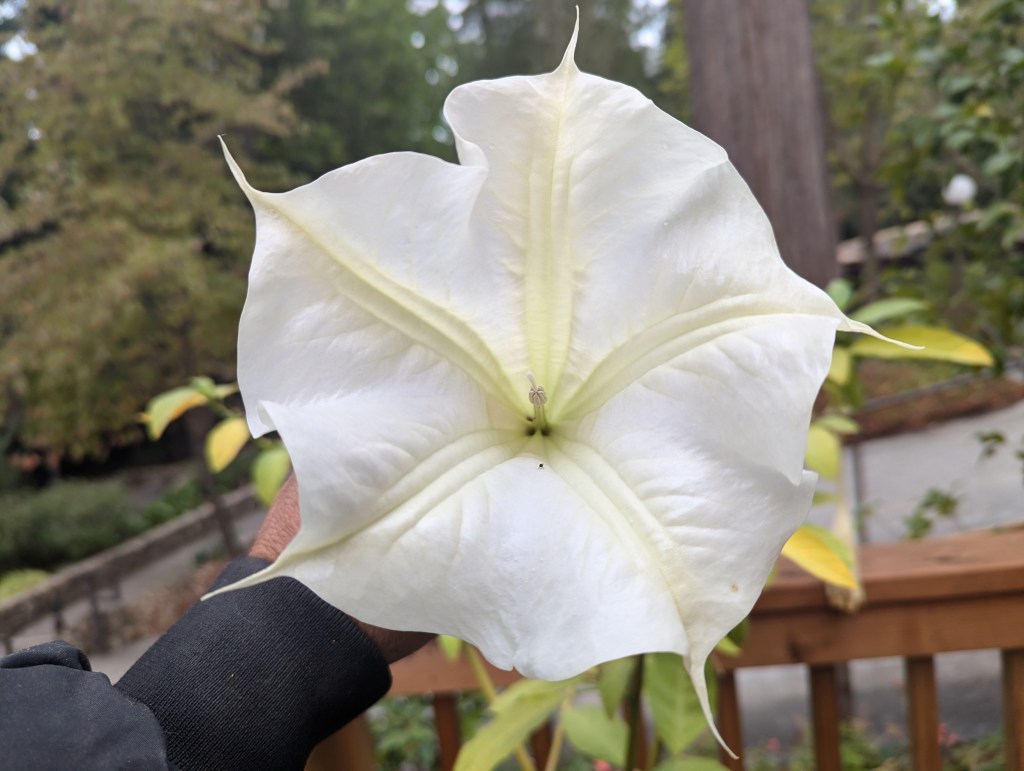
Angel’s trumpet should be finishing bloom by now. Instead, and even while their foliage is fading with cooler weather, their bloom continues. Only the unidentified cultivar with single pink flowers currently lacks open flowers, but even it is budded for potential later bloom. (I neglected to get a picture of a flower of ‘Charles Grimaldi’ angel’s trumpet only because two pictures of angel’s trumpet is sufficient.) While angel’s trumpet is finishing, Algerian iris and ‘Peach Delight’ ginger lily are blooming for their first time here and red butterfly ginger is generating bulbils for its first time here. I was not aware that this sort of ginger generates bulbils. Otherwise, I could have allowed the other gingers do so also.

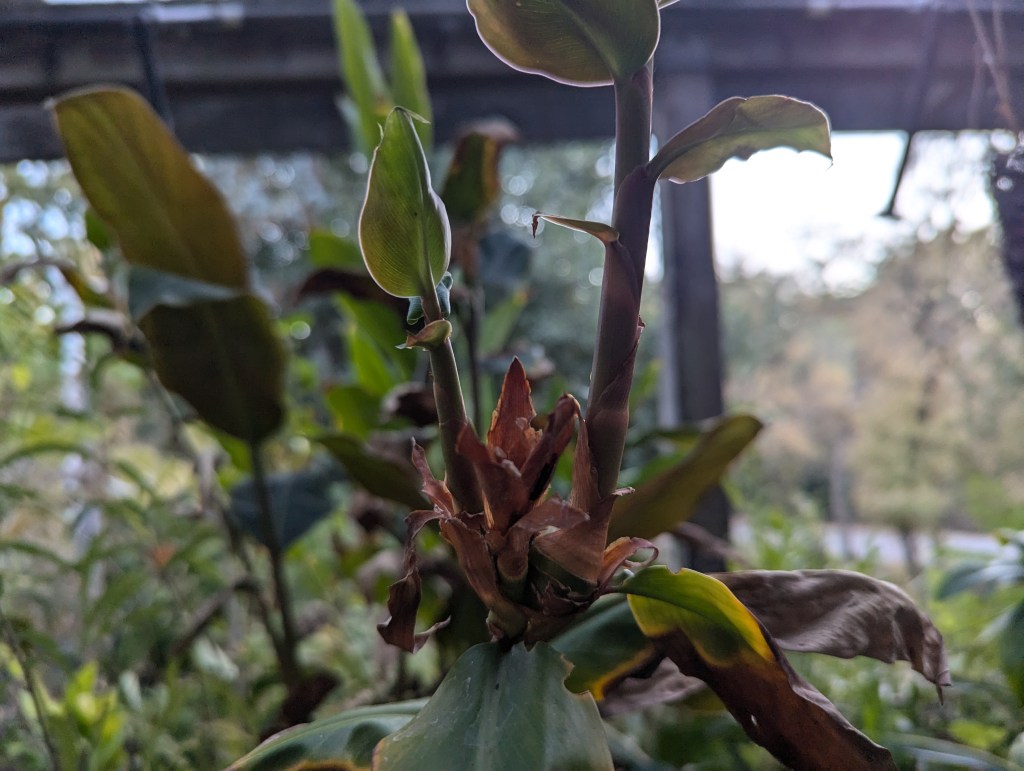
1. Hedychium greenii, red butterfly ginger is making bulbils! I did not know that it knew how to do so. I am now glad that I refrained from pruning the bloomed canes out earlier.

2. Hedychium coccineum X cornonarium ‘Peach Delight’ ginger lily started to bloom so late that I did not expect for it to actually show this much color and confirm its identity.

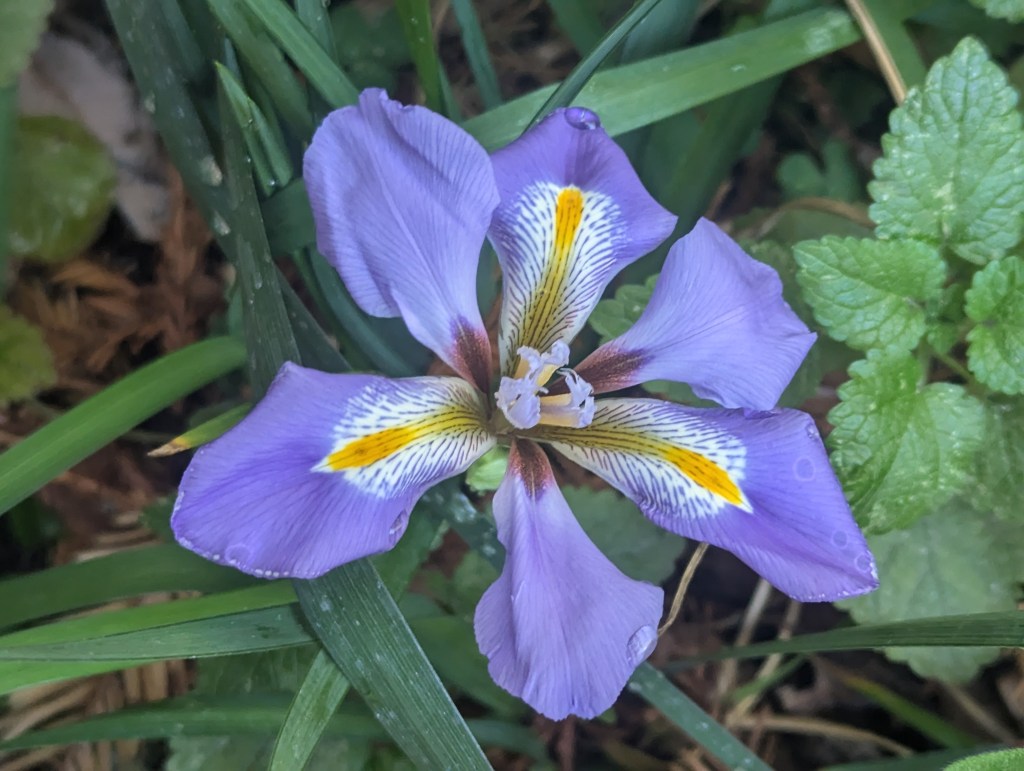
3. Iris unguicularis, Algerian iris is also blooming for the first time here, since its arrival from Tangly Cottage Gardening. It should bloom more for winter. Is it blue or purplish?

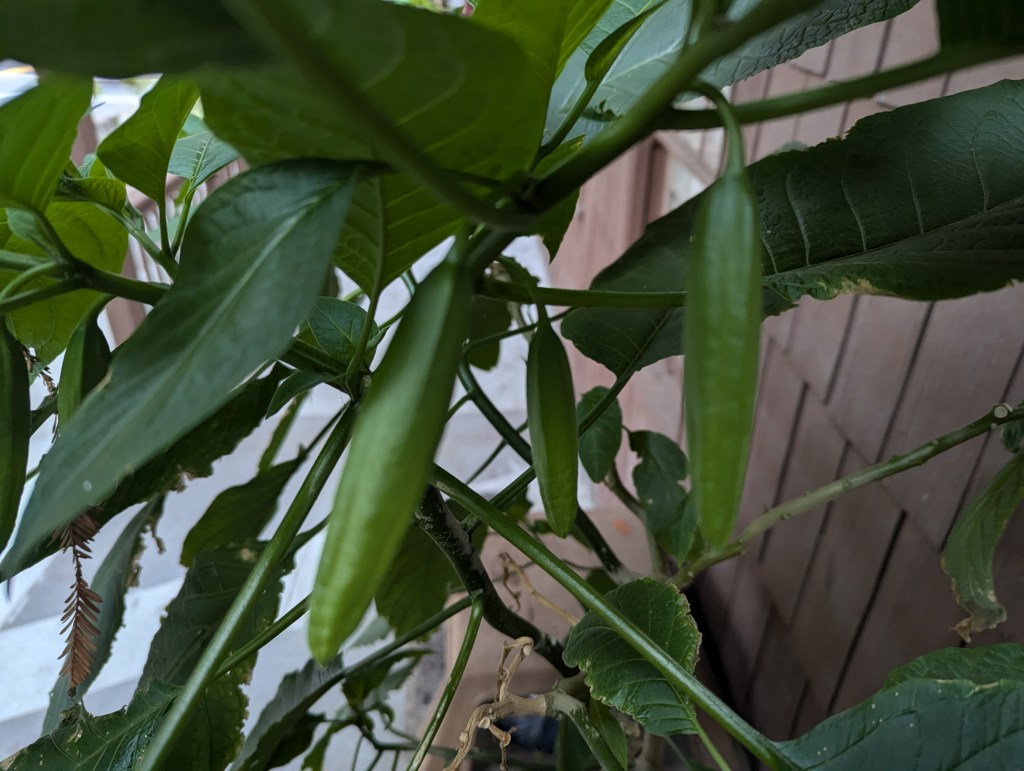
4. Brugmansia, angel’s trumpet of an unidentified cultivar, species or perhaps hybrid, is trying to bloom with its last big single pink flowers of the season, and it just might do so.

5. Brugmansia insignis ‘Single White’ angel’s trumpet is my favorite in regard to bloom, but not one that I recommend. It is blooming nicely though, now that its season is done.

6. Brugmansia candida ‘Double White’ angel’s trumpet also intends to bloom until it no longer can. It bloomed only sporadically since spring, but better than the ‘Single White’.

This is the link for Six on Saturday, for anyone else who would like to participate: https://thepropagatorblog.wordpress.com/2017/09/18/six-on-saturday-a-participant-guide/

Periwinkle

Periwinkle is both pretty and a weed.

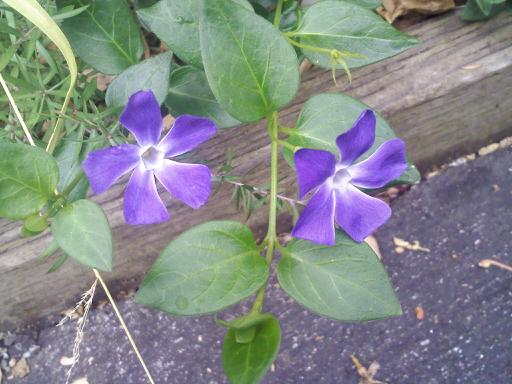
Conflict would likely erupt from any discourse between the city mouse and the country mouse regarding the topic of periwinkle, Vinca major. In rural areas, periwinkle can aggressively invade any area that stays even slightly damp through summer; and it is nearly impossible to eradicate. In urban areas, periwinkle can be a useful and appealing ground cover for difficult situations. It clings to steep embankments, and ventures into shade that is too dark for other ground covers.

Periwinkle can mound up to more than a foot and a half deep with wiry stems and rich green leaves about two and a half inches long. It looks neater and stays lower if shorn or mown down just before new growth develops at the end of winter. Two inch wide sky blue periwinkle flowers bloom mostly as new growth develops through spring, and can bloom sporadically through the end of autumn. ‘Variegata’, with wide white leaf margins, brightens up urns or planters of mixed ferns, and also looks good cascading from planters of mixed annuals or perennials. 

Tree Work Will Be Less Stressful During Dormancy.

Only arborists can work on the big trees.

The taller trees are typically the first to admit that summer is finished and that it is now autumn. Perhaps because they are higher up and into the changing weather more than smaller plants that are sheltered and closer to the ground. Some trees are changing color nicely. Others are thinking about it. Evergreens are, . . . well, evergreen; so they may not seem to change so much. Nonetheless, autumn is here, and most plants will consequently be going dormant for the winter, or at least slowing down a bit.

For many trees and other plants that need to be pruned, the next few months will be the best time for it. Because they are more or less dormant, they are not very aware of whatever procedures they are subjected to. When they wake up in spring, they simply adapt to the earlier pruning and start growing as if not much happened to them. Dormancy is like a natural anesthesia for trees and plants.

Conversely, the end of winter and beginning of spring is the worst time to prune many trees and plants because they are just emerging from dormancy, so are wide awake! If necessary, minor pruning done properly is generally tolerable, but should realistically be done either before or after that time. Maples, birches, mulberries and figs express their disapproval of late pruning by bleeding profusely, and sometimes for a long time.

Deciduous trees are most dormant by winter when their leaves have fallen off. Pruning them a bit earlier would probably be harmless, but deprives them of their colorful foliage. Maples, gingkoes, poplars and mulberries typically defoliate earliest. Oaks, elms and sweetgums (liquidambars) take their time, holding onto their leaves until they get knocked out by wind and rain. Oaks and elms are not very colorful anyway. Sweetgums though can look too good to get pruned late into winter!  

Arborists are physicians of trees, so can prescribe recommended pruning and maintenance procedures. Many trees, like Chinese elms, fruitless mulberries and willows, need more attention than others. Austrian black pines and Eastern redbuds are not so needy. Blue spruces that are allowed to remain branched to the ground and have enough space around them may never need a visit by an arborist.

Regardless of how much attention any particular tree needs, when it develops a problem that is out of reach, it should be assessed by an arborist, and hopefully pruned accordingly. Because trees are the most substantial features of the landscape, and can develop worse problems if not maintained properly, it is imperative to procure the services of qualified arborists; and not trust such important tasks to a gardener or anyone who can find a chain saw and pick up. Fortunately, certified arborists can be found at the website of the International Society of Arboriculture (ISA), at www.isaarbor.com.

Horridculture – Pave Paradise

pavement within pavement within pavement

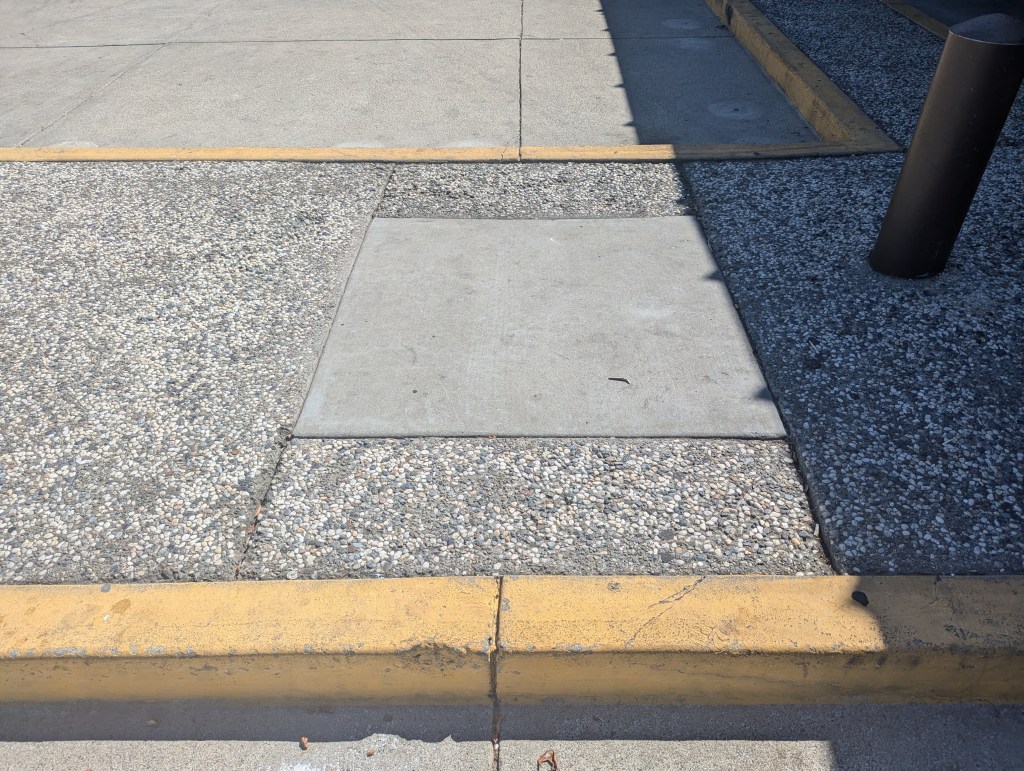
The Santa Clara Valley really is, as it was formerly known, the Valley of Heart’s Delight. A long time ago, it was famous for vast orchards that thrived in its exemplary climate and soil. The climate is still here, but so are nearly two million people who now live where orchards formerly were. Not so much of the formerly productive soil remains exposed, and almost none is appreciated for its potential. Urban development continues to expand to occupy more of it. At a strip mall in the Berryessa District of San Jose, I noticed what appeared to be gravesites of small patches of once exposed soil that died slow deaths after all other soil around them was developed. The concrete pavement outside of and below the yellow curbs was likely the original parking area, walkway and paved patio, which were separated from each other by what was likely small landscaped patches of exposed soil within and at the same level as the yellow curbs. Sometime after the area outside of the curbs were paved, most of what was likely exposed soil within was also paved with exposed aggregate concrete, leaving only what was likely three smaller square patches of exposed soil, perhaps for trees to survive in. Eventually, even these three smaller square patches of exposed soil were also paved with simpler concrete. It is impossible to say why all this concrete pavement was necessary, or why exposed soil was so objectionable. Perhaps the dirt was dirty. Perhaps it was infested with weeds. Perhaps all this concrete is some sort of Brutalistic art. Regardless, the good soil below is now useless. The patio now lacks shade from trees. A little bit more of the Santa Clara Valley can not sustain any vegetation. A little bit more of Paradise is paved.

Brutalism?

Ranunculus

Ranunculus blooms several months from now.

The shriveled and dried tuberous roots of Ranunculus are not much to brag about. They look more like dehydrated mini calamari than dormant and viable spring bulbs. Yet, they somehow bloom as soon as the weather warms enough after winter. Although they need no vernalization, they need time to grow. Bulbs should be into their garden by December.

Alternatively, small budding plants will be available from nurseries after winter. They are too big for cell packs, so are mostly in four inch pots. Larger one gallon plants often have shabby foliage. Although popular as annuals, Ranunculus can be reliably perennial like other bulbs. They are less susceptible to rot if dug and stored while dormant for summer.

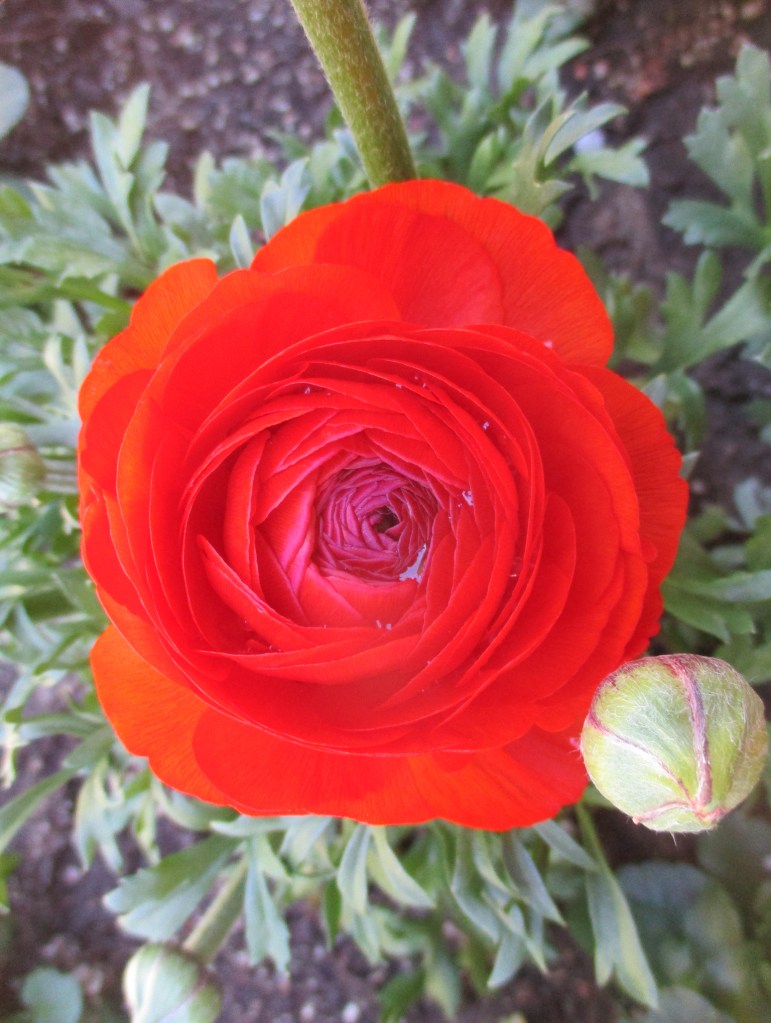
Ranunculus bloom is white, yellow, orange, red, pink or purple. The plump flowers have many papery and densely set petals, like small peonies. They typically stand less than a foot high, and may be only half a foot high. Their finely textured basal foliage stays even lower. It resembles parsley, but is a bit more substantial. It shrivels during warm weather.