Stumpery

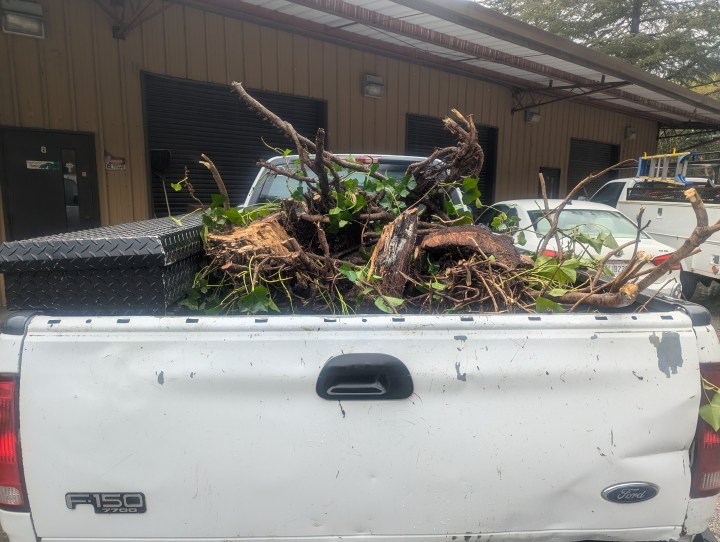
Redwoods give new meaning to stumperies. Their stumps are massive, and remain intact for decades. After all, coastal redwoods are among the largest trees in the world, and their wood is famously resistant to decay. Although redwoods had been harvested here for a very long time, most were harvested soon after 1906 to rebuild San Francisco after the Great San Francisco Earthquake and Fire. The stumps of some of them were subsequently hollowed by forest fire in the 1950s. An outhouse at home was built on top of one such hollow stump. A showers was built within another. A third is big enough to be built into a guest cabin. Stumps at work are not so useful, so remain only as monolithic garden sculpture. One short stump was planted with Billbergias a few years ago. More recently, we installed a few Cymbidium orchids on one short stump and one taller stump. The taller stump is about five feet wide and about eight feet tall, so looks rather silly with a pair of relatively small orchids protruding from the top. The orchids could be happy there, though. They should fill out and become more proportionate to the stump that they inhabit.

Persimmon

Persimmons ripen as their leaves fall.

It lacks the spectacular spring bloom of the other deciduous fruit trees, but compensates. Persimmon, Diospyros kaki, performs double duty with fall color. Its autumn foliar color is impressively fiery orange. Then, it defoliates to reveal plump, abundant and comparably fiery orange fruit. So, it is spectacular with both autumn foliar color and autumn fruit color.

Persimmon trees are tempting. Some cultivars can grow twenty feet tall to become small or even mid sized shade trees. However, if they do so, much of their overly abundant fruit is unreachable. Aggressive and strategic pruning limits their production with most of their fruit in reach. Although undemanding otherwise, this major dormant pruning is important.

Persimmons are self fruitful without a pollinator. However, they supposedly provide more fruit of better quality with another cultivar. Fruit is unfortunately inedible before thoroughly ripe, but then all ripens simultaneously. That is an incentive to share with neighbors and friends. With a bit of effort, fruit is conducive to drying and freezing, although not canning. Ripe fruit is very perishable.

Trees May Benefit From Winterization

Many trees need no winterization pruning.

Arboriculture becomes more of a concern at this time of year. Although winter is a month away, the weather is becoming increasingly stormy. Wind and rain can dislodge limbs or destabilize entire trees. Some trees may benefit from winterization prior to even stormier weather in the future. Some may need the specialized services of professional arborists.

Dormant pruning of deciduous fruit trees is, incidentally, not the same as winterization. It happens later in winter, after the subjects have been dormant for a while longer. Besides, after proper dormant pruning last year, they should not need winterization now. However, if subjects are defoliated, they should not mind early pruning. They are already dormant.

Ironically, the trees that are more likely to require winterization are evergreen. Deciduous species perform almost all of their own winterization naturally. They defoliate to eliminate most of their resistance to wintry winds. In other words, they become more aerodynamic. Defoliation also eliminates most of the surface area to accumulate heavy water from rain.

Evergreen species are generally more resilient to wind than foliated deciduous species. However, as deciduous species defoliate, evergreen species can not. Evergreen foliage therefore becomes less aerodynamic and more vulnerable to wind. Also, it absorbs more heavy rainwater. The added weight of rainwater causes limbs to sag and perhaps break.

Rain does more than cause foliage to become heavier. It also saturates soils, which can potentially compromise root stability. The timing could not be worse, since wind typically accompanies rain. This is also more of a problem for evergreen species than deciduous species. However, some storms arrive early, and some deciduous species defoliate late.

Winterization pruning is as variable as the trees that benefit from it. Large trees will likely need specialized services that only arborists can provide. Japanese maples may require only minor clipping of stems that have extended too far. Many trees require nothing at all. Ultimately, such techniques should help limbs and trees survive eventual wintry weather.

Six on Saturday: More Late Bloom

Flowers are starting to succumb to cool and rainy weather. So, it is beginning to look like autumn here. Summer is truly over.

1. Pelargonium X hortorum, zonal geranium is finally starting to look somewhat shabby after the recent rains, although several others continue to bloom as if nothing happened.

2. Rosa spp. ‘Iceberg’ rose is probably the last rose to bloom for the season. A few young floral buds are molding before they bloom. The roses get pruned before New Year’s Day.

3. Tagetes patula, French marigold is more seasonable. It is expected to bloom through autumn, and could continue until replacement with warm season annuals during spring.

4. Abutilon X hybridum, flowering maple does not seem to know when to stop blooming for autumn. Its bloom should probably decelerate now that the weather is getting cooler.

5. Rhododendron spp., azalea is even more confused than the ‘Duc de Rohan’ azalea that bloomed not so long ago. It is blooming more abundantly and even later, or not so early.

6. Rhody curls up somewhat tighter while the weather is cool. His fur should get fuzzier, but does not seem to be doing so. He insists on coming to work with me, out in the cold.

This is the link for Six on Saturday, for anyone else who would like to participate: https://thepropagatorblog.wordpress.com/2017/09/18/six-on-saturday-a-participant-guide/
Candelabra Tree

Candelabra tree resembles cacti, but is not related.

The weirdly sculptural succulent stems of candelabra tree, Euphorbia ingens, dark green but devoid of any real foliage, are striking in the right situation. These stems resemble those of unrelated cactus, with longitudinal ridges topped with spines. Although botanically interesting, the minute greenish yellow flowers that bloom in autumn and winter on the ridges of the upper portions of the upper segments are not much to look at. Deep red seed capsules that turn purple as they ripen sometimes develop in milder climates after the flowers are gone, but are almost never seen locally.
Good exposure is preferred. Candelabra tree are better structured and more prominent standing alone away from other larger trees and shrubs. Cool winters and occasional frosts limit their height to not much more than fifteen feet; and unusually cold frost can actually kill big specimens back severely. However, in sheltered areas and milder climates, candelabra tree can get twice as tall. Soil should drain very well and get dry between watering. Regular watering can cause rot, particularly in dense or rich soil.
The main problem with candelabra tree is the remarkably caustic latex sap, which can be dangerous to children, chewing dogs or even those who need to prune the stems. Fortunately, candelabra tree needs very little attention, and only needs to be pruned where the stems get in the way or start to lean against fences or roofs. The caustic sap prevents insect problems.

‘The Wise Old Owl’

Filoli

(This article is several years old, so contains outdated information.)

The sixteen acres of gardens of Filoli are spectacular and horticulturally compelling throughout the year. However, the weather through winter, although more pleasant than other places in the world, is not always quite so compelling or conducive to garden tours. At Filoli though, this is not a problem. More than six hundred volunteers and the Filoli staff merely bring the outdoors indoors, by selecting materials from the garden to adorn the interior of the 36,000 square foot Filoli residence for ‘The Wise Old Owl’, the annual fund raising Holiday Traditions Boutique.

While perusing The Wise Old Owl merchandise, guests can enjoy how so much more than flowers can be brought in from the garden to deck out the home. Bare stems, gnarly limbs, evergreen foliage, pine cones, bark and all sorts of bits and pieces of the autumn and winter garden demonstrate the potential for alternatives to traditional cut flowers that we may not even recognize as useful materials in our own gardens. Of course, there will be no shortage of the less abundant flowers that bloom through the season and decoration that are not out of the garden, as well as live music to enhance the display. Regardless of horticultural interest or boutique merchandise, the grand residence at Filoli is worth visiting even on the least eventful day of the year.

There are too many events within the Event to describe here. Guests can visit http://www.filoli.org to plan ahead and make reservations for buffet lunches and evening bistro dining, as well as an elegant Saturday Evening Dinner Party with dancing in the Ballroom. Children six to twelve years of age can enjoy a Children’s Tea on the finale of The Wise Old Owl on December 3.

The Wise Old Owl begins in only a few days on November 25, and continues through December 3. The hours of operation and admission are variable relative to the various events throughout the main Event. Reservations for specific events can be arranged and more information can be found online

Tickets can be purchased online, by fax or by telephoning Filoli weekdays between 9:00 a.m. and 4:00 p.m. At 650 – 364 8300 X 508. Order forms for fax transactions can be downloaded from the website and sent to 650 – 503 2090. Admission is limited; and tickets get exhausted somewhat early. Tickets are neither refundable nor exchangeable. Filoli is located at 86 Canada Road in Woodside (94062).

Autumn Fever

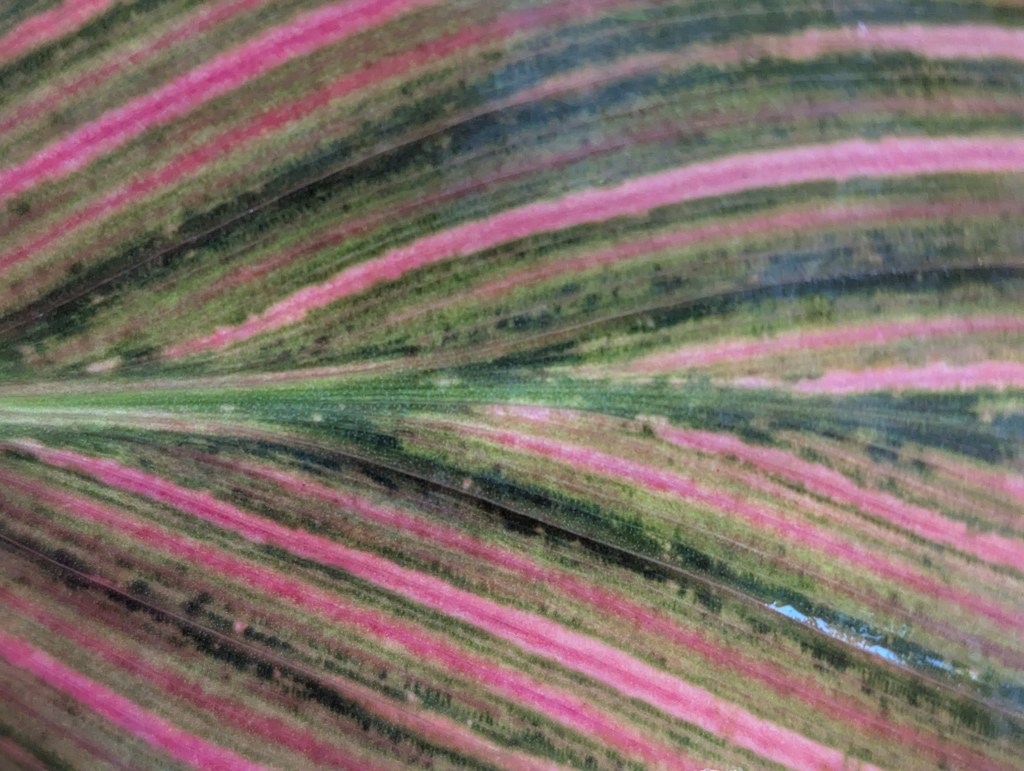
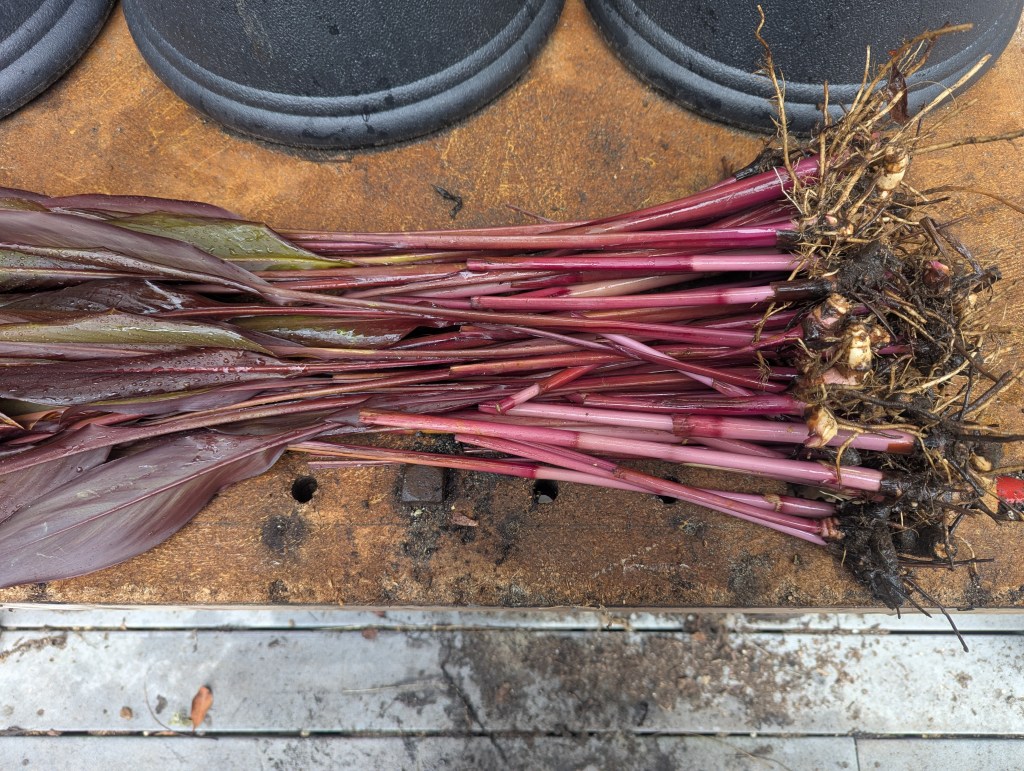
‘Purple Ribbon’ sugarcane has been growing like a weed, but should go into the garden.

Autumn is the time for planting. So is winter. It is difficult to resist new acquisitions for the garden. However, there is already so much in the nursery that needs to be planted into the garden that I should not consider acquiring more.

I like to think that I purchase almost nothing for the garden. I grow just about everything that I want to grow from bits and pieces from other gardens. I purchased sugarcane, though, because I could not find any of a cultivar that I wanted in another garden. Now that it has been growing like a weed here, I returned to the online catalogue of one of the nurseries that sells sugarcane to see what else I want.

Planting Justice grows and sells many fruit and vegetable plants that I want to purchase. Because the primary nursery is in Oakland, only about an hour and a half away, I could purchase directly, rather than by delivery. My wish list from them includes medlar, yacon, currant, sunchoke, lingonberry, moringa, kangaroo apple, raisin tree, earth chestnut, chestnut, cinnamon vine, tree collard, sea berry, aronia and highbush cranberry. The twenty items that I want cost only $316, but are contrary to my tradition of purchasing almost nothing for the garden. Fortunately and unfortunately, I will most likely refrain for another year, when I expect the garden to be refined enough to accommodate them.

Freeman Maple

Red maple combines with silver maple.

It combines the autumn foliar color of red maple with the lacier foliar form of silver maple. Freeman maple, Acer X freemanii, is a hybrid of the two. It occurs naturally where ranges of its parents overlap. However, most modern garden cultivars are products of intentional hybridization. Like silver maple, it does not need much chill to exhibit autumn foliar color.

Freeman maple inherits other attributes from both its parents. It combines rapid growth of silver maple with structural integrity of red maple. Although it gets bigger than red maple, it is not as imposing as silver maple. It develops high branches like silver maple, but also is symmetrical like red maple. Big roots are about as complaisant as those of red maple.

Mature Freeman maple trees can grow about forty feet tall and broad. Autumn foliar color is vivid orange and red, and lasts longer than that of red maple. Since Freeman maple is a hybrid, it is mostly sterile. It can not generate an annoying abundance of seed. Nor can it naturalize in favorable climates. It is an exemplary maple for mild climates such as this.

Rain Will Increase Until Late Winter

The weather is about to change.

Defoliation is the colorful beginning. It indicates that the weather is getting progressively cooler. It then gets messy with the first rain. This is inevitable at this time of year. After all, it is late autumn. Storms will become more frequent as weather simultaneously becomes cooler. So, while gardens are getting wetter, they also take longer to dry between storms.

Ironically, vegetation uses much less moisture while it is so abundant. Deciduous foliage can not perform any evapotranspiration after it defoliates. Evergreen foliage is much less vascularly active while cool. Roots can not utilize all the moisture that autumn and winter rain provides. Soil in some areas might stay moist from now until next spring or summer.

Conversely, summery weather is innately arid and warm. That is how the Mediterranean climate here operates. Moisture is either scarce or abundant. Rain will eventually stop in spring, and then not resume until next autumn. Summer thundershowers are uncommon. Gardening could likely be easier with a bit less rain for winter, and a bit more for summer.

With more rain expected, irrigation needs seasonal adjustment. Such adjustments might need to be incremental, since weather changes incrementally. Manual irrigation might be either less frequent or less voluminous, or both. The same applies to automatic systems, which have a disabling ‘rain’ option. It turns irrigation off without modifying the schedule.

Besides necessitating modification of irrigation, rain can also be messy. It dislodges and accelerates the deterioration of defoliating deciduous foliage. It causes even formerly dry soil to become muddy. A bit too much rain can cause erosion. Cleaning up such mess is less pleasurable while the weather is wet and cool. Then, the weather gets messy again.

Rain can not postpone all gardening. Spring bulbs must get into their garden soil prior to winter chill. Dormant pruning happens later in winter, prior to spring. Fortunately though, gardening is less involved than it is during spring and summer. Maintenance of tools and sorting seed can be indoor tasks for rainy days. So is shopping online for seed, plants or garden tools.