Khartoum

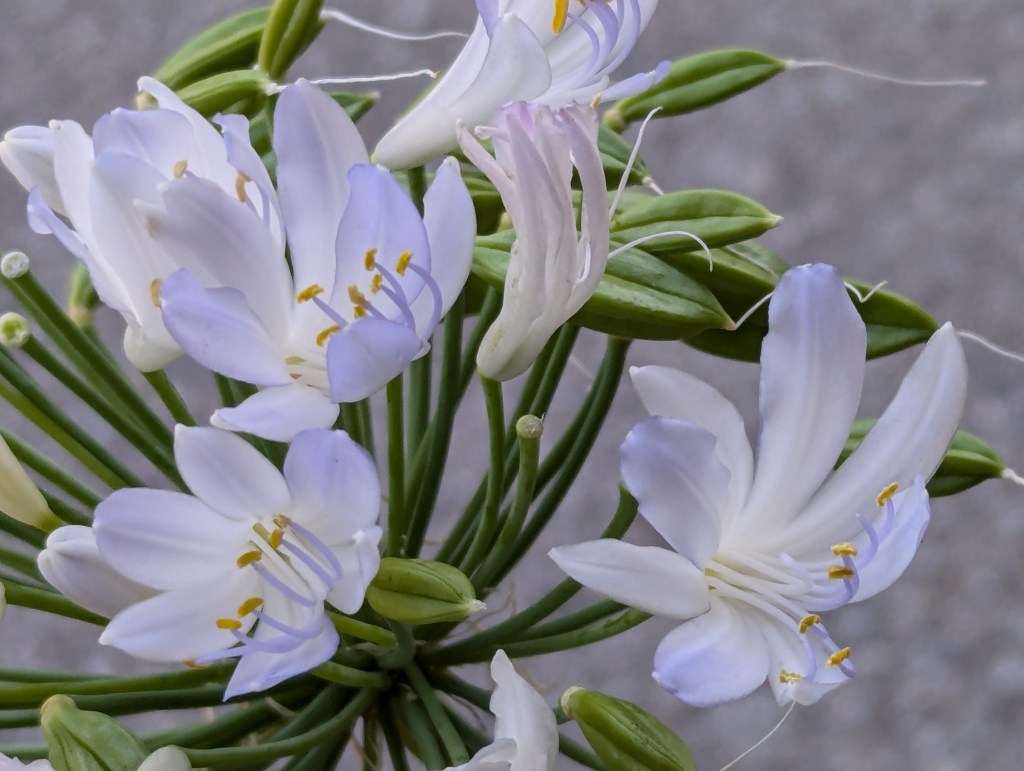
‘Khartoum’ (Agapanthus orientalis ‘Khartoum’) is a blend of Blue Nile and White Nile.

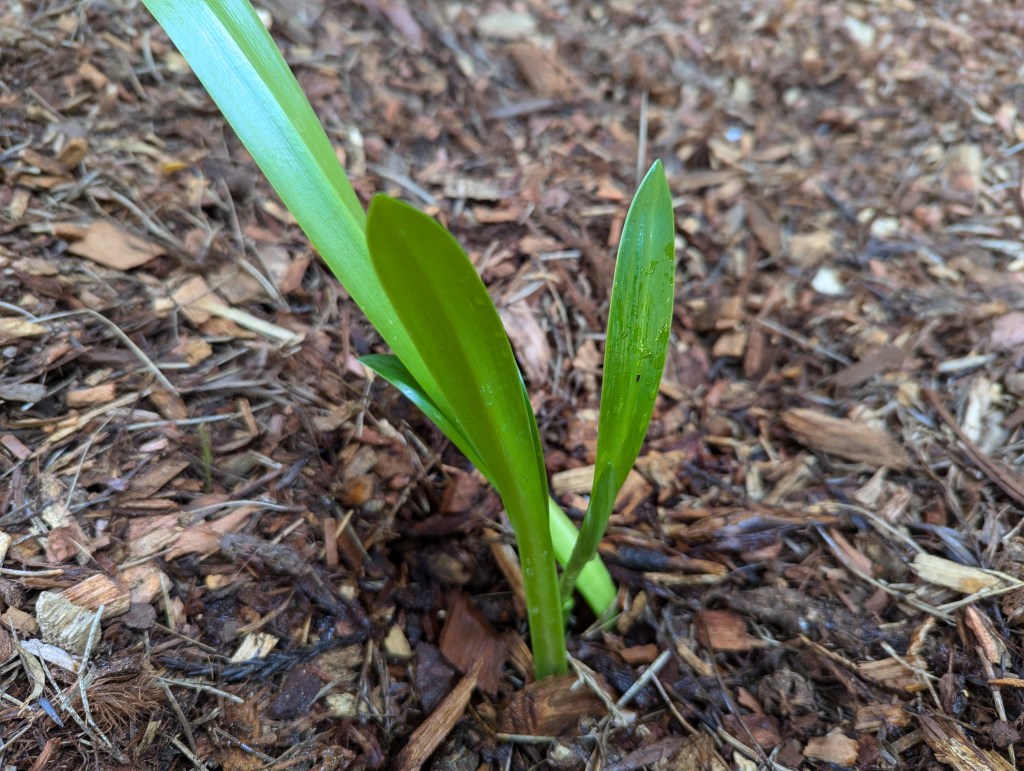
Khartoum is located where the Blue Nile River merges with the White Nile River to become the Nile River. Lily of the Nile, contrary to its name, is neither a lily nor native to any of the three Nile Rivers. It is in the Amaryllidaceae Family, and is native to Southern Africa. Coincidentally though, it naturally blooms either blue or white. It really seems like it should be native to at least two of the Nile Rivers, with those that bloom white inhabiting the floodplains of the White Nile River, and those that bloom blue inhabiting the floodplains of the Blue Nile River. Perhaps both should inhabit the floodplains of the primary Nile River. Like a few other species that bloom exclusively true blue or white, lily of the Nile sometimes exhibits sports, which are mutant growth, that bloom with the other of the two options. In other words, those that bloom blue sometimes produce a shoot that blooms white, and conversely, those that bloom white sometimes produce a shoot that blooms blue. As if genetically unstable, such sports may revert to their original floral color by the following season, and before they divide into several shoots that bloom prominently with aberrative floral color within their otherwise florally monochromatic colonies. When I noticed a single white bloom within an exclusively blue blooming colony, I did not want to wait for the following season to see what its intentions were. Then, as bloom faded and I separated it from the colony, I found that it was blushed with blue, as if already trying to revert. Because it is impossible to confirm its intentions, I canned it and set it aside to see what it does in the future. If blue, it can return to the landscapes with the random mix of blue lily of the Nile that has been accumulating as long as they have inhabited landscapes here. If white, it will be given to neighbors, because I want to maintain the genetic purity of the single white cultivar that is here. If it remains white with pale blue blush, it might get a separate but prominent position within a landscape.

Six on Saturday: Firsts

The first and last may potentially suggest that this is an episode of the Red Green Show.

1. Hedychium greenii, red butterfly ginger, which I accidentally took from Brent Green’s garden with a bunch of crowded out Heliconia psittacorum, is now about to bloom here. I was totally unaware that it was here until Brent mentioned that it was no longer there.

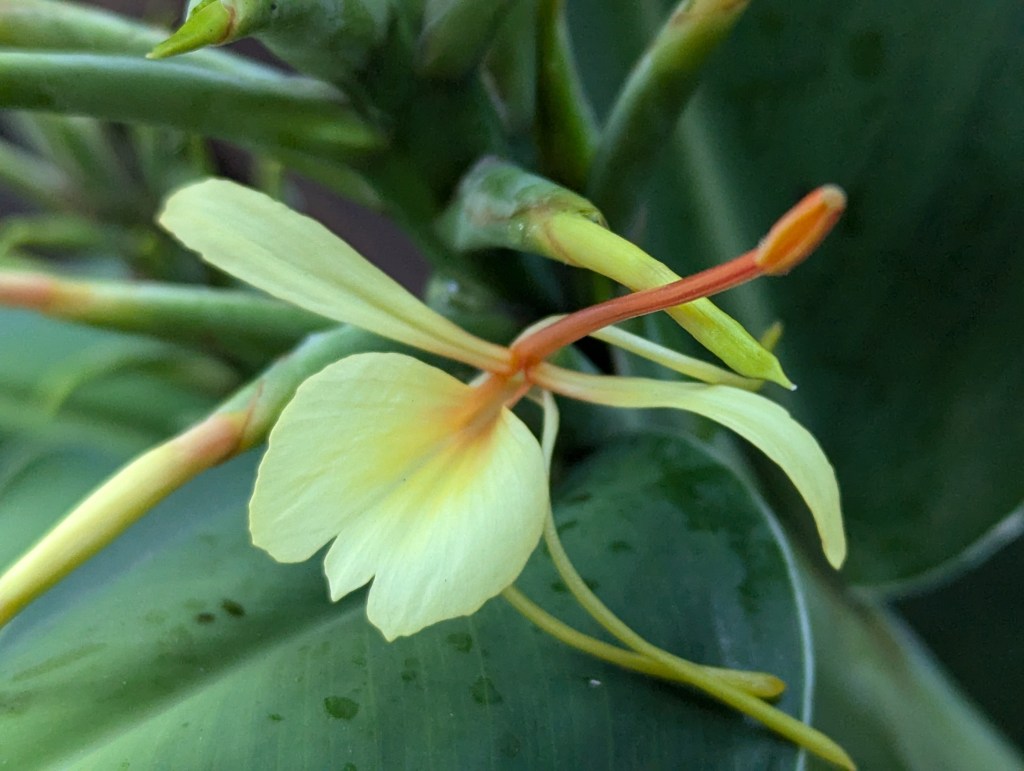
2. Hedychium gardnerianum, kahili ginger bloomed during the pandemic, while no one was here to see it. Then, gophers ate it. I canned the remnants, which are blooming now. This is the first of several florets to bloom on the first tall floral spike. It smells like 1986.

3. Agapanthus orientalis, lily of the Nile suddenly bloomed with this single white umbel within an exclusively blue colony. I removed the offending shoot as bloom began to fade, but found that it is not completely white. I canned it to observe how it blooms next year.

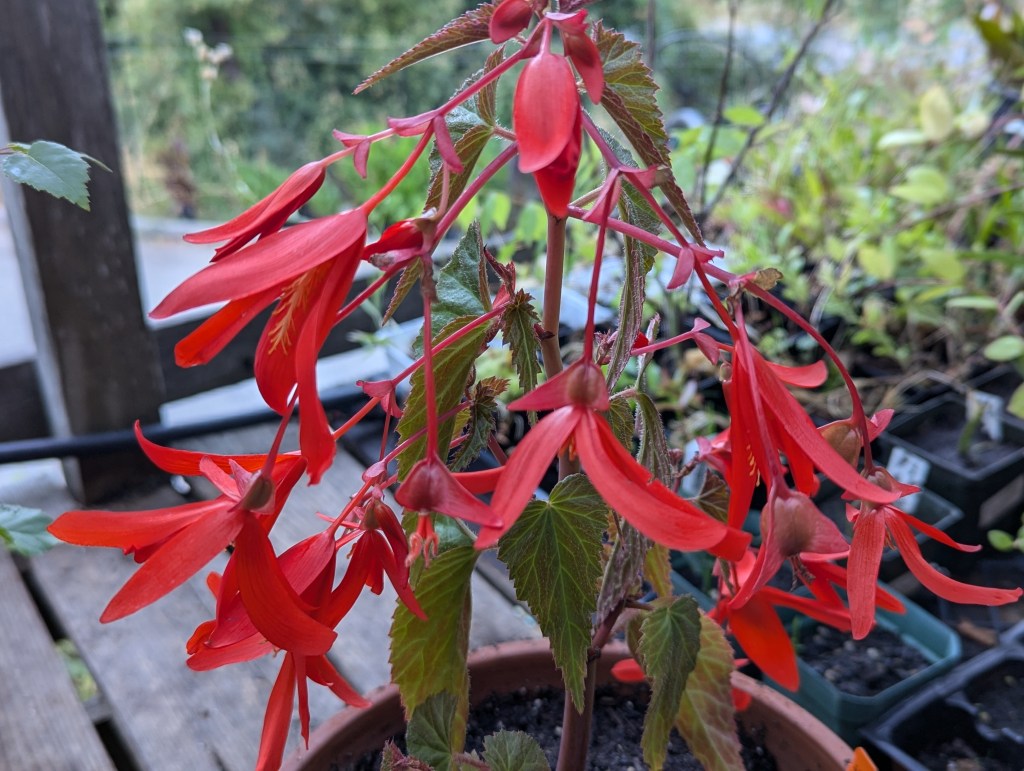
4. Begonia boliviensis ‘Santa Cruz’ begonia was not my idea. Another horticulturist here just procured it from a nursery in Santa Cruz, a few miles away. It is quite happy here in Santa Cruz County. It deserves a more appealing name, such as ‘Los Gatos’ or ‘San Jose’.

5. Canna ‘Cannova Mango’ canna was not my idea either. Brent sent it to me. I am not at all keen on modern cultivars, particularly this color. I nonetheless divided it too much to bloom well. This is its first opportunity to demonstrate how profuse its bloom should be.

6. Canna that was a gift from friends of a friend last winter is now blooming here. I have no idea what cultivar it is, and I do not care. Gifts are always better than nursery surplus from Brent’s projects. It is elegantly tall with simple red bloom and simple green foliage.

This is the link for Six on Saturday, for anyone else who would like to participate: https://thepropagatorblog.wordpress.com/2017/09/18/six-on-saturday-a-participant-guide/

Poor Man’s Rhododendron

Poor man’s rhododendrons is less colorful but more perennial than the more popular busy Lizzie Impatiens walleriana.

The nursery industry is so innately unsatisfactorily lucrative, that to us nurserymen, a ‘poor man’s rhododendron’ is any rhododendron that we grow. To everyone else, it is Imaptiens sodenii, a tender perennial that gets to six feet tall and wide or even larger on plump, softly succulent stems. It succumbs to even mild frost in winter, but regenerates rapidly by summer. It prefers partial shade, and can roast if too exposed to direct sunlight on warm days. Too much shade is rarely a problem.

The two inch wide flowers are typically very pale shades of pink, lavender or slightly blushed white. At least one modern variety has brighter white flowers with reddish pink centers. Bloom continues as long as weather is warm. The seed capsules are not much to look at, but explode to disperse their seeds when disturbed. The soft, rich green leaves are about three to six inches long.

Sunscald

Even cacti are susceptible to scald if their exposure changes.

Agave americana is a tough perennial that is naturally endemic to harsh desert climates. It not only survives, but is happy in awful heat and dry air without shade. However, a specimen that lived in my garden for about two years succumbed to sunburn and moderate heat in less than a day.

The problem was that it had been growing in a rather shady spot since it arrived. There was enough ambient sunlight to sustain it, but no direct exposure to sunlight. The typically stout steely blue leaves were consequently elegantly elongated and slightly twisted, but well adapted to their particular environment. This would not have been a problem, except that I dragged the plant out to relocate it.

In only a few hours, the leaves were roasted by exposure to sunlight. They melted and laid limp like steamed asparagus. Only the unfurled leaves in the middle remained turgid. By the next morning, the scorched leaf surfaces were already turning ashy white. Now, the desiccating foliage lays flat with slightly curled blackening edges, around the surviving meristem (terminal bud in the middle), like an angry starfish road kill taking its last gasp.

The good news is that the new foliage that eventually develops from within the presently unfurled middle leaves should adapt to the environment where the plant gets relocated to, even if the first leaves to open are not quite adapted. The bad news is that the damaged foliage cannot be salvaged, and will need to be cut before planting. I will put the plant deeper in the ground than the level it had been growing at so that the leaf stubs will be buried.

Just as people can get sunburned, plants that are sheltered can succumb to sunscald when they suddenly become too exposed. It does not always result from the particular plant getting moved, but sometimes happens when nearby plants or features change. For example, foliage of Japanese maples that have grown as understory plants to larger shade trees is susceptible to foliar sunscald if the larger trees get removed or pruned significantly. Replacing old large picture windows with more reflective windows to keep the interior cooler may reflect enough glare to the exterior to temporarily scald sensitive ferns. Aggressively pruning English walnut, avocado or silver maple trees in summer may expose sensitive bark of main limbs enough to cause bark scald.

Damage to foliage may linger as long as the foliage does, but is typically as temporary as the foliage is. Deciduous plants will drop the damaged foliage in autumn, and replace it with more adapted foliage in spring. Bark scald though can be a serious problem, since the bark is not so easily replaced in a year. One of my great grandfather’s old English walnut trees got sunscald on some main limbs when the tree was pruned for clearance from a room addition in about 1950, and remained damaged when the tree was removed about half a century later. The scalded bark decayed decades ago, exposing inner wood to decay.

Madonna & Black Lace

Sambucus nigra ‘Black Lace’ European black elderberry

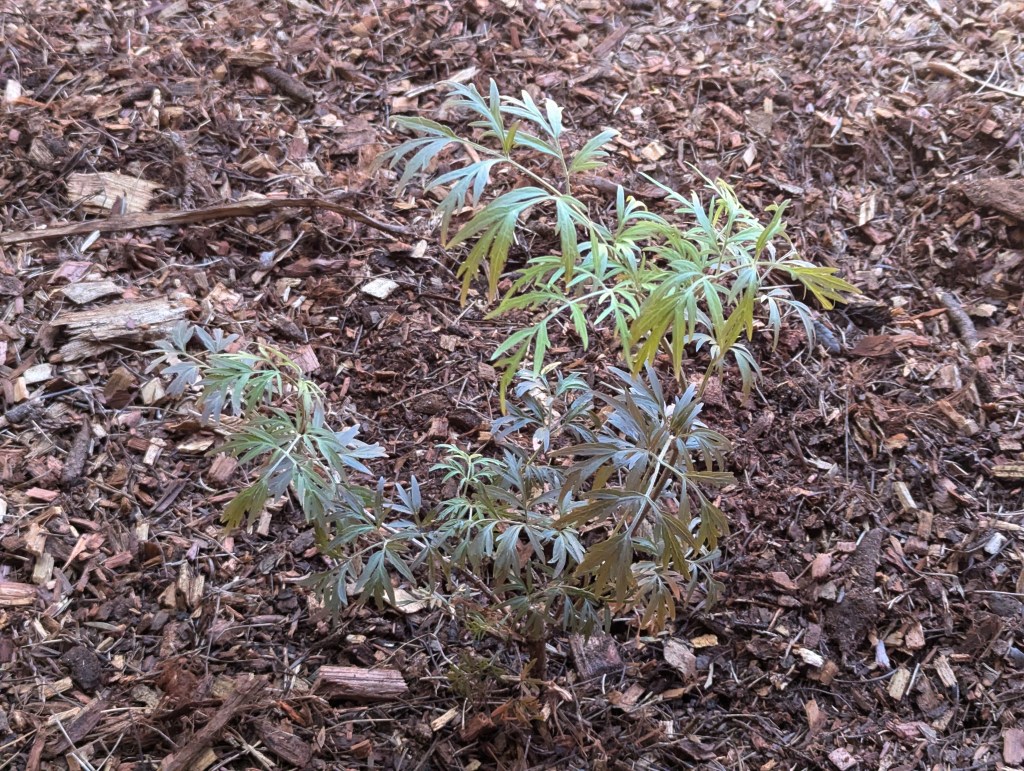
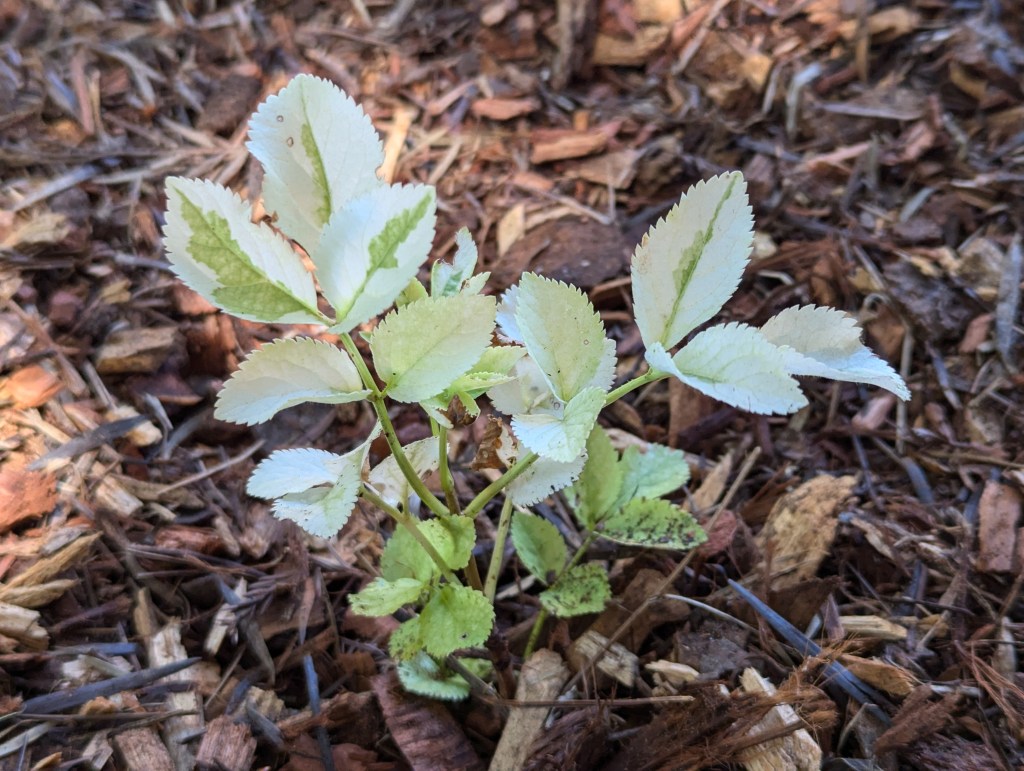
1984 was four decades ago. This is happening right now. Sambucus nigra ‘Black Lace’ European black elderberry, with intricately lacy and richly bronzed foliage, and flaring upright form, has inhabited one of the landscapes here for a few years. I was initially not so keen on it, but eventually learned to appreciate it as others who saw it expressed fondness for its distinctive texture and color. It was so popular that I grew a few too many copies from pruning scraps two winters ago, with the intention of adding a few more to other landscapes. I plugged a few more last winter, as if I did not know better. Several were shared with neighbors, but so far, only one was added to another landscape here, and only a few days ago. It may not look like much in the picture above, but should be a bit bigger and more richly bronzed next year. Sambucus nigra ‘Madonna’ European black elderberry, with simpler and yellowish variegated foliage, and somewhat more rounded form, was a more recent acquisition. Although I am not so keen on its yellowish color, it happened to become available while I was considering acquisition of a pollinator for ‘Black Lace’, which has not produced berries yet. Although each can self pollinate somewhat, different cultivars pollinate each other more effectively. Doves enjoy the resulting berries; and people enjoy seeing happy doves. The original specimen of ‘Madonna’ was thrashed when I acquired it, but provided more than sixteen rooted side shoot copies before going to live in a colleague’s garden. The first of these copies was installed adjacent to and in conjunction with the first copy of ‘Black Lace’. It may not look like much in the picture below, but it is just a dinky copy from a four inch pot.

Sambucus nigra ‘Madonna’ European black elderberry

Saint John’s Wort

Saint John’s wort is a survivor.

Saint John’s wort is the common name of a few species of Hypericum. Hypericum beanii sometimes gets the distinction of Bean’s Saint John’s wort. That sounds more like carob, Ceratonia siliqua, though. Carob is the locust bean that sustained Saint John the Baptist in the desert. Mr. Bean was actually a respected botanist of the Royal Botanical Garden.

This Saint John’s wort is not as invasive as naturalized sorts, but is as resilient. Although rarely available from nurseries, it survives in old and neglected landscapes. Established specimens need no irrigation, but perform better with it. This species is likely rare merely because of its resemblance to invasive sorts. It propagates quite efficiently from cuttings.

Hypericum beanii is a shrubby species, unlike more familiar ground cover types. It grows about two or three feet tall and wide. Its bright yellow flowers are about two inches wide, and bloom through summer. Foliage is deciduous where winter is cooler. Here, it is likely to linger until spring foliage replaces it. Partial shade is tolerable, but might inhibit bloom.

Aridity Is Opposite Of Humidity

The sky is bluer with aridity.

Aridity is a measure of humidity. Humidity is a measure of aridity. Although opposite, they are similar. Humidity is the quantity of water vapor that is suspended within the air. Aridity is a deficiency of humidity. They are components of weather that are more likely felt than seen. Although, aridity clarifies the air, which typically causes the sky to seem more blue.

Of all components of weather, only atmospheric pressure is less tangible than aridity. It is measurable with instrumentation, but perceptible to very few. Except for its clarification of the sky, aridity is just as invisible. It is more perceptible, though. Just as humidity inhibits dissipation of heat, aridity promotes it. Therefore, arid heat feels cooler than humid heat.

That is why the West Coast is famous for its delightfully arid weather with sunsets. Even when the weather here is warmer than elsewhere, it may be more comfortable. Although undesirable, smog and smoke from forest fires provide color for clear sunsets. Temperate arid weather is more conducive to gardening. However, some vegetation might disagree.

Fragrant flowers can not disperse their fragrance quite as effectively during arid weather. Nor can aromatic foliage disperse its aroma quite as effectively. A few varieties of colorful foliage and flowers may fade a bit faster with minimal humidity. After all, most vegetation within home gardens is originally from more humid climates. It naturally enjoys humidity.

More importantly, most vegetation needs more water through arid weather. It loses much more moisture from its foliar surfaces at such times. Any breeze, which people might like, exacerbates loss of moisture. Obviously, warmth does also. Automatic irrigation requires appropriate adjustment as weather changes. Manual irrigation may become demanding.

Irrigation is less demanding for species that actually prefer local Mediterranean climates. Many of such species are native. Most are native to other regions with similar climates. A few are native to climates that are more arid, but tolerate a bit of extra moisture. Weather and climate do not adapt to a garden. It is best to cooperate with climate than not.

Weed Eater

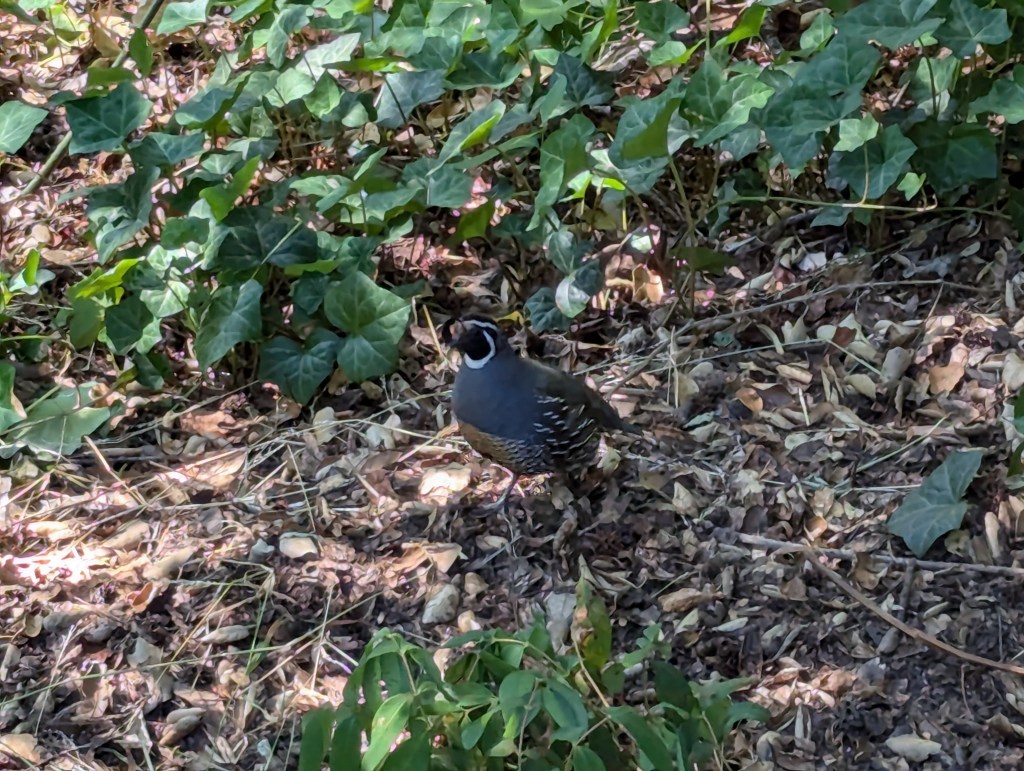
California quail are the Official State Bird of, as one might guess, California. They are delightfully plump but small game birds that are on the ground more than anywhere else. They fly only when necessary, and seem to avoid landing in trees or shrubbery. They effectively avoid predators by running into thickets of vegetation that their predators can not follow them into. Some believe that they sound like they say “Chicago” when they talk to each other. Actually though, they say “Hey Paco!”, in a politely mellow tone. They are a chaparral species that venture into adjacent forests such as the redwood forests here. Relatively colorful males, such as this, are typically followed by their visually subdued female mates after spring, and by now are likely to be followed by a herd of tiny and fuzzy chicks. Their motion on the ground is fluid, although most of a small herd can angularly and suddenly change direction, as if the Papa quail follows his silly apostrophe shaped topknot to the left or right, and the rest follow. They run about pecking at exposed soil, and often stop to scratch at forest debris where soil is not so exposed. Not only do they eat insects and mollusks, but most of their diet is seeds. Since only a negligible minority of seeds within our landscapes of desirable vegetation, such as naturalized wildflowers, almost all of the seeds that California quail eat here are those of weeds. They proactively eat weeds before they happen.

Cicada

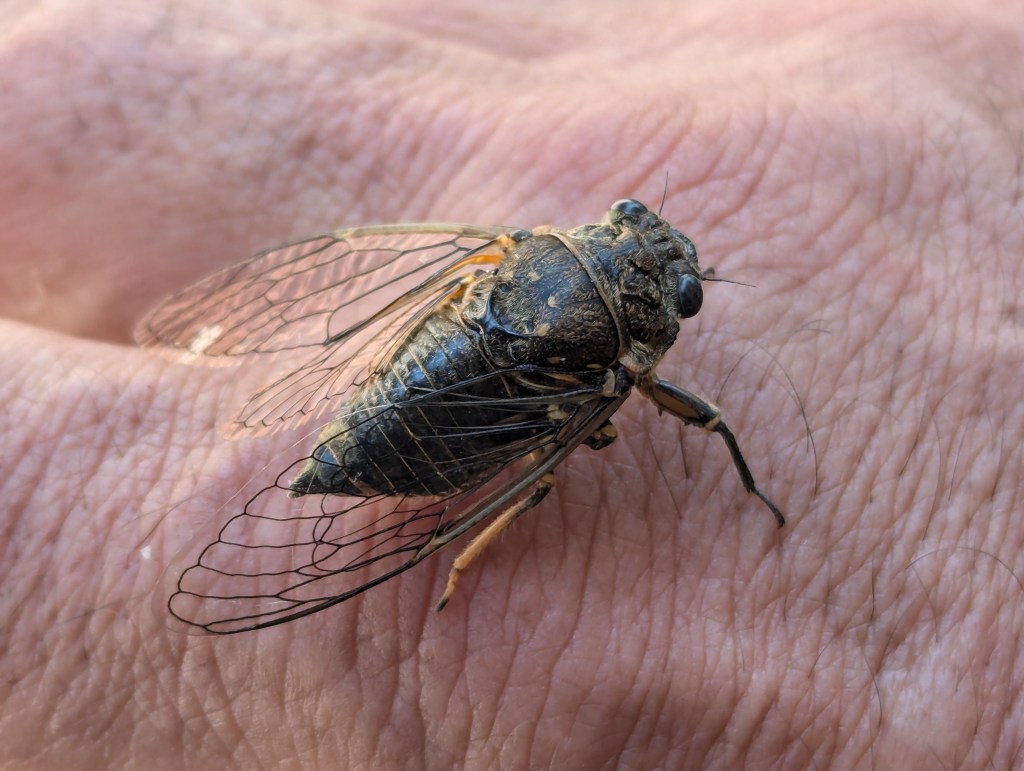
The left wing seems to be injured.

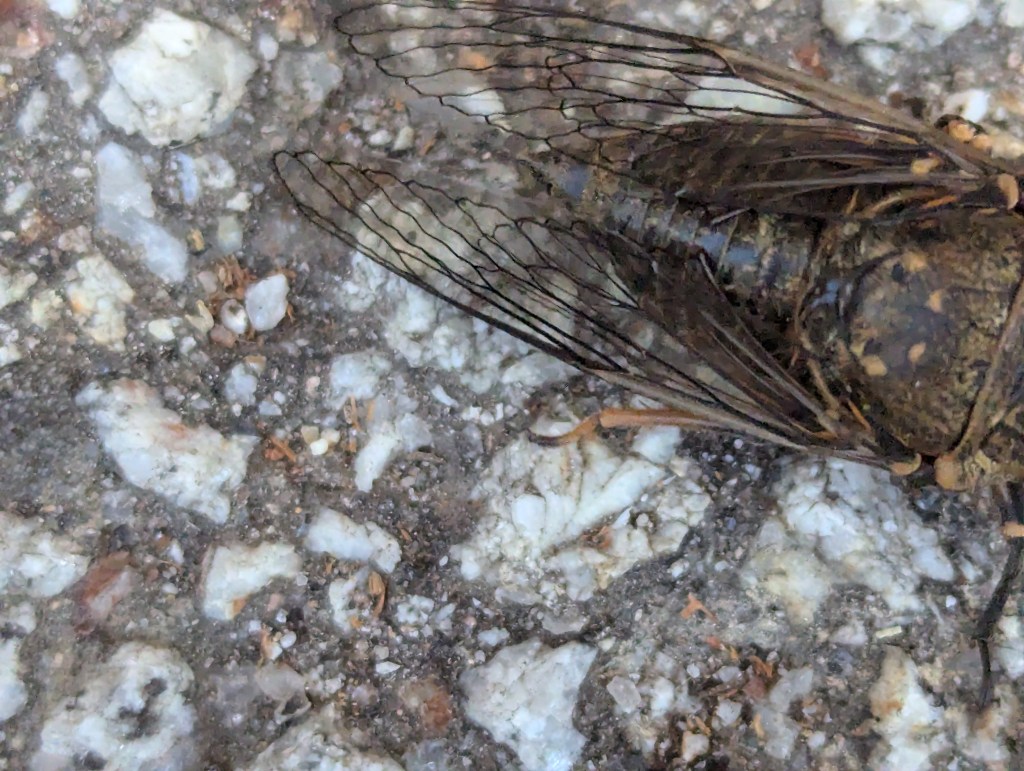
Contrary to common belief, cicadas are native to California. There are actually more native species here than in any other state. Of course, that is partly because California is so big, with so many distinctly diverse ecoregions. Cicadas are merely less prominent here because they are less numerous than they are within dense hardwood forests farther east. Within most regions here, they are somewhat rare. Even where they are most numerous, they do not congregate to form obnoxiously loud populations as they do elsewhere. Some native species are content to share their relatively mixed western forests with relatively few individuals of their own kind, and perhaps a few individuals of other cicada species. They are loud enough to find each other over significant distances. This cicada found its way to where I was enjoying the garden last Thursday. It was quite intimidating when it arrived with loud buzzing of its wings. It flew awkwardly before bashing into a steel building with a loud ‘PING’ that sounded more like a fat acorn falling onto the roof. I should have fled. It circled on the ground briefly before getting airborne again, and coming after me! It landed on my collar. I managed to maintain my composure as I removed it. I could see that one of its wings was impaired, as is evident in the picture above. That did not stop it from trying to fly again. It did not get far before landing on the asphalt driveway. It did not cooperate for the second picture below, which, although not of good quality, demonstrates that the impaired wing is not so impaired. It was likely merely out of whack from crashing into the wall. Before we could get acquainted, this no longer so intimidating cicada flew away as awkwardly as it arrived.

Both wings seem to be fine now. (This cicada did not want its picture taken.)

Six on Saturday: Early or Late

Some of these six are early. Some are late. Some merely seem to be one or the other, but are actually right on schedule. Only the banana pup, which is the only of these six that is not blooming, was influenced intentionally.

1. Hymenocallis latifolia, Peruvian daffodil is actually right on schedule. I expected it to remain dormant through summer to bloom for autumn, after naked lady. It may still do so if it foliates first. Otherwise, it should naturally bloom for summer. These are my first.

2. Musa acuminata ‘Cavendish’ banana was divided earlier and allowed to grow for two months, but then lopped and sent by mail. It must now grow new foliage before autumn. It is actually less likely to rot with this technique. I am quite pleased to have procured it.

3. Hedychium gardnerianum, kahili ginger surprised me with what initially seemed like early floral trusses. However, they have since grown so slowly that they might bloom for later summer or autumn, which is when I previously thought that they normally bloom.

4. Gladiolus hybridus, gladiola has been unexpectedly reliably perennial, and is actually slowly multiplying. A sport of an orange and yellow variety now blooms yellow. Another blooms red. This one seems to be trying to extend its bloom season by blooming so late.

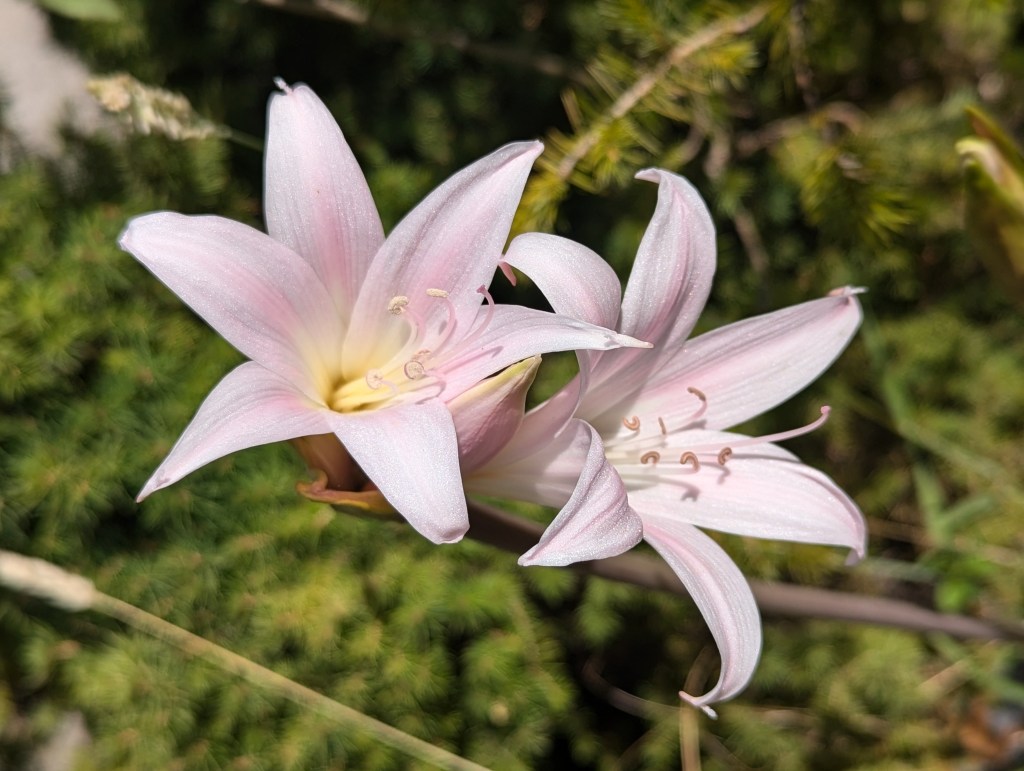
5. Amaryllis belladonna, naked lady is doing the opposite. It should not bloom for about another month. This bulb might be blooming early as a result of distress associated with crowded confinement with too many other bulbs within a big pot. It is pretty regardless.

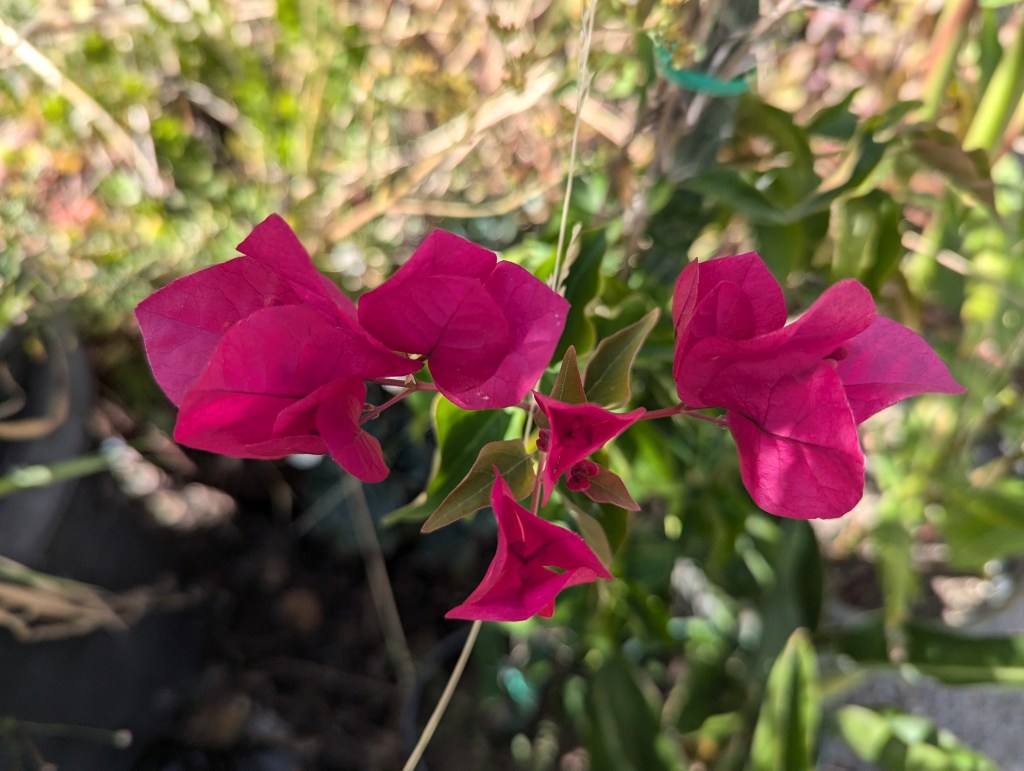
6. Bougainvillea, which lacks a common name that is actually common, could have been blooming since the weather began warming at the end of last winter. It recovered slowly from minor frost damage, though. It still seems to be rather lean, but at least it is trying.

This is the link for Six on Saturday, for anyone else who would like to participate: https://thepropagatorblog.wordpress.com/2017/09/18/six-on-saturday-a-participant-guide/