Sports

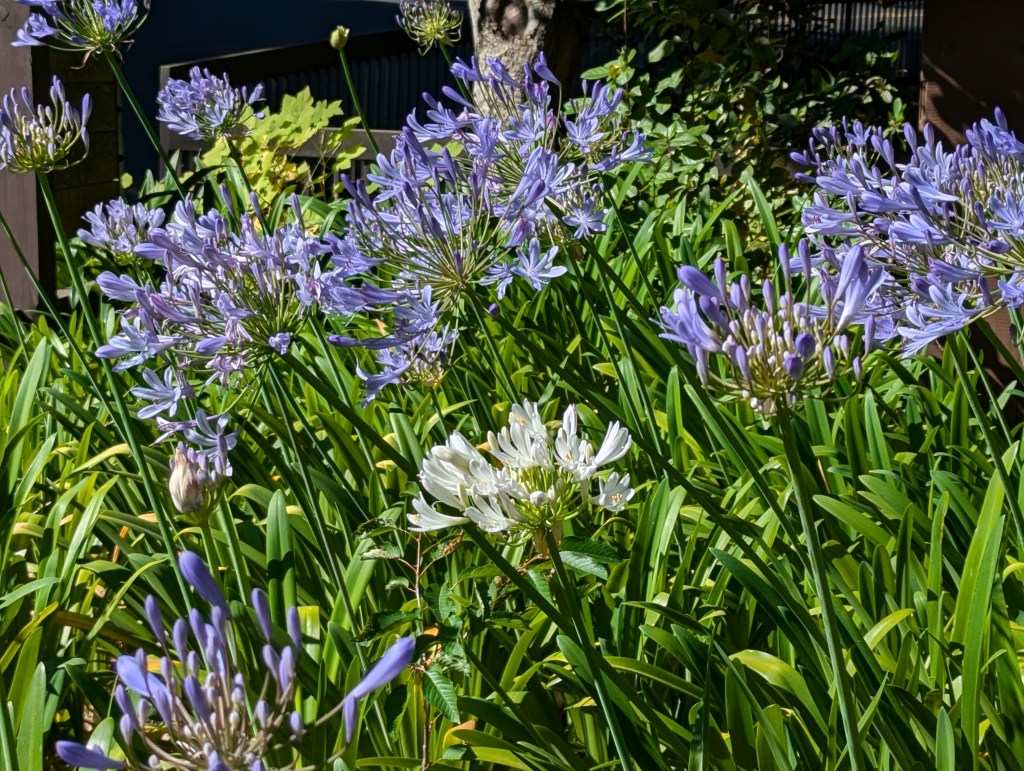
This white lily of the Nile appeared this summer within this exclusively blue colony.

Horticulturally, a sport is a genetically variant growth. Although it is more common among extensively bred or genetically aberrative cultivars than simple species, the most basic of lily of the Nile can, on rare occasion, change floral color from blue to white or from white to blue, as I mentioned on the sixth of July. Unvariegated or ‘green’ sports are a more common annoyance among some cultivars with variegated foliage, such as popular cultivars of Euonymus japonica, since they grow faster with more chlorophyll, and can overwhelm the original and more desirable variegated growth. The yellow hybrid gladiola that I posted a picture of for Six on Saturday on the twenty-ninth of June could be a sport of an adjacent orange and yellow hybrid gladiola. I did not give it much consideration because I assumed it to be the first bloom that I noticed from one of a few bulbs that somehow survived for a few years longer than expected. Until last summer, the only hybrid gladiolas to survive from a mixed batch planted years earlier had been either purple or the aforementioned orange and yellow. However, now that the yellow bloom is gone, an equally unfamiliar orangish red bloom emerged from the same small colony of bulbs that had bloomed only orange and yellow. As their common name suggests, hybrid gladiolas are hybrids, so are innately genetically unpredictable, and therefore have potential to generate sports as they multiply. Although I do not know for certain that this new orangish red hybrid gladiola did not survive without blooming for the past few years, I sort of suspect that it and the new yellow hybrid gladiola are more recently developed sports of the original orange and yellow hybrid gladiola. I hope that both are as reliably perennial as the original.

This orangish red hybrid gladiola seems to be a sport of the orange and yellow hybrid gladiola.

Smokebush

Smokebush bloom is not particularly flowery.

Mundane floral color and a lack of floral fragrance are no problems. Smokebush, Cotinus coggygria, compensates. Its uninteresting bloom reveals strikingly fluffy floral trusses for summer. These trusses eventually deteriorate to reveal exquisitely vibrant foliar color for autumn. This foliar color eventually deteriorates to reveal sculptural trunk form for winter.

Foliar color through spring and summer is likely the most striking attribute of smokebush. Most are boldly rich purplish bronze. Some are strikingly vivid yellowish chartreuse. The two extremes contrast splendidly. Old fashioned olive drab is now rare. Foliar color does not fade much. However, it suddenly transitions to fiery orange and red color for autumn.

Old fashioned olive drab smokebush can grow a bit more than fifteen feet high and wide. Because it does not grow fast, only old specimens are so large. Most bronze cultivars do not get much higher than first floor eaves here. Chartreuse cultivars are likely to stay a bit shorter. Healthy young specimens might get wobbly if their canopies outgrow their roots. Aggressive pruning improves form and stability, and can also enhance foliar color.

Weed Abatement Beyond Refined Gardens

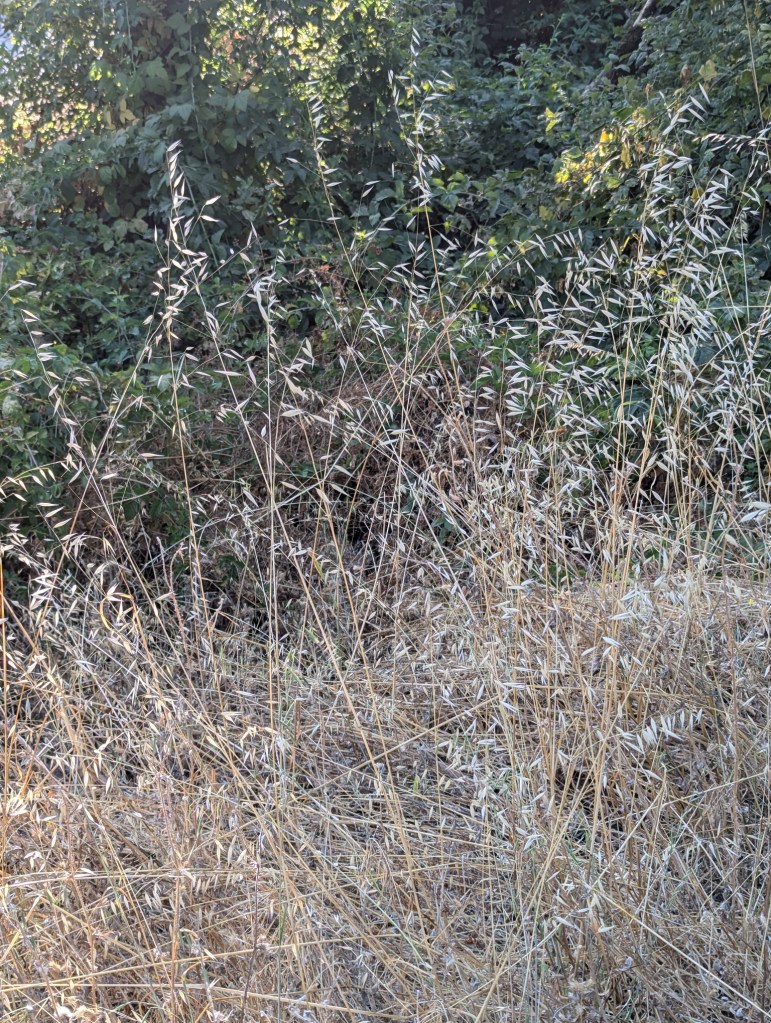
Dry weeds can be very combustible.

Gardening involves weeds. Gardening outside of refined gardens involves more weeds. A few of such weeds are native species which grow where they are undesirable. Most of the most aggressive are naturalized exotic species. Collectively, they are an unpleasant consequence of unmanageable external biodiversity. They necessitate weed abatement.

Weed abatement is a standard procedure within refined gardens. Most know it simply as weeding. Ideally, it is harmless to desirable vegetation. It may be a relatively simple task where desirable vegetation excludes weeds. Also, weeds are less abundant where they lack sources of seed to regenerate. Timely weeding should eliminate much of their seed.

Unfortunately, no garden is isolated from external influences. Weed seed sneaks in from uncultivated spaces, adjacent gardens or beyond. Suburban and rural gardens might be close to wildlands or forests. Many of such weed seed sources are beyond the control of their victims. Some are merely easy to ignore because they are out of view or not in use.

For some unused or unseen areas, weed whacking can be more practical than weeding. It entails cutting undesirable vegetation almost to grade with a motorized weed whacker. Manual weed whackers, although rare, are not extinct. Weed whackers are not selective. They can sever desirable annuals or perennials that mingle with undesirable vegetation.

The primary advantage of weed whacking is that it is fast and efficient. With good timing, it eliminates bloom or developing seed prior to dispersion of seed. Diminishment of seed inhibits subsequent proliferation, and is much safer for pets. Foxtail seed are notoriously hazardous. Besides, overgrown weed vegetation becomes a fire hazard as it desiccates.

Viable basal stems and roots that remain after weed whacking are not much of an asset. Many types of perennial and biennial weeds regenerate from such growth. However, to a very minor degree, such vegetation may contribute to healthy biodiversity. It may sustain some beneficial insects and soil microorganisms. Also, it can inhibit surface soil erosion.

July 12, 2024 – Memorial Tree Update (July 14)

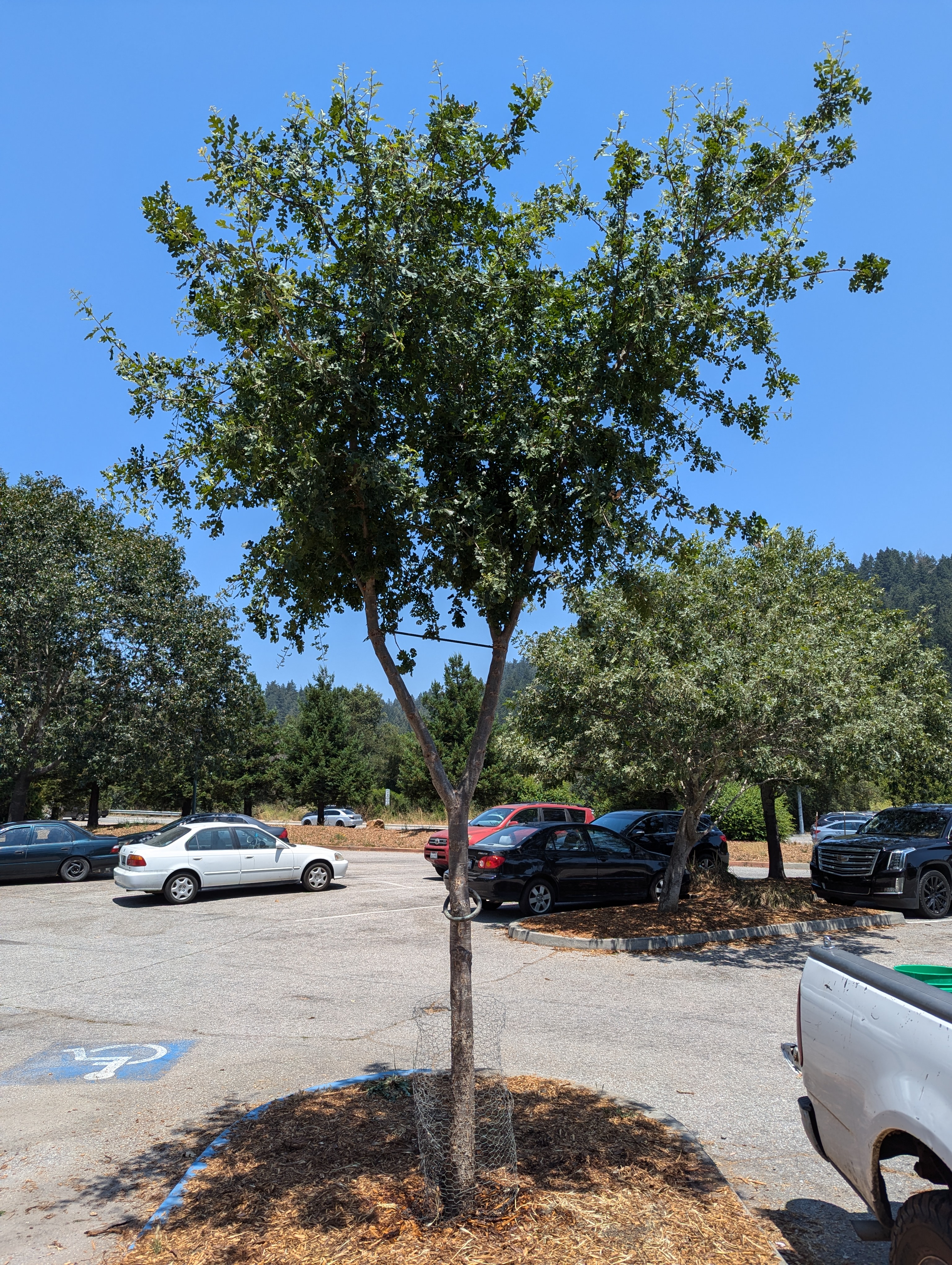
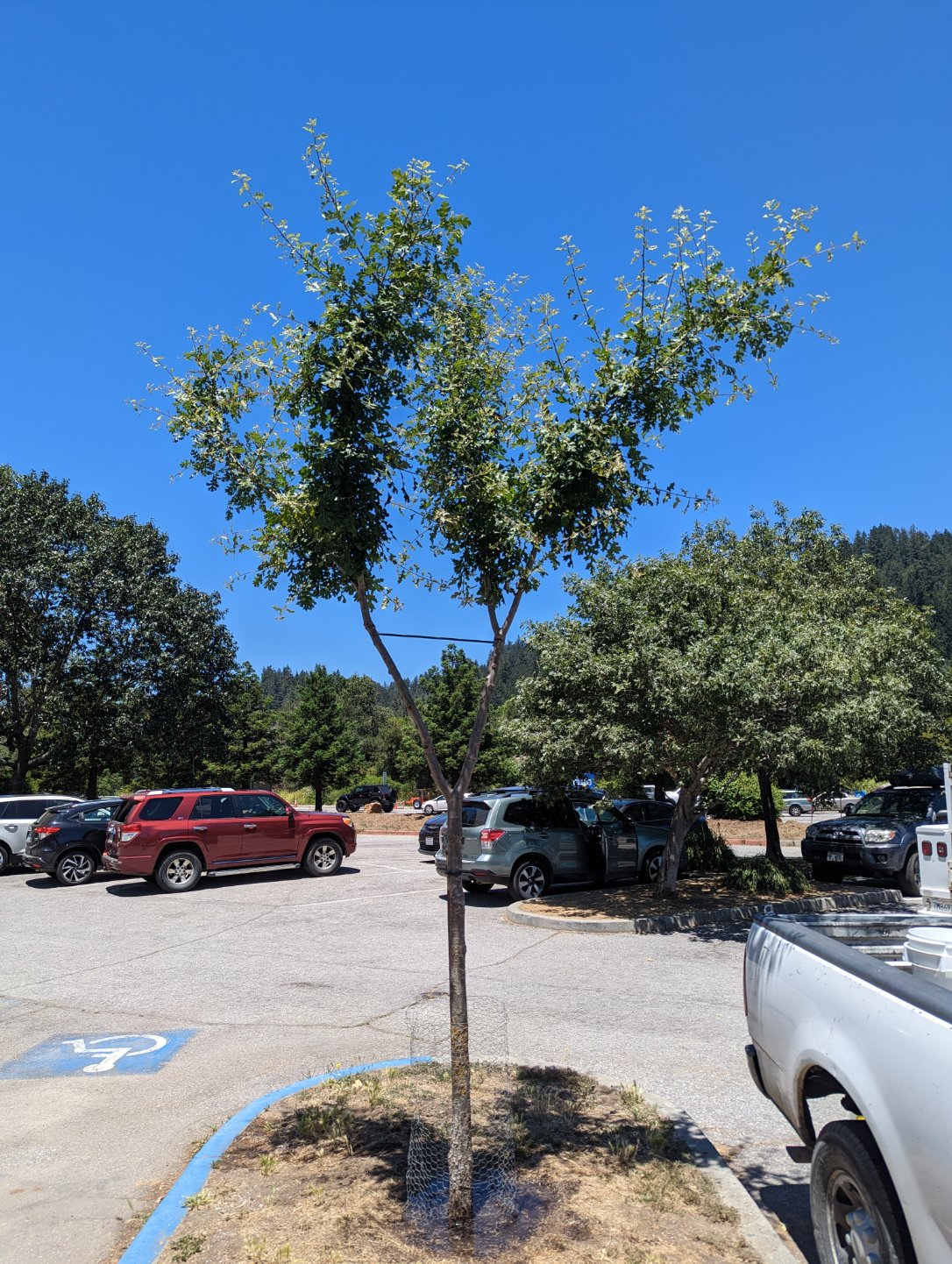
The Memorial Tree is becoming a productive member of its ecosystem!

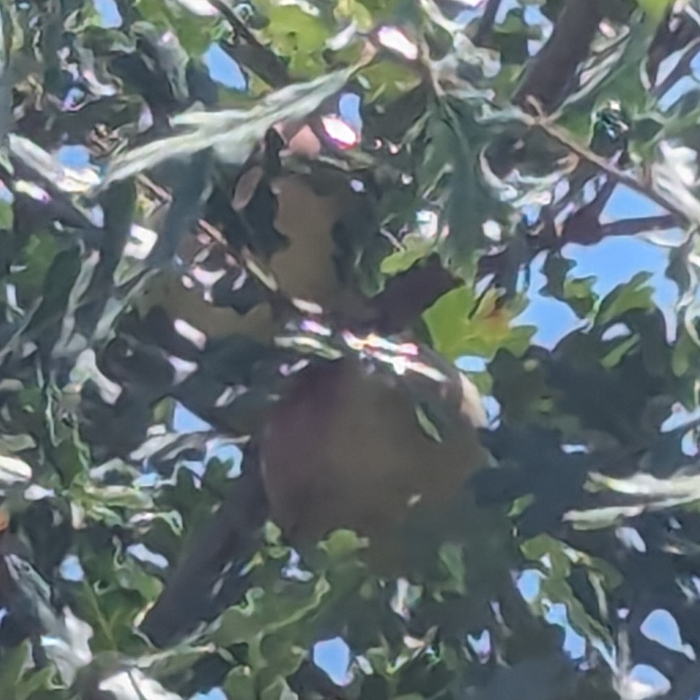
Every year, there is less to write about regarding the Memorial Tree in Felton Covered Bridge Park. That is because every year, it becomes more independent. It no longer needs structure pruning for clearance above the surrounding parking lot. It no longer benefits from supplemental irrigation. The mesh around the base of the trunk really should be removed. So should the truss between the two lowest main limbs. The stake remains merely as a precaution for strong winds, but is likely completely unnecessary. It can be removed after defoliation next winter. The trunk is quite sturdy. Growth is quite vigorous. The branch structure seems to be rather awkward, but such structure is normal for such young specimens of this particular species, and is very unlikely to compromise structural integrity as the tree matures. The canopy is slightly asymmetrical, but not problematically so. The crew who maintains the park replenishes the mulch within the parking lot island around the tree more regularly than they had in the past, and cuts weeds when necessary. They are very protective of this tree, so pull weeds between the trunk and the surrounding mesh rather than get too close to the trunk with their weed whackers. Recently, a neighbor pulled weeds before weed whacking became necessary. Although oaks can technically bloom and produce acorns after only about five years, almost all delay bloom until they are about twenty years old, and some wait until they are twice as old. A lack of bloom this early is therefore normal. The development of two oak apples was a surprise though. Apparently, an oak apple gall moth considers this tree to be mature enough to sustain its eggs. It is as if this little Memorial Tree is already growing up to become a productive member of its ecosystem!

From the ground, I could not get a good picture of these first oak apples.

Perennial Gladiolus

Gladiolus papilio, butterfly gladiolus

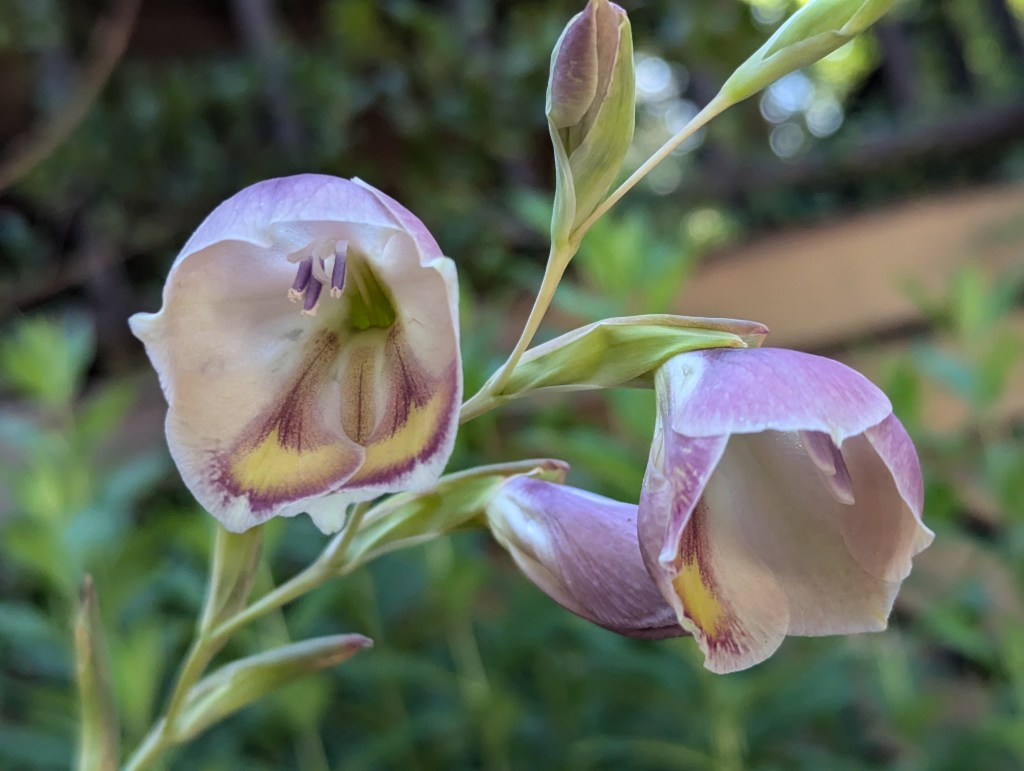
Gladiolus papilio, butterfly gladiolus has been performing very well, and, unlike the more common fancy hybrid gladiolus, it has been very reliably perennial. It multiplies and migrates like a wildflower. I know that I brag about it more than I should, and I just posted a picture of it for Six on Saturday last Saturday, but it happens to be one of my favorite perennials now. It was a gift from Tangly Cottage Gardening in the autumn of 2018, almost six years ago. Prior to that, I had been wanting to grow perennial gladiolus for quite a while, although I was not familiar with such species. I was only familiar with the common fancy hybrid sorts, which are generally not reliably perennial. Gladiolus murielae, Abyssinian gladiolus that arrived a few years ago as a gift from a neighbor may eventually inhabit a different portion of the same landscape that the butterfly gladiolus inhabits. It neither multiplies nor migrates as much as the butterfly gladiolus, and is a bit more garish in bloom, but is both reliably perennial and compatible with wildflowers, and technically, is probably more appropriate to that particular refined landscape. Various cultivars of Watsonia, bugle lily, most of which also came from Tangly Cottage Gardening, could also inhabit the same landscape. There is no rush to decide anytime soon, and the refined landscapes at work are constantly evolving. Within my home garden, I can be less concerned with how visually compatible some of such species and cultivars are, and be more concerned with growing what I enjoy. After all, that is how I acquire so many odd species and cultivars with so much history and from so many important gardens, and even from so many natural ecosystems. It is what makes my home garden so important to me.

Six on Saturday: ‘Variegata’

‘Variegata’ is a common designation for the first variegated cultivar of a species. Fancier or later distinct cultivars get fancier cultivar designations. The first three of these six are variegated, but lack a cultivar designation as if variegation is normal for the species. The fourth seems to have a few cultivars with the same designation. The last two could be the only variegated cultivars of their respective species. I can not remember ever seeing any of the first four without variegation. The fifth is still rare. The sixth is now more popular than unvariegated.

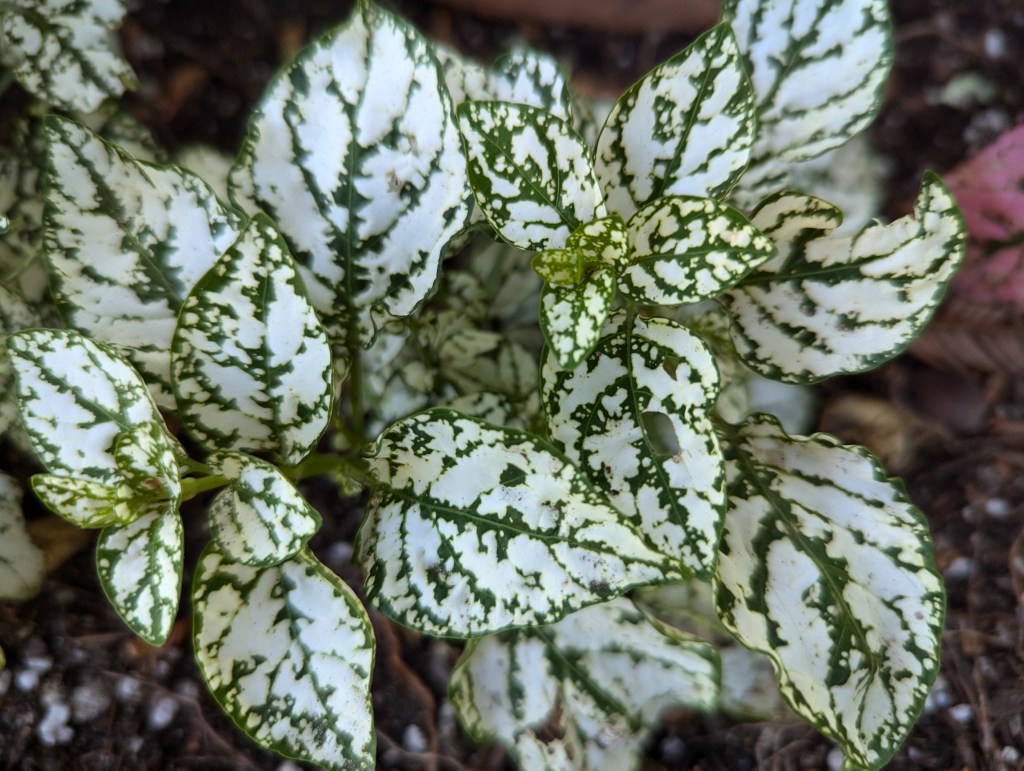
1. Hypoestes phyllostachya, polka dot plant lacks cultivar designation. This was labeled merely as white. Variation of foliar variegation indicate that they were grown from seed.

2. Hypoestes phyllostachya, polka dot plant is also pink, which is exactly how this other half of them was labeled, likewise without cultivar designation. ‘Variegata’ would suit it.

3. Hypoestes phyllostachya, polka dot plant variegation is variable. Some specimens are more green than others. At least two of the pink sort are variegated with red such as this.

4. Aucuba japonica ‘Variegata’, gold dust plant is about as variable as polka dot plant is, but is known by the same cultivar name. Of course, modern cultivars have other names.

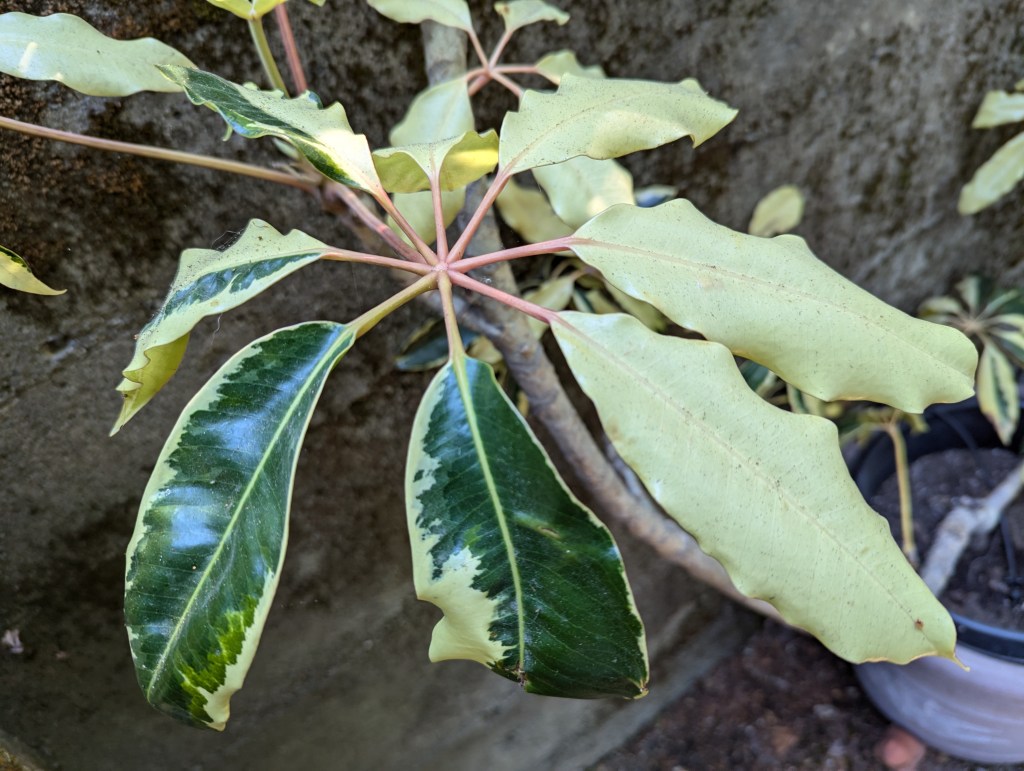
5. Tupidanthus calyptratus ‘Variegata’, mallet flower was not planned. I have wanted to grow the typical unvariegated type since I met it in 1986. Brent sent me this raggedy old but rare variegated specimen so that I would grow more for him. I am learning to like it.

6. Solandra maxima ‘Variegata’, cup of gold vine was also unplanned. I grew the typical unvariegated type to the left first. Then, Brent got me the variegated cultivar to the right. I am getting to like it because it is more docile. The unvariegated sort grows like a weed!

This is the link for Six on Saturday, for anyone else who would like to participate: https://thepropagatorblog.wordpress.com/2017/09/18/six-on-saturday-a-participant-guide/

Godetia

All but one species of Clarkia are native somewhere in California.

Like California poppy, sky lupine and various other native wildflowers, godetia, Clarkia amoena, seems to prefer its own space. However, it is somewhat more adaptable than some other natives are to regular irrigation and coexisting with exotic (non-native) wildflowers that are not too overpowering. It is a common component in wildflower mixes, and is more likely than most to naturalize after the other wildflowers have died out. 

It is best to sow godetia seed in autumn, directly where the flowers are wanted, so that the seed get watered in by rain and begin to grow through winter and early spring. Bloom begins later in spring or early summer. In areas that do not get watered regularly, occasional watering prolongs bloom. Fertilizer can actually interfere with bloom though. As bloom finishes, deteriorating plants should be left to disperse seed for the following year.

The two inch wide flowers are typically pink or purplish with red blotches or veining. Some are very pale pink or nearly white with deeper pink blotches at their centers. Most godetia are only about a foot or two tall. ‘Dwarf Gem’ stays less than a foot tall. Taller types get nearly three feet tall. The lanky stems are adorned with narrow light bluish green leaves that are about half an inch to one and a half inches long.   

Seemingly Complicated Latin Names Simplify Nomenclature.

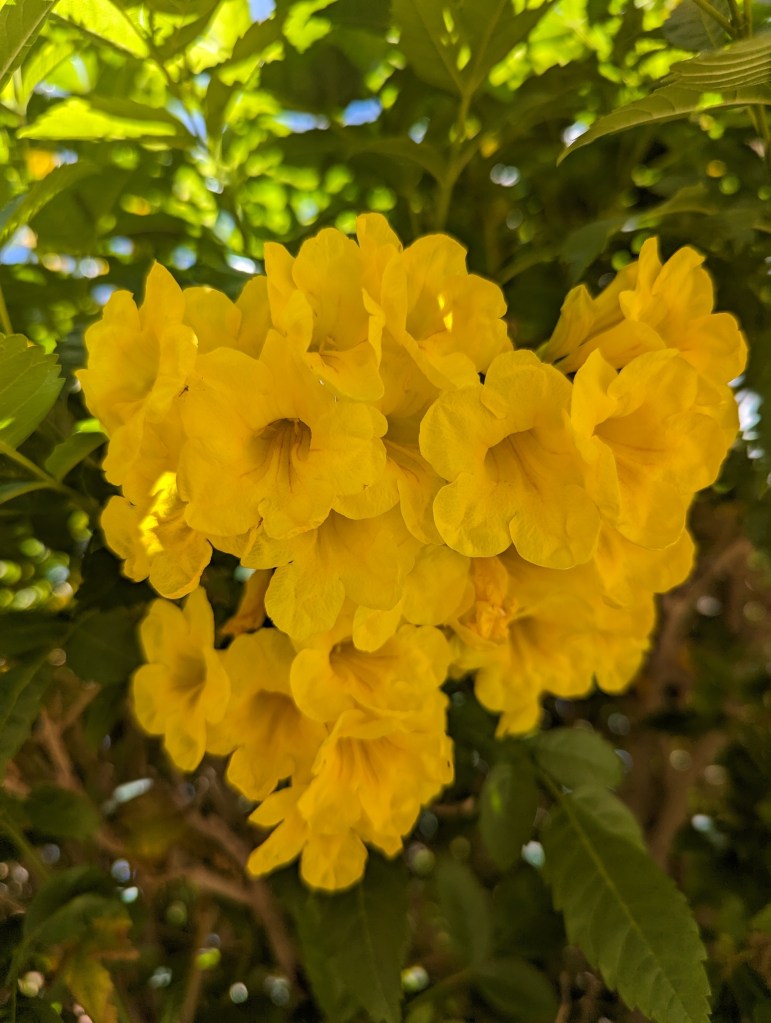
Tecoma stans has only one Latin name, but a few common names; esperanza, yellow bells, yellow elder, yellow bignonia and trumpet bush.

If I remember correctly, it was Wednesday evenings when my three college roommates and I would gather in the parlor of our apartment on Boysen Street in San Luis Obispo to watch Star Trek: the Next Generation. One of my roommates, who has since returned to Cal Poly as a professor of rangeland resource management, traditionally made cornbread for the occasion . . .  with butter and honey . . . mmm. So, for half an hour each week, we learned more about the remotely futuristic cultures of planets many light years away than about our studies.

Thanks to a contraption referred to only on rare occasion as the ‘universal translator’, nearly everyone in this quadrant of the galaxy will be able to understand each other within the next four centuries. No matter what language is spoken, it will all be perceived as the same universal language. Unfortunately, the ‘universal translator’ has not yet been invented. The many languages used on this single planet will consequently continue to interfere with accurate communication.

This is why horticulturists, biologists, and many other professionals who may interact with colleagues who speak other languages or even slightly different regional dialects use Latin to identify, among other things, biological organisms. Latin names may be cumbersome to pronounce and daunting to spell, but are universal to those of us who use them. This is important because the ‘common names’ are so regionally variable. 

For example, some of the European maples that we know as maples here are known as sycamores in England, but are known everywhere by their Latin name of Acer. (Latin is traditionally italicized.) Similarly, North American sycamores that are known as maples, planes or plane trees in various regions are all likewise known everywhere by their Latin name of Platanus. With few exceptions, the universality of Latin names facilitates accurate identification.

Latin names are therefore very helpful when researching plants. A tree known simply as a ‘cedar’ might be a calocedrus, arborvitae, juniper, cypress, chamaecyparis or a true cedar just to name a few. Knowing that this particular tree is more specifically a ‘red cedar’ perhaps limits the possibilities to arborvitae or juniper. (Differentiation between ‘Eastern’ and ‘Western’ red cedars is often neglected in the East and West where the respective cedar is predominant.) Identifying the tree as a Juniperus virginiana will help us find the most accurate information about it, even though it is not really a cedar at all, but a juniper.   

North & South

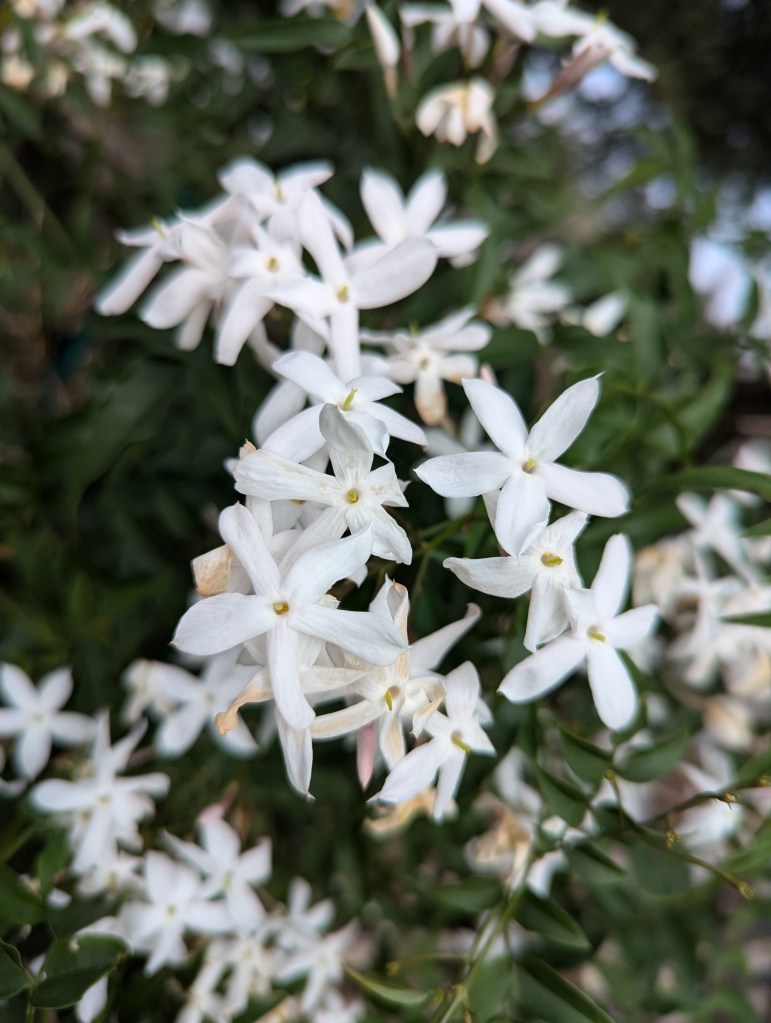
pink jasmine, Jasminum polyanthum

Brent and I studied horticulture through the second half of the 1980s at California Polytechnic State University at San Luis Obispo, which is known more simply as Cal Poly. San Luis Obispo is exactly halfway between where each of us came from. He came from the region west of Los Angeles, two hundred miles to the southeast, which is considered to be south by the standards of California. I came from the region west of San Jose, two hundred miles to the northwest, which is considered to be north by the standards of California. He considered San Luis Obispo to be within Northern California. I considered it to be within Southern California. Consequently, when either of us encountered a species with which we lacked prior experience, we assumed it to be regionally popular within the respectively unfamiliar half of California. Such assumptions were accurate for some species. For example, Brent was as fascinated with redwoods as I was with desert fan palms. He knew that redwoods are more popular here than in Southern California, and eventually went to experience them growing wild within their native range near Santa Cruz. I knew that desert fan palms are more popular in Southern California than here, and eventually went to experience them growing wild within their native range near Palm Springs. Pink jasmine, Jasminum polyanthum, was an odd one. Because Brent had never encountered it before, he assumed that it had been popular in Northern California. Because I had never encountered it before, I assumed that it had been popular in Southern California. In actuality, it only became commonly available throughout California at about the time that we encountered it, so had previously been popular neither here nor there. Nonetheless, to Brent, it is still as northern as it is southern to me.

Perennial Pea

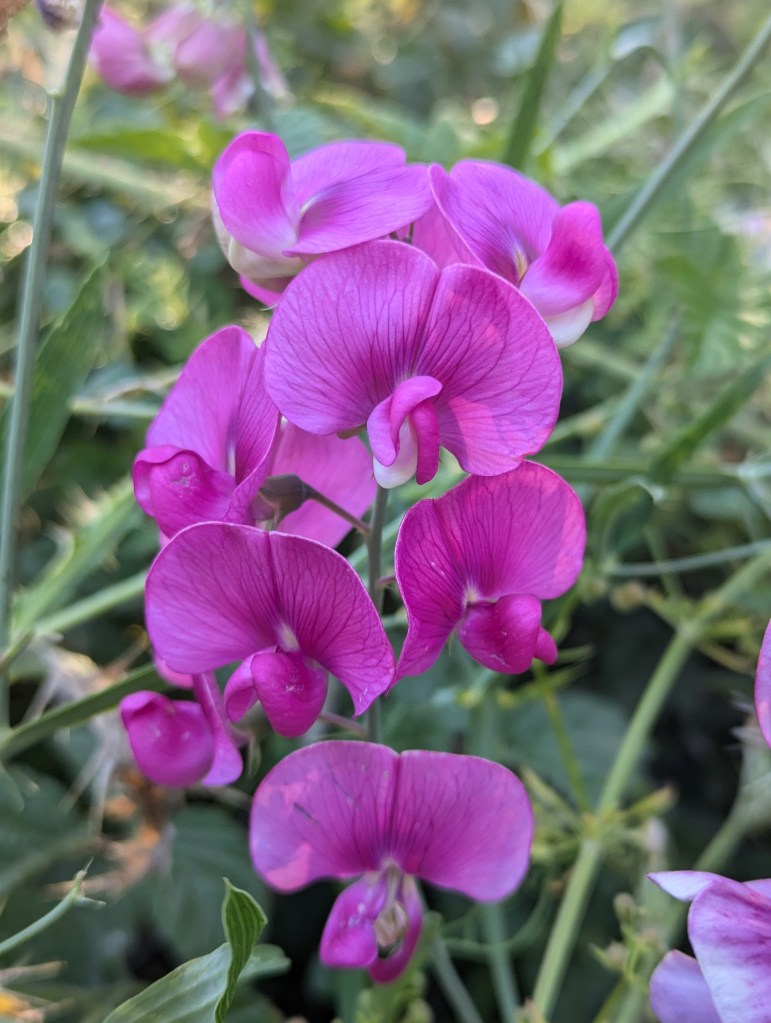
Perennial pea is a naturalized wildflower.

Now that the weather is getting hot, perennial pea, Lathyrus latifolius, is finishing bloom. It needs warmth to bloom, so can begin between the middle or end of spring. However, it shrivels in heat, so can finish between the beginning and middle of summer. Sometimes, it can bloom for almost three months. Sometimes, it finishes almost as soon as it starts.

Perennial pea is more popular as a naturalized wildflower than within home gardens. Its seed is rarely available from nurseries. Young seedlings might not grow very big initially. Mature specimens can vigorously climb and creep more than seven feet in any direction. Their fibrous perennial roots are very difficult to kill. Propagation by root division is easy.

Almost all perennial pea blooms with an abundance of bright pinkish magenta flowers. A rare few bloom with slightly striated light pink flowers. A bit fewer bloom with bright white flowers. Bloom resembles that of annual sweet pea, but is less frilly and lacks fragrance. Slightly bluish foliage and stems have a soft texture, and recover slowly from disruptions. Any parts can be toxic if ingested.