Summer Warmth Continues Into Autumn

Dog days of summer are over.

The locally mild climate might be rather boring. Winter weather is not very cold. Summer weather is only sometimes very hot. Then, warmth does not often last for very long. Such climate might seem to be deficient in seasons. Summer seems to be the primary season, with just a few cool weeks of winter. Spring and autumn seem to be only brief transitions.

According to the position of Sirius, the Dog Star, the dog days of summer are done. They are the hottest days of the year for several climates of the Northern Hemisphere. The last was the eleventh of August. The final day of summer is the twenty-second of September. Such dates are less relevant here than elsewhere, though. Warm weather may continue.

Indian summer is more typical here than not. In some other climates, it is unusually warm and dry weather that continues into autumn. In this particular climate, it is not so unusual. Another difference is that it does not occur after earlier frost, as it might elsewhere. Some climates here lack frost anyway. Locally, warm weather is more lingering than fluctuating.

Some vegetation knows how to exploit such weather. Indeterminate tomato varieties can continue to be productive until a first frost. If they started soon after a last frost, they could get sloppy with rampant growth. That should not be a problem if production is the priority. With phasing as late as August, determinate tomato varieties can also produce until frost.

Most popular canna cultivars are hybrids of tropical and montane species. Because they are tropical, they are not accustomed to distinctly cool winter seasons. Because they are montane, they survive mild frost. Therefore, they grow until frost, and then resume growth as soon as they can afterward. Dahlia is similar, but maintains dormancy through winter.

Photoperiod also influences growth. Days gradually shorten through summer regardless of the duration of warmth. Some species are more responsive to this than others. Later in summer, crape myrtle can slowly begin to develop autumn foliar color. It does not require much chill to become strikingly colorful for autumn. It can do so while cannas still bloom and tomato plants still produce fruit.

Out with the new, in with the old

Canna ‘Cannova Mango’

Canna ‘Cannova Mango’ is a relatively recent introduction to the landscapes here. I inadvertently brought it back from Southern California about two and a half years ago, without realizing that it is exactly the sort of modern cultivar that I am not at all keen on. It is new. It is improved. It blooms with a strange but trendy color. The problem is that it performs too well to not be an asset to the landscapes. Because it is so short and compact, it starts blooming early, while old fashioned Canna are still only foliar. Because it replaces older stalks with newer stalks so efficiently, it is rarely without bloom until frost. Other cultivars of the series bloom yellow, lemon (which is implied to be distinct from yellow), orange shades (?), red golden flame (?!), rose, scarlet with bronze foliage or orange with bronze foliage. The tallest are less than five feet tall. Regardless of my disdain for modern cultivars, I do not doubt that all of them perform as impressively as ‘Cannova Mango’. Nonetheless, I prefer the older and formerly common sort. A relatively compact cultivar that stays less than about four feet tall with simple green foliage and billowy but simple red bloom has been relocated through a few landscapes here since the early 1980s. Although not many rhizomes survive, I intend to grow more of it, even if not so much within the landscapes at work. Its bloom begins a bit later, and is neither as profuse nor as continuous as that of ‘Cannova Mango’, but it has history here. Besides, its more relaxed foliar texture and bloom somehow seem to be more compatible with the surrounding forested setting than the almost too refined modern cultivars, with their perfectly compact form, overly profuse bloom, and strangely modern floral color.

Unidentified old fashioned red Canna with green foliage.

Yucca whipplei Seed

Yucca whipplei seed is likely more rare in cultivation than in the wild.

Yucca whipplei, which is now known as Hesperoyucca whipplei, should not be so difficult to procure. It is the most common species of the genus within the next few hundred miles south of here, and was quite common in the hills around San Luis Obispo, where Brent and I studied horticulture at California Polytechnic State University (Cal Poly). I should have taken pups from wild specimens within the region, but I know of no one with wild specimens within their gardens. I can only see them from a distance, and, although within view, they are far enough away to necessitate quite a hike to get to. I never bothered to procure pups from specimens that I encounter directly in the Santa Monica Mountains north of Beverly Hills because they might be a different variety, or related to such a variety. Contrary to dramatic bloom, seed of the species is supposedly rare because the larvae of its very specialized pollinating moth devour almost all of the seed that develops from successful pollination. (The moth pollinates a flower only to provide seed for its larvae to eat.) Seed should be even more rare here because the specialized pollinating moth has no business so far from the natural range of its sustaining species. Somehow, a specimen that bloomed at work produced these few seed capsules. Someone else besides the specialized pollinating moth apparently took interest in its bloom. Although I have no idea what variety of Yucca whipplei the particular specimen is, I am pleased with the seed, and will try to grow them if they are viable when their capsules dry. (I hope that removal from their deteriorating stalk does not compromise their development.) Furthermore, I will get at least one pup from the original parent now that it will generate a litter after its monocarpic bloom. It is likely the variety that I want and am most familiar with anyway, because that particular variety happens to be the most common. Of course, I will procure a pup from a wild specimen within the region of San Luis Obispo if I ever get the opportunity to do so, just in case it is any different from what is growing and now blooming here.

Six on Saturday: Off Color

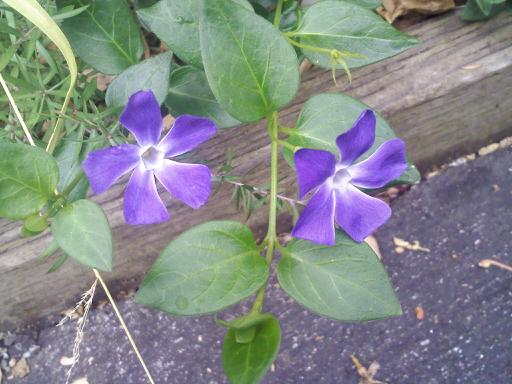
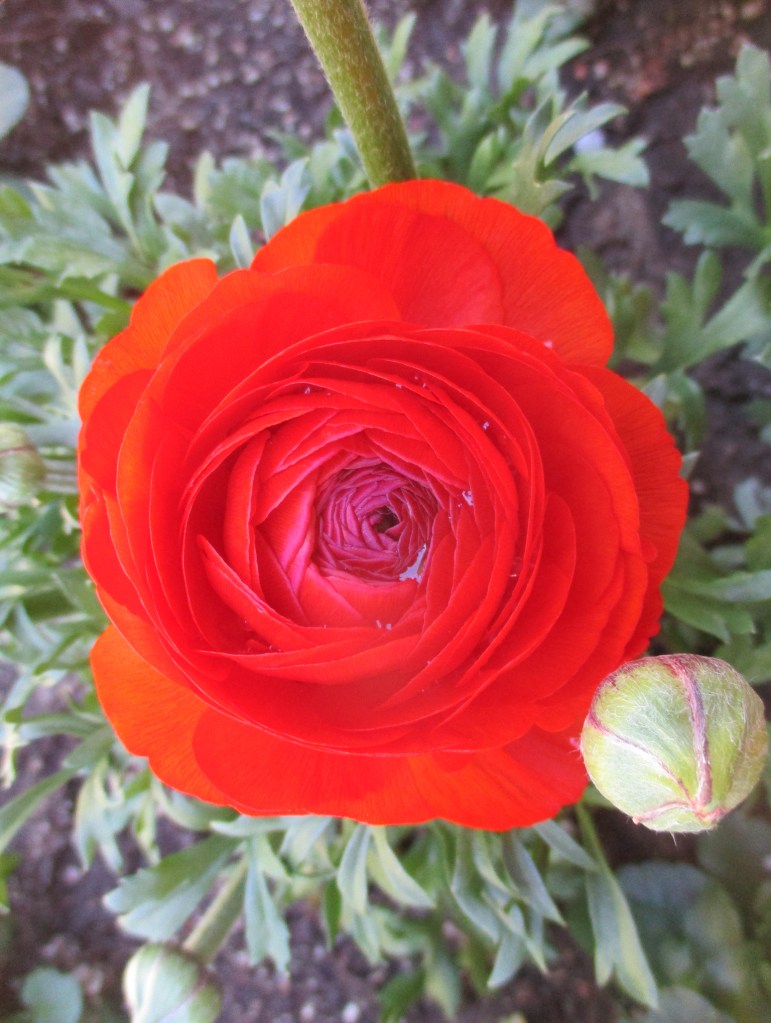
Perennial pea, lily of the Nile and dahlia displayed aberration of color earlier and started a trend.

1. Eriocapitella hupehensis, Japanese anemone is enviable in other gardens. I neglect to remember that a minor bit of it survives in one of our landscapes. I ignore it because it is such a grungy almost grayish white without enough blush to be pink. I should see how it blooms now and then relocate it to a better situation where it might develop better color.

2. Hypoestes phyllostachya, polka dot plant is typically spotty with either white or pink. Two of seventy-two cell pack plugs exhibited this darker pinkish red. I got copies of it to perhaps grow as houseplants, at least until they will be happy in the garden next spring.

3. Chrysanthemum X morifolium, florist’s chrysanthemum seems to change color like a dahlia that I got a picture of last week. I thought that it bloomed orange last year, which was a surprise after it bloomed rusty red two years ago. I must not remember accurately.

4. Phlox paniculata, garden phlox has bloomed exclusively white since it arrived here by unknown means a few years ago. Although I have been very pleased with its white color, and white happens to be my favorite color, I am also pleased with this new pink variant.

5. Amaryllis belladonna, naked lady did the opposite. It had always bloomed exclusively bright pink. Then, I found and isolated a few bulbs of a white blooming variant last year. An associate found two more in the same location this year. I like it much more in white!

6. Rhody is canine so lacks perception of red, which is the basis of these off colors. Most have more than they should, and one has none. Rhody sees them only as shades of gray.

This is the link for Six on Saturday, for anyone else who would like to participate: https://thepropagatorblog.wordpress.com/2017/09/18/six-on-saturday-a-participant-guide/

Blue Marguerite

Not many flowers are as blue as blue marguerite is.

            Like all sorts of daisies, gazanias, ice plants and so many of the familiar flowers in the Compositae family, blue marguerite, Felicia amelloides, is endemic to South Africa. Their flowers are the colors of the flag of Sweden though, with clear blue petals around bright yellow centers. These inch wide or slightly wider flowers bloom on well groomed plants most of the time, except during cool weather. Plants that do not get dead headed (groomed of deteriorating flowers) take breaks between bloom phases. The simple inch long leaves seem to be glossy, but almost have the texture of a cat’s tongue.    

            Mature plants may be taller than a foot and broader than four feet. Their somewhat woody stems are not as substantial as they should be, so can break easily, leaving awkward holes in otherwise well rounded shrubs. Unfortunately, the healthiest plants may live for only a few years. Distressed plants actually last a bit longer. Aggressive pruning at the end of summer or just before spring can restore old deteriorating plants for a while.

            Blue marguerite likes well drained soil, good sun exposure and somewhat regular watering. It is most often used as a colorful and shapely perennial, but is colorful enough for pots and urns of mixed perennials or annuals.

Sustainability Sometimes Needs Help

Some perennials naturally last longer than others.

            As much as I like to remind everyone of how easy it is to perpetuate many of their perennials for ever, and to share with their friends, neighbors, children, grandchildren, great grandchildren and so on, there are just some perennials that are not meant to last. I do not mean that they can not last; only that they are not as easy to sustain as others are. For most of these not so easy to sustain perennials, the original plants actually die completely, so will only be sustainable if replacement copies are propagated by cuttings or layers before the demise.

             Many of the very easy to grow daisies and daisy relatives are actually not as self sustaining as they should be. Clumping gazanias can actually rot out in the middle after a few years. Before this happens, it is rather easy to propagate replacement plants from division of mature clumps, or to take small cuttings, even though clumping gazanias do not often need to be pruned. Alternatively, side shoots can be layered (pressed into the soil to form roots) right next to parent clumps. Only a few replacements are necessary, but without them, clumping gazanias eventually die out.  

            Even trailing gazanias can eventually die out. Because they sometimes need to be pruned around the edges, there is a regular supply of material to make cuttings to patch bald spots. To get bigger cuttings, I actually like to delay edging until the plants look shabbier than they should around the edges; but my neighbors do not mind. (At least they do not tell me if they mind.)

            Shrubby marguerite daisies (not blue marguerites) and euryops likewise need to be replaced every few years. If there is enough space, outer stems that lay on the ground can be layered. It is best to bury each layered stem in a small hole, and then hold it down with a stone or brick. The layered plants may not be so symmetrical when the parent plants die out, but should fill out nicely. The fourteen euryops in the long park-strip in front of my home did not have enough space for layering, so died a slow, miserable and unsightly death until I finally removed them. If I had planned better, I would have taken cuttings to replace them.

            It is a surprise when pink breath of Heaven (Coleonema or Diosma pulchrum) or coyote brush dies suddenly, because they are really woody shrubs. (Although coyote brush is actually of the family Compositae like gazanias and daisies, etc.) Various ceanothus live longer, but not much longer. These woody shrubs are not so easy to layer, and quite difficult to root from cuttings, so often get replaced with new plants from the nursery, or different plants.  

Tabasco

Dahlia ‘Tabasco’

Annuals, as their designation implies, complete their respective life cycles within one year. Perennials, as their designation implies, can survive perennially, for more than one year. However, some bedding plants that are enjoyed as annuals actually have potential to be perennials. They are only as disposable as annuals because they are less appealing during dormancy or whatever season in which they do not perform so exemplarily. Most who enjoy gardening do not mind. Perennials that are designated as perennials but do not perform for more than a year are more disappointing. Of a few dahlias that the other horticulturist here purchased a few years ago, four were two pairs of bedding dahlias, which typically function as annuals, and one was a rather expensive perennial ‘Cafe au Lait’ dahlia. ‘Cafe au Lait’ rotted within its first season of minimal bloom. I was not at all keen on it anyway, and was even less keen on its lack of perennial performance. One pair of bedding dahlia, which I do not remember the name of, bloomed for two years, with bright yellow flowers against light green foliage. They would have bloomed again this year if I had stored them better and put them back into the landscape sooner. I forget about the stored dahlia tubers because we typically do not dig and store them here. The other pair of bedding dahlia was ‘Tabasco’. It originally bloomed with red flowers striped with orange, against dark green foliage. For the following year, it blooms with yellow flowers blotched with orange, against simpler green foliage. Now, for its third year, it blooms more like it appears in pictures, with simpler red flowers against bronzed foliage. I do not mind its variability, and actually find it to be interesting. I am more impressed by its perennial performance.

Four O’Clock

Two colors on one four o’clock.

Punctuality is not one of its primary attributes. Four o’clock, Mirabilis jalapa, is supposed to unfurl its flowers about four o’clock. It is more likely to do so a bit later here because of aridity. Flowers can remain open and mildly fragrant all night, but might close after about noon. Four o’clock grows vigorously with summer warmth, but also appreciates humidity.

Floral color ranges through various hues of pink, red, orange, yellow and white. Flowers commonly exhibit stripes, spots or patches of other color within this range. Flowers with completely different colors can bloom on the same stems. Simple bright pink flowers are typically the most fragrant. Other colors and mixed colors may lack fragrance completely.

Most four o’clock grow in their gardens without invitation. They sneak in as seed, but are too pretty to be weeds. They grow tuberous roots to overwinter as their foliage and stems later succumb to chill. Stems do not stand much more than three feet tall, but may sprawl twice as wide. Below their lush foliage, these lanky stems are vulnerable to disturbance and wind.

Staking Helps Keep Trees Straight

Binding can interfere with trunk development.

Planting trees often involves staking. Until they disperse new roots, many new trees rely on stakes for stabilization. Their stability is limited by the initial confinement of their roots. Nursery stakes and their associated binding provide different support. They merely direct straight trunk growth. In a home garden, nursery stakes subordinate to landscape stakes.

This process is different for different trees. Small palm trees need no staking at all, either in nurseries or home gardens. Spruce trees are too stout to need support after they grow beyond their nursery stakes. Camphor trees may need both types of stakes concurrently. Landscape stakes maintain their stability as nursery stakes maintain their trunk integrity.

Typically though, landscape stakes completely replace nursery stakes of most trees. For adequate stability, they must extend into undisturbed soil below excavated soil. For most trees with bare trunks, such staking should reach lower limbs. Some trees need only one stake. Some, particularly those with large canopies, may need a pair of opposing stakes.

Straps that attach trees to their landscape stakes need proper installation also. They are more durable than nursery binding, but must not be too restrictive. They should only hold trees upright without interfering with their natural development. Straps should be as high as practical on their respective stakes. Additional ties may be needed to prevent bowing.

Some old fashioned straps are strips of old tires with bailing wire at each end. Others are simple bailing wire through bits of old hose. Modern straps are more refined and diverse to facilitate staking for diverse subjects. They should cross over between the stakes and the trees they support to limit abrasion. Short nails may attach them firmly to their stakes.

Staking should be as unobtrusive as possible. Trunks that can move somewhat freely in mild wind are studier than those that can not. Binding for trees that initially require it with staking should be as loose as practical. Incremental loosening might be safer for weakly limber trunks. Without loosening, tight binding might harmfully constrict trunk expansion.

Exposure

Sunshine promoted bloom to the left. Shade inhabited bloom to the right.

Naked ladies like exposure. Amaryllis belladonna can certainly survive and actually develop lushly healthy foliage in partial shade. However, it needs sunshine to bloom. This picture above, which was recycled from yesterday when I mentioned that I might elaborate on it later, demonstrates how discriminating this species is. As mentioned yesterday, a row of naked lady bulbs extends completely across the picture from left to right. It does not extend only from the left to the middle of the picture, as the bloom might imply. Now that bloom is finishing, foliage will develop throughout the entire row, including the portion of the row that currently lacks bloom, so that the extent of their herd will be more apparent. The lack of bloom to the right is the result of the shade of a densely foliated coast live oak above. Because coast live oak is evergreen, it shades the area below its canopy through winter, when naked lady is also foliated and storing resources for subsequent late summer bloom. Those that do not get sufficient sunshine to initiate bloom within any particular season will be unable to bloom for the beginning of their subsequent season. When we installed these recycled bulbs here, we considered that bloom would likely be inhibited below the coast live oak, and that we would relocate bulbs that were too shaded to bloom, but we expected more of a transition between the shaded area and the sunnier area. This is so blunt, with bloom to the left, but none to the right. At least we now know precisely which bulbs to relocate while they are dormant next summer. Although there is technically no need to relocate them, and they can be adequately healthy here, they would be more appealing within a sunnier situation that would promote bloom.