After the warm and arid summers here, ferns enjoy the beginning of the rainy season in late autumn or early winter, which is about now.
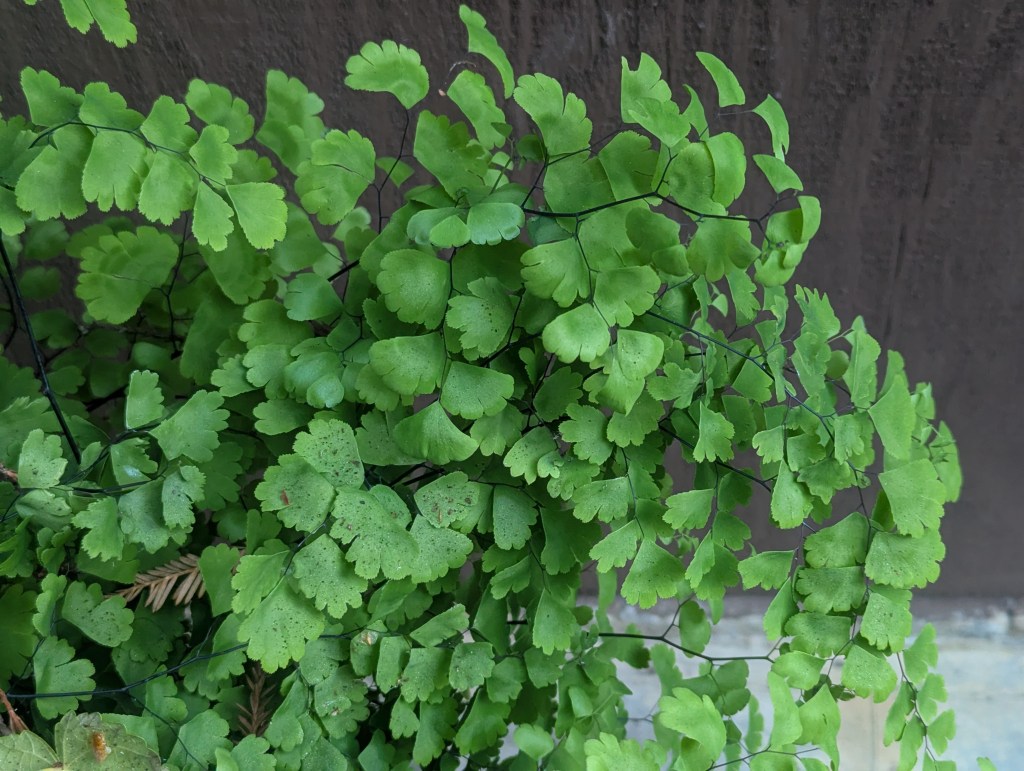
1. Adiantum capillus–veneris, Southern maidenhair fern replaces all its tired old foliage for autumn. It resembles native species of maidenhair fern, but with distinct foliar form.
2. Nephrolepis cordifolia, sword fern remains within a big pot because it can be invasive in the ground. It is directly related to Boston fern, but is not quite as soft and pendulous.
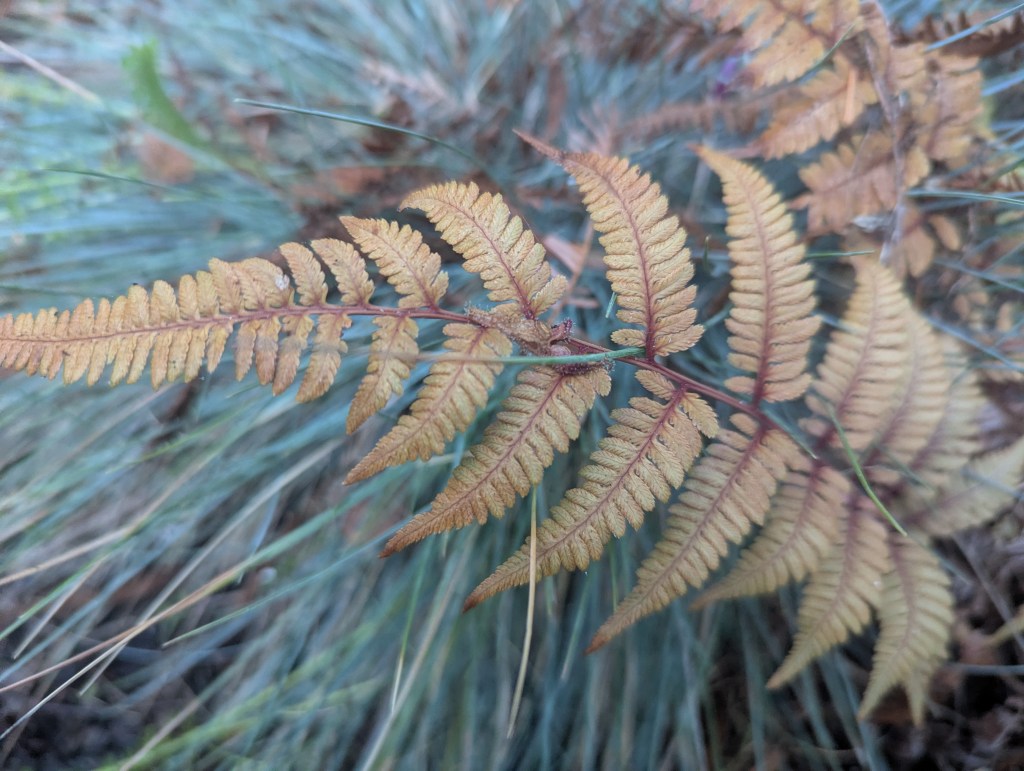
3. Dryopteris erythrosora, autumn fern is the only fern here that exhibits autumn foliar color. It is pretty, but quite diminutive. It is no bigger now than it was several years ago.
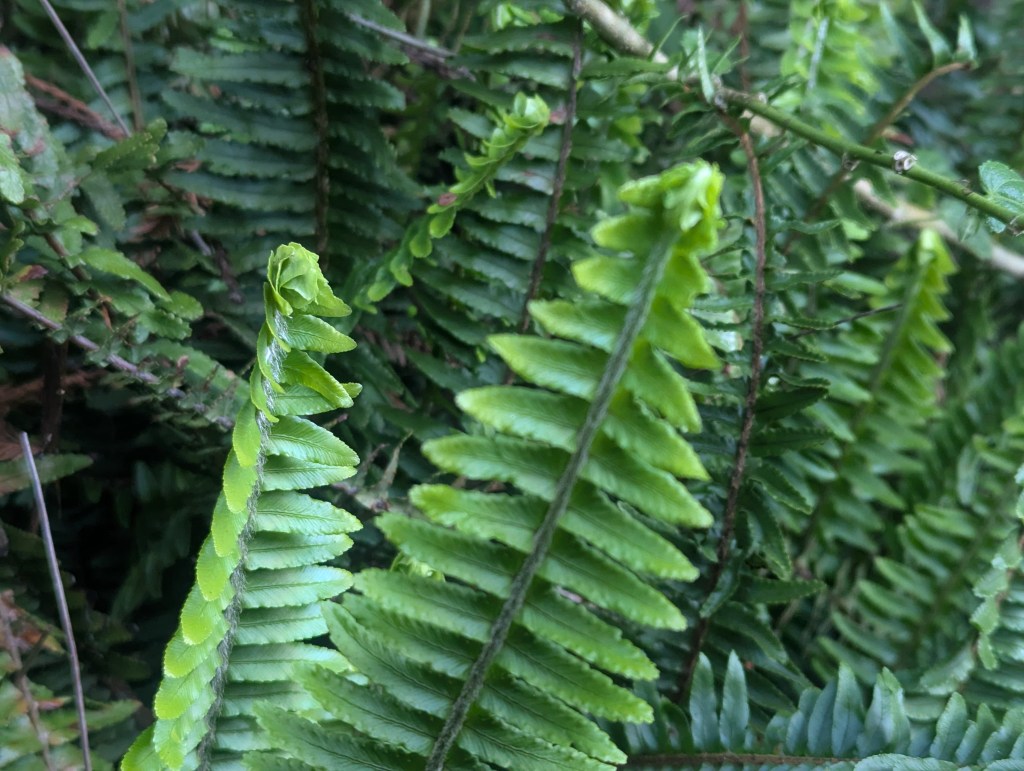
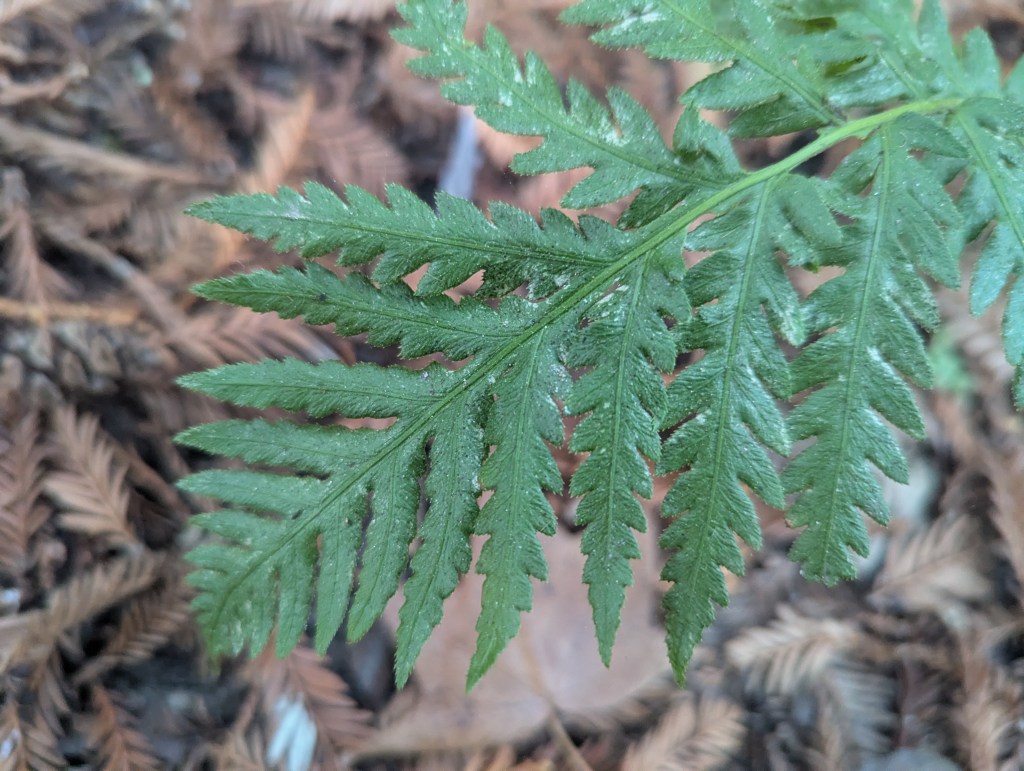
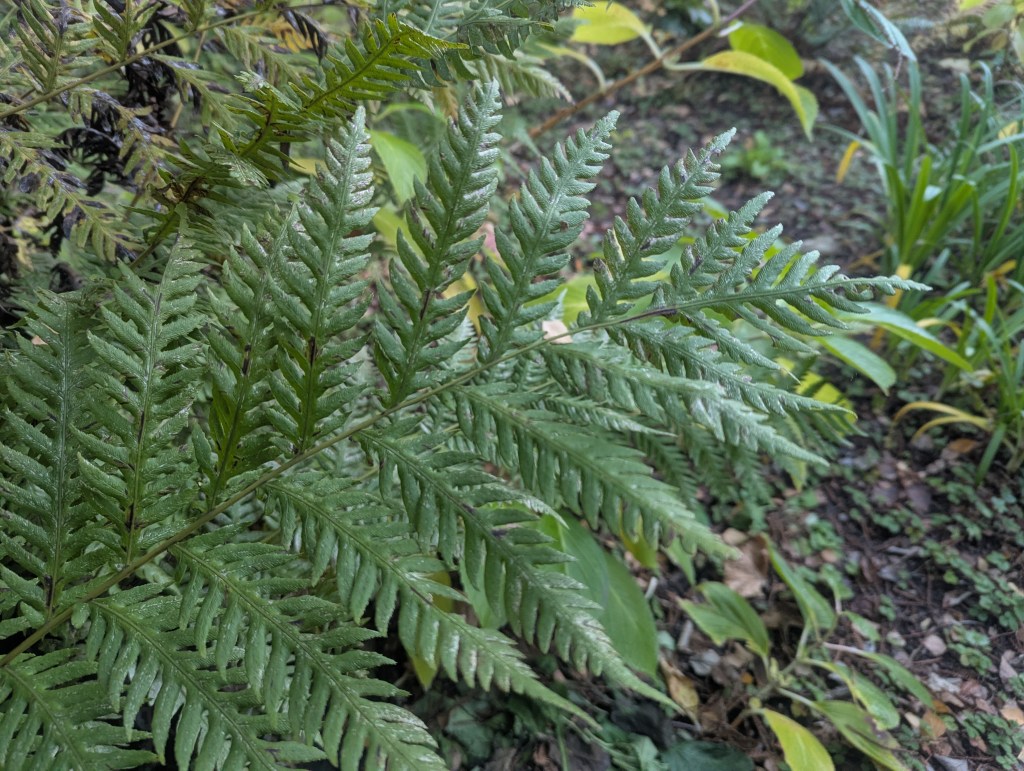
4. Polystichum munitum, Western sword fern and the next two ferns are native here. All three grow wild within some of our landscapes; and all are remarkably tolerant of shade.
5. Athyrium filix–femina, lady fern is also known locally as ostrich plume fern, but is not related. It has tender leaves with almost succulent rachises that break easily if disturbed.
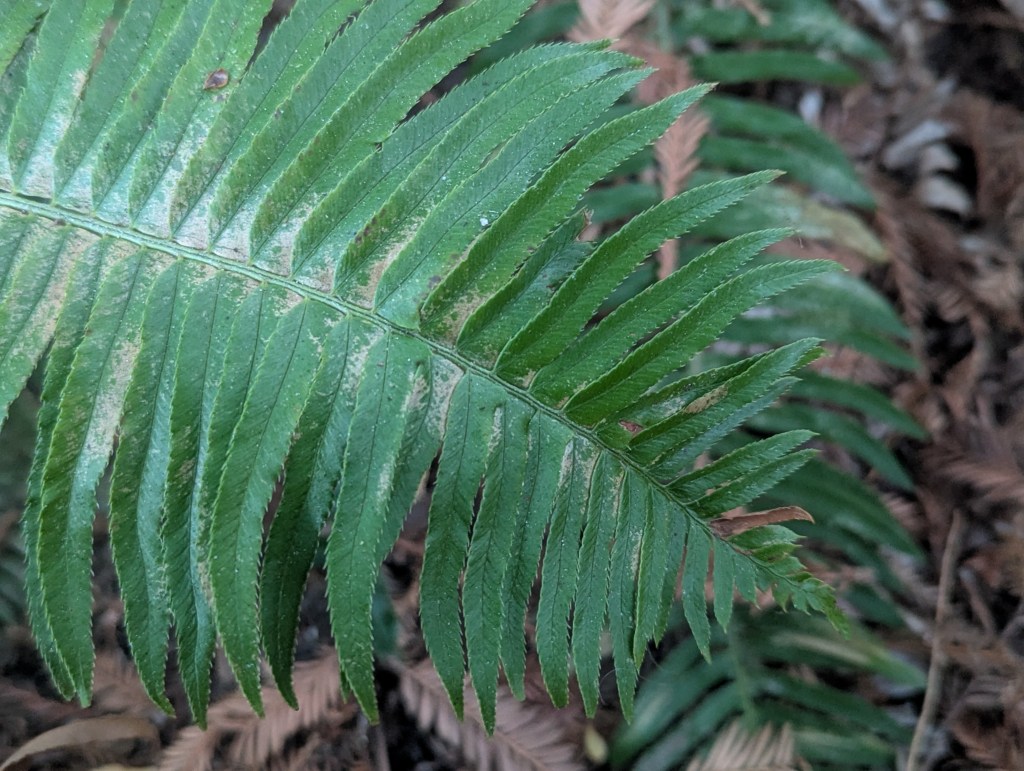
6. Woodwardia fimbriata, giant chain fern has a similar foliar texture, but is bigger and more resilient than lady fern. We sometimes need to remove big superfluous specimens.
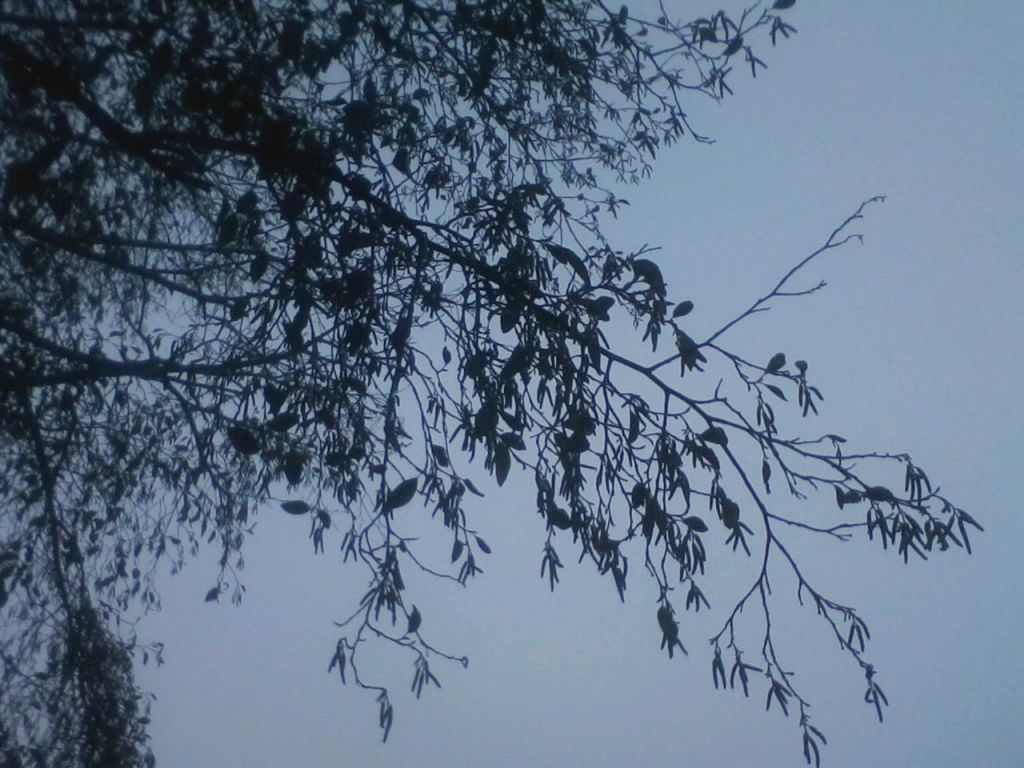
During the summer, the native white alder, Alnus rhombifolia, is a nice shade tree that looks bigger than it really is. By late winter, the bare deciduous canopy has an appealingly picturesque silhouette. This time of year is actually when white alder is typically less appealing, with dead foliage that provides no interesting fall color, but lingers until knocked down by rain or late frost. Yet, even now, it sometimes surprises with these funny looking floral structures that are interesting both in the early winter landscape, and with cut flowers.
In past decades, white alder was an ´expendable’ tree that was put into landscapes for quick gratification while slower but more desirable trees matured. By the time the desirable trees matured, the alders were removed to make more space for the desirables. This technique was practical because, like many fast growing trees, alders do not live very long, so start to deteriorate after about twenty five years anyway. However, alders often live longer than expected.
Mature alders are usually less than fifty feet tall where they are well exposed. They can get at least twice as tall where shaded by other trees or big buildings. Their plump trunks with mostly smooth silvery gray bark make them seem larger than they really are though. Too much water promotes buttressed roots which can displace pavement.
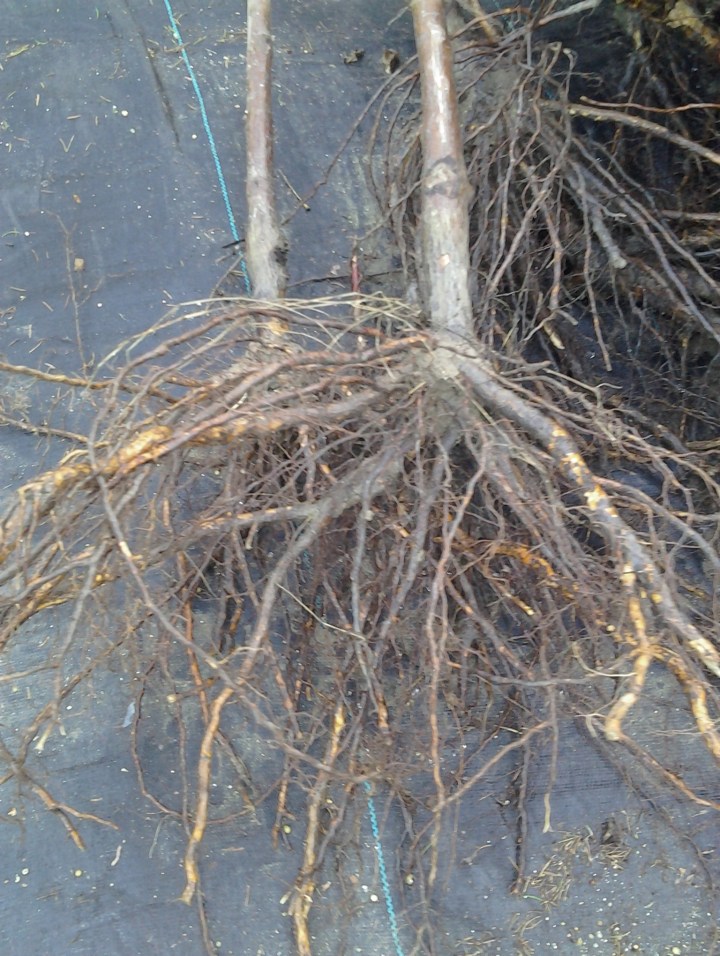
Now that nurseries and garden centers are no longer selling Christmas trees, they have plenty of room for bare root stock. All sorts of deciduous fruit trees, a few deciduous shade trees, shrubs and vines, and even a few perennials can now be purchased while dormant and without the cumbersome media (soil) that the roots need at all other times of the year. Not only is bare root stock easier to handle and transport in small cars, but it is also much less expensive than canned stock (that has roots contained in media, which is contained in nursery cans). Bare root stock typically costs about a third of what canned stock costs.
Bare root stock also has the advantage of adapting to new garden easier, since it does not need to leave the comfort zone of the media that it would have grown into (within a can) in order to venture out into unfamiliar soil. Instead, it starts to disperse roots into the new home soil immediately as it emerges from dormancy in late winter. Without cans, bare root stock can not get root bound. Instead of developing branch structure that is appealing to nursery marketing, bare root stock can get an early start on developing branch structure that is most practical and efficient for the gardens that it gets installed into.
It seems that all of the ´stone’ fruit can be found as bare root stock. These include apricot, cherry, plum, prune, peach, nectarine, almond (which is the seed, or ´stone’, of a peach like fruit) and the odd hybrids of these. The pomme fruits, apple, pear and quince, are perhaps the second most popular of bare root stock, although quince is still rather rare. Ornamental trees, shrubs and vines include flowering crabapple, flowering cherry, flowering quince, alder, poplar, willow, lilac, forsythia, wisteria and clematis. Perennials include rhubarb and artichoke.
Bare root stock can be purchased as soon as it becomes available, but does not do much until it starts to grow in spring. It should get planted quickly and soaked in, but will get more water than it needs from rain afterward. It should not need water again until after it blooms or gets new leaves in late winter or early spring. Despite guarantees of fruit in the first year, none should be expected. The few fruit trees that might set fruit will probably produce only useless underdeveloped fruit because new plants are busy producing new roots and growing. Actually though, this apples to canned stock as well, except only for citrus, olives and other evergreen fruit trees.
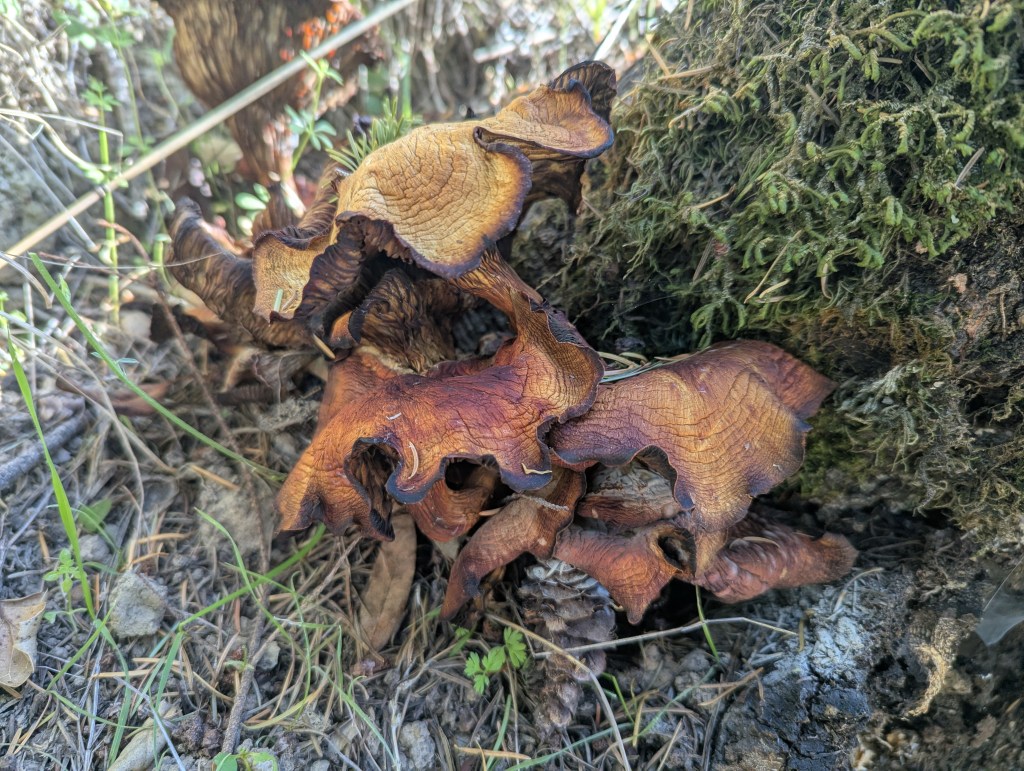
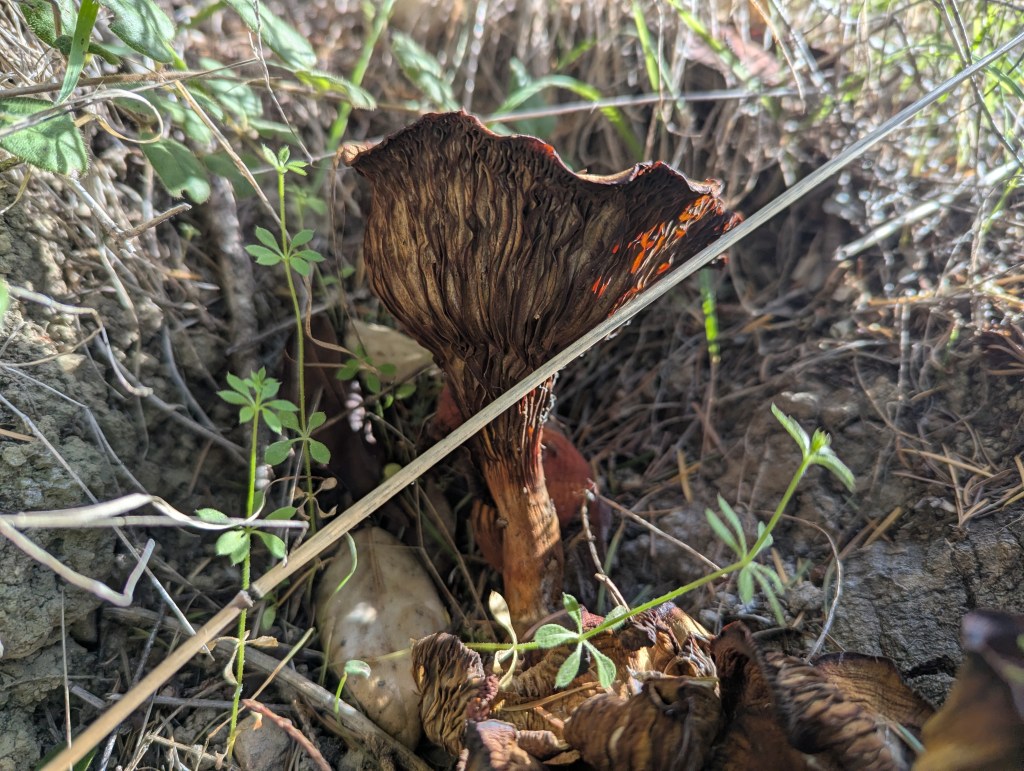
Are these chanterelles? I found them at the base of a dead and rotting coast live oak on the Upper East Side. I took their picture because friends had been asking me if there are any chanterelles to collect there. Apparently, chanterelles can be sold for quite a sum to restaurants. I really should have been more observant when I took these pictures, to see how many more of the same, if any, were in the area. I will not return to the area anytime soon, unless I need to show someone else where it is. It is quite a hike to get there, with a very steep incline. It is likely too late to collect chanterelles anyway. They supposedly emerge after the first autumn rain, but finish through November, which is likely why these look so deteriorated and dried. However, locally, they can continue to appear throughout winter if weather conditions are favorable. I am certainly no expert. After all, even if these are chanterelles, this is my first experience with them. We are barely acquainted. I do not trust them enough to taste them. Nonetheless, I would be pleased if friends could collect real chanterelles for a profit.
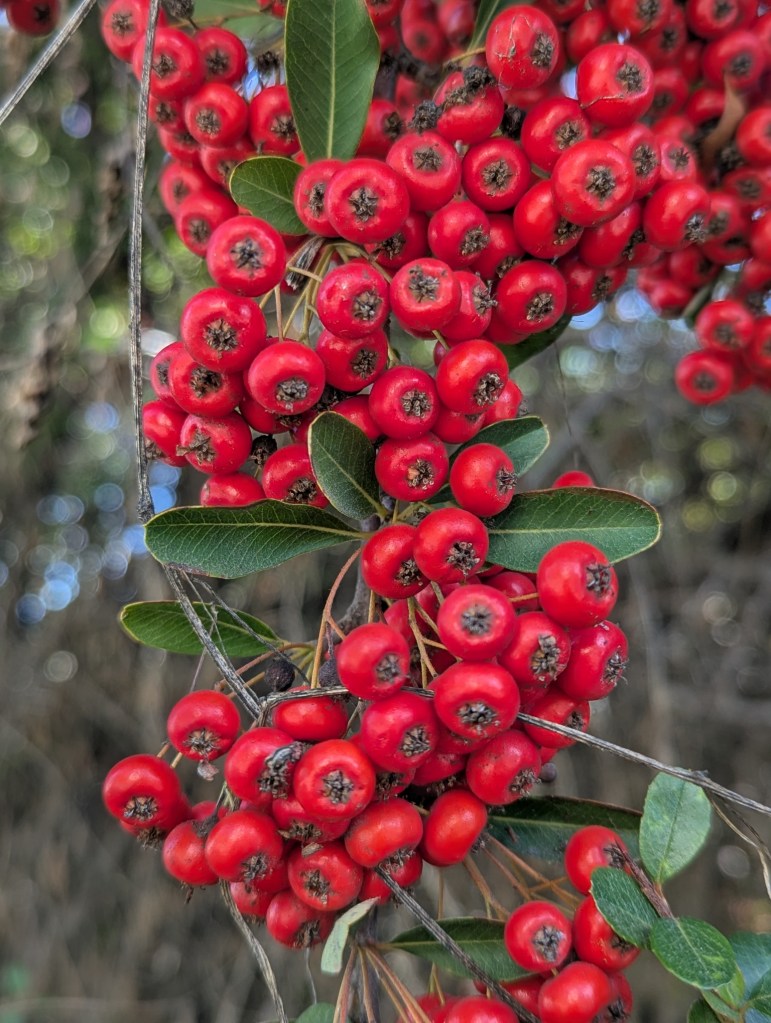
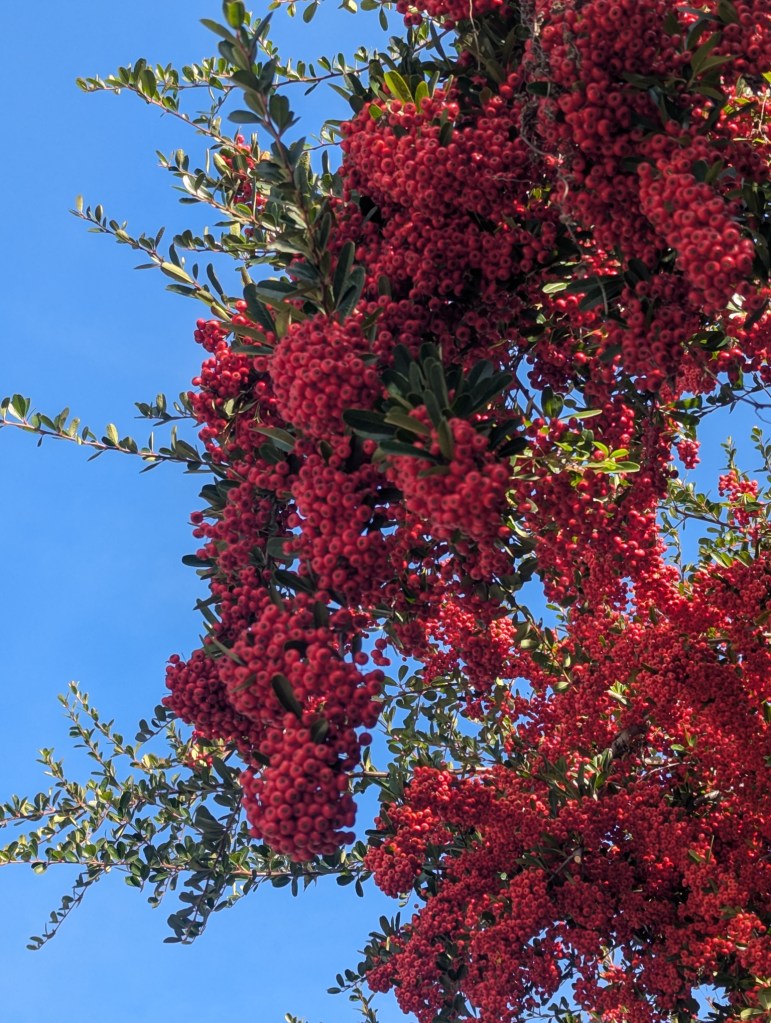
Nothing is lost in translation. The botanical name of Pyracantha coccinea literally means “Firethorn red”. Firethorn is its common name. It produces bright red berries on wickedly thorny stems. Some old-fashioned cultivars produce bright orange berries. Cultivars that produce bright yellow berries are now rare. Fruit ripens for migrating birds about autumn.
The thorns of firethorn are difficult to work with. However, they make a hedge of firethorn impenetrable. Frequent shearing deprives hedges of their natural form and some of their fruit. Selective pruning is tedious and likely painful, but retains more berries. Pyracantha needs sunny exposure, but is otherwise quite undemanding. It is susceptible to fireblight.
The most popular cultivars of firethorn can grow taller than eight feet. Taller cultivars that can grow twice as tall are uncommon. Sprawling types initially stay quite low, but without adequate pruning, form thickets. These same sprawling types are conducive to espaliers on fences and walls. Because pyracantha is difficult to work with, it should not be left to get unruly.
Cool season annuals are less diverse than warm season annuals for one simple reason. Flowers prefer to bloom while their favorite pollinators are most active. Most of the better pollinators are insects that are most active during warm weather. Therefore, most flowers want to bloom while the weather is warm. Many colorful berries are similarly exploitative.
For dispersion of their seed, colorful berries rely on birds. Therefore, many ripen and are most colorful as many birds migrate during autumn. Birds consume the berries but do not digest their seed. Instead, as they migrate, they disperse the viable seed. It is a mutually beneficial arrangement. Birds eat all they want. Seed benefits from thorough dispersion.
As they ripen, autumn and winter berries develop bright colors that attract birds. Most are bright red. Some are bright orange. A few are bright yellow. They are substantial enough to satisfy the birds that eat them. Yet, they are compact enough for such birds to eat them whole. Some are impressively abundant, at least until any birds that they feed find them.
That can be a dilemma for home gardening. Many garden enthusiasts grow autumn and winter berries for the color. Many grow them to attract birds, though. More grow them both for their color and to attract birds. The latter is least disappointing. Typically, such berries ripen to display their color faster than birds can eat all of them. Every season is different.
Unfortunately, there are not many options for colorful autumn and winter berries. Some of the species that produce the most colorful fruit are unfortunately thorny. Firethorn notably produces the most abundant, most colorful and most familiar berries. It is horridly thorny, though. So is English hawthorn, which is deciduous and defoliates to expose its red fruit.
Toyon and various cotoneasters are thornless alternatives for colorful berries. Toyon is a native species that grows rather large. Although cotoneasters are not as prolific, cultivars stay proportionate to home gardens. Hollies are dioecious, so female specimens need a male nearby for pollination. Because males are rare, females produce only a few berries.
As bloom of most other plants decelerates for late autumn and winter, the floral color of common annuals becomes more prominent in the landscapes at work.
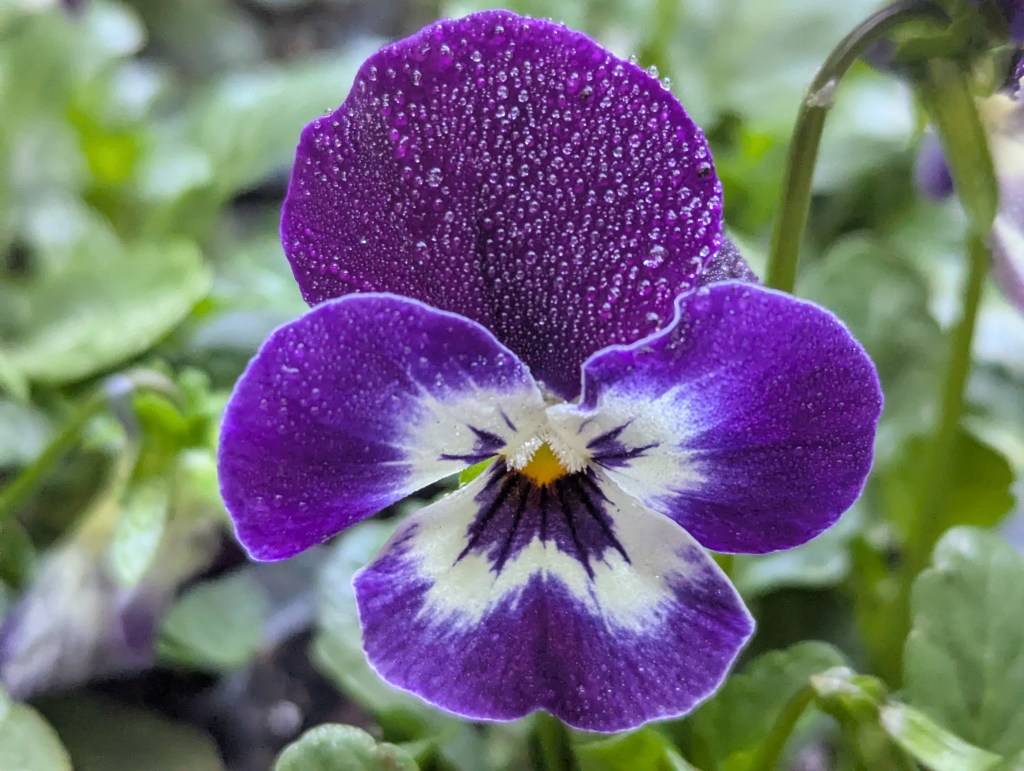
1. Viola X wittrockiana, viola blooms with smaller but more profuse flowers than pansy. I am not certain if they are the same species. Also, most of the flowers face one direction.
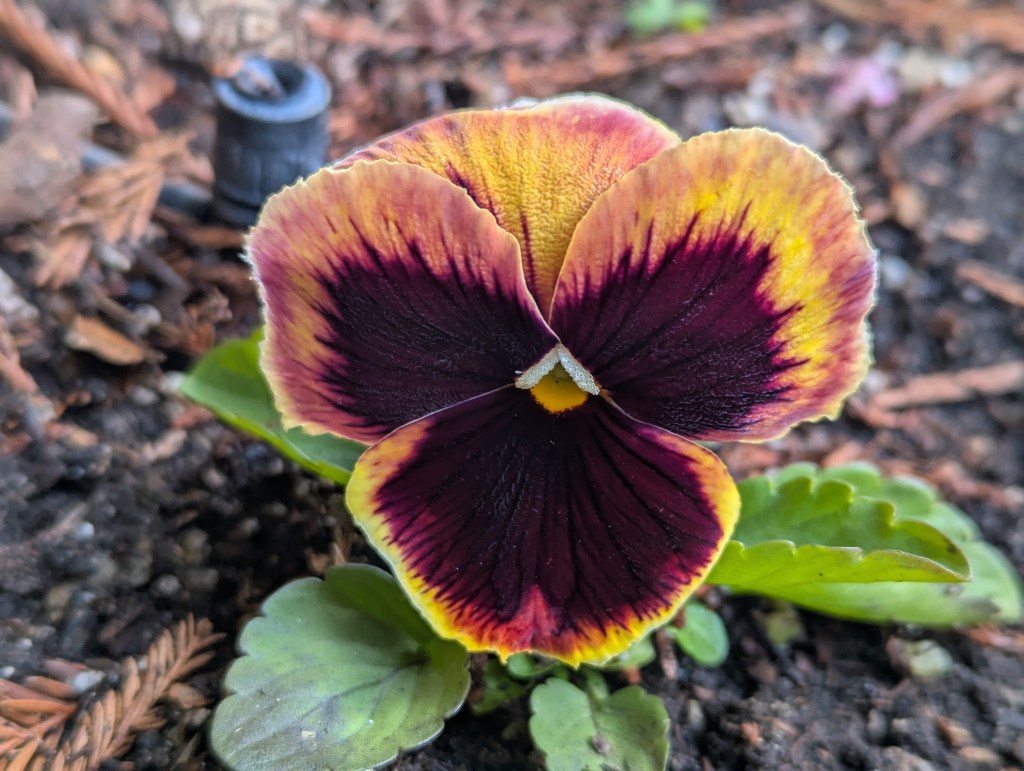
2. Viola X wittrockiana, pansy blooms with bigger but less profuse flowers which mostly face random directions. We got only two six packs to add to other flowers in a small bed.
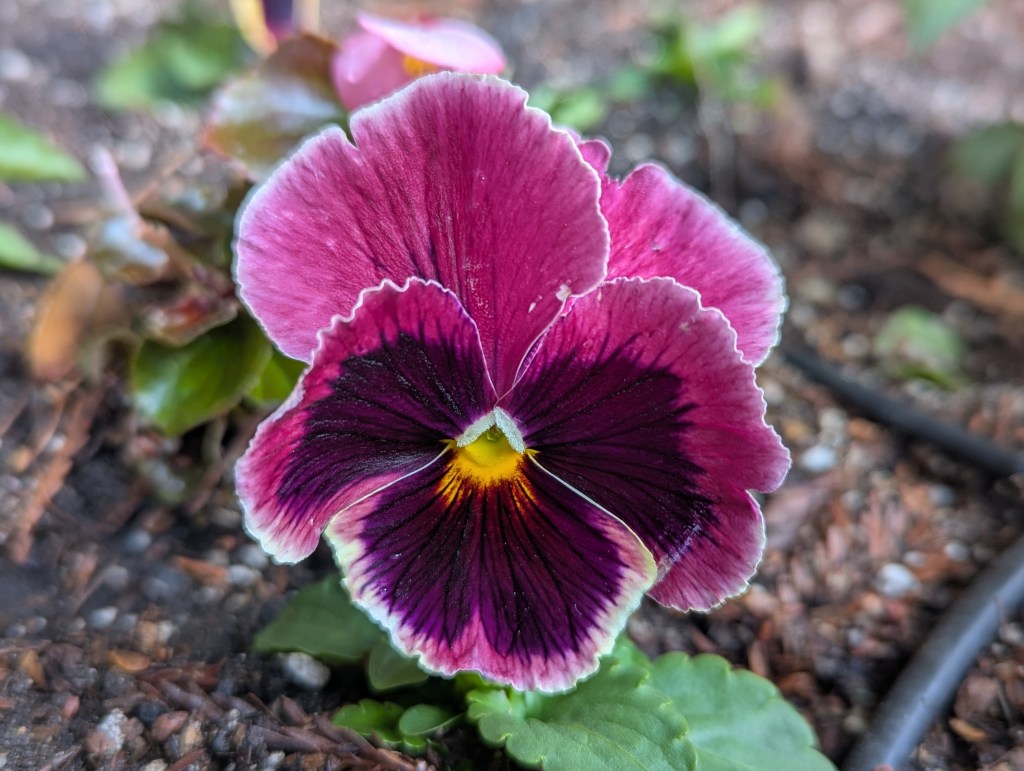
3. Viola X wittrockiana, pansy is redundant to the picture above, but is a different color. The plants are so dinky that they are scarcely visible behind their relatively wide flowers.
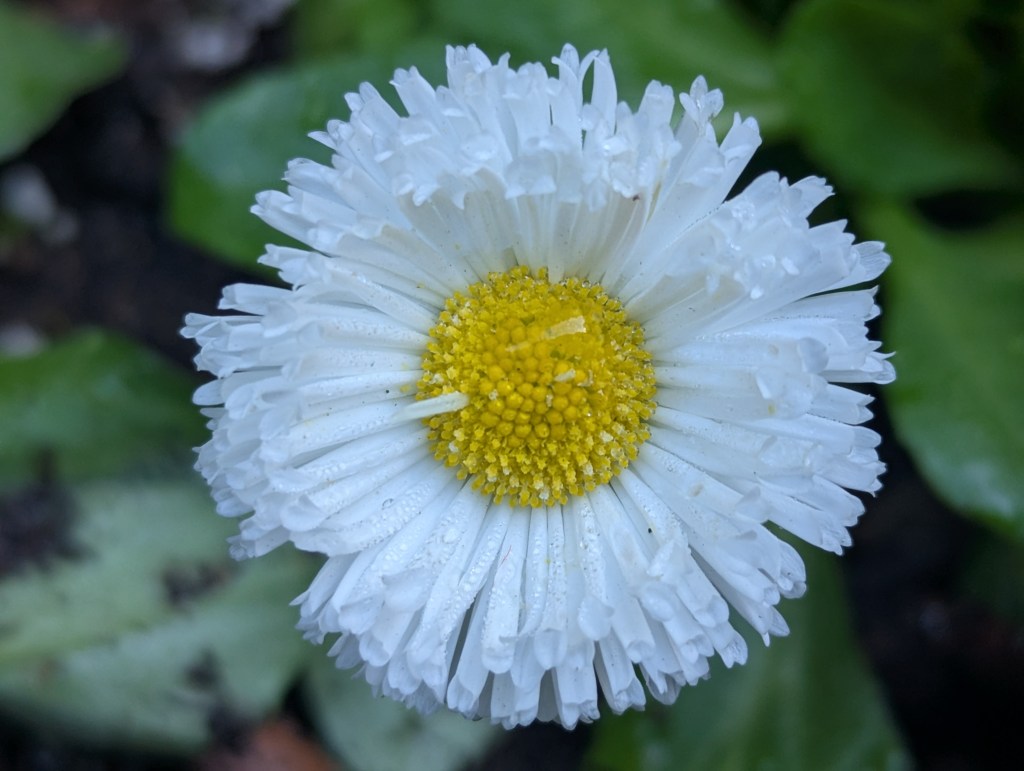
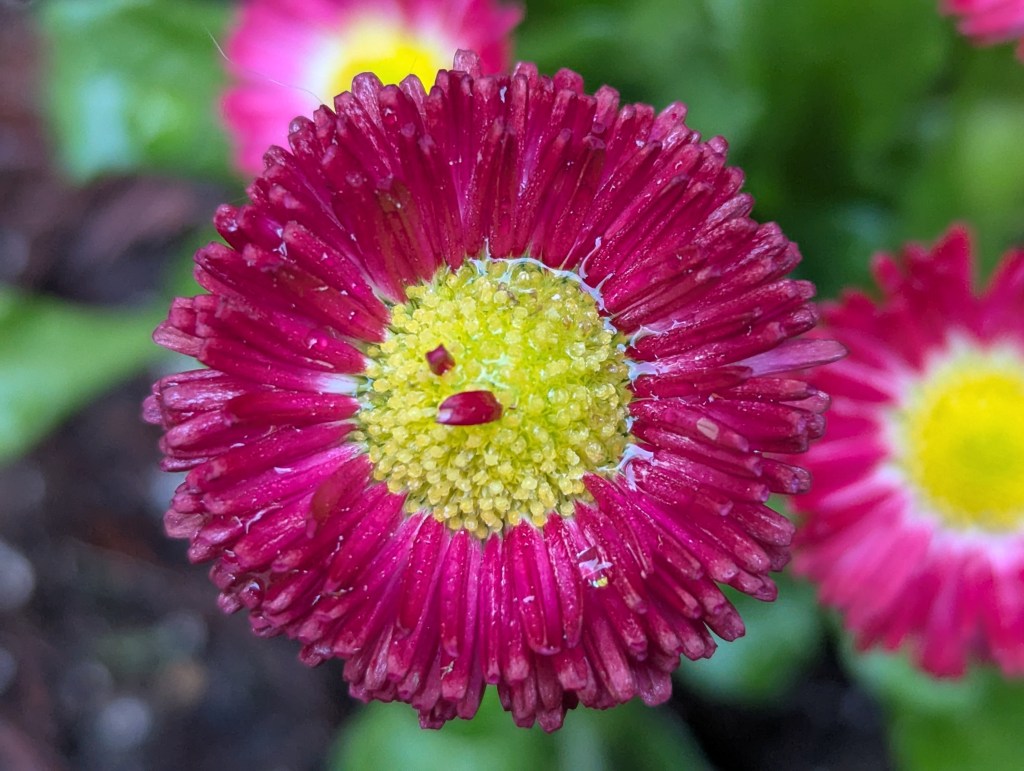
4. Bellis perennis, English daisy ranges in color from this rosy red to white like the color scheme of candy canes. I am fond of it because it is not so overly bred like other annuals.
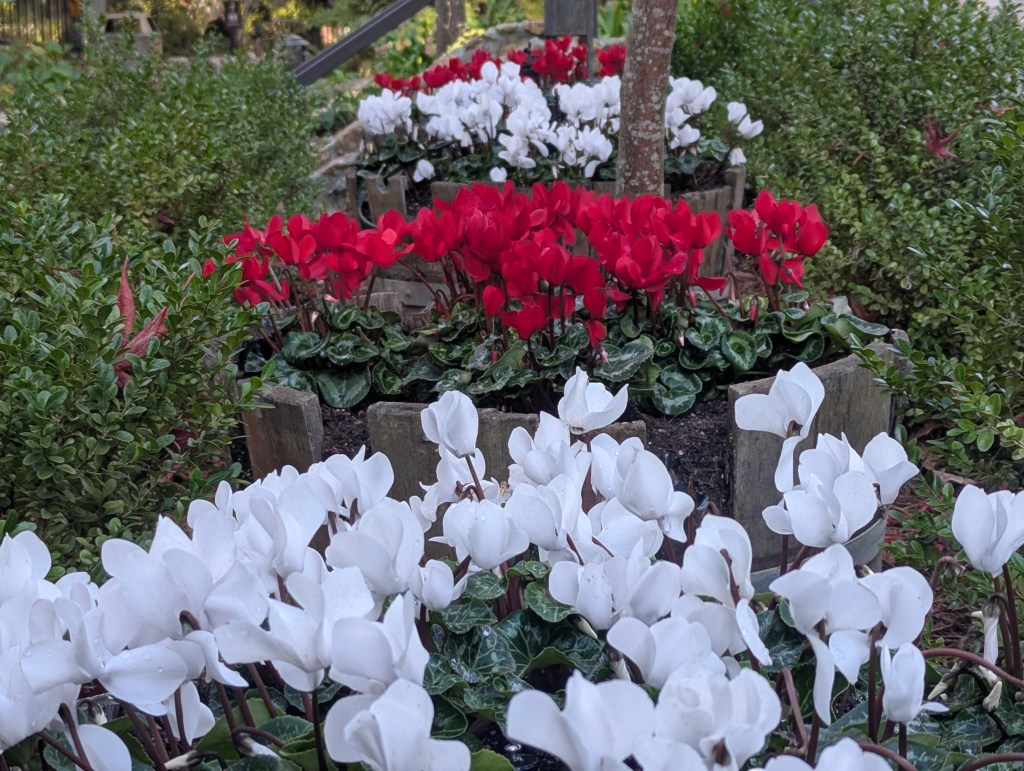
5. Cyclamen persicum, florist’s or Persian cyclamen is cheapened as an annual. I used to grow mine as cool season perennials. I also grew colors other than simple red and white.
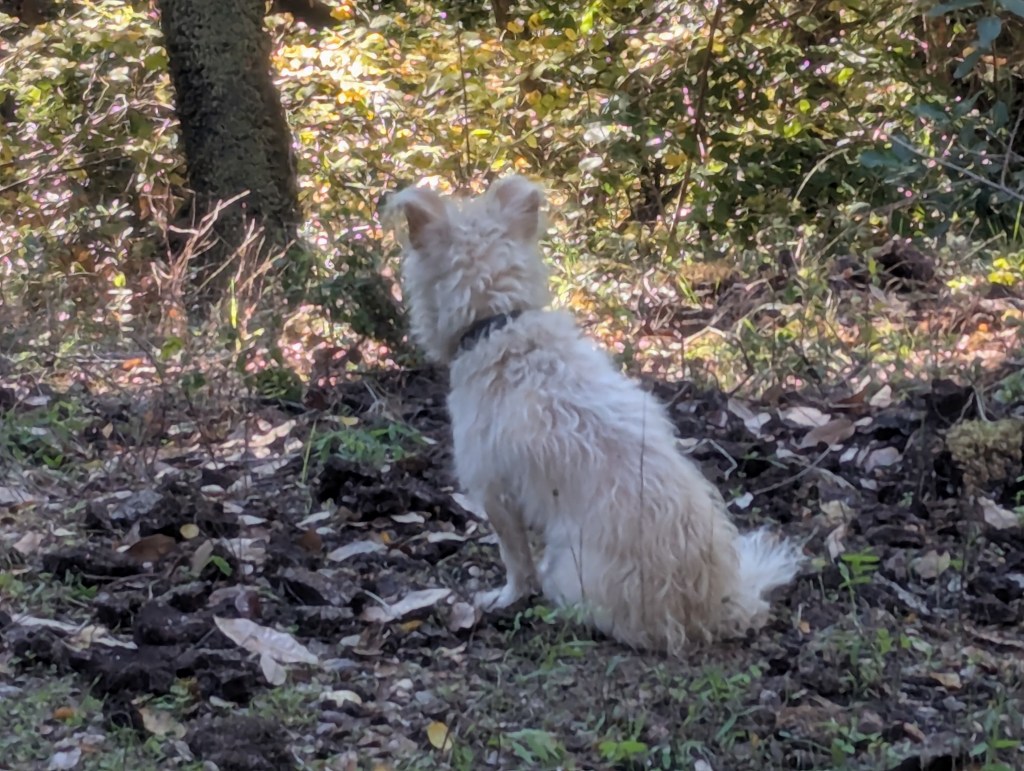
6. Rhody was unconcerned with these common annuals as he surveyed his domain early last Monday, while I burned forest green waste. He is not overly horticulturally oriented.
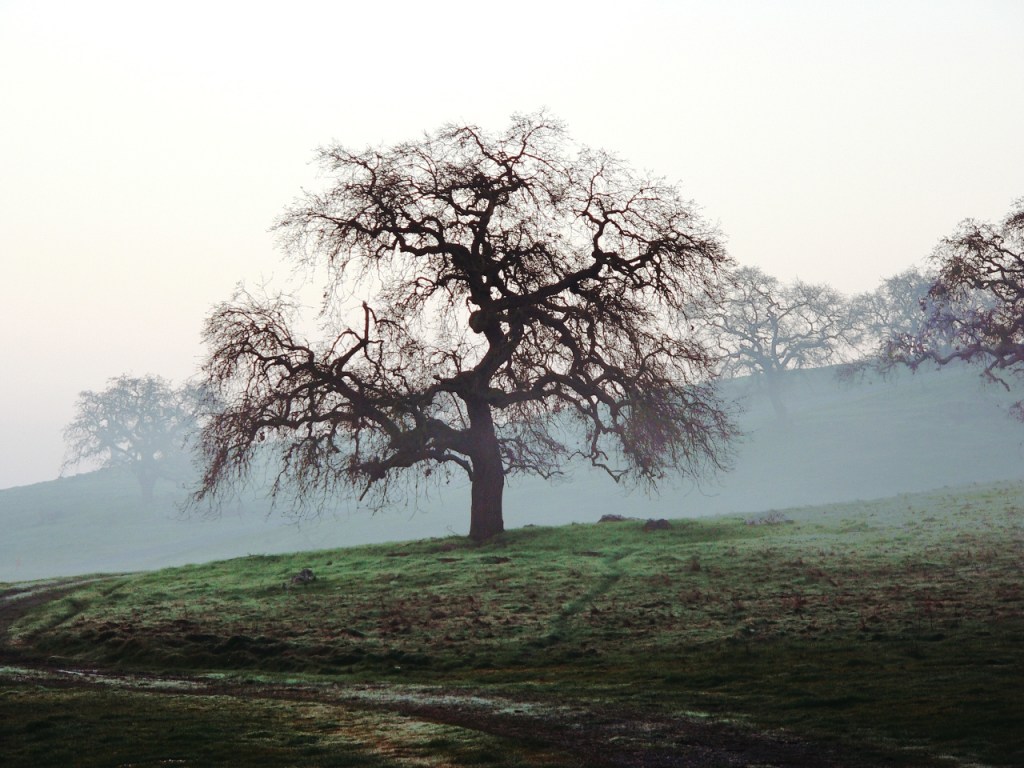
‘Foggy Oak Morning’ by Karen Asherah, is another example of the local scenery that I miss while not taking a bus or walking. I drove past this scene for years on my way to work outside of San Martin without ever bothering to take a look at it. This happy tree is a native valley oak, Quercus lobata, like those that had been common throughout the Santa Clara Valley until only about two centuries ago. It is not exactly the sort of shade tree that everyone wants in a compact suburban garden, but is grand enough for large spaces like parks.
Mature specimens may not seem to get as tall as oaks in the Appalachian Mountains, but are actually the largest oaks in North America, and live more than five centuries. The tallest trees are mostly less than seventy feet tall, but can get taller. Trunks of the oldest trees are commonly six feet wide or wider. The distinctively and uniformly furrowed bark is as classically ‘oakish’ as the rounded prominent lobes of the deciduous leaves, and the sculpturally irregular branch structure. Odd stem galls, commonly known as ‘oak apples’, are home to the larvae of tiny wasps that rely on valley oaks for everything they need. Incidentally, Paso Robles, or ‘El Paso de los Robles’ is named for the valley oaks in the area, which Spanish immigrants thought resembled the ‘robles’, the European oaks that inhabit Spain.
More information about ‘Foggy Oak Morning’ can be found at the website of Karen Asherah at karenasherah.com.
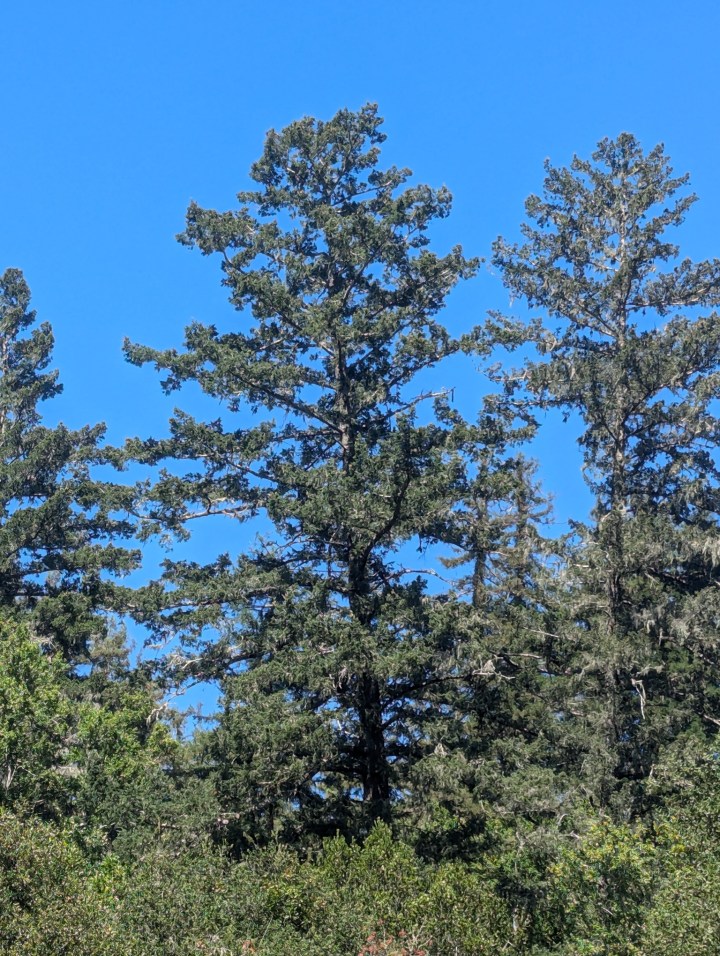
Most live Christmas trees grow too big for home gardens.
One of the problems with driving my favorite vehicles that were old long before I learned to drive them is that I spend considerable time waiting for a bus or walking. The cool thing about that is that I get to seem so much scenery that I would otherwise drive past. While waiting nearly an hour for a bus at the Cavallero Bus Terminal in Scott’s Valley, I went across the street to see the landscape of the somewhat new Post Office, which has actually been there for many years now.
The landscape is a bit sparse in front (I think because of architectural modifications after the landscape was designed), so was outfitted with recycled live Christmas trees. Although none of these particular trees seem happy in the local climate or sandy soil, I had wanted to get better acquainted with them for some time. They are an odd assortment of spruce and fir that are rare here.
The more typical concern with the more common live Christmas trees is not that they are not well suited to local climates and soils, but that they actually do too well and grow much larger than expected. Except for the small rosemary, holly and English ivy ‘trees’, most coniferous evergreen live Christmas trees are young pines that get remarkably large; and some waste no time doing it! The most common live Christmas trees are Italian stone pines, which happen to be the two very large and broad trees in Blaney Plaza in downtown Saratoga!
Canary Island pines, which had been more common than they are now, do not get quite as broad, but do get very tall and messy. Years ago, Aleppo, Eldarica and Monterey pines all took their turns being popular live Christmas trees. Each of them grows large enough to require significant garden space.
This is of course not a problem for the few live Christmas trees that happen to get planted where they have plenty of space. However, those that get planted where they do not have room to grow can cause serious problems. Because they seem so cute and innocent while they are young, and are so often expected to stay cute and innocent, many often get planted dangerously close to houses, where they can displace porches, walkways and even foundations! Large pines, particularly Italian stone pines, are also too messy and potentially combustible (if not pruned and groomed regularly) to be too close to houses.
Sadly, large pines do not like to stay in containers too long. They can be pruned for a few years, but eventually get congested roots. (Bonsai techniques of root pruning can maintain even the largest types of pines in containers indefinitely, but not many of us know these techniques.) Small pines, like Austrian black, Japanese black and Scott’s pine (which has no relation to Scott’s Valley), as well as other small coniferous evergreens, like certain junipers, can stay in containers much longer, but these are the sort that are small enough to get planted in the garden, so do not necessarily need to stay in containers anyway.
If space is not sufficient, pines and other live Christmas trees that eventually get too large really should be given to friends and neighbors who have space to accommodate them. Fortunately, most do not require much attention once they get established after two years or so.
 Tony Tomeo