Snowberry is native here. I have been wanting to grow it because I like its white berries. I just found a seedling where it could not stay, so brought it back here. I am very pleased with it, but did not want to share pictures of it as scrawny canned bare twigs. I got these pictures instead.
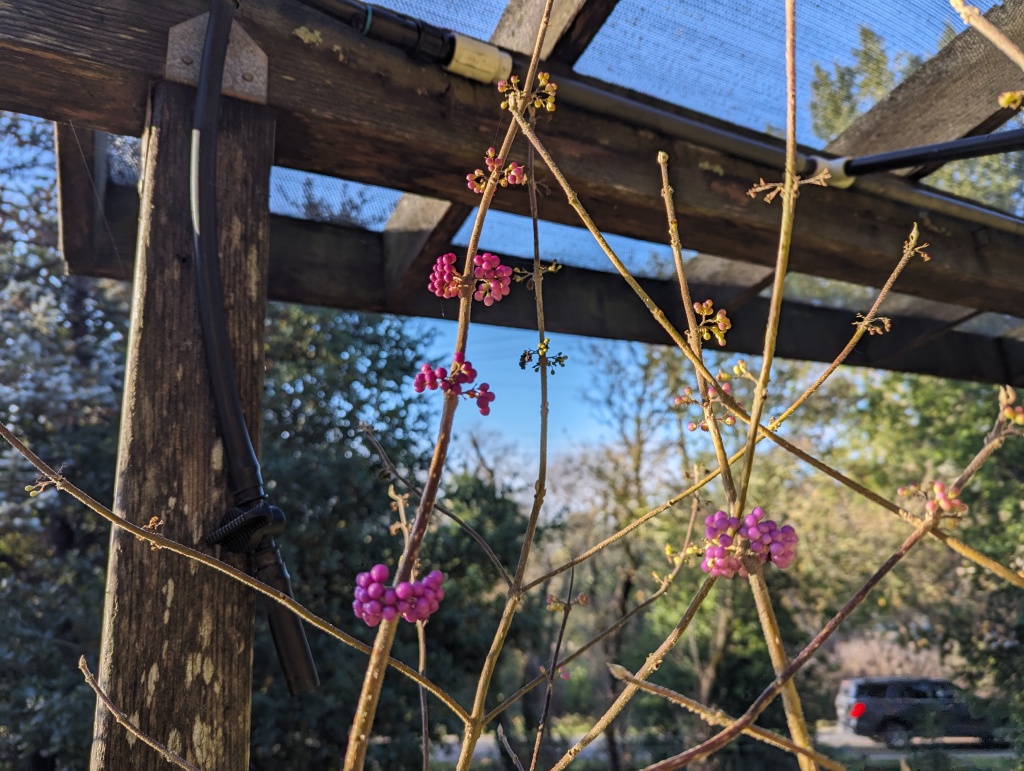
1. Callicarpa americana, American beautyberry is what compelled me to get pictures of berries for this week. I shared a closeup picture of the first of these berries as they began to ripen more than a month ago, which was about two months later than elsewhere. I do not mind. These are my first, and there are more of them now. Perhaps their berries will ripen on time when they are established within the landscapes. The seedlings, as well as white butterfly ginger and, recently, American holly, were gifts from Our Forest Garden.
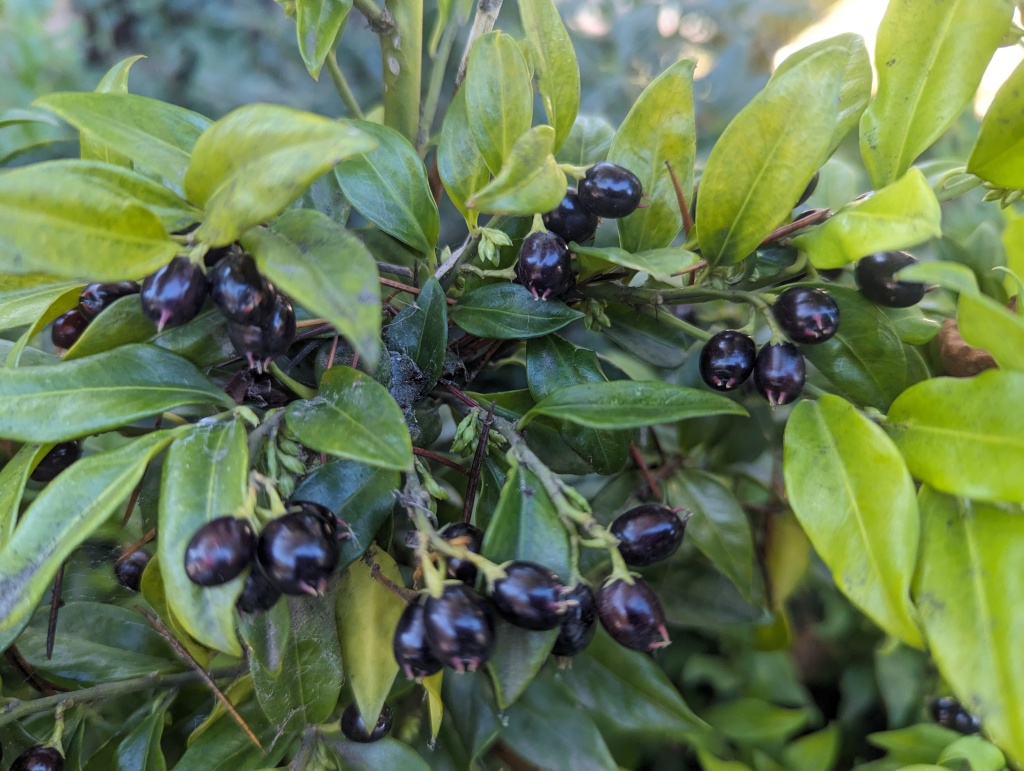
2. Sarcococca ruscifolia, sweet box typically produces very few red berries that typically fall off before turning black. They are both atypically abundant and atypically black now.
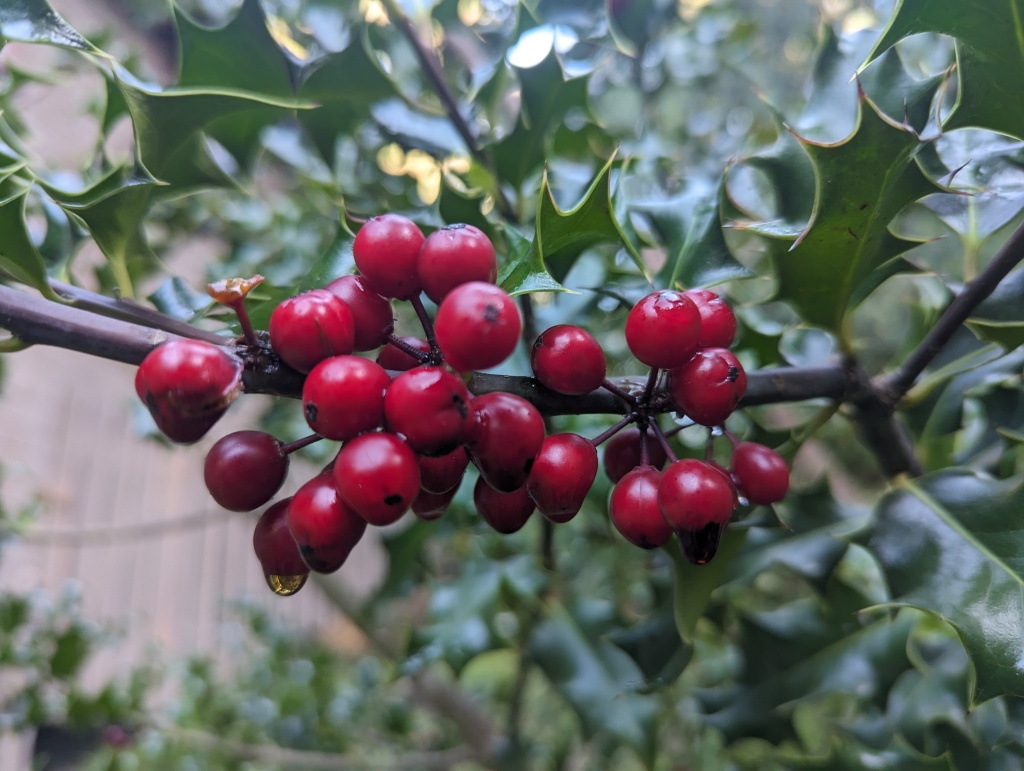
3. Ilex aquifolium, English holly self sows, but most feral specimens seem to be male, or produce only a few berries, in a few sparse clusters. Very few produce clusters like these.
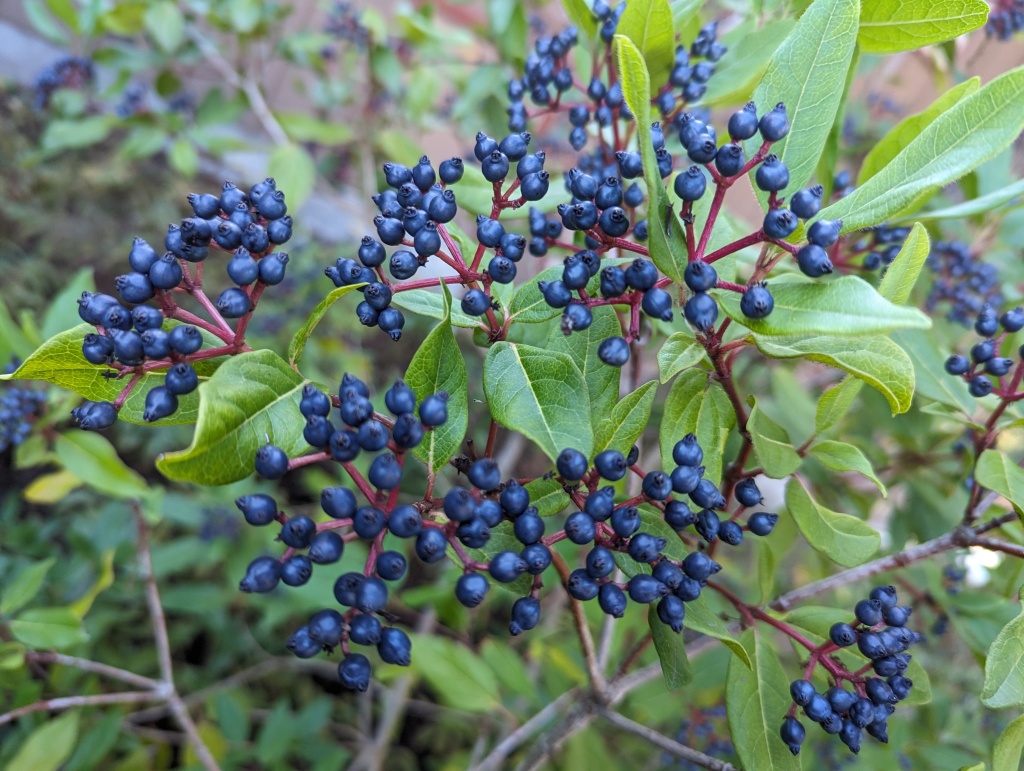
4. Viburnum tinus, laurustinus also self sows. I am not as impressed with it as I am with English holly, but have been learning to appreciate it more, as those in other regions do.
5. Cotoneaster pannosus, silverleaf cotoneaster is naturalized a bit more vigorously. It is not as pretty as I like to think it is. I should retain a few specimens but eradicate the rest.
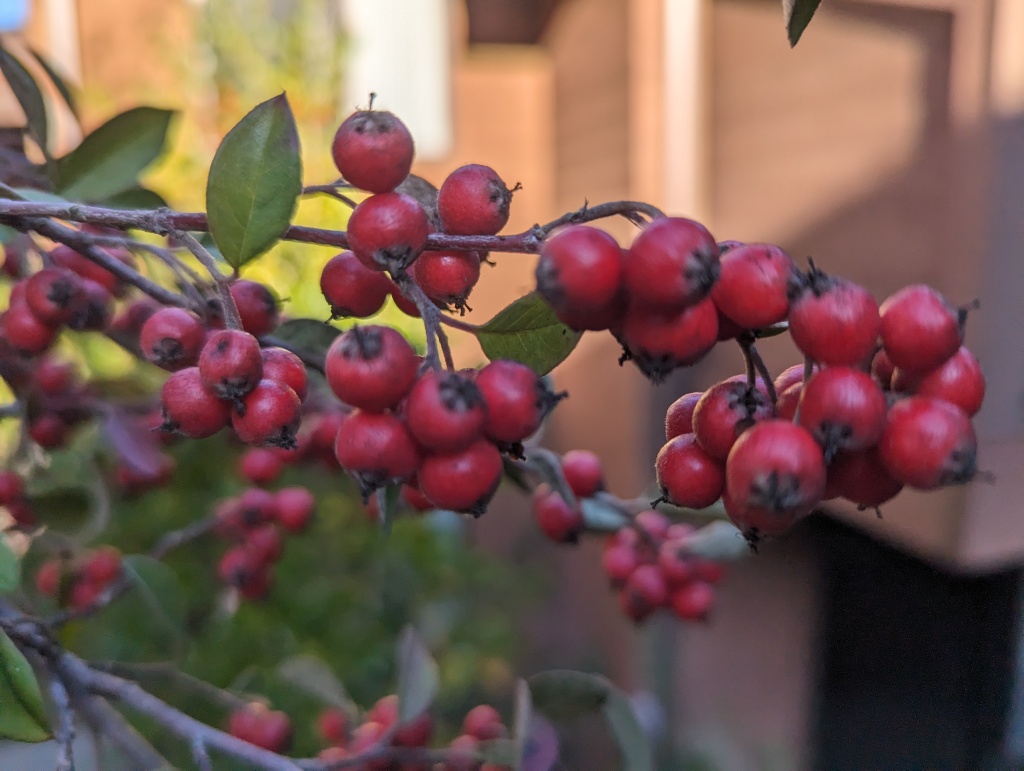
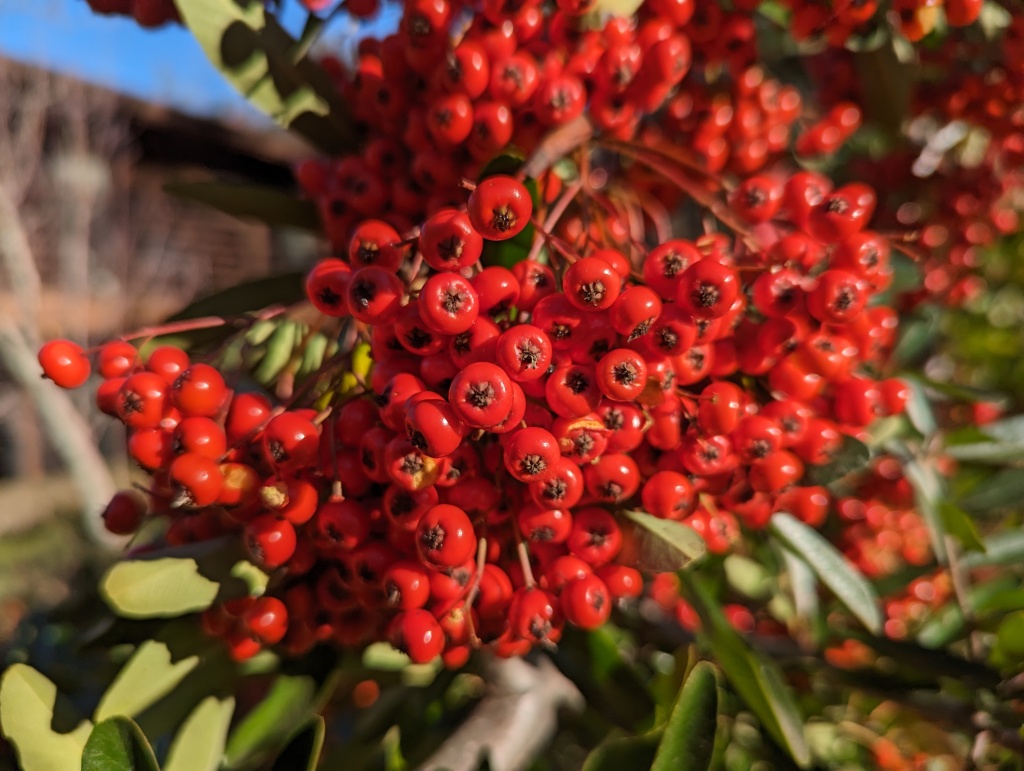
6. Pyracantha coccinea, firethorn is more colorful with similar but with more abundant and glossier berries. Unfortunately, it is also much thornier, so it is no fun to work with.
This is the link for Six on Saturday, for anyone else who would like to participate: https://thepropagatorblog.wordpress.com/2017/09/18/six-on-saturday-a-participant-guide/





 Tony Tomeo