a Tale of Two Jacarandas

Jacaranda seedlings from this year will be ready to grow next year.

Los Angeles is about three hundred and fifty miles to the southeast of Los Gatos. Relative to the number of different climates between here and there, the climates of the two specific locations are surprisingly similar. Nonetheless, they are not completely similar. Winter weather is somewhat milder within the Los Angeles region, with only minimal frost. Some coastal climates there lack frost. Also, spring weather there is a bit warmer than here.

Jacaranda mimosifolia perform spectacularly with such mild winter weather and warm spring weather. Without frost, or even with minimal frost, they can grow taller than thirty feet, and eventually grow broader than tall. After defoliating for the end of winter or beginning of spring, they bloom for late spring, immediately prior to refoliation. Their awesomely vivid blue bloom is almost as profuse as their subsequent foliage. No other tree of comparable size compares to their floral color or floral profusion. That is why jacaranda are so much more popular within the region of Los Angeles.

Here, occasional moderate frost inhibits comparable performance. Trees are generally smaller and more compact, with more globular form. Vigorous growth that develops after frost damage can be structurally deficient, but heavy with lush foliage. Bloom is more sporadic amongst such vigorously vegetative growth. Although very pretty by local standards, jacaranda is not quite as exquisite as it is within the region of Los Angeles.

Nonetheless, I am growing some. A colleague brought me a seed pod from which I extracted seed. Fortunately, only a few more than two dozens seedlings survived a late frost last winter. Otherwise, many more would eventually be in need of homes. A few will likely inhabit our landscapes. A neighbor wants a few. Any extra jacaranda trees can be shared with other neighbors, like so much other surplus.
Perennial Annual Dahlias

Annual dahlias are expected to be, as their designation implies, annual. In other words, they grow in the spring, perhaps from seed, bloom through summer, and then succumb to frost during their first winter. Some are likely grown from cuttings or division of nursery stock tubers, in order to be ready for spring earlier than seedlings. Regardless, they are not expected to survive for more than one year.

Most other dahlias are expected to be perennial. That is how their expense is justified. Most are sold while they are merely dormant tubers, and are generally more expensive than annual dahlias. Some, especially the trendy sorts, are significantly more expensive.

‘Cafe au Lait’ was a trendy dahlia a few years ago, and is still trendy. We procured one at work. It performed somewhat well for the first season, and was then dug and stored for winter. It did not perform well for the second season, and was then dug and stored again, but did not survive through winter.

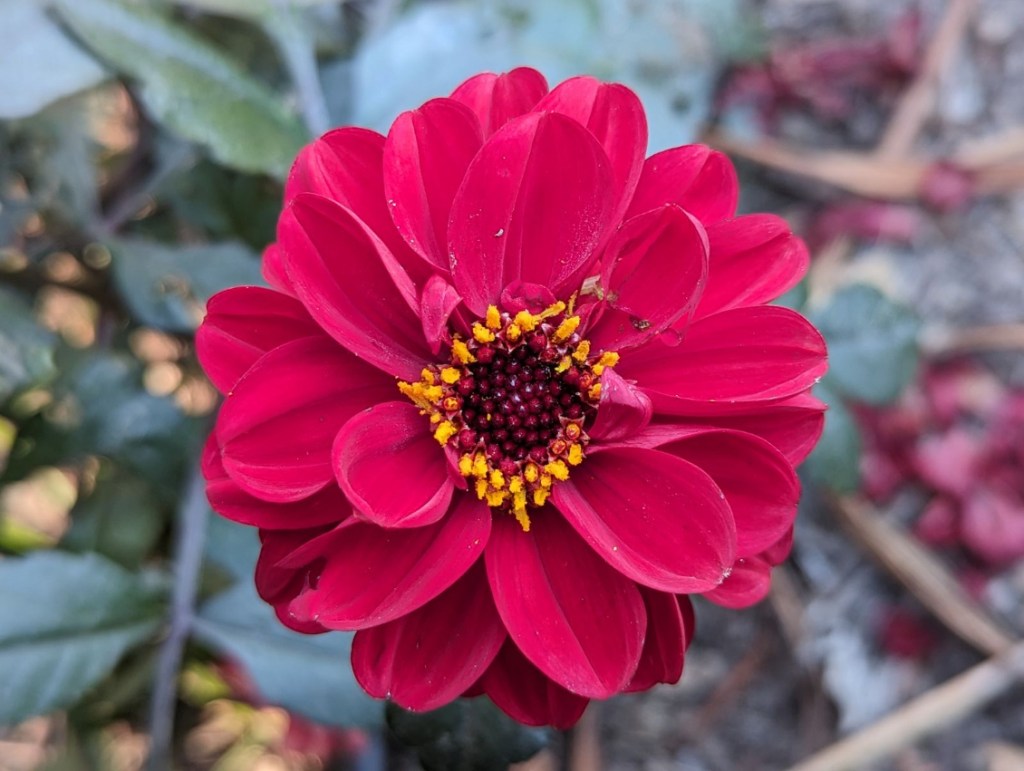
Four smaller annual dahlias were procured in conjunction with the single ‘Cafe au Lait’ dahlia. They were relatively inexpensive, but delightfully colorful. They bloomed nicely around the larger ‘Cafe au Lait’ dahlia. They were also dug and stored for winter after their first season, although we knew that we should likely merely discard them. One had actually divided into two. These annual dahlias bloomed better than ‘Cafe au Lait’ for their second season, and then again, were dug and stored for winter. Unfortunately, three, including one that divided during the previous winter, did not grow for long after last spring. However, two of the original four annual dahlias continue to bloom, and will be dug and stored as they succumb to frost this winter. These annuals have been more perennial than the perennials.

Six on Saturday: Good News

Horticulture occasionally involves some degree of disappointment. However, more than occasionally, it is surprisingly gratifying. After the mysterious disappearance of a colony of Louisiana iris, I remembered how much I enjoyed growing them. Unplanned bananas will be fun to grow in the future. Unseasonable bloom is at least as gratifying as seasonal bloom.

1. ‘Black Gamecock’ Louisiana iris was a gift from Tangly Cottage Gardening. Therefore, they were VERY important to me. I split and plugged them into a thirty foot long row on the edge of a pond at work. Sadly, after growing happily through summer, they suddenly and inexplicably disappeared. I am determined to not be unrealistically saddened about this, though. They were intended to be enjoyed, and I enjoyed growing them all summer. The good news is that Tangly Cottage Gardening offered replacement when I return this winter. Also, I found these four surviving plugs! I canned them here for their protection.

2. Iris unguicularis, Algerian iris was another of several prized gifts from Tangly Cottage Gardening. I split and plugged them into a row that is about twenty feet long last winter.

3. Musa acuminata, banana ‘trees’ are getting to be rather excessive. With these pairs of four new cultivars, there are now fourteen cultivars! There are no plans for any of them.

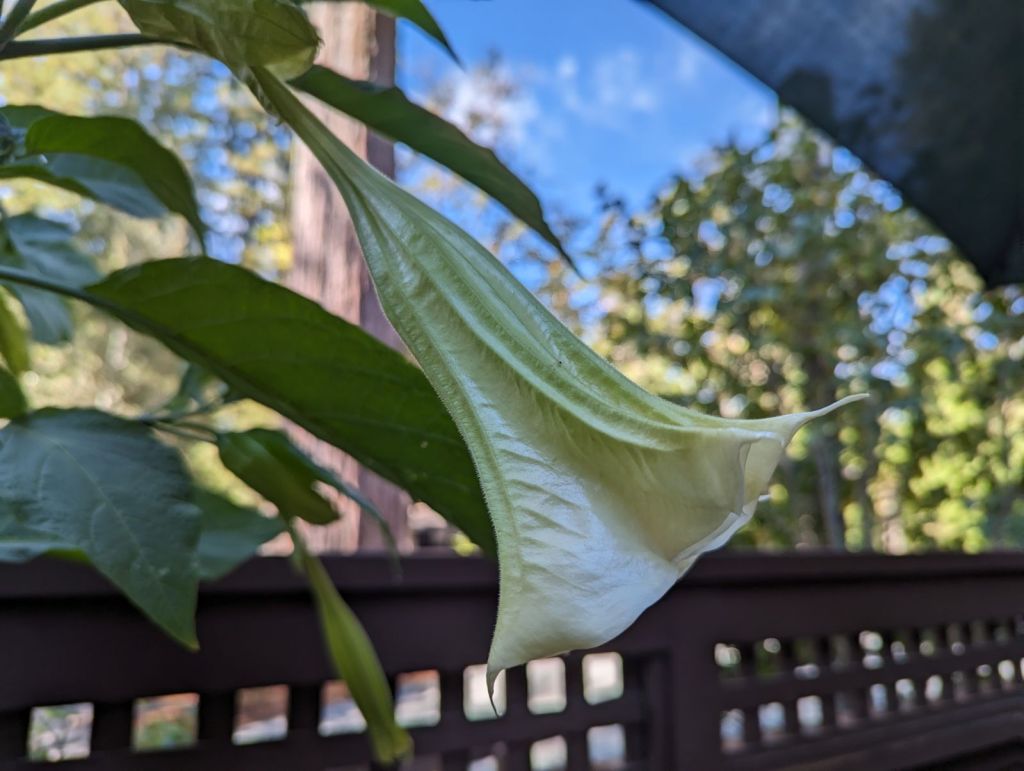
4. Brugmansia candida, double white angel’s trumpet failed to impress this year. Bloom was limited. Now that summer is over, it decided to bloom! I suppose this is good news.

5. Brugmansia X cubensis, ‘Charles Grimaldi’ continues to bloom late, and with this odd peachy color. Although I know that it should be simple yellow, I rather prefer this color.

6. Brugmansia, angel’s trumpet of an unidentified cultivar with single white flowers also decided to bloom late. This is impressive because it grew from a cutting from last spring!

This is the link for Six on Saturday, for anyone else who would like to participate: https://thepropagatorblog.wordpress.com/2017/09/18/six-on-saturday-a-participant-guide/

Sticks on Fire

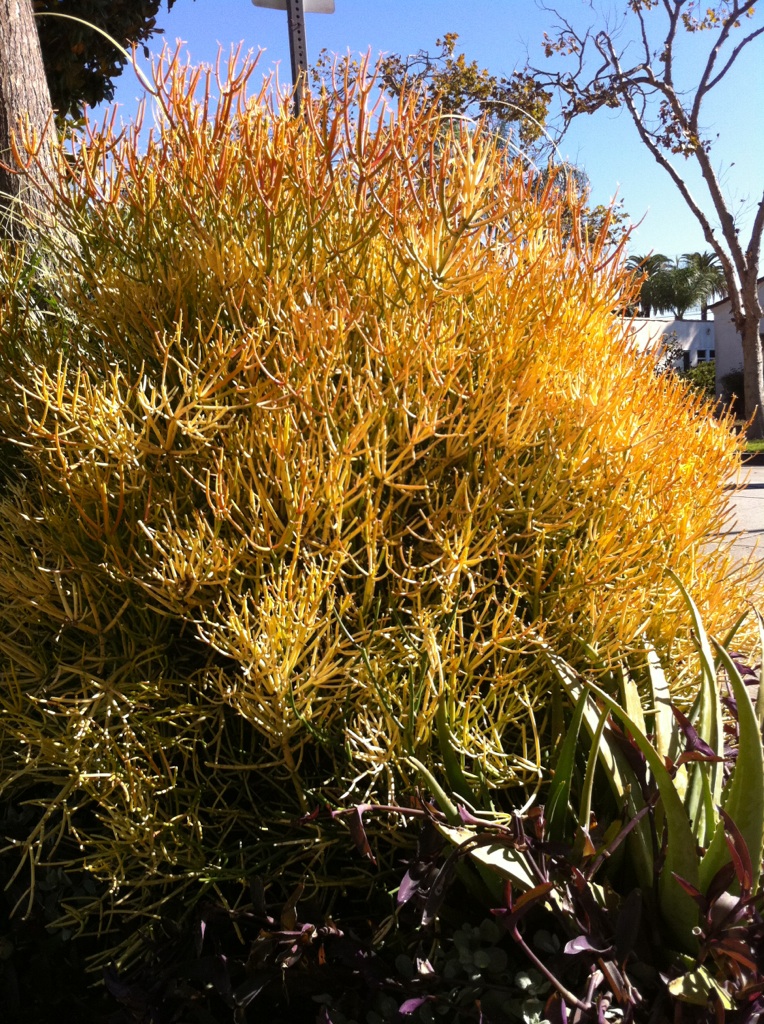
Sticks on fire is a more colorful version of pencil tree.

The old fashioned pencil tree, with leafless, succulent stems is a strikingly strange plant already. In mild climates of coastal Southern California, it can get quite large, nearly ten feet broad and twice as high. Sticks on Fire, Euphorbia tirucalli ‘Sticks on Fire’, stays less than half as large, but is even weirder because the stems are so oddly colored.

The inconspicuous leaves drop almost as soon as they develop, leaving distended fleshy stems that are either reddish or yellowish orange. Stems fade to softer yellow through summer, and then turn red in winter. Size and growth rate are limited by a lack of chlorophyll. Although related to poinsettia, the flowers of sticks on fire are not significant.

Sticks on fire prefers full sun exposure and warmth, but unfortunately needs protection from frost during winter. It can be happy under an eave on a south or west facing wall, or in a large tub that can be moved to shelter during winter. Plants in tubs are a bit more sensitive to rot if watered too frequently. The sap of sticks on fire is very caustic to skin and can be dangerous if it gets in the eyes.

Village Harvest Distributes Surplus Fruit (outdated)

Fruit trees are famously productive here.

(This is an old article with outdated information.)

The vast orchards that formerly inhabited the Santa Clara Valley were here because this is among the best places on Earth to grow apricots, cherries, prunes, almonds and walnuts. Actually, there are not many fruit trees that would prefer to be somewhere else. Home gardens continue to produce the many traditional fruits, as well as many other types of fruit that were not so common in the orchards; such as citrus, figs, apples, pears, persimmons, avocados, peaches, nectarines and too many more to fit into a brief list.

Those of us who enjoy growing fruit trees do not need to be reminded of how well they do here. Some trees produce too much and  can become overwhelming. It is not always possible to can, dry, freeze or share with friends and neighbors all the fruit from the more productive trees. Leaving the fruit out in the garden is not only wasteful, but also bad for the garden, attractive to vermin, very messy and smelly.

Besides, there are other people in the community who could use it. During this past year, Village Harvest has harvested from local gardens, and distributed to those who can use the produce, approximately 156,000 pounds of fruit. The record for distribution of produce may be exceeded this year after apples, persimmons and citrus are harvested.

Volunteers make Village Harvest possible, by collecting excessive fruit from home gardens. Some of the people with productive trees like to retain some of the fruit. Volunteers are also welcome to take some of the fruit. The vast majority of fruit gets dispersed to others in the community who can use it.

The next apple harvest event in the Cupertino orchard on October 22 may no longer be able to accommodate additional volunteers; but the next major apple harvest in the Woodside Orchard on October 29 may still be in need of volunteers. Harvests take about three and a half to four hours, between 9:00 a.m. and 12:30 p.m.. Volunteers must be at least sixteen years old.

Volunteers can register for harvest events, or get more information at villageharvest.org. Early registration is recommended since space is limited. Volunteer instructions, including meeting location addresses will be e-mailed to volunteers a few days prior to each event. Those of us with excessively productive fruit trees who happen to be within range of harvest events can possibly make arrangements to get fruit harvested.

The next few neighborhood harvests will be on October 25 in Central San Jose, October 31 in Sunnyvale, November 1 in Central San Jose, November 6 in Mountain View, November 8 in Central San Jose, and November 14 in Sunnyvale. Sunnyvale harvests begin at 8:00 a.m.. Some harvests are repeated. For example, the Central San Jose harvests are weekly on Tuesday.

Horridculture – Gophers!(?)

Who took the Louisiana iris?!

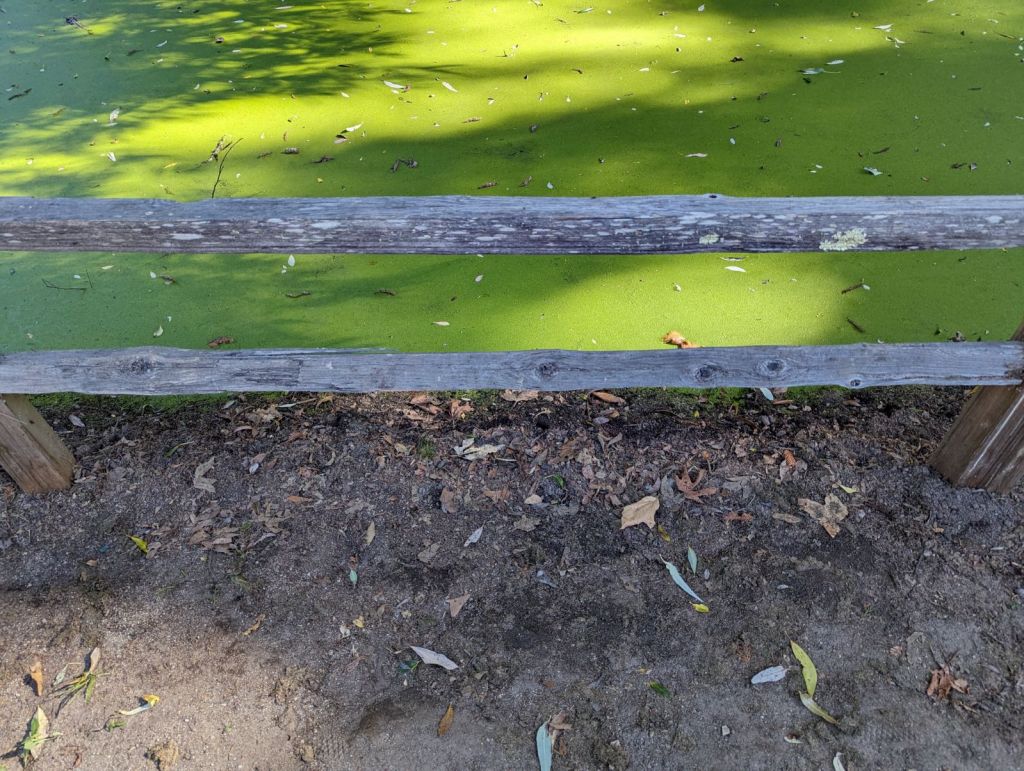
This is more infuriating than the rat or rats who ate the tops off of my rare young banana trees. I do not actually know who the culprit is, but can only guess that it is a gopher or a few gophers. Initially, I thought that it was someone who intended to pull weeds, but instead pulled the beloved Louisiana iris. All I know is that the iris were growing well, and are now completely gone!

These Louisiana iris were a gift from Tangly Cottage Gardening in Ilwaco, so were extremely important to me. After bringing them here at the end of last winter, I split and groomed them, and plugged them into a single row that was about thirty feet long. This row was on the edge of a pond, where I hoped they would form a network of rhizomes to help contain the shifting mud. It was an ideal situation. I watched them grow through the year, and expected them to bloom next season. They were totally awesome!

There is no indication that they were pulled or dug. Nor is there any indication that they were pulled downward from below. Although I found a few gopher tunnels, such tunnels were not sufficiently extensive to reach all of the rhizomes of the Louisiana iris.

Only four very small plugs remained. I dug and canned them to protect them from whomever or whatever took the rest of them. Although they can grow and multiply very efficiently, they will not replace the thirty foot long row for several years. Besides, even when they do proliferate, I do not know if I can safely install them back onto the edge of the pond. Without knowing what happened to the last colony, I can not protect a subsequent colony from the same fate.

Daffodil

Daffodil will bloom months from now.

They may seem to be unseasonable now. Their flowers will not bloom until early spring. It is getting to be about time to install their dormant bulbs, though. Daffodil and all related Narcissus enjoy chilling under damp soil through winter. In fact, established bulbs bloom better after unusually chilly winters. Plump bulbs of some types are conducive to forcing.

The names for daffodil and Narcissus seem to be interchangeable. Narcissus is actually the Latin name of daffodil. It mostly applies to those with smaller but more abundant and fragrant flowers. Most with bigger but fewer and scentless flowers are daffodil. Narcissus are mostly white, but may be yellow. Daffodil are mostly yellow, but may be white or pink.

Some of the fancy varieties of daffodil bloom with billowy double flowers with two colors. Simpler Narcissus are more likely to naturalize though. Taller varieties of both can bloom nearly a foot and a half high. Their narrow and bluish green leaves stay somewhat lower. Foliage deteriorates after bloom, but lingers to sustain new bulbs until summery warmth.

Early Spring Bulbs Start Now

Early spring bulbs appreciate winter chill.

Halloween seems to be an appropriate time to bury early spring bulbs in shallow graves. The season begins about now, and continues until about the end of the year. Installation of new bulbs might initially be ungratifying. There is nothing to show after their interment. Their spectacular bloom during late winter or early spring should more than compensate.

Freesia, narcissus, crocus, hyacinth and tulip are the most popular of early spring bulbs. So are anemone, ranunculus and several iris, although they may also be summer bulbs. Not all of such bulbs are actually bulbs. Several are corms, rhizomes, tubers or tuberous roots. Like bulbs, these store resources through dormancy to grow and bloom in season.

Early spring bulbs, unlike summer bulbs, prefer to be in their garden prior to winter. They enjoy rain and winter chill. Those that originate from nurseries are prechilled so that they bloom well regardless. After their first season though, some might not perform as reliably. Some bulbs can be slightly less than satisfied with winter chill within such mild climates.

However, a few types of early spring bulbs can naturalize. After their primary bloom, they produce new bulbs to replace the originals. Colonies of prolific bulbs eventually become crowded enough to inhibit bloom. Division of superfluous bulbs while dormant alleviates crowding. Also, it relinquishes a few bulbs for relocation. Freesia might be nicely prolific.

Early installation of early spring bulbs promotes early bloom. Obviously, later installation delays bloom. Therefore, installation in phases throughout the planting season prolongs bloom. For example, as one phase of daffodil finishes bloom, the subsequent phase can begin. This is effective only for their first season though. Bloom synchronizes afterwards.

Because winter weather is so mild locally, some early spring bulbs bloom a bit too early. Also because winter weather is so mild, premature bloom may not be a serious problem. Nonetheless, later installation may be preferable for some bulbs. Heavy rain may thrash tulip or freesia. Like phasing though, delaying bloom is only effective for the first season. Naturalized bulbs as they please.

PruneYard

No more prunes.

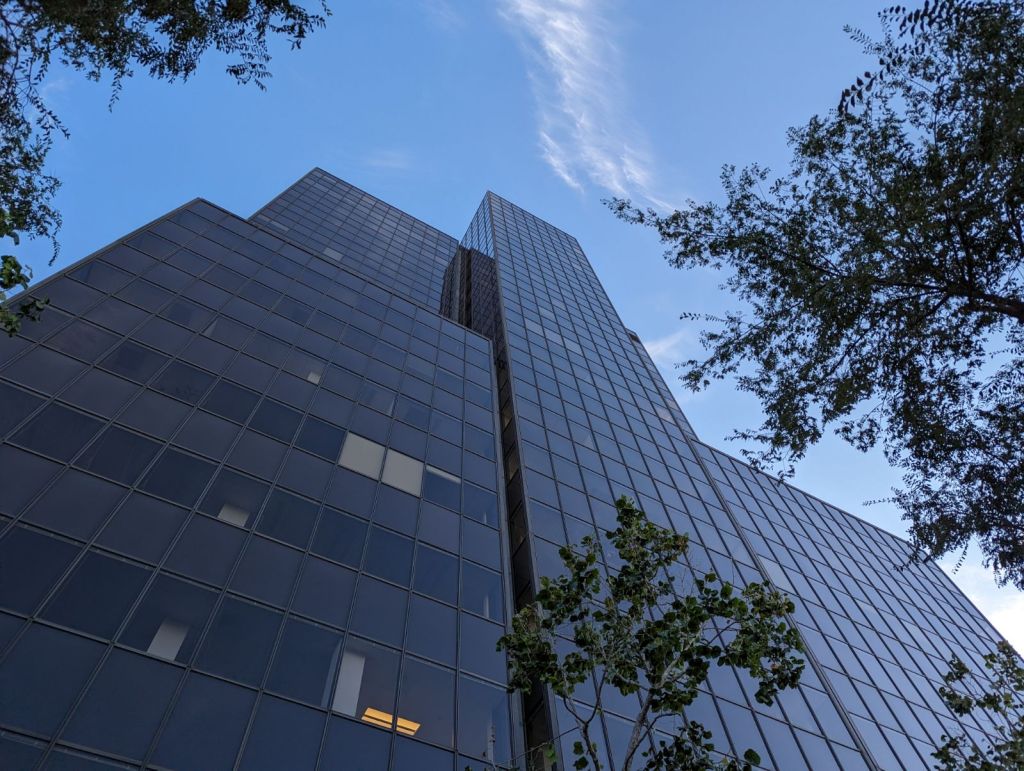
Ulmus parvifolia, Chinese elm extends most prominently into the picture from the right, with another bit from the left of the upper margin. Platanus X acerifolia, London plane extends into the picture from the right of the lower margin, with another minimal bit from the upper left. Otherwise, no other vegetation is visible. This is not exactly a horticultural topic.

The PruneYard Tower 1 is the big and dark skyscraper above the elms and planes. For a few years, it was the tallest skyscraper between San Francisco and Los Angeles. Like many major urban developments, it and its associated complex of buildings is named for what it displaced.

The PruneYard really was what its name describes, a large yard for drying prunes, as well as apricots, from the formerly vast orchards that surrounded it. Because the primary PruneYard complex of buildings is almost as old as I am, I can not remember it not being there. However, I can remember the ruins of some of the associated facilities nearby, as well as abandoned remnants of orchards. The stouter PruneYard Tower II was added in about 1976. The PruneYard Place was added in the early 1990s.

Nowadays, the name of the PruneYard must seem silly to those who are unaware of its history. Few are aware of the difference between prune and plum. Even those of us who can remember the last scraps of orchards find it difficult to believe that, not only were orchards here, but that they were formerly much more vast, and occupied most of the Santa Clara Valley. Just as tourists go to see the fall color of New England, tourists formerly came here to see the spring bloom. It is no wonder that the Santa Clara Valley was also known as the Valley of Heart’s Delight.

From the Muddy Banks of the Wishkah

Well, . . . it is not exactly on the muddy banks.

Kurt Cobain was here. So was I. That is how I got this picture of this English holly in this awkward situation within Kurt Cobain Memorial Park, on the muddy banks of the Wishkah River. I wrote about other pictures from there at my other presently discontinued blog, ‘Felton League’, a bit more than a year and a half ago. This particular picture was omitted because it was irrelevant to that particular post. It is more relevant to this horticultural blog.

‘From the Muddy Banks of the Wishkah’ is, incidentally, the second album that the band Nirvana recorded without Kurt Cobain.

English holly is more naturalized on the muddy banks of the Wishkah River and throughout coastal regions of the Pacific Northwest than it is here. There are not many ecosystems that it can not migrate into there. Here, it can infest only ecosystems that retain sufficient moisture through summer to sustain it, such as riparian or coastal ecosystems. Even within such ecosystems, it would not likely survive on top of a piling such as this specimen.

Some of the most prominent vegetation of the coastal ecosystems of the Pacific Northwest is surprisingly similar to vegetation here. Douglas fir, which is sporadically native here, is the most prominent species within the forests there. Bigleaf maple is likewise more common there than here. Naturalized Himalayan blackberry is even more common and more wicked there!

However, to me, the entire region seemed to be riparian. Nothing was far from some sort of waterway. I encountered nothing that resembled a familiar chaparral ecosystem. Someone who is more familiar with the region could distinguish between the various local ecosystems. I should be more observant about the diversity of the ecosystems and their associated vegetation, both native and exotic, when I return late next winter.