Late Summer

Such weather is early this year.

The change of seasons can be boring here. It might seem as if this climate experiences only two seasons. Summer is the primary season, which seems to extend through most of the year, with what seems to be merely a few days of another brief secondary season which is not summer. Perhaps this brief secondary season is autumn, winter and spring, but that is too many letters and big words for such a small season.

That is how those who are familiar with more distinct seasons might perceive seasons of this innately mild climate. Those of us who are familiar with this climate perceive it quite differently. We are aware of the four seasons, regardless of how mundane the transitions between them seem to be. In fact, some might contend that, if autumn seems to be minimal here, it is merely because this climate experiences a fifth season between summer and autumn, which is known as Indian summer.

Indian summer is an extension of summery weather into autumn, and sometimes occurs after summer seems to have begun to succumb to autumn. It does not happen annually, and does not seem to be happening this year, but certainly could. It is sneaky that way.

For now though, autumn seems to be sneaking into the last two weeks of summer, much like Indian summer sometimes sneaks into autumn. Nights have been interestingly cool. Low clouds have been lingering a bit longer after sunrise than they typically do.

However, vegetation that enjoys warmth does not seem to be decelerating for cooler weather. Perhaps such vegetation knows more than the rest of us do about what to expect. Perhaps it is merely more responsive to photoperiod than weather. Regardless, I get the impression that this is how late summer typically is within other climates.
Six on Saturday: Frosty Forecast

Frost is not a problem here. The several species here that are not resilient to frost are the problem. The first of my Six actually has no problem with frost, but does have a problem with starting too late to finish prior to frost next winter. The second also has no problem with frost, but does not want to bloom as weather cools into autumn. The other four are from a frostless region of Los Angeles. I neglected to protect them from the earliest frost last winter because I did not expect it. Their recovery was slow through mild spring and summer weather. They are now growing vigorously rather than decelerating for autumn. This increases their vulnerability to frost next winter.

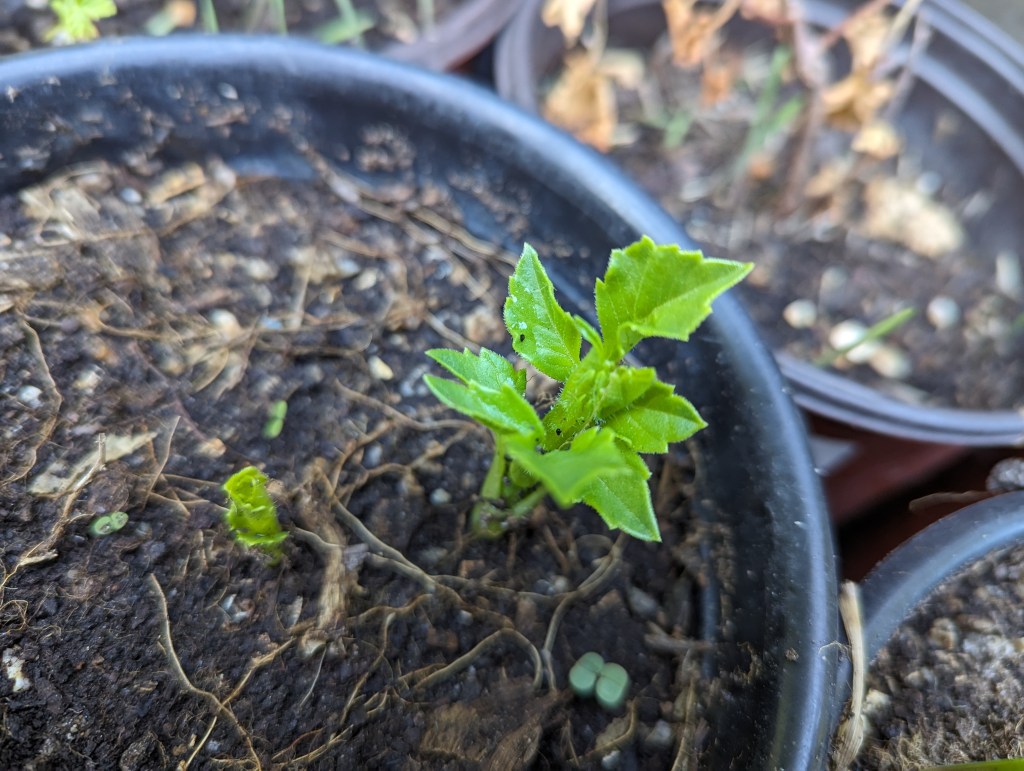
1. Dahlia X pinnata, mixed dinnerplate dahlias are starting to grow, with only a third of their season left. I described the delay last week. Only three of two dozen survived so far.

2. Gardenia jasminoides, gardenia seems to be healthy, and generated a typical number of floral buds, but is now shedding such floral buds, likely in response to cooling nights.

3. Solandra maxima, cup of gold vine was new here when it got frosted last winter, then grew slowly through atypically cool weather last spring, and is now growing like a weed!

4. Platycerium bifurcatum, staghorn fern also waited a bit too long to start growing like this. It could eventually enjoy rain and humidity through winter, but not even mild frost.

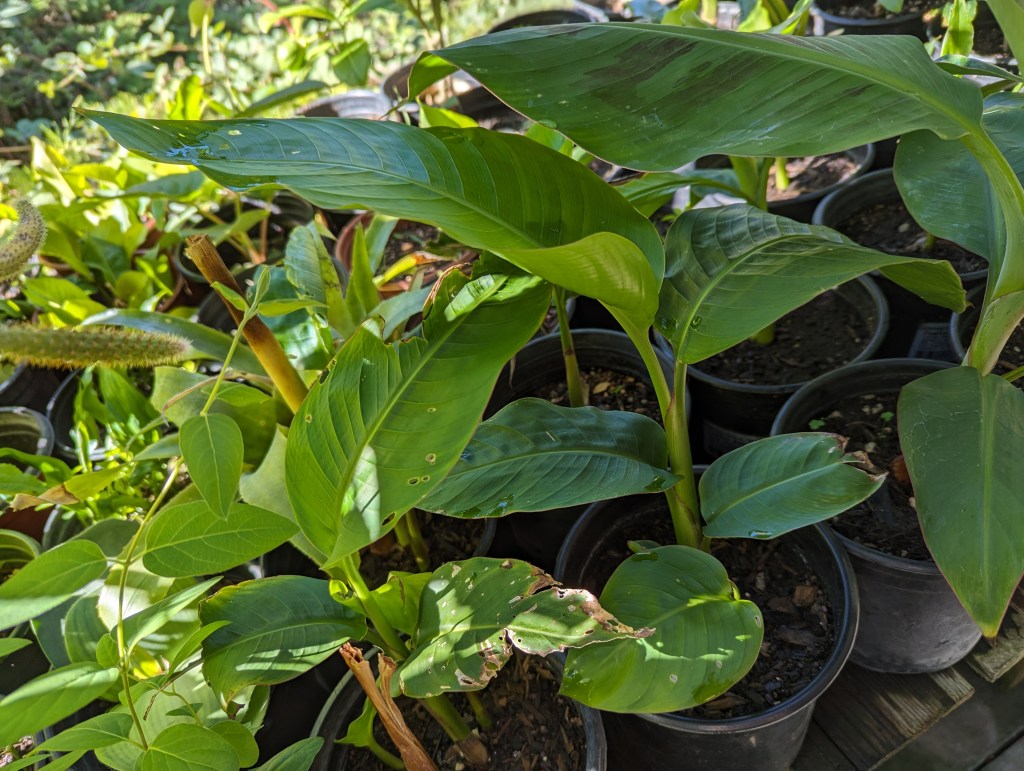
5. Heliconia psittacorum, parakeet flower has done well since last winter. I brought nine rhizomes from Los Angeles. They are still a bit too small to survive average frost though.

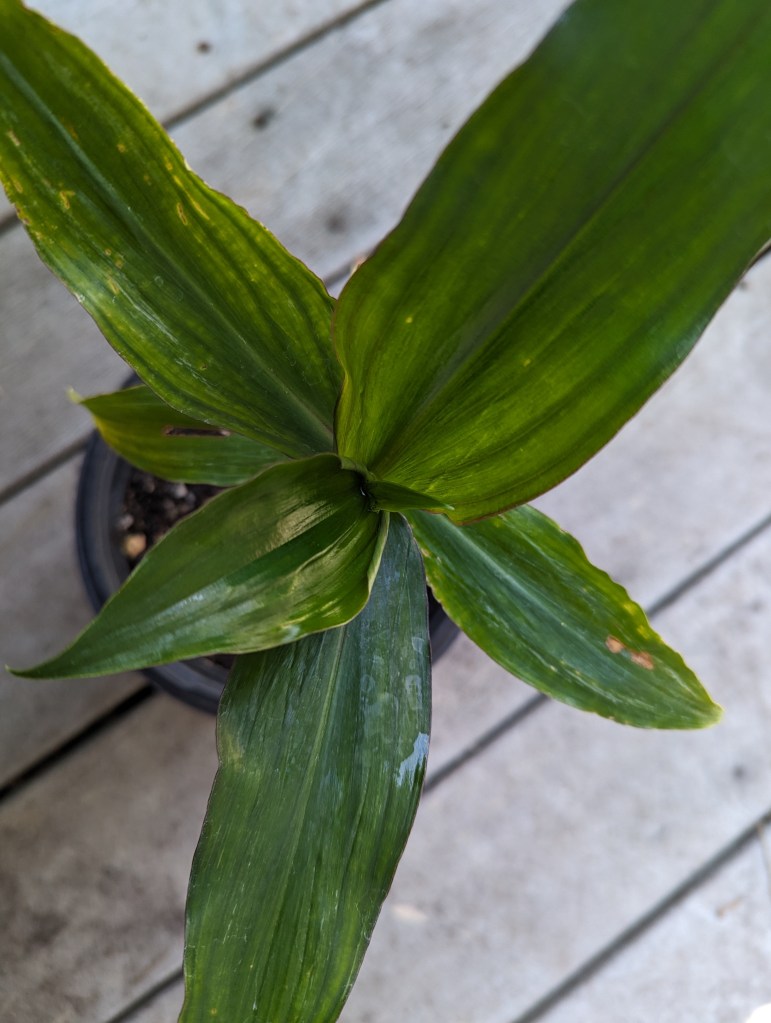
6. Dichorisandra thyrsiflora, blue ginger is likely even more vulnerable to frost. Most of its cuttings did not survive last winter. I am impressed and pleased with the six that did.

This is the link for Six on Saturday, for anyone else who would like to participate: https://thepropagatorblog.wordpress.com/2017/09/18/six-on-saturday-a-participant-guide/

Fiddle Leaf Fig

Fiddle leaf fig starts out as a clinging epiphytic vine.

What a weird tree! Fiddle leaf fig, Ficus lyrata, is an uncommon but familiar large scale houseplant that we might not welcome into our homes if we knew how it behaves where it grows wild in the lower rainforests of Western Africa. Although it can grow upward from the ground like almost all other trees do, it often germinates and begins to grow as an epiphyte, within organic debris that accumulates in the branch unions of other trees. While suspended, it extends roots downward. Once these roots reach the forest floor, they develop into multiple trunks that overwhelm and crush the host tree as they grow.

The bold foliage is typically dark drab green, like the shades of green that were so popular for Buicks in 1970, with prominent pale green veins. Individual leaves are about a foot long and potentially nearly as broad at the distal (outward) ends, often with randomly wavy margins. Like fiddles, they are narrower in the middles, or actually more often narrower at the proximal (inward) ends. When pruning becomes necessary, the caustic sap should be soaked from fresh cuts with paper towels so that it does not drip and stain.

Too Much Mix & Match Gets Sloppy

Conformity has practical application even in casual landscapes.

A combination of modern horticultural apathy and too many choices was probably the demise of conformity in home gardens. Formal hedges or even informal screens of several of the same plants are nearly obsolete. Ironically, long and low barrier hedges and so called ‘orchards’ of identical trees planted in regimented rows or grid patterns have become common in large landscapes in public spaces

Those of us who still crave formal hedges, paired trees or any such symmetry in our home gardens must be more careful with the selection of the plants that need to conform than would have been necessary decades ago when there was less variety to complicate things. It is just too easy to get different varieties of the same plant. Only plants with matching cultivar (cultivated variety) names will necessarily match. (Yet, on rare occasion, even these are inaccurate.) For example, ‘Emerald’ arborvitaes will match other ‘Emerald’ arborvitaes, but will not match ‘Green splendor’ arborvitae, no matter how they resemble each other in the nursery.

Plants that are identified by their characteristics instead of by cultivar name are riskier. Blue lily-of-the-Nile could be any one of many different cultivars with blue flowers. It is therefore best to obtain all lily-of-the-Nile for any matching group from the same group in the same nursery at the same time. What will be available next week may actually be a different variety with a different shade of blue and different foliar characteristics. Nurseries bring stock in from so many different growers.

Adding new plants to replace those that have died within established hedges or streets flanked with the same trees can be particularly difficult, especially if the old varieties are no longer available. The old fashioned yellowish Japanese boxwood that was so common for small hedges in the 1950’s has not been common in nurseries for several decades. Replacement plants are darker green. Some are even compact cultivars or different specie like English boxwood. When lined up and shorn together, they make ‘calico’ hedges.

Horridculture – Nature

Nature is dysfunctional.

Horticulture is unnatural. It involves unnatural manipulation of exotic species that were unnaturally imported from all over the World. It provides unnatural irrigation and unnatural chemical fertilizers and amendments. It involves unnatural containment of many plants within unnatural synthetic media within unnatural plastic cans or other containers. It strives to eliminate much of what is natural, such as pathogens and competition. It is ironic that so many believe that a simple but totally unnatural houseplant brings a bit of nature into their particular environment.

Nature, although quite natural, is dysfunctional. It is messy. It is dirty. It is tragic. It is potentially dangerous. It is overrated. Realistically, it is a hot mess of problems. Somehow though, it seems to be appealing.

That is why so many of us strive to incorporate more nature into our respective lifestyles by very unnatural means. We crave a sort of idealized version of what we believe nature should be. It would likely be easier and more efficient to accept such attempts as unnatural, and exclude what nature might try to contribute.

Some are quite happy to live and work in high rise homes and offices with minimal natural influence. They still breathe natural air, and appreciate natural sunlight and the stabilizing effects of natural gravity, but shelter themselves from what is most bothersome about nature outside, such as weather, wildlife and most insects.

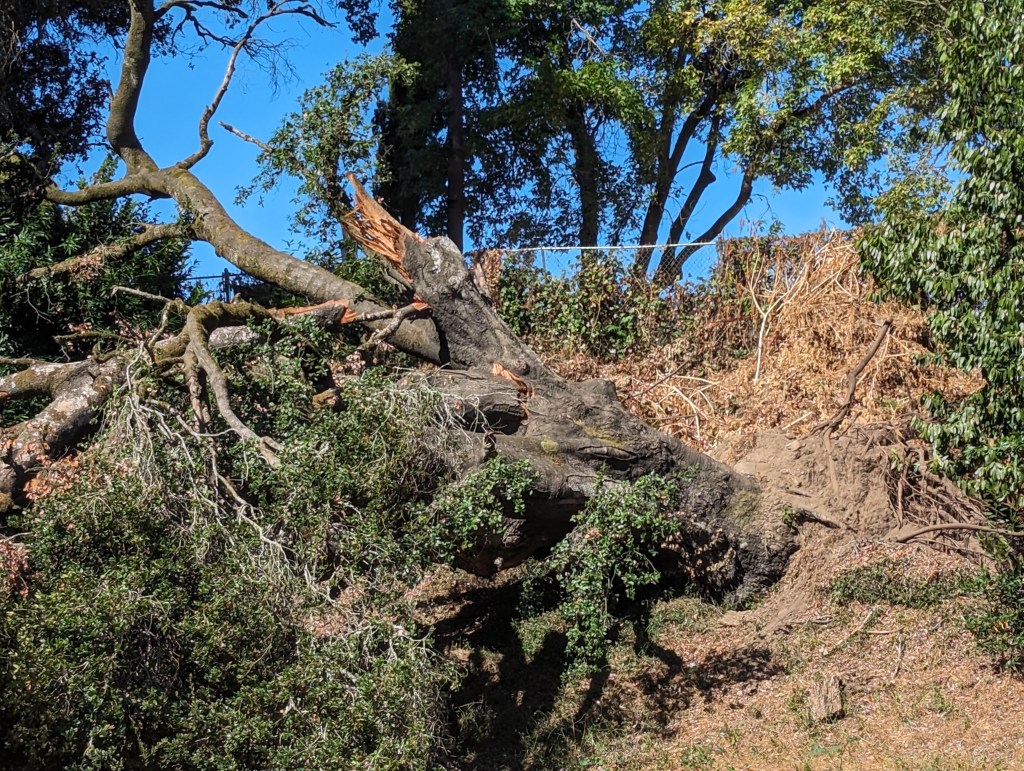
This unfortunate old coast live oak is an exemplary victim of nature. It grew here naturally for two centuries or so. It obtained all that it needed from the natural soil, air and weather. It survived natural insect infestations, and long ago, may have survived natural forest fires. Ultimately though, perhaps in conjunction with a bit of natural wind and natural fungal organisms associated with decay, it succumbed to natural gravity.

This old oak finally succumbed to the same nature that it exploited for centuries.

Frisee

Frisee is a type of endive.

Many popular salad greens are somewhat discriminating about the seasons here. Some dislike even a minor chill during winter. Several more dislike arid warmth during summer. Frisee is a sub variety of curly endive, Cichorium endivia var. crispum, that dislikes both. It prefers weather from late summer through autumn, and from late winter through spring.

Frisee is related to chicory, which includes radicchio, puntarelle and Belgian endive. It is less closely related to dandelion. Because it is relatively unfamiliar locally, some know it as chicory or curly endive. It is typically a component of fresh green salads. Alternatively, it sautees nicely, or mixes with other cooked greens. Frisee is apparently quite versatile.

Frisee may be unavailable as seedlings in cell packs from nurseries. Because individual plants are small, it is most practical to grow them from seed anyway. Seed germinates in about a week. Seedlings mature in about a month and a half. Mature frisee is only a foot wide. It requires full sun exposure with frequent watering. Phasing prolongs productivity.

Cool Season Vegetables For Autumn

Tomatoes need warmth to be productive.

Warm season vegetables will be productive until autumn. Several will produce until frost. Those that grew slowly during mild weather through last spring are performing well now. Summer does not end until later in September. Summery weather may not end until a bit later. Several climates never get frost. Yet, cool season vegetables are now seasonable.

This does not require productive warm season vegetables to relinquish their space. Most should stay until they finish. It only means that it is likely too late to grow any more warm season vegetables. Also, it is time to start growing any cool season vegetables that grow from seed. Transitioning between seasons begins prior to the actual change of seasons.

It is most efficient to sow seed for most vegetables directly into the garden. However, It is more practical to plug seedlings of some big vegetables somewhat later. Because only a few cabbages are adequate, there is no need to sow many of their seed. Instead, two six packs of seedlings may be sufficient. They are not very much more expensive than seed.

This applies to broccoli, cauliflower and many other large cool season vegetables. Their plugs or seedlings are available from nurseries while seasonable. Alternatively, they are easy to grow in cell packs or flats, from seed, in a home garden. This technique is useful for quantities that are expensive in cell packs. Also, more varieties are available as seed.

Of course, it is not much more effort to sow their seed directly into a garden. The problem with doing so is that warm season vegetables are not yet done. Sowing seed below and between them is an option, but interferes with later cultivation. Any relinquished space is necessary for smaller cool season vegetables. These really should grow only from seed.

Baby lettuces and small greens must be too numerous for plugging. Therefore, they must grow from seed. Peas are both too numerous and too sensitive to transplant for plugging. Transplanting damages cool season vegetables that are roots. Therefore, it is necessary to sow seed for beet, carrot, radish, turnip, and parsnip directly. Some can wait a bit later. Most cool season vegetables comply with phasing.

Jungle Update

New foliage is already beginning to replace older foliage.

Strelitzia nicolai, giant bird of Paradise is growing! It is not much growth, but it is more than expected. The specimens were heeled in about a month ago to begin the slow process of recovery from division and relocation. Within the damp soil of their temporary situation, they should begin to develop rudimentary roots without actually dispersing them too remotely prior to another relocation to their more permanent landscape after the beginning of the rainy season of autumn. In other words, the roots should begin to grow, but not grow too much.

They can grow more when they get settled within their permanent situation. This is done in two separate processes because the specimens are easier to monitor and irrigate prior to rain within the confined space where they are heeled in. Besides, they would not be very appealing within their permanent landscapes until they begin to recover. Once they begin to recover, they should grow faster, so will not be too unappealing for too long, and even if they are, it will be through winter, when fewer people are here to notice.

Anyway, while they begin the process of recovery and development of rudimentary roots, foliar growth is expected to be minimal. It was expected to stagnate for at least a month or so, and then to slowly resume as the minimal foliage that was retained deteriorates. Like root growth, foliar growth should accelerate after final relocation.

Instead, foliar growth is already accelerating, perhaps as a response to removal of so much of the original foliage while foliage is necessary to sustain rudimentary root growth. Perhaps these specimens actually are as healthy and as vigorous as they seem to be. Although this fresh new foliar growth will be more vulnerable to frost through winter, it is nonetheless gratifyingly encouraging.

Proud Land

Proud Land

‘La France’, in 1867, was the first hybrid tea rose to be hybridized. ‘Peace’, in 1945, was the first hybrid tea rose to be classified as a hybrid tea rose. Yes, it took quite a while.

Afterward, hybrid tea roses became very popular both for the cut flower industry and home gardens from the 1950s through the 1980s. Because of their single bold flowers that bloom on tall and sturdy stems from spring until autumn, they are still very popular as florist flowers. However, more florific floribunda roses became more popular for home gardens through the 1990s. Since the turn of the Century, all sorts of simpler shrubby roses, such as carpet roses, became more popular than all of the other types of roses. Hybrid tea roses and other types that produce comparably exemplary cut flowers require more specialized maintenance than most people want to commit to. Sadly, hybrid tea roses are now passe.

‘Proud Land’ was the first of the hybrid tea roses that I installed into my mother’s new rose garden in 1984. It came from Jackson & Perkins while Jackson & Perkins was still based out of Medford in Oregon. Unfortunately, it suckered so profusely during its first season that I wrote a letter to Jackson & Perkins about it. Jackson & Perkins generously replaced it for the following season. Also, my mother, who was unaware of the replacement, purchased another replacement. As if that were not enough, I managed to abscise all sucker and burl growth from the original while it was dormant for the following winter. So, three individual specimens of ‘Proud Land’ bloomed at the center of the small rose garden for 1985, which was the year that I graduated high school.

Technically, hybrid tea roses are at their best after about five years, but should probably be replaced before about ten years. ‘Proud Land’ continued to perform though, with no indication of deterioration, until I finally removed them in 2020. They live here now. I grew a few ungrafted copies from their pruning scraps. I should properly graft a few copies also. Realistically, there is no need to retire the originals.

Some consider hybrid tea roses to be passe. I consider them to be historical.

Six on Saturday: You Get What You Pay For

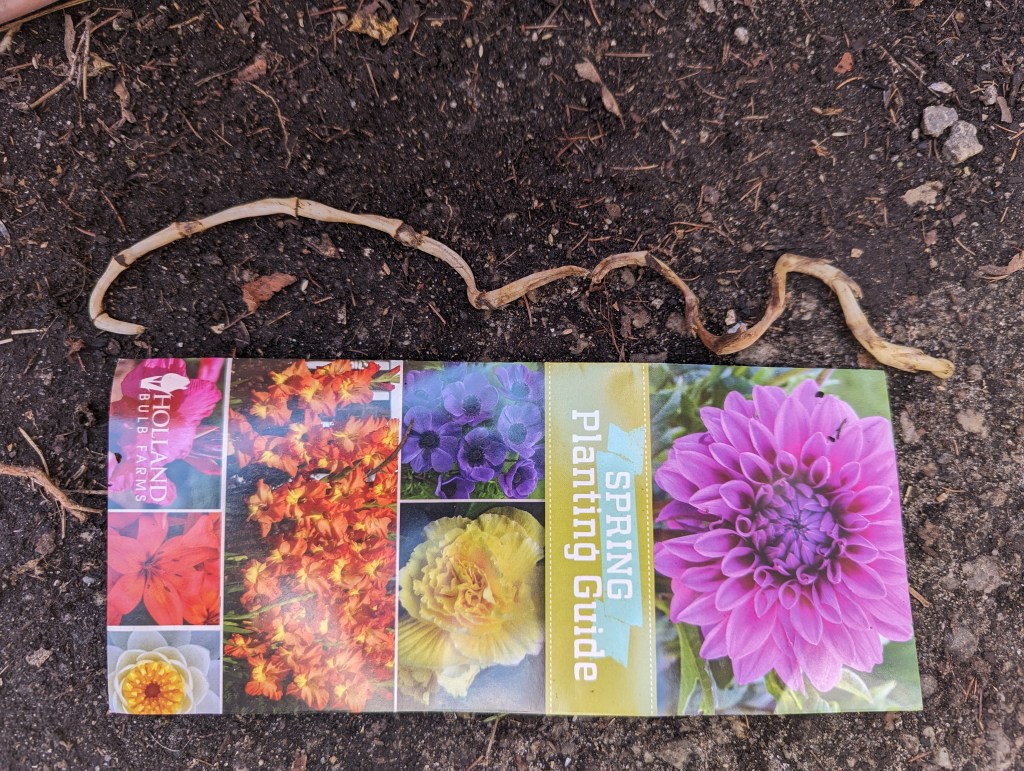
It all started when I succumbed to the temptation of cheap but out of season bulbs. They were actually canna rhizomes that did not work out so well. The supplier gave me credit, which I used to purchase cheap but out of season dahlia tubers. I suppose that I can not blame the supplier twice. I should have known better from the beginning than to violate my most basic rule against purchasing plant material, even if I try to justify doing so for work. Contrary to the title of these Six, ginger, elderberry and a dinky lime tree that cost nothing are working out quite nicely.

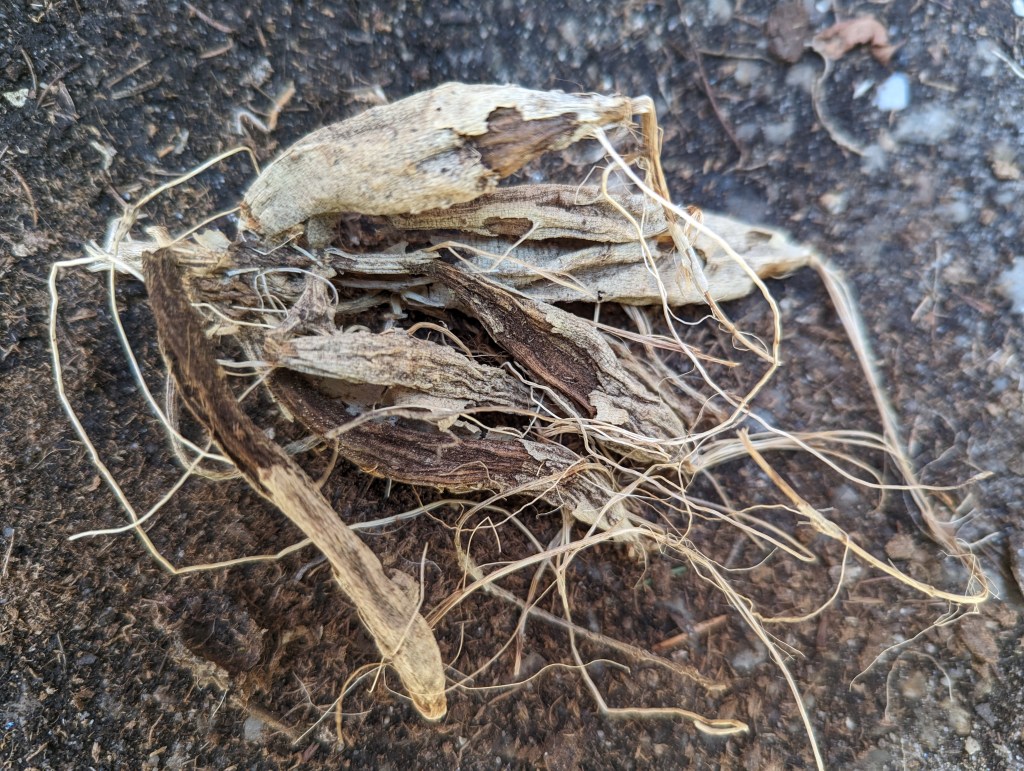
1. Dahlia X pinnata, mixed dinnerplate dahlias were purchased with the credit that I got for the ‘Red King Humbert’ Canna that were both virused and not ‘Red King Humbert’. I again fail to be impressed. I canned any that were not completely desiccated, but do not expect any survivors. I should have requested a total refund after the primary purchase.

2. Dahlia X pinnata, mixed dinnerplate dahlias grow through spring for summer bloom. I figured that, even without enough time to bloom, they could grow enough to replenish their resources before winter dormancy, and then grow and bloom next year. I assumed that tubers that are available this late had been refrigerated to maintain their dormancy. Instead, a few diligently tried to grow earlier, but could not escape from their packaging.

3. Zingiber officinale, ginger is not so limited by seasons. It grows whenever it wants to.

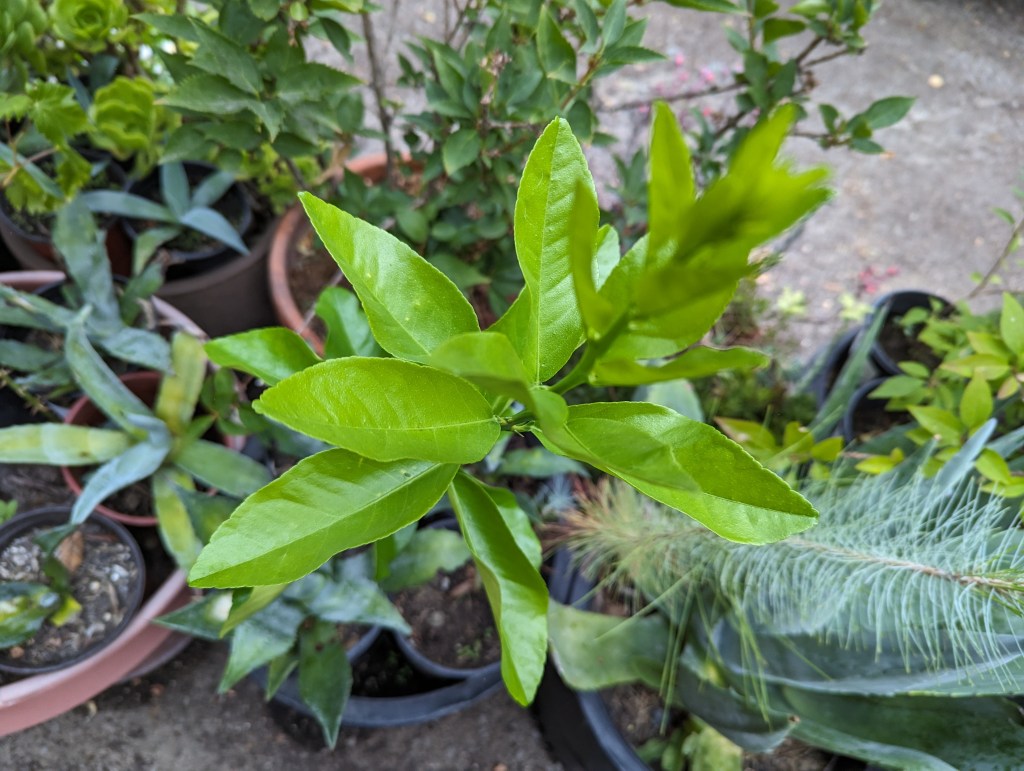
4. Citrus X latifolia ‘Bearss’, Persian lime grew from the stump of a tree that I pulled out of a neighbor’s yard. It cost nothing, but will eventually be worth more than I paid for it.

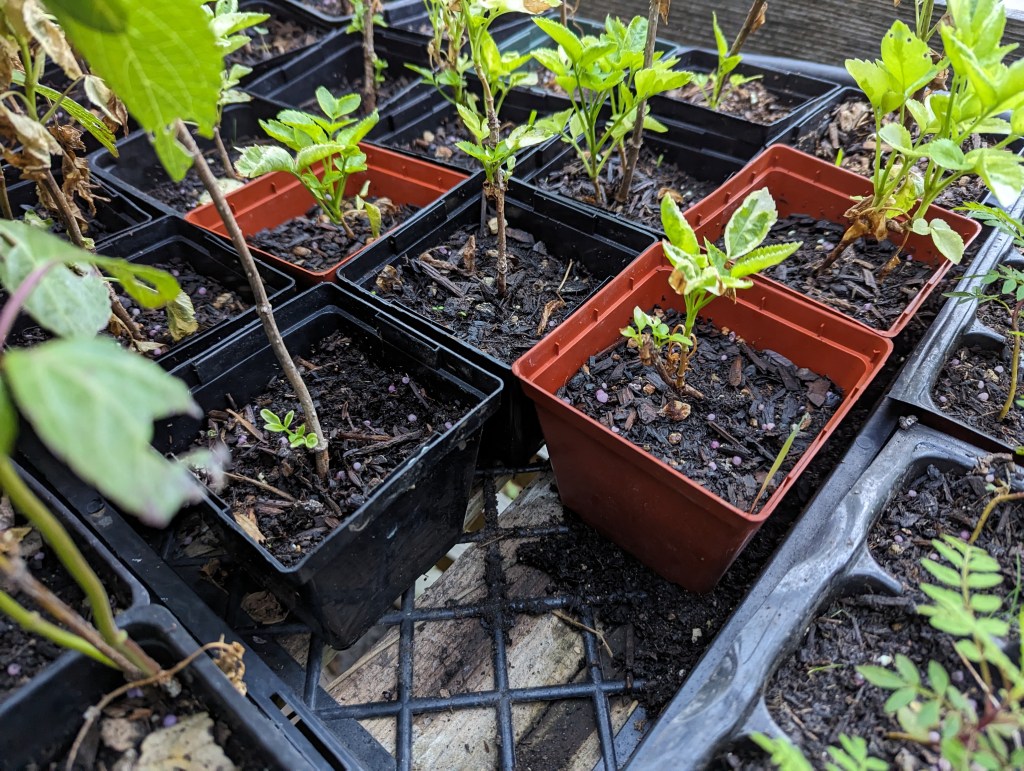
5. Sambucus nigra ‘Madonna’, European black elderberry likewise cost nothing, and for a while, it looked as such. It provided sixteen copies though, and the first found a home.

6. Rhody is irrelevant to the previous five of these six, but everyone wants to see Rhody.

This is the link for Six on Saturday, for anyone else who would like to participate: https://thepropagatorblog.wordpress.com/2017/09/18/six-on-saturday-a-participant-guide/