Horridculture – Keep Out!

Gilroy City Council does not endorse this landscape.

Corner lots can be challenging. Even if paths do not get worn diagonally through front lawns, vegetation between curbs and sidewalks is likely to get trampled. The pavement in the foreground of this picture connects the sidewalk to crosswalks for the two associated streets. (I realize that this is not a very good picture, and the blotched out poster for a candidate for Gilroy City Council could not be erased completely, but I took it from a car while stopped at a stop sign.) Vegetation for this particular application must be durable, and perhaps deterrent to trampling. This particular vegetation certainly conforms in that regard. However, there is no polite way of saying how extremely dysfunctional this landscape is. Firstly, from the get go, it is very dangerous to anyone who might simply trip and fall as people sometimes do. Secondly, this landscape will become more dangerous as it matures. Although most of the already crowded agaves seem to be a somewhat compact cultivar that should not reach very far over the sidewalk, the specimen at the center of the bottom of the picture seems to be a variegated common century plant, which has potential to reach halfway across the sidewalk. Thirdly, the entire hot mess will be hideous as it soon needs to be pruned for clearance. The sago palm will soon reach the sidewalk like the common century plant. Pruning will destroy their foliar form. The Mexican fan palm should eventually grow upward and out of the way, but will eventually prevent the streetlamp from illuminating a portion of the sidewalk close to the corner, where illumination is relatively important. Fourthly, this collective herd of wickedly hateful vegetation will soon be too congested to remove litter or weeds from; and curbside landscapes such as this innately collect litter.

Gardening With Succulents

(This article is recycled from many years ago, so contains very outdated information.)

Many succulents are remarkably easy to propagate from cuttings.

Succulent plants that were so trendy during the 1970’s seem to be gaining popularity again. This is actually one of the few trends that I like to see, since succulents are such useful and practical plants in modern urban gardens. Although some cacti, agave and larger succulents become quite imposing, most other succulents are quite compact and proportionate to small garden spaces. Some can by happy in the partial shade of atriums and under eaves. Succulents generally do not need much attention, are remarkably easy to grow, and are even easier to propagate. Most do not need much water. 

‘Gardening with Succulents’, with master gardener Laura Balaoro and the Guadalupe River Park Conservancy, is a great program for experiencing the potential for succulents in containers and the garden. There will be several samples of container gardens to demonstrate some of the many possibilities for succulents, as well as their variety of textures and colors. Common pathogens, propagation methods, succulent that grow through winter, and succulents that are adaptable to partial shade will all be discussed. After a planting demonstration, there will be free cuttings for those who can not wait to add new succulents to their gardens.

‘Gardening with Succulents’ is only in a few days, from 10:00 a.m. to noon on September 11, so it is important to register right away by telephoning 298 7657 or online at www.grpg.org. If this program gets full to capacity first, there are many other interesting classes and programs described at the website for later. Admission is $15, or $10 for members of Friends of Guadalupe River Park and Gardens. ‘Gardening with Succulents’ will be at the Guadalupe River Park and Gardens Visitor and Education Center, which is located at 438 Coleman Avenue in San Jose.

Nearby in the San Jose Heritage Rose Garden, the last of the Rose Deadheading Blitzes will be from 5:00 to 7:30 p.m. on September 14, in order to remove spent blooms and promote more blooms before autumn. Volunteers should bring pruning shears and gloves, and wear closed-toe shoes; and of course, stay for ice cream afterward. (Loaner shears are available if necessary.) The San Jose Heritage Rose Garden is located on Taylor Street at Spring Street, just east of Coleman Avenue. Visit www.grpg.org or telephone 298 7657 for more information or to register.

Succulents

Succulents are remarkably diverse.

Among the many garden chores that I neglected so far this summer is the ‘processing’ of many of the bits and pieces of unusual succulent plants that I acquired from earlier volunteer work days at the Arizona Garden at Stanford. Volunteers are always welcome to take any of the debris that we generate. After everyone present took what they could, I could not bear to waste what was left; so I took more than I should. Cacti, agaves and yuccas cannot be recycled as green waste, so would otherwise have been disposed of.

I really wanted large canes of a particular unusual yucca, so processed them as large cuttings first. I only needed to cut away all but the foliage on top, stick them in the ground and keep them watered until roots grow. This particular desert yucca does not grow roots as efficiently as tropical yuccas do, though.

Meanwhile, many pieces of cacti, ice plant, and succulents that I can not even tell you the names of remain out in a pile in the driveway. However, as I was looking them over today, I noticed that they are not only alive, but actually seem to doing quite well. Some are even blooming!  

This is just too weird. There is no soil. There is no watering. Even if there were, there are no roots to exploit the resources that are necessary to keep plants alive. These bits and pieces of various succulents get only sunlight and warmth during the day. Apparently, this is all they need for now.

They know that it will eventually rain. When it does, they will develop new roots into the soil wherever they are. Since I do not intend to let them do this in my driveway, I will eventually get them into the garden, and water them in to hasten the rooting process. I will groom them and strip lower foliage from agaves and aloes, so that they look better than the debris that they are. They should actually grow slightly and look pretty good by autumn.   

There are so many different kinds of ‘succulent plants’ or ‘succulents’, that the definition is not always so clear. All cacti are succulents that are equipped with spines. Many relatives of poinsettia (euphorbs) have fleshy green stems just like cacti, so are also succulents. Some of these even look like cacti, with comparable spines. Aloes and agaves are succulents as well, with large fleshy leaves, some with very sharp leaf tips and teeth on their leaf margins. The list goes on, including sedums, sempervivums, echiverias, aeoniums, crassulas, lithops, ice plants and more.

Simply speaking, succulents store water in distended ‘succulent’ leaves, stems or even roots, in order to survive long dry seasons. Most happen to be remarkably easy to propagate from cuttings. Some can even be grown from relatively large cuttings. In the desert where water is a very limited commodity, many succulents defend themselves with spines or teeth.

Yuccas, which are related to aloes and agaves, are considered (by ‘some’) to be succulents as well, even though they lack fleshy leaves or stems. Some yuccas that form trunks and branches, particularly those that are from tropical or forest environments, and especially the common Yucca elephantipes, are just as easy to propagate from cuttings as other succulents are.

Volunteer Days at the Arizona Garden of Stanford

Green waste from the Arizona Garden is fair game for volunteers.

(This article is from 2010, so contains irrelevantly outdated information.)

Some gardens are native gardens. Some are wildflower gardens. Others are vegetable gardens, white gardens or rose gardens. There are really all sorts of gardens. Mine though is the only garden that I am aware that is described by some as a ‘felony garden’.

This less than appealing distinction originates from my habit of ‘recycling’ green waste from other gardens. From the bits and pieces of debris generated by normal maintenance, I like to propagate copies of plants that I like for my own garden. Sometimes, I get large volumes of material, such as clumps of New Zealand flax or African iris. Sometimes, I just get small bits of pelargonium or English ivy. Sometimes, the small bits are not exactly generated by maintenance.

On March 20, I really scored big! I procured a pick up full of large canes of a somewhat uncommon species of yucca, along with more than a wheelbarrow full of pieces of various cacti, agaves, aloes and succulents! I suppose that I should feel guilty; but I was helping to dispose of the green waste generated by the volunteers at the Arizona Garden at Stanford University.

The historic Arizona Garden could actually use the help of more volunteers during their Volunteer Days every third Saturday of each month. Most of us were pulling weeds last month, and will likely be pulling more this month. Although there is not always booty to be had, (and no one scores like I did!) volunteers are welcome to the debris they generate from any needed grooming and pruning.

The next Volunteer Days will be on April 17, May 15 and June 19. Volunteers can arrive at any time after 9:00 a.m., and should bring heavy gloves since almost everything in the Arizona Garden is equipped with nasty thorns or spines. Some who stay through noon like to bring bag lunches. New volunteers should contact Arizona Garden Coordinator, Christy Smith at 650 – 723 7459 or christy.smith@stanford.edu before attending a Volunteer Day to get any other necessary information and specific directions to access the Garden.

On April 18, the day after the next Volunteer Day at the Arizona Garden, the Going Native Garden Tour will be visiting more than 65 gardens throughout the Santa Clara Valley and the Peninsula from 10:00 a.m. to 4:00 p.m.. The gardens range from newly planted to established, from townhome lots to acre parcels, but all feature native plants. Some gardens feature talks about native plant gardening. A few gardens will have native plants available for purchase.

It is not possible to see all the gardens within this self guided tour, so guests can choose which gardens to visit. Admission is free, but limited; so early registration is recommended. Registration is required prior to noon on the day of the Tour. Registration can be arranged, and more information about the Going Native Garden Tour and about volunteering can be found at www.gngt.org.

Litter Problem

It will not DIE!

We have a litter problem. At least three species of Agave continually have litters of pups. We give almost all of the pups away to friends and neighbors, but more constantly appear. I suppose that we could dispose of some, but that is not easy for those of us who enjoy growing vegetation instead of destroying it.

Pups of one Agave continue to appear where the original was relocated from several years ago. Although I do not know what species it is, it is likely my favorite of the three. However, we can not accommodate all these pups! The original is happy with its new situation, but is beginning to generate a few more pups there as well.

Pups of Agave americana, century plant, got canned because we thought that we could eventually find homes for them. Now, and for the past few years, these maturing pups are producing more pups, some of which are emerging from the drainage holes of their cans! The original is happy to be a neighbor of the unidentified Agave, but could generate more pups at any time.

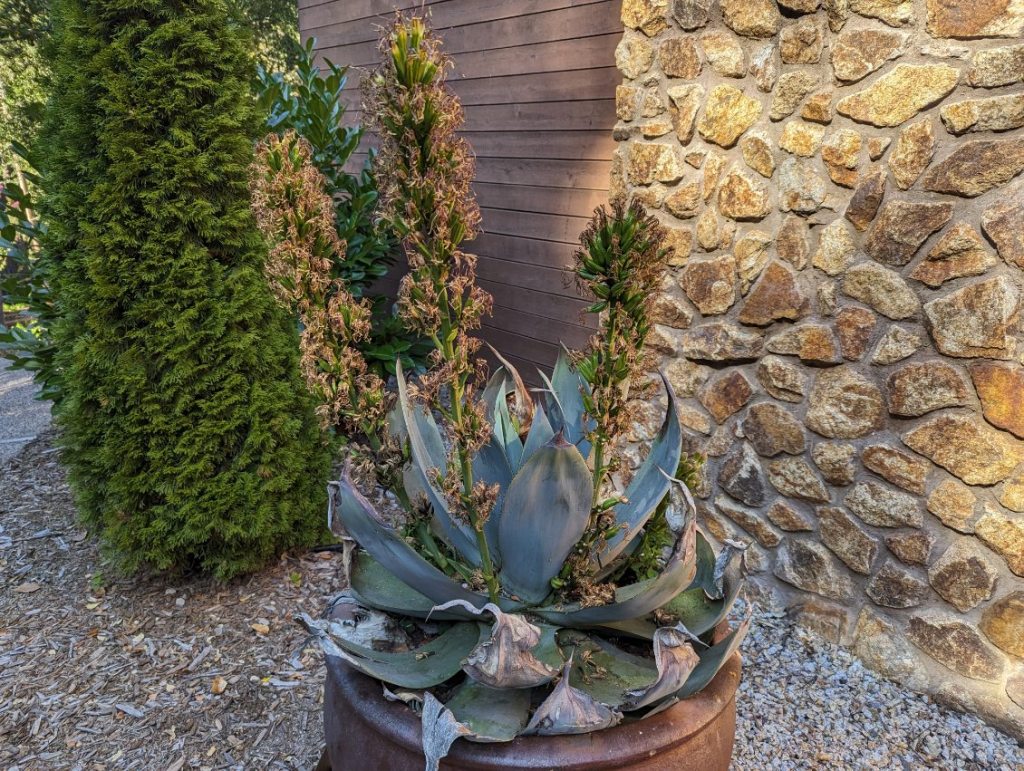
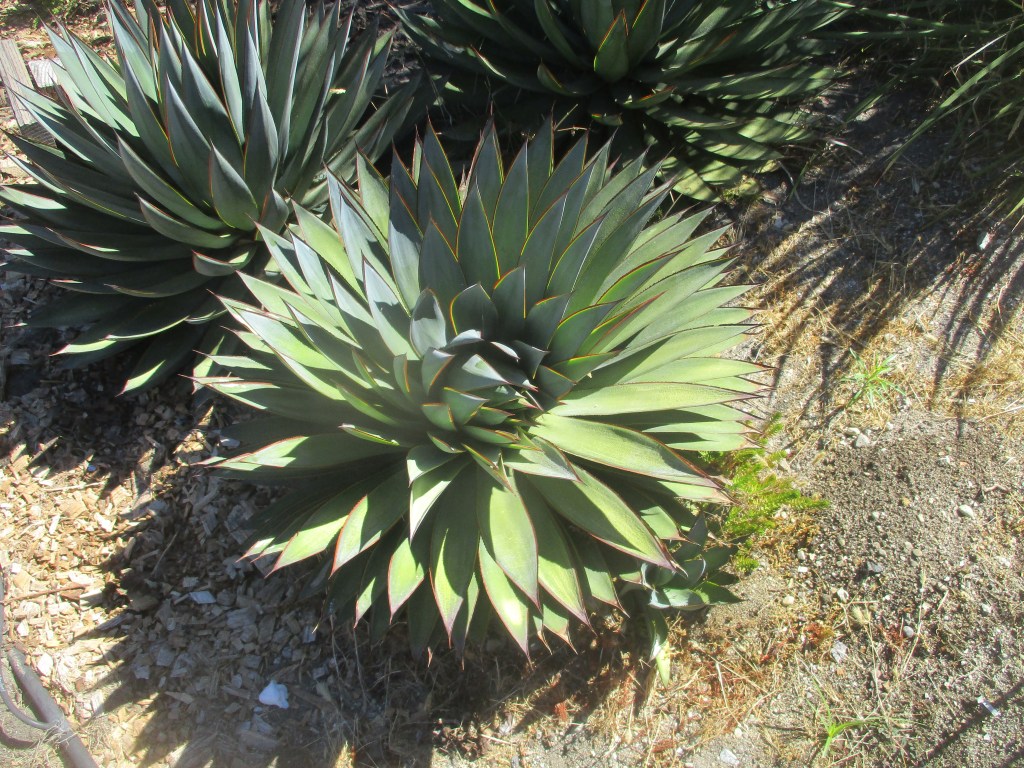
Agave ovatifolia, whale tongue agave, was purchased by the other horticulturist for a specific situation. It was a striking specimen that was worth what was spent on it. However, it began to generate pups almost immediately after installation, and then suddenly and unexpectedly bolted and bloomed. It was disappointing for such an expensive specimen of a monocarpic species. We removed it after bloom, with the intention of replacing it with one of its several maturing pups. Of course, I could not simply dispose of its carcass. I canned it like a dormant perennial, just in case it did something. Well, now it is doing something! It is bolting and blooming from the grave! I expect more pups soon. We really should get all the Agave spayed!

Agave really should be spayed!

Monocarpic?

Agaves refuse to die.

Monocarpic species bloom only once. They die afterward. Many annuals are monocarpic by default. After bloom and production of seed, they have served their purpose of perpetuating the next generation. Some may bloom more than once within their respective season, but realistically, do not expect to live for long after doing so.

Agaves are monocarpic. Unlike annuals, some grow for many years before maturing enough to bloom. In fact, the century plant is known as such because, in the wild, it supposedly takes a century to mature enough to bloom and finally die. Of course, they do not take nearly so long to bloom within cultivation.

That could be either an advantage or a disadvantage. Their bloom is awesome, but their death is ugly. Removal of their deteriorating but wickedly thorny foliage is a horrid chore. The sap from their foliage causes a rash that can be comparable to the allergic reaction from poison oak. What is worse is that they are not really monocarpic!

Again, that can be either an advantage or a disadvantage. They provide more than enough pups to replace their deteriorating carcass. However, these prolific pups must be divided from each other and the deteriorating carcass of their parent. They are too numerous to accommodate within the same garden or share with neighbors who likely do not want them. Furthermore, they continue to generate pups long after the parent and first litter of pups is gone. Without intervention, they seem to never die completely. Even with diligent intervention, they can linger for many years.

This particular agave should have remained vegetative for many years, but bloomed after only two or three years. The first litter of pups bloomed immediately afterward, as this picture demonstrates. Ultimately, we would like only a single pup to replace the parent.

Succulents Are A Diverse Group

If Agave are succulents, are closely related Yucca also succulents?

There really is no way to neatly classify succulents. Many are spiny cacti with fleshy stems without recognizable foliage. Others are euphorbs (related to poinsettias) that may resemble cacti, or may instead have fragile leaves on fleshy stems. Aloes and agaves have bold rosettes of fleshy leaves that obscure their wide basal stems.

The most familiar succulents are small docile perennials, like the many varieties of jade plants and iceplants. Some are flowering perennials like begonias. A few are even grown as annuals, like busy Lizzie (impatiens).

So what do succulents have in common? Well, that is a good question that is open to interpretation. Most would agree that succulents have some sort of fleshy succulent parts for storing water through dry weather. These succulent parts are most often leaves or stems. Yet, yuccas, dracaenas and ponytail palm that are no more succulent than palms, are considered by many to be succulents like related aloes and agaves.

Many succulents are remarkably easy to propagate vegetatively (without seed). Most aloes, some agaves and many yuccas produce pups, which are basal shoots that can be separated as new plants. Agaves that do not produce pups while young will likely produce many pups after they bloom and begin to deteriorate. (Individual rosettes die after blooming.)

Despite the nasty spines that make them difficult to handle, cactus that produce multiple trunks can likewise be divided. Cactus can alternatively be propagated as large cuttings; but because they are so fleshy, should be left out for their cut ends to dry and ‘cauterize’ somewhat before rooting. Many euphorbs behave much like cacti, but are even more hazardous to handle because of their very caustic sap.

The majority of small succulents, like the many jade plants and iceplants, are notoriously easy to propagate by cuttings.

Thread Agave

Agave generally excel in chaparral climates.

Many species of Agave and Yucca should probably be more popular here than they are. Several are endemic to desert or chaparral climates. Once established locally, they may survive without irrigation. Occasional watering through summer only improves their foliar color and vigor. Except for gophers that might attack from below, not much offends them.

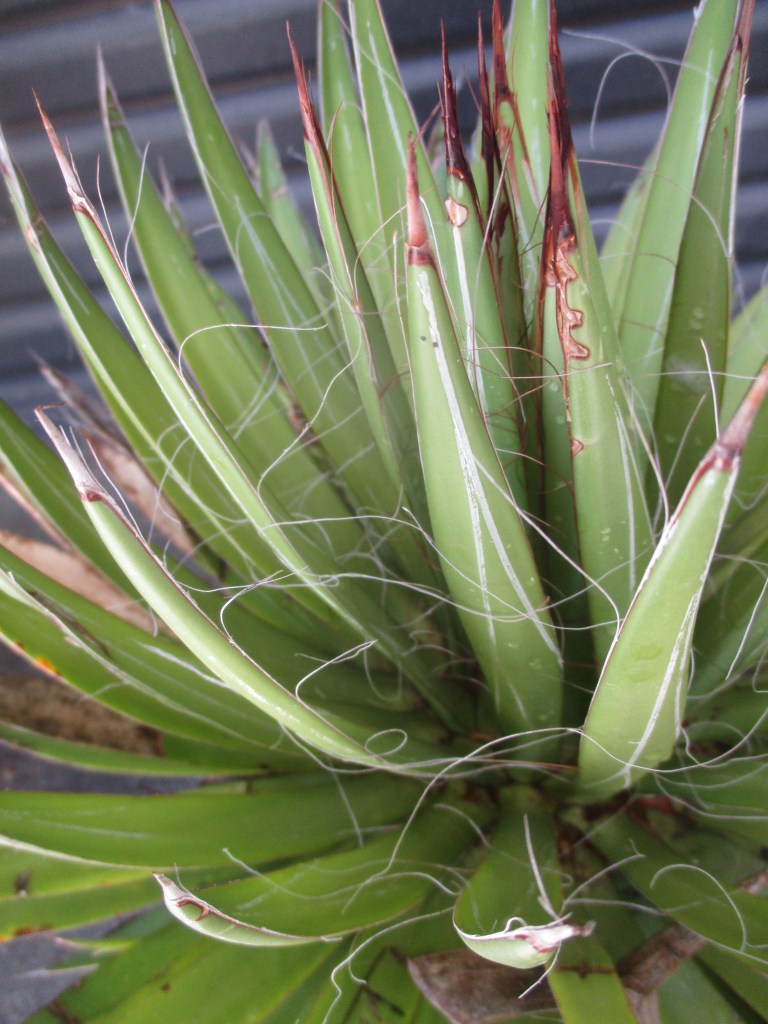
The primary deterrent to their popularity is their dangerous foliar spines. Many species of Agave and Yucca grow too large to not become obtrusive within compact home gardens. Consequently, their striking but hazardous foliage can be difficult to avoid. Fortunately, a few species such as thread agave, Agave filifera, remain proportionate to home gardens.

Thread agave develops rounded foliar rosettes that are less than three feet wide and two feet tall. Evergreen leaves retain silvery impressions of adjacent leaves. Although growth is generally slow, vigorous floral stalks may grow rapidly to ten feet tall during summer, to bloom during autumn. Pups begin to replace original rosettes prior to monocarpic bloom.

Six on Saturday: Agave Surprise

Several species of Agave inhabit the landscapes here. Only a few are identified. Some of those that are unidentified could likely be identified if their identities were important to us. For some, identification would be as simple as researching our records. I know what Agave attenuata is only because there is nothing else like it. #3 is likely a variegated and dwarf cultivar of Agave americana. #6 is the surprise of these Six. It is a familiar species that was formerly identified as another genus. Although its relation to the Family should be obvious in regard to physiology, it is not visually similar to others of the Agave genus. I still know it by its older and perhaps less accurate designation. It works for me.

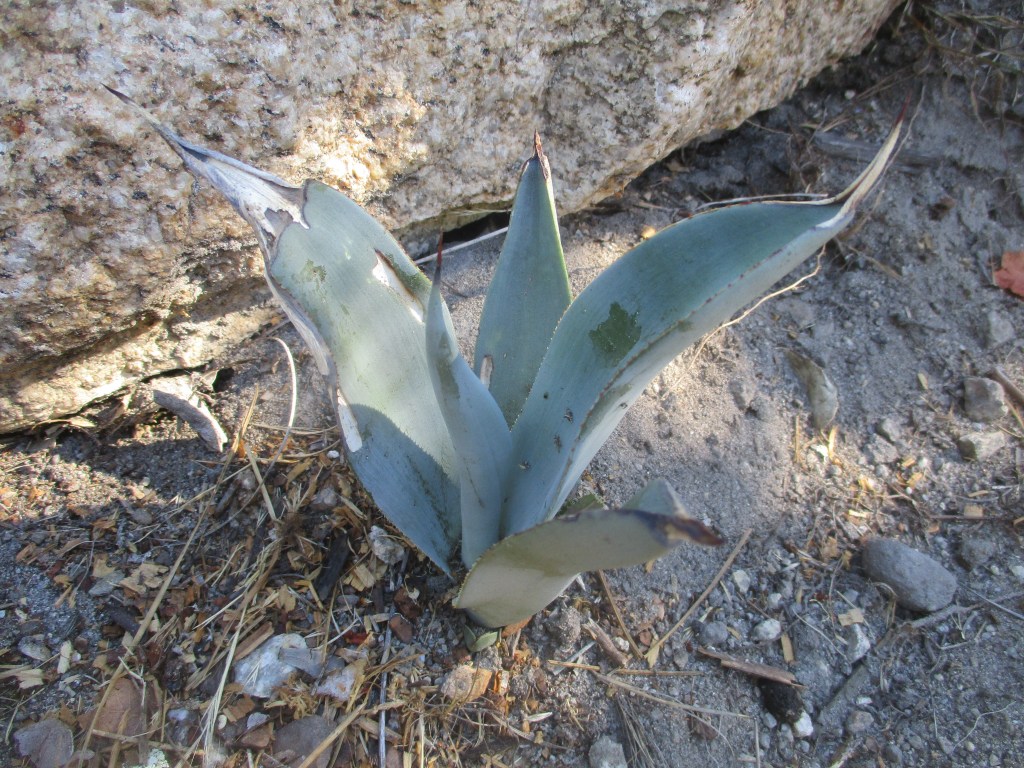
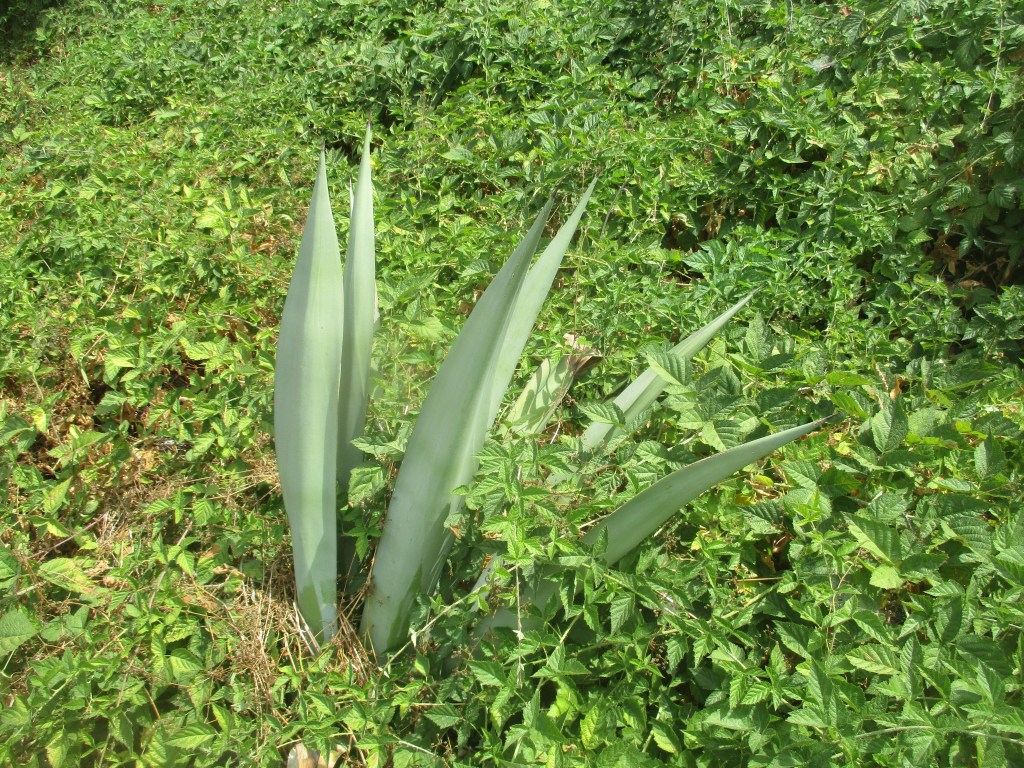
1. Pups of an unidentified agave that was removed last year are a concern because others just like this continue to develop where the agave was relocated from a few years earlier!

2. The parent agave got removed and dumped next to a greenwaste pile after gophers ate its base, but somehow survived. It fell over only recently. Maybe other gophers found it.

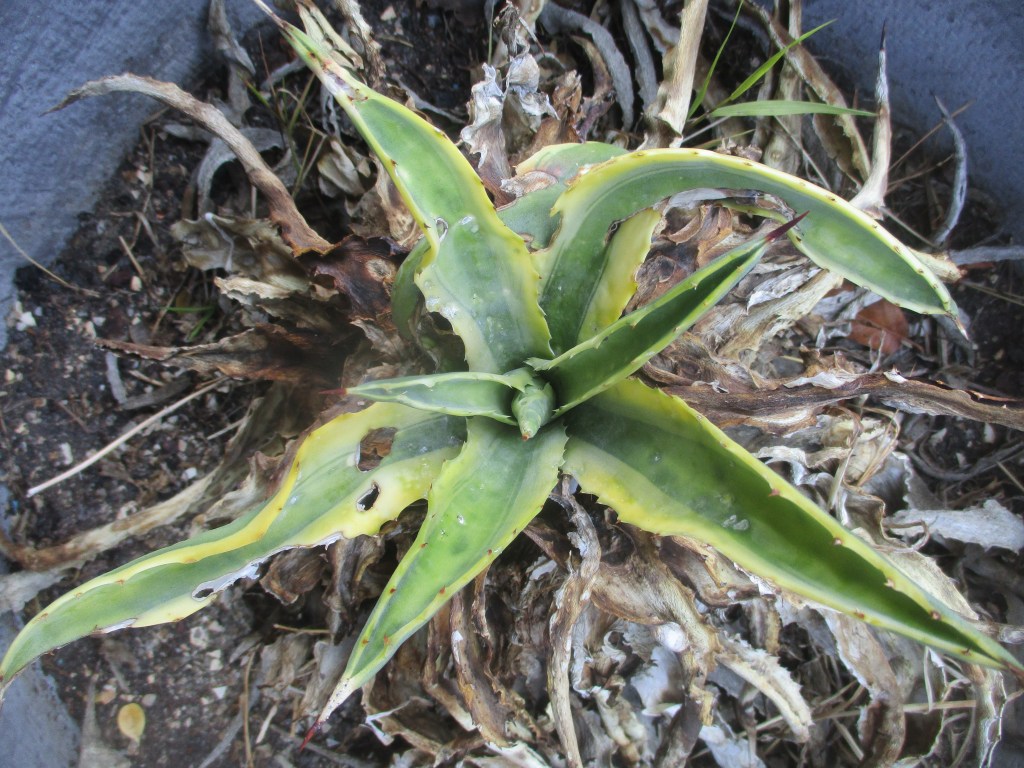
3. Gophers also ate the base of this other unidentified agave, which, like the other agave, seems to have survived somehow. Fortunately, it did not leave undesirable pups behind.

4. Agave attenuata arrived as a big cutting with a long stem, and by odd circumstances. The severed stem generated a big secondary rosette, which is now generating four pups.

5. The pup to the lower right of this unidentified agave indicates that its primary rosette may be about bolt and bloom. Although most agaves are monocarpic, their pups survive.

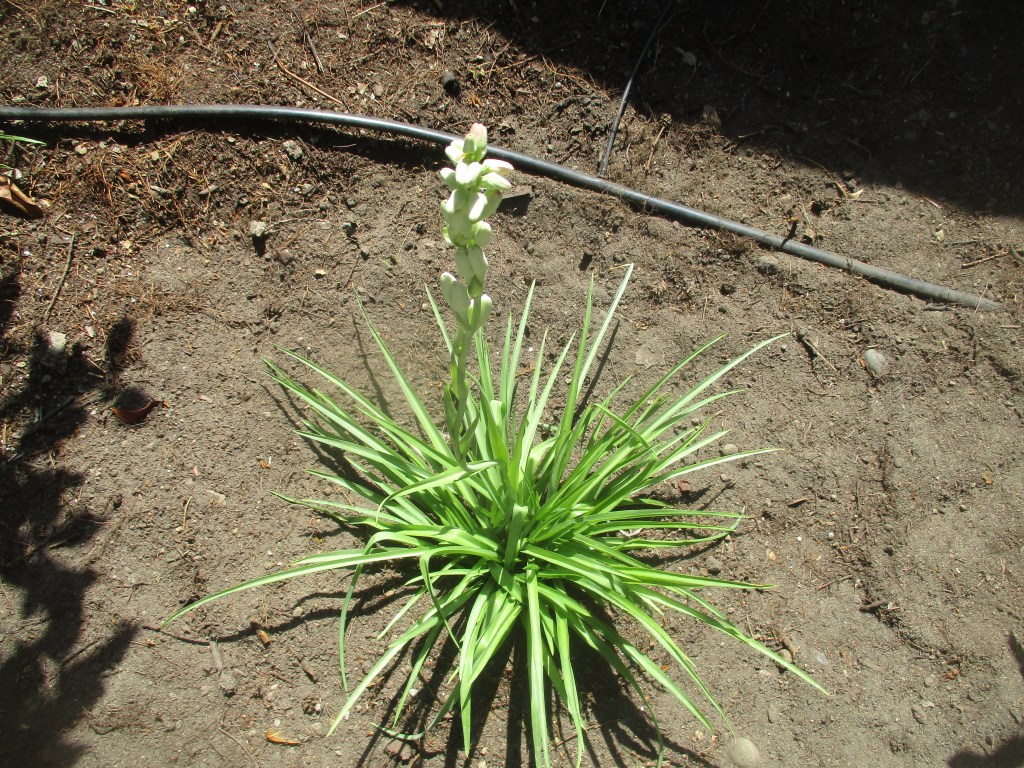
6. Surprise! Fresh from 1985, tuberose, which was formerly Polianthes tuberosa, is now Agave amica. We just installed three, with two more still canned. I hope for many pups.

This is the link for Six on Saturday, for anyone else who would like to participate: https://thepropagatorblog.wordpress.com/2017/09/18/six-on-saturday-a-participant-guide/

Six on Saturday: Bummer!

Things do not always go according to plans. Seasons and weather change faster than we can keep up. Many plants do what they want to do rather than what we want them to do. There is always compromise. It is a bummer that a unique agave is bolting now, and will eventually die, but it provided plenty of pups to replace itself with. It is a bummer that I must remove a productive elderberry bush before the berries ripen, but there are plenty more elsewhere. It is a bummer that two exemplary red maples may have died, but there are three more. The excess of recycled cannas is not a bummer though, but merely extra work.

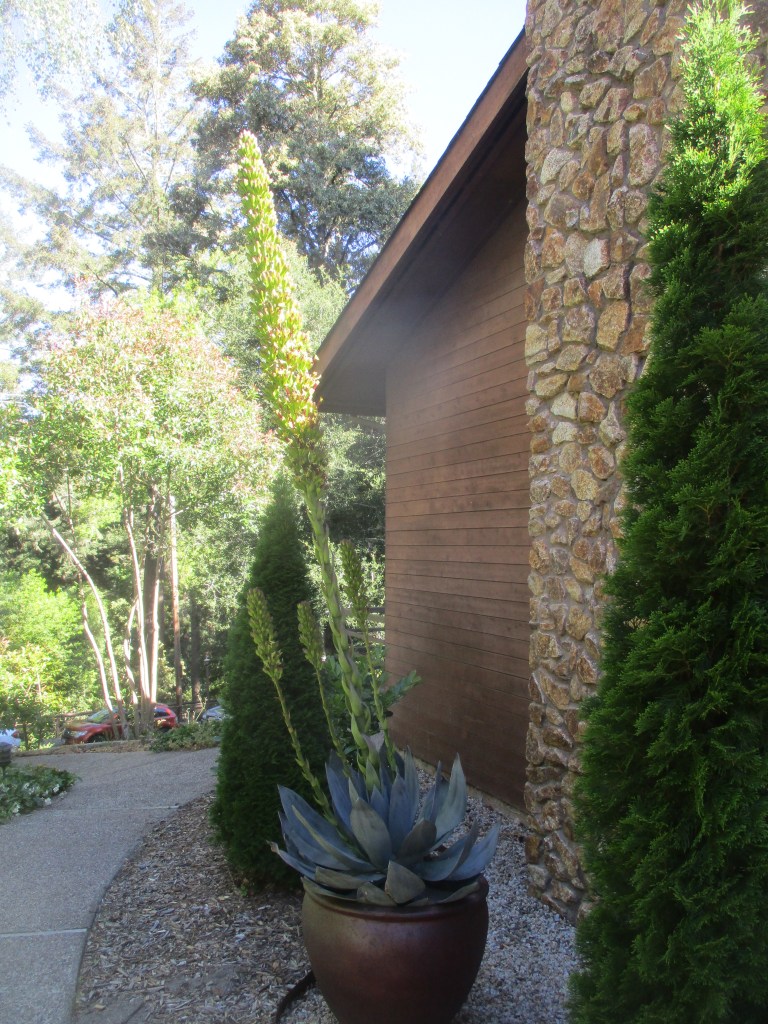
1. Whale’s tongue agave was a splurge. The horticulturist who got it had been wanting to grow it for a while. However, two years later, it had a litter of pups and is now blooming!

2. The flowers are not even very pretty. At least the floral stalks are weirdly striking, and bloom slowly. Although monocarpic, it could take months for the original rosette to die.

3. Six big potted maples were installed temporarily last year. Three are red maple. Three are Norway maple. The red maples foliated before we made arrangements for irrigation.

4. Elderberries are developing nicely. These are some of the best. However, they are on a big healthy elderberry bush that must be cut back from a roadway before they can ripen.

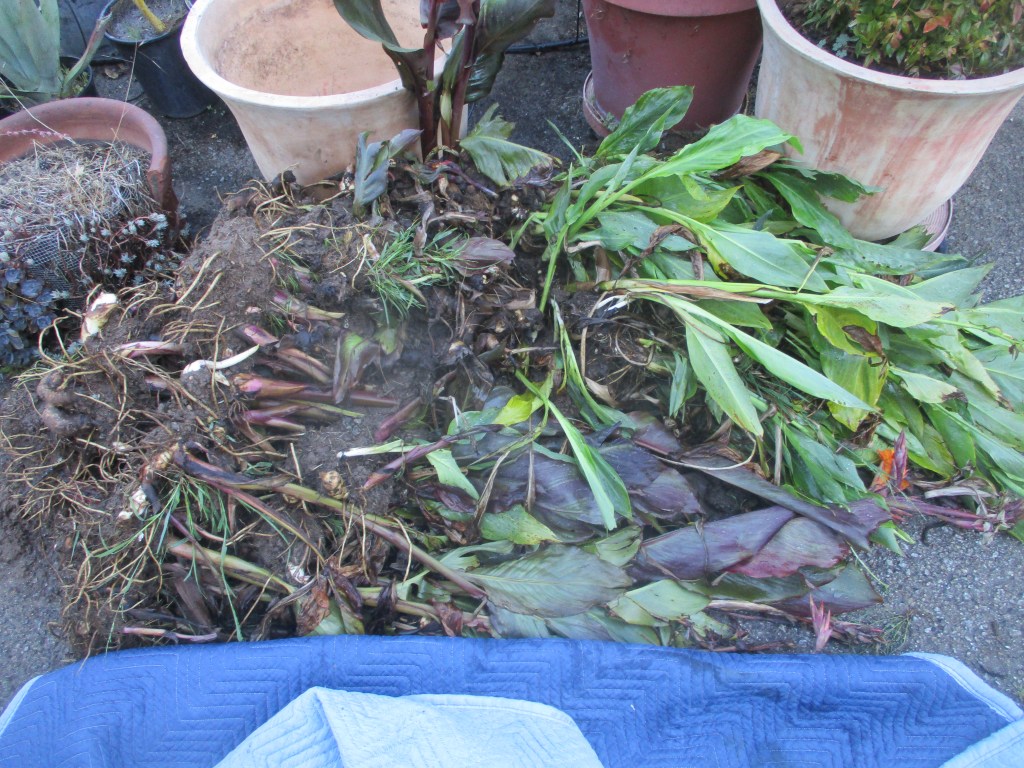
5. Cannas are fun! I was pleased with an opportunity to recycle a bunch from a neighbor. However, this pile is HUGE! Well, I know what I will be doing this Saturday. Goodness!

6. These cannas bloom very nicely. Most are bright orange. Most of the rest are yellow. A few are red. Unfortunately, they are blooming in the big pile, unseen and unappreciated.

This is the link for Six on Saturday, for anyone else who would like to participate: https://thepropagatorblog.wordpress.com/2017/09/18/six-on-saturday-a-participant-guide/