What was probably the last of the warm weather for the year really got the zinnias going again; but only for their leaves to become dusted with powdery mildew in the subsequent long cool nights. No matter how good the zinnia flowers still look, it is time for cool season annuals.
In mixed plantings, cool season annuals can be ‘plugged’ (as seedlings or small plants) or sown (as seed) among the warm season annuals so that they are ready to perform as the warm season annuals succumb to cooler weather. Of course in more uniform beds, warm season annuals will eventually need to be removed to make space for their cool season replacements.
Pansies and related violas are likely the two most popular cool season annuals. They fill in nicely as bedding plants or are nice components to mixed plantings. They perform best early in the season while the weather is still a bit warm, but should last until the weather gets too warm the following spring.
Primroses and Iceland poppies can take a bit more effort since they need ‘deadheading’ (removal of deteriorating flowers) to continue blooming. Primrose can also be hazardous to anyone who happens to be allergic to them, causing skin irritation comparable to that of poison oak! Some primroses are very brightly colored, while others are more subdued and elegant shades of pink and white. Iceland poppies are mostly pale shades of orange, yellow, pink and white on wiry stems.
Chrysanthemums, which are actually perennials, are the most variable of the cool season annuals, with a wild range of colors and flower forms. The varieties most popularly grown as annuals stay low and compact. Taller types make good cut flowers, but are not so practical for bedding. The related African daisies, which are incidentally similar to the ground cover of the same name, lack the variety of flower color and form, but are easier to grow; particularly as a perennial long after other cool season annuals are gone.
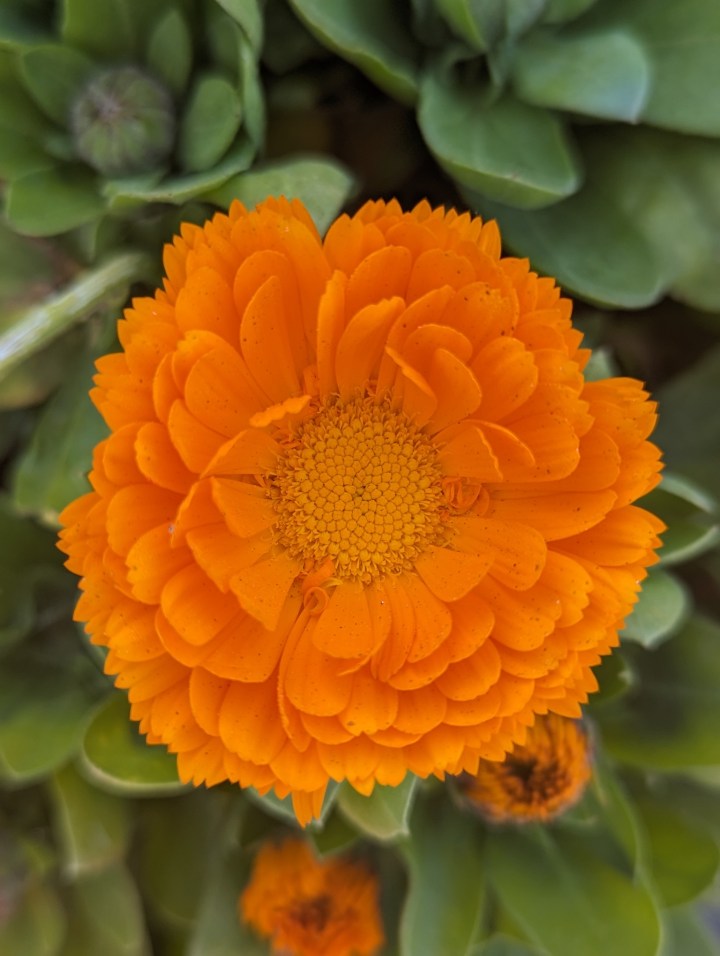
Calendulas are another simpler chrysanthemum relative that are more proportionate to typical annuals, since they get only a few inched deep. They would probably be more popular than they are if they provided more colors than their marigold like orange and yellow. Unlike chrysanthemums and African daisies, calendulas really are annuals, so do not last long into warm weather.
Red, white, pink and rosy pink flowers among rich green foliage can be provided by sweet William (dianthus). They not only tolerate a bit more shade than some other cool season annuals, but are also likely to survive sporadically as perennials where protected from warm exposure through spring and summer.
Stock is the best cool season annual for fragrance. It smells like carnations, but much stronger. Short varieties are good bedding annuals, and even better for mixed plantings. Taller varieties are great cut flowers.
 Tony Tomeo