Cool Season Vegetables Begin Now

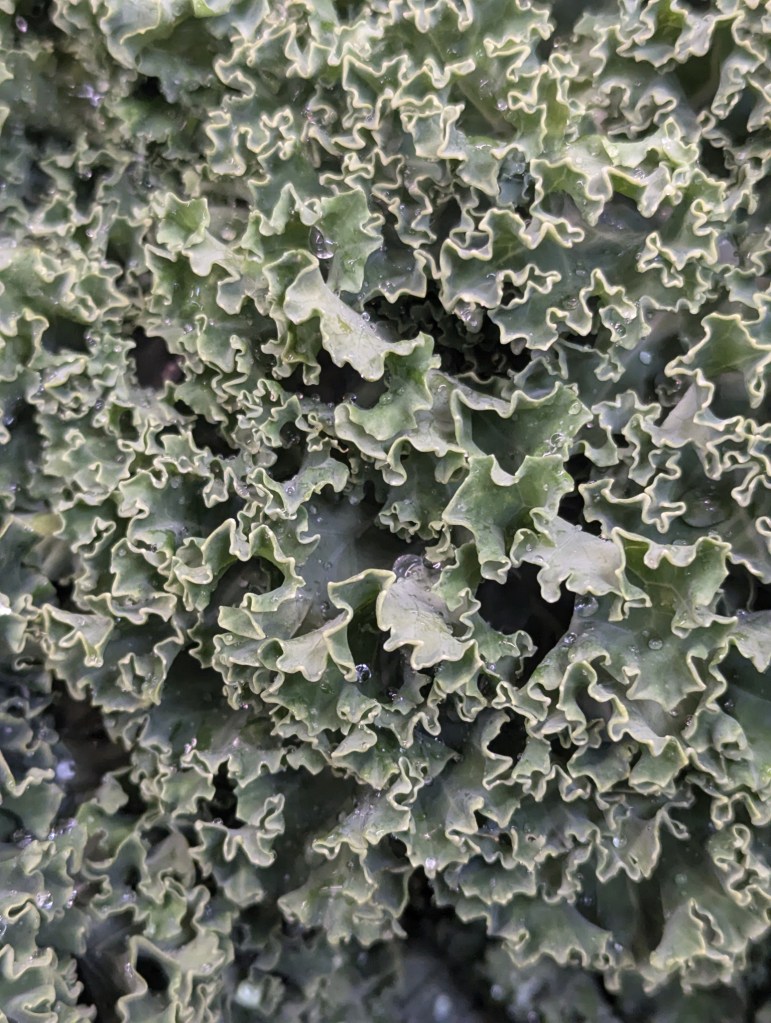
Kale is productive until spring warmth.

Warm season vegetables that started late last winter will be finishing their seasons soon. Cool season vegetables, or winter vegetables, should begin to replace them. This might sound familiar as the same scenario for warm and cool season annuals. After all, almost all vegetable plants are either annuals or biennials. Few perform for more than a season.

Just like annual bedding plants, different vegetable plants perform to different schedules. Some warm season vegetables begin to deteriorate as warm weather ends. Others may continue to produce until frost. Some cool season vegetables need an early start. Others can start late and grow through cool winter weather. Gardens need not transition quickly.

Besides, different phases of some types of vegetables begin and finish at different times. Although late phases of corn continue to grow, early phases are already done and gone. Although late phases of beet might begin months from now, early phases can begin now. Warm season vegetables, ideally, relinquish space as cool season vegetables require it.

Cool season vegetables grow slower than warm season vegetables. Also, more of them are true vegetables rather than fruit that contain seed. Many are distended roots, such as beet and carrot. Many are distended foliage, such as cabbage and chard. A few, such as broccoli and cauliflower, are distended floral bloom. Peas are actually fruiting structures.

All root vegetables should grow directly from seed. They are vulnerable to disfigurement if transplanted. Besides, they typically grow in significant quantities that are not practical for transplant. These include beet, carrot, radish, turnip and parsnip. Cucumber and pea, although conducive to transplanting, also perform better from seed. So do lettuce greens.

Heading lettuce, though, is more like cabbage and larger cool season vegetables. Since only a few are necessary, transplanting them as seedlings is practical. Besides, they are conducive to transplanting. Cell pack seedlings for cool season vegetables are available from nurseries now. Seed is always available. It can go directly into a garden or into cells for transplanting later, as summer becomes autumn, then winter.

Cool Season Annuals Return Annually

Many warm season annuals perform late.

Warm season annuals that started late last winter should be finishing their season soon. It might seem as if they replaced their predecessors, cool season annuals, only recently. This is the nature of annual bedding plants. They perform only for their particular season. It is now about time for cool season annuals, or winter annuals, to begin another season.

There is no need to hurry, though. The several different cool season annuals operate on different schedules. Only the earliest begin as small plants now, and even they can wait. Some prefer to begin later during autumn. Cyclamen and ornamental kale can even wait until winter. Only annuals that start as seed really must do so while the weather is warm.

Besides, some warm season annuals still perform too nicely for immediate replacement. Ideally, they are only beginning to deteriorate as they relinquish their space. Sometimes, some varieties are already grungy before their replacement. This facilitates their removal without guilt. However, some warm season annuals might continue to perform until frost.

Furthermore, some annuals, both cool season and warm season, are actually perennial. They merely function as annuals because their replacement is easier than their salvage. Busy Lizzie, for example, can remain mostly dormant through winter below new pansies. As the pansies finish in spring, the older busy Lizzie can regenerate for another season.

Sweet William and various primrose are cool season annuals that are actually perennial. Both can bloom until next spring becomes too warm for them. Then, they become mostly dormant until the following autumn. Any that remained dormant through last summer can regenerate and bloom this autumn. Perhaps they take turns performing with busy Lizzie.

Pansy and viola are the most familiar and reliable of cool season annuals. Marigold and snapdragon are popular now, but only as autumn annuals. They may not perform well for winter. Wax begonias might perform almost throughout the year with grooming after frost. Stock is the most fragrant of the cool season annuals. A few short varieties are available.

Petunia

Petunias appreciate rich soil or media.

Most popular modern petunia are hybrids of two primary species, and a few others. They classify collectively and simply as Petunia X hybrida. Although popular as warm season annuals, some can be short term perennials. They are only uncommon as such because they get shabby through winter. Yet, with a bit of trimming, they can regenerate for spring.

Petunia are impressively diverse. Their floral color range lacks merely a few colors. Also, flowers can exhibit spots, speckles, stripes, blotches, haloes or variegation. Flowers can be quite small, or as broad as four inches. Some are mildly fragrant. Some are quite frilly with double bloom. Cascading types can sprawl three feet while most are more compact.

Petunia are perhaps the most popular warm season annual. They can bloom from spring until frost, though they can get scrawny after a month or so. Trimming of lanky stems can promote more compact growth. Deadheading might promote fuller bloom for some types. Petunia enjoy sunny exposure, regular watering and rich soil. They perform well in pots. Cascading varieties are splendid for hanging pots and high planters.

Pincushion Flower

Pincushion blooms in pastel blue, lavender pink or white.

The oddly protruding stamens of pincushion flower, Scabiosa columbaria, are ideal for bees collecting pollen. To us, they resemble pins stuck into the somewhat flat surface of the composite (daisy like) flowers. To bees, they are a flea market (or bee market) of pollen. Bees easily stroll the two inch wide flowers to peruse the merchandise on display. 

The pale lavender, blue, pink or white flowers on limber stems are good cut flowers. The grayish foliage is deeply lobed and nicely textured. Mature plants can be two feet tall and broad. Bloom begins by summer and continued until frost if fading flowers get plucked. Although perennial in mild climates, pincushion flower is more often grown as an annual.

Wildflowers On The Wild Side

Some wildflowers bloom in shady forests.

Warm season annuals are more varied than cool season annuals for one simple reason. Spring and early summer are the best time for bloom. Afterward, there is plenty of time for seed to develop, prior to cool winter weather. Obviously, most flowers want to exploit this schedule. This includes wildflowers, particularly in regional chaparral or desert climates.

Wildflowers are in more of a rush to bloom for early spring here because summer is arid. They could be more susceptible to premature desiccation later. They last longer and can bloom later in home gardens with irrigation. Actually though, not all wildflowers bloom for early spring. Some bloom for autumn or winter. A few bloom for summer, generally briefly.

There is no explicit definition for wildflowers. Western redbud and the various ceanothus are technically native wildflowers. Yet, they grow as large shrubbery or even small trees. Most popular wildflowers are annuals. A few are biennials or perennials. Some perennial sorts must mature for more than a year before they bloom well. Some are very persistent.

Technically, wildflowers should be locally native, and observable directly within the wild. Realistically, this expectation is unrealistic. Many of the most colorful, like perennial pea, are naturalized exotic species. Most wildflower seed mixes include random species from elsewhere. Some are regionally specific, but to other regions and very different climates.

California poppy and various lupine are the most popular and familiar native wildflowers. Douglas iris, yarrow and clarkia are about as practical for cultivated home gardens. Bush poppy and monkey flower more appropriate to rustic landscapes beyond home gardens. Many wildflowers need aggressive maintenance, such as cutting back after their season.

Seed of most annual and perennial wildflowers prefers to be in a garden by late autumn. It can then settle in through cool and rainy winter weather to grow and bloom about now. With watering after the winter rainy season, several might start now to bloom for summer. Some of the more sustainable species can disperse seed for another wildflower season.

Warm Season Vegetables Start Early

Tomatoes are the favorite summer vegetable.

Warm season annuals that are becoming more available in nurseries are a clue. As they become seasonal, so do warm season vegetables, or summer vegetables. After all, they also perform as annuals within their respective seasons. It may still be too cool for many to inhabit the garden directly. However, several that grow from seed can start about now.

Many more varieties of warm season vegetables are available from seed than as plants. Vegetable plants are available in cell packs or four inch pots. They occupy more nursery space than racks of many more varieties of seed. Many more varieties are available from online catalogs. Several true to type varieties can provide seed for subsequent seasons.

Furthermore, many warm season vegetables grow better from seed than from transplant. Corn, beans, squash and root vegetables grow very efficiently from seed. However, they do not recover so easily from transplanting. Root vegetables are particularly susceptible to deformity from such handling. Seed for many root vegetables is ready for sowing now.

Seed is also an advantage for warm season vegetables that grow from many plants. For example, one packet of beet seed can provide more than enough beets. One cell pack of beets costs about as much, but provides only six possibly wimpy beets. A solitary tomato plant might provide plenty of tomatoes, though. Besides, tomato plants transplant easily.

Seed for corn, beans and squash should wait for warmer weather for their direct sowing. So should seed for many warm season vegetables that do not really need direct sowing. However, those that do not require direct sowing can start now inside or in greenhouses. They are easy to transplant from flats, cell packs or small pots later with warmer weather.

The season for warm season vegetables is only now beginning. Ideally, such vegetables arrive as cool season vegetables relinquish their space. Successive phases can replace the last of cool season vegetables. Eventually, cool season vegetables will reclaim their garden space. Currently new warm season vegetables should be finished with it by then.

Stock

Stylishly colorful stock is alluringly fragrant.

Marigold is a warm season annual that gets more popular later than earlier in its season. It is prominent for autumn but does not last for long into winter. Stock, Matthiola incana, is a cool season annual for the opposite extreme of the year. It is popular for late winter and spring but may not perform well into summer warmth. It is unreliable as a perennial here.

Stock bloom can be white, or rich shades or pastels of purple, red, pink, yellow or cream. Most bloom is double, but some is single. Floral fragrance is alluringly rich and complex. It resembles that of carnation, but is notably stronger. The narrow leaves are oblong with pastel grayish green color. Removal of deteriorating bloom promotes subsequent bloom.

Garden varieties of stock are quite different from florist varieties. For home gardens, most popular stock is relatively compact, and blooms freely. Florist stock is taller, and tends to bloom abundantly but at about the same time. In home gardens, florist stock may require staking if it grows as tall as three feet. Home garden stock may grow no taller than a foot.

Warm Season Annuals Start Early

Nasturtium grows best directly from seed.

Cool season annuals that started late last summer should be finishing soon. A few might have potential to continue as perennials. However, about as many are done or decaying. Now, warm season annuals, or summer annuals, should eventually start to replace them. If it seems early, it typically does for such bedding plants before their respective seasons.

Some annuals can not decide if they are cool season annuals or warm season annuals. Stock is actually a cool season annual but becomes more popular now for spring bloom. Wax begonias might have survived through winter to resume growth for another season. Primrose is a cool season annual that rarely gets too warm locally to continue blooming.

These indecisive annuals can actually be an asset to home gardens. Stock, for example, can replace old pansies while it is still too early for petunias. It compensates for cool and warm season annuals with more definite seasons. Petunias will be ready before stock is done. Some garden enthusiasts replace seasonal annuals for each of their four seasons.

Warm season annuals, like all annuals, are contrary to sustainability. Although many can perform as perennials, few actually do. Those that truly are annuals complete their entire life cycles within one year. Their main purpose is to provide floral or perhaps foliar color. Texture and form are also assets. Annuals are popular because they serve this purpose.

The most popular of warm season annuals grow from cell packs. Those that start earliest are already available, including wax begonia and lobelia. Petunia, impatien and annuals that crave more warmth will become available later. Four inch potted annuals are bigger than those in cell packs, but more expensive. They are even more expensive in quantity.

Many more varieties of warm season annuals are available as seed. Countless more are available online than from nurseries. However, seed requires more effort. Most must start early. Although most grow well in flats or cells, some prefer direct sowing. Sunflower and nasturtium are very vulnerable to the distress of transplanting. Seed is the logical option. Many seed are less expensive than six cell pack seedlings.

Iceland Poppy

Native California poppies are nothing like this.

Because winters here are so mild, Iceland poppy, Papaver nudicaule, gets planted out in the garden in autumn to bloom through winter and into early spring. Where winters are cold, bloom must wait until after winter, whether plants are put out in autumn or sown from seed as winter ends. Iceland poppy prefers good drainage because it is out in the garden during the coldest and rainiest time of year, but is otherwise not too demanding. Picking the flowers and removal of deteriorating flowers (deadheading) promote continual bloom. 

Circular flowers up to three inches wide in shades of orange, yellow, pink, white and nearly red hover up to a foot high on wiry and hairy stems. Prominent fuzzy stamens are bright yellow at the center of each flower. Some varieties have brighter colors and taller stems. The hairy and deeply lobed leaves form basal rosettes about five inches wide.

Six on Saturday: Saturday of Flowers III

Is exclusive bloom becoming redundant? Well, one of these is actually foliar rather than floral, although it resembles real floral bloom enough to qualify for the title above. Most of these six are annuals.

1. Cyclamen persicum, Persian cyclamen is now a Ghost of Christmas Past that will stay as long as it performs. If it does not mold by the end of the rainy season, it will hibernate by the warmly dry season. It is sadly exploited as an expensively cheap annual perennial.

2. Lobularia maritima, alyssum remains from last summer as a genuinely cheap annual that wants to be a perennial. Although it has potential to perform as a perennial, salvage after winter is less practical than replacement, especially since alyssum is not expensive.

3. Rosmarinus officinalis ‘Prostratus’ creeping rosemary is neither annual nor perennial like the others. It is instead a very prostrate shrub that sprawls as a ground cover. Bloom seems to be continuous, although not as impressive as bloom of annuals and perennials.

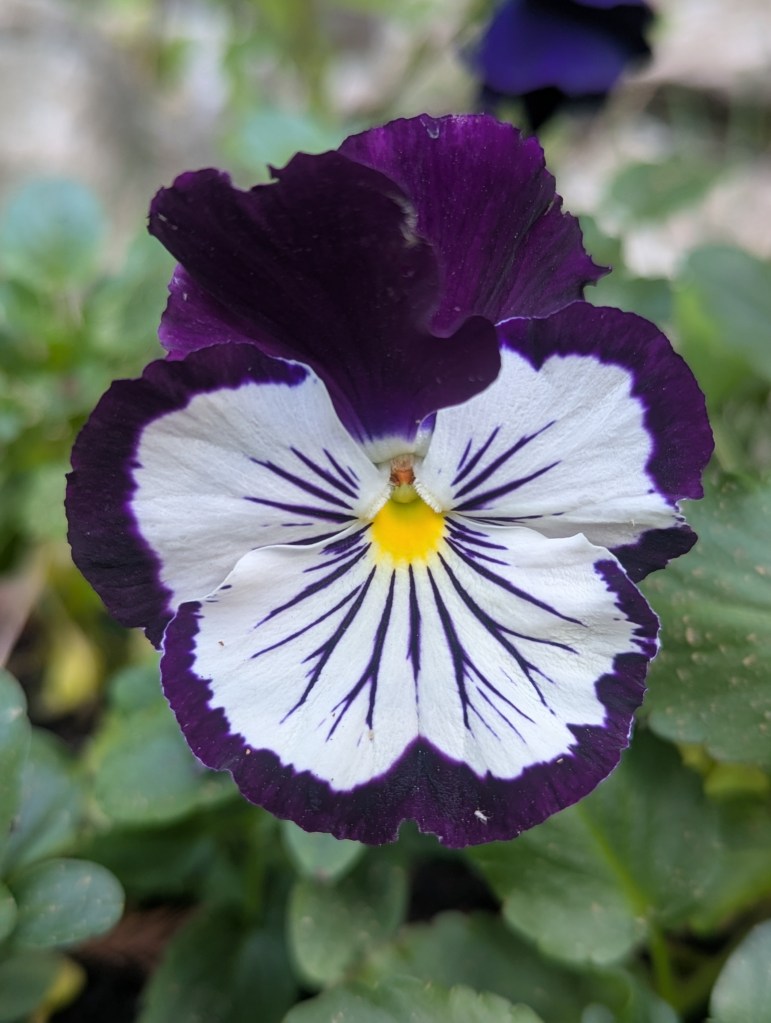
4. Viola X wittrockiana, pansy is probably the most popular cool season annual here. It has potential to be perennial, but like alyssum, it is easier to replace when it is in season than salvage after it was not in season. It gets thrashed through the warmth of summer.

5. Osteospermum ecklonis, African daisy tries to bloom as continuously as rosemary. Its flowers do not last for long while the weather is cool and damp, though, and might mold before they unfurl. Several cultivars with distinct floral colors bloom in the same garden.

6. Brassica oleracea var. acephala, ornamental cabbage is the only one of these six that is foliar rather than floral. Actually, it deteriorates as it eventually blooms with warming summer weather. Yet, it is the biggest and boldest of these six even without floral bloom.

This is the link for Six on Saturday, for anyone else who would like to participate: https://thepropagatorblog.wordpress.com/2017/09/18/six-on-saturday-a-participant-guide/