 You can say what you like about nasturtiums. My landscape designer colleague, Brent Green certainly did when he named them ‘dago pansies’. They are still one of my favorite flowers, and just might be my favorite, even though none are convincingly white. They were my first. I discovered them when I was very young. They were growing near an old English walnut tree in my great grandfather’s garden. He noticed that I liked them, so found some seeds underneath to send home with me.
I did not know what to do with seeds, so I poked holes into the ground and dropped the seeds into the holes just like my great grandfather showed me to do. A few days later, small round leaves appeared where I had put the seeds. The leaves expanded and looked just like those of the nasturtiums in my great grandfather’s garden. Yellow, orange and even a few red flowers were blooming within a month. I was so impressed when the flowers first appeared, but was then briefly saddened when the first flowers to bloom faded.
I say that I was ‘briefly’ saddened because of what happened next. Where the flowers had been, I discovered what appeared to be the same sort of seeds that my great grandfather had given me! I still did not understand how these things worked; but I took the seeds and stuck them into the ground in other areas . . . anywhere I thought nasturtiums would be nice. They grew, bloomed and provided more seeds, which I took and planted elsewhere . . . and everywhere! To this day, my pa considers nasturtiums to be invasive weeds because of how they overwhelmed the garden that he thought was his.
In my kindergarten classroom, we had ‘color boards’ on a wall. Red, yellow and blue were the tree primary colors. Orange, green and purple were the secondary colors. There were also boards for pink, brown, black, white and gray. We could bring small disposable artifacts from home for our teacher to tape to the various boards. The artifacts were mostly bits of fabric, colored paper, pictures from magazines, Legos, buttons, or really anything we could find that could be taped to a wall. Of course, I had to bring yellow, orange and red nasturtium flowers, and a green nasturtium leaf. Our teacher probably did not want to tape them to the wall, but did anyway. They turned brown, but stayed there. I bragged about them for the rest of the school year.
I still grow descendents of those old nasturtiums. I also try new varieties just because I enjoy them so much. I still like the classic ‘Jewels mix’ because they have every color. They are smaller than wild nasturtiums at first, but are more prolific. After a few years, they revert to the common yellow and orange. Renee’s Garden Seeds at https://www.reneesgarden.com/ has some very interesting varieties, including a few old classics. The climbing types do not bloom as much, but are fun anyway. I probably have not tried them all yet, but I would if I could. I have history with dago pansies.
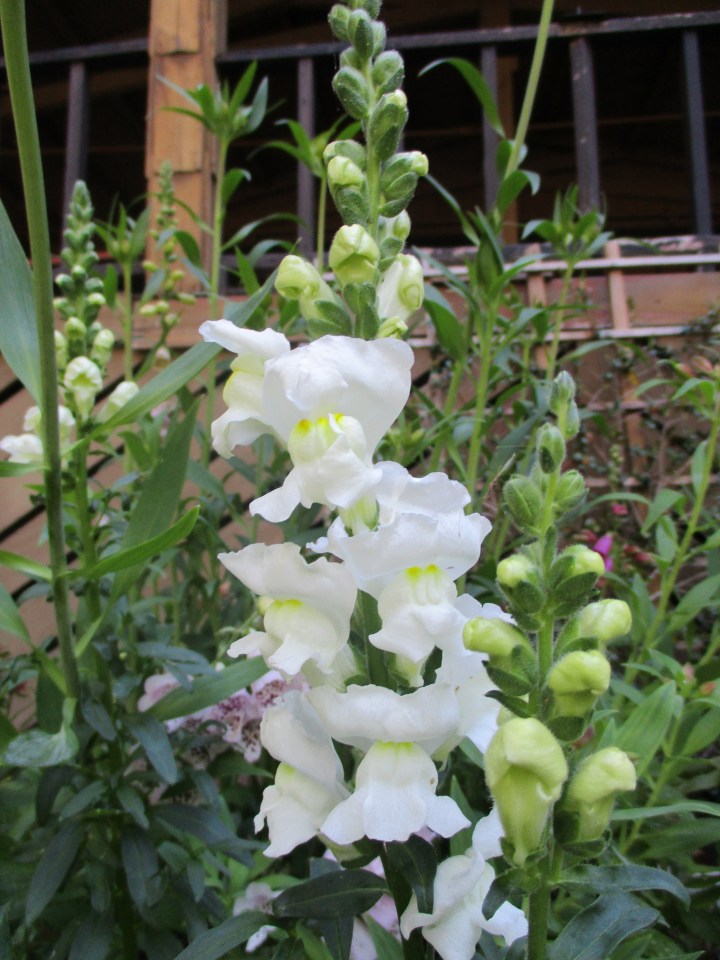 They are short term annuals in spring or autumn. Where winters are cold, they may last from spring through autumn. Where summers are hot, they may last from autumn through spring. So what are snapdragon, Antirrhinum majus, here? They can be either or both, depending on where and when they get planted. For most of us, they are a cool season annuals that finish before summer.
 Once it gets into a lawn, English daisy, Bellis perennis, can be very difficult to get rid of without leaving bald spots. The thin but tough rhizomes creep along the ground, producing rounded leaves that get no longer than two inches. Mowers barely scratch the surface. English daisy seems to prefer partly shaded areas to drier sunny spots. Although invasive, it can be pretty in informal lawns.
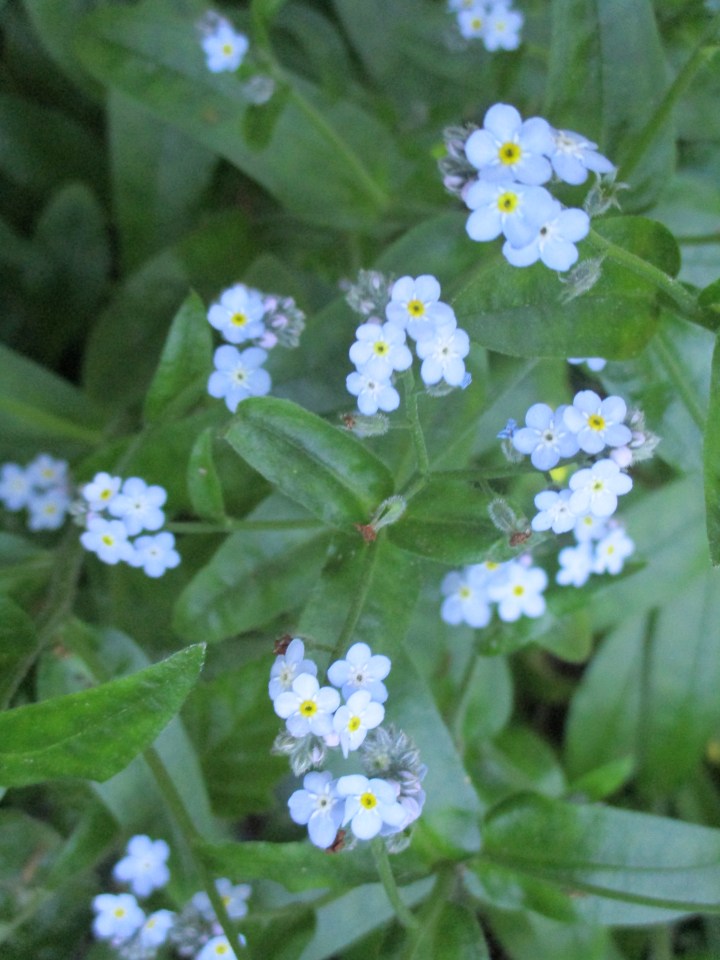 It is not easy to forget annual forget-me-not, Myosotis sylvatica. Even if it dies back early in the heat of summer, it will probably throw plenty of seed to regenerate through next winter, and bloom again by next spring. It can easily naturalize in damp or riparian areas, and might be considered to be a weed; but like nasturtium and foxglove, it is a polite weed that is not aggressively invasive.
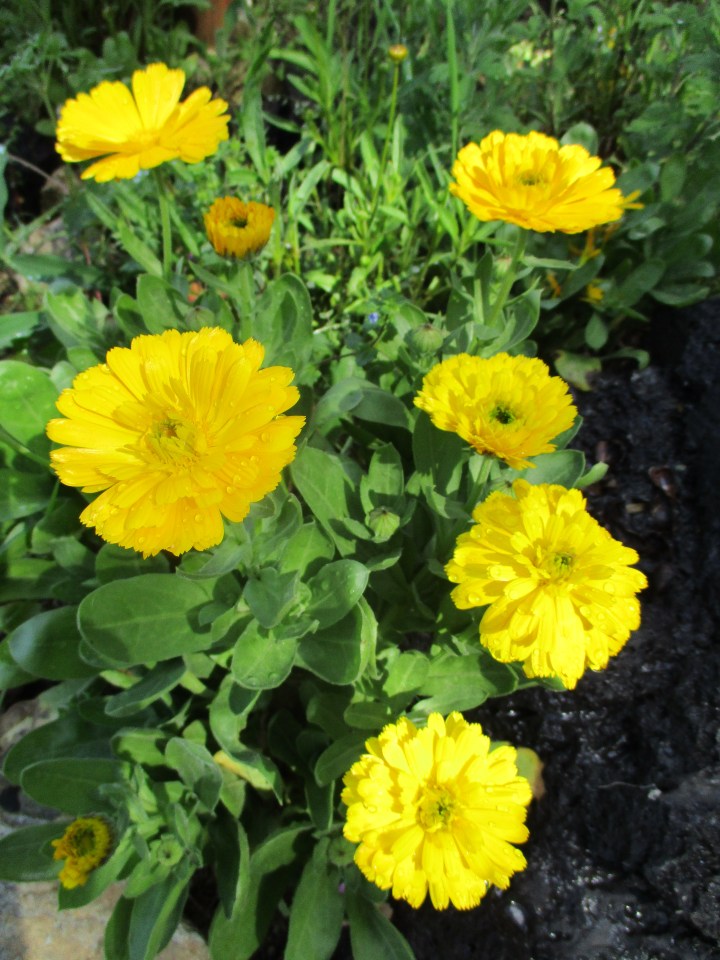 Just before the weather gets warm enough for real marigolds, and after the weather starts to get too cool and rainy for them, pot marigold, Calendula officinalis, is at its best. It can bloom at any time of year, depending on when it gets planted, but prefers cool and humid spring and autumn weather. It is not so keen on frost in winter, or the arid warmth of summer that real marigolds enjoy.
 The Latin name is easy to confuse with the sacred flowers of an aquatic perennial from tropical regions of Asia, or a funny looking British sport coupe. Lotus berthelotii is a diminutive terrestrial perennial known as parrot’s beak. It gets only about a foot high, and spreads to only two or three feet wide. It cascades nicely from hanging pots, and is actually rarely planted out in the garden.
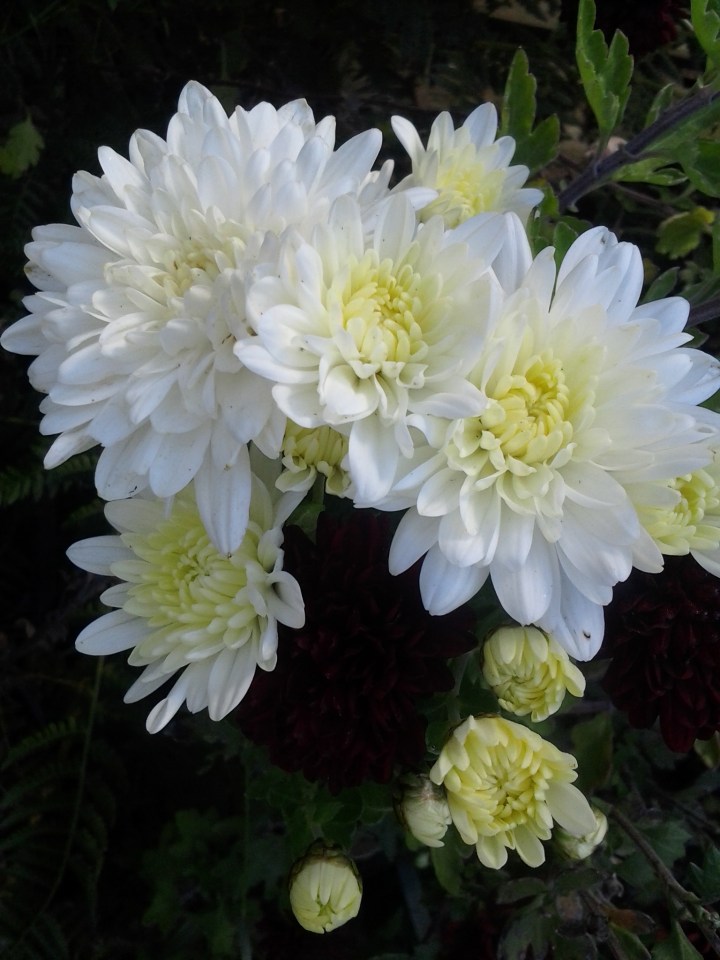 Just like warm season vegetable plants in the vegetable garden, flowering warm season annuals get replaced this time of year. Although the weather is still warm, cool season annuals should be planted now so they can disperse roots before the weather gets too much cooler. Except for a few short term annuals and perennials, most should perform until the weather gets warm next spring.
 Many people have a favorite color. I learned how seriously some people can take their preference for a particular color when I was in high school, and taking care of the yardwork for a few homes in the neighborhood. There were three tract homes next to each other. One was grayish blue, with a silvery blue Sedan deVille in the garage, and a garden of blue flowers. The middle house next door was soft amber yellow, with a buttery yellow Oldsmobile 98 in the garage, and a garden of exclusively yellow flowers. The house next door to that was iron oxide red, with an exquisite rich red Electra in the garage, and a garden of, you guessed it, red flowers.
 Tony Tomeo