New Guinea Impatiens

New Guinea impatiens can be perennial.

Busy Lizzie had been unavailable for years because of a downy mildew epidemic. It has only recently been regaining availability and popularity. During its absence, New Guinea impatiens, Impatiens hawkeri, became more popular. Although a closely related species of the same genus, the two are actually very different. Resistance to mildew is important.

Besides that, New Guinea impatien is about as foliar as it is floral. Its bolder and slightly bigger flowers are notably less abundant than those of busy LIzzie. Also, its floral color range is limited to white, pink, red, lavender, magenta or orange. Its rich green or bronze foliage below compensates though. Many cultivars are variegated with yellow or salmon.

New Guinea impatiens are unfortunately a bit more expensive than most other annuals. The smallest that are available are in four-inch pots. They are unavailable in smaller and less expensive cell packs. They can grow about a foot wide and slightly taller if crowded. During winter, they deteriorate; but they can be tender perennials with shelter from frost.

Annuals Change With The Seasons

Several perennials are useful as annuals.

Winter continues. It will not end until March 19. Wintry weather is unconcerned with such dates though. It could end at any time, or continue a bit later. Vegetation is more aware of this than we are. It wants to be ready regardless. Cool season annuals linger as long as they can. As they no longer can, warm season annuals should be ready to replace them.

Warm season annuals, or summer annuals, include both bedding plants and vegetables. They perform seasonally as cool season annuals do, but through warm seasons instead. They perform for only one annual cycle, although several have potential to be perennial. Removal of perennials is necessary only because subsequent annuals need the space.

All sorts of annuals are available in cell packs from nurseries. They become available as they become seasonable. Those that bloom for late winter and early spring are available now. More of those that bloom best during warm weather should become available soon. It is still a bit too cool and early for most of them. It is not too early for their seed, however.

Although plugging cell pack seedlings into a garden is easier, some prefer to sow seed. Those who do so should begin about now so that the new seedlings are ready by spring. Many seedlings require the warmth and shelter of a greenhouse to grow. As they mature, and the weather warms, they relocate into their garden. Other seed prefer direct sowing.

Many more varieties of annuals are available as seed than as seedlings from nurseries. Even if only a few varieties of seed are in nurseries, countless more are available online. Also, some flowers from previous seasons provide viable seed for subsequent seasons. There are a few reasons to justify the extra effort of growing annual seedlings from seed.

Sunflower and nasturtium are among the warm season annuals that prefer direct sowing. Their roots dislike confinement within cell packs. They recover slowly from transplanting. Cosmos and alyssum do not mind transplanting, but also grow easily from direct sowing. Seed for many varieties can start now because the weather will be warmer as they grow. Petunia, impatien, zinnia and lobelia are easier from cell packs later.

Chrysanthemum paludosum

Chrysanthemum paludosum goes into the garden early here.

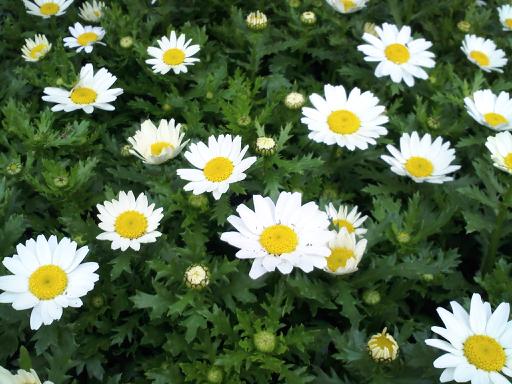
            In cooler climates, where winters are too harsh but summers are just right, Chrysanthemum paludosum is a warm season annual. Locally though, it gets planted about now like pansies, stock and Iceland poppies.  Chrysanthemum paludosum does just fine through late winter, and does even better as the weather gets warmer in spring. It can be replaced with real warm season annuals as weather eventually gets too warm and dry (lacking humidity) in summer. In cool and damp places, it can survive through summer. Chrysanthemum paludosum develops into six inch wide mounds of rich green and finely textured foliage adorned with small white daisy flowers with yellow centers.

Horridculture – Cyclamen (deferred from Wednesday)

Cyclamen are too expensive to be as disposable as they are.

Cyclamen persicum is a popular cool season annual. It is known simply as cyclamen here because it is the only common cyclamen that is available. It might be known as florists’ cyclamen where other species are available. Red and white are the most popular colors because cyclamen are associated with Christmas. Cyclamen can alternatively bloom with various tints and shades of pink, salmon pink and purplish pink. Some bloom with two-toned color or picotee margins. Cyclamen really is a delightful perennial.

Yes, perennial. Like many garden annuals, cyclamen is actually a perennial. It can survive in the garden for many years. It merely goes dormant through warm summer weather, and then resumes growth as weather cools during autumn.

Not only is it a perennial, but it is an expensive perennial. It is too expensive to be so disposable. So-called ‘landscapers’ do not mind. Disposable annuals are lucrative for them. Besides, even where cyclamen can perform as a perennial, it is not colorful throughout the year, and even in season, it is not as colorful as it is for its first season away from the nursery that it originally grew in.

Other species of Cyclamen that are available within other regions are becoming available here as well. Their bloom is sparser, with only light pink or blushed white flowers. They are grown as perennial wildflowers that bloom for autumn or winter, when not much else blooms. Although not as garish as common florists’ cyclamen, they are appreciated for their perennial performance.

The few florists’ cyclamen that we install at work bloom somewhat reliably only until spring. Because they were grown within ideal greenhouse conditions, they do not adapt immediately to landscape conditions. By spring, many are already beginning to rot. Those that survive their summer dormancy may become perennial.

Perennial Annual Dahlias

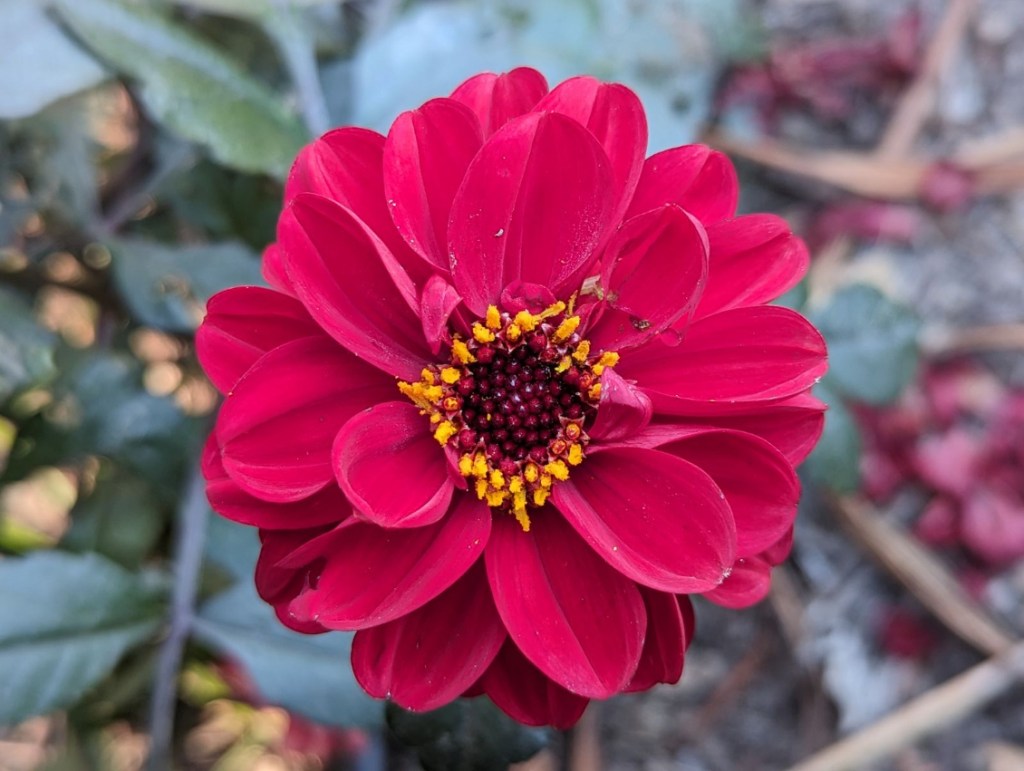
Annual dahlias are expected to be, as their designation implies, annual. In other words, they grow in the spring, perhaps from seed, bloom through summer, and then succumb to frost during their first winter. Some are likely grown from cuttings or division of nursery stock tubers, in order to be ready for spring earlier than seedlings. Regardless, they are not expected to survive for more than one year.

Most other dahlias are expected to be perennial. That is how their expense is justified. Most are sold while they are merely dormant tubers, and are generally more expensive than annual dahlias. Some, especially the trendy sorts, are significantly more expensive.

‘Cafe au Lait’ was a trendy dahlia a few years ago, and is still trendy. We procured one at work. It performed somewhat well for the first season, and was then dug and stored for winter. It did not perform well for the second season, and was then dug and stored again, but did not survive through winter.

Four smaller annual dahlias were procured in conjunction with the single ‘Cafe au Lait’ dahlia. They were relatively inexpensive, but delightfully colorful. They bloomed nicely around the larger ‘Cafe au Lait’ dahlia. They were also dug and stored for winter after their first season, although we knew that we should likely merely discard them. One had actually divided into two. These annual dahlias bloomed better than ‘Cafe au Lait’ for their second season, and then again, were dug and stored for winter. Unfortunately, three, including one that divided during the previous winter, did not grow for long after last spring. However, two of the original four annual dahlias continue to bloom, and will be dug and stored as they succumb to frost this winter. These annuals have been more perennial than the perennials.

Wax Begonia

Wax begonia is potentially a perennial.

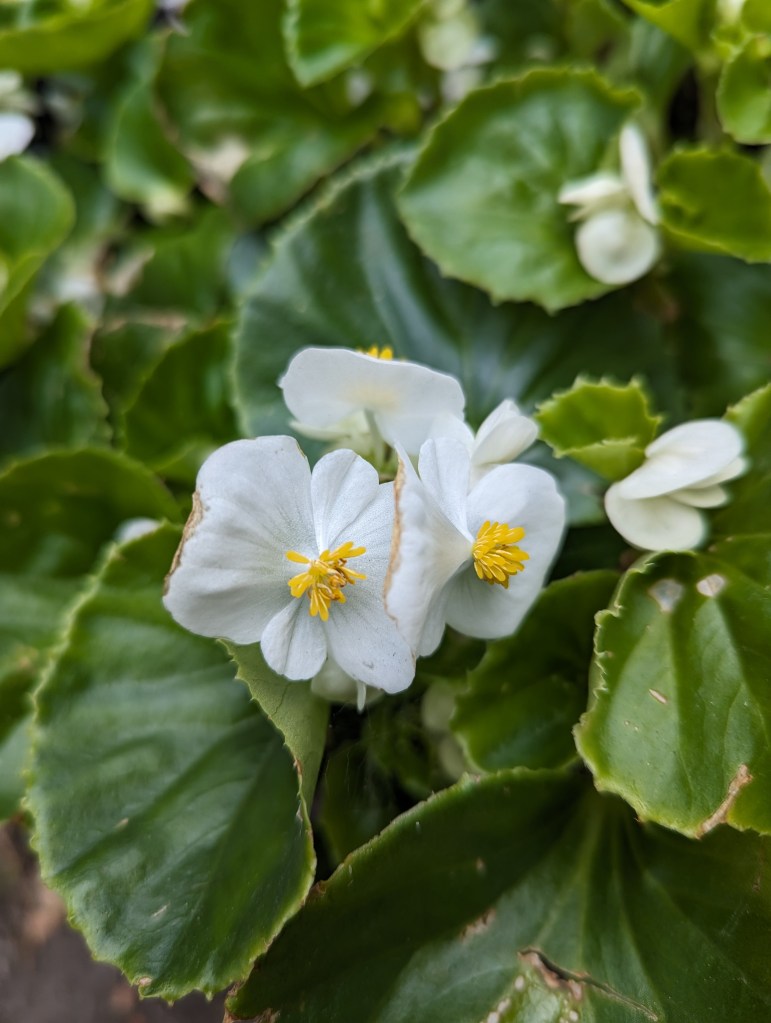
Simplicity is a recurring theme among wax begonia, Begonia X semperflorenscultorum. Floral color is white, pink or red. Foliar color is green, bronze or dark bronze. Each floral color combines with each foliar color. Variation within this simple color range is minimal. So is variation of foliar or floral form. Cultivars with slightly fluffier double bloom are rare.

Perfection eliminated the potential for improvement. Regardless of such simple variation, wax begonia is among the most popular annuals. Technically, it is perennial. Technically, it prefers warm weather. It remains available as cool season color after summer because it blooms until frost. Later, it can recover from minor frost. Without frost, it blooms all year.

Mature wax begonia rarely grows higher or wider than a foot, with densely rounded form. Flowers are small but abundant. Both leaves and stems are succulent and tender, with a waxy sheen. Propagation is remarkably easy by cuttings or division. Consistent watering is very important. Partial shade is tolerable, but if too shady, can inhibit bloom somewhat.

Cool Season Color Returns Seasonally

Pansies and violas like cool weather.

Cool season vegetables are the first clue. Now that they are seasonal, cool season color is also seasonal. Both comply with similar schedules. Their cool season centers around winter, including portions of spring and autumn. Some prefer to start early. Some prefer a later start. They also finish at variable times through spring. Some perform until summer.

Warm season color also complies with distinct schedules. Some might finish a bit earlier than their cool season replacements begin. Conversely, some could continue to perform a bit later than their replacement allows. It is gratifying when color of one season finishes as color of the next season begins. That will become more likely later within the season.

Cool season color has a few designations. Winter commonly replaces cool season. Yet, it includes adjacent portions of autumn and spring. Bedding plants or annuals commonly replaces color. Yet, many are actually perennials, and none are limited to bedding. Large homogenous beds are passe anyway. Some perennials linger after their primary season.

Also, some species behave differently here than within other climates. Wax begonias are warm season color, but may dislike locally arid warmth. They perform better for spring or autumn than for summer here. Actually, they become as popular as summer ends as they are when winter ends. They bloom until frost, or continually and perennially without frost.

Growth is slower during cool weather. Therefore, seed for cool season color should start early. For most, small plants, such as those from cell packs, are more efficient than seed. Cyclamen grow so slowly that they are only available in expensive four inch pots. Some cool season color is better for autumn or spring. This includes marigold and snapdragon.

Pansy and viola are the most popular of cool season color. Pansy are a type of viola with fewer but bigger flowers. Various types of primrose are nearly as popular, and can bloom until summer heat. Iceland poppy can grow a bit later in autumn to bloom through winter. Sweet William is a perennial that blooms now until spring, and can resume next autumn. Ornamental cabbage is bold foliar cool season color.

Sweet Alyssum

Sweet alyssum has potential to naturalize.

My neighbor describes sweet alyssum, Lobularia maritima, as a ‘polite’ weed. It naturalized over an area of her vegetable garden that was not in use at the time, but was easy to get rid of when the space was needed for something else. A few plants that were left in the perimeter bloom almost continuously and fill in other unused space between herbs and perennials without interfering with them.

As a bedding planting, sweet alyssum is most often planted from cell packs like most other annuals. Yet, seed is so easy to sow in bare spots among mixed annuals or perennials. Naturalized sweet alysssum sows seed so abundantly that new plants replace old plants before the old plants deteriorate.

Bloom is most often white, but can be shades of pink or purple. However, naturalized sweet alyssum eventually reverts to classic white. The minute, sweetly fragrant flowers form small, round clusters over the delicate mounds of finely textured and sometimes sparse foliage. The tiny leaves are only about an inch long and quite narrow. The largest naturalized plants are not often more than a foot tall.

Mixing Things Up

Annuals are nice, but so are a few more substantial or perennial plants.

Large pots, urns and planter boxes filled with ridiculously colorful blooming annuals are certainly nothing new. However, more small perennials and even a few small shrubs and trees are being planted along with the annuals, and allowed to stay indefinitely as fewer annuals get replaced around them as the seasons change.

These plants only need to be tolerant of confinement, regular watering and the comings and goings of the annuals around them. Upright plants should go in back, behind the lower annuals. Cascading and ground cover type plants should go in front.

Small forms of New Zealand flax and trunkless dracaena palms (Cordyline spp.) add texture, form and motion to large planters, but may eventually get too big if not properly pruned. Larger shoots can be pruned out to allow smaller shoots to take over. Alternatively, overgrown plants can be removed and put out in the landscape when they get too big.

Hollywood and Rocky Mountain junipers have striking form if pruned to show it off, and are easier to contain with selective pruning than reputed. Even without the interesting branch structure of junipers, arborvitaes are appreciated for their similar finely textured foliage and their rich green or yellow color. ‘Blue Rug’ juniper, a grayish ground cover juniper, cascades nicely from large planters.

Large succulents that tolerate water, such as good old fashioned jade plant and various aeoniums, offer bold texture and form in the background. They are easy to prune as they grow, and do not have aggressive roots. Low clumping aloes do the same in front.

Euonymus fortunei, English ivy, various iceplants and other ground cover plants do well cascading over the edges of large planters.

There really is not much limit to the variety of perennials and small shrubs and even trees that play well with others in planters of blooming annuals, and do not mind the confinement and regular watering. Annuals are still the best for flashy floral colors. Yet, the other plants excel in form, texture, foliar color and motion in the breeze.

Nigella

Nigella is more typically blue, but can alternatively bloom white, pink or lavender.

Those who crave blue for the garden probably know nigella, or ‘love-in-a-mist’, Nigella damascena. It blooms in May and June, typically with various shades of pastel blue, or can alternatively bloom pink, lavender or white. The lacy flowers are surrounded by lacier bracts, and suspended on thin stems among delicate pinnately lobed foliage, with very narrow (‘thread-like’) lobes. The plump brown seed capsules that appear over summer after bloom are commonly used as dried flowers. The plants can be half a foot to a foot and a half tall. Although annual, nigella self sows easily, so can grow in the same location for many years if allowed to.