Aphid Savor Fresh Spring Growth

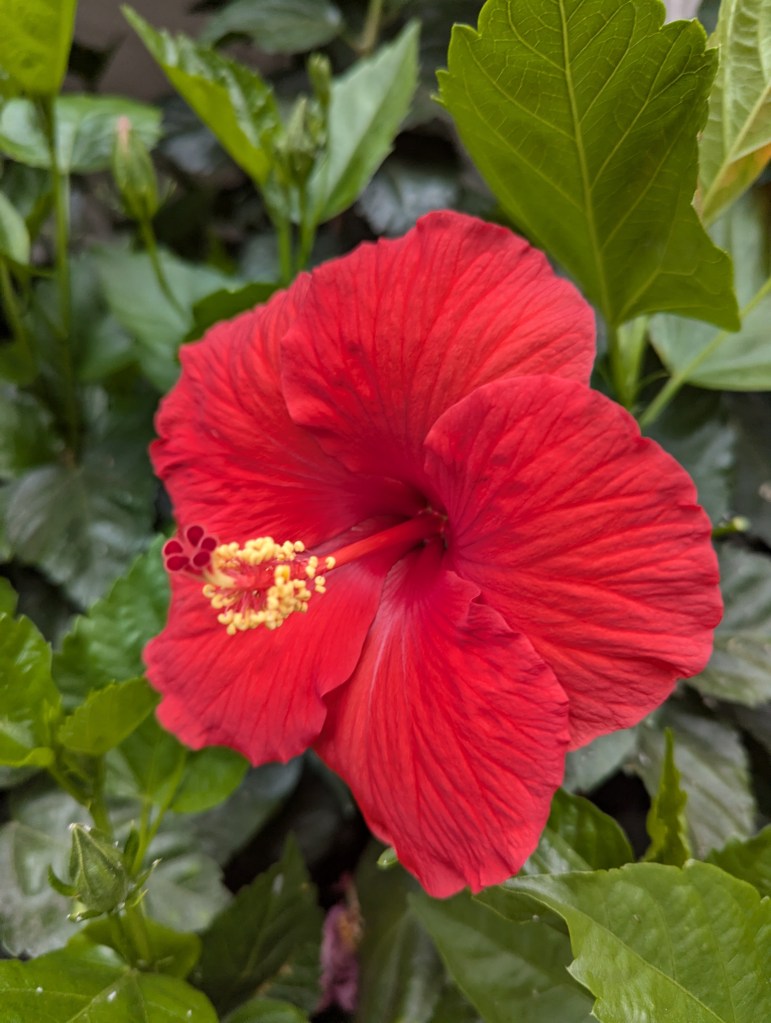
Not many hibiscus escape aphid completely.

Dormant pruning last winter did more than concentrate resources for flowers and fruits. It did more than eliminate superfluous growth, which many pathogens overwinter in. It also directed or concentrated resources for stems and foliage. Such growth now grows faster than some types of insect infestation. Aphid, though, are famously prolific and tenacious.

Hybrid tea roses very effectively demonstrate the advantages of dormant pruning. Those that lacked such pruning are more vulnerable to major aphid infestation now. Those that benefit from such pruning are significantly less vulnerable. Even with minor infestations, they may bloom well. Their vigorous stems grow at least as fast as aphid can proliferate.

It is too late for dormant pruning now. Furthermore, this is the beginning of aphid season. It continues until early autumn. Fortunately, aphid are usually not problematic for too long on the same hosts. Their natural predators often find and control them as their infestation culminates. They might continue to be present, but at a tolerable or unnoticeable degree.

Insecticides can be useful for severe infestation, but can interfere with natural processes. Some eliminate predatory insects that can naturally control aphid. If possible, it might be more practical to literally allow nature to take its course. Aphid are prolific, but essentially weak. Mildly soapy water kills them fast without killing many beneficial predatory insects.

Ants symbiotically cultivate aphid in exchange for their honeydew, (which is excrement). They protect their benefactors, and move them to ideal host material. Pruning citrus trees so that they touch nothing else can nearly block access to ants. Application of a barrier to their trunks, such as grease, blocks access more completely. Predatory insects still fly in.

This technique is practical for many small trees, but not low shrubby roses and hibiscus. For them, aphid might be easy to blast off with a spray nozzle on a hose. This procedure neither removes nor kills all aphid, but it can limit their damage. Repetition of the process will likely be needed a few days later, and maybe a few times. Aphid might be persistent, though.

Aphids

Aphid enjoy fresh new growth of roses.

Since the seeds arrived in the mail from Renee’s Garden, I have been waiting for the pale yellowish white ‘Buttercream’ nasturtiums to bloom. The appearance of their first few leaves was quite an event. They then started to grow a bit faster like annuals do this time of year. Then, suddenly and without warning, they where overtaken by a herd of hungry aphids!

These small but prolific insects congregate at the tips of new foliage and flower buds. They pierce fresh tissue and suck out the juices within. They are more often yellowish green, but can be grayish black, pale white or sickly pink. Although minute, the fattest aphids can be as plump as caviar.

Fortunately, aphid are typically not problematic for very long, and are easier to control than other insect pests. Even without insecticides, their festivities will be brief before their natural predators move in and break up the party. Pesticides can actually be detrimental by also killing some of the natural predators, and delaying their conquest of the aphids.

Right now though, I do not care! The aphids are hurting the nasturtiums. They must die!

On tougher plants like roses, aphids can be blasted off with water from a hose. Because roses can get mildew if their foliage stays wet too long, they should get blasted early in the day, so that they can dry in the sun. This procedure does not kill all the aphids, and may not even dislodge all of them, but it slows their proliferation so that the natural predators have the advantage.

Nasturtiums and other annuals that are too soft to get blasted with water can instead be sprayed gently with very slightly soapy water, which efficiently kills aphids. Water with a bit of vinegar, or a ‘tea’ made from cigarette butts, also work. Foliage is less likely to be damaged if rinsed afterward. This likewise does not kill all aphids, but controls them long enough for the predators to take over.

Parasitic wasps, syrphid flies, lacewings, lady beetles and predatory midges all eat aphids. They only need some time to do so because they rely on the primary proliferation of aphids to feed their own proliferation. In other words, there must be enough aphids to feed the predators before there can be enough predators to feed on the aphids.

However, aphids have an ally. Ants dutifully protect aphids from their predators, and actually cultivate aphids on choice plants because they like to eat the ‘honeydew’ excreted by the aphids. (ICK!) That is why lemon trees that are infested with aphids also have an abundance of busy ants commuting up and down the trunks.

Trimming an aphid infested lemon tree so that it does not touch anything else, and circling the base of the trunk with axle grease, will keep the ants out without preventing predatory wasps from flying in. Just like with roses, blasting with water dislodges many of the aphids and  stranded ants; but the wasps simply get out of the way and return when it is safe. It may all seem unfair to the aphids and the ants, but is gratifying for the predatory wasps, the lemon tree and whoever cares for the lemon tree.