Travel

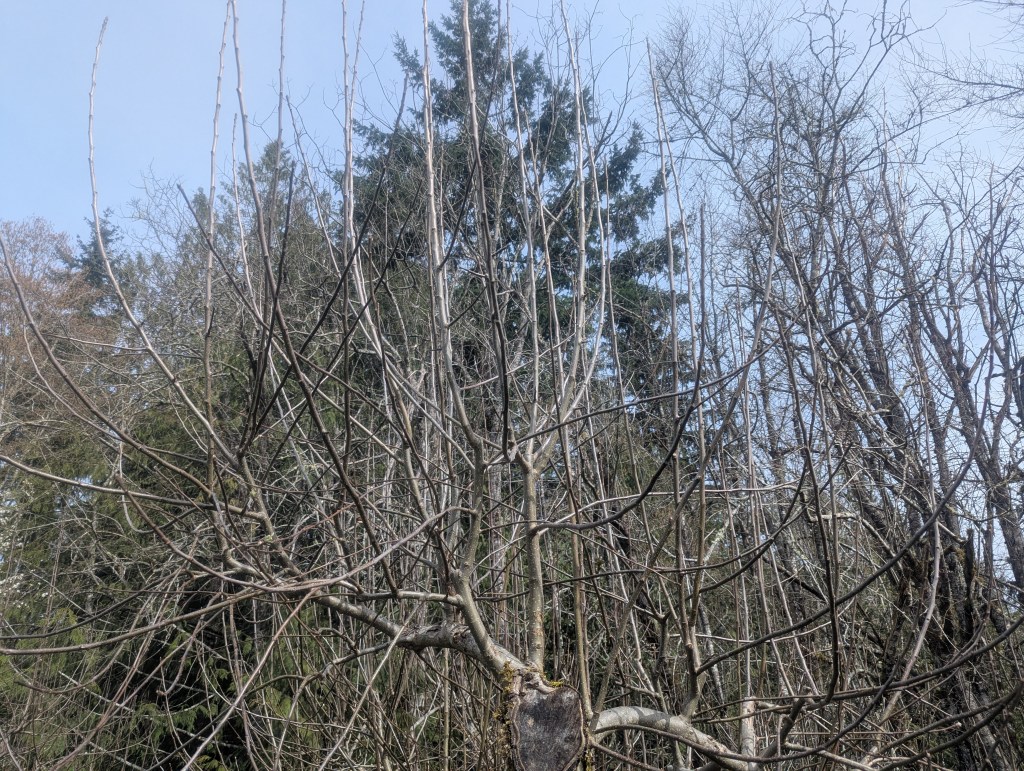
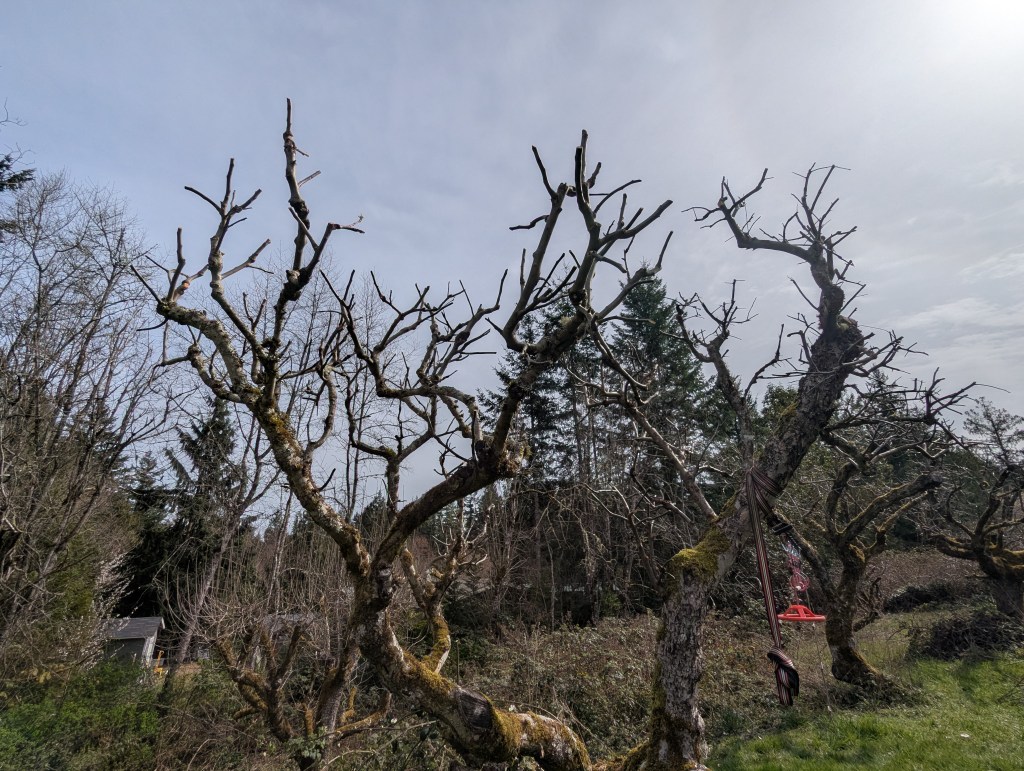
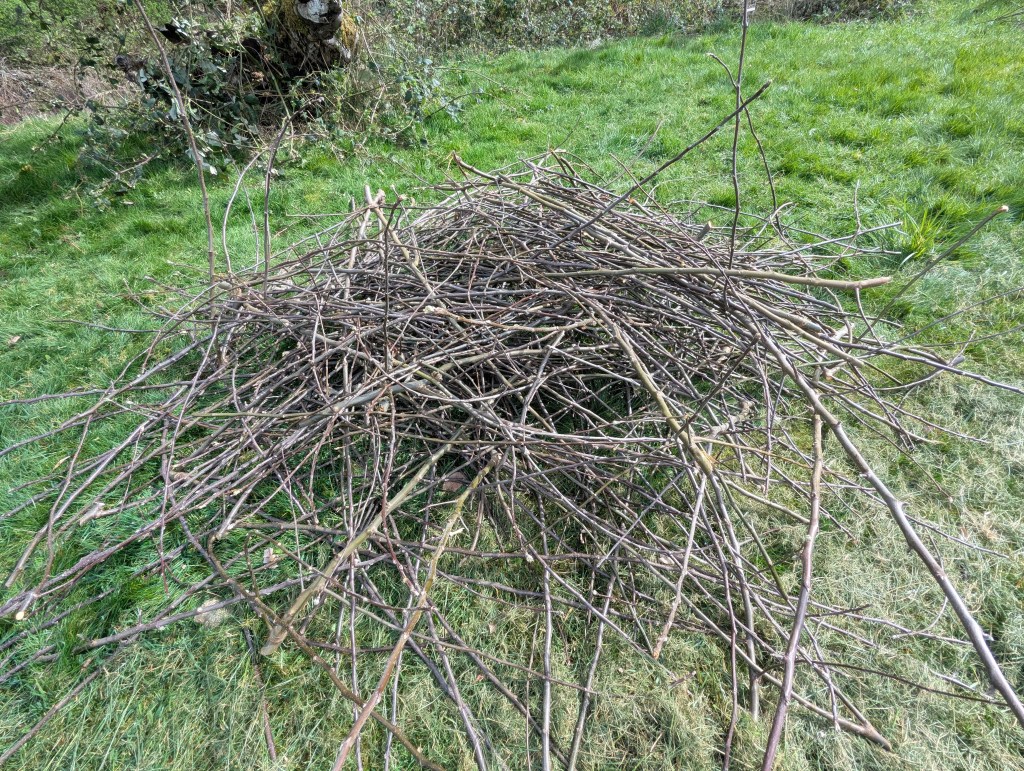
This does not happen often. Actually, it is quite rare, which is one of the consequences of enjoying my horticultural professions a bit too much. I almost never crave travel as I have been lately. Why should I? I live and work in such an excellent region which is excellent for horticulture and just about anything else. It is the sort of region that those who are not here travel to. Furthermore, there is nothing here that I want to get away from. In order to travel, I must first make obligations where I intend to travel to. Then, I can not change my plans for such travel. Even then, some of my obligations are horticultural pursuits, as if I must make work where I intend to go to compensate for my inability to take all of my work with me. I prune apple trees when I go to the Pacific Northwest. I procure regionally rare species where they are more available when I go to the Southwest. While vacationing in the region of Los Angeles last May, I spent a day greeting guests at one of Brent’s three landscapes that were featured on ‘Blooms With a View’, the Spring Garden Tour of View Park and Ladera Heights. I have no such plans anywhere yet. Now that it is late summer, it would be inconvenient to leave here for more than three days anyway. So, why should I so arbitrarily want to travel? I do not know. I suppose that I could go to the region of San Luis Obispo for Monday and Tuesday. I would like to find a pup of the regional variety of Hesperoyucca whipplei spp. whipplei that I first encountered while studying horticulture at Cal Poly there. But of course, I need no excuse to travel.

Horridculture – Traditional Delay

Rhody and his Roady, . . . still waiting to leave.

This article is scheduled to post at midnight between March 19 and March 20, which is precisely when we were scheduled to leave for the Pacific Northwest. We were supposed to arrive on the Kitsap Peninsula late in the afternoon, and likely continue to the coast the following morning. Now, we will not leave until midnight between Sunday, March 24 and Monday, March 25. I know that it is only five days later, but it changes the entire schedule. I should still be there in time to prune the apple trees prior to bloom. I do not know when we will return now, but it will likely be about Thursday, April 4.

Then, two and a half weeks later, we leave again for eleven days in Beverly Hills in Los Angeles County, and Buckeye near Phoenix in Arizona. That would involve leaving Wednesday, April 24, and returning on Saturday, May 4. That should be before the weather gets too warm in Arizona to prune the mesquite trees there comfortably. I suppose that the second trip does not necessarily need to be delayed just because the first trip was. We could still leave on Wednesday, April 17 and return on Saturday, April 27 as originally planned, even if that leaves less time between the two trips. Perhaps I should not worry about this until we return from the first trip!

This seems to happen annually. Regardless of how intent I am on leaving on time, we encounter a delay of some sort of another. Ultimately, we leave at about the same time annually, but only after planning to leave about a week earlier, just as we planned for the previous few years. I can not complain, of course, since the delay is justified, but that is another topic for another post.

Apple

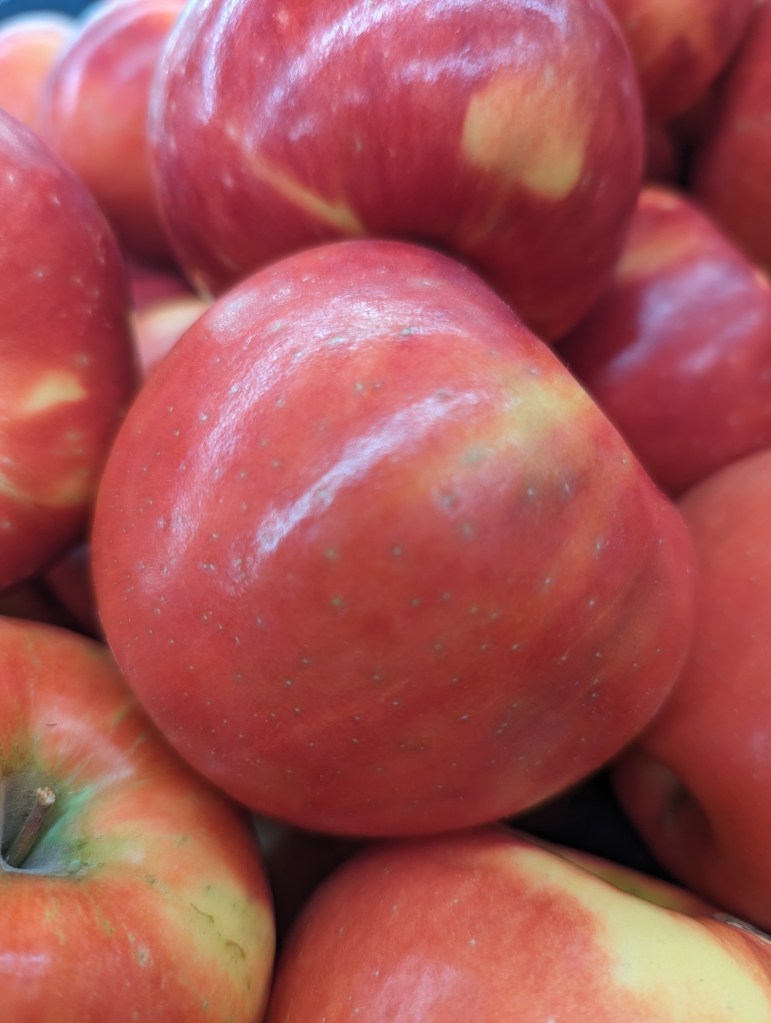
There are countless varieties of apple.

Apples are amazingly diverse. They have been in cultivation for thousands of years. Too many cultivars to document developed during that time. Some ripen as early as summer, while others ripen for late autumn. Some are best for eating fresh, while others are better for cooking, baking or juicing. Some are sugary sweet, while others are impressively tart.

Malus domestica is the general botanical name for most domesticated apples. However, this classification includes countless hybrids of a few species. Some are products of very extensive breeding. Most can grow as large as small shade trees. Grafting onto rootstock limits their size accordingly. Most ‘semi dwarf’ home garden trees are relatively compact.

Apple trees bloom with small but profuse and brilliant white flowers for spring. Flowering crabapple trees generally bloom pink or reddish pink, but produce dinky fruit. Otherwise, apples are about as big as baseballs. Some are significantly bigger or smaller. They can be variable shades of red, yellow or green. Some are striped or blushed with two colors. Their deciduous foliage turns yellow through autumn, and defoliates through winter.

Pomes Produce Better Than Palms

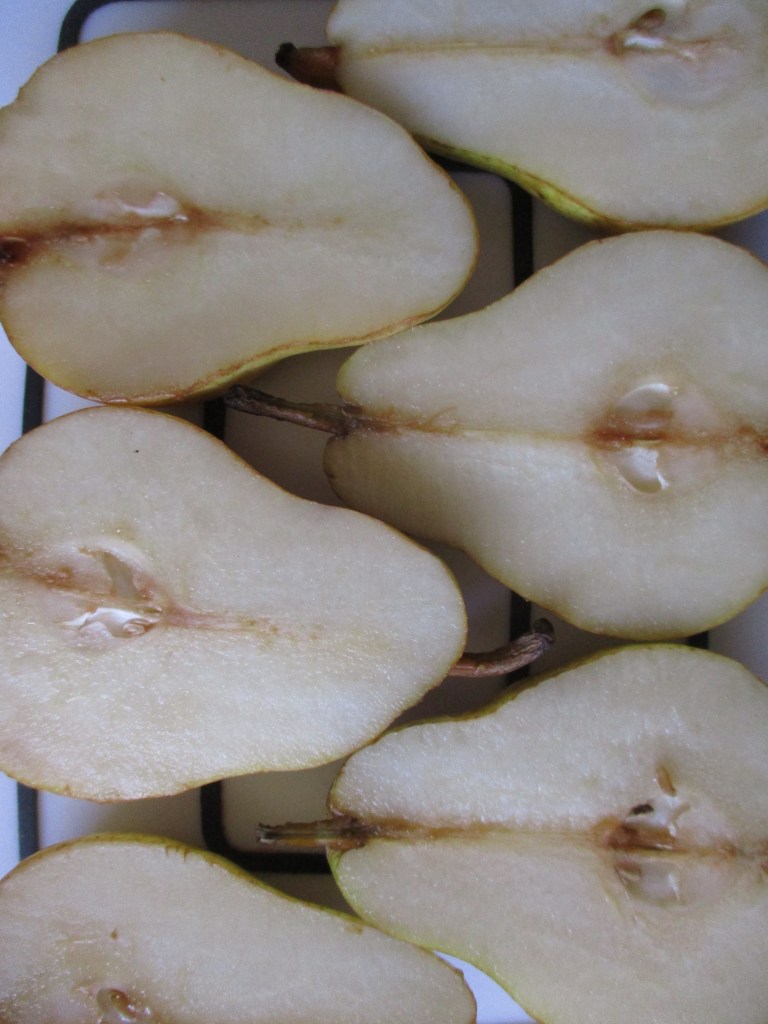
Pear season continues late into October.

Dates, coconuts, acai berries and palm oil grow on palm trees. All are rare in local home gardens. The palms that are popular in much of California are almost exclusively ornamental. Very few of them produce useful fruits. Despite the similar pronunciation, such palms are not at all related to pomes. Some of the more familiar fruits happen to be pomes, which are also known as pommes.

Apples and pears are the most popular examples of pomes. Quinces, which were very popular decades ago, are now rare. Quinces are so closely related to pears that they work well as dwarfing understock for home garden pear trees. (Orchard pear trees use other understocks that are not dwarfing.) Actually, most quince trees grew secondarily from roots of dead or removed pear trees.

Saskatoons (serviceberries), chokeberries (aronias) and medlars are locally rare pome fruits that are slowly gaining popularity. Productively fruiting cultivars of loquat are now more available than those that were primarily ornamental. Some flowering quinces may produce a few small fruits. Mayhaws and mountain ashes (rowans) are berry-like pomes that are more familiar in other regions.

The earliest cultivars of apple might be in season by late July, before stone fruit season finishes. (Some peaches, the largest of the stone fruits, ripen in September!) The latest will be ready in late November, at least a month into citrus season. Pear season extends from August into October. So, this is the middle of apple and pear season. Most but not all other pomes are already finished.

Like stone fruit trees, the trees and shrubs that produce pomes need very specialized pruning while dormant through winter. Without annual pruning to enhance structural integrity and concentrate resources, apple and pear trees are unable to support all of their fruit. Shrubby quince trees become thickets without pruning for grooming and confinement, although they may not need it annually.