 The terminology has certainly changed over the years. Not many of us remember what tree surgeons were, or that there were actually a few different kinds of tree surgeons, who performed very distinct tasks. Tree surgeons are now known as ‘arborists’. Much of what they used to do is done by other types of horticultural professionals. The work that arborists still perform is ‘arboriculture’.
Back when orchards were still common in the Santa Clara Valley, Orange County, and many of the areas of California that are now urban, those who pruned deciduous fruit trees while dormant in winter were known as tree surgeons. Of course, they did other work that the trees needed through the rest of the year, and harvested fruit as well. They might be known as orchardists nowadays.
Tree surgeons also assembled new orchards, as well as individual trees in home gardens. It used to be standard procedure to install the understock of fruit trees in the first winter, and let it grow through the following year. A tree surgeon would return while it was dormant the following winter, to graft desired scions onto it. This is now done by nurserymen in nurseries that sell finished trees.
The tree surgeons who we now know as arborists are, of course, still important. The tree surgery that we now know as arboriculture is the sort or work that other horticultural professionals are not qualified or able to perform. It involves the biggest of trees that are out of reach from the ground, or even from ladders. There are still a few different kinds of arborists, but most must climb trees.
Arboriculture is the horticulture of trees. Arborists are therefore horticulturists of trees. Those who are certified with the International Society of Arboriculture, or ISA, have passed an examination of their arboricultural expertise, and maintain their credential by continued involvement with the educational seminars, classes and workshops of the ISA. Arborist can assess the health, stability and structural integrity of trees, and prescribe and supervise necessary corrective arboricultural procedures.
 There are mixed emotions about tree removal permits that so many municipalities need to issue in order for a ‘heritage’ tree to be cut down legally. Most of us want to believe that in America, we have certain rights to do what we want to on the properties that we own. Obviously, that makes the most sense. However, if it were that simple, many more prominent trees that are collective assets to the larger communities would be removed.
 It sounds like science fiction, but it is not. Every spring and during particular summer weather, limbs can fall from trees without warning, and seemingly for no reason at all. It happens when least expected, while the weather is warm and perhaps humid, but notably without wind. The lack of wind is what makes it so unexpected. It is a phenomenon known simply as spontaneous limb failure.
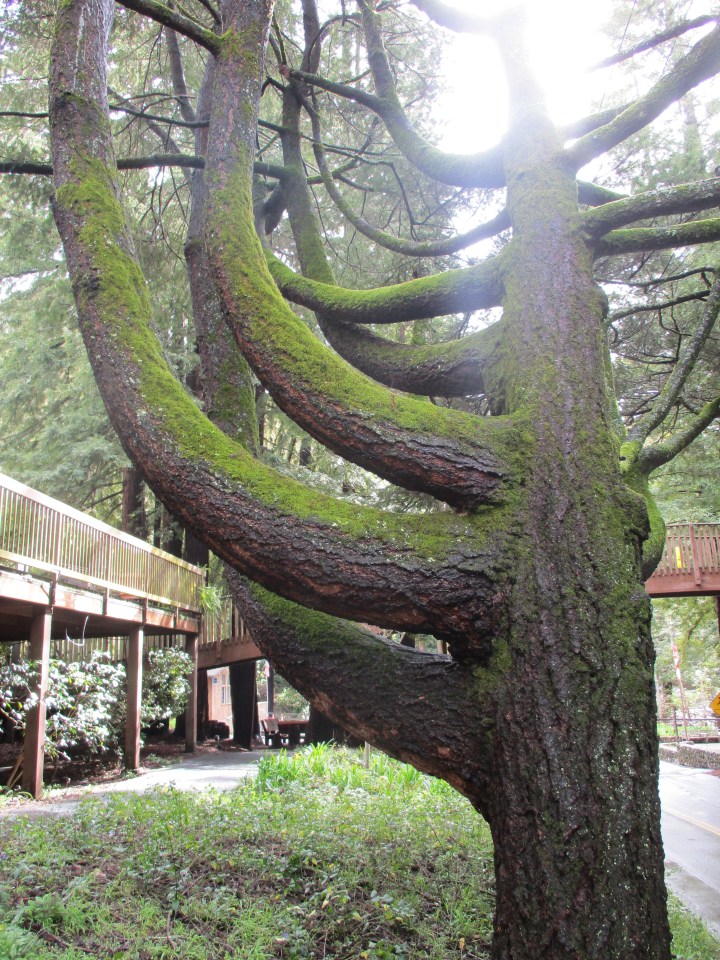 This is no common Douglas fir. It is the ‘Davey Tree’, named after the tree service that so diligently prunes it for clearance from the utility cables above. Yes, I can see as easily as you can how disfigured it is. The plan is to cut it down before it falls apart. At least that is the excuse for cutting it down. It is relatively short an stout, so is likely quite able to support its own weight, regardless of this disfigurement. We really just want it gone because it is so unsightly.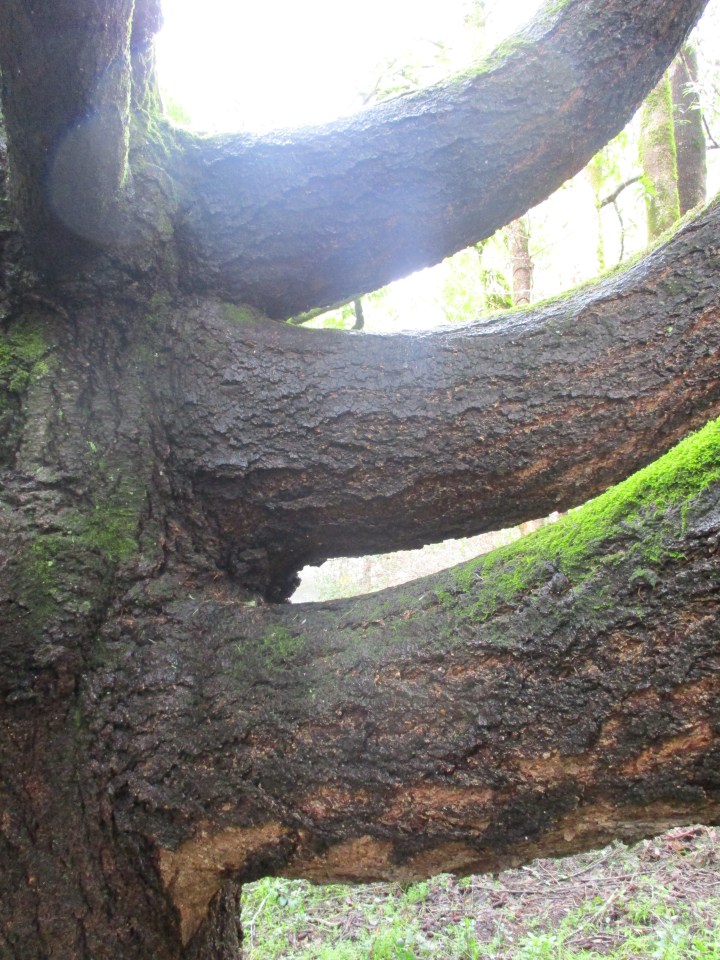
 This landscape is nothing fancy. It is out in front of a fast food establishment on Ocean Street in Santa Cruz. It is low maintenance, and starkly simple. It would be nice if the so-called ‘gardeners’ would cut back the African iris and English lavender a bit better, but they may have left them like this so that they are less likely to get trampled. The colored chips get replenished regularly, and the trash gets harvested quite efficiently. As I said, it is nothing fancy. The only remarkable feature had been this exemplary crape myrtle in the middle.
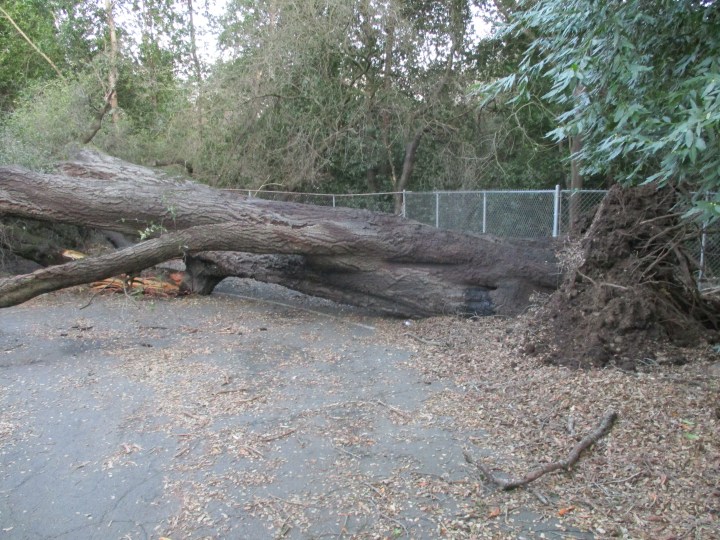
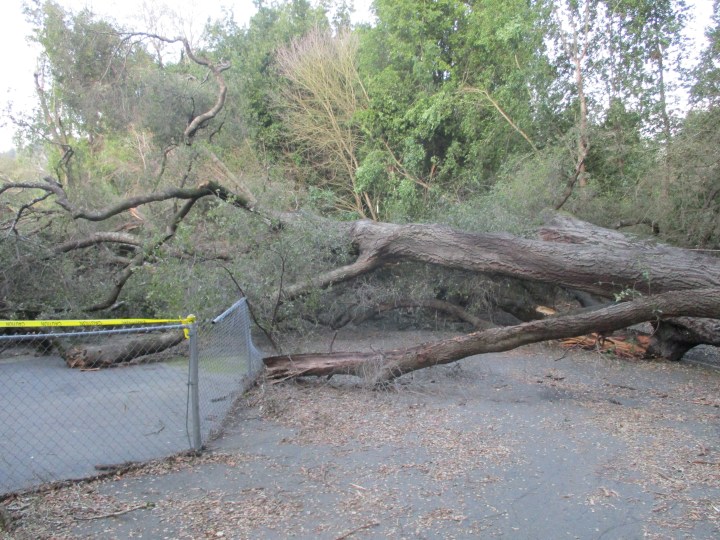
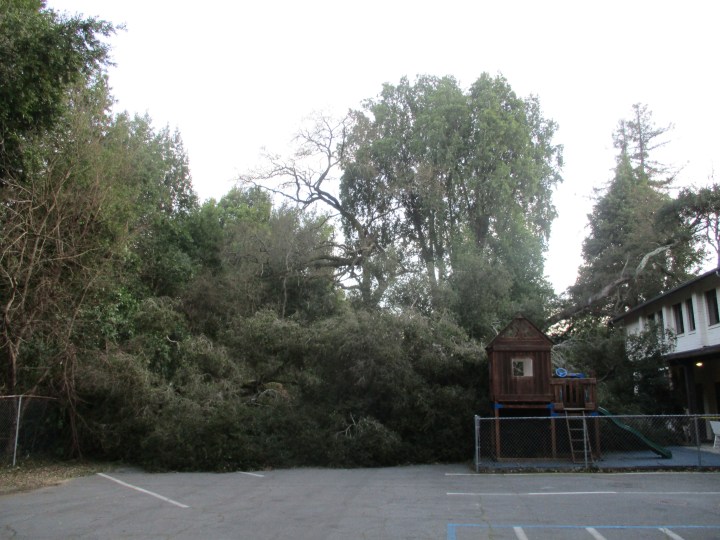
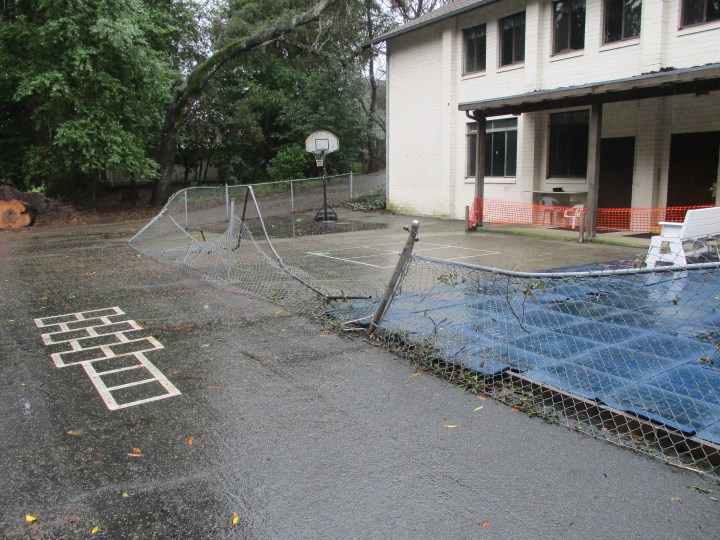
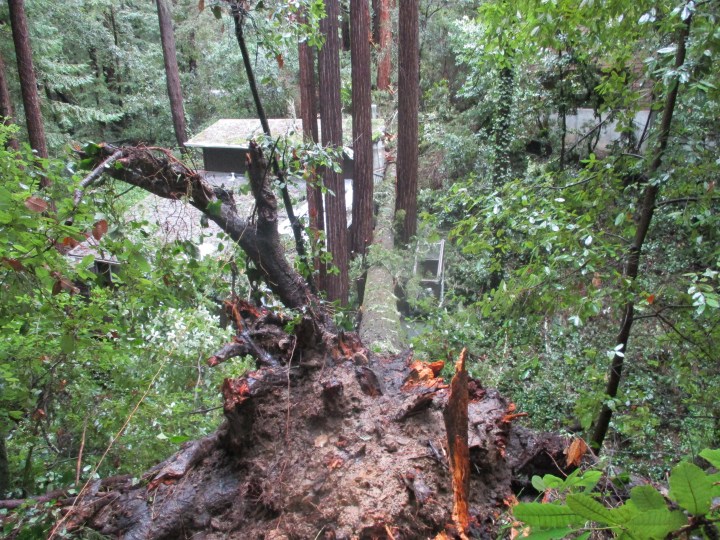 If there were lawns and fences in this neighborhood, the grass would likely seem to be greener on the other side of the fence. In this situation, the greenhouse probably seemed to be more comfortable than being left out in the storm. This tall Douglas fir tree dropped in to find out. It did not go well. What remains can be seen in the middle of the picture above, just to the right of the fallen fir, and in the close up of the picture below.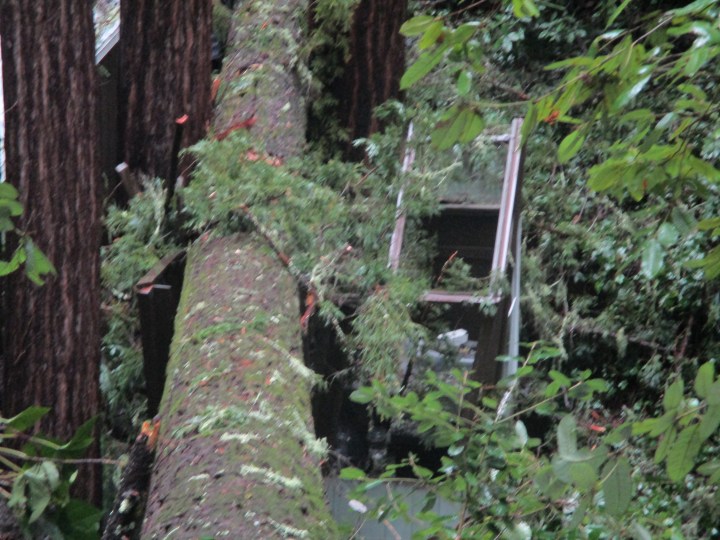

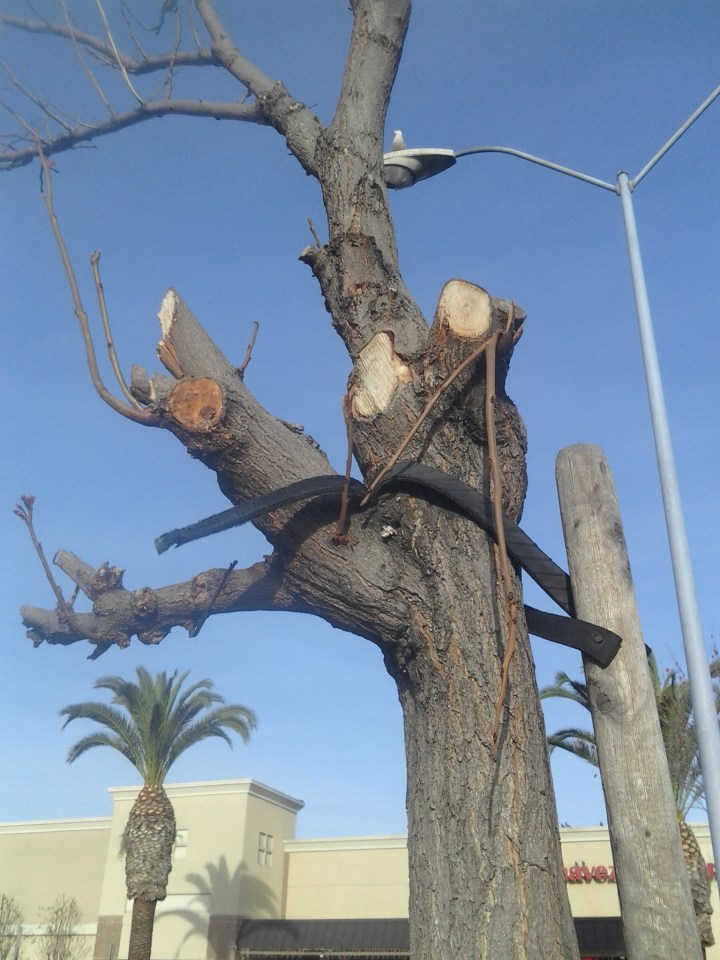 Okay, we get it; someone really hates trees. That’s fine. Trees are not for everyone. Just cut it down. Put it out of it’s misery. Take away the useless lodgepole stake and strap along with it. Maybe those Canary Island date palms that look like the home of SpongeBob SquarePants in the background will recover from their own form of abuse to compensate for the loss of this seemingly unwanted goldenrain tree.
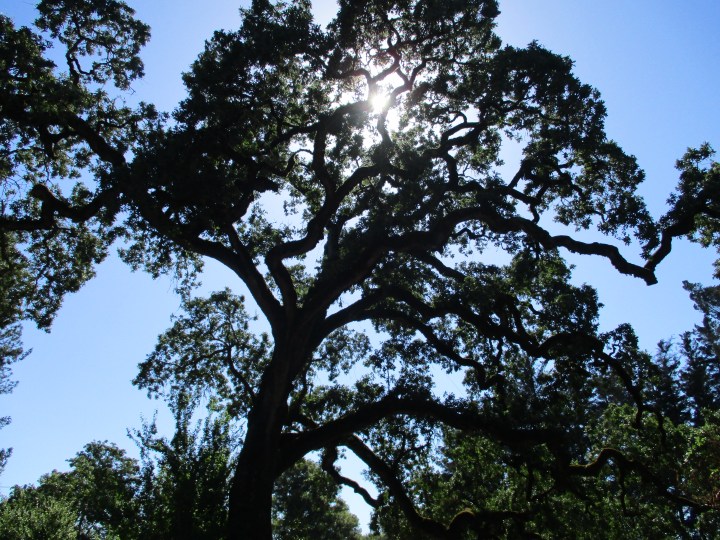 It is no surprise that there are many different types of physicians within the medical industries. Pediatricians, surgeons, cardiologists, dermatologists, and all sorts of ‘doctors’ are all recognized for their particular medical specialty. Yet, almost all horticultural professionals are known simply as gardeners or landscapers, even though many never work directly in gardens or landscapes.
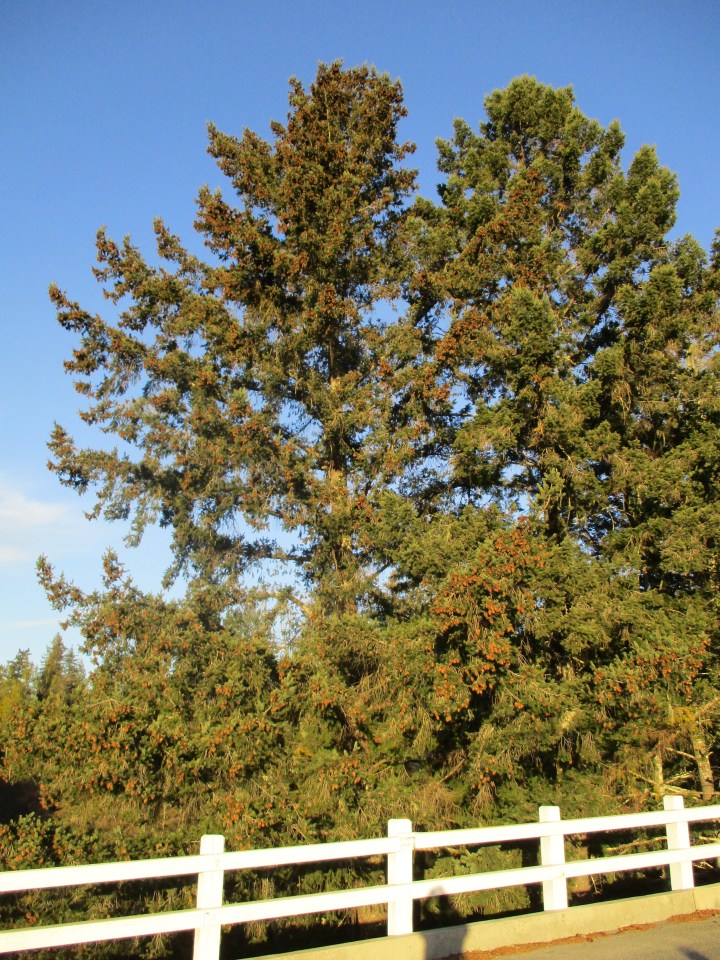 The first storm of the year has a way of reminding us if our trees need attention. Whether then need to be worked on this year or not, we tend to notice how they blow in the wind, or if they are full of dead and deteriorating debris that falls into the garden or onto the roof. As deciduous trees defoliate, they are less likely to be damaged by wind, but their structural deficiencies become visible.
 Tony Tomeo