Horsetail

The allure is more in the form than in the bloom.

            It is no wonder that the many specie of horsetail have been around since the Carboniferous Age. They seem to be impossible to kill! Because they can be so invasive and persistent, they should be confined to planters or areas of the garden where they can be controlled. They should probably be kept away from thickly foliated areas where they can spread and mix with other plants unnoticed.

            Even though they are among the oldest plant specie, they seem well suited to modern architecture. Besides, the narrow areas between modern residences, walkways and driveways are confining by nature. Many modern buildings are even outfitted with awkwardly narrow planter areas that could use plants that get three or four feet tall without spreading out laterally, just as Equisetum hyemale, the most common species of horsetail does. The partial shade and potentially bad drainage in these confined spaces is not a problem.

            The hollow segmented stems are rich green with black or dark brown joints. Some specie of horsetail have symmetrical whorls of wiry stems radiating from their joints. Otherwise, no other foliage is evident. Small knobs on top of the stems produce rusty brown spores. The larger types of horsetail are more likely to become invasive. Equisetum scirpoides stays about half a foot tall and is relatively complaisant. I do not know the identity of the horsetail that I got this picture of; but it has unusually large spore ‘blooms’ and a more relaxed texture.  

Physics of Exposure

Pavement reflects glare and enhances harsh exposure, which can roast small plants.

How can so many colorful annuals and perennials be so surprisingly happy in the many large pots on the sidewalks in front of downtown shops? Downtown does not seem like it should be so comfortable to them, with all the concrete, glass, stucco and all sorts of other reflective surfaces to enhance the harsh exposure. Yet, the buildings and street trees instead provide a bit of shade to soften exposure and hold in a bit of ambient humidity. Some areas are even too dark for many plants.

Exposure is as important to selection of appropriate plants as climate and soil (or potting media) are. Plants that need full sun exposure will not perform like they should in partial shade. Those that want partial shade may get roasted by too much sunlight.

Walls, fences, and windows to the north can enhance the harshness of exposure by reflecting glare. To the south, they can conversely limit exposure with shade. Such structures to the west increase morning warmth but provide shelter from afternoon heat. To the east, these features are not so advantageous, since they shade morning sun, but enhance afternoon heat. Pavement adds to glare without providing any shade.

As if this is not confusing enough, there are  many more factors to consider. Coarsely textured or darkly colored surfaces do not reflect glare as severely as smooth or lightly colored surfaces do. Broad eaves, like those that adorn classic ranch style architecture, not only add more shade, but also limit reflected glare from walls below. Taller buildings, like two story Victorian houses, create more shade than single story Spanish colonial houses with flat roofs. Even shade trees are variable, ranging from the dark evergreen shade of Southern magnolia, to the light deciduous (absent through winter) shade of silk tree.

Most plants do well within a significant range of exposure, between full sun and partial shade. A few, like agaves, yuccas, oleanders and most eucalyptus, are resilient to harsh exposure, but would not survive significant shade, and would look tired in even partial shade. Even fewer, like ferns, fuchsias, impatiens and Japanese aralia, tolerate darker shade (although none survive in complete shade), but would get roasted if too exposed. Shade, reflected glare, and anything that might affect exposure must be considered in the selection of appropriate plants for each particular application.

Made In The Shade

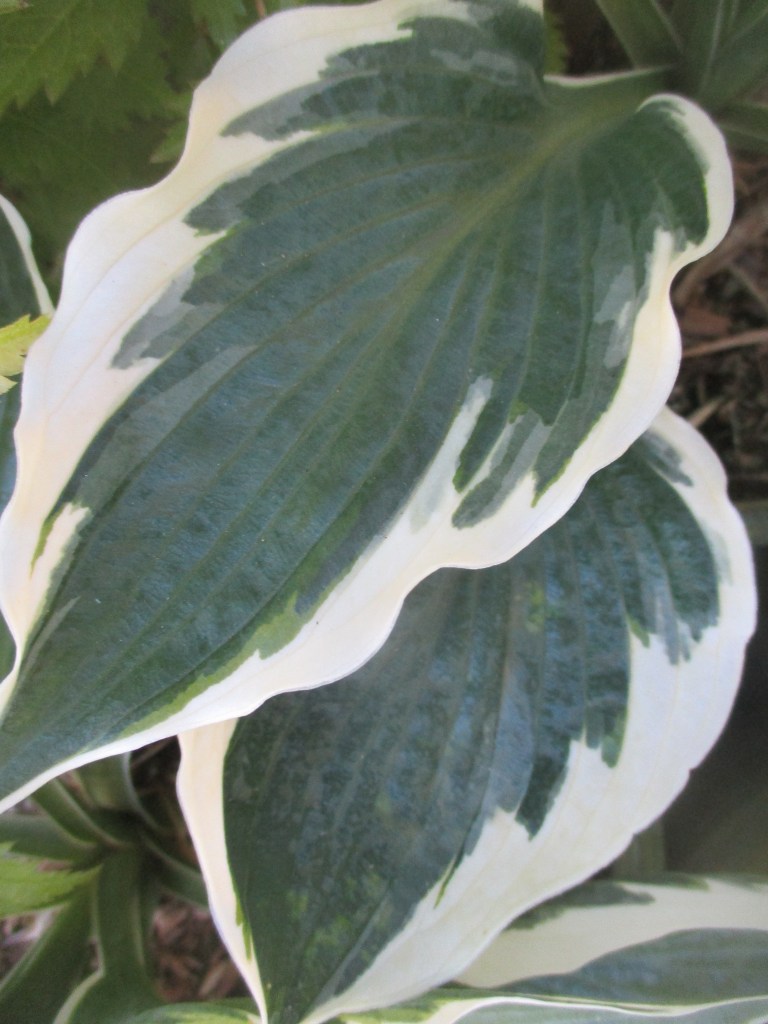
Hosta happen to tolerate a bit of partial shade.

Modern gardens are shadier now than they ever have been. Ranch houses that were popular through the middle of the last century had those classic big eaves that shaded wide margins close to the homes. Prior to that, tall Victorian houses made big shadows. Modern houses though are even bigger. To make matters worse, lots and garden spaces are smaller and surrounded by ominously tall fences; so there is less space that is not shaded by something sometime during the day.

This is why small trees, sometimes known as ‘micro-trees’, are so popular. They are all that fit into some small gardens without creating too much shade for other plants. Large shrubbery, like some of the larger types of pittosporum, and some of the smaller types of podocarpus, often function quite nicely as small scale trees. Where not too shaded, pineapple guava and New Zealand tea tree are just as effective. They only need to be allowed to develop upper canopies with adequate clearance, while their lower limbs get pruned away, instead of getting pruned to stay down low as shrubbery typically does.

Camellia, hydrangea, aucuba, Japanese aralia, Oregon grape and Heavenly bamboo (Nandina spp.) are appealing shrubby plants for shady locations. Camellias and hydrangeas of course provide impressive blooms during their respective bloom seasons. Camellias also have the advantage of excellently glossy dark green foliage all year;  but hydrangeas are bare and need pruning in winter. Oregon grape and Heavenly bamboo, which are actually related, are more subdued but look more woodsy in bloom, and sometimes provide interesting berries afterward. Aucuba and Japanese aralia do not need showy flowers because their foliage is so bold. Japanese aralia has bigger and bolder leaves, but common types of aucuba are spotted with gold.

Balsam (Impatiens spp.), which is already one of the most popular warm season annuals that is beginning to get phased in as the weather gets warmer, is not quite as colorful in the shade as it is with better exposure, but can be impressive nonetheless. Cyclamen takes shade as well, but will actually be getting phased out through late spring and summer. Cyclamen is actually a perennial that can stay in the garden (if it is not in the way of anything else) to regenerate next autumn. As weather gets warmer in spring, caladiums and coleus can provide remarkably colorful foliage for shady spots through summer and early autumn.

Various types of ferns, although devoid of flower color, provide distinctive and often bold form and foliar texture. Australian tree ferns can actually get quite large and eventually function as small trees. Baby tears is a finely textured perennial ground cover that spreads as far as it has moisture. It can actually get to be invasive.

Sunlight Is Becoming A Commodity

Sunlight has not changed. Architecture did.

Shade trees are no longer appreciated like they had been. Only half a century ago, they were important components of suburban landscapes. Big deciduous trees shaded broad lawns and sprawling roofs during the warmth of summer. They defoliated to let warming sunlight through during winter. Now, modern architecture would not accommodate them.

Sunlight has not changed. Human interaction with it has. Modern homes are significantly taller, so create bigger shadows. They are closer together, with less garden space that is not within their bigger shadows, or shadows of adjacent homes. Higher fences intended to compensate for the minimal proximity of adjacent homes contribute even more shade.

Gardening can be difficult within the limited space and abundant shade of modern home gardens. Small evergreen trees or big shrubs that obscure unwanted scenery above the fences can also obscure much of the sunlight that manages to get past the infrastructure. Substantial vegetation in neighboring gardens can get close enough to be influential too. 

The primary part of modern homes that is not excessively shaded is the roof, which is not used for gardening. Trees that are proportionate to modern home gardens are not much taller than associated modern roofs. Modern attics are fortunately insulated so efficiently that shade is not important. Besides, many modern homes are outfitted with solar panels. 

Walls and windows of modern homes are efficiently insulated as well. Warming sunlight during winter is therefore not as much of an advantage as it is for older homes, although it is appealing within sunnier homes. Ironically, the utility cables of many modern homes are subterranean, so will not interfere with trees that get too big for their confined spaces. 

Regardless of their functions within their landscapes, even small trees can develop roots that are sufficiently aggressive to displace pavement and deck suspensions, particularly since they are likely to be close to them where space is limited. Turf grass that is thin and wimpy because of insufficient sunlight is more susceptible to lumpiness of surface roots. Because of proximity, neighboring gardens must be considered too.

Green Roof

This artice is from three years ago too, and the picture is a bit older. I sort of wonder if this tree is still there.

tonytomeo's avatarTony Tomeo

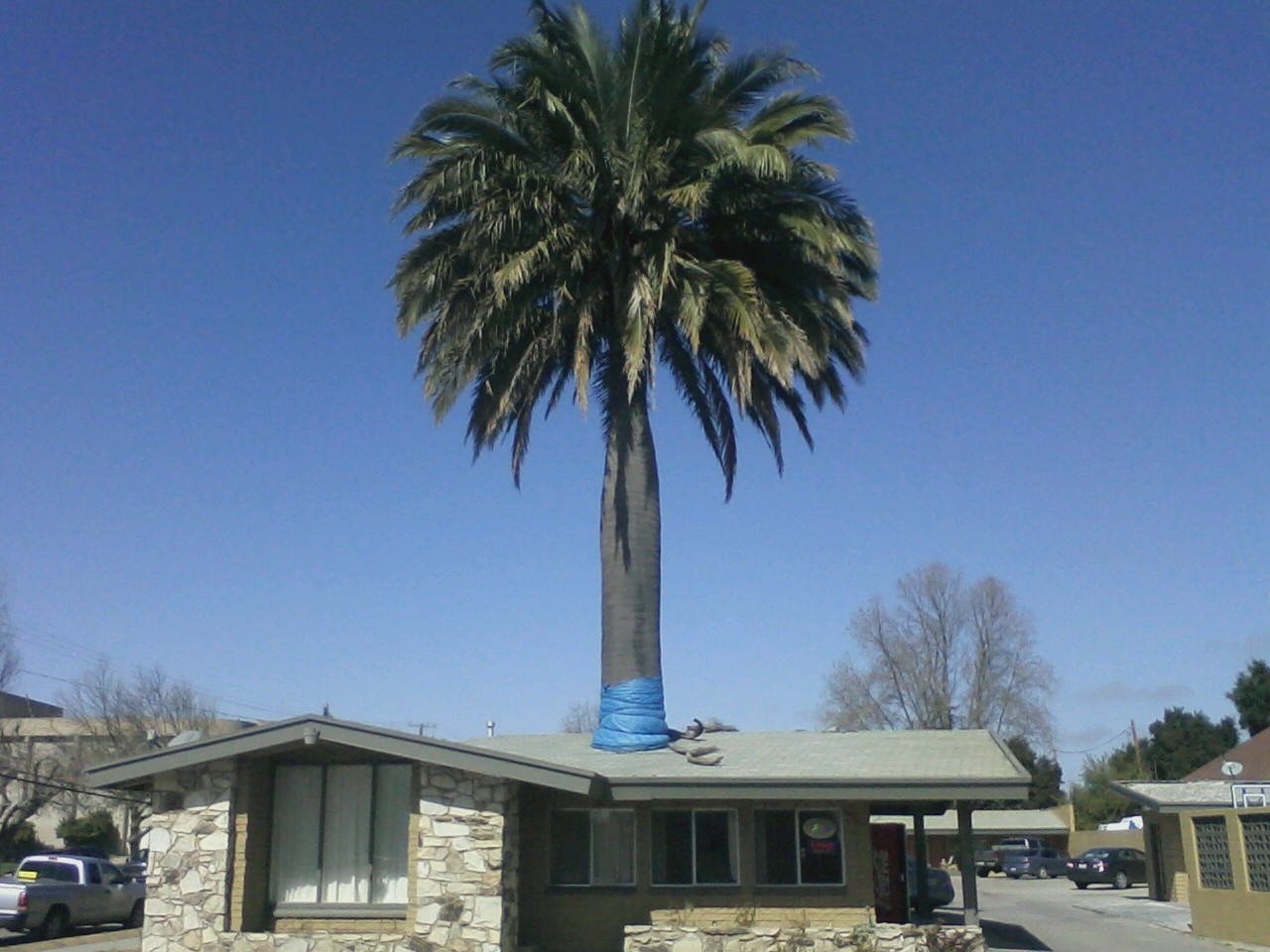
P71125Is this a bad idea for a green roof?

Is it a houseplant that got too big?

Is it a wheelchair accessible tree-house?

None of the above. It is just weird architecture, designed to preserve a rare Chilean wine palm. The tree was probably planted in the front garden of a Victorian home that was on this site before the site was redeveloped. Chilean wine palms were more popular back then; and this one seems to be about that age. Although it seems to be healthy now, the constriction in the trunk indicates that it had been stressed by the redevelopment, which undoubtedly covered much of the established root system. The time it took for the length of trunk above the constriction to grow coincides with the estimated age of the building below. The tree very likely had better access to rainwater before.

Because it is a palm, the trunk…

View original post 156 more words

Horridculture – On The Fence

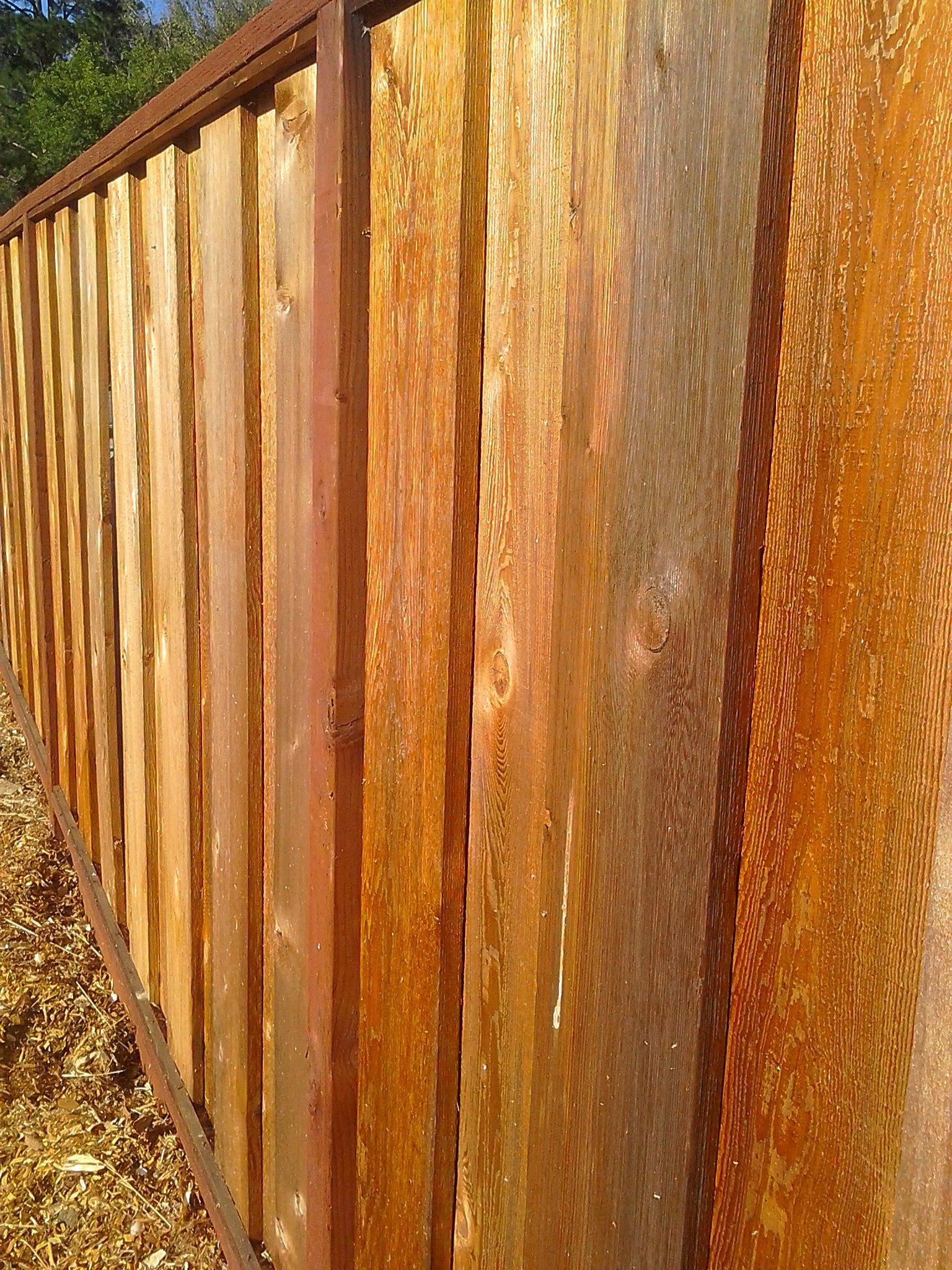
P90522Where I lived in town, the backyard was surrounded on three sides by fences, with the house on the only unfenced fourth side. These were the sort of fences that were common in suburban neighborhoods. They kept children and dogs in or out of adjacent gardens, and probably provided some sense of privacy, although I never understood why we all needed such privacy there.

I mean, if I really wanted significant privacy, I would not have lived in town, where the homes and gardens were all so close together. I enjoyed living there, and I enjoyed my neighbors. We could hear some of each others conversations and televisions, but no one seemed to mind. It was worth living in such an excellent neighborhood so close to everything we could want in town.

Years ago, suburban fences were not too obtrusive. They were only about four feet high. Some of the older homes were still outfitted with picket fences that were only about three feet high. We could still talk to neighbors over them, and sometimes pass over a bag of extra fruit or vegetables, or even flowers, from the garden. Dogs and young children were effectively contained.

Then everyone became obsessed with privacy. At the same time, many of us added onto our homes or replaced them with new homes that occupied more of the allowable space within their compact formerly suburban, but now urban parcels. Smaller remaining garden spaces became more shaded by bigger houses and taller fences. Gardening, as we once knew it, became passe.

What are all these big fences for? What are they keeping out? . . . or . . . What are they keeping in? Why do so many who want so much privacy live so close to so many who crave the same?!

Horridculture – High Fences

P90522There is no doubt that fences are useful for a variety of functions. They exclude deer from the garden. They confine livestock. For suburban homes, they enclose a relatively safe space for children and pets. Fences should be designed according to their intended functions. Those designed to exclude deer might be as simple as coarse mesh on posts. Those enclosing backyards might be more refined and compatible with the landscape.
Over the years, conformity to modern suburban and urban landscapes, as well as modern architecture and lifestyles, has changed the standards of how fences are designed. Low picket fences do not adequately obscure the scenery that adjacent and often dissimilar landscapes contribute to a view. Where common vegetable gardens might have been, most of us want private outdoor rooms, with a distinct style of landscape.
It seems that everyone wants privacy nowadays. Those who have no need for privacy will get it anyway because no one will build fences that will not provide it. In the 1950, fences were commonly four feet high, and not every backyard had them. By the 1970s, they were more commonly six feet high, and standard for almost every backyard. Now, fences are expected, and many are seven feet high or higher, with lattice on top!
Modern architecture and lifestyles are part of the justification for such tall fences. Low profile older homes on formerly suburban lots are commonly replaced with two or more larger homes on smaller subdivided city lots. They are much closer to each other than the older homes were, with only narrow spaces between upstairs windows, where even eight foot high fences will not provide privacy.
So, not only do much larger homes on much smaller parcels mean that there is much less space for gardening, but taller two story (or taller) homes with weirdly high fences mean that more of the very limited space available for gardening is shaded!

Big Trees Are Bad Houseplants

P81111By ‘big trees’, I don’t mean the various ficus trees that can grow up to the ceiling, and be quite happy inside. I am referring to the shade trees that live out in the yard, or forest trees that live beyond that. They are outside for a reason . . . or actually, several reasons. They are too big to bring inside. They probably would not like the climate inside. No one wants to rake fallen autumn leaves inside. Well, you get the point.
Unfortunately, on rare occasion, big trees that are outside end up partly inside by falling or dropping limbs onto the homes that they provide shade for. Just like trees seem to fall onto certain types of cars more than others ( tonytomeo.com/2018/11/04/trees-hate-cars ), trees seem to fall onto certain types of homes more than others. The difference between the homes that trees seem to dislike and the cars that they seem to dislike, is that there are actually reasons why some types of architecture is more susceptible to falling limbs or trees.
First of all, just as some trees seem to avoid falling on cars, some seem to avoid falling on houses.
Coastal redwoods in landscape situations are remarkably stable. In my entire career, I have inspected only three that have fallen. One had a massive pair of trunks that split apart and fell away from each other. Although they were on the fence line between two closely set urban homes, and there was almost no place for them to fall without destroying one home or another, they did the seemingly impossible. They literally fell onto the property line. One trunk fell out into the street. The other fell back into the backyards of the homes behind. The fence was pressed into the ground. The landscapes were seriously damaged. Gutters were stripped from both adjacent homes. Otherwise, there was NO structural damage to any of the homes. I am still amazed at how minimal the damage was!
The massive coast live oak two doors down from my former home in town was just as talented. It sprawled out over its associated home and the front yards of the two adjacent homes. It was so broad that I would not have believed that it could have fallen down without destroying one of the homes. Yet, it did exactly that . . . as I watched from my dining room. During a windy storm, it fell right toward me, and landed squarely in the front yard next door. It broke a few rafters on the edges of the eaves, and tore the gutters off, but that was the worst of the damage. It somehow found the best spot to fall where it would cause the least amount of damage.
Not all homes are so fortunate.
Victorian homes though, do not seem to be targeted by trees as much as others are. Most are closer to downtown, away from tall or very broad forest trees. Many are on somewhat narrow parcels that can not accommodate disproportionately large trees like the coast live oak in the picture above. Broadly sprawling trees tend to be too low to extend their limbs over the roofs of taller two story Victorian homes. Although taller than most other types of homes, two story Victorian homes do not occupy as much area as other homes, so are not such big targets.
Low profile homes of ranch architecture, or similar types of architecture, are more likely to be damaged by falling limbs or trees. Many happen to be located in suburban or rural areas, closer to bigger and broader forest trees. Their wider parcels can accommodate larger trees. Their roofs are low enough for trees to extend limbs over. Because they tend to be on a single level, they occupy more area, so are larger targets.

Horridculture – CH CH CH CHIA!

P80829Skyscrapers are already very efficient. They fit more usable floorspace into their ‘footprint’ than any other type of building does. They conserve energy that gets used for heating and cooling by exposing less of that floorspace to the outside weather. For all that usable floorspace, they need only a single roof.
Think about it. A relatively short ten story building contains as much floorspace as ten single story buildings that occupy the same area individually, but collectively occupy ten times as much area! Nine of those stories loose heat during cold weather, and collect heat during hot weather, only around the exterior walls. Only the top floor loses and collects heat through the roof, and only if there is not an upper utility ‘attic’ floor that insulates it. Ten single story buildings of the same area are all exposed on top, as well as all the way around. Of course, ten single story buildings of the same area need ten roofs comparable to the single roof of the ten story skyscraper.
Skyscrapers certainly need more infrastructure to support all of their floors, and they lose a bit of their floorspace to that infrastructure, as well as to the elevators needed for access to the upper floors. It also takes significant energy to pump water up to upper floors. Regardless, skyscrapers are still the most efficient of buildings. They have nothing to prove to the treehuggers who dislike them so.
‘Green roofs’ on top of skyscrapers are a fun concept. They utilize space that is otherwise useless, and they really do help to insulate the top and most exposed floor of big buildings. However, they are no more ‘green’ than landscapes that are at ground level. In fact, they necessitate the incorporation of extra infrastructure into their respective buildings in order to sustain their synthetic environments, and to support the extra weight of the soil, water and flora. Pumping water to irrigate green roofs takes more energy than irrigating landscapes at ground level. Generally though, they are probably worth the effort, as long as they are not too elaborate,
Chia Pet Skyscrapers are what happens when they get too elaborate. The vertical landscapes incorporated into the facades of these buildings consume more resources and energy than they conserve. Although less energy is needed for cooling the buildings during warm weather, more energy is used to pump water for irrigation. Not only must the buildings be constructed to sustain these landscapes, but they require much more specialized maintenance than conventional skyscrapers need. Because the flora in these vertical landscapes can not disperse roots into real soil, the growing medium must be fertilized very regularly with more synthetic fertilizer than conventional landscapes in the ground need, and all this fertilizer eventually leaches into the drainage systems of the landscape. Insects might enjoy these vertical landscapes, but the necessary regular maintenance would prevent much other fauna from getting established like they could in conventional landscapes at ground level.
Although the skyscraper within this spectacular Chia Pet Skyscraper benefits the environment, the vertical landscape that adorns the exterior only benefits those who live and work in and around it.