Warming Summer Weather

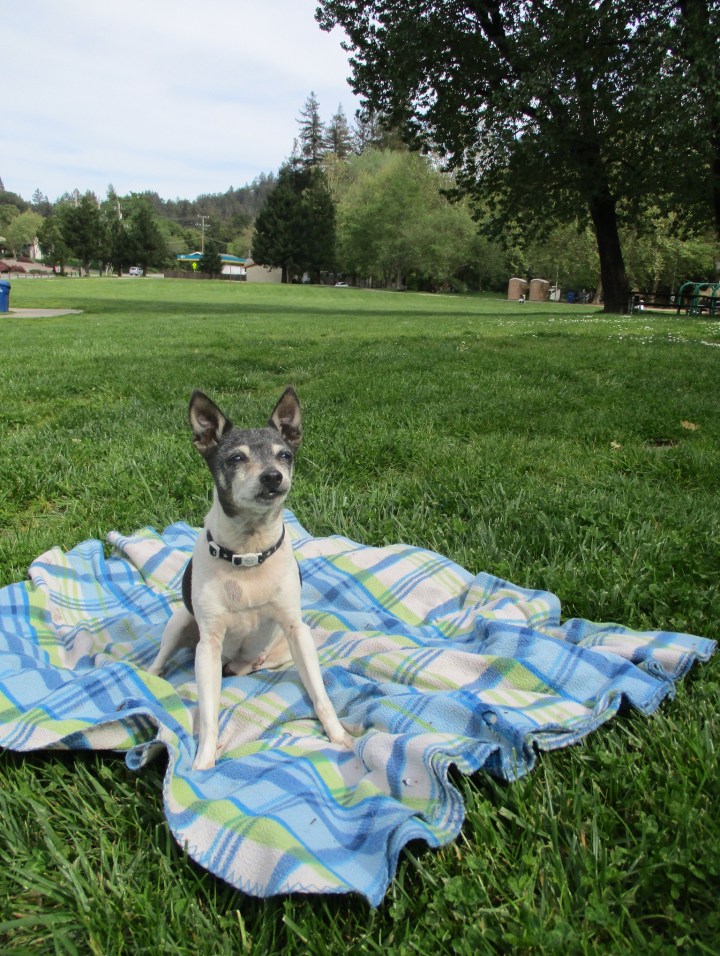
Dog Days!

My great grandfather could remember more summers in Sunnyvale than anyone else. He knew how unique every summer was and continues to be. Some summers are uncomfortably hot from beginning to end. Last summer though, was the coolest in recorded history!

Warm summers are of course best for the fruits and vegetables that like warmth. Peaches, grapes, tomatoes and rhubarb in my great grandfather’s garden always got the best flavor during warm weather. Warm but not too hot weather early in summer made the best ‘Bing’ cherries on my grandmother’s tree in Santa Clara.

Although cool summers are more comfortable for dogs, cats and people, they are not quite as conducive to growing fruits and vegetables. It is still too early to know what this summer will be like, but even though it is now getting warm, the warmth is developing late. The past spring was remarkably mild, with rain lingering later than it typically does.

Consequently, some fruits and vegetables, as well as some flowers and trees, are developing slowly. Peaches may be a bit smaller than they typically are, with slightly milder flavor. Rhubarb should have good flavor because of recent warm weather, but may develop a bit late because it got a late start.

Tomatoes are perhaps expressing the most dissatisfaction with the mild weather. Even tomato plants that were put out in the garden early in spring have grown slowly, and are not nearly as productive as they typically are by the beginning of summer. Some are not yet producing!

Fortunately and unfortunately, the weather has gotten significantly warmer. This may be uncomfortable for us; but is a party for the formerly bored tomato plants. Warmth of course promotes bloom and fruit production, and enhances flavor. If they get what they need, tomato plants that seemed sickly in the past may suddenly grow like weeds.

They should waste no time making up for lost time. Even if mild weather continues into summer like it did last summer, it will still get warmer than it has been. Maturing tomato plants will want more water and fertilizer (if used) as they get larger, and the weather gets warmer.

Xeriscape Is Definitely Not Zeroscape

Ocotillo actually prefers more xeric climates.

“Zeroscape” is a neologism that evolved from “xeriscape”. It was a mispronunciation that became a misspelling that became a real word. Ironically, it makes sense. It evolved with the misconception that a xeriscape requires no maintenance. Now, the two are different types of landscapes. A Zeroscape is pavement or gravel that requires zero maintenance.

A xeriscape is a landscape of xeric vegetation. Generally, such a landscape needs less maintenance than conventional landscapes. Nonetheless, some degree of maintenance is necessary. Furthermore, several xeric species require very specialized maintenance. Such specialized requirements may be more demanding than more familiar gardening.

The primary advantage of a xeriscape is that it needs less water than other landscapes. Some xeric species are native to Mediterranean climates. More are native to arid desert climates. Once established, they need minimal irrigation. Many xeric species get all the moisture they need from seasonal rainfall. Some can not tolerate much more than that.

Native species that grow wild can be surprisingly difficult to establish in home gardens. Some xeric species can be even more uncooperative. Cultivation within a garden is very different from natural conditions. In the wild, such species disperse roots proportionately as they grow from seed. In a garden, they begin with detrimentally confined root systems.

Even xeric vegetation within a xeriscape needs moisture while it disperses roots. A few may get enough through winter if they get into a garden early in autumn. Most prefer a bit of irrigation at least through their first year. The difficulty is that some can rot if irrigation is even slightly excessive. They are more susceptible to rot than species that are not xeric.

Maintenance of a xeriscape, is more challenging than demanding. That is because so many xeric species are from harsh desert ecosystems. They innately defend themselves from grazing wildlife. Consequently, cacti, agaves and yuccas are wickedly thorny and spiny. Several are potentially dangerous to handle. So are some euphorbs and acacias. They may not need maintenance often, but when they do, they do not make it at all easy.

Humid Weather is Atypical Here

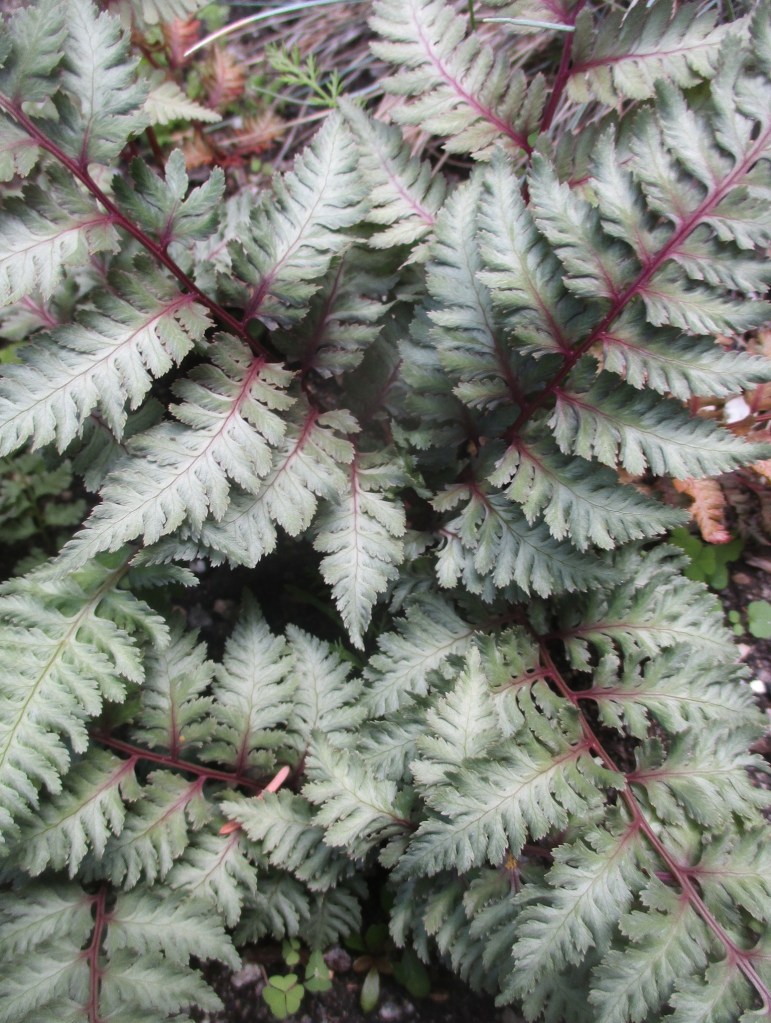
Ferns generally appreciate humidity with warmth.

Aridity is the opposite of humidity. It is why summer warmth is not as unpleasant here as in humid climates. It does not get so much consideration though. Most of the populace of California inhabits arid chaparral or desert climates. Aridity is so typical that any absence gets more attention. Humid warmth is both uncomfortable and relatively uncommon here.

Hurricane Hilary recently demonstrated how unusual humid weather can be here. It was merely a tropical storm as it left Mexico, but was significant nonetheless. Humidity briefly remained elevated after torrential rain in Southern California. It may have lingered longer in regions that lacked rain in Northern California. It caused warmth to seem a bit warmer.

This humidity would have been more horticulturally influential if it had lasted a bit longer. Obviously, irrigation is temporarily unnecessary for saturated landscapes. Some flooded. Some simply absorbed rain. Less obviously, landscapes that received no rain need a bit less water with humidity. Humid weather reduces evaporation from active foliar surfaces.

Humidity also reduces the volatilization of floral fragrance. Fragrant flowers are therefore more fragrant during humid weather. Delicate floral structures also last a bit longer. Many flowers are more turgid and colorful with humidity. All sorts of foliage, particularly tropical foliage and fern foliage, is more lush. After all, most vegetation is from less arid climates.

Humidity influences allergens also, both positively and negatively. Some allergens, such as fungal spores, are more abundant with humid weather. Some allergens, such as dust and pollen, are more abundant with less humidity. That is why humidifiers are helpful for dust or pollen allergies. It is also why dehumidifiers are helpful for fungal spore allergies.

Spontaneous limb failure can be another consequence of humid warmth. It is hazardous because it occurs very unexpectedly without wind. Warmth accelerates vascular activity, which increases foliar weight. Humidity with slow air circulation inhibits evaporation from foliage. If unable to shed enough weight, foliage becomes too heavy for limbs to support.

Arid Weather Increases Water Consumption

Chaparral vegetation naturally tolerates arid weather.

Superbloom is brief for two main reasons. It involves native species that know to bloom quickly before arid weather of summer. Also, wildflowers in the wild receive no irrigation to sustain bloom through arid weather. With irrigation, some of such species are capable of prolonging bloom. A few can disperse seed for subsequent generations to bloom later.

That is why California poppy blooms for a longer season within home gardens. It easily performs through much of summer with irrigation. Also, with irrigation, it might regenerate to bloom for autumn after summer dormancy. Seed from earlier spring bloom might grow to also bloom for autumn. Some godetias and lupines perform similarly within cultivation.

Most species within home gardens are exotic though. In other words, they are not native. Those that are native to a similar mediterranean climate respond similarly to cultivation. Generally, some from desert climates do so also, although many dislike extra irrigation. The majority of exotic species actually rely on some degree of cultivation and irrigation.

Such species are native to climates with cooler and less arid weather through summer. Rainfall here is too limited to winter to sustain them through summer. Minimal humidity and warmth increase the need for moisture while it is least available. Cooling summer breezes actually accelerate desiccation. Arid weather certainly has its disadvantages.

As spring relinquishes to warmer and drier summer, irrigation becomes more important. Frequency and duration of automated irrigation must adjust to increasingly arid weather. Shallow root systems, such as those of turf grass lawns, require more frequent irrigation. Deep root systems, such as those of maturing trees, require more voluminous irrigation.

However, irrigation should not be so excessive that soil remains saturated. Many mature trees and shrubs need none at all. Some receive enough from what adjacent vegetation does not consume. Some are satisfied with only occasional irrigation. Turf and annuals require the most frequent irrigation. Yet, even they can rot if their soil is always saturated. Calibration of irrigation requires diligence.

Arid Climates Can Be Challenging

Some plants shrivel in arid warmth.

‘Mediterranean’ translates as an adjective that describes being at the middle of the Earth. Those who inhabited that region many centuries ago considered the Mediterranean Sea to be central to their World. That was long ago and far away. Nonetheless, climates here and now are somehow Mediterranean. Maybe semi arid climates of Italy are Californian.

Mediterranean climates are temperately warm with dry weather through summer. Rain is almost exclusive to a rainy season between autumn and spring. Although rain can briefly get abundant during the rainy season, the average annual rainfall is modest. Humidity is minimal for much of the time. Arid warmth is more comfortable than rarely humid warmth.

Desert climates accumulate less than ten inches of rain annually. Local climates receive more than fifteen inches of rain annually. They are therefore not sufficiently arid to qualify as desert climates. Technically, they are only semi arid chaparral climates. This climactic designation is perhaps more appropriate than the regional designation of Mediterranean.

Native plants and plants that are native to other chaparral climates are naturally pleased with the local climate. However, some initiate at least partial dormancy to survive through the long and arid summers. They may bloom early, but then partially defoliate for several months. Some delay dormancy if watered. A few dislike watering. It is unnatural for them.

Most plants in home gardens are not native to chaparral climates. They require watering to compensate for aridity during summer. Minimal humidity accelerates evaporation from foliar surfaces, which increases the demand for moisture. In conjunction with warmth and wind, aridity can desiccate foliage. Like people and pets, plants must maintain hydration.

Humid warmth that is less comfortable for people and pets is more comfortable for plants than arid warmth is. Humidity inhibits evaporation from foliar surfaces so plants consume less moisture. Incidentally, most pathogens, such as fungal diseases, bacterial diseases and most insects, also prefer warm humidity. People and pets seem to be in the minority.