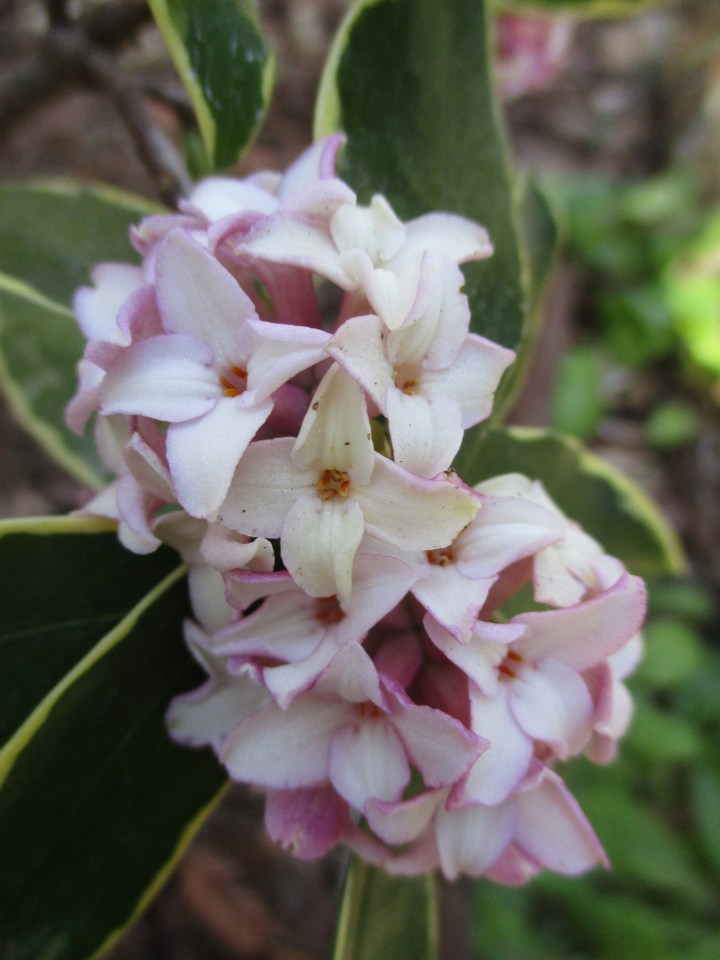
More flowers bloom as winter becomes early spring than at any other time of year. For many flowers, bloom is significantly accelerated this year because winter was so very warm. Flowering cherry, purple leaf plum and most of the stone fruit trees (such as almond, cherry, apricot, nectarine, peach, plum, prune and all their various hybrids) have already bloomed.
Color is what gets noticed first. After all, that is what all the flashy colors are intended for, to get the attention of pollinators. Yet, there is more to the indirect mating strategies of flowers than color. Because flowers lack the mobility to pollinate each other, they do what they must to attract others to disperse their pollen for them. Some use fragrance.
Generally, flowers prefer one tactic or the other. This is why the most colorful flowers lack fragrance, and the most fragrant lack color. Gardenia (which is not easy to grow locally), star jasmine, honeysuckle, Pittosporum tobira, Pittosporum undulatum and night blooming jasmine are not exactly colorful while blooming. The powerfully fragrant flowers of sweet osmanthus and sweet box barely get noticed.
Pink jasmine and mock orange (Philadelphus spp.) are flashier, only because their blooms are so profuse. Southern magnolia has spectacularly big flowers, but they are mostly obscured by dense foliage high above view. Cereus cactus and moon flower are likewise spectacular, but bloom at night to attract nocturnal moths for pollination.
Only a few flowers are both colorful and fragrant. Lilac and wisteria are among the more familiar. Both bloom early in spring, with a similar color range of lavender, blue, pink and white. Lilac is shrubby. Wisteria is an aggressive vine. ‘Charles Grimaldi’ angel’s trumpet is a big shrubby perennial that blooms rich yellow, but may only be fragrant at sundown.
Freesia, hyacinth, lily and bearded iris are flashy and fragrant flowers grown from bulbs, although hyacinth and most lilies rarely bloom a second year, and many lilies and bearded iris lack fragrance. Sweet alyssum is a mildly fragrant annual that blooms white, pink or lavender.
 Window boxes were supposedly invented in Venice to contain aromatic plants that repelled mosquitoes (and probably because garden space was so minimal in Venice). Hanging plants like nasturtium and ivy geranium are traditional window box plants because they do not obscure scenery or sunlight. Scented geraniums are also popular because they are be so strongly aromatic.
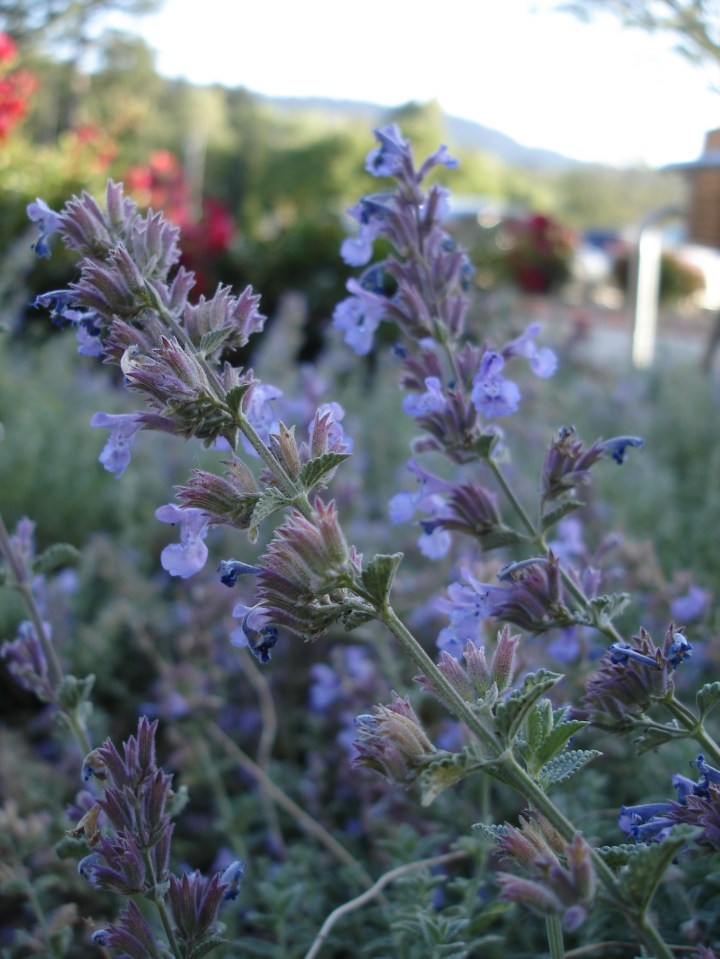 Out in deserts, where vegetation can be a scarce commodity, cacti, agaves and yuccas protect themselves from grazing animals with thorns, spines, caustic sap and distastefully textured foliage. None of these defense mechanisms is perfect. They only need to be better than what the competing specie are using. Many plants find that objectionable flavor and aroma work just fine for them.
 Tony Tomeo