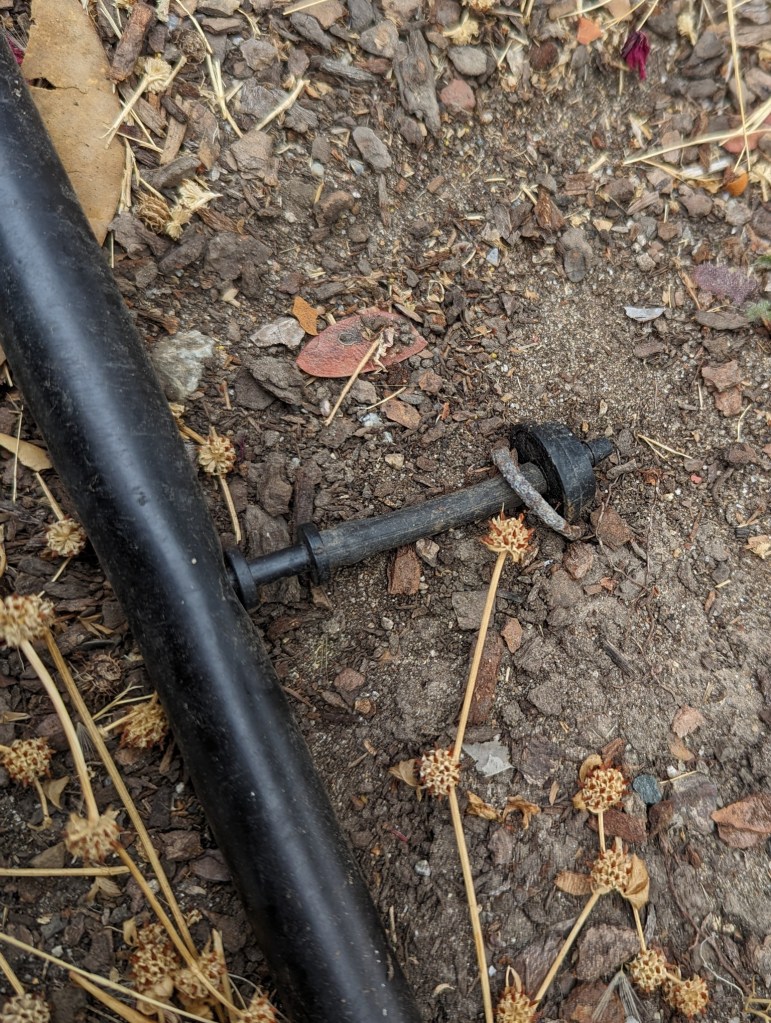
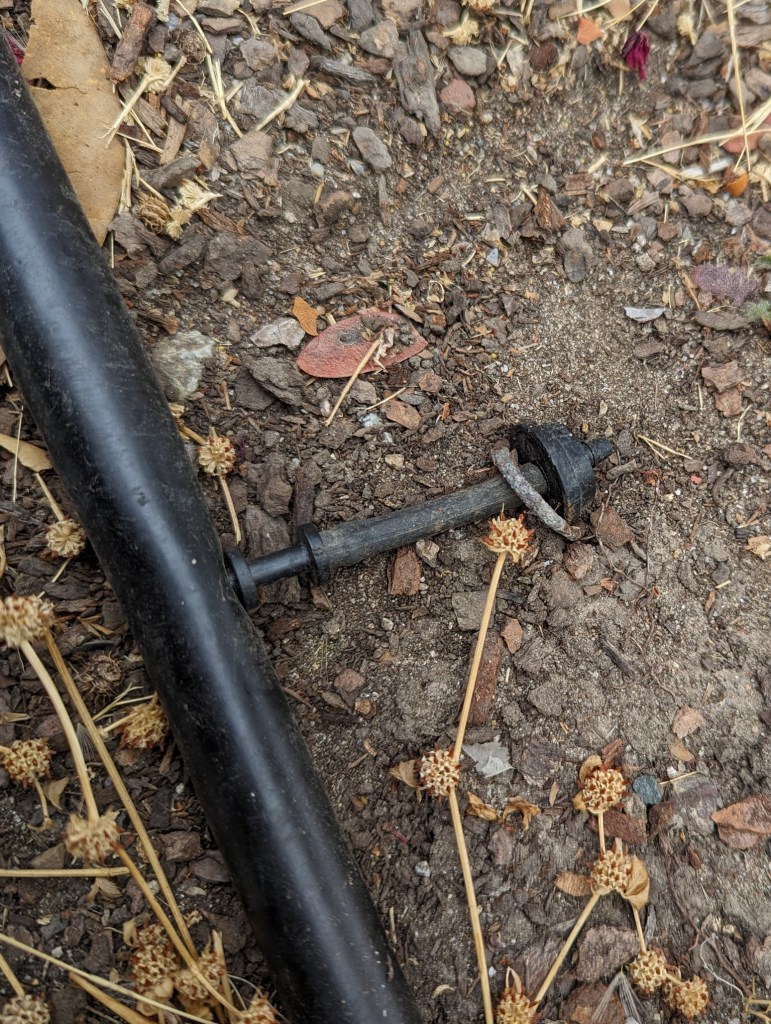
Now that it has started to rain, what should be done with automatic watering systems? In almost all situations, automatic irrigation systems should be adjusted to accommodate for moisture provided by rain. If rain is sufficient to provide enough or too much water, irrigation can be discontinued until needed again when the rain stops a few months from now.
If the first few storms are discontinuous enough with warm and dry weather mixed in between, lawns and plants that want more substantial watering may need to be watered a few times until the rain becomes more reliable. However, because of cooler temperatures and shorter days, plants do not use nearly as much water as they did during the summer anyway, so do not need to be watered nearly as much as they were only a month or so ago.
Deciduous plants that are losing their leaves need the least moisture, since they can not lose any moisture through evapotranspiration (evaporation from foliar surfaces). The very few plants that bloom or even start to grow during winter use a little bit more water than those that really are dormant, but are still likely get all they need from rain even without getting watered.
Flowering annuals, particularly left over warm season annuals that continue blooming late, may get moldy with too much rain. Their flowers and some of their foliage can turn to mush until there is a break in the rain. Removal of damaged flowers and leaves slows the spread of the mold but does not cure it. Good air circulation among well spaced plants and in exposed areas helps inhibit mold. Regardless, moisture from abundant rain can eventually cause mold to be a problem.
In fact, the only plants that are not likely to get all the water that they need from rain are those that are in pots and planters under eaves or in the home as houseplants. Nonetheless, sheltered plants that are outside should still get much less water now than they do during the long and warm days of summer. These plants are either dormant or at least more sedate because of the shorter cooler days through winter. Houseplants may likewise use less water because the home environment is also cooler.
However, if the heating system of the home decreases humidity, some large houseplants may actually want a bit more water through winter! Humidity fluctuates most in older deficiently insulated homes that are heated by wood stoves or fireplaces; since these homes get humid without a fire burning, but then get much drier with a fire.
 Tony Tomeo