Ecclesiastes 3: 1

P80207There is a time for everything, and a season for every activity under the Heavens:

Verses 2 through 8 continue to list a few examples of more specific activities that happen at specific times. If there were more examples, autumn foliar color would probably be cited as well. After all, autumn foliar color happens in . . . well, . . . autumn.

Perhaps it was omitted for brevity. Of course, there is the possibility that it was omitted to avoid confusion. If it had been cited, it might have been described simply as ‘foliar color’ rather than ‘autumn foliar color’. Some foliage colors earlier if distressed. Some foliage does not color until frosted. Some might even delay color until it is in the process of getting replaced by new foliage. Then there are the many sorts of evergreen foliage that do not color at all, or at least in a manner that is visible or notable from outside. Shedding browned or blackened dead foliage, particularly that which is obscured by new foliage, does not count.

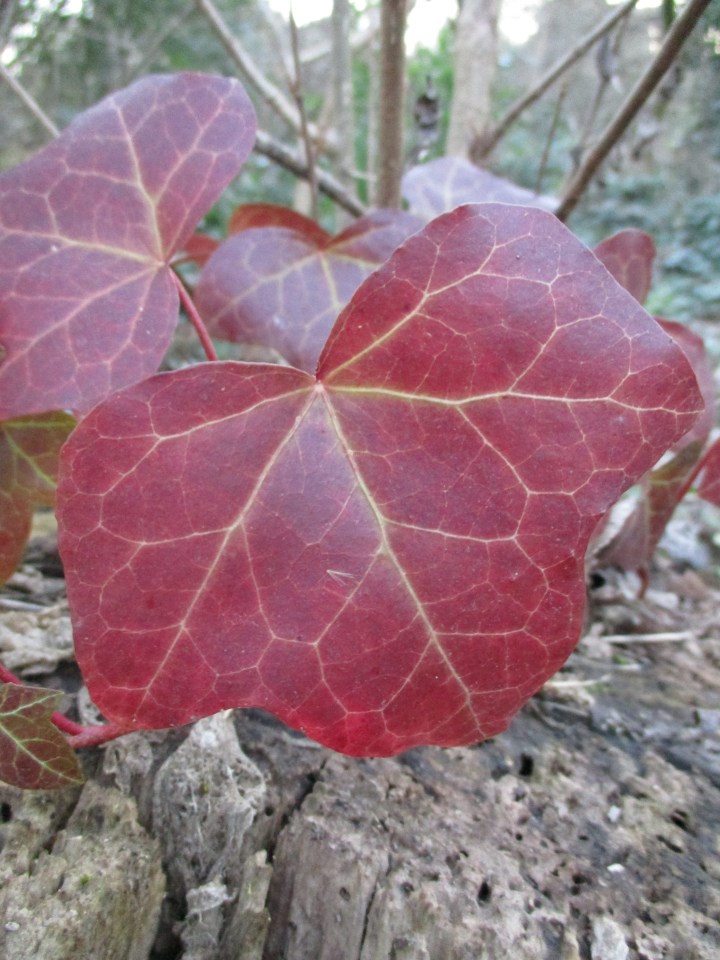
This English ivy foliage is the sort that should not color at all. Old leaves should whither and deteriorate once obscured by new foliage. Perhaps the vine is concentrating resources elsewhere while abandoning this section. Perhaps the entire vine is deteriorating. From this picture, it is impossible to determine why this colorful foliage is exposed.

Perhaps this is the time to just appreciate nice autumn foliar color wherever and whenever we get it, even if it is on English ivy in winter. As the flowering cherries try to convince us that it is spring, that would be just fine too. This can be the time for autumn, spring, and maybe even winter if it ever arrives, all at the same time.

Unseasonable Weather Can Confuse Plants

70920thumbEven without any of the five senses that we are outfitted with, plants are remarkably perceptive of the weather and the changing seasons. They know precisely what time of year it is because they know how long the sun is up. Their calendar is just as accurate as ours is. They also know that the weather has been getting progressively cooler through autumn, and that it rained a bit earlier.

New Zealand tea tree, torch lily, euryops daisy and many other plants from other temperate climates do not seem to care that they should not be blooming at this time of the year, if the weather is telling them otherwise. If the weather is warm enough during the day, even if it gets cool at night, these plants will bloom right up until things get really cold, even if some of their bloom gets frosted.

Saucer magnolia, lilac, apple and the many other plants from climates with cooler winters should know better than to bloom this time of year. Many bloom only once annually, so whatever blooms now will not bloom when it should next spring. Besides, the flowers that try to bloom now will bloom slowly, and probably be ruined by cool or rainy weather before they can develop completely.

Roses had a particularly weird year. They bloomed well and on schedule last spring, but then idled through much of summer, only to express a new interest in blooming now that they should be going dormant for winter! No one wants to prune them while they have more buds than they did in August. Fortunately for them, they bloom more than once annually, so should recover by spring.

The colorful foliage of sweetgum and Chinese pistache, as well as the observable weather, indicate that everything is more or less in order for this time of year. Autumn might have started out mild, but it had been even warmer in past years. It is impossible to say why some magnolia, lilac and apple are trying to bloom already. They each have such distinct personalities, and respond to so many different variables besides the obvious; daylength, temperature and humidity.

‘Green’: The ‘Other’ Autumn Color

P71202After reading so much about the exquisite foliar color that most everyone else in the Northern Hemisphere gets this time of year, I must admit, I can get rather envious of those who experience four seasons instead of just two. The abundance of spring in the Southern Hemisphere does not help. Why have I not found a garden blog from Ecuador or Indonesia so that I have something to point and laugh at? It just isn’t fair.
Well, now I have something to brag about.

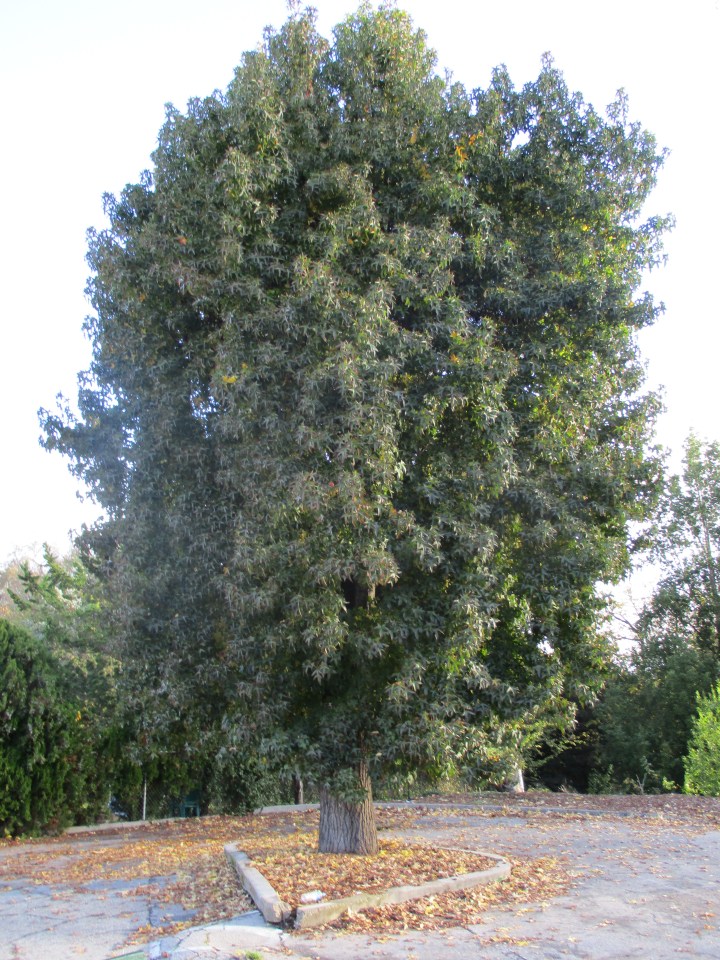
I found this bright red leaf on a crepe myrtle in town. Isn’t it pretty? Go ahead, you can tell me. It is gorgeous, RIGHT? Go on; say it! Say it NOW! LOUDER!

Soon, all the foliage behind it will be turning red and orange with maybe a bit of yellow. Can you see it? I think some of those leaves are starting to consider turning color right now! I just love this time of year!

There is other foliar color. I just happened to take a picture of this single leaf first. REALLY! There IS autumn color here.

In fact, most of of the foliar color here this time of year is a very different color from what is so common elsewhere. It is known as ‘green’. Have you ever heard of it? Yes, of course! It is that color that you saw so much of in spring and summer!

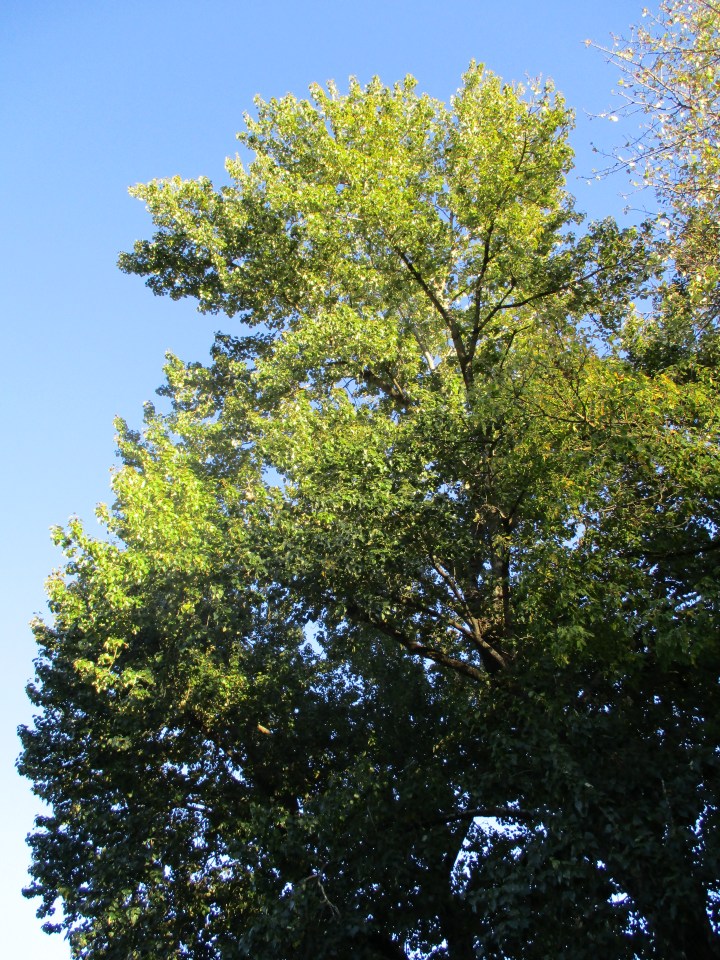
‘Green’ is such a splendid color! It looks particular exquisite on palm trees. Do you know what a palm tree is? Of course not. Well, we can talk about that later. For now, I will just post this spectacular picture of a rich ‘green’ sweetgum tree! Can you remember the last time you saw one in ‘green’? The fallen leaves on the ground remind us that this is autumn.P71202++

Coneflower

71129Known more as a medicinal herb, and by its Latin name, coneflower or Echinacea, is a delightful prairie wildflower that works just as well in refined home gardens. It blooms in summer and again in autumn, although autumn bloom can be inhibited if plants are not groomed of deteriorating stems from the previous bloom. Like related gaillardia and rudbeckia, coneflower is a nice cut flower.

Flowers start out like any other daisy flower, but then fold back with the long ray florets hanging downward around the more rigid centers of darkly colored disc florets, forming cones. Flowers can stand almost three feet high, mostly on unbranched stems. Many popular varieties stay lower. Leaves and stems are somewhat hairy or raspy. Old varieties were mostly purple or lavender. Newer varieties can be orange, yellow, red, pink, white or green. Big plants can be divided after autumn bloom, or in spring.

Autumn Color That Proves It

71122thumbThere may not be a good time to talk about it this year. The late warmth really put a damper on some of the autumn foliar color. Some trees are dropping their leaves as soon as they start to turn color, leaving only fading green leaves in their canopies. Only the most reliable trees for autumn color, sweetgum, Chinese pistache, flowering pear and gingko, are trying to make up for lost color.
Now, just because these four trees happen to color well and reliably in autumn does not necessarily mean that they are the right trees for every application. No tree is perfect. Gingko comes close in regard to adaptability to a broad range of applications, but provides only bright yellow autumn color. Flowering pear can be an excellent tree in most regards, but it very susceptible to fire blight.

The other two eventually get too big for some applications. Chinese pistache gets broad with low branches, and old trees (that predate the selection of the standardized male cultivar) can be messy with tiny but profuse fruits. Mature sweetgum trees are notoriously messy with obnoxiously spiked mace-like fruits, and can develop serious and potentially hazardous structural deficiency.

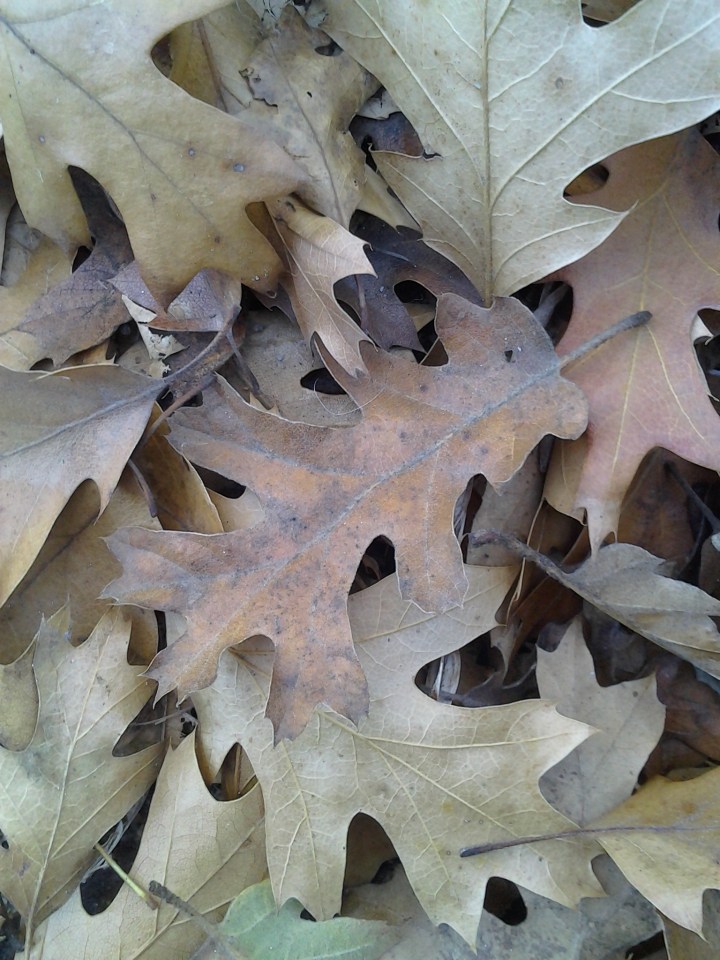
There are certainly more trees and plants that can provide foliar color in autumn. These just happen to be four of the most reliable, and most brilliantly colored. Chinese tallow turns dark burgundy and almost purplish, but colors best in response to a sharp and sudden chill. Red oak turns a monochromatic brown like that of a paper bag, but of course, the color does not appeal to everyone.

Years ago, it was advisable to select flowering crabapples and flowering cherries while blooming in spring because that was the most accurate representation of their floral color. (Photographs were not what pictures are nowadays.) This is still good advice. For autumn color, it is probably better to observe trees around the neighborhood, and then identify those that are most appealing.

Once a few are identified, it is easier to research them to learn about their distinct characteristics, and to determine if they are appropriate for particular applications or situations. Some might be too big. Some might be too messy. Some are not as colorful as others. Persimmon has the added bonus of fruit. Crape myrtle blooms nicely in summer. It is better to know before planting them.

Colors

P71029+Remember the movie from 1988? I don’t either. I never saw it. Gang violence is not my idea of a good time. The title ‘Colors’ refers to the use of distinguishing colors by the gangs of Los Angeles. Gang members wear colors that correspond to their respective gang affiliation.
As autumn progresses, some of us get to gloat about our colors. New England gets the most and best colors, with a full range of reds, oranges and yellows, as well as browns and burgundies. The Appalachian Mountains to the south seem to go lighter on the reds and burgundies, concentrating more on oranges. The upper Midwest around Minnesota excels at the rich reds, with yellows confined to groves of cottonwoods. The lower Midwest does well with clear browns alternating with yellows, and even some oranges. The Rocky Mountains have a good range of color, with more gold than the Appalachians Mountains, but it is not as spectacularly concentrated. The bright colors contrast more with evergreens.

Here on the West Coast, we have yellow. . . . and redwoods . . . and palm trees. The bright yellow cottonwoods are quite flashy farther inland and in Nevada, where they grow along creeks and rivers that flow through the southern deserts. The only orange and rusty red we get from native specie here is from poison oak. Cottonwoods, willows, sycamores, box elders and even the bigleaf maples all turn yellow; and only when the weather is just so. Box elder foliage is more likely to shrivel and turn tan. Sycamore and willow foliage usually gets rather shabby.

To get the bright oranges and reds that everyone else in American enjoys, we plant exotic (non-native) trees; and there are not many choices that color reliably in our mild climate. Sweetgum is probably the most reliable, and the most variable with its color. Pistache and flowering pear are the second best choices, although flowering pear has a serious problem with fireblight here. Gingko colors very nicely, but is limited to yellow, which we already have a bit of.

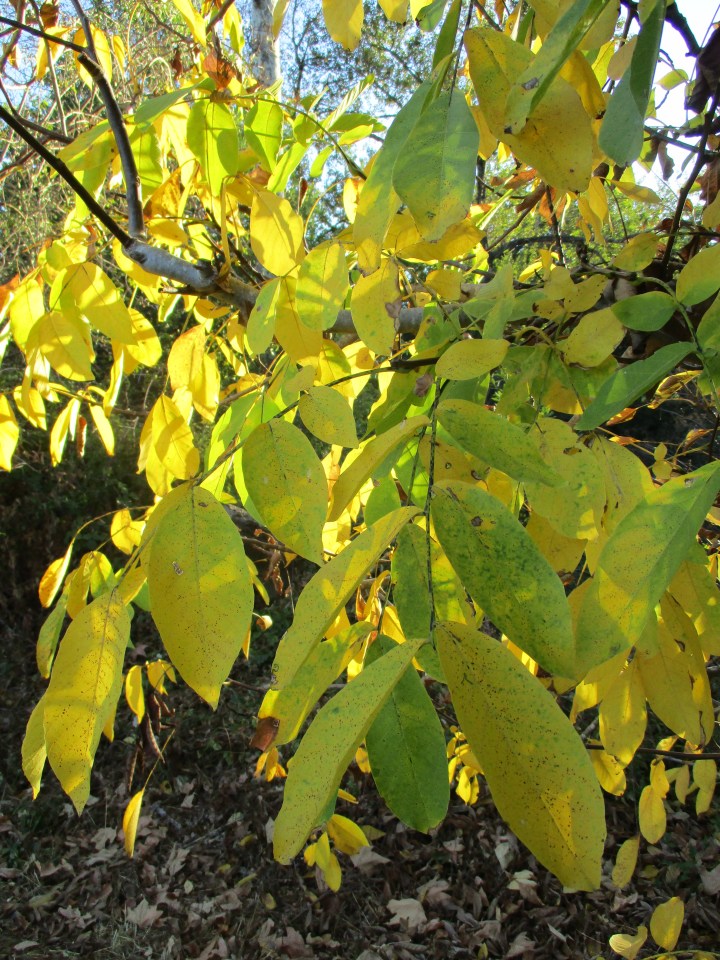
While everyone else is posting pictures of their autumn color online and bragging to Californians about it, our color is only beginning to develop here. The most reliably colorful of the exotic trees seem to be doing well; but the natives and some of the exotics are defoliating prematurely, without much color at all. Honeylocusts have dropped most of their foliage while it is still lemon-lime green. Box elders just look sickly. Cottonwoods drop leaves as soon as they turn yellow, leaving only green leaves up in their canopies. The English walnut in the picture is the best color I could find.

It happens this way sometimes. This year, it might be a result of the unusually warm weather so late in summer, after the weather had already started to turn milder. It is impossible to say for certain. We take what we can get. We are not known for autumn color here.

P71029

Gutters And Chimneys Need Attention

71101thumbThere is no time that is best to clean the gutters on the eaves. They should probably be cleaned early before the debris within them gets dampened by the first rains. However, they will only need to be cleaned out again after more foliage falls. If cleaned only after all the foliage falls, they will be grungier, and there will be potential for some of the debris to flow into and clog the downspouts.

Most of the fresh leafy debris that fell recently is relatively easy to clean out. Debris that has been accumulating through the year will be more decomposed and settled in. Evergreen trees are somehow messier than deciduous trees. They drop smaller volumes of debris in autumn, but they drop the rest throughout the year. Deciduous trees drop all their foliage within a limited season.

That certainly does not mean that deciduous trees can not make a mess. All that foliage has to go somewhere. If the weather gets cool slowly, foliage falls slowly, and for a longer time. Some deciduous trees innately defoliate slowly, and may even wait all winter to finish. Fruitless mulberry, tulip tree and poplars typically defoliate efficiently, making a big mess that gets cleaned up once.

Flat roofs that lack gutters collect debris too. So do the spaces behind chimneys and in roof valleys (where the slope changes direction). Even if this debris does not interfere with the function of gutters and downspouts, it promotes rot in roofing material. Trees and vines that touch a roof are likely to be abrasive to roofing material if they move in the breeze, or hold debris against the roof.

Trees and vines must be kept clear of chimneys, not only because they can interfere with ventilation, but also because they can be cooked by exhaust from the fireplace below, and ignite! Fan palm beards (dead foliage that accumulates on trunks), pine, cypress, spruce and cedar are particularly combustible. Clinging vines can separate brick from mortar, which is another fire hazard.

Working on the roof and gutters is of course potentially dangerous. It might be best to get a professional for these sorts of jobs, especially if trees need to be pruned. While that is being done, there is plenty of raking and other gardening for us to do (without a ladder). Raking leaves is an important job too, since fallen leaves can shade out lawn, ground-cover and flowering annuals.