Still Going Bananas!

Most of the banana pups and plugs are manageable, . . . for now.

Three more cultivars of banana arrived this week. There are now as many as twenty here. Three are unidentified. Of these three, two could be redundant to others. Of these two, one is merely dormant corms that could rot before generating new foliage. Another is already generating pups. Another is represented by a pair of pups. Eight grew from pups. Twelve grew from tissue culture plugs. Five have already grown too big to remain in the nursery where this picture was taken. At least three can grow more than twenty feet tall. At least two can grow more than forty feet tall. One is Musa ingens, which is the largest species of banana in the World, which can grow more than sixty feet tall! This sounds like fun, but so far, we only intend to add one of these twenty to only one of the landscapes! Three other small cultivars might remain potted in other landscapes, but are merely a minority of the total. Banana ‘trees’ are not exactly easy to accommodate. They want generous irrigation. Their ‘trunks’ grow very fast, but do not last long. Because they can not be climbed, every ‘trunk’ requires a radius that is comparable to its potential height to free fall when it gets cut down. None of the refined landscapes can forfeit areas that are large enough for ‘trunks’ of the larger cultivars to fall. Riparian areas that can accommodate them, and even without irrigation, are forested with redwoods, which banana ‘trees’ are not aesthetically compatible with. I would say that we will figure this out as they grow, but banana ‘trees’ grow very fast. They can remain canned for the rest of this season, but would be very displeased with such confinement next year. It is about to get even more interesting.

Six on Saturday: Amiss

Heather worked ‘VERY’ late. Labels got switched on two cultivars of passion flower vine. We got another banana tree with no plan. A walnut replaced a palm. Palms did nothing. Oh my!

1. Musa acuminata ‘Popoulu’ banana ‘tree’ arrived in the mail as this tissue culture plug with a crease across it. It will recover, but its blemish is annoying. What is more amiss is that this is the twentieth cultivar of banana here, but we have plans for none of them yet.

2. Juglans nigra, black walnut was a typical understock for the English walnut orchards of the Santa Clara Valley. It is somewhat naturalized nearby, but not here. Where are all these seedlings coming from? Why did this grow in a can for Costa Rican bamboo palm?

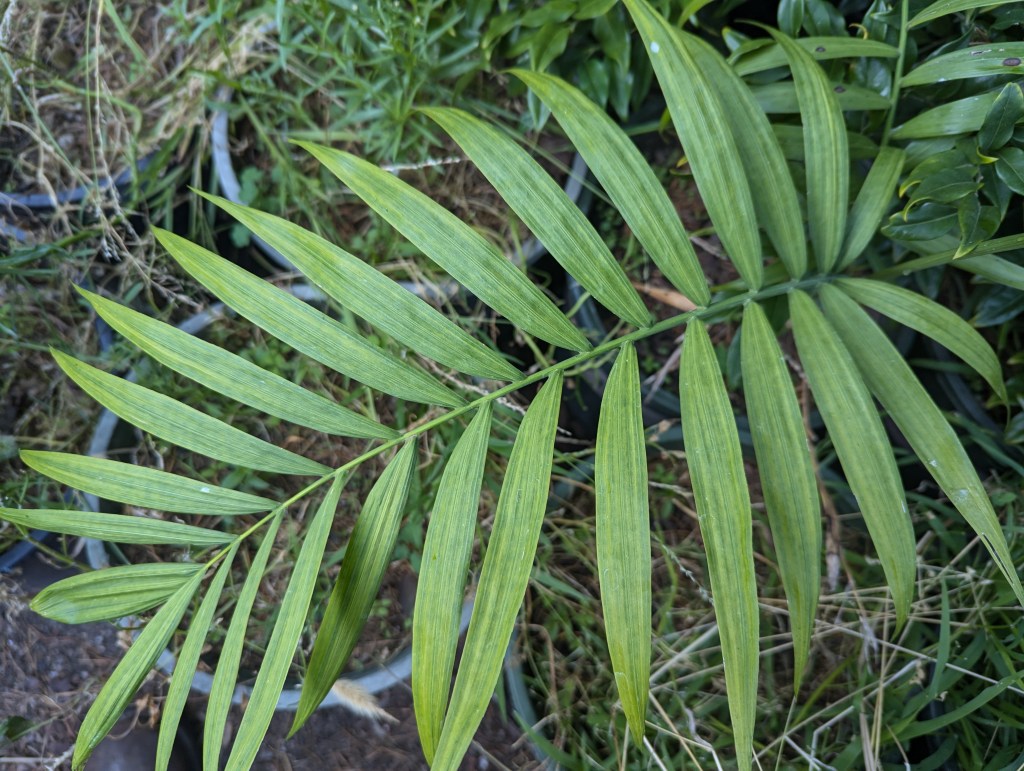
3. Chamaedorea costaricana, Costa Rican bamboo palm is what should be in the can of the black walnut seedling. I brought enough rhizomes from Brent’s garden for about ten #5 cans and about as many #1 cans, but after a year, this is the only specimen that grew.

4. Hakonechloa macra ‘Aureola’ Hakone grass had never performed particularly well. A few other small perennials were added nearby to compensate. Now, the Hakone grass is growing lushly enough to overwhelm some of the perennials that were added to assist it.

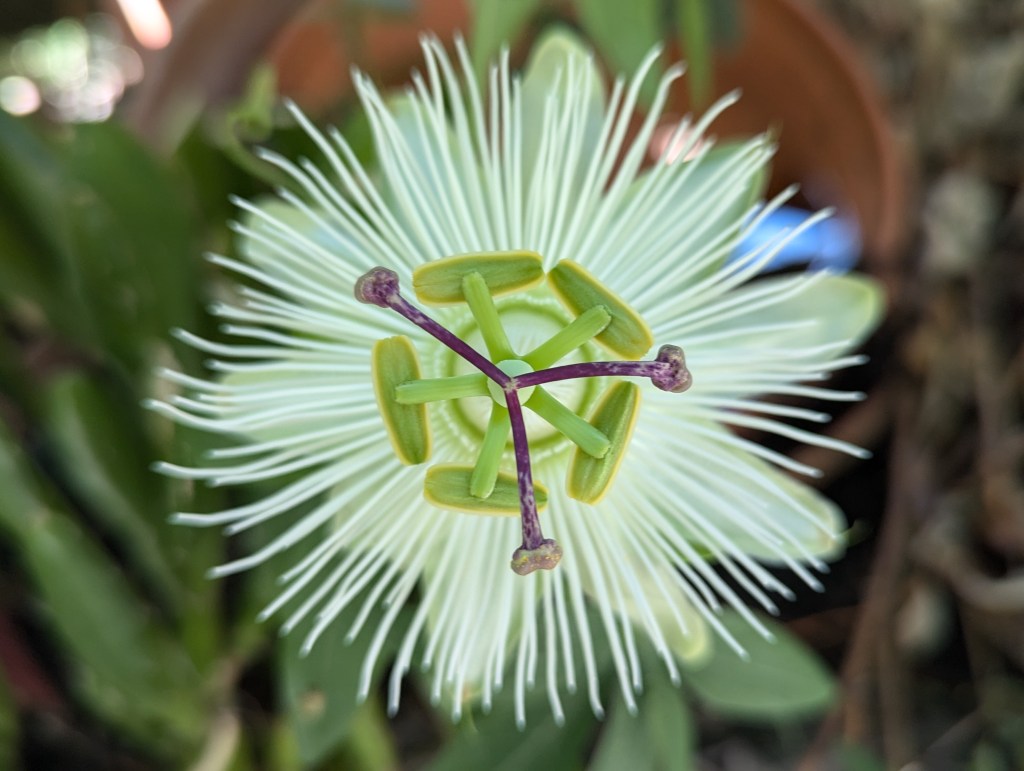
5. Passiflora caerulea ‘Constance Eliot’ passion flower vine went into a landscape after it impressed with purple bloom. Of course, it was expected to bloom white like the original that provided the cuttings. This specimen was expected to bloom purple like its original.

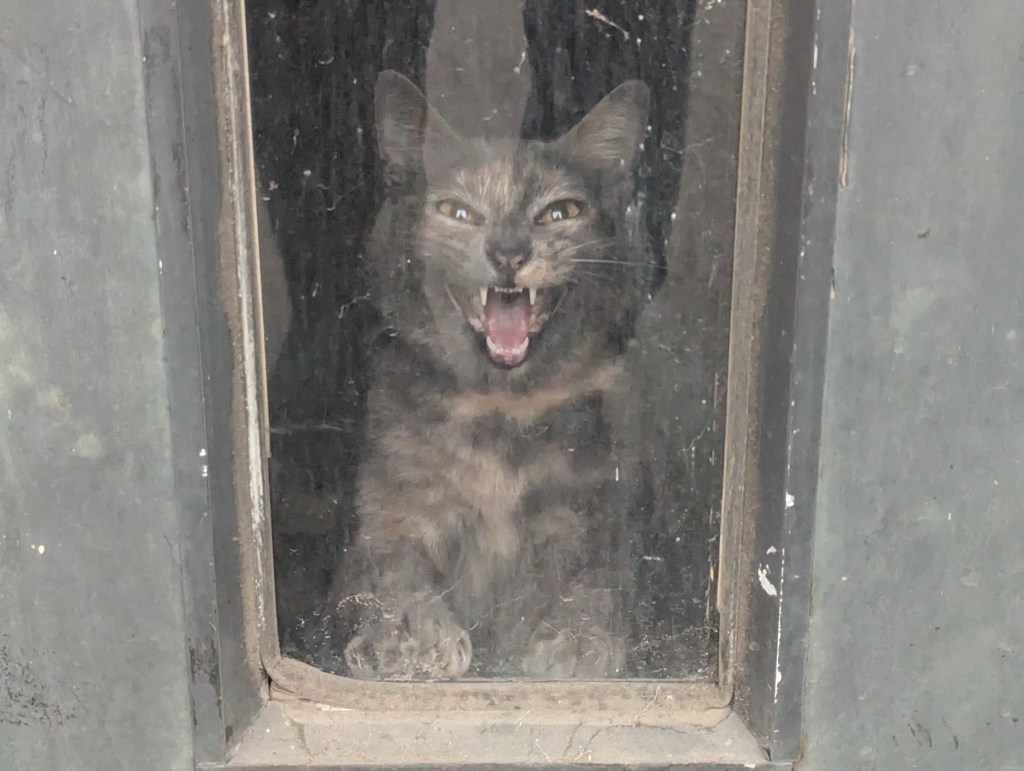
6. Heather is a very proficient mouser. Rodents had been a major annoyance prior to her arrival. They are now no bother at all. However, a rat was observed within this particular shop. Heather apparently went in to investigate, and consequently spent the night there.

This is the link for Six on Saturday, for anyone else who would like to participate: https://thepropagatorblog.wordpress.com/2017/09/18/six-on-saturday-a-participant-guide/

Going Bananas! II

‘Double Mahoi’ banana pup with pups

‘Double Mahoi’ banana has been tediously slow. Although I now know why, I am disappointed with its development so far. After the primary pup that I split from the original last year got frosted over winter, I noticed that its central bud survived and was barely beginning to recover. Then, it stopped. I mean, it did nothing for several days or maybe more than a week, even though the weather was warming. Also, the foliage remained pale, as if it had just emerged. Because it was stagnating for so long as the weather was warming, at least one of its leaves got scalded in the middle. Then, because I gave it a bit too much soluble fertilizer, its leaves got bad tip burn. I suspected that it was up to something while seemingly inactive, but did not really know. Finally, the tip of its first pup appeared. Then another appeared, and then a few more! While still just a pup, it had an entire litter of eight pups, which is four times ‘Double Mahoi’, and I do not know if it is finished. Of course, eight pups sharing resources do not grow fast. Also, the tip burn continued as the pups initially emerged, which likely inhabited growth for a while. For now, I can only give them plenty of water, and refrain from giving them more fertilizer. They have good exposure, but I will move them under saran if the weather gets too warm for such small pups to be so exposed. I doubt that all eight pups will survive, but I would have been pleased with merely one. Of course, the one original pup will not survive the process of diverting its resources to its pups, but that is an acceptable consequence of getting a bit more than expected.

Original ‘Double Mahoi’ pup not much more than a month ago