Tabasco

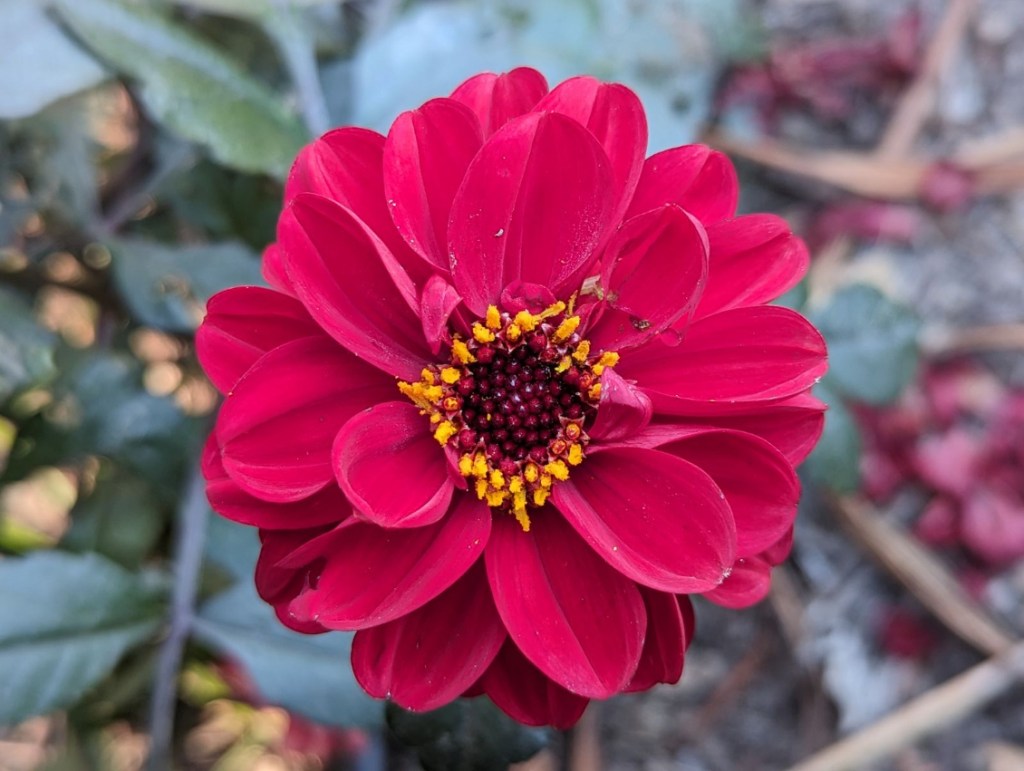
Dahlia ‘Tabasco’

Annuals, as their designation implies, complete their respective life cycles within one year. Perennials, as their designation implies, can survive perennially, for more than one year. However, some bedding plants that are enjoyed as annuals actually have potential to be perennials. They are only as disposable as annuals because they are less appealing during dormancy or whatever season in which they do not perform so exemplarily. Most who enjoy gardening do not mind. Perennials that are designated as perennials but do not perform for more than a year are more disappointing. Of a few dahlias that the other horticulturist here purchased a few years ago, four were two pairs of bedding dahlias, which typically function as annuals, and one was a rather expensive perennial ‘Cafe au Lait’ dahlia. ‘Cafe au Lait’ rotted within its first season of minimal bloom. I was not at all keen on it anyway, and was even less keen on its lack of perennial performance. One pair of bedding dahlia, which I do not remember the name of, bloomed for two years, with bright yellow flowers against light green foliage. They would have bloomed again this year if I had stored them better and put them back into the landscape sooner. I forget about the stored dahlia tubers because we typically do not dig and store them here. The other pair of bedding dahlia was ‘Tabasco’. It originally bloomed with red flowers striped with orange, against dark green foliage. For the following year, it blooms with yellow flowers blotched with orange, against simpler green foliage. Now, for its third year, it blooms more like it appears in pictures, with simpler red flowers against bronzed foliage. I do not mind its variability, and actually find it to be interesting. I am more impressed by its perennial performance.
Perennial Annual Dahlias

Annual dahlias are expected to be, as their designation implies, annual. In other words, they grow in the spring, perhaps from seed, bloom through summer, and then succumb to frost during their first winter. Some are likely grown from cuttings or division of nursery stock tubers, in order to be ready for spring earlier than seedlings. Regardless, they are not expected to survive for more than one year.

Most other dahlias are expected to be perennial. That is how their expense is justified. Most are sold while they are merely dormant tubers, and are generally more expensive than annual dahlias. Some, especially the trendy sorts, are significantly more expensive.

‘Cafe au Lait’ was a trendy dahlia a few years ago, and is still trendy. We procured one at work. It performed somewhat well for the first season, and was then dug and stored for winter. It did not perform well for the second season, and was then dug and stored again, but did not survive through winter.

Four smaller annual dahlias were procured in conjunction with the single ‘Cafe au Lait’ dahlia. They were relatively inexpensive, but delightfully colorful. They bloomed nicely around the larger ‘Cafe au Lait’ dahlia. They were also dug and stored for winter after their first season, although we knew that we should likely merely discard them. One had actually divided into two. These annual dahlias bloomed better than ‘Cafe au Lait’ for their second season, and then again, were dug and stored for winter. Unfortunately, three, including one that divided during the previous winter, did not grow for long after last spring. However, two of the original four annual dahlias continue to bloom, and will be dug and stored as they succumb to frost this winter. These annuals have been more perennial than the perennials.

Cool Season Color Returns Seasonally

Pansies and violas like cool weather.

Cool season vegetables are the first clue. Now that they are seasonal, cool season color is also seasonal. Both comply with similar schedules. Their cool season centers around winter, including portions of spring and autumn. Some prefer to start early. Some prefer a later start. They also finish at variable times through spring. Some perform until summer.

Warm season color also complies with distinct schedules. Some might finish a bit earlier than their cool season replacements begin. Conversely, some could continue to perform a bit later than their replacement allows. It is gratifying when color of one season finishes as color of the next season begins. That will become more likely later within the season.

Cool season color has a few designations. Winter commonly replaces cool season. Yet, it includes adjacent portions of autumn and spring. Bedding plants or annuals commonly replaces color. Yet, many are actually perennials, and none are limited to bedding. Large homogenous beds are passe anyway. Some perennials linger after their primary season.

Also, some species behave differently here than within other climates. Wax begonias are warm season color, but may dislike locally arid warmth. They perform better for spring or autumn than for summer here. Actually, they become as popular as summer ends as they are when winter ends. They bloom until frost, or continually and perennially without frost.

Growth is slower during cool weather. Therefore, seed for cool season color should start early. For most, small plants, such as those from cell packs, are more efficient than seed. Cyclamen grow so slowly that they are only available in expensive four inch pots. Some cool season color is better for autumn or spring. This includes marigold and snapdragon.

Pansy and viola are the most popular of cool season color. Pansy are a type of viola with fewer but bigger flowers. Various types of primrose are nearly as popular, and can bloom until summer heat. Iceland poppy can grow a bit later in autumn to bloom through winter. Sweet William is a perennial that blooms now until spring, and can resume next autumn. Ornamental cabbage is bold foliar cool season color.

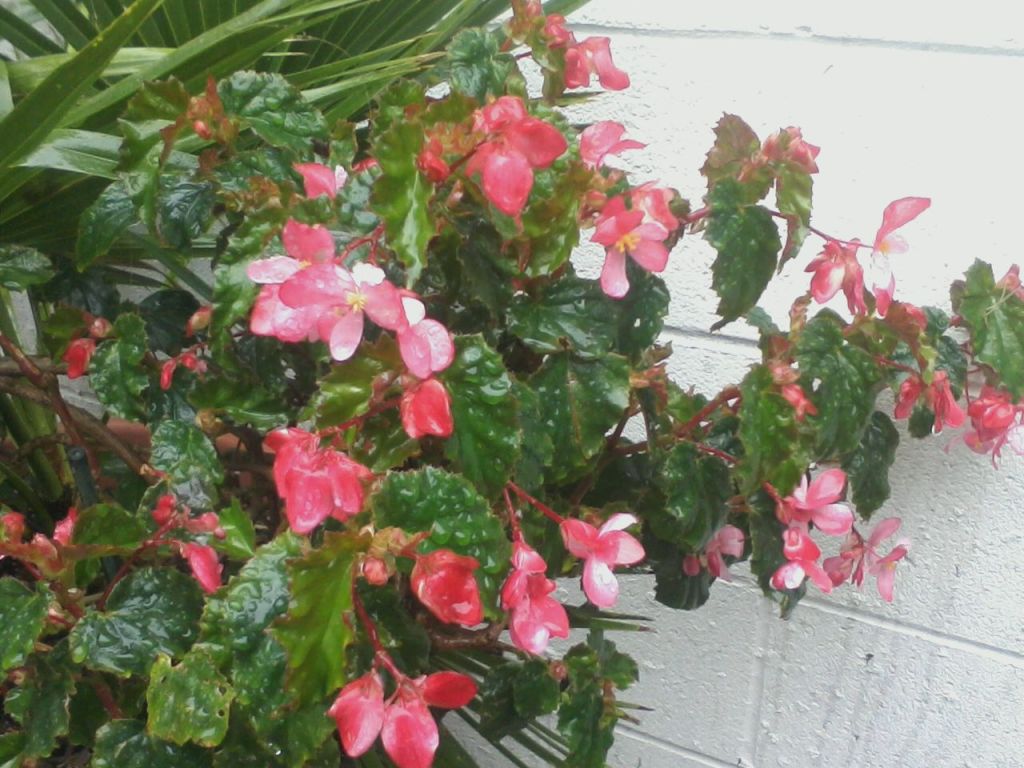
Richmond Begonia

Richmond begonia is very easy to propagate by cuttings.

It is difficult to say whether Richmond begonia, Begonia ‘Richmondensis’, is grown more for unusual waxy pink flowers that bloom throughout the year, or rich glossy green leaves with bronzy red undersides. Perhaps it is the distinctive combination of both characteristics. Perhaps it is because Richmond begonia is so easy to grow in partial shade near porches or atriums where other flowering plants would want more sunlight. It only wants relatively rich soil and regular watering, and is quite happy in pots. Mature plants eventually grow to two feet tall and broad. Lanky branches that get cut back to promote dense growth can be rooted elsewhere in the garden.

Warm Up To Warm Season Annuals

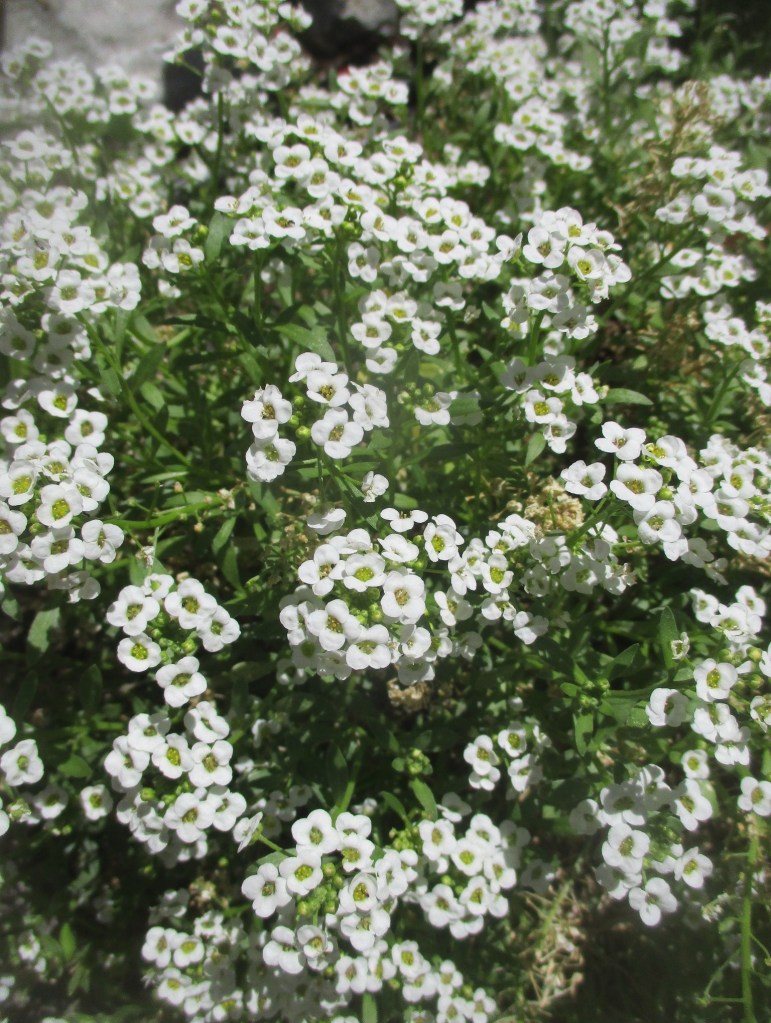
Sweet alyssum can seem to be perennial, but bloom best during warm weather.

The common and almost stigmatized nasturtium has always been my favorite of the flowering annuals. It is technically a warm season annual that gets its seed sown at the end of winter so that it can grow and bloom with bright yellow, orange and sometimes even red flowers all spring and summer and into autumn. However, because winters are so mild here, the foliage is appealing even while bloom is inhibited by cool winter weather. By the time older plants die out, seedlings are already maturing to replace them; so they function like perennials. Nasturtiums are so easy to grow that many garden enthusiasts consider them to be weeds, or too cheap and common to bother with. Yet, their carefree nature is precisely why so many of us enjoy them so much.

Sweet alyssum shares the same reputation that causes it to be shunned by some but appreciated by others. It can be white, pink or purple when initially planted, but eventually reverts to white as it naturalizes. (Pink and purple types produce white blooming seedlings.) Like nasturtium, it blooms less over winter, but never really goes away, since seedlings are always there to replace older plants. It is easy to grow from seed sown late in winter, or can be planted from cell packs after winter for more immediate results.

All sorts of warm season annuals that are now available in nurseries are ready to replace the cool season annuals that bloomed through winter. Busy Lizzy (impatiens) and petunias are the most popular as well as the most colorful. French marigold has the best yellows and oranges, as well as bronze. Lobelia is a classic companion for sweet alyssum or marigold, providing all kinds of blues, as well as purple, purplish rose and white (although white is rather redundant to alyssum). Cosmos blooms in many shades of pink, from very pale to almost red, as well as white. Most varieties stay quite low while others get a few feet tall.

The less popular warm season annuals are sought by those who like their unique colors or other appealing characteristics. Floss flower blooms pale blue or lavender with funny fuzzy flowers. Cockscomb are mostly the colors of marigold as well as red, but with unusual plume-like blooms. Verbena and moss rose may not fill in soon enough to work as bedding plants, but have rich colors that look great with other assorted annuals or perennials. Although statice, pincushion flower (scabiosa) and zinnia can function as bedding plants, they are more often grown singly, in small groups or as borders around more homogenous bedding plants.

Trailing Lobelia

00603
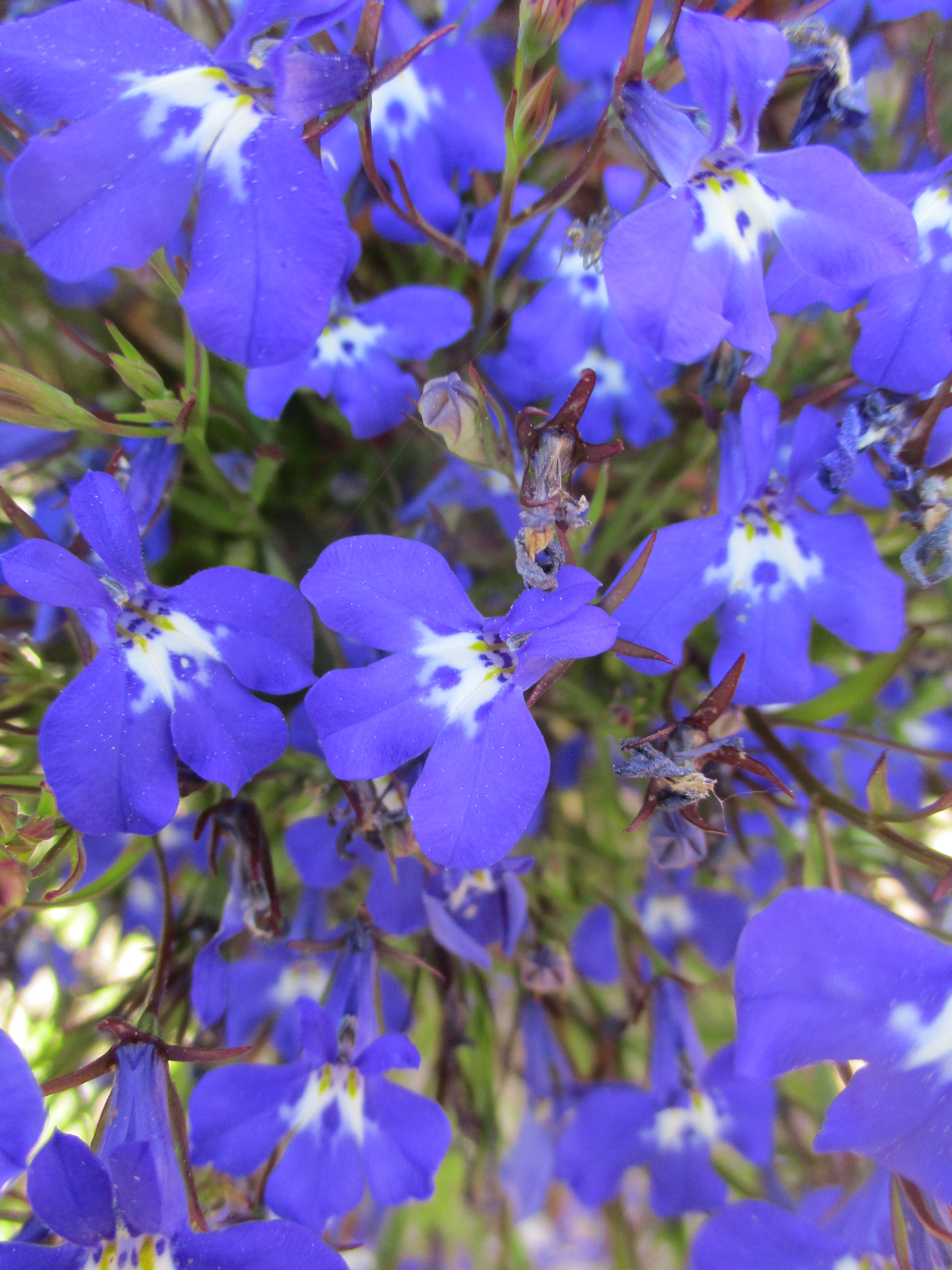
Lobelia may bloom beyond next summer.

No other bedding plants exhibit such rich blue as trailing lobelia, Lobelia erinus. Cultivars with white, purplish pink, purple or sky blue bloom are still not quite as popular as the favorite cobalt blue bloom. Individual flowers are tiny but very profuse and uniform. Some have white centers. The narrow leaves are tiny as well, and finely textured. Some cultivars have dark purplish bronzed foliage.

Individual plants are only about three to six inches high and wide. Cultivars that are more rounded and densely foliated are excellent for edging. They are very popularly planted in single rows, and alternating with alyssum. Trailing types exhibit wispier growth that stays a bit lower and spreads a bit wider. They do not trail far, but cascades nicely from urns and hanging pots of mixed annuals.

Although grown as a warm season annual, trailing lobelia can survive as a short term perennial where winters are mild. Fresh new growth develops out of the centers of overwintered plants about now. If pressed gently into the soil just before they are replaced by new growth, scraggly outer stems can develop roots. They just might grow into new plants before the originals eventually die off.

Bedding Plants That Defy Seasons

00603thumb
Some seasonal annuals are really perennials.

Bedding plants that go into the garden in spring are generally warm season or summer annuals. They should perform through summer until the weather gets too cool for them the following autumn. Bedding plants that go into the garden in autumn are generally cool season or winter annuals. They should perform through winter until the weather gets too warm for them late the following spring.

That sounds simple enough. Each type of bedding plant performs best within a specified season. Since they are annuals, they complete their life cycles within a single season within a single year. Of course, it is not so simple here where seasons are as unique as they are. Winter is mild. Summer is arid. Some bedding plants that are annuals in harsher climates may survive as perennials.

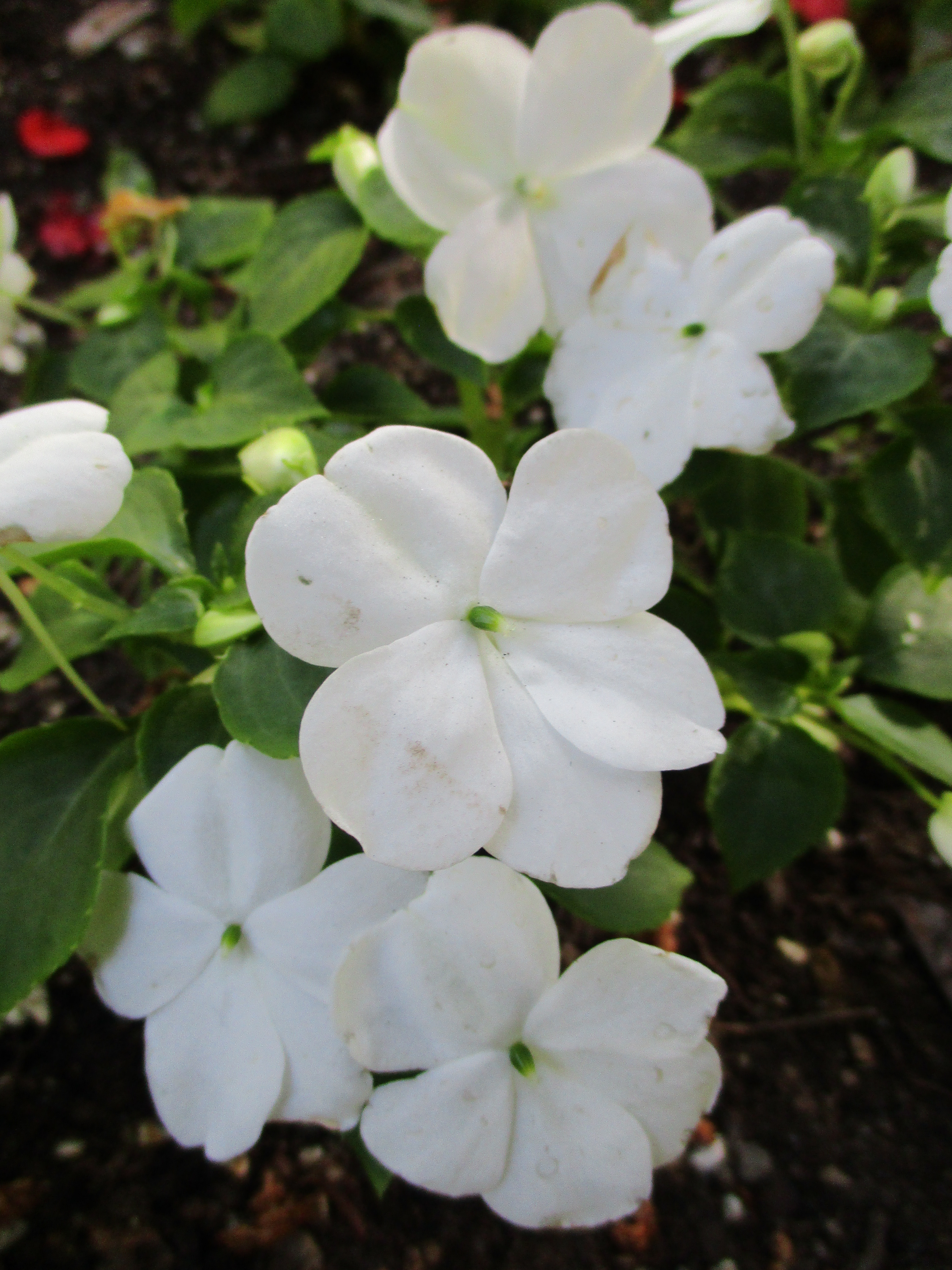
For example, busy Lizzie and wax begonia are warm season annuals in most climates. They succumb to frost as weather cools in autumn. Locally, they can survive through winter if sheltered from mild frost. Any that survived through last winter can regenerate now. As bedding plants, they will not be as uniform as they were last year. However, their variability would be fine for mixed bedding.

If sheltered and warm enough, wax begonias may actually continue to perform right through winter. If they dislike the aridity of summer, they can even perform slightly better through winter than they do through summer. Their best performance is often about now and again in autumn, between the two extremes of summer and winter. They challenge their designation as a warm season annual.

Even some of the bedding plants that really are annuals may not behave as such. Alyssum and nasturtium can disperse seed to replace themselves before they finish. They are not true to type, so their progeny eventually revert. Nonetheless, simple yellow and orange nasturtium and white alyssum are splendid for many relaxed gardens. Nasturtium might perform better in summer or winter.

Bedding plants usually know more about what they should be doing than those who are managing and manipulating them.