Blackberry Canes Need Specialized Maintenance

Dormant blackberry canes are now available with other bare root stock.

            One of my favorite modern California impressionistic paintings depicts suburban gardening of the post agricultural period in the Santa Clara Valley. It is a finger painting that I made in kindergarten at Bucknall School in about 1972 or 3, to illustrate some of my favorite features of my grandparents’ garden in Santa Clara. To the left is a vertical brown stripe below green squiggles with black spots; the avocado tree. To the right is a similar image with red instead of black spots; the cherry tree. Between and below these, and lacking a vertical stripe, is a flurry of green squiggles with more black spots. These are blackberry canes.

            Blackberries are not at all ‘low maintenance’ since they require rather intensive specialized pruning. Most of the work that they need gets done during summer; but bare-root blackberry plants become available and get planted this time of year with other bare-root plants. Blackberries produce fruit on biennial canes which grow during their first year, and then bloom and fruit during their second year before dieing out.

            Once the tough roots are established, there is no shortage of fresh new canes to replace the old canes. In fact, surplus young canes can be dug and divided with roots to propagate new plants during winter. Because they have a way of spreading outward, blackberries should not be planted too near to neighbors’ fences without root barriers to keep them contained.  

            The most popular blackberries locally are ‘trailing’ types such as ‘Boysen’, ‘Marion’ and ‘Olallie’, which are also known as ‘Boysenberry’, ‘Marionberry’ and ‘Olallieberry’.  Less common ‘erect’ types, such as ‘Arapaho’, ‘Chickasaw’, ‘Choctaw’ and ‘Navaho’, are more tolerant to cold winter weather, so are more popular where winters are more severe. Hybrids of trailing and erect blackberries are ‘semierect’, and are generally treated like trailing types.

            After they get planted in winter, trailing and semierect blackberry canes can do whatever they want to through their first year. In their second year, canes should be trained onto trellises or wires until they have finished fruiting in summer. When the fruit is finished, these canes should be cut to the ground.

            Some of the canes that were growing on the ground below the trellises while all this was going on should now be trained like the canes that were just removed. For trailing types, about ten to fifteen of the best canes should be selected, trained and pruned to about six or seven feet long. About half as many canes of semierect types should be selected and pruned about a foot shorter. All remaining canes should be cut to the ground. (A few of the smallest remaining canes may be left intact through summer to be divided for propagation in winter.)     

            Side branches grow from the pruned canes through late summer and early autumn. At the end of the following winter, these side branches should be pruned to about a foot long. New growth from these stems blooms and fruits during the following summer. Again, when fruit is gone, the spent canes get cut to the ground so that the process can be repeated.

            Erect blackberries do not need to be trained onto support. Canes that develop during their first year can be cut to about two and a half feet tall in the middle of summer. Resulting branches should be cut about a foot long in winter. During the following summer, these fruiting canes should be cut to the ground as fruit is depleted. New canes can then be pruned like the previous canes were.

Six on Saturday: Colorful but Inedible Berries

Snowberry is native here. I have been wanting to grow it because I like its white berries. I just found a seedling where it could not stay, so brought it back here. I am very pleased with it, but did not want to share pictures of it as scrawny canned bare twigs. I got these pictures instead.

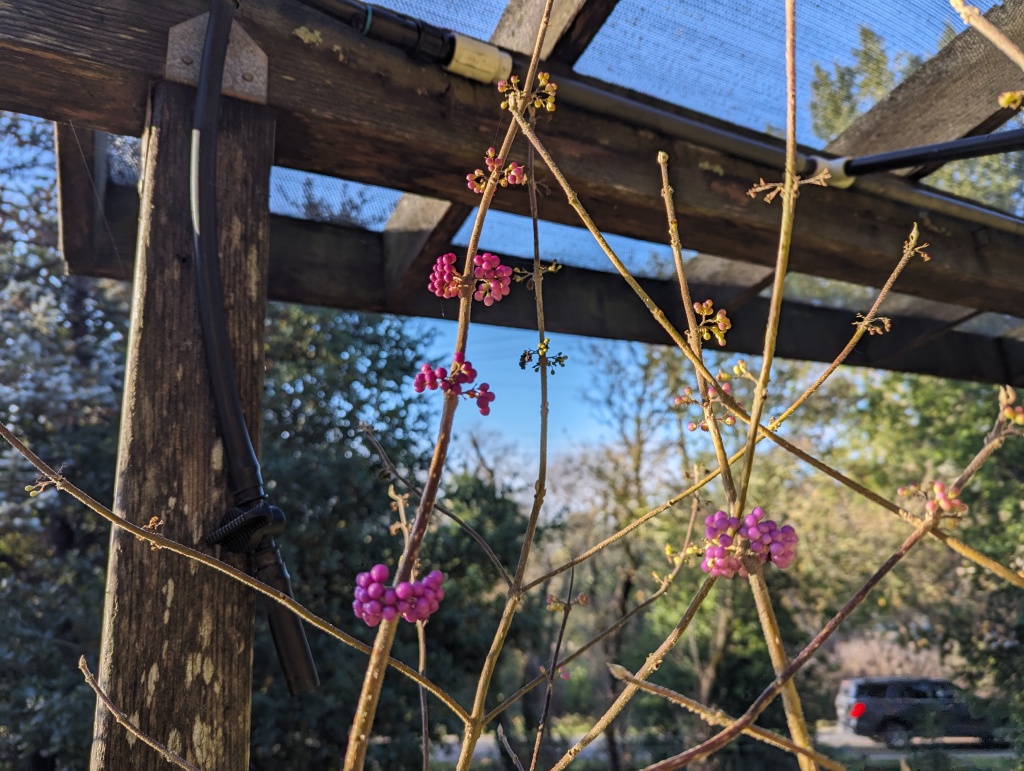
1. Callicarpa americana, American beautyberry is what compelled me to get pictures of berries for this week. I shared a closeup picture of the first of these berries as they began to ripen more than a month ago, which was about two months later than elsewhere. I do not mind. These are my first, and there are more of them now. Perhaps their berries will ripen on time when they are established within the landscapes. The seedlings, as well as white butterfly ginger and, recently, American holly, were gifts from Our Forest Garden.

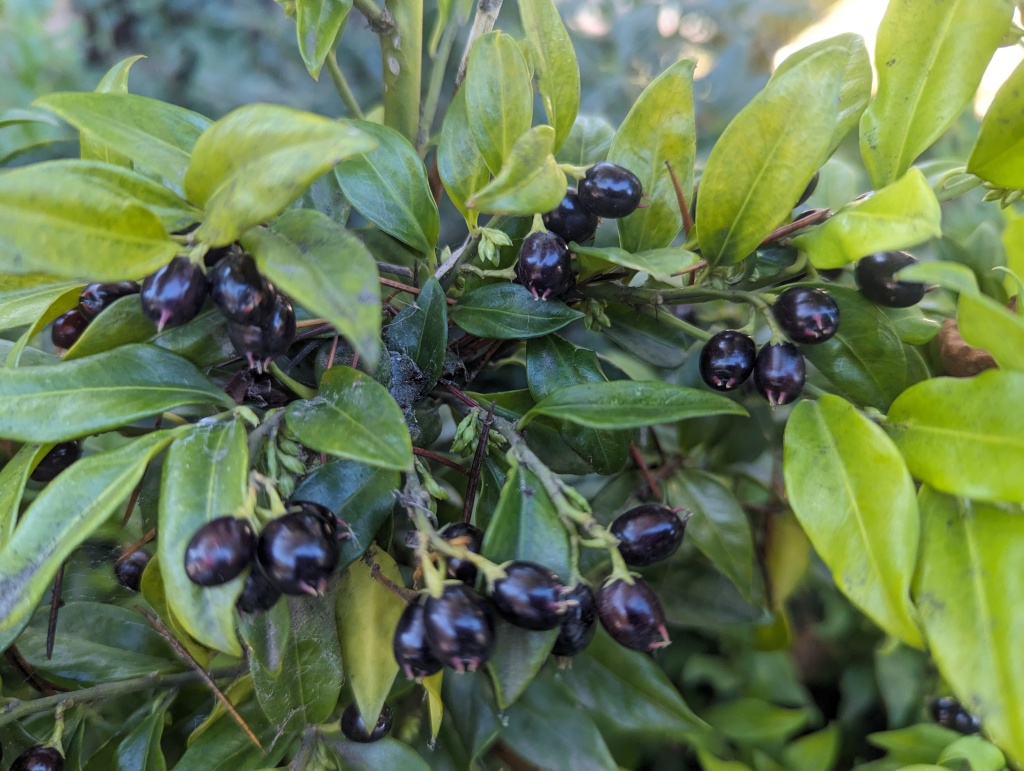
2. Sarcococca ruscifolia, sweet box typically produces very few red berries that typically fall off before turning black. They are both atypically abundant and atypically black now.

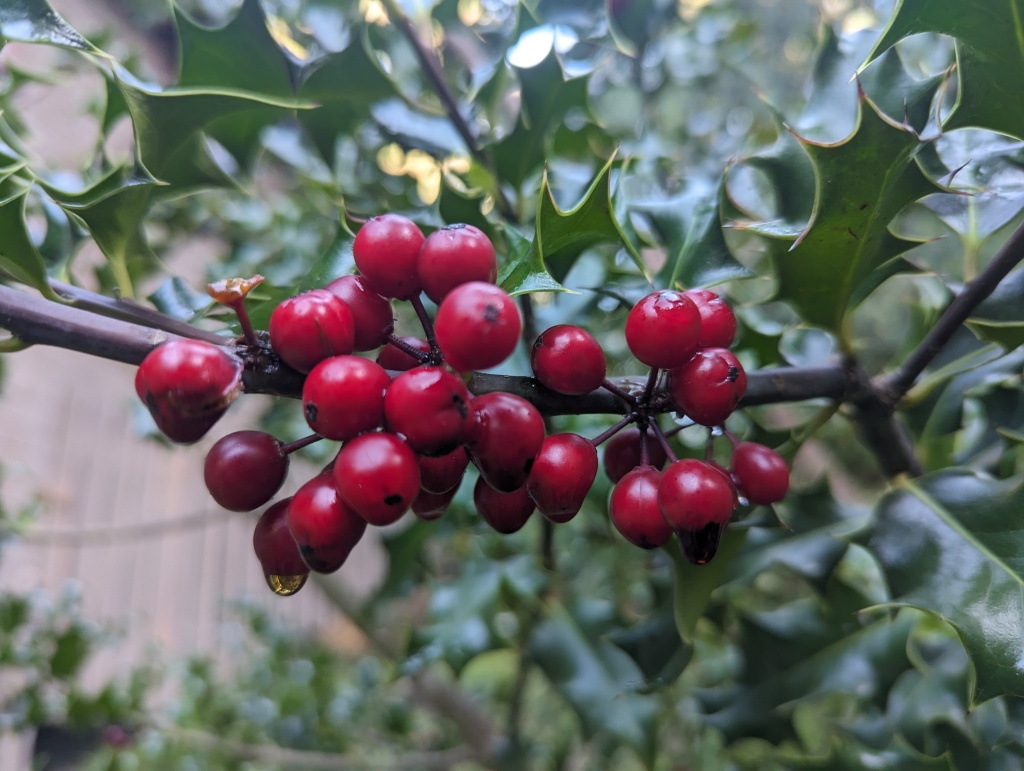
3. Ilex aquifolium, English holly self sows, but most feral specimens seem to be male, or produce only a few berries, in a few sparse clusters. Very few produce clusters like these.

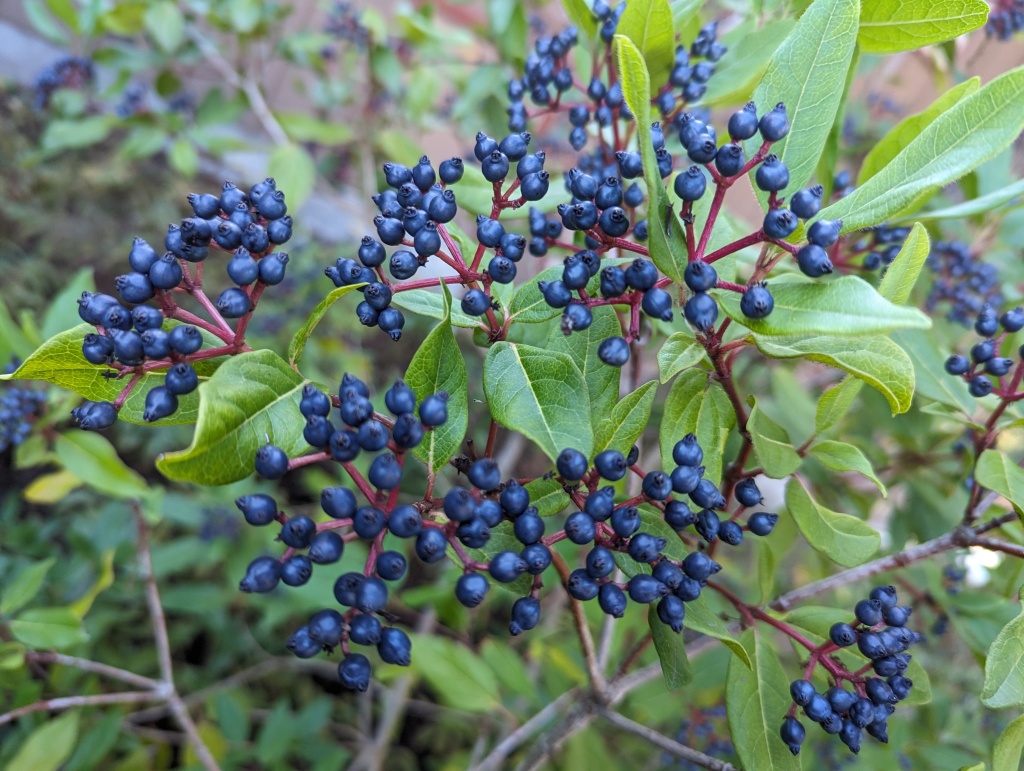
4. Viburnum tinus, laurustinus also self sows. I am not as impressed with it as I am with English holly, but have been learning to appreciate it more, as those in other regions do.

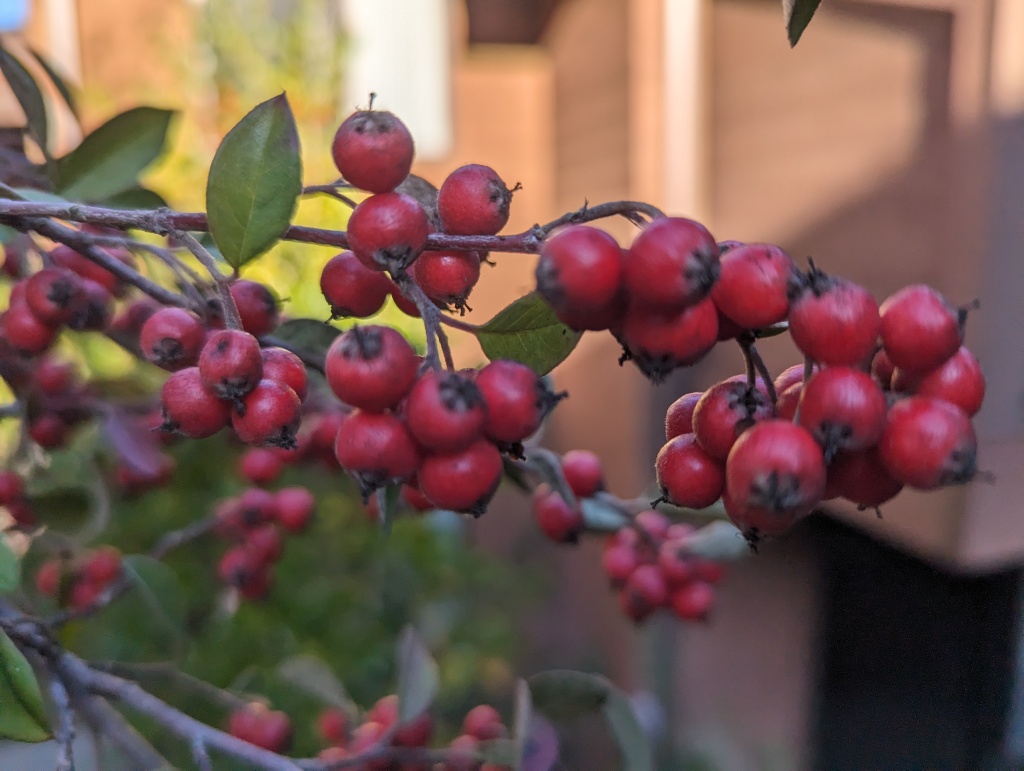
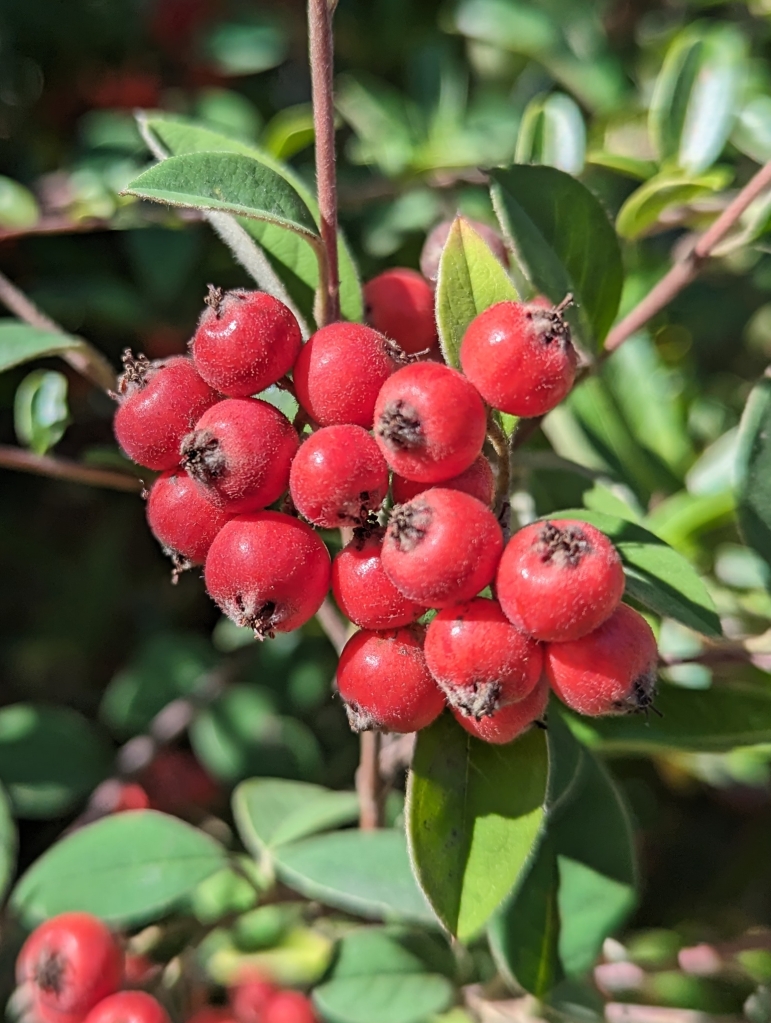
5. Cotoneaster pannosus, silverleaf cotoneaster is naturalized a bit more vigorously. It is not as pretty as I like to think it is. I should retain a few specimens but eradicate the rest.

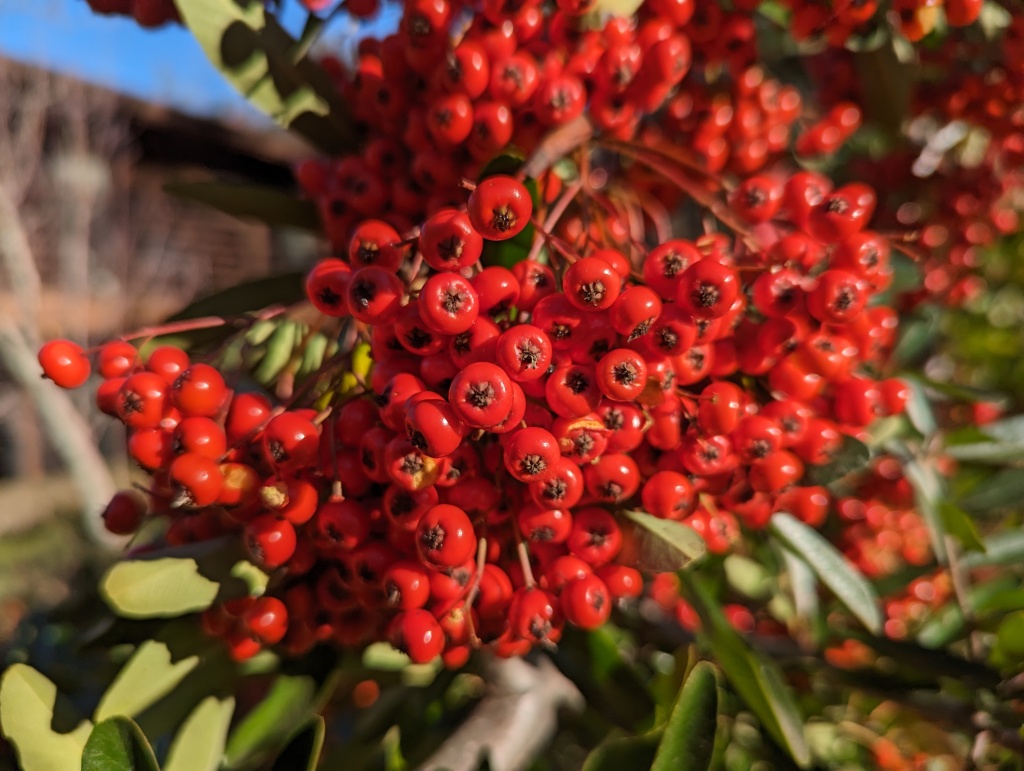
6. Pyracantha coccinea, firethorn is more colorful with similar but with more abundant and glossier berries. Unfortunately, it is also much thornier, so it is no fun to work with.

This is the link for Six on Saturday, for anyone else who would like to participate: https://thepropagatorblog.wordpress.com/2017/09/18/six-on-saturday-a-participant-guide/

Silverleaf Cotoneaster

Silverleaf cotoneaster berries are subtly colorful.

Its prevalence within a few wild ecosystems suggests that it is native. In actuality, it likely naturalized here only after the Gold Rush. Silverleaf cotoneaster, Cotoneaster pannosus, is native to southern central China. It likely came here with the influx of Chinese laborers after 1848. It was a common component of the original landscapes of Golden Gate Park.

Nowadays though, silverleaf cotoneaster is rare within refined gardens. Modern cultivars and other species are more adaptable. Silverleaf cotoneaster naturally develops broadly outwardly flaring form. Pruning that damages its natural form causes awkwardly angular form. Ironically, undesirable feral specimens often develop the best form without pruning.

Silverleaf cotoneaster can get more than ten feet tall, and nearly twice as wide. Removal of old trunks to their bases promotes more vigorous new growth. Alternatively, removal of low growth promotes taller tree form on arching trunks. The small camo green leaves are unremarkable. The copious red berries that ripen for autumn are very appealing to birds.

Berries Get Colorful For Winter

Firethorn berries are very reliably abundant.

Some vegetation excels at exploitation of wildlife. All sorts of flowers use color and floral form to attract pollinators. Many flowers rely on fragrance or flavorful nectar for this same purpose. Many flowers employ a combination of such techniques. After pollination, many species produce fruit to draw wildlife to disperse their seed. This includes winter berries.

Just as flowers appeal to particular pollinators, fruits appeal to particular consumers. Big fruits appeal to animals who eat them, perhaps sloppily, but drop the seed within. Acorns and nuts appeal to squirrels who bury more than they can retrieve. Winter berries appeal to birds who do not digest the seed within. The birds deposit the seed wherever they go.

It is a mutually beneficial arrangement. Birds, whether migratory or overwintering, eat as many berries as they want. Vegetation that provides winter berries benefits from efficient dispersal of its seed. Naturally, such fruits ripen as birds are fattening up for winter. They are brightly colorful to attract hungry birds. They are small enough for birds to eat whole.

This is convenient for home gardening. It provides some color after defoliation of autumn foliar color, and prior to spring bloom. It is actually more appealing where cooler weather accelerates defoliation. Also, such color contrasts more prominently against snow within a stark landscape. Within any climate though, such berries last only until birds find them.

For some, birds and squirrels who come for winter berries are welcome. Some prefer the color of winter berries. Ultimately though, the wildlife determines how long winter berries linger. Anyone can cultivate vegetation that produces winter berries. Very few can protect such fruit from wildlife that craves it. Berries rarely last long enough to rot through winter.

Firethorn produces the most colorful winter berries. Various cotoneasters are similar, but with somewhat subdued rusty red color. Toyon develops larger but looser clusters of fruit. English hawthorn fruit resembles that of cotoneaster, but on bare stems. Hollies produce only a few berries. They are dioecious, so need male pollinators which are rarely nearby.

Cane Berries Require Diligent Maintenance

Without proper pruning, cane berries become wicked thickets.

Given the opportunity, blackberry and raspberry canes become rampant thickets. The trick is to keep them contained and controlled so that they can produce berries without conquering the garden. Besides, proper pruning promotes production. Properly maintained canes are therefore both better behaved and more productive

Berry canes are certainly not low maintenance, and should be selectively pruned a few times through the year. The type of pruning needed is determined by the type of growth that the canes exhibit in particular seasons. Spent canes or upper portions of everbearing raspberry canes that produced berries through summer and early autumn will need to be removed by the end of winter while new canes that grew through this year get trained to replace them.

Pruning and thinning of new canes should be delayed until the end of winter; but removal or pruning of spent canes can begin as soon as their fruit gets depleted. Spent canes of traditional summer bearing raspberries like ‘Willamette’, ‘Tulameen’ and ‘Canby’ can be pruned to the ground. ‘September’, ‘Heritage’, ‘Summit’, ‘Fallgold’ and other everbearing raspberry canes should be pruned only as low as their fruit was produced. Lower portions that did not produce fruit should be left to bloom and produce berries next spring.

Just like raspberry canes, new blackberry canes that grew this year do not need to be pruned until late winter. However, the canes that grew last year and are finishing berry production this year can be pruned to the ground as their last berries get taken. There is no rush for this procedure, but getting it done early makes later pruning of new canes for next year a bit easier.

Of course, every different cultivar (cultivated variety) of raspberry and blackberry behaves differently. Some finish producing and are ready to be pruned sooner than others. Their behavior is also affected by climate and environmental conditions, so that the same variety may be earlier or later in different areas, or even different parts of the same garden.

Favorite berry canes are very easy to propagate by division of superfluous new shoots during winter. Alternatively, spent canes that should be removed can be ‘layered’ instead. They simply need to be bent down and partially buried, and can be dug and separated as they develop roots.

The top few inches of cane should extend above the soil. At least a few inches of cane below the top should be buried a few inches below the surface of the soil. The length of cane between the buried portion and the base of the parent plant can remain exposed.

Layering can be done at any time of year if the layer (buried section of cane) gets watered while developing roots. Layering this time of year is easiest though, because layers get plenty of water from rain through winter, and develop roots most efficiently as they come out of dormancy late in winter or early in spring. If layers are buried where new plants are desired, they do not need to be dug and moved next year.

Blackberry

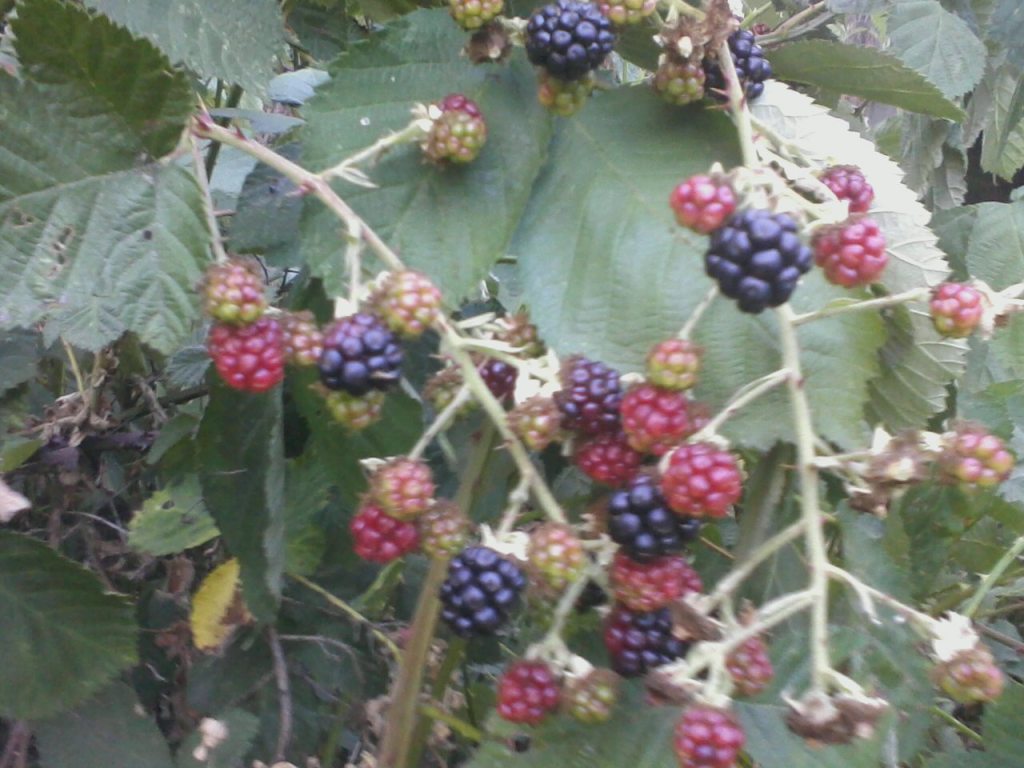
Blackberries are ripening slowly this year because of the mild weather.

Rampant brambles of feral blackberry, Rubus fruticosus, canes are much too common and give blackberries a bad reputation. Yet, with regular selective grooming and pruning, their biennial stems that emerge from woody perennial roots are both more productive and easier to contain than one would guess. ‘Primocanes’ grow rapidly to six to sixteen feet in the first year. In the second year, they become ‘floricanes’, which do not grow longer, but instead develop lateral stems that bloom and fruit. Only a few modern ‘fall bearing’ or ‘everbearing’ cultivars fruit on primocanes.

Canes are trailing, semi-trailing or erect. As the names imply, trailing types like ‘Marion’, ‘Boysen’ and ‘Olallie’, need support. They are the most popular locally because they are more productive. Erect types that need no support, like ‘Navaho’, ‘Choctaw’ and ‘Arapaho’, are less productive, but because they are more tolerant to frost, are more popular where winters are colder. Old classic blackberry varieties are quite prickly. Modern thornless varieties are becoming more popular as more varieties are developed. All have palmately compound leaves with five or seven leaflets. Simple small white or pale pink flowers that bloom late in spring are followed by the familiar blackberries that are ripening now.

Blackberries And Raspberries Are Expensive For A Reason.

Cane berries need aggressive pruning, but are no fun to prune.

All the raspberries and blackberries that are now ripening do not come without a price. The canes that produce them may grow like weeds, and in many gardens really are weeds, but they need quite a bit of work. Like the deciduous fruit trees that need such meticulous pruning while dormant in winter, berry canes need winter pruning while dormant, as well as summer pruning as the berries finish.

Blackberry canes that have produced fruit should be cut at the ground as the fruit gets depleted. Then, for ‘trailing’ varieties, about a dozen of the new canes that grew since spring should be selected, pruned to about six feet long, and trained onto the same supports that the removed canes used. ‘Semi-erect’ varieties need only about half as many canes, and get cut about a foot shorter. (‘Erect’ varieties that get cut even shorter are not common locally.) All other canes should be cut to the ground. Through the rest of summer, the pruned canes develop side branches which should eventually get pruned to about a foot long in winter to bloom and produce fruit next year; but that part must wait.

Summer bearing raspberries, like ‘Willamette’, ‘Tulameen’ and ‘Canby’, do not need to develop side branches to produce fruit next year, so do not necessarily need to be groomed of spent canes and pruned just yet, and can actually wait until winter. Everbearing raspberries like ‘September’, ‘Heritage’ and ‘Fallgold’, are not nearly so simple, although canes that were selected while young last winter and allowed to grow through summer likewise need no pruning just yet. The top portions of these canes will produce fruit later in autumn, and later in winter, get pruned down as low as fruit developed. However, the lower portions of older canes that fruited the previous year and got their tops pruned down last winter are now finishing their second and last phase of fruit production, so should get pruned out as they finish.

Yaupon

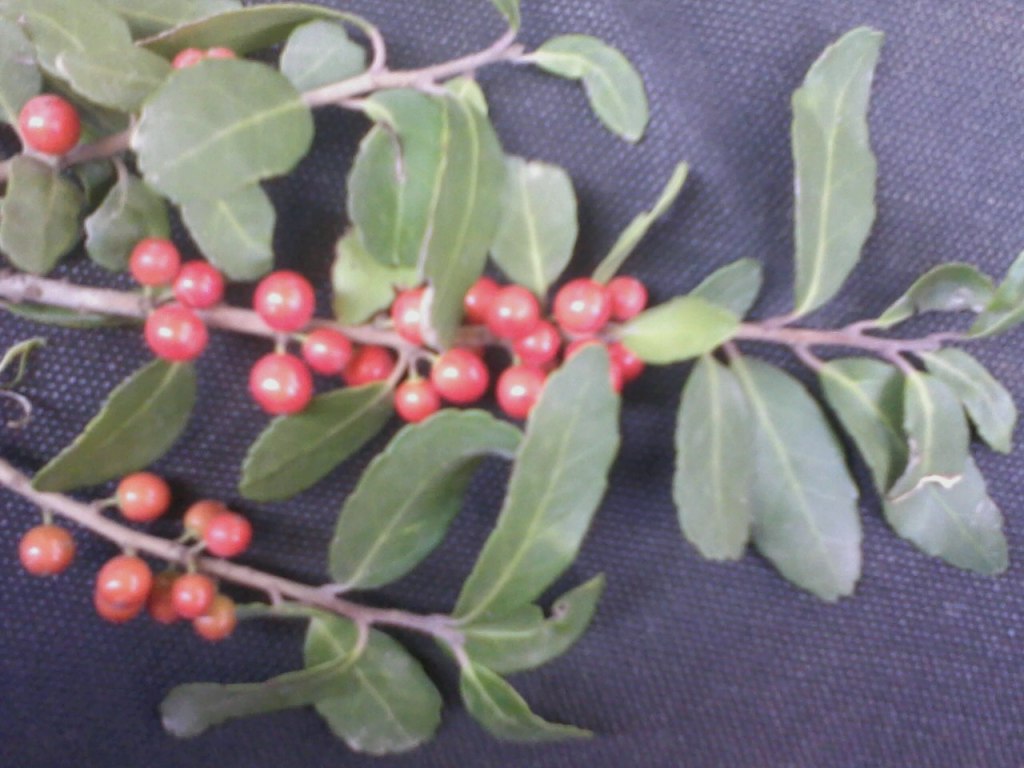
The unflattering Latin name does not suit the yaupon, which can make a tailored formal hedge of dense foliage, or a neat informal (unshorn) screen that may occasionally produce a few colorful winter berries.

Hollies are innately uncommon in California. Yaupon (holly), Ilex vomitoria, happens to be one of the least common. Ironically, because of its small leaves and dense growth, it is more tolerant to frequent shearing by maintenance gardeners who ruin other hollies. It can actually make a nice shorn hedge.

Hedged yaupon can eventually get up to the eaves of a single story. Unshorn plants can reach the eaves of a second story, and might display showy red berries about an eighth of an inch wide. The small and often randomly serrate leaves are only about half to an inch long, and maybe half an inch wide.

Firethorn

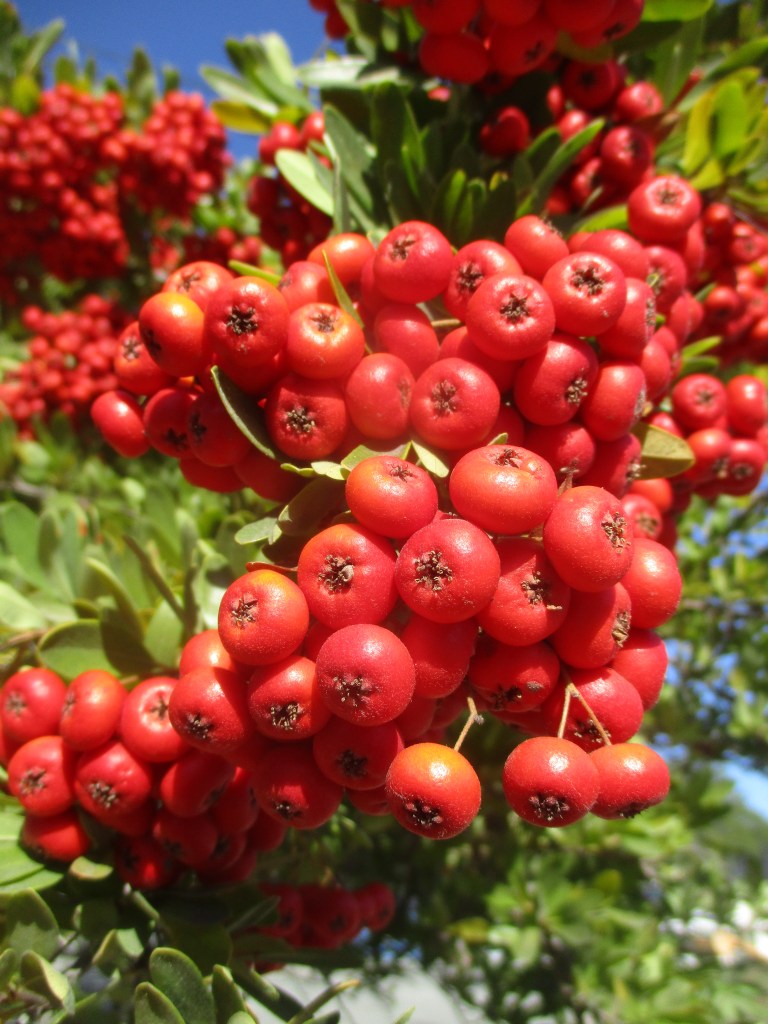
Firethorn is a familiar wintry berry.

Its name says it all. Firethorn, Pyracantha coccinea, produces an abundance of fiery red berries on unavoidably thorny stems. A few old fashioned cultivars produce equally fiery orange berries. Cultivars with fiery yellow berries are now rare. Berries ripen for autumn, in time to feed migratory birds. Late berries can last longer after migratory birds are gone.

The rigid and wickedly thorny stems of firethorn work well as impenetrable hedges. They are rather difficult to prune and handle without impalement though. Unfortunately, simple shearing deprives formal hedges of some of their new growth that blooms and fruits most abundantly. Selective pruning is tedious and more hazardous, but might enhance bloom.

Shrubby cultivars of firethorn can grow higher than first floor eaves. Mature and vigorous hedges with hefty interior trunks at such height can generate spirelike growth that almost reaches second floor eaves. With pruning, some cultivars that sprawl close to the ground can stay quite low. Without pruning, some slowly form thickets that are several feet deep.

Winter Berries Attract Migrating Birds

English hawthorn is like deciduous firethorn.

Bloom and colorful foliage provide most of the color besides green within home gardens during spring and summer. Deciduous foliage becomes more colorful for autumn. Winter berries and a few other lingering fruits become more colorful as deciduous foliage sheds through winter. All this color adheres to precise schedules within a collective ecosystem.

Many plants exploit wildlife. It is how they compensate for their immobility. Many provide incentive for the services that they desire from the wildlife that they exploit. For example, after enticing pollinators with fragrance or color, flowers happily exchange extra pollen or nectar for pollination. Many plants provide edible fruits in exchange for seed distribution.

It is no coincidence that so many different winter berries ripen through autumn for winter. They provide sustenance to many migratory birds who rely on them. Overwintering birds who compete with migratory birds appreciate their efforts as well. Such winter berries are small but abundant, for ‘grab and go’ convenience. Bright color is the best advertisement.

Some people appreciate how winter berries attract birds and squirrels into their gardens. Some appreciate the seasonal color of such berries more than the wildlife. Unfortunately, wildlife decides the outcome, and such outcomes are variable. It is impossible to predict if berries will disappear as they ripen, or linger as they deteriorate through most of winter.

Firethorn is likely the most familiar of the winter berries here. It seems to be more prolific with its brilliant red berries than any other species. Some old fashioned cultivars produce bright orange or perhaps even bright yellow berries. Some sorts of cotoneaster resemble firethorn, but with subdued rusty or orangish red display for less refined woodsy gardens.

Toyon, or California holly, is most prolific with winter berries where it grows wildly without pruning. It gets big though. Real hollies, which are more popular in other regions, do not produce many berries locally, particularly since male pollinators are uncommon. English Hawthorn is a small deciduous tree that displays berries that resemble those of firethorn, but on bare stems.