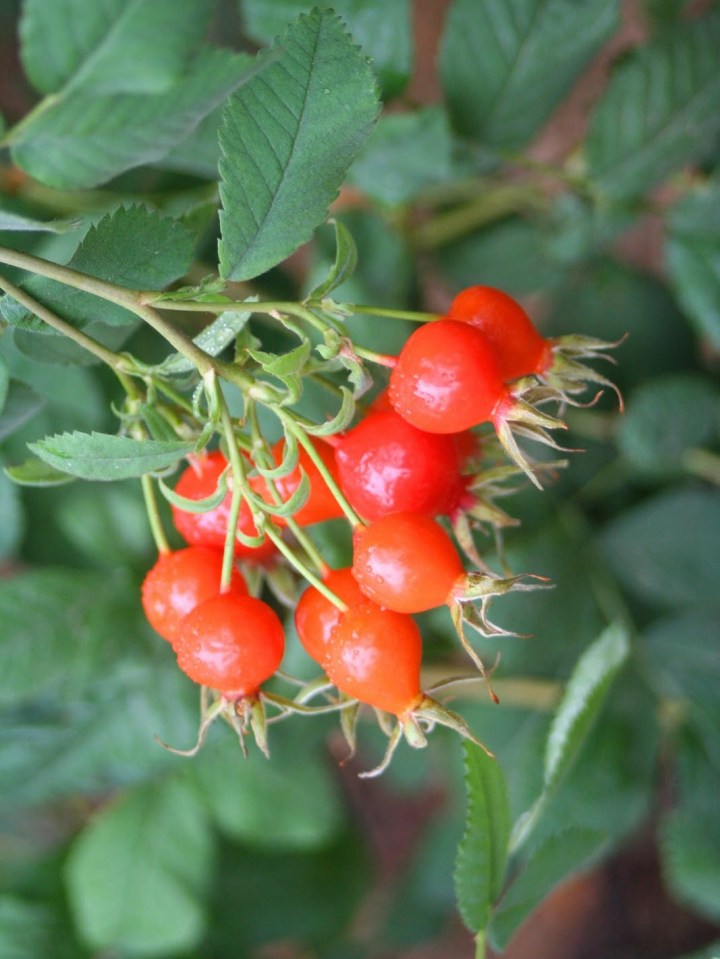
 Just as many flowers attract pollinators with color, some types of fruit employ color to get the attention of birds and other animals. Just as many flowers reward their pollinators with nectar, fruit is its own reward to the animals that eat it. The only catch is that those who want the fruit must disperse the seed within. For both the hungry animals and the fruiting plants that lack mobility, it is a rather equitable arrangement.
Much of the fruit that uses this technique ripens in autumn, and linger through winter, when there is not much other fruit. It is available to migratory birds and animals that want to fatten up for winter. Unlike nuts and large seeds that get buried locally by squirrels, the tiny seeds of winter berries typically get eaten and ‘dispersed’ more remotely. Some actually need to be scarified by digestion before they will germinate.
Because they put as much effort into attracting vectors to disperse their seed as flowers put into attracting pollinators, fruit and berries can add significant color to the home garden. Oranges, mandarins, lemons, grapefruits and other citrus are quite colorful, even though they do not expect to be taken away by birds, To attract crows, persimmon fruits get as colorful for winter as their foliage was through autumn.
Firethorn (pyracantha) is probably the most colorful and profuse of the ornamental berries. Various specie and cultivars of cotoneaster produce similar berries, but not quite so prolifically. They are popular for their resiliency. Toyon, which is the native ‘California holly’ that Hollywood is named for, is a bit too finicky for irrigated and refined gardens, but can be quite colorful with berries in wild or casual landscapes.
Firethorn, cotoneaster and toyon, as well as English hawthorn, all produce similar ‘pomme’ fruits, which are actually more like tiny apples than real berries. They are so popular with the birds that they are not very messy; although the birds may be if they loiter. English hawthorn is a small deciduous tree, so yellows and defoliates as the bright red fruit ripens.
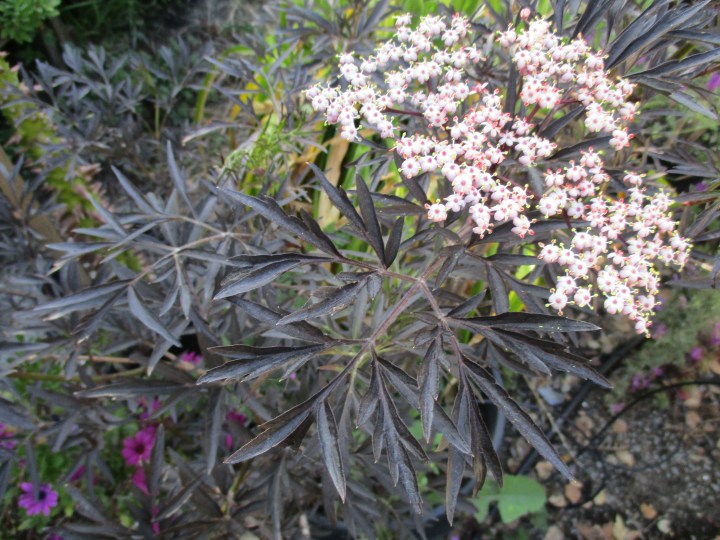
 There were barely enough blue elderberries left this late in the season for the blue elderberry jelly that should have won the blue ribbon at the Harvest Festival. It’s a long story.
 Heavenly bamboo, or simply ‘nandina’, is one of those many plants that almost never performs like it should. The intricately lacy foliage is so appealing while plants are young, and changes color with the seasons. The red berries can be comparable to those of holly. Unfortunately, healthy plants grow, and then ultimately get shorn into globs of disfigured leaves and stems.



 The bright red berries of late cotoneaster, Cotoneaster lacteus, that ripen in autumn may not be as profuse or as bright red as those of firethorn, but they last longer, and even into winter. Birds strangely seem to avoid them. Although the clustered small berries can look just like firethorn berries, they are usually less shiny, and darker red. Clusters of tiny pale white flowers bloom in spring. The small evergreen leaves have a nice glossy and veined texture on top, with hazy gray or tan tomentum (fuzz) below. The grayish brown bark of old stems resembles that of apple or pear trees.
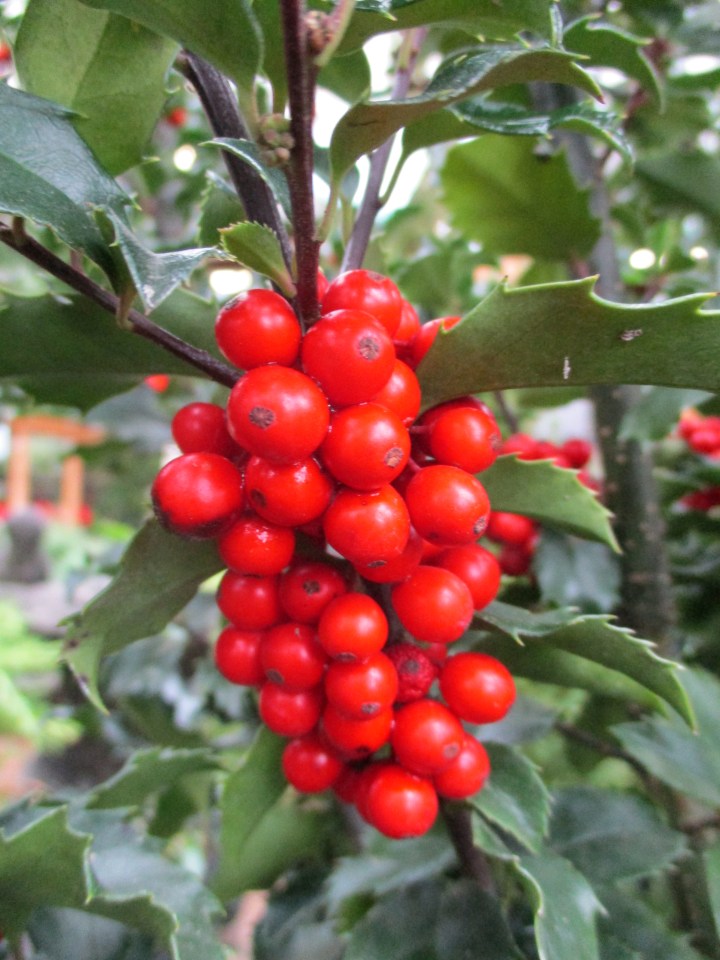 Plants compensate for their immobility by procuring the services of animals and insects. They bloom with flowers that attract pollinators with colors, fragrances and flavors. Their fruits use similar techniques to attract those who consume the fruits to disperse the seeds within. It is a pretty ingenious system. The animals and insects probably think that they are taking advantage of the plants.
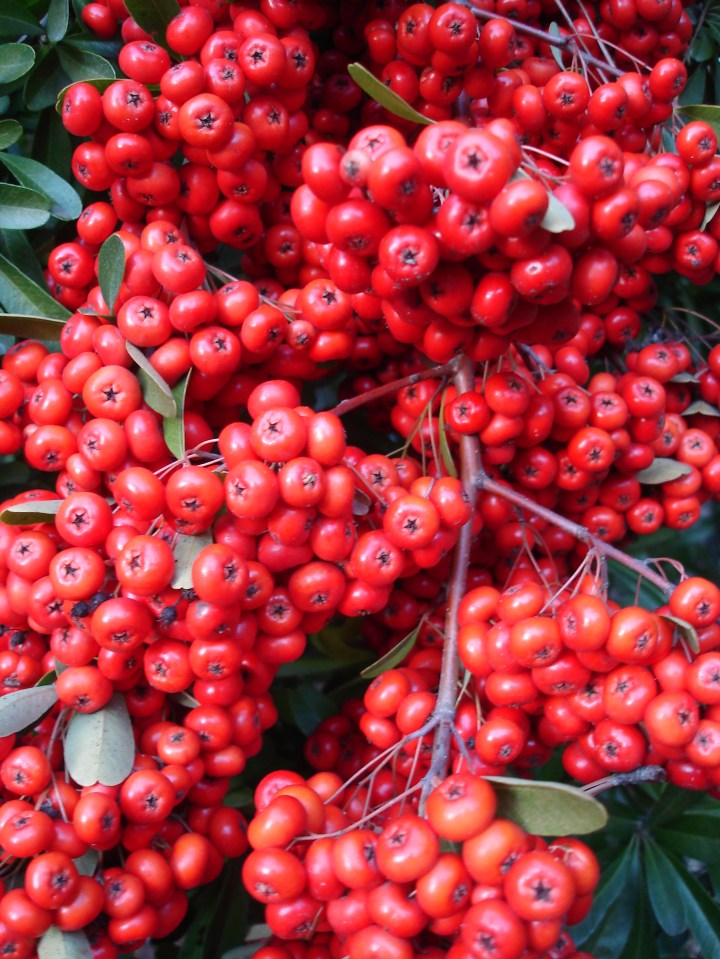 It is probably no coincidence that certain berries and small fruits are so colorful through winter while colorful flowers are relatively scarce. Like flowers, they want to get others to do something for them. Flowers use color, aroma, flavor and sometimes even texture to attract and reward pollinators. Colorful berries and fruits do the same to attract birds and animals who disperse their seeds.
 Tony Tomeo