Perennial Annuals

New Guinea impatiens (with ivy geranium) from last year.

Annuals complete their entire lifespans within a single year.

Perennials survive for more than a single year.

Biennials grow vegetatively during their first year, and then bloom, disperse seed and die during their second year, but that is another story.

Most species that are appreciated as annuals here actually have potential to be perennials, even if only short term perennials. They are only replaced annually because it is easier than maintaining them through their dormant season.

For example, busy Lizzy is a warm season annual that gets installed for spring and replaced with cool season annuals for autumn. However, if cut back and sheltered from frost, it can survive through winter to perform for the following spring and summer. Actually, it can survive perennially like this for quite a few years, and as it ultimately deteriorates, it can replace itself with its own cuttings or layered stems.

Brent did this with New Guinea impatiens from last year. He neglected to replace them for winter (which is quite brief there), and then noticed that they resumed growth as winter ended. Now, they are huge and even more spectacularly florific than they were last summer.

The picture above shows where I camp out in his backyard when I go to Southern California. Most of the white bloom to the right is actually ivy geranium that cascades below the New Guinea impatiens, but most of the white bloom to the left is New Guinea impatiens above ivy geranium. (White on white was not quite as monotonous when each of the two species maintained its distinct form last year.)

Small terrace at the western margin of the garden.

This other pair of potted dwarf Alberta spruce surrounded with the same New Guinea impatiens above, with a close up below, flanks the steps to a small terrace at far western margin of the garden.

These New Guinea impatiens are huge because they resumed growth from last year.

Celery

Celery season conforms to local climate.

It could be either a warm season vegetable or a cool season vegetable. Celery, Apium graveolens variety dulce, dislikes both frost and arid heat. It is a warm season vegetable where summer is mild but winter is not. It is a cool season vegetable where winter is mild but summer is not. Where winter is cold and summer is hot, it prefers spring and autumn.

Celery is a biennial, which grows vegetatively for its first year, and blooms for its second. Because it is ready for harvest in less than half a year, bloom is not a concern. Any that mature enough to bloom are too tough to eat. Celery appreciates organically rich soil. It needs regular watering. Growth is irregular if its soil becomes too dry, even temporarily.

Celery naturally grows as densely vertical foliar rosettes, or bunches. Its distended and elongated petioles are its primary edible parts. Its disproportionately small leaflets are also edible though. Mature celery grows about a foot and a half to two feet tall. It grows well from cell packs if only a few bunches are necessary. It also grows well from seed.

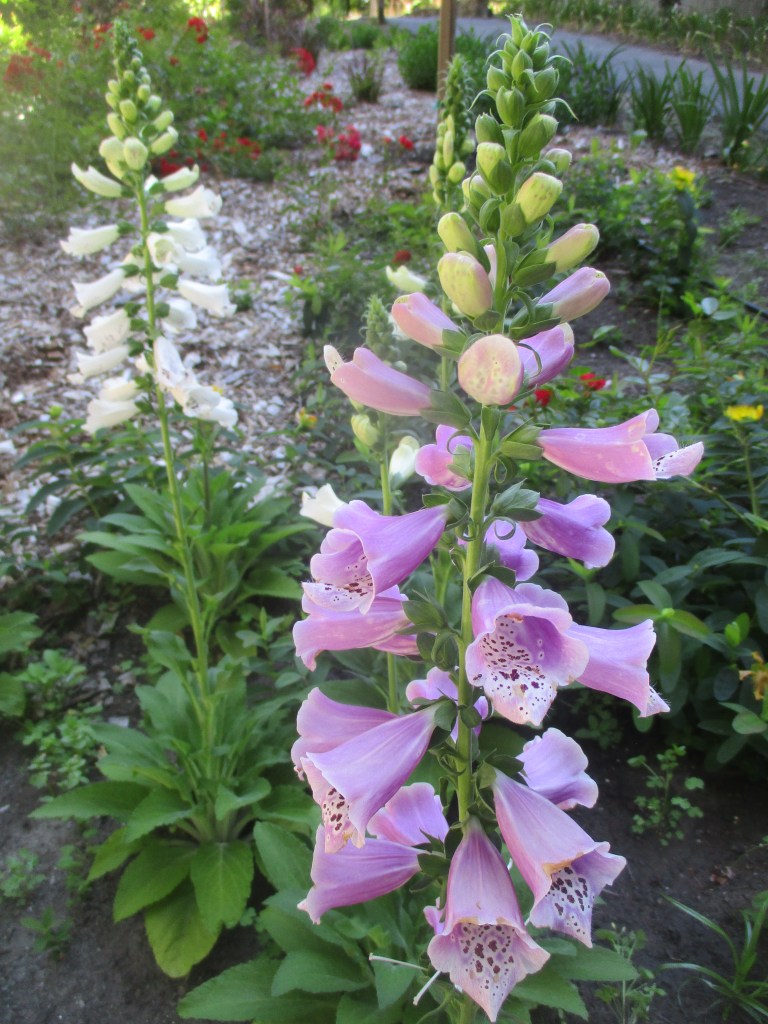
Foxglove

Foxglove is the source of digitalis.

It is no coincidence that its generic name seems more pharmaceutical than horticultural. After all, the cardiac medication digitalis is an extract of foxglove, Digitalis purpurea. The plant is unfortunately very toxic. Because it naturalizes in several regions, it can be more hazardous than standardized medications. It can migrate undetected into home gardens.

Otherwise, foxglove is a delightful warm season annual with a rustic or woodsy style. It is actually a biennial that generates basal foliar rosettes during its first season, and blooms during its second season. Although technically monocarpic (so should die after bloom), it can produce a few short pups to bloom later. Seedlings can appear in random situations.

Plants from nurseries grew during a previous season, so are ready to bloom immediately for early summer. Their seedlings may grow through later summer and autumn, so might bloom for the following summer. Floral stalks generally stand between three and six feet tall. The tubular and somewhat pendant flowers are mostly pinkish purple, pink or white. A few modern varieties bloom yellow or apricot.

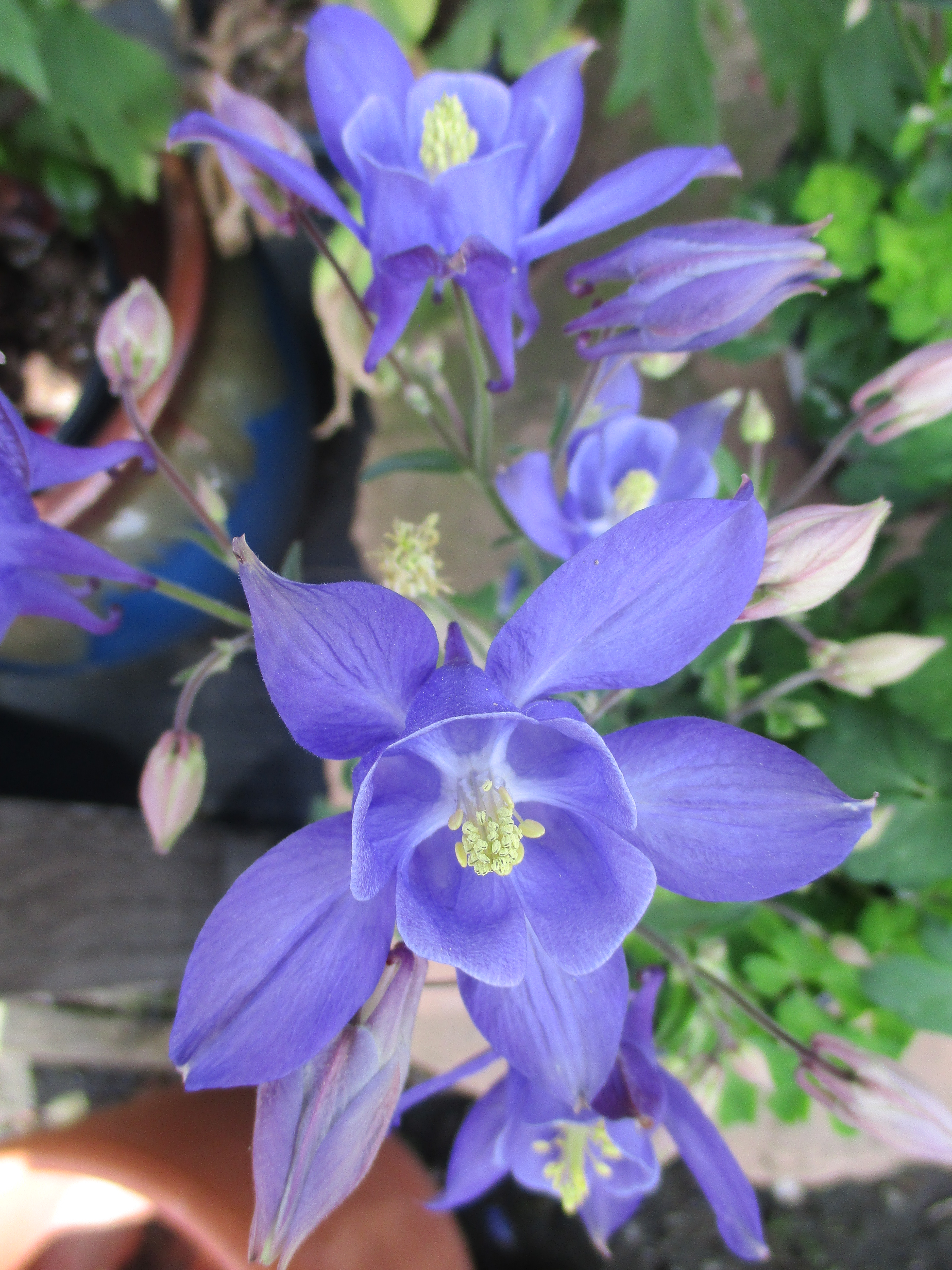
Columbine

90529Colorado is another state that was able to designate one of the most excellent wildflowers of North America as the Official State Flower because it happens to be native there. Rocky Mountain columbine, Aquilegia caerulea, however, did not contribute as much to the breeding of the many modern hybrid varieties of columbine as did common European columbine, Aquilegia vulgaris.

Most are short term perennials that are more often grown as biennials or, if they do not continue to perform through the dry warmth of summer, as spring annuals. Seed can be sown directly earlier in spring, but new plants may not bloom until the following spring. Plants that are grown in a greenhouse through winter, as well as self sown plants that grow though winter, should bloom in spring.

The famously spurred flowers can be just about any color; white, blue, purple, red, orange, yellow, pink and even pale green (fading to white). Most are combinations of two colors. Some varieties proudly bloom with frilly double flowers. The thin flower stems stand about a foot tall, with flowers facing slightly downward. The trifoliate and delightfully lobed leaves are like big lacy clover leaves.

Some Annuals Are Really Perennials

90529thumbAnnuals are plants that complete their entire life cycle from germination to death within a single year. Biennials complete their entire life cycle in two years, mostly by developing vegetative growth during their first year, and then blooming, producing seed and then dying after their second year. Perennials are the many herbaceous plants that survive longer than just a few years or indefinitely.

As simple as these definitions seem to be, the plants that they describe are a bit more complicated. Some biennials can regenerate from the roots of plants that have already bloomed and died. Stems of some annuals can root where they touch the ground, to form new plants that survive for another year. Some annuals seem perennial if they replace themselves with their own seedlings.

Of course, none of that matters for the many biennials, perennials and self perpetuating annuals that get grown as mere annuals. At a time when ‘sustainability’ is a fad and trendy buzz word, it is ironic that so many bedding plants that could contribute more if given the chance to do so, continue to get discarded as soon as their primary season finishes. Most have more potential than that.

Self perpetuating annuals like sweet alyssum and nasturtium might only need to be groomed of old plants as new ones take over. Young nasturtium are rather efficient at overwhelming their own parent plants to some degree. Of course, subsequent generations will revert to feral plants. Fancier nasturtium will eventually become basic orange and yellow. Sweet alyssum will be plain white.

Many annuals that are actually perennials might survive through their off season if just overplanted with more seasonal annuals, and then regenerate when the weather becomes more favorable. For example, primrose from last season might be left in the ground as petunias take over for summer, but when the petunias finish next autumn, the primrose can regenerate for another season.

Such perennials regenerate more randomly than they grew in their primary season, and will need some degree of grooming and perhaps mulching.

Annuals Just Might Be Perennials

70614thumbAnnuals come and annuals go. There are cool season annuals for winter. There are warm season annuals for summer. Really though, there are all sorts of annuals that are not annuals at all. Most are some sort of perennial that has the potential to last longer than a single season. Only a few popular ‘annuals’ would necessarily die after blooming and producing seed, within a single year.

To be clear, true annuals last only a single year. They probably germinate from seed early in spring, and grow quickly. They then bloom in spring or at least by summer, and subsequently produce seed. Once their seed has matured and been dispersed, their job is done. They finally die in late autumn or winter. Annuals from deserts are even faster because of the harshness of the weather.

Many large-flowered sunflowers are true annuals. They are finished once their seeds mature. They will not bloom again. Even if they wanted to, they would not survive through winter. Petunias should be annuals, because they also die over winter. However, it is possible for them to survive winter in a semi-dormant state, and regenerate and bloom again the following spring and summer.

Realistically, it is not practical to salvage petunias for a second year. It is easier and more efficient to plant new ones. Yet, it sometimes happens, particularly in mixed plantings where old plants can get cut back while cool season annuals dominate in winter. Alternatively, lanky old stems can get buried with only their tips exposed. These tips might grow as new plants the following spring.

Cyclamen are cool season annuals that have been dieing back for summer. They usually get removed by now. However, in mixed plantings, some of their fat tubers can survive through summer to regenerate next autumn. For what they cost, they are worth salvaging! Primrose, chrysanthemum, impatiens and the various fibrous begonias are all worth salvaging through their off seasons.

Fibrous begonias may not know what their off season is. Those that bloomed through winter might be looking tired by now. If pruned back, they could regenerate as warm season annuals. Those planted in spring might look tired by the end of summer. If pruned back early enough in autumn, and protected from frost, they might grow enough before winter to work as cool season annuals. Cutting them back and waiting for regeneration may not be much more effort than replacing old plants with new ones, and is less expensive.