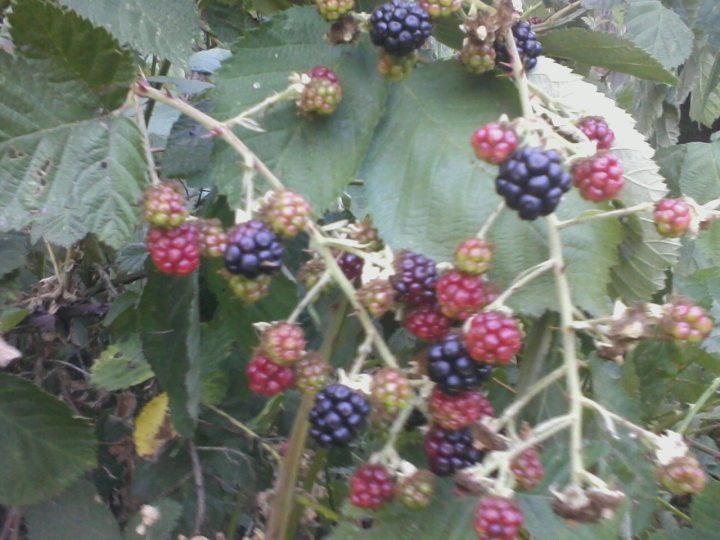
Cane Berries

Cane berries are certainly not ‘low maintenance’.

Given the opportunity, blackberry and raspberry canes become rampant thickets. The trick is to keep them contained and controlled so that they can produce berries without conquering the garden. Besides, proper pruning promotes production. Properly maintained canes are therefore both better behaved and more productive.

Berry canes are certainly not low maintenance, and should be selectively pruned a few times through the year. The type of pruning needed is determined by the type of growth that the canes exhibit in particular seasons. Spent canes or upper portions of everbearing raspberry canes that produced berries through summer and early autumn will need to be removed by the end of winter while new canes that grew through this year get trained to replace them.

Pruning and thinning of new canes should be delayed until the end of winter; but removal or pruning of spent canes can begin as soon as their fruit gets depleted. Spent canes of traditional summer bearing raspberries like ‘Willamette’, ‘Tulameen’ and ‘Canby’ can be pruned to the ground. ‘September’, ‘Heritage’, ‘Summit’, ‘Fallgold’ and other everbearing raspberry canes should be pruned only as low as their fruit was produced. Lower portions that did not produce fruit should be left to bloom and produce berries next spring.

Just like raspberry canes, new blackberry canes that grew this year do not need to be pruned until late winter. However, the canes that grew last year and are finishing berry production this year can be pruned to the ground as their last berries get taken. There is no rush for this procedure, but getting it done early makes later pruning of new canes for next year a bit easier.

Of course, every different cultivar (cultivated variety) of raspberry and blackberry behaves differently. Some finish producing and are ready to be pruned sooner than others. Their behavior is also affected by climate and environmental conditions, so that the same variety may be earlier or later in different areas, or even different parts of the same garden.

Favorite berry canes are very easy to propagate by division of superfluous new shoots during winter. Alternatively, spent canes that should be removed can be ‘layered’ instead. They simply need to be bent down and partially buried, and can be dug and separated as they develop roots.

The top few inches of cane should extend above the soil. At least a few inches of cane below the top should be buried a few inches below the surface of the soil. The length of cane between the buried portion and the base of the parent plant can remain exposed.

Layering can be done at any time of year if the layer (buried section of cane) gets watered while developing roots. Layering this time of year is easiest though, because layers get plenty of water from rain through winter, and develop roots most efficiently as they come out of dormancy late in winter or early in spring. If layers are buried where new plants are desired, they do not need to be dug and moved next year.
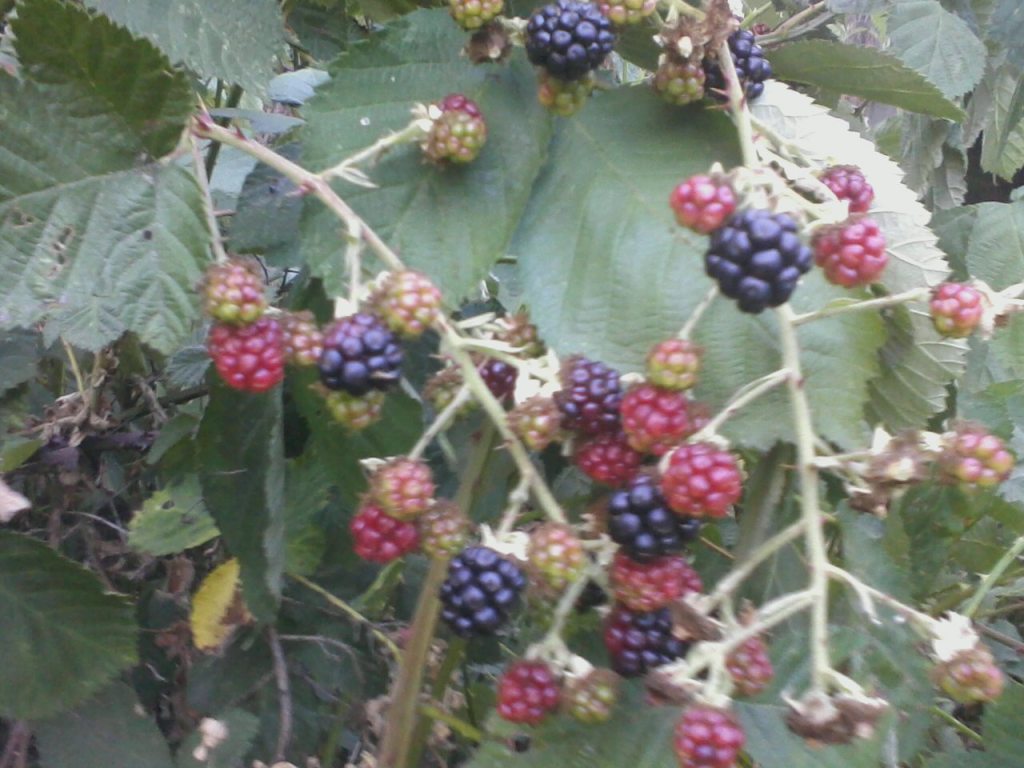
Installing Bare Root Cane Berries

Blackberry canes are not at all “low maintenance”!

The fruits of summer are still a few month away. The work necessary to produce them needs to get done now though. Just like bare root trees, bare root raspberry canes get planted while dormant in winter, and later require intensive specialized pruning to keep them in control and to promote abundant production. Canes that are already established need to get pruned now and every winter.

New plants should be planted about two or three feet apart, and then cut back so that only a single bud is visible above ground. Root barriers should keep them from venturing under fences and into neighbor’s gardens, particularly since south or west facing fences are ideal spots to grow raspberries. Alternatively, raspberries can be planted in sunken #15 cans (15 gallon nursery pots), with or without the bottoms cut off. Cans should be buried up to their rims because any exposed black vinyl collects warmth from the sun, which is uncomfortable for the roots within. Mulch should insulate the soil until new foliage provides shade.

The few new canes that should develop during the next few months should be able to support their own weight, but may be easier to work with if tied to a fence or trellis. The popular everbearing types, like ‘September’, ‘Heritage’, ‘Summit’, ‘Golden Summit’ and ‘Fallgold’ may produce fruit on top of their new canes by autumn. The tops of these canes should get cut down as low as fruit developed during the following winter. The remaining lower portions of canes that did not produce fruit in the first year should produce fruit by the second summer, and should be pruned to the ground as the fruit finishes.  

As the spent canes get removed, about five to ten of the best new canes should be selected and tied in place if desired. All other canes should be cut to the ground. Like the canes of the previous year, the selected canes should develop fruit on top in autumn and get pruned as they finish in winter, and then develop more fruit down low before getting pruned out during the following summer. This process should be repeated annually.

‘Willamette’, ‘Tulameen’ and ‘Canby’ are traditional summer bearing raspberries. They do not produce in their first year, and will need to be pruned to about five feet tall during the following winter. As these canes develop fruit, many new canes emerge below. Every winter afterward, about five to ten of the new canes should be selected and pruned to about five feet as spent canes and unneeded canes get cut to the ground.

Blackberry Canes Need Specialized Maintenance

Dormant blackberry canes are now available with other bare root stock.

            One of my favorite modern California impressionistic paintings depicts suburban gardening of the post agricultural period in the Santa Clara Valley. It is a finger painting that I made in kindergarten at Bucknall School in about 1972 or 3, to illustrate some of my favorite features of my grandparents’ garden in Santa Clara. To the left is a vertical brown stripe below green squiggles with black spots; the avocado tree. To the right is a similar image with red instead of black spots; the cherry tree. Between and below these, and lacking a vertical stripe, is a flurry of green squiggles with more black spots. These are blackberry canes.

            Blackberries are not at all ‘low maintenance’ since they require rather intensive specialized pruning. Most of the work that they need gets done during summer; but bare-root blackberry plants become available and get planted this time of year with other bare-root plants. Blackberries produce fruit on biennial canes which grow during their first year, and then bloom and fruit during their second year before dieing out.

            Once the tough roots are established, there is no shortage of fresh new canes to replace the old canes. In fact, surplus young canes can be dug and divided with roots to propagate new plants during winter. Because they have a way of spreading outward, blackberries should not be planted too near to neighbors’ fences without root barriers to keep them contained.  

            The most popular blackberries locally are ‘trailing’ types such as ‘Boysen’, ‘Marion’ and ‘Olallie’, which are also known as ‘Boysenberry’, ‘Marionberry’ and ‘Olallieberry’.  Less common ‘erect’ types, such as ‘Arapaho’, ‘Chickasaw’, ‘Choctaw’ and ‘Navaho’, are more tolerant to cold winter weather, so are more popular where winters are more severe. Hybrids of trailing and erect blackberries are ‘semierect’, and are generally treated like trailing types.

            After they get planted in winter, trailing and semierect blackberry canes can do whatever they want to through their first year. In their second year, canes should be trained onto trellises or wires until they have finished fruiting in summer. When the fruit is finished, these canes should be cut to the ground.

            Some of the canes that were growing on the ground below the trellises while all this was going on should now be trained like the canes that were just removed. For trailing types, about ten to fifteen of the best canes should be selected, trained and pruned to about six or seven feet long. About half as many canes of semierect types should be selected and pruned about a foot shorter. All remaining canes should be cut to the ground. (A few of the smallest remaining canes may be left intact through summer to be divided for propagation in winter.)     

            Side branches grow from the pruned canes through late summer and early autumn. At the end of the following winter, these side branches should be pruned to about a foot long. New growth from these stems blooms and fruits during the following summer. Again, when fruit is gone, the spent canes get cut to the ground so that the process can be repeated.

            Erect blackberries do not need to be trained onto support. Canes that develop during their first year can be cut to about two and a half feet tall in the middle of summer. Resulting branches should be cut about a foot long in winter. During the following summer, these fruiting canes should be cut to the ground as fruit is depleted. New canes can then be pruned like the previous canes were.