Environmental Factors Silently Influence Bloom

California poppy dramatizes favorable weather conditions.

Superbloom occurs only about once every decade or so. It is very unpredictable though. It can happen for two or even three consecutive springs. Alternatively, it may not happen for two decades. It can be as early as late February, or as late as late May. It can last one or a few weeks. Superbloom is as variable as the environmental factors that influence it.

Actually, all bloom relies on influence from variable environmental factors. That is how it knows how and when to bloom. It is also why many species are so irregular about doing so. Various species prioritize reliance on various environmental factors. Therefore, some may bloom early or late while others adhere to stricter schedules. It can get complicated.

Warmth is undeniably the most significant of environmental factors that influence bloom. Cool weather inhibits bloom, even as growth resumes at the end of winter. Then, warmth accelerates bloom, mostly during spring, but also into summer. Many species continue to bloom as long as the weather stays warm. Very few prefer to bloom during cool weather.

As mentioned, the influence of environmental factors can get complicated. Many species actually require sustained winter chill, or vernalization, to bloom well. It is how they reset their growth seasons to begin in winter. Peony is unreliable here because of inadequate chill. After unusually cool winter weather though, flowering cherry and lilac bloom better.

Humidity is another important environmental factor. Although it does not stimulate bloom for more than a few species, it can prolong bloom. Some flowers, particularly from humid climates, can desiccate with aridity. Conversely, even flowers from desert climates retain hydration better with humidity. Also, rain provides water for areas that lack any irrigation.

Species from mild but not tropical climates might rely more on photoperiod than weather. Poinsettia in the wild does not experience sufficient chill to distinguish winter. It monitors the photoperiod, which is the duration of daylight, instead. It knows to bloom when nights are longer than days. A few species use the same very consistent technique to bloom for other seasons.

Flowering Crabapple

Flowering crabapple is more colorful than crabapples that are grown more for fruit.

This picture resembles flowering cherry, but is actually a flowering crabapple, Malus spp.. Both provide impressively abundant spring bloom before foliation in spring. Both may have single, semidouble or double flowers in various shades ranging from white to rich pink. Some flowering crabapples though have nearly red flowers. Flowering crabapples get slightly larger, more than twenty feet tall and broad; but some stay as short as five feet, and others get taller than thirty feet! Some have bronzy or purplish foliage through summer. The half inch to nearly two inch wide yellow, orange or red fruit can be colorful into autumn, and some makes good jelly; but it can also be messy. The main advantage of flowering crabapples is that they are somewhat less susceptible to rot than flowering cherries are in dense slowly draining soil.

Deadheading Redirects Resources For Growth

Deteriorating flowers lose their appeal fast.

Early spring bulbs that went into their gardens last autumn are now blooming. Some are already done. Some summer bulbs should begin to bloom as the last spring bulbs finish. A few of them might bloom as late as autumn. Ultimately, like the earliest of spring bulbs, all eventually finish. As they do, their deteriorating flowers will necessitate deadheading.

Deadheading is simply the removal of deteriorating blooms. For many species, it diverts resources from fruiting into other growth. Many species can utilize diverted resources for subsequent bloom. Many become more intent on blooming again after deprivation of any prior fruiting. Spring bulbs instead utilize all their diverted resources for new bulb growth.

For spring bulbs, it is the most practical response to deadheading. Most bloom only once annually. Therefore, they can not divert resources directly to subsequent bloom. Instead, they prioritize vegetative growth of bulbs to grow and bloom for the next spring. They are patient. Reproduction remains their priority. They merely regroup before another attempt.

Because of extensive breeding, many spring bulbs can not produce viable seed anyway. Of course, this does not prevent them from trying. Even seeding or fruiting structures that contain no viable seed can be unappealing. For them, deadheading is merely aesthetic. Some complicated hybrids that might produce viable seed are unlikely to be true to type.

Elimination of viable seed that is not true to type is as practical as it is aesthetic. Without deadheading, such seed can grow into feral progeny. Such ferals may be more similar to remote ancestors than to their direct parents. They can be aesthetically inferior, but more prolific. Eventually, less desirable feral bulbs may displace their more desirable parents.

Because they are small but abundant, some freesia avoid deadheading. Resultant ferals are more fragrant but less colorful with pale white bloom. They are more prolific, so might eventually displace their parents. Common grape hyacinth and snowflake are too florific to deadhead, but are true to type. Actually, they can become invasive in some situations. Montbretia are very likely to be invasive.

Force To Be Reckoned With

Flowering quince is conducive to forcing.

Winter flowering cherry, flowering quince, witch hazel and forsythia are finishing bloom. Later types of flowering cherry and flowering quince bloom immediately afterward. Lilac, redbud and weigela bloom only slightly later. Flowering crabapple extends the season of such flashy early bloom. It is relatively easy to force any of these for even earlier bloom.

Forcing is more popular where cool weather inhibits bloom through winter. It accelerates bloom simply by exposing it to home interior warmth. Bulbs that remain dormant in cold gardens bloom sooner in warm homes. Winter is the most popular time for forcing bulbs. It is now time to force formerly dormant deciduous stems to bloom a bit earlier for spring.

It is less wasteful to force deciduous stems to bloom than to force bulbs to bloom. Bulbs rarely survive because they exhaust their resources without replenishment. Those that do survive and have potential to bloom again may take a year to recover. Bulbs are not cheap. Deciduous stems are free, and are as disposable as other popular cut flowers.

The most popular stems to force are the fruitless counterparts of fruit trees. This includes flowering cherry, flowering crabapple and flowering quince. Flowering quince is actually not closely related to fruiting quince though. It also includes flowering apricot, flowering plum, flowering peach and flowering pear. Flowering pear is likely to smell badly though.

Stems from deciduous trees that actually produce fruit are just as easy to force. They are only less popular because they are not bred to be as pretty. Also, removal of their stems compromises fruit production. Those who plan to force such stems can leave a few extra during dormant pruning. Collection of stems should not damage or disfigure the source.

Stems are ready to force when their floral buds are just about to pop. Ideally, some buds should be slightly exposing their floral color within. A few flowers could be blooming. At that stage, bloom accelerates significantly in response to home interior warmth. Aridity can desiccate larger blooms. Otherwise, wisteria, dogwood, deciduous magnolias and perhaps azaleas are conducive to forcing.

Six on Saturday: Shabby Spring II

Some of these Six are leftovers from last week. Some might have been late last week, and are a week later now. African daisy and calla bloom somewhat randomly, so technically, may not qualify as late. Likewise, candelabra aloe does not bloom quite as randomly, but is not always punctual either. I should be more observant of bloom schedules. Evergreen clematis and bridal wreath spirea are more likely to be blooming late. I am more certain that flowering quince should have bloomed earlier. Only calla and candelabra aloe were grown here. The others were originally acquired from nurseries many years ago, so I can not gloat about growing them. Incidentally, Rhody and I will leave for Washington early Wednesday morning, so my next two ‘Six on Saturday’ posts should be from there.

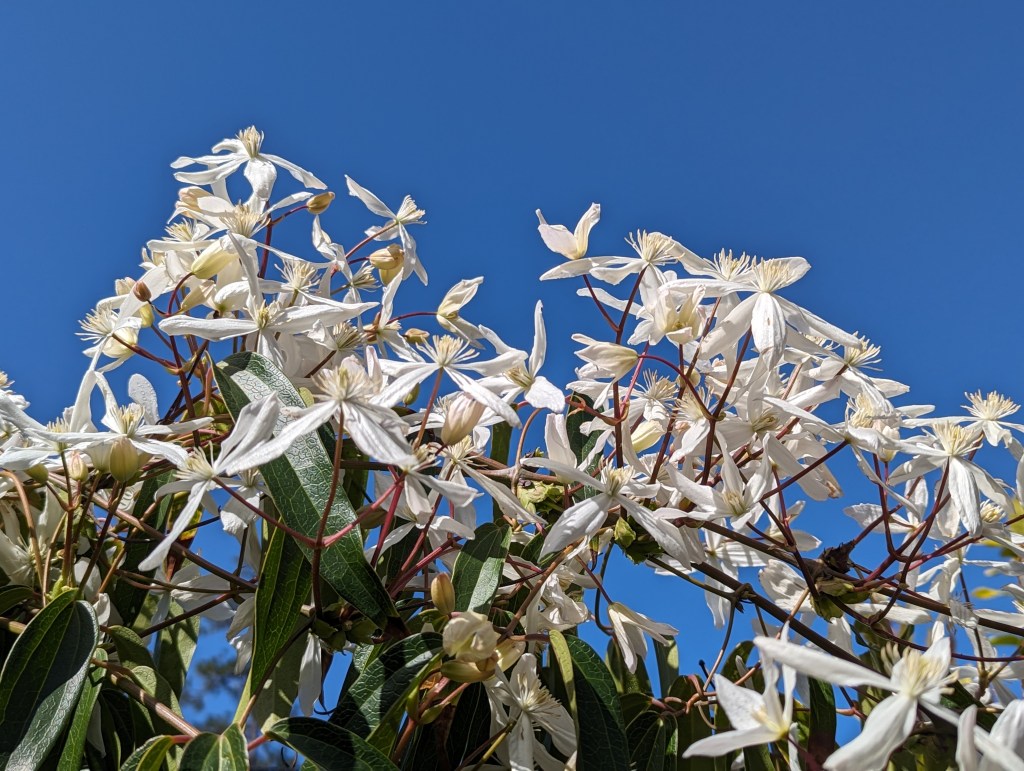
1. Clematis armandii, evergreen clematis bloomed while I was not looking. This picture is from last week. Bloom lasted a bit longer than expected, but is presently deteriorating.

2. Osteospermum ecklonis, African daisy also bloomed last week, but of course, is rarely without bloom. It blooms a bit more profusely in phases between now and late summer.

3. Aloe arborescens, candelabra aloe typically blooms for late winter. These vivid orange flowers are resilient to wintry weather, and contrast splendidly with blue California lilac.

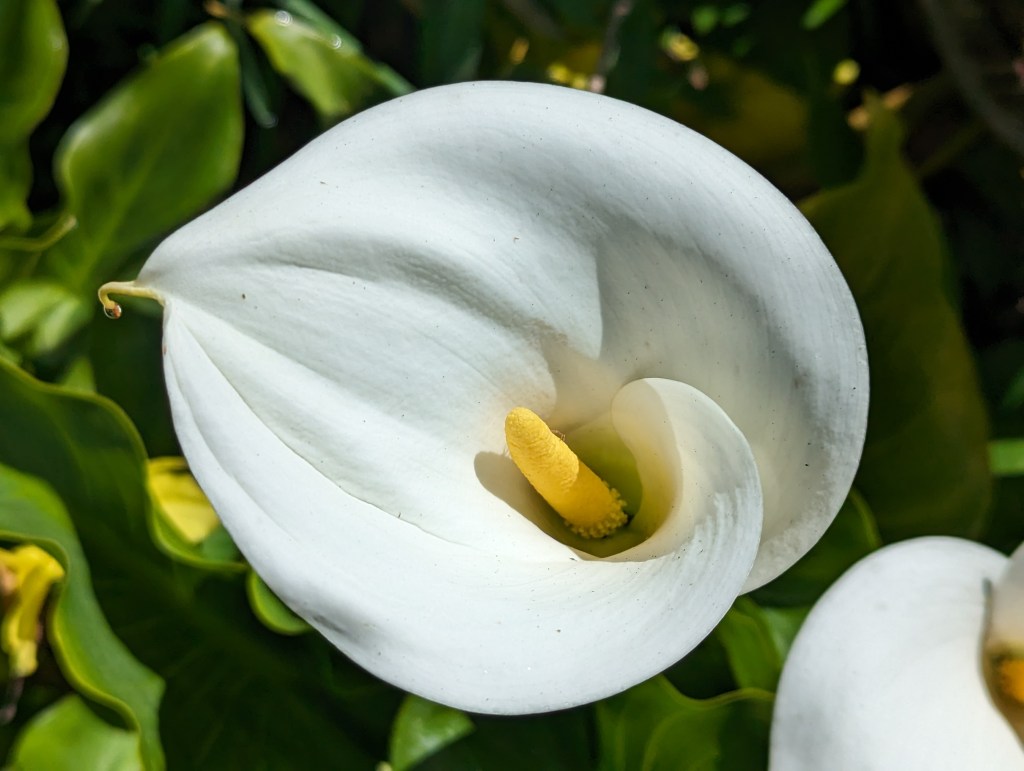
4. Zantedeschia aethiopica, calla grows wild within a portion of one of the landscapes. It could do the same elsewhere if we were to relocate some of it, which is why we rarely do.

5. Spiraea prunifolia, bridal wreath spirea seems to be blooming late. I do not know for certain because I do not remember when it typically blooms. Foliage develops afterward.

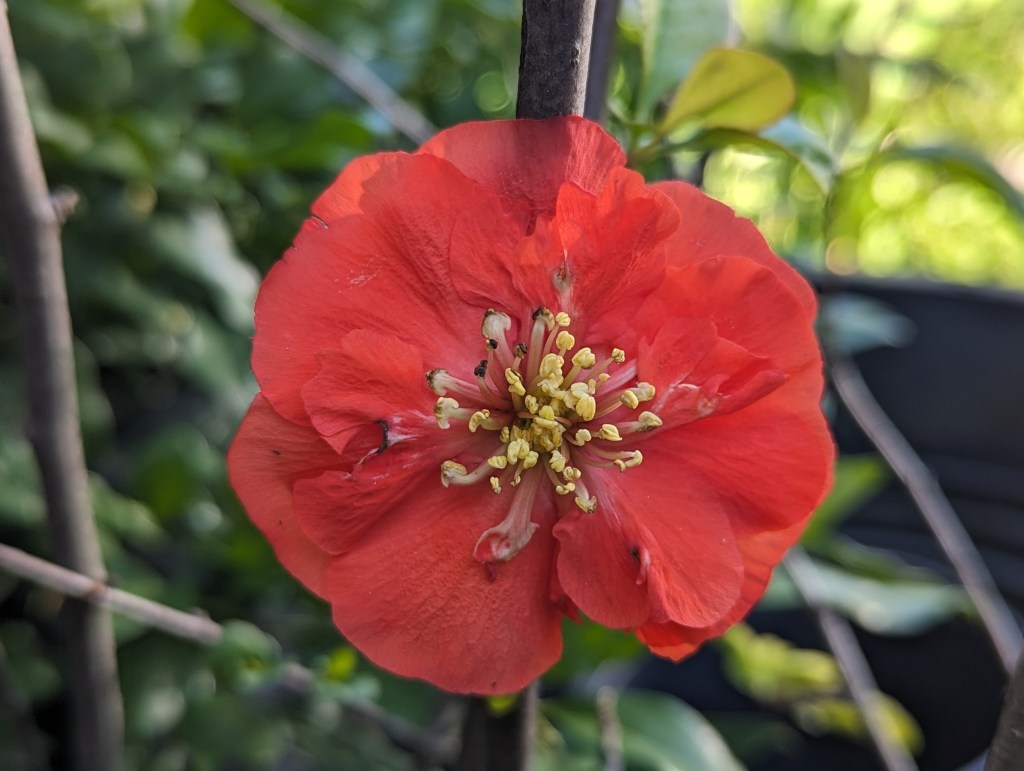
6. Chaenomeles speciosa ‘Double Take Orange’ flowering quince also develops its foliage after bloom. I am more certain that it is blooming late. It typically blooms with forsythia.

This is the link for Six on Saturday, for anyone else who would like to participate: https://thepropagatorblog.wordpress.com/2017/09/18/six-on-saturday-a-participant-guide/

Six on Saturday: Shabby Spring

This should have been done earlier. While most who participate in Six on Saturday have been posting pictures of early spring bloom, I have been posting less colorful pictures of dormant corms, their barely visible new spring growth, some windmill palm foliage and a sliced weirdly yellow beet. Some of the few flowers that I posted pictures of were oddly pallid, which was sort of why I thought they might be interesting. Now that I am posting floral pictures, early spring flowers are beginning to deteriorate. The first two are rather shabby. The third has not been quite right for a few months. I should have found fresher flowers.

1. Eucalyptus cinerea or pulverulenta, florist silver dollar got an identity crisis. I learned it as cinerea. I am now told that it is pulverulenta. Regardless of its name, bees enjoy it. We thought we added another tree of the same species nearby, but it is the other species.

2. Tecomaria capensis, cape honeysuckle really was prettier earlier. Its bloom is not too profuse, but it is distinctly orange. Goodness, I really should have taken a better picture.

3. Rosmarinus officinalis, rosemary is badly infested with mites, but blooms regardless. It is right across the road from the silver dollar, and just as popular with the honeybees.

4. Lavandula stoechas, Spanish lavender is the only lavender that self sows here. It does not become invasive though. Its bloom may be blue, pink, white or, obviously, lavender.

5. Tulbaghia violacea, society garlic is one of my least favorite of perennials. It stinks! It is not so much to look at either. It has been here for many years though, and will not die.

6. Grevillea rosmarinifolia, rosemary grevillea seems as popular with hummingbirds as rosemary and silver dollar is with bees. Hummingbirds are prettier than this odd bloom.

This is the link for Six on Saturday, for anyone else who would like to participate: https://thepropagatorblog.wordpress.com/2017/09/18/six-on-saturday-a-participant-guide/

Spring Blooming Trees

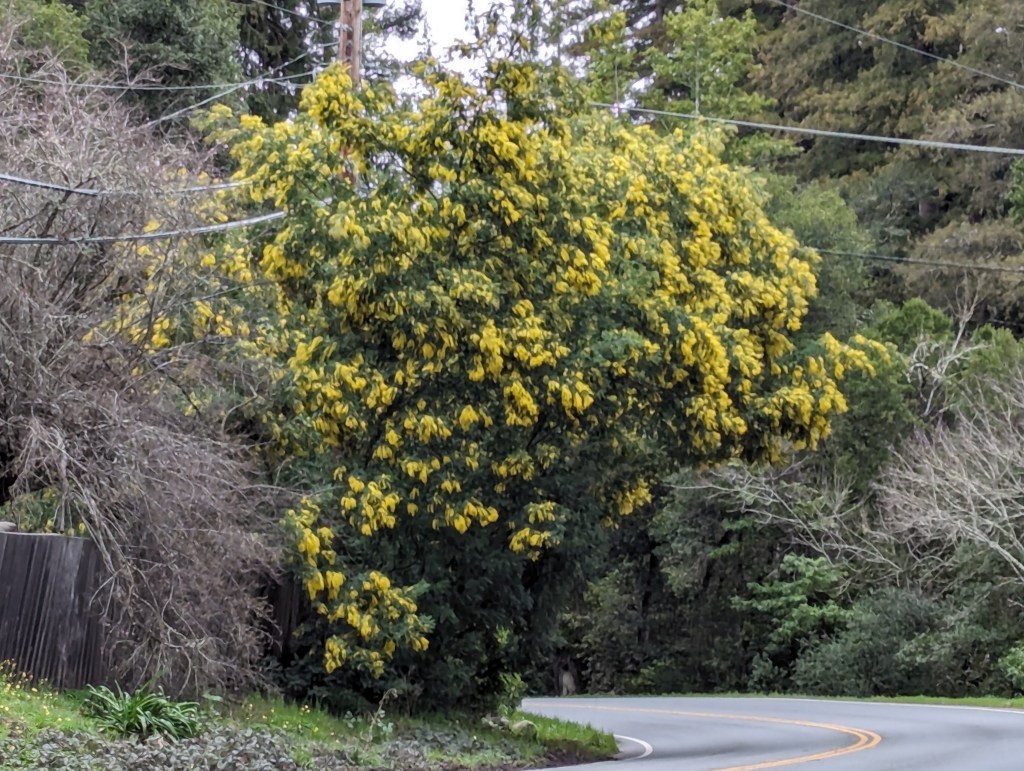
Silver wattle is an aggressively invasive exotic species, but certainly is pretty in bloom!

From my window, I can see across the way to one of my all time favorite weeds in my neighbor’s garden. A healthy acacia tree is nearly in full bloom! Throughout the year, I occasionally remind my neighbor that we really should cut the tree down before its seedlings overwhelm the neighborhood. This time of year though, I am secretly glad that we have not gotten around to it yet.

Even though most people find the fragrance objectionable, I actually find it appealing. It reminds me of Southern California, perhaps because, even on a cool wintry day, it smells like a sun roasted freeway on a hot smoggy day. I suppose that its pollen is a problem for anyone with even mild allergies; and after all, it is still a major weed.

Other trees that are now blooming are not so problematic, or equipped with a petroleum based fragrance. Shrubby forsythia and flowering quince were the first to bloom. Forsythia is the best bright yellow besides acacia. The most popular flowering quince are rich pinkish orange. Apricot, cherry, peach, plum, prune, nectarine, almond and a few other fruit trees, as well as their fruitless ‘flowering’ counterparts, including purple leaf plum, are blooming about now. (Flowering apricot, peach, nectarine and almond are rare.) Fruiting pear and apple trees typically bloom a bit later; but flowering pear and some flowering crabapple are already blooming. Later, redbuds bloom bright purplish pink.

When pruning fruit trees during winter, I sometimes leave a few branches to cut and bring inside while in bloom. Fruitless flowering trees do not need to be pruned like fruiting trees, so can provide even more flowering stems with more flower variation. Stems of forsythia, flowering quince and flowering cherry are often ‘forced’ into bloom by getting cut and brought in just as flower color start to become visible, so that they can finish their bloom inside. Except for redbud, any of the other spring bloomers can also be forced, but are more likely to get desiccated by the dry air inside.

As red maple and red oak begin to break dormancy, they develop delicate pendulous ‘blooms’ that are not very colorful, but might be interesting enough to add to more colorful cut flowers. Of course, pussy willows are always traditional.

Six on Saturday: Strange Times

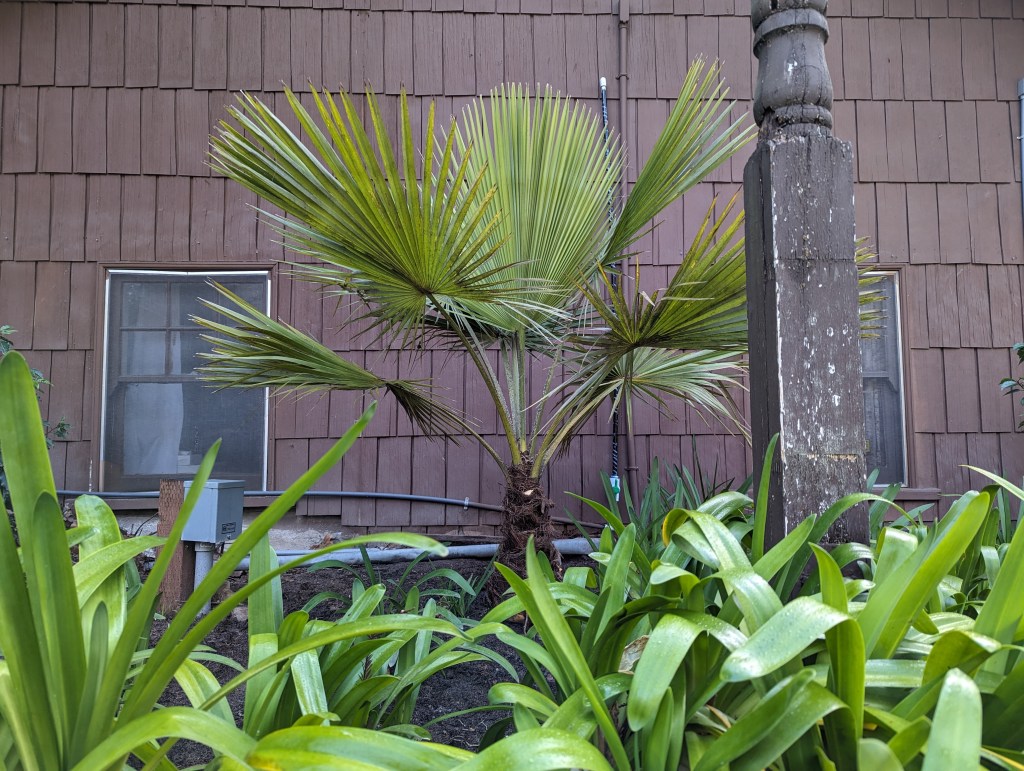
Some flowers are blooming strangely this year. Well actually, one bloomed strangely last year, and is now blooming normally. Flowers that prefer more winter chill than they can experience here are blooming quite nicely this year, even after less frost than last winter. I can neither make sense of it all, nor complain about it. I mean, it may be strange, but it is strange in a good way. We added a windmill palm that I mentioned two weeks ago to a landscape. I like palms, especially this palm, but I am not sure that I like them here with the redwoods. Palms are strange with redwoods.

1. Trachycarpus fortunei, windmill palm is strange because it is one of only three palms here. Palms and redwoods should not mix. It remains canned, so will be removed as the unseen angel’s trumpet behind it grows. I featured it two weeks ago, before it came here.

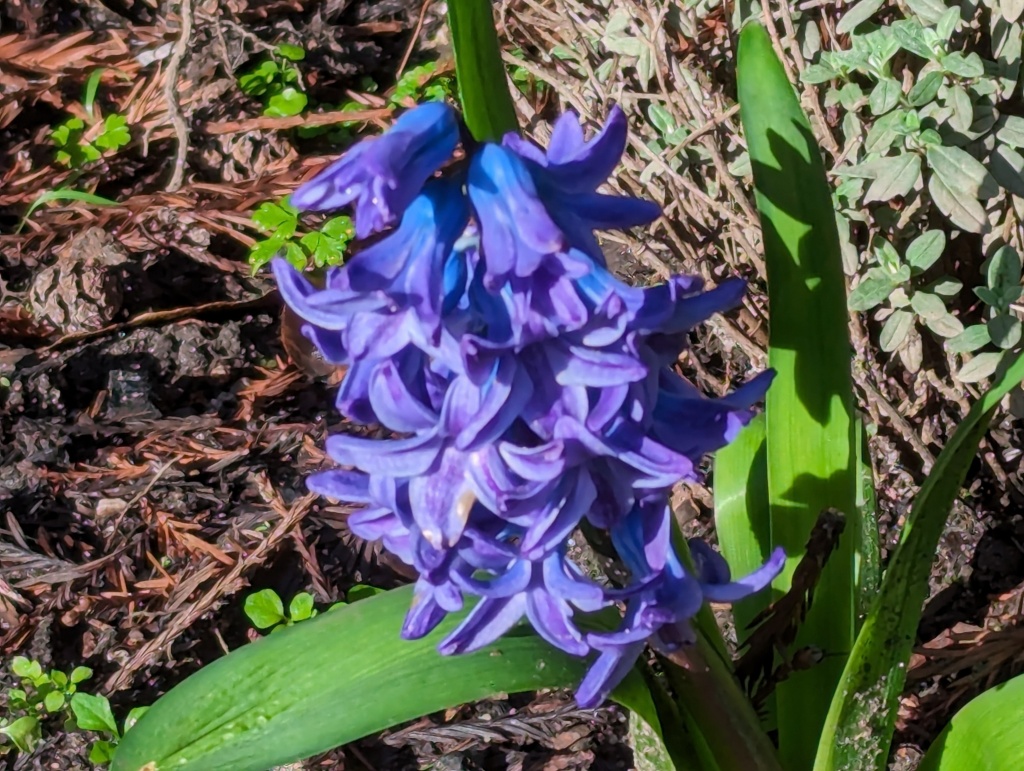
2. Hyacinthus orientalis, hyacinth is not so strange either, but it performs strangely well and reliably with only minor chill. Several have been blooming like this for several years.

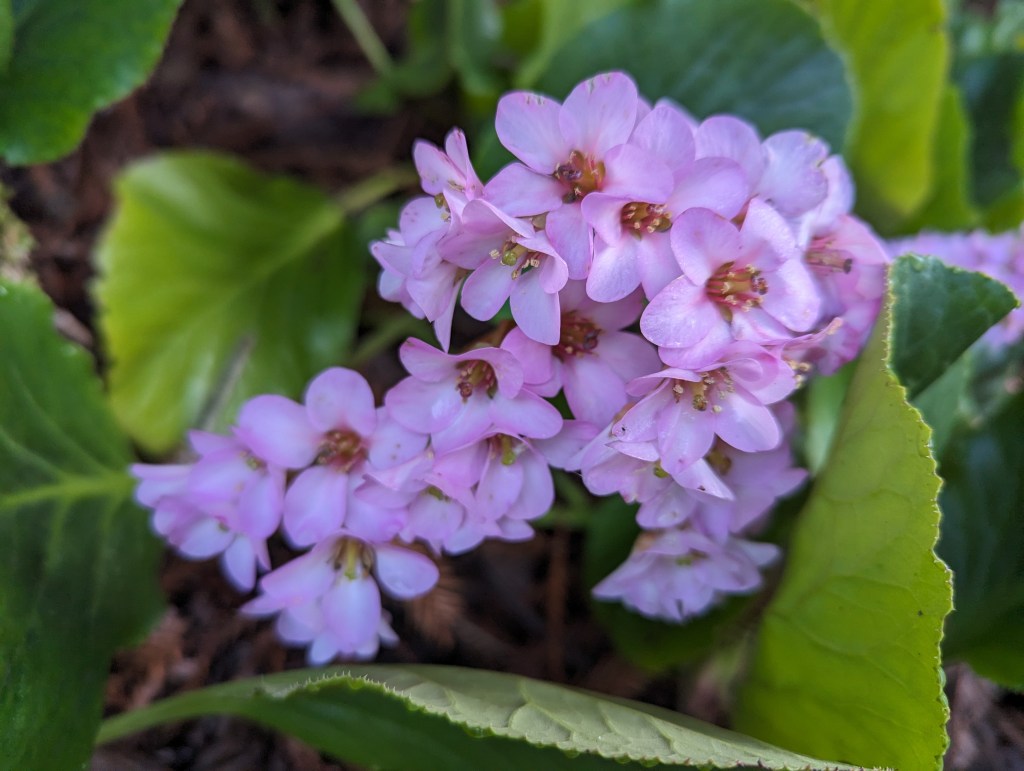
3. Bergenia crassifolia, pig squeak is blooming strangely late with a strangely light pink floral color. Otherwise, it blooms a bit better now that a sycamore that shaded it is gone.

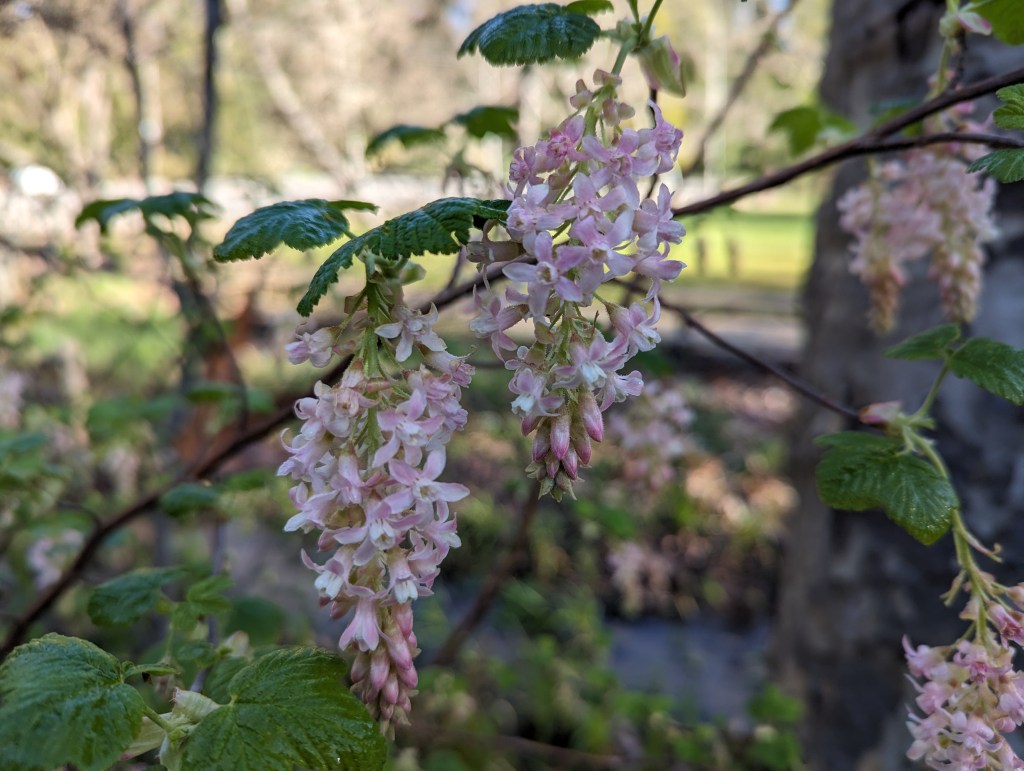
4. Ribes sanguineum, red currant is blooming with a strangely light pink floral color too. It is not much more than white, but is not white. All are this same strangely pallid color.

5. Brugmansia X cubensis ‘Charles Grimaldi’ angel’s trumpet did just the opposite. After blooming strangely pallid peachy orange since spring, it now blooms yellow as it should.

6. Helleborus orientalis, Lenten rose is blooming strangely well this year. Typically, only a few bloom like this. Now, many are. This is one of a uniform colony that is likely feral.

This is the link for Six on Saturday, for anyone else who would like to participate: https://thepropagatorblog.wordpress.com/2017/09/18/six-on-saturday-a-participant-guide/

Litter Problem

It will not DIE!

We have a litter problem. At least three species of Agave continually have litters of pups. We give almost all of the pups away to friends and neighbors, but more constantly appear. I suppose that we could dispose of some, but that is not easy for those of us who enjoy growing vegetation instead of destroying it.

Pups of one Agave continue to appear where the original was relocated from several years ago. Although I do not know what species it is, it is likely my favorite of the three. However, we can not accommodate all these pups! The original is happy with its new situation, but is beginning to generate a few more pups there as well.

Pups of Agave americana, century plant, got canned because we thought that we could eventually find homes for them. Now, and for the past few years, these maturing pups are producing more pups, some of which are emerging from the drainage holes of their cans! The original is happy to be a neighbor of the unidentified Agave, but could generate more pups at any time.

Agave ovatifolia, whale tongue agave, was purchased by the other horticulturist for a specific situation. It was a striking specimen that was worth what was spent on it. However, it began to generate pups almost immediately after installation, and then suddenly and unexpectedly bolted and bloomed. It was disappointing for such an expensive specimen of a monocarpic species. We removed it after bloom, with the intention of replacing it with one of its several maturing pups. Of course, I could not simply dispose of its carcass. I canned it like a dormant perennial, just in case it did something. Well, now it is doing something! It is bolting and blooming from the grave! I expect more pups soon. We really should get all the Agave spayed!

Agave really should be spayed!

Six on Saturday: Hello Yellow

White is my favorite color. I sometimes post six pictures of exclusively white flowers for Six on Saturday. Also, I posted six pictures of exclusively red flowers merely to show that I could. I might have tried other colors as well. I do not remember trying yellow though. California bay gave me the idea, although its bloom is rather unimpressive. Silver wattle is much more colorful. So is daffodil. Dandelion is merely a weed; but technically, silver wattle is also. Ultimately, I got four pictures of yellow flowers, a picture of an aberrative beet, and a picture of someone who might qualify as golden retriever light gold, which at least sounds yellow. He can not see most colors anyway.

1. Acacia dealbata, silver wattle is an aggressively naturalized exotic species. It certainly is pretty though. It typically blooms earlier, and maybe by New Year’s Day farther south.

2. Umbellularia californica, California bay does not bloom as prettily. Its flowers are too tiny, too sporadic and too high in its canopy to be prominent, but it blooms nonetheless.

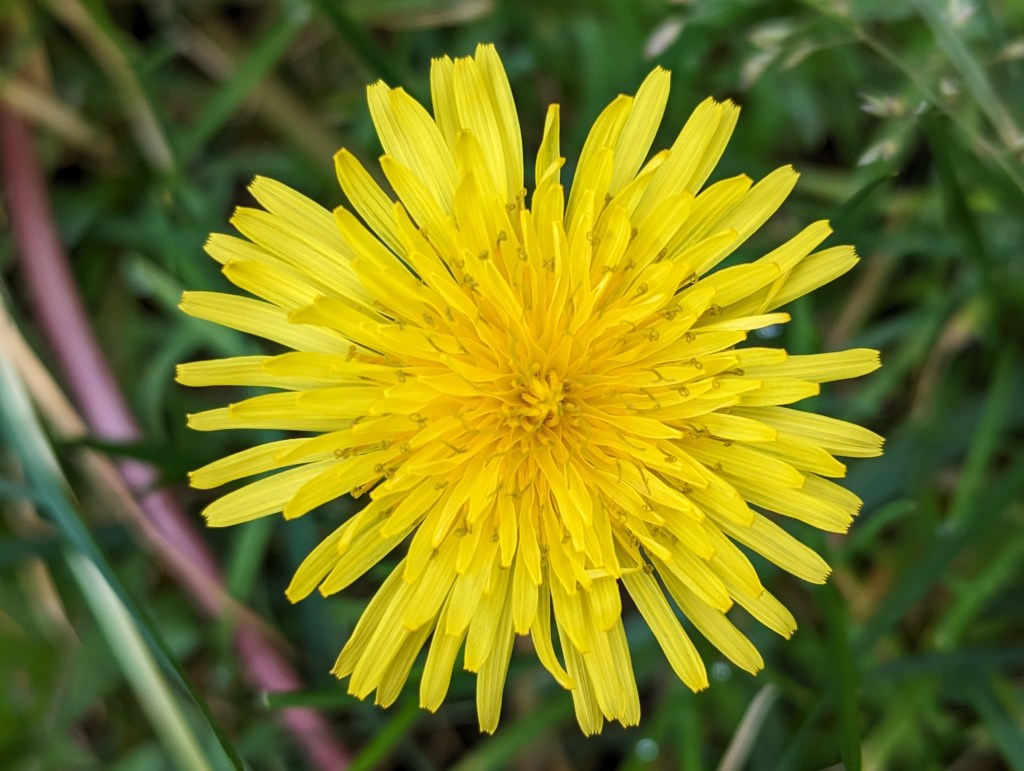
3. Taraxacum officinale, dandelion, like silver wattle, is also an aggressively naturalized exotic species. It infests most lawns, and blooms to toss its seed whenever it wants to.

4. Narcissus pseudonarcissus, daffodil continues to bloom. Several are still budded. If it were not so variable with its bloom schedule from year to year, I would say that it is late.

5. Beta vulgaris, beet should be red, not yellow. ‘Detroit Dark Red’ is best! This seems to taste about the same, but looks like a sick carrot! I loathe carrots! Why do this to a beet?

6. Rhody remains unimpressed. He is no more interested in beets than carrots. He could be more concerned about the first of a few storms that should arrive in only a few hours.

This is the link for Six on Saturday, for anyone else who would like to participate: https://thepropagatorblog.wordpress.com/2017/09/18/six-on-saturday-a-participant-guide/