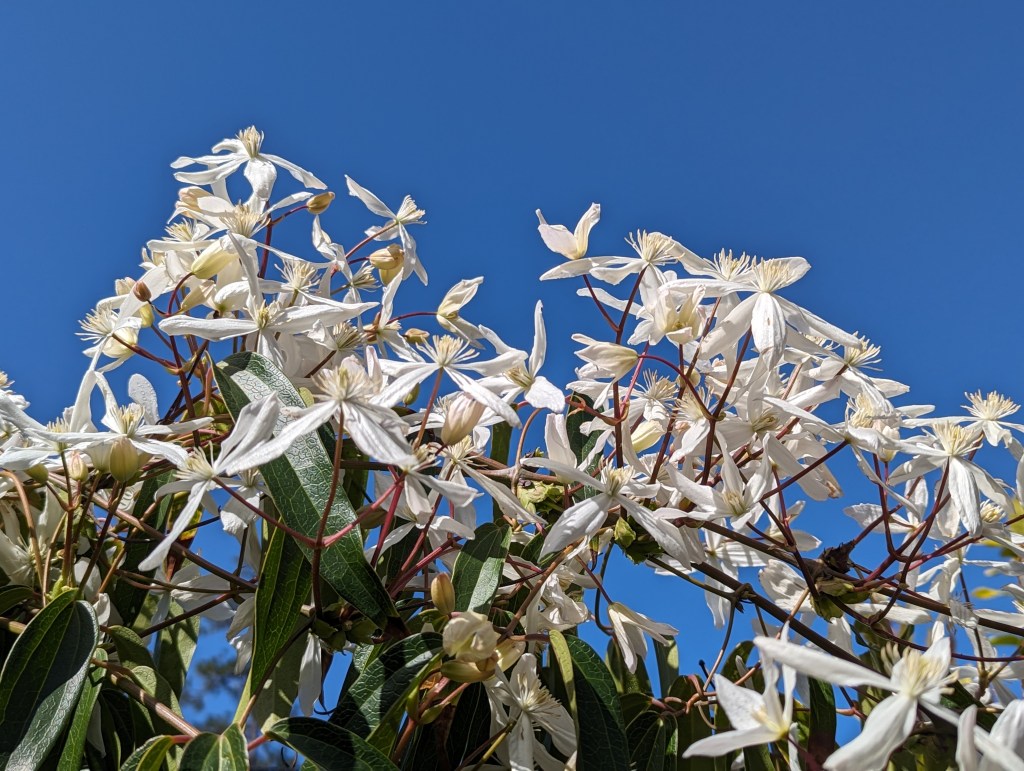
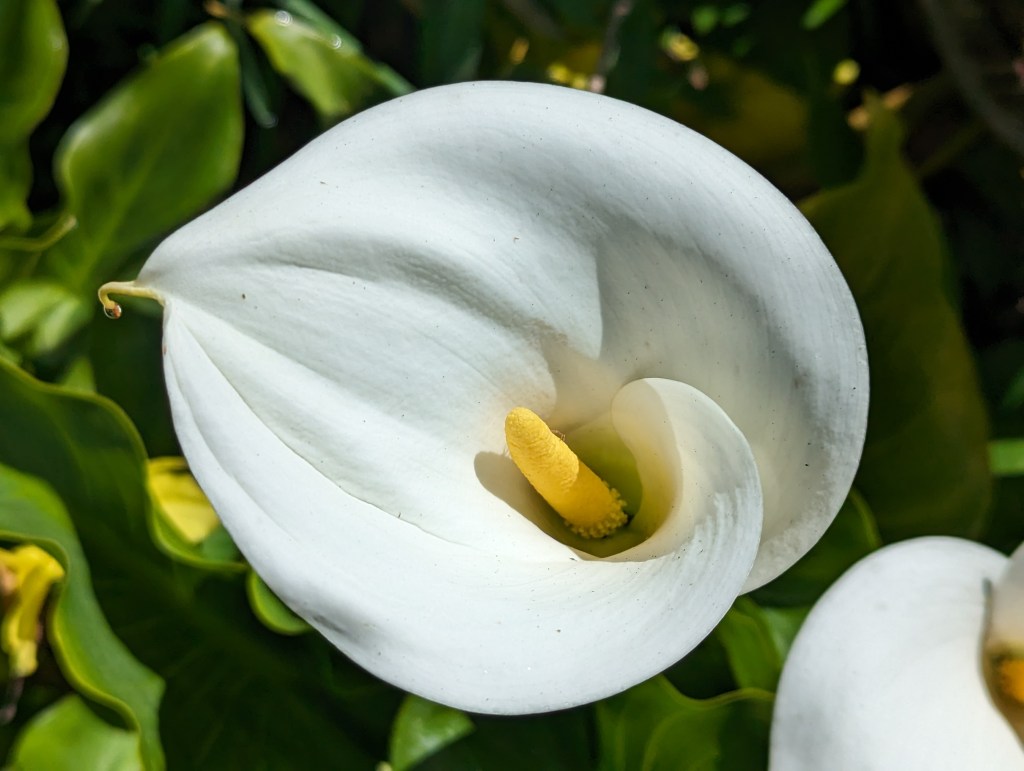
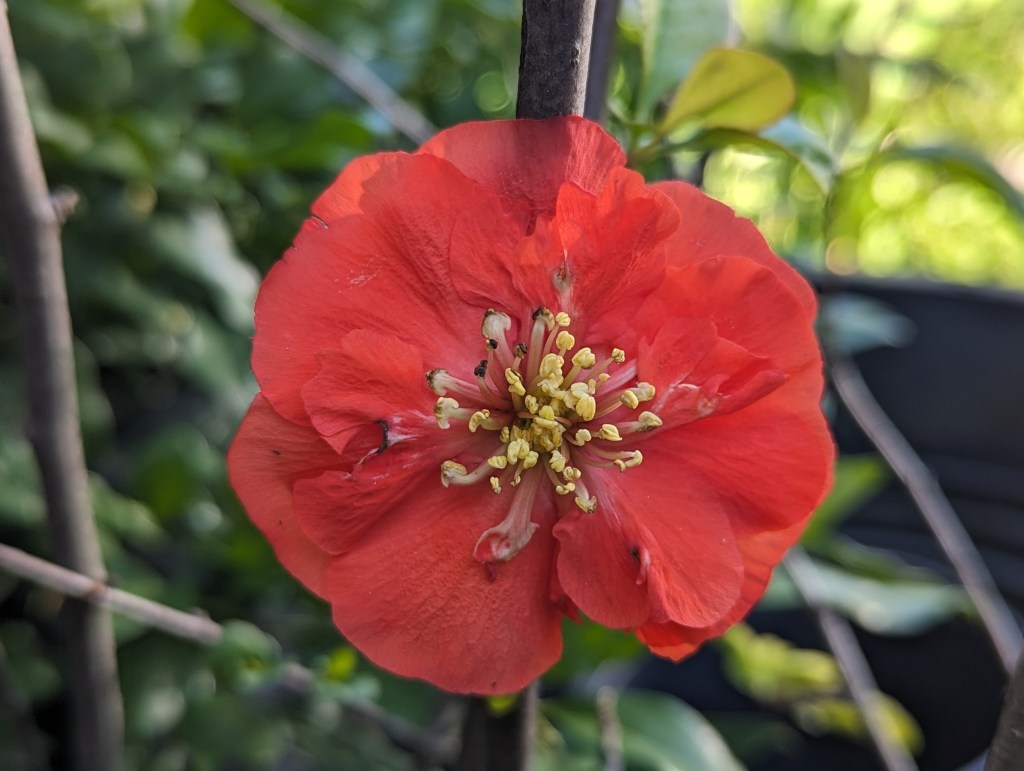
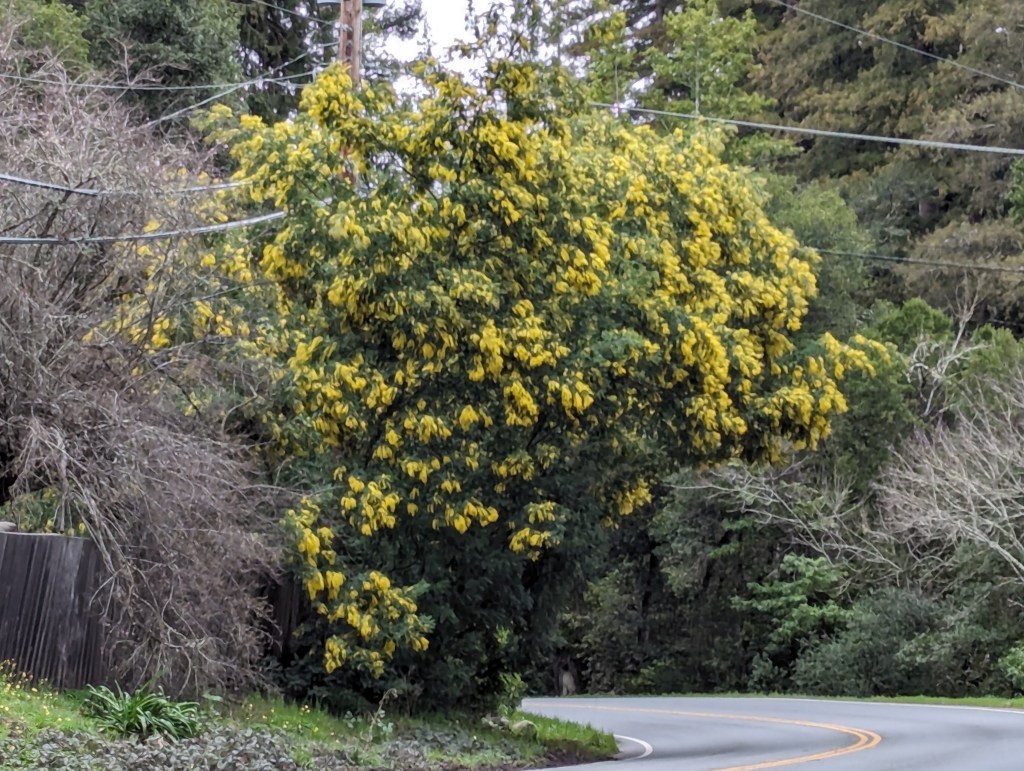
Winter Bloom Might Be Limited (deferred from yesterday)

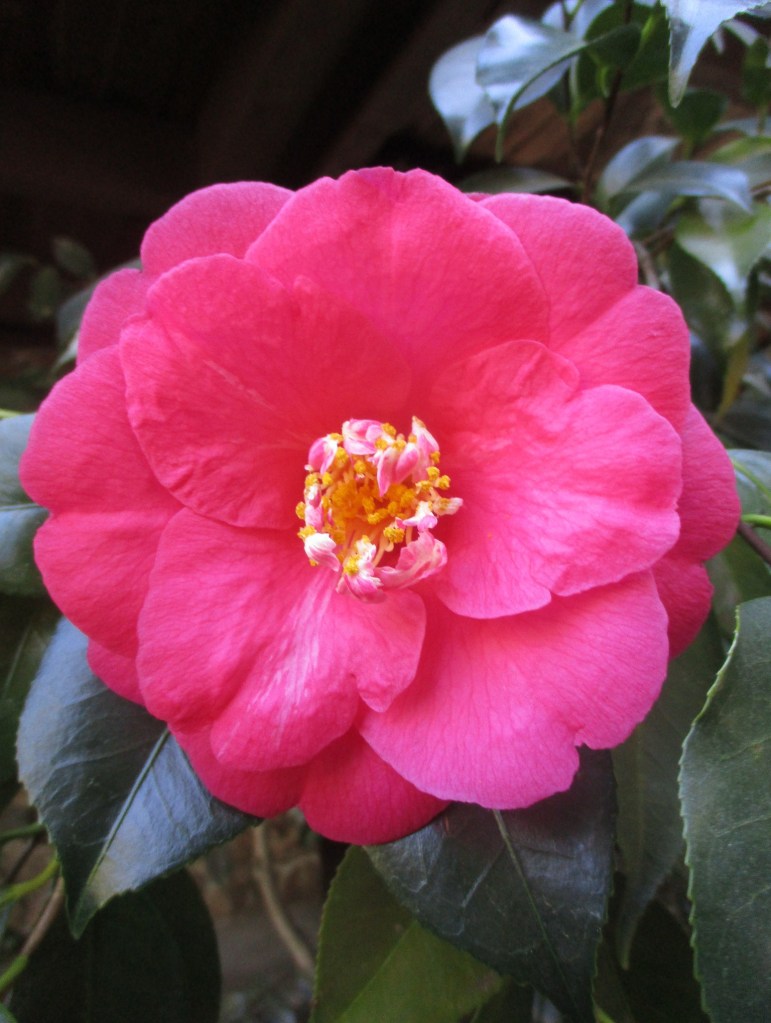
Some camellia varieties bloom for winter.

Except for flowers that bloom randomly throughout the year, most autumn bloom is done. Much of the formerly spectacular autumn foliar color succumbed to wintry rain and wind. Many colorful winter berries have already gone with migratory birds who consume them. Overwintering birds appreciate what lingers. Fortunately, some winter bloom continues.

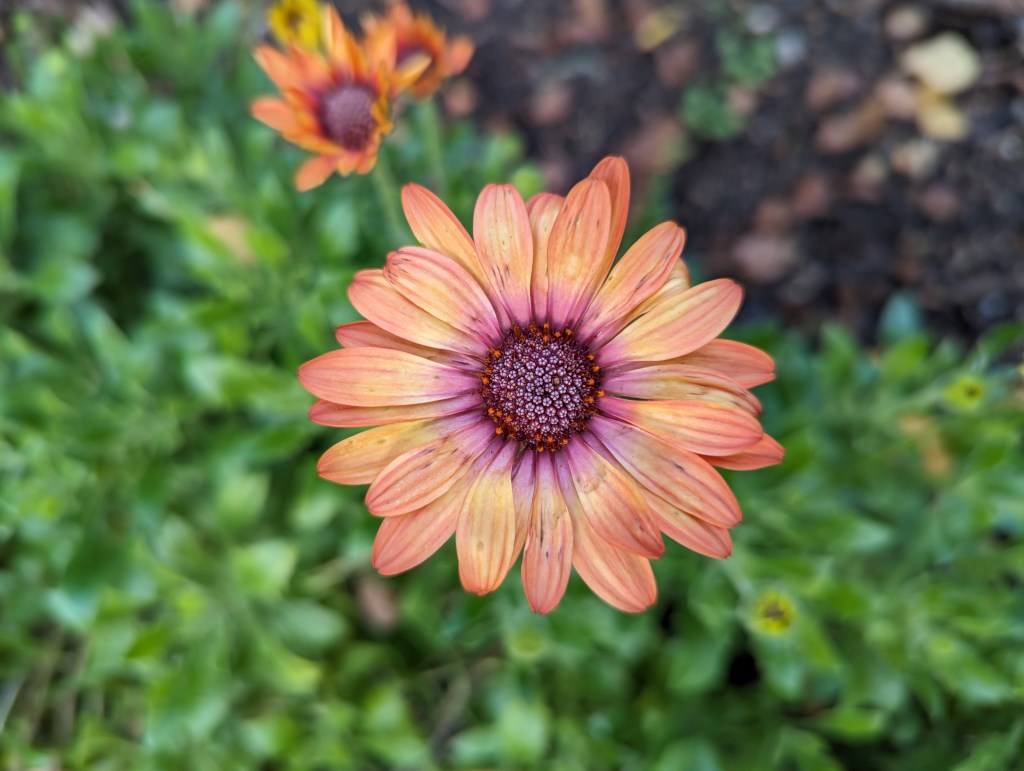
Cool season annuals likely provide most winter flowers prior to spring. Ornamental kale generates a foliar display like a pastel version of summer coleus. Snowdrop bulbs bloom only white, but look sharp if other bloom is scarce. A few species contribute winter bloom merely because they lack regard for seasons. African daisy blooms whenever it wants to.

However, winter bloom is not comparable to spring bloom. That is an unfortunate reality. Most species that bloom randomly throughout the year bloom best for spring or summer. Most species that bloom specifically during winter are relatively subdued about doing so. Although pollinators are less active, competition for their pollination services is minimal.

Witch hazel is becoming more popular locally for its fragrant winter bloom on bare stems. Modern cultivars bloom with earthy tones of yellow, orange, red, and burgundy red. They prefer cool wintry weather though. Bloom may be inhibited somewhat within mild coastal climates. Winter jasmine bloom, although limited to only brilliant yellow, is more reliable.

Some species of Mahonia likewise bloom reliably but exclusively bright yellow. They are evergreen instead of deciduous. So is andromeda. Its pendulous ivory white or pale pink blooms are more striking in form than color. Daphne, which likely finished bloom already, is more striking in fragrance than color. Its light pink bloom is mostly obscured by foliage.

Camellias are among the most reliably colorful of winter bloom. Their floral color ranges through all hues between white and red. Floral form and abundance are notably diverse. Some bloom rather sparsely. Various cultivars bloom at various times throughout winter. Sasanqua camellias generally bloom earlier, with relatively smaller but profuse flowers. Camellias unfortunately lack fragrance.

Too Late To Divide Cymbidiums

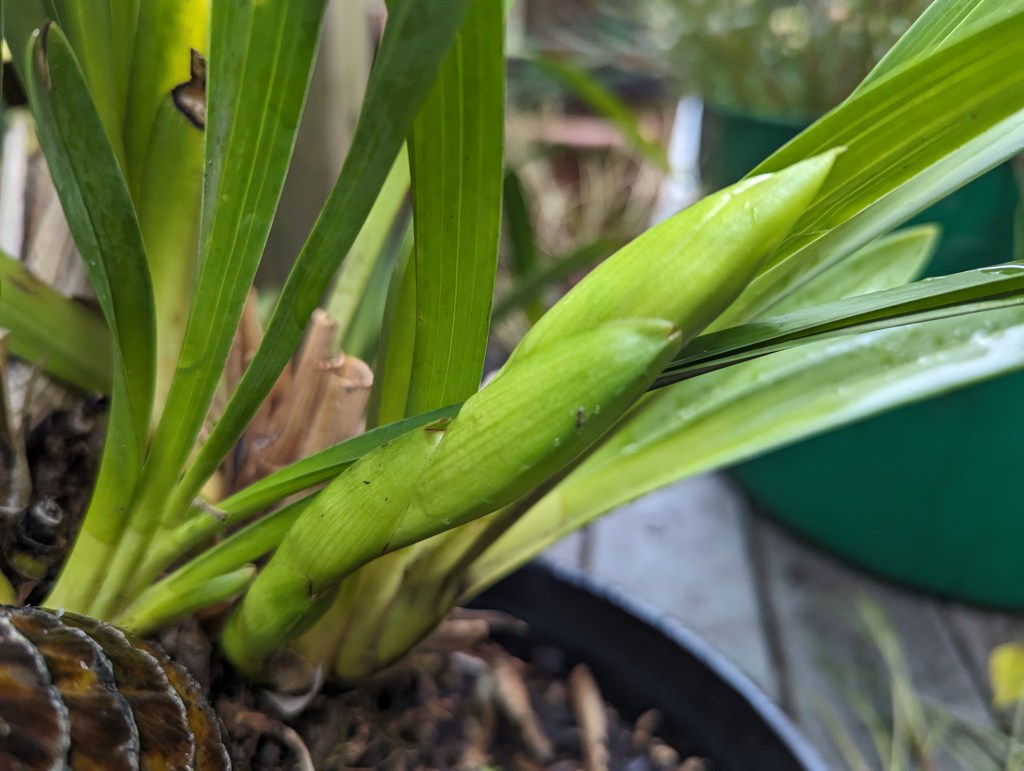
New floral shoots appeared almost immediately after the former bloom finished.

Cymbidium orchids perform quite well here, and seem to be happier with a bit of neglect. Actually, those with a tolerable bit of foliar blemishing or discoloration bloom better than those with exemplarily healthy and vigorous foliage. Those that get everything that they supposedly want, such as coarse chunks of fir bark to disperse their roots into, and regular application of fertilizer, are likely to produce an abundance of healthy foliage with only moderate bloom.

Only two cymbidiums inhabit my garden. I gave all others away many years ago. I acquired one of these two from a neighbor in the early 1990s, and have divided many copies of it since then. It remains potted within a bunch of leafy debris that I raked from my driveway under a massive valley oak many years ago. I suspect that the debris has decomposed to soggy muck at the bottom of the pot, although it remains friable on top, where I only rarely add a bit more leafy debris. I am not so keen on its simple pink bloom, but I continue to grow it because it has been with me for so long.

The other cymbidium was a gift from a colleague here. It originally grew ‘properly’ in a pot of coarse fir bark, but was removed from its pot many years ago, and left to die on top of a pot of potting soil that something else had already died in. It grew unattended there for a few years before coming here. It has bloomed splendidly and annually since its arrival. I want to divide it, but have not managed to do so between bloom phases. Its bloom continues for so long, that by the time it finishes, the next bloom phase is beginning. Fortunately, it is not too overgrown yet.

Six on Saturday: Springtime

Flowers bloom throughout the year here. I featured bloom this week to avoid the topic of minor frost damage that I should have protected vulnerable foliage from. Frost is minor here, and does not occur every year, but it occurred here prior to some other regions this year. However, this bloom can imply that it is springtime.

1. Osteospermum X hybrida, African daisy should bloom most for spring, but can bloom randomly whenever it chooses, and often blooms most profusely for summer or autumn.

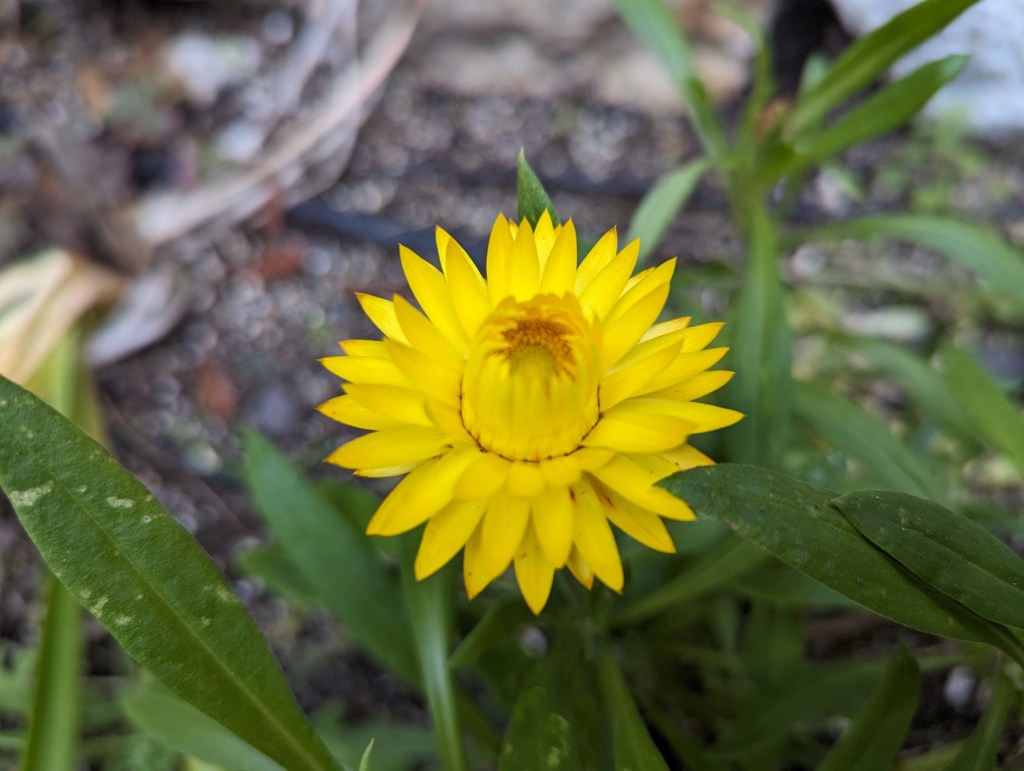
2. Helichrysum bracteatum, strawflower is my favorite of these six because I remember it as the main cut flower crop to the east of my Pa’s home in Montara through the 1980s.

3. Salvia chiapensis, Chiapas sage is a species that I had never met before last year. They grew well through last summer, and even better with more bloom through this summer.

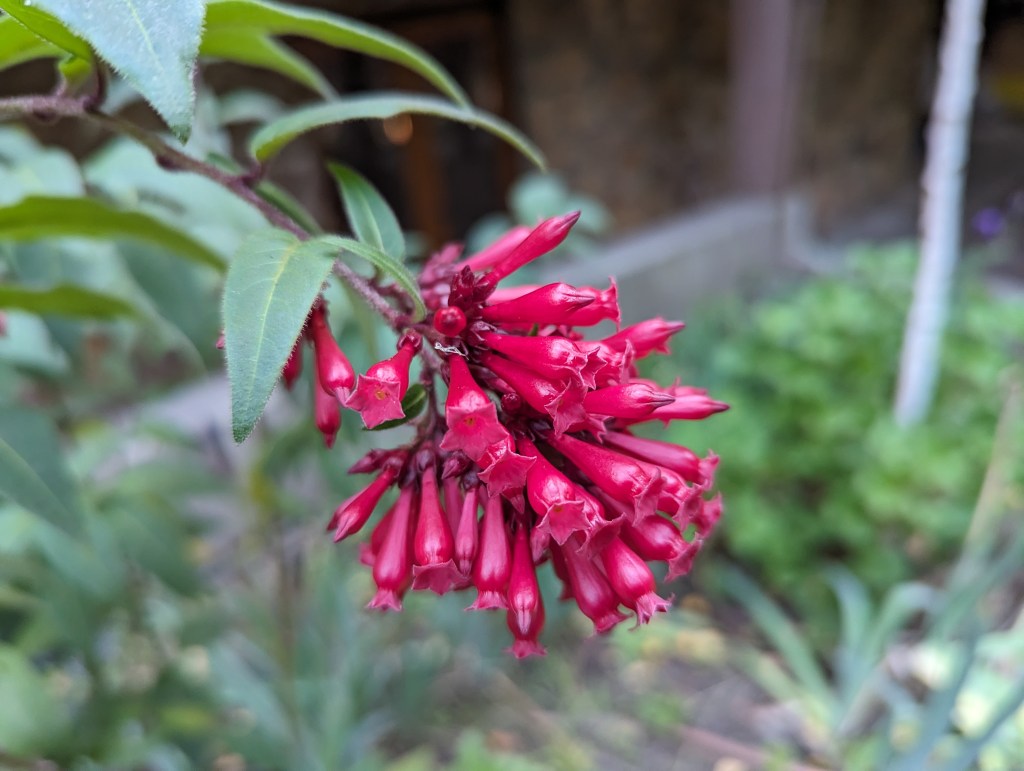
4. Cestrum fasciculatum ‘Newellii’, bastard jasmine has an interesting name. Of course, it is not really jasmine. It recovered slowly from gopher damage, but blooms nicely now.

5. Rosa, carpet rose is my least favorite of these six because it is so cheap and common. I prefer old fashioned and respectable hybrid tea roses that are such excellent cut flowers.

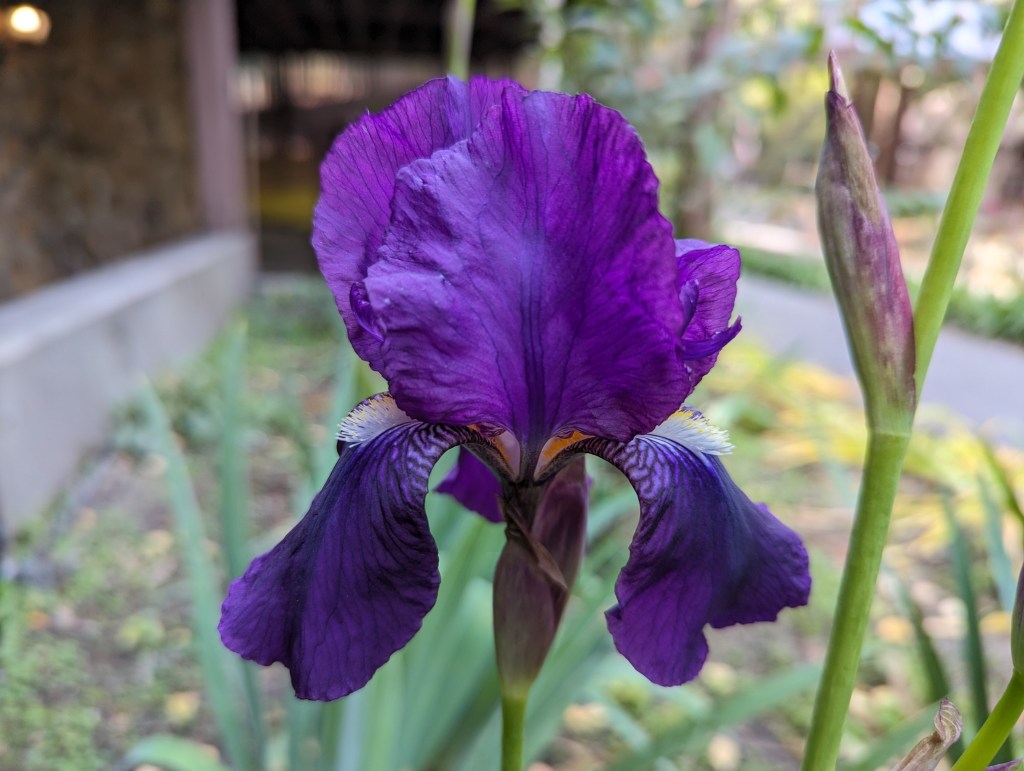
6. Iris X germanica, bearded iris should bloom for spring. Reblooming types also bloom for autumn. I have no idea what this is, but I sort of doubt that it is a reblooming variety. Earlier, it did not bloom much, so now seems to be blooming late for the first phase this year, rather than blooming again for a second phase within the same year. Furthermore, its simple bloom and slim floral stalks suggest that it is not extensively bred. It might be a simple species that is confused about the seasons here, because this climate is so mild.

This is the link for Six on Saturday, for anyone else who would like to participate: https://thepropagatorblog.wordpress.com/2017/09/18/six-on-saturday-a-participant-guide/

Abutilon

Bloom may become more scarce with cooling weather.

Abutilon X hybridum grows wild from seed within some of our landscapes. Although not prolific enough to be naturalized, dispersion of any viable seed seems odd for hybrids, since most hybrids are sterile. Of course, I do not know for certain if their ancestors were actually Abutilon X hybridum. They could have been other simple species of some sort. Besides, the name seems to apply to any cultivar of unknown parentage, including a few that are not actually hybrids.

Furthermore, even those that are generally sterile hybrids only needed to produce a single viable seed to start the process. Such a seed would likely grow into something that is more genetically stable, and therefore less sterile than its parents. Regardless of their supposed genetic stability, or because of their lack of it, their individual floral color is delightfully variable.

I am no more certain about the common name of this genus, species or group of hybris, which I know simply as flowering maple. Some know it as Chinese lantern. A few may know it as Indian mallow or parlor maple.

I am not so keen on the flowering maple, or whatever it is, for refined landscapes. However, the landscapes here are not so refined, and some are quite rustic. They benefit from the relaxed style, sporadic bloom, and open form of whatever this is.

Bloom is always sporadic, but is a bit more abundant during warm weather. Conversely, it can get scant while the weather is cool through winter. I am impressed by the few flowers that continue to bloom on this particular specimen. So are the hummingbirds. Bloom will likely become more scarce now that the first mild frost occurred last night. Also, foliage may get sparse until warmer weather next spring initiates regeneration to continue the seasonal cycle.

Monocarpic?

Agaves refuse to die.

Monocarpic species bloom only once. They die afterward. Many annuals are monocarpic by default. After bloom and production of seed, they have served their purpose of perpetuating the next generation. Some may bloom more than once within their respective season, but realistically, do not expect to live for long after doing so.

Agaves are monocarpic. Unlike annuals, some grow for many years before maturing enough to bloom. In fact, the century plant is known as such because, in the wild, it supposedly takes a century to mature enough to bloom and finally die. Of course, they do not take nearly so long to bloom within cultivation.

That could be either an advantage or a disadvantage. Their bloom is awesome, but their death is ugly. Removal of their deteriorating but wickedly thorny foliage is a horrid chore. The sap from their foliage causes a rash that can be comparable to the allergic reaction from poison oak. What is worse is that they are not really monocarpic!

Again, that can be either an advantage or a disadvantage. They provide more than enough pups to replace their deteriorating carcass. However, these prolific pups must be divided from each other and the deteriorating carcass of their parent. They are too numerous to accommodate within the same garden or share with neighbors who likely do not want them. Furthermore, they continue to generate pups long after the parent and first litter of pups is gone. Without intervention, they seem to never die completely. Even with diligent intervention, they can linger for many years.

This particular agave should have remained vegetative for many years, but bloomed after only two or three years. The first litter of pups bloomed immediately afterward, as this picture demonstrates. Ultimately, we would like only a single pup to replace the parent.

Six on Saturday: Good News

Horticulture occasionally involves some degree of disappointment. However, more than occasionally, it is surprisingly gratifying. After the mysterious disappearance of a colony of Louisiana iris, I remembered how much I enjoyed growing them. Unplanned bananas will be fun to grow in the future. Unseasonable bloom is at least as gratifying as seasonal bloom.

1. ‘Black Gamecock’ Louisiana iris was a gift from Tangly Cottage Gardening. Therefore, they were VERY important to me. I split and plugged them into a thirty foot long row on the edge of a pond at work. Sadly, after growing happily through summer, they suddenly and inexplicably disappeared. I am determined to not be unrealistically saddened about this, though. They were intended to be enjoyed, and I enjoyed growing them all summer. The good news is that Tangly Cottage Gardening offered replacement when I return this winter. Also, I found these four surviving plugs! I canned them here for their protection.

2. Iris unguicularis, Algerian iris was another of several prized gifts from Tangly Cottage Gardening. I split and plugged them into a row that is about twenty feet long last winter.

3. Musa acuminata, banana ‘trees’ are getting to be rather excessive. With these pairs of four new cultivars, there are now fourteen cultivars! There are no plans for any of them.

4. Brugmansia candida, double white angel’s trumpet failed to impress this year. Bloom was limited. Now that summer is over, it decided to bloom! I suppose this is good news.

5. Brugmansia X cubensis, ‘Charles Grimaldi’ continues to bloom late, and with this odd peachy color. Although I know that it should be simple yellow, I rather prefer this color.

6. Brugmansia, angel’s trumpet of an unidentified cultivar with single white flowers also decided to bloom late. This is impressive because it grew from a cutting from last spring!

This is the link for Six on Saturday, for anyone else who would like to participate: https://thepropagatorblog.wordpress.com/2017/09/18/six-on-saturday-a-participant-guide/

Out of Tune Trumpet

Brugmansia X cubensis ‘Charles Grimaldi’

Summer was mild. Vegetation that enjoys warmth grew relatively slowly through much of it. Then, toward late summer, and without increased warmth, some vegetation seemed to accelerate growth unexpectedly. Banana and heliconia pups grew like they should have earlier in summer. Angel’s trumpet cuttings began to get somewhat weedy. Some that did not bloom earlier began to bloom now!

Brugmansia X cubensis ‘Charles Grimaldi’ is likely the most popular angel’s trumpet. It is the most vigorous, and may be the most fragrant. One cutting that survived the unusually cool frost last winter grew from its roots to more than six feet tall since then. Now that it is time for it to decelerate growth, it is blooming! Such performance is impressive, but not in tune with the seasons. It can not continue for long, before disruption by increasingly cool autumn weather. Unusually vigorous growth that continues to bloom unusually late could be unusually vulnerable to frost next winter.

This is not the only angel’s trumpet that is out of tune with its seasons. A similarly mature specimen of an unidentified cultivar with single white flowers is about to bloom also. Two older specimens of other unidentified cultivars are growing about as vigorously, although without bloom. One blooms with double white flowers. The other blooms with single pale orange flowers.

About nine copies of each of both cultivars that bloom with white flowers are growing like weeds in #1 cans, with more than a dozen more small cuttings of the cultivar that blooms with double flowers in cells. Only the original matured specimen that blooms with double white flowers actually inhabits a landscape, and is incidentally about to bloom, but is not here with these in the nursery. More will go to landscapes after winter, where their bloom can be enjoyed.

Autumn Bloom Is Remarkably Natural

Some bloom adapts to regional climate.

Most flowers bloom during spring. That seems to be most practical. It maximizes the time for their seed to develop prior to the following winter. It conforms to the schedules of their naturally preferred pollinators. Bloom is less likely to succumb to weather through spring. Deviancy is natural though. Many functional flowers quite naturally prefer autumn bloom.

Deviancy, of course, is as complicated as it is natural. Autumn bloom occurs for a variety of reasons among a variety of species. Many can be delightful assets for home gardens. They provide more options for floral color than the most popular of cool season annuals. Some autumn bloom continues as autumn foliar color develops, and perhaps into winter.

Many flowers bloom randomly as warm weather allows them to do so. They may seem to bloom almost continually here. Cool weather may disrupt their bloom only during winter. As weather fluctuates, bloom might resume before a previously disrupted bloom finishes. African daisies provide autumn bloom because autumn is too mild to disrupt their bloom.

Technically, such flowers do not necessarily prefer to bloom during autumn. They merely bloom whenever they can. Most actually bloom most profusely during spring or summer. Canna produces summer and autumn bloom, as it regenerates from its winter dormancy. Otherwise, within frostless tropical climates, it blooms continuously. It is quite adaptable.

Some flowers that are actually more responsive to seasons simply prefer autumn bloom. Joe Pye weed and goldenrod grow only vegetatively through spring and earlier summer. They only begin to bloom about now. Perhaps their seed prefer to grow through cool and damp winter weather. Their seedlings may be vulnerable to desiccating summer warmth.

Naked lady is more extreme. It maintains dormancy through most of summer to bloom as summer ends. Then it grows through winter until spring warmth initiates dormancy again. It seems to believe that it still inhabits its native range within South Africa. Summer there is winter here. Actually, summer weather there is more severe than winter weather there.

Proud Land

Proud Land

‘La France’, in 1867, was the first hybrid tea rose to be hybridized. ‘Peace’, in 1945, was the first hybrid tea rose to be classified as a hybrid tea rose. Yes, it took quite a while.

Afterward, hybrid tea roses became very popular both for the cut flower industry and home gardens from the 1950s through the 1980s. Because of their single bold flowers that bloom on tall and sturdy stems from spring until autumn, they are still very popular as florist flowers. However, more florific floribunda roses became more popular for home gardens through the 1990s. Since the turn of the Century, all sorts of simpler shrubby roses, such as carpet roses, became more popular than all of the other types of roses. Hybrid tea roses and other types that produce comparably exemplary cut flowers require more specialized maintenance than most people want to commit to. Sadly, hybrid tea roses are now passe.

‘Proud Land’ was the first of the hybrid tea roses that I installed into my mother’s new rose garden in 1984. It came from Jackson & Perkins while Jackson & Perkins was still based out of Medford in Oregon. Unfortunately, it suckered so profusely during its first season that I wrote a letter to Jackson & Perkins about it. Jackson & Perkins generously replaced it for the following season. Also, my mother, who was unaware of the replacement, purchased another replacement. As if that were not enough, I managed to abscise all sucker and burl growth from the original while it was dormant for the following winter. So, three individual specimens of ‘Proud Land’ bloomed at the center of the small rose garden for 1985, which was the year that I graduated high school.

Technically, hybrid tea roses are at their best after about five years, but should probably be replaced before about ten years. ‘Proud Land’ continued to perform though, with no indication of deterioration, until I finally removed them in 2020. They live here now. I grew a few ungrafted copies from their pruning scraps. I should properly graft a few copies also. Realistically, there is no need to retire the originals.

Some consider hybrid tea roses to be passe. I consider them to be historical.

Deadheading Can Enhance Bloom

Without deadheading roses divert resources from continued bloom to fruiting and seeding.

It takes quite a bit of effort for flowers to bloom. It takes even more effort and resources for pollinated flowers to produce seed and the fruiting structures that contain the seed. If the seed of certain aggressive plants get dispersed, we need to put even more effort into pulling up the seedlings. It just never seems to end!

Removal of deteriorating flowers, commonly known (even by those of us who missed that generation) as ‘deadheading’, can eliminate so much of this extra work. Not many plants benefit from deadheading; but most that do are really grateful for it. Others that do not care one way or the other simply look better without their deteriorating flowers.

It is of course impossible to deadhead large flowering trees or vast areas of ground cover. Regularly shorn hedges should never need deadheading because they never get the opportunity to bloom or develop fruit. Plants that are appreciated for the ornamental quality of their fruit should of course not be deadheaded.

Most roses get deadheaded as they bloom because the development of their fruiting structures, known as ‘hips’, takes enough resources to compromise subsequent bloom. Removal of these hips therefore promotes bloom. Only the few types of roses that are grown for their showy hips should not get deadheaded. Phlox, daisies, zinias, dianthus and all sorts of plants with long continual bloom seasons likewise benefit from deadheading.

Some types of iris that produce seed perform better with deadheading, not because they will bloom again during the same season, but because they can divert resources to vegetative growth (like rhizomes and foliage) that will sustain bloom during the following year. Most bearded iris (that do not produce seed) and lily-of-the-Nile do not seem to care if they get deadheaded, but are generally more appealing without their finished flower trusses.

Four o’ clocks can not be deadheaded without also removing developing flowers, so can only be allowed to bloom and throw their invasive seed all over the garden. It is easier to pull their seedlings later. We have a bit more control over crocosmia. Even though they do not need to be deadheaded, they are less invasive and more appealing without their scraggly brown stalks and seed capsules.