
It would seem obvious that there would be more flowers to cut to bring into the home during summer than there would be in winter. A quick tour through the garden might prove otherwise. Much of the color in the garden this late in summer is provided by flowers that fade quickly, or small flowers of shrubby plants that lack good stems for cutting.
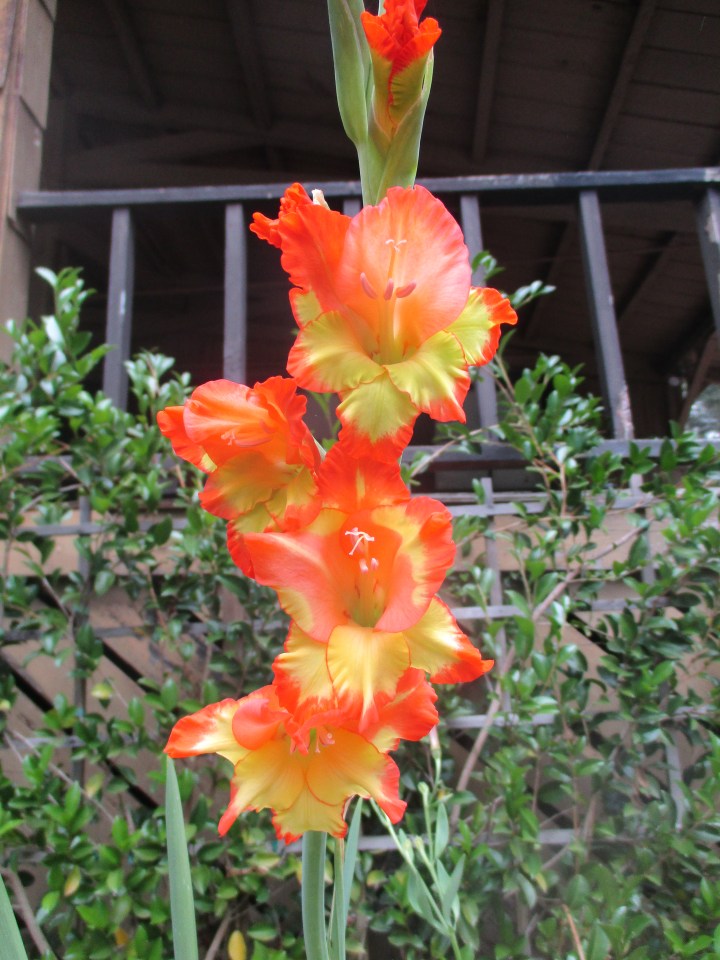
Lilies, gladiolus and most of the lily of the Nile that bloomed earlier in summer are finished. Bearded iris (reblooming types) that will soon be blooming again, as well as cannas, wilt too much to last long as cut flowers. Dahlias happen to be at their prime, and are excellent cut flowers if their water gets changed regularly. Otherwise, they rot and smell badly.
Realistically, anything that blooms is fair game. Of course, this does not mean that everything tried will work. It does means that some flowers that are not often thought of as good cut flowers might be worth considering as such. Not all of us are equipped with roses, zinnias, dahlias, sunflowers, delphiniums, blanket flowers or the many other favorite summer bloomers.
All sorts of sages, which are also known by their Latin name of ‘salvia’, are delightful cut flowers. However, some types are not very showy. Others wilt right after getting cut. Mexican blue sage may or may not wilt, but is colorful enough to be appealing even if it can not stand up like it should. Sometimes it is best to try something new to see if it works.
Sea foam statice and annual statice are nice cut flowers both fresh and dried. Fresh flowers are probably more colorful, but of course, do not last as long as dried flowers. Annual statice is lightweight enough to stand upright as it dries in a vase. Sea foam statice has bulkier flowers that should probably be hung up-side-down to dry straight.
Oleander certainly is reliably colorful, but is not worth cutting. It wilts almost immediately, and drips toxic sap. However, the stigmatized and common lemon bottlebrush is a surprisingly tasteful cut flower with rustically aromatic foliage. Speaking of foliage, some types of eucalyptus, particularly the red flowering gum (Eucalyptus ficifolia), have handsome flowers as well.









 Tony Tomeo