Six on Saturday: Making Up For Lost Time

A few late bloomers are making up for lost time. Hydrangea, although late, is somewhat earlier than it typically is. Bluegum is not blooming, but contributes its own sort of color with bark.

1. Eucalyptus globulus, bluegum remains canned because it grows too big too vigorously to go into the ground. Ultimately, it will likely need to be destroyed. For now, it provides both aromatic juvenile foliage and pretty adult foliage. It also has pretty watercolor bark.

2. Yucca recurvifolia, curve leaf yucca is known as Yucca gloriosa var. tristis now. What was wrong with its former botanical name? Its boring common name should be changed instead. Anyway, I am impressed that it is blooming so soon after relocation last winter.

3. Hibbertia scandens, guinea gold vine grew like a weed from a cutting last year, and is now beginning to bloom for the first time. This is the first of many flower buds to unfurl. Its bloom was expected, but its profusion is unexpectedly impressive. It remains canned.

4. Hemerocallis fulva, daylily was similarly expected to bloom and is similarly blooming with unexpected profusion. I have no idea what cultivar this is, but I suspect that it may be the straight species. We grow just one other daylily cultivar, and it is relatively docile.

5. Begonia semperflorens-cultorum, wax begonia had languished for years in its planter box full of aggressive redwood roots. It now grows much more happily in its new planter box within its old planter box, which is elevated on cinder blocks above an empty space.

6. Hydrangea macrophylla, hydrangea typically blooms later on axillary stems because I prune the terminal buds off with winter dormant pruning. My concern was that, if I left the canes intact as I should, they would flop over. They are flopping, but it was worth it.

This is the link for Six on Saturday, for anyone else who would like to participate: https://thepropagatorblog.wordpress.com/2017/09/18/six-on-saturday-a-participant-guide/

More White Trash

White is my favorite color. It is not the best color for all flowers, but it is the only color that I allow within the White Garden, which is really just the meager landscape of the Mount Hermon Memorial Chapel. Creamy white, such as white nasturtium and white canna, are not white enough. I am adamant about this. After replacing a few blue lily of the Nile with a white hydrangea, I needed to remove the hydrangea as it began to bloom with a slight pinkish blush. About that time, two winters ago, we added a white climbing rose. It was a perfect fit, and produced a straight cane that extended from the top of an original cane to the eave during its first summer. Because it was still young and small, it bloomed mildly but sufficiently. More importantly, it bloomed white. It got pruned over winter. Now that it is a bit larger, it is blooming a bit more fuller. However, it no longer seems to be blooming pure white! Young flowers unfurl with a creamy pale yellow blush before fading to white. It is too pretty to remove, especially without a replacement. This could become a major dilemma!

FIRST Louisiana Iris!

Finally, after two years, ‘Black Gamecock’ Louisiana iris from Tangly Cottage Gardening are blooming! At the end of winter of 2023, I divided a significant clump of them into enough pups for a thirty foot long row on the edge of the irrigation pond. They grew through summer, and should have bloomed for the following spring. Instead, a gopher ate all but a few pups. At the end of winter of 2024, I divided another clump into enough pups for a twenty foot long row in the same location, but closer to the water. Again, they grew through summer, and should have bloomed this spring, but instead, all but a few were eaten by a gopher. These that are now blooming are the survivors from the original batch, which were canned for their safety. They are blooming late, probably because they would rather be in the ground than canned. I will divide these into more cans now so they can proliferate and be divided again later, until there are twice as many as necessary for the edge of the pond. Then, I will plug some at the edge of the pond, into saturated soil that gophers can not dig under.

Hummingbirds Enjoy Home Gardens Also

Hummingbirds are very fond of sages.

Floral color communicates to pollinators. Pollination is, after all, the priority of all flowers. Those that rely on pollinators more than breezes for pollination must therefore advertise. They effectively customize their bloom for preferable pollinators. Some incorporate floral fragrance if necessary. Most preferable pollinators are insects. Some are hummingbirds.

Seven species of hummingbird inhabit California. Some are always here. Some migrate south for winter. A few are only here while they migrate between farther south and farther north. All eat only small insects and floral nectar. Blooms which rely on hummingbirds for pollination are happy to provide. They have a mutually beneficial symbiotic relationship.

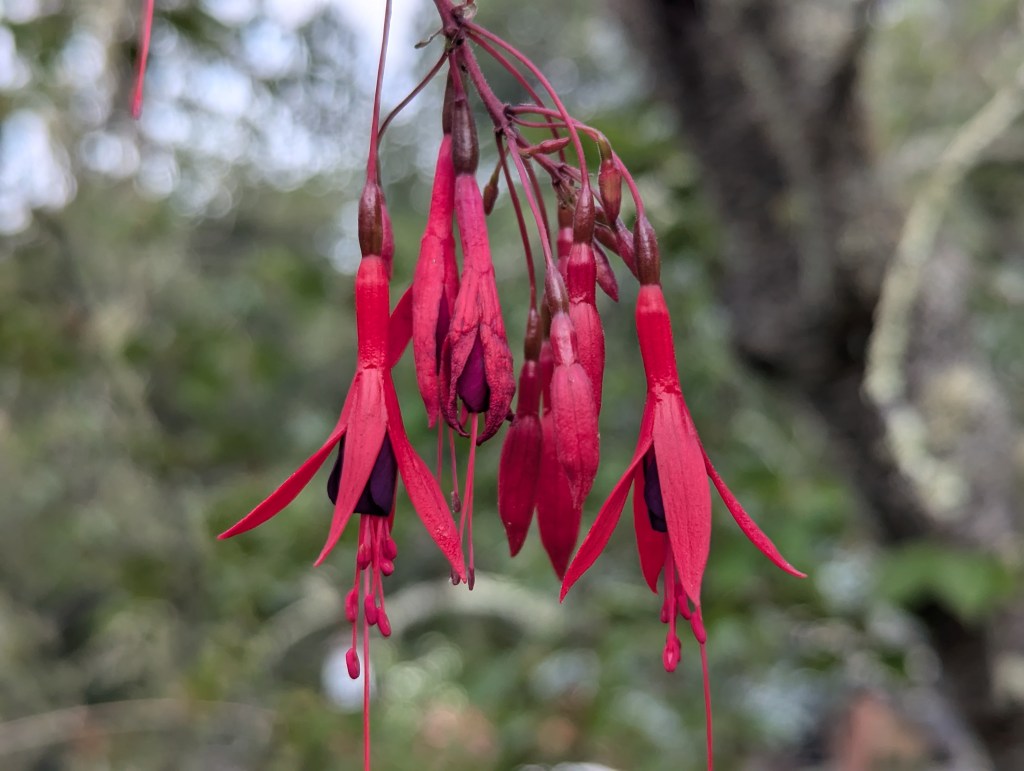
Many plant species have customized their bloom for pollination by hummingbirds. Many of these flowers are elongated, tubular and curved to fit the long beaks of hummingbirds. Most, although not all, are bright and rich colors that hummingbirds prefer. Bright red and orange are probably their favorite colors. Floral fragrances are more for other pollinators.

Many who enjoy gardening enjoy hummingbirds within their gardens. Hummingbirds are as colorful as some small flowers, but are much more dynamic. They enjoy hummingbird feeders and birdbaths or simple saucers of water. They also appreciate the various sorts of flowers that appeal specifically to them. Such flowers can appeal to everyone anyway.

Hummingbirds enjoy too many flowers to list. Those that customize their blooms for them will be expecting them. Many that customize their blooms for other pollinators can attract them anyway. Zinnia, coneflower and most composite flowers are ideal for pollination by bees. Many of their bright floral colors that attract bees entice hummingbirds incidentally.

Columbine and nasturtium are more customized for hummingbirds. Penstemon, foxglove and various trumpet vines accommodate a range of pollinators. Honeysuckle, lupine and sages do too, but seem to fit thin hummingbird beaks best. Bright floral color of hibiscus, fuchsia, canna and bottlebrush are impossible to ignore. Indiscriminate taste is an asset.

Six on Saturday: Neither Rhododendrons Nor Roses

This is an intentional attempt to eschew the most obvious options.

1. Tanacetum parthenium ‘Aureum’, golden feverfew is the only of these six that I know the cultivar of, but only because it is the only cultivar that I am aware of with such sickly chartreuse foliar color that passes for golden. Its little daisy flowers are splendid though.

2. Dianthus caryophyllus, mini carnation is one of those cool season annuals that never gets removed at the end of its season. It neither flourishes nor dies, so has been here for several years. It will probably die back partially now that the weather is getting warmer.

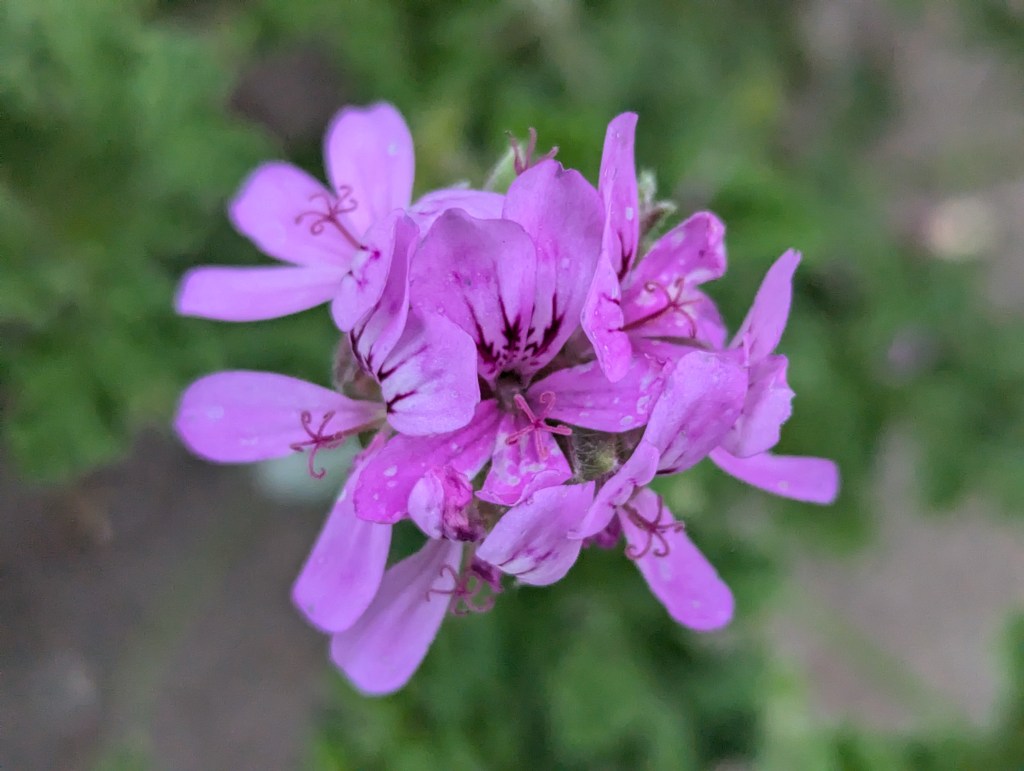
3. Pelargonium X hortorum, zonal geranium may seem to be cheap and common, but it has been very reliable. Besides, I happen to be fond of them. They were some of the first perennials that I grew during my childhood. This and others like it are modern cultivars.

4. Alstroemeria spp., Peruvian lily was the first large scale cut flower crop that I worked with during the summer of 1986, while I was studying horticulture at Cal Poly, San Luis Obispo. This and a few cultivars at work seem to be as old fashioned as those from 1986.

5. Lilium auratum, Asiatic lily was a gift from a neighbor while its bulbs were dormant a few winters ago. It was not expected to perform as well as it has. Not only has it become reliably perennial, but it has multiplied so much that I must eventually dig and divide it.

6. Cornus florida, flowering dogwood is the last dogwood to bloom so late. This could be because of distress associated with its relocation last winter. I do not remember when it bloomed last year, or if it should bloom as late next year. I suppose that we will see then.

This is the link for Six on Saturday, for anyone else who would like to participate: https://thepropagatorblog.wordpress.com/2017/09/18/six-on-saturday-a-participant-guide/

Flowers Have An Agenda

Flowers are only as colorful or fragrant as they are to attract pollinators.

When the garden is full of bloom, we do not like to think that flowers have an agenda. All their colors and fragrances seem to be displayed merely for our benefit. Who really wants to know that procreation is their real priority; that all their efforts are merely to get pollinated to make seed for the next generation?

Because flowers are not mobile like animals and insects are, they need to rely on wind or pollinators to deliver their pollen to other flowers. Flowers that are more reliant on wind for pollination are not much to look, since they do not need to advertise. The wind needs no incentive to blow. Wind pollinated flowers are instead abundant and productive, to disperse as much of their light pollen as possible.

Flowers that need pollinators need to advertise. They offer all sorts of attractive colors, fragrances, nectar and pollen to attract their particular preferred pollinators. For example, those that exploit the services of hummingbirds appeal to their discriminating taste with sweet nectar in tubular flowers that are mostly in colors that hummingbirds like, orange or red.

All the variety among flowers is designed for the variety of pollinators that they employ. Flowers that rely on nocturnal moths are large and pale, often with infrared patterns (that people do not see) to be visible in moonlight to moths drawn to their sweet fragrance. The offensive fragrances and textures of fly pollinated flowers are delightful to flies. Many flowers appeal to multiple pollinators.

Bees are of course the busiest of pollinators, as they collect nectar and pollen to make honey. They visit any flower they encounter, but prefer those that make abundant and dense pollen that they can carry away. They are very fond of the many different fruit trees; such as apple, pear, apricot, cherry, plum and all their relatives, as well as citrus. They also dig eucalyptus, wild lilac (ceanothus), hebe, firethorn, bottlebrush, honeysuckle and roses.

The difficulty for bees is finding a constant supply of flowers. As apple and pear trees finish blooming, bees want to start visiting other flowers. Bees like a variety of just about any of the annual flowers, particularly pincushion flower, cornflower, snapdragon, foxglove, sunflowers, poppies and lupines. With a good mix, something should always be blooming. Bees are also very fond of catmint, ajuga, thyme, rosemary, penstemon, lavenders and the many salvias and sages.

Those who want to attract bees to the garden should therefore plan for a good mixture of flowers that bees like, so that there is always something to keep the bees happy. Many of their favorite flowers that may not seem very colorful to us use ultraviolet patters that are quite flashy to bees. The choices are not always so obvious.

However, those who do not like bees or are allergic to bee stings, should avoid an abundance of flowers that will attract them. Unfortunately, there are no flowers or plants to repel bees. Also, the coniferous (cone bearing) evergreens and many other wind pollinated plants that are less attractive to bees produce abundant light pollen that is so problematic for allergies.

White Bearded Iris

What makes this particular white bearded iris so special? Well, all three of the bearded iris that bloom white in my gardens are special. Each arrived with history, from other important gardens. I am impressed with this one now because it is so white. I did not know what color it was when I acquired it from its garden in Monterey so many years ago. I just wanted a souvenir from that particular garden after the owner passed away, so grabbed a bit of it during the estate liquidation. It bloomed for its first season, but was a dingy grayish white. I thought it might get whiter for its second season, but continued to bloom annually with the same unimpressive color. I could not eliminate it from my collection because of its historical significance. Because it is so uninteresting, I had not shared it or, until recently, tried growing it anywhere else. Then, because bearded iris grow and proliferate as they do, I brought a small bit of it to the Iris Bed at work, where I got this picture of it. I can not explain why it is so much whiter than it had been, but I am impressed.