Sunday Best – Elderflower


These six lack a theme. They are just random pictures of a few flowers that are blooming here and now.
1. Lavandula stoechas, Spanish lavender posed for this picture, which was not adequate for the gardening column, but is too pretty to delete without sharing here. It looks like it is about to fly away with those long wings. A bee posed with it for the gardening column.

2. (Hespero)Yucca whipplei, chaparral yucca is blooming again after blooming last year. This floral truss is about twelve feet tall, and still growing. Seed that it provided last year is now growing abundantly. It is the first species of Yucca that I met in the wild in 1985.

3. Scilla peruviana, Peruvian squill has been reliably perennial for about three years but has not grown much. Although the floral trusses are bigger than they were last year, they are no more numerous. Just nine remain in three groups of three, just as I planted them.

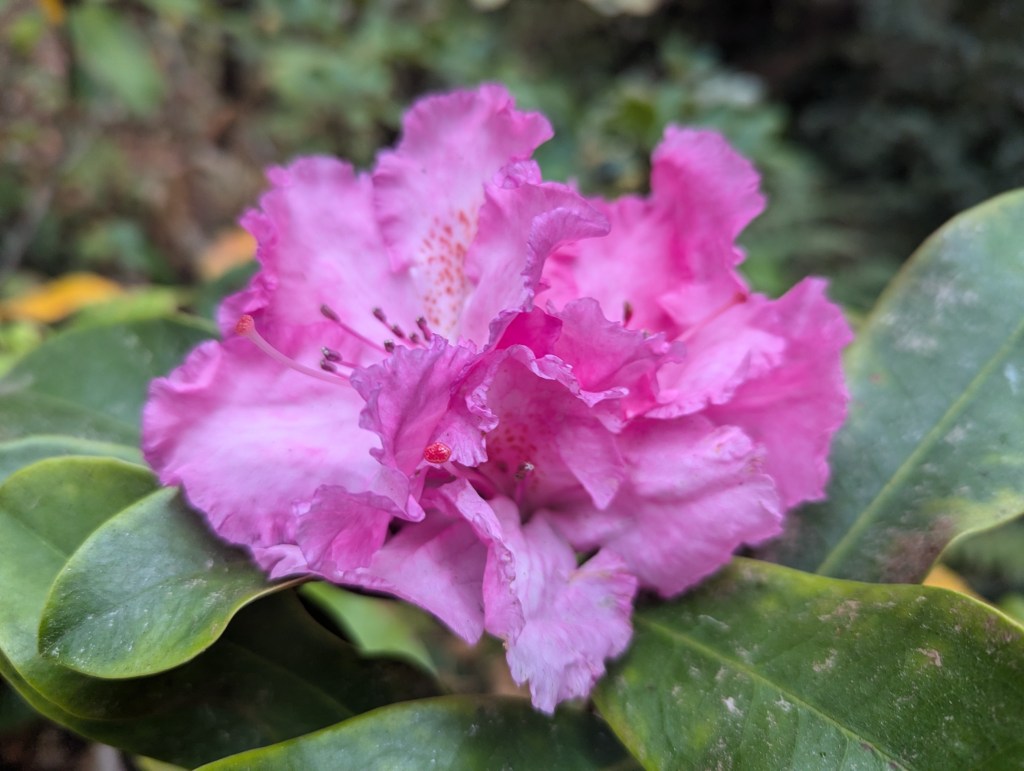
4. Rhododendron spp., like the bearded iris and cymbidium orchid, is of an unidentified cultivar. Many others are blooming now also. I refrained from posting six pictures of six different rhododendrons like I usually do though, because that can get a bit predictable.

5. Iris X germanica, bearded iris was difficult to take a good picture of at the time of day that I encountered it. Its pale color did not help. I am fond of this iris though, since I got it from Cedar Lodge at Kidder Creek, on the way to the Pacific Northwest two years ago.

6. Cymbidium spp., has been blooming very slowly. The buds appeared over winter, and have been extending since then, but only recently opened. I never liked this orchid much anyway. A white orchid that typically blooms so impressively here did nothing this year.

This is the link for Six on Saturday, for anyone else who would like to participate: https://thepropagatorblog.wordpress.com/2017/09/18/six-on-saturday-a-participant-guide/
Too many iris are blooming now to document. Therefore, I limited my selection to a few bearded iris, which includes one that is not within the landscapes at work. Perhaps some of the other species can be featured next Saturday. With so much in bloom, it is difficult to be selective.
1. Of these Six, only this one does not inhabit the Iris Garden at work. It inhabits a small roadside planter in front of the totally awesome White Raven Coffee Shoppe in Felton. I believe that it is more caramel and charcoal colored than it appears to be in this picture.

2. Of these Six, only this one is likely identified. It conforms precisely to the descriptions of ‘Rosalie Figge’, including its habit of blooming sporadically throughout the year, with abundant bloom about now. Another participant of Six on Saturday identified it as such.

3. This relatively small pale yellow but nicely fragrant iris might be feral. It was found at a dumpsite for landscape debris, so could have grown from a deadheaded seed. It would likely be bigger and more colorful if it had grown from a discarded rhizome of a cultivar.

4. This big blue iris is as floppy as beagle ears, and is so heavy that its tall stems fall over if not staked. That is why its nearly horizontal stalk is obscured in its background behind it instead of visible below it. It is not actually as purplish as it seems to be in this picture.

5. Although more billowy and likely a bit bulkier, this garish iris needs no staking. Its tall and rather thin floral stems are sturdier than they seem to be. This happens to be one of my favorite bearded iris in this particular group. It was originally a gift from a neighbor.

6. Color is again deficient. This bearded iris is not as purplish as it seems to be here. It is actually a rich burgundy red. I remember the origins of all the other iris here but can not remember how this one was acquired. I do not remember ever seeing it before this year.

This is the link for Six on Saturday, for anyone else who would like to participate: https://thepropagatorblog.wordpress.com/2017/09/18/six-on-saturday-a-participant-guide/
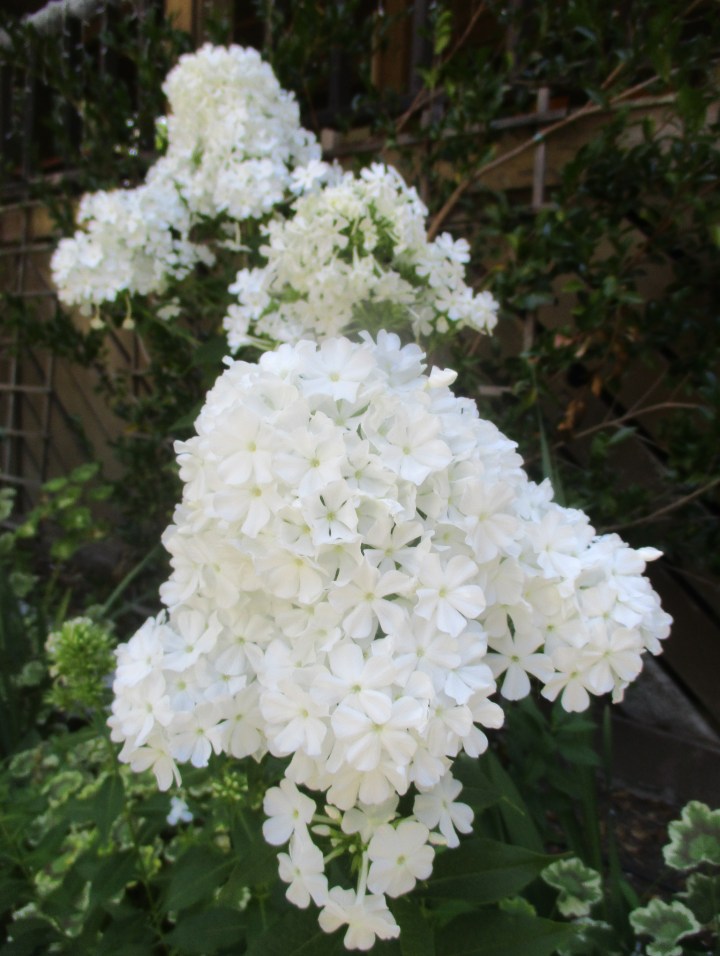
Syringa vulgaris ‘Madame LeMoine’ French hybrid lilac bloomed bright white and right on time as March became April, and is not finished yet. It was somewhat of a surprise, since it remains canned until development of the landscape that it should eventually inhabit. It does not grow much while canned, so was not expected to be so spectacular in bloom. It is so spectacular that it was temporarily placed into a prominent position within another landscape, with its can mostly obscured by other vegetation, until it finishes bloom.
However, regardless of how spectacular it is, it reminds me that white is not necessarily the best color for all flowers. White happens to be my favorite color, and lilac happens to be among my favorite early spring flowers, but to me, lilac bloom should be lilac colored. I mean, it really should be that lavender or pastel purple color of traditional and formerly common old fashioned lilacs. The only advantage to this white floral color is that it would be appropriate to situations in which white is the most desirable color, or where lavender is undesirable.
Just as many flowers are at their best in white, some are best with other colors. Southern magnolia, lily of the valley, moonflower, gardenia, Easter lily and old fashioned calla are exclusively white, and would look weird in any other color. Gladiolus, tulip, hyacinth and rose can be all sorts of colors, but happen to excel at white. A few other flowers that can be all sorts of colors happen to not excel at white, such as bougainvillea, crape myrtle, English primrose, tropical hibiscus, wisteria and, of course, lilac. Both white crape myrtle and white bougainvillea happen to have been selected specifically for landscapes here, so perhaps white lilac is not so out of place.


Borago officinalis, borage, as I mentioned last October, blooms almost exclusively with blue flowers. At the time though, a few maturing seedlings were blooming with a few pink flowers that eventually were replaced with blue flowers. Now that more are blooming, a few are doing so like this, with white flowers. Also last October, I mentioned that, although white is my favorite color, I expect borage to bloom blue. Not only does blue seem like a more natural color for it, but is also prettier. White borage seems rather mundane. Fortunately, most bloom blue, with enough that bloom white for my own garden, where I am less concerned with how pretty they are. I now wonder if they will be true to type. In other words, I wonder if those that bloom white will produce seed for more that bloom white, or if they will revert to bloom mostly blue. I will take what I get, I suppose. I have not yet found one that I do not like. I would be impressed, or perhaps concerned, by orange bloom, but I seriously doubt that will happen. I should be more concerned with what to do with all these borage seedlings than with their bloom color. I will plant only a few at work, which leaves more than a few for my home garden. Although supposedly not invasive, they are also supposedly proficient with self seeding. Once they get established within my garden, they will likely always be there. I suppose that I should learn to exploit their culinary applications, particularly for those that bloom blue where I do not want them, but perhaps less so for those that bloom white where I do want them. Now I am getting ahead of the situation. After all, they are still just seedlings.
Skyler and Allan, the people who live with Skooter of Tangly Cottage Gardening, invited Rhody and me to tour their home gardens while vacationing in the Pacific Northwest. It has become an annual event. I always leave with a trunk load of interesting and unusual species. I will post pictures of some of such acquisitions from this tour next week. These six pictures are from the home gardens of Tangly Cottage Gardening, although I did take rooted bits and a potted specimen of two of them. After taking these pictures, Rhody and I stayed for lunch and a visit, but did not leave too late to avoid driving in the dark. More pictures of our tour can be seen at Tangly Cottage Gardening.
1. Primula X pruhonicensis ‘Old Port’ primrose exhibits luxuriantly rich burgundy floral color. This name is merely a guess, since I actually have no idea what cultivar this one is.

2. Hyacinthoides hispanica, Spanish bluebells is unfortunately a bit too aggressive here, which is why I have not tried it at home. It could be docile in a chaparral climate though.

3. Rubus spectabilis, salmonberry is native and grows wild in Ilwaco. I would have asked for cuttings if I had not already acquired it. I will compare its fruit to other cane berries.

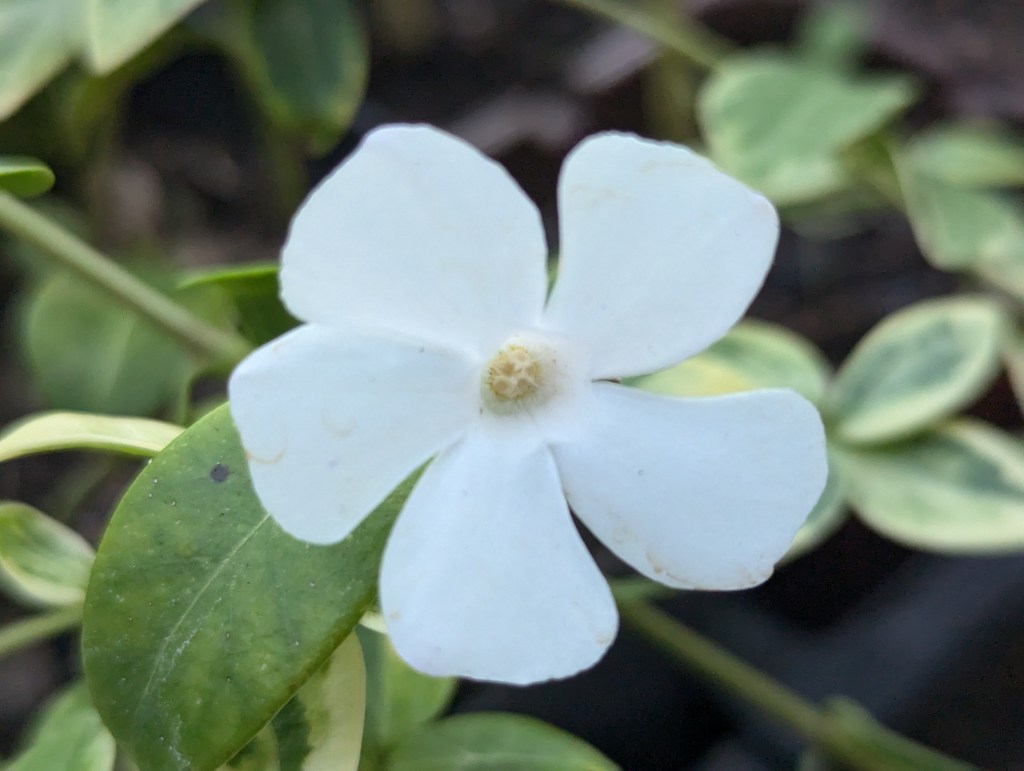
4. Vinca minor ‘Alba Variegata’ periwinkle is not as invasive at home as it is elsewhere. I procured a few bits because I like its white flowers, and may learn to like its variegation.

5. Pulmonaria officinalis ‘Bowles’ Blue’ lungwort, along with cultivars that bloom white, pink and purple, were excellent acquisitions also! Its cultivar name is merely conjecture.

6. Skooter approved of my acquisitions from his Tangly Cottage Garden, which includes quite a bit more than periwinkle and lungwort. I will get pictures of them for next week.

This is the link for Six on Saturday, for anyone else who would like to participate: https://thepropagatorblog.wordpress.com/2017/09/18/six-on-saturday-a-participant-guide/
Spring bulbs are now blooming, and some are already done. Summer bulbs will bloom a bit later, and some will continue until autumn. Annuals, perennials, shrubbery, vines and all sorts of other vegetation also bloom. Most simply shed their deteriorating flowers after bloom. Some may benefit from grooming to remove such flowers before they go to seed.
Grooming to remove lingering deteriorated flowers, or deadheading, is obviously neater. Flowers that continue to bloom are more prominent without their decaying predecessors. Camellias may not need such grooming, since their flowers fall away as they deteriorate. However, removal of fading flowers, before or after they fall, eliminates their mess below.
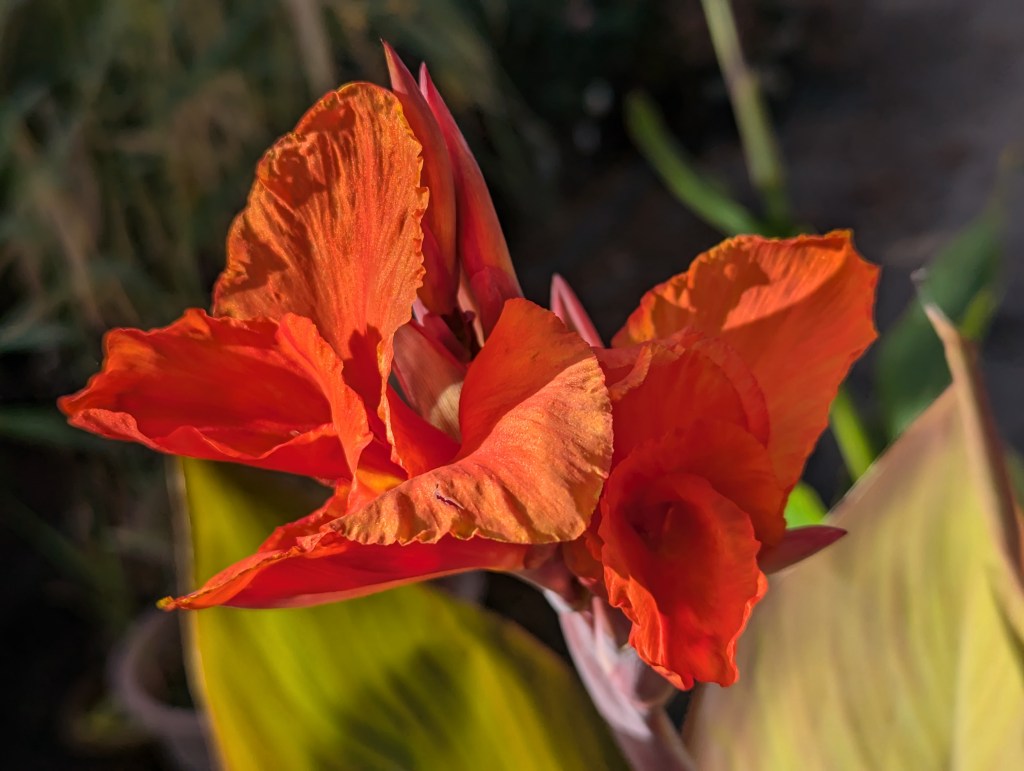
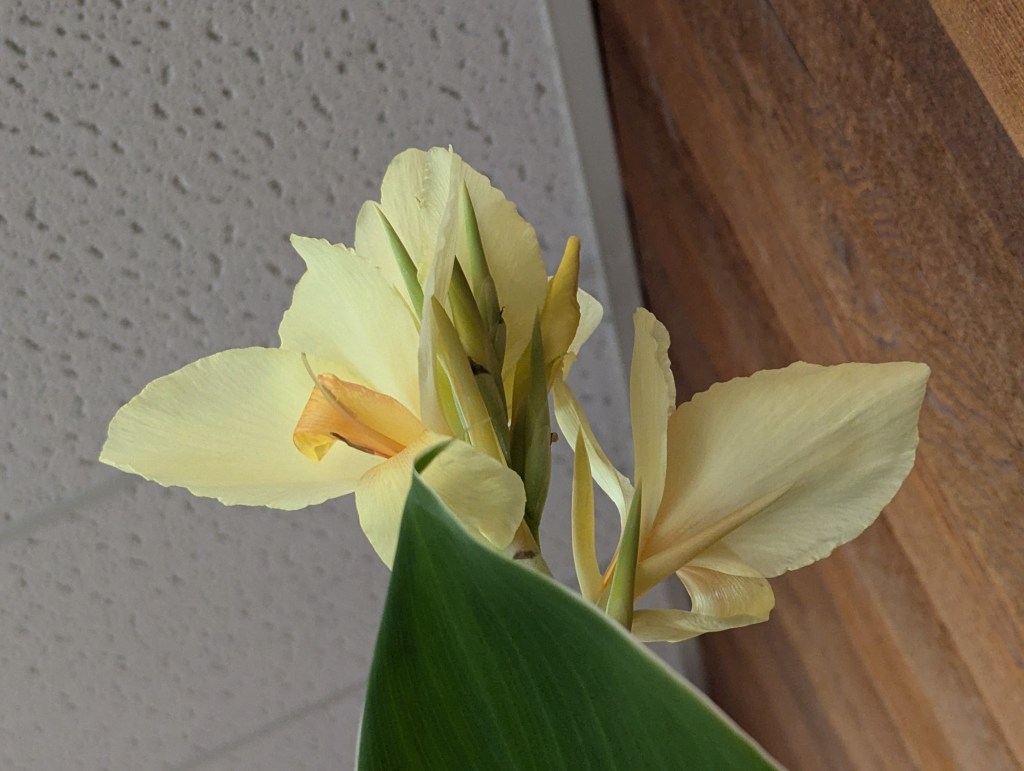
Perhaps more importantly, grooming to remove fading flowers conserves vital resources. Although most bulbs are sterile hybrids, some try to generate fruiting structures for seed. This consumes substantial resources. Removal of fruiting structures before they develop diverts resources to other growth. Canna diverts such resources into subsequent bloom.
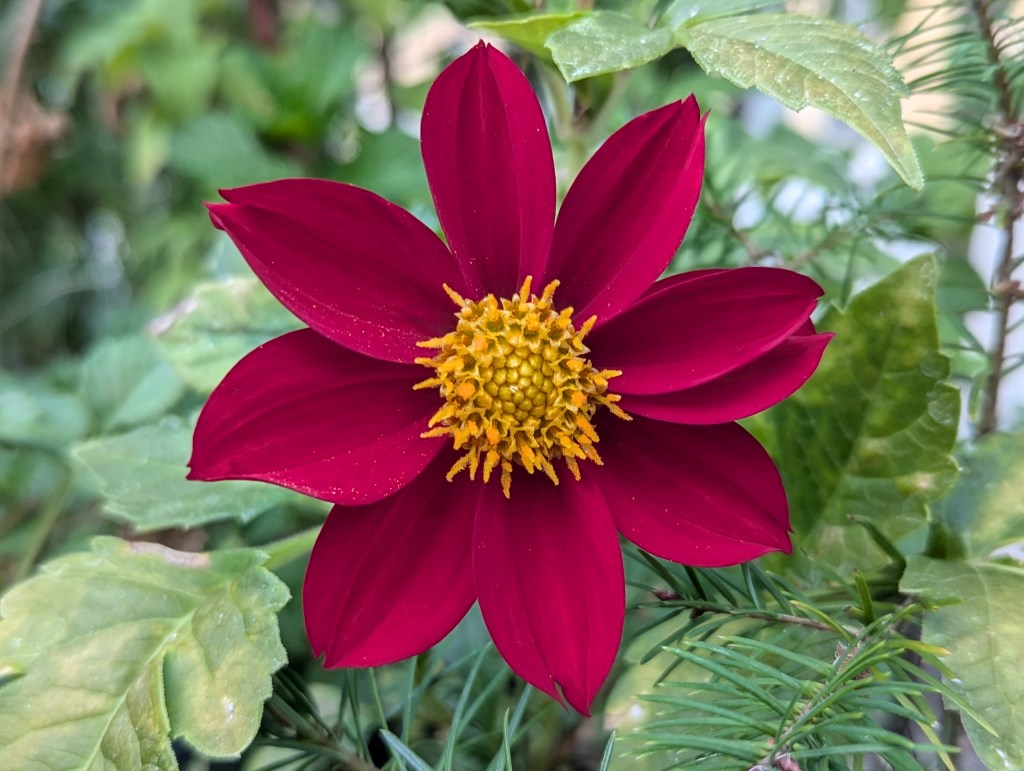
For some species, grooming to remove fruiting structures stimulates subsequent blooms. After all, seed production is their priority, and the objective of bloom. If they perceive any deprivation of seed, they are compelled to produce more. Several dahlias bloom initially with single flowers. After grooming, the stems below branch for a few secondary flowers.
For a few potentially invasive species, grooming eliminates unwanted seed. Montbretia, which is famously invasive, is less so if deprived of its seed. African iris might disperse a few unwanted seed and get shabby without grooming. Summer snowflake and common grape hyacinth often disperse their seed. Both are too small and numerous for grooming.
Fortunately, summer snowflake and common grape hyacinth are true to type. Freesia are not. Without grooming, they can produce feral progeny that are similar to their ancestors. Such feral progeny are more prolific with seed for more of the same. Eventually, they can displace the desirable original varieties. Although more fragrant, they are not as colorful.