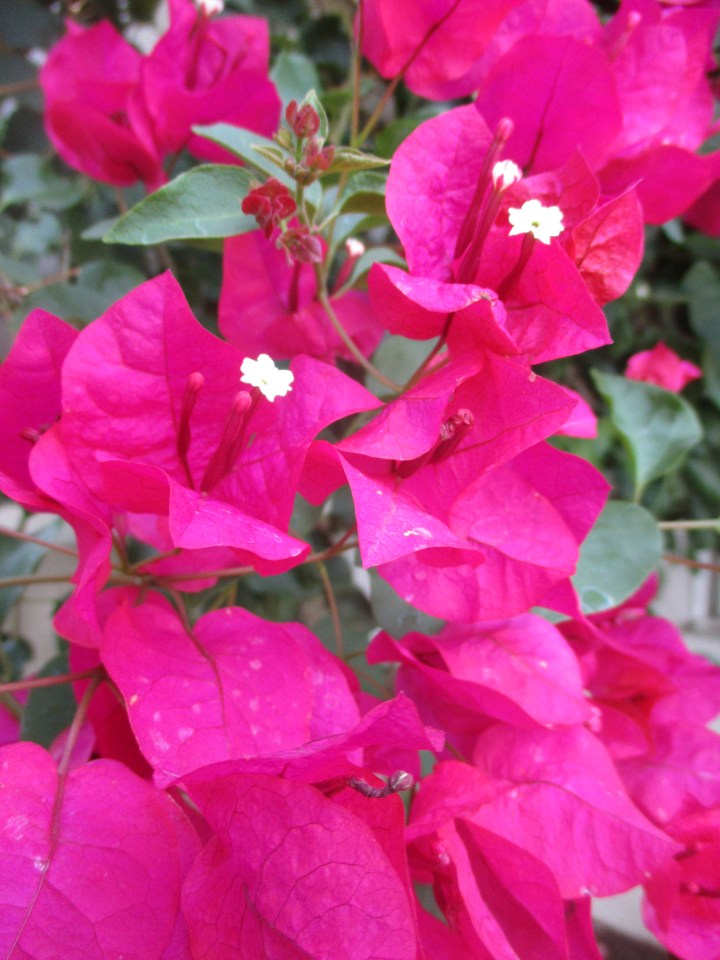
No other bloom is comparable to that of bougainvillea. It is often profuse enough to nearly obscure the foliage. The color is remarkably vibrant. Magenta is the most popular color. Purple might be the second most popular color. Other cultivars bloom in delightfully rich hues of pink, red, orange, yellow and white. Some bloom with double flowers. A few dwarf cultivars have variegated foliage.
Bougainvillea is a thorny vine that leans on its support, rather than cling to it. Like climbing roses, it must be tied or woven into trellises. Larger cultivars can mix with the branches of trees and big shrubs to eventually reach more than thirty feet high. Many cultivars stay much lower. Some grow slowly, and do not get more than three feet tall. The lush foliage is evergreen with regular watering.
However, bougainvillea does not want too much water, and actually prefers to get a a bit dry between regular irrigation. Excessive irrigation may promote vegetative growth while inhibiting bloom. Excessive fertilizer does the same. Sunny and warm exposure promotes fuller bloom. In late spring, the first and most profuse of perhaps a few bloom phases can continue for more than a month.

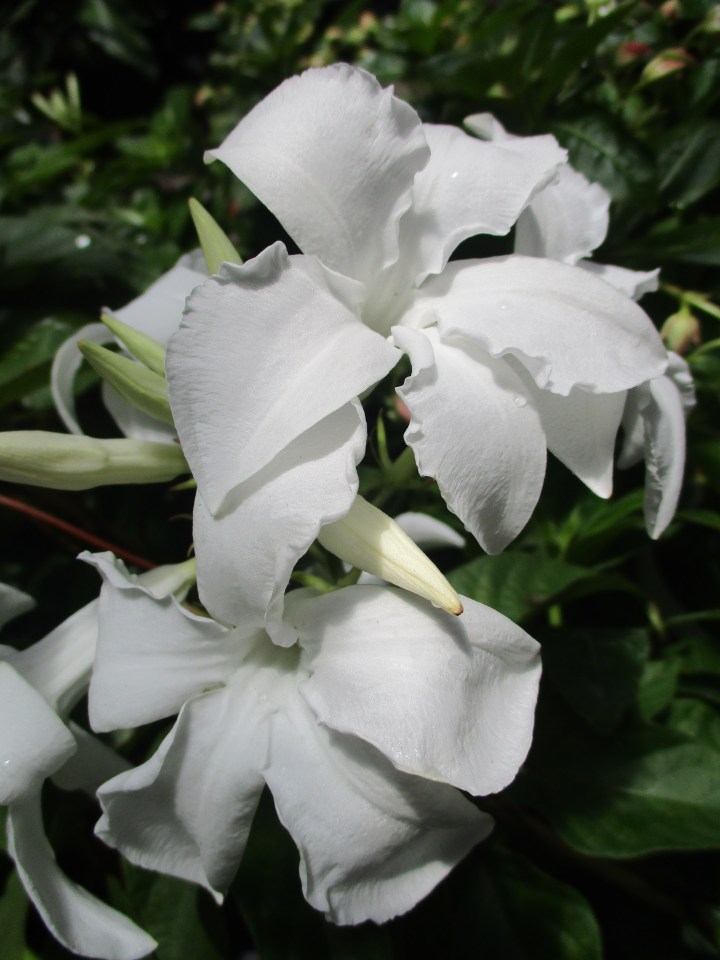 This is not just another mandevilla. Well, maybe it is. Mandevilla laxa is special though. It is known as Chilean jasmine because, unlike other mandevillas, it is so delightfully fragrant, particularly on warm summer evenings. Some say the fragrance is similar to that of gardenia, but not as strong. Others say it has a bit of vanilla mixed in. Sporadic bloom continues through most of summer.
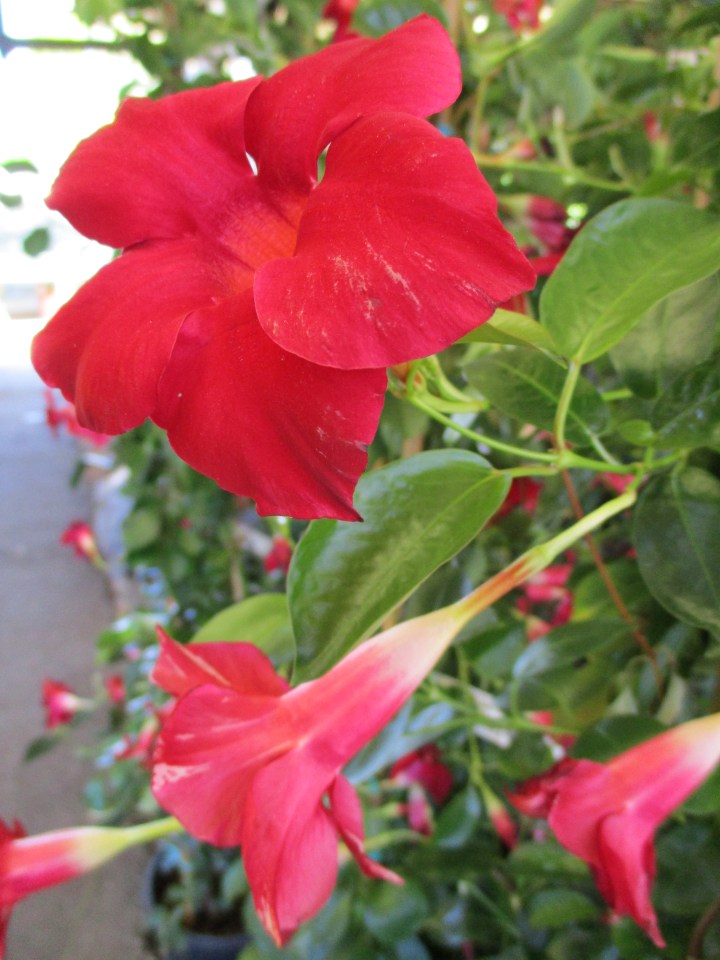 ‘Alice Dupont’ mandevilla that was so popular through the 1980’s was already a cool vigorous but not too overwhelming vine, with big clear pink radial flowers. It grows rather vigorously to upstairs eaves, and tends to get bunched where it reaches the top of its support. Modern cultivars with red, white or bright pink flowers are more compact and tame, and can stay below downstairs eaves.
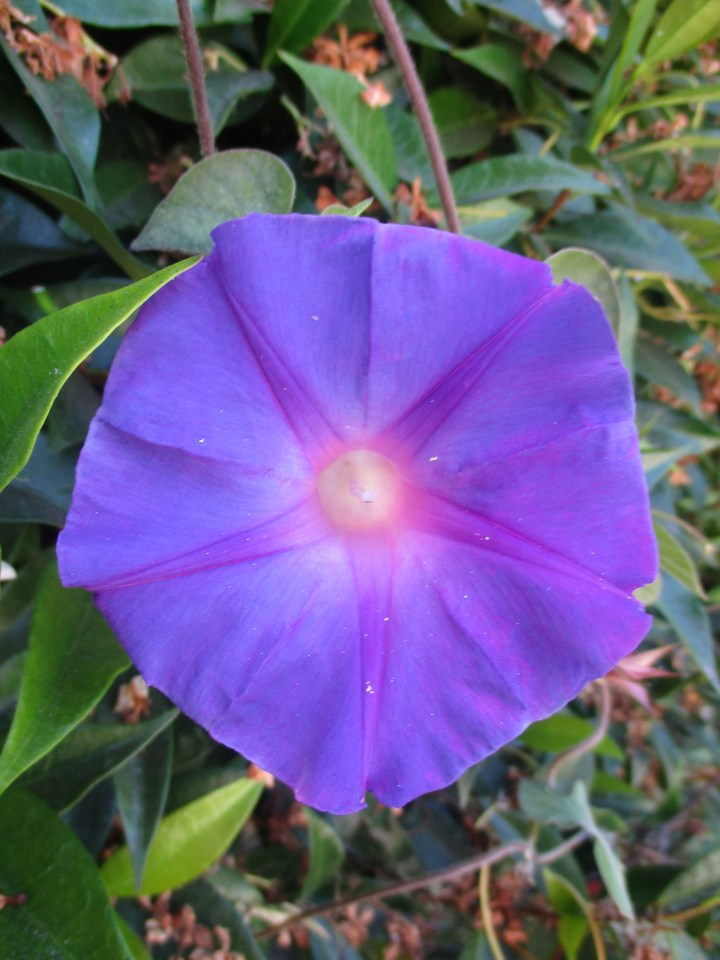 A landscape designer would have more fun describing both the modern and the good old fashioned varieties of morning glory. Their vivid colors are so resplendent. Their rich green foliage is so luxuriant. Their delicate vines are so elegant. Hey, perhaps this is not so difficult. Anyway, the popular garden varieties of morning glory are descendents of various species of the genus Ipomea.
 Whether it is grown intentionally, or considered to be a common roadside weed, there is no denying that perennial pea, Lathyrus latifolius, knows how to brighten some of the wilder parts of the garden with brilliant purplish pink bloom. Some garden varieties bloom either pale pink or white, just like a few random feral plants do. Bloom resembles that of sweet pea, but without fragrance.
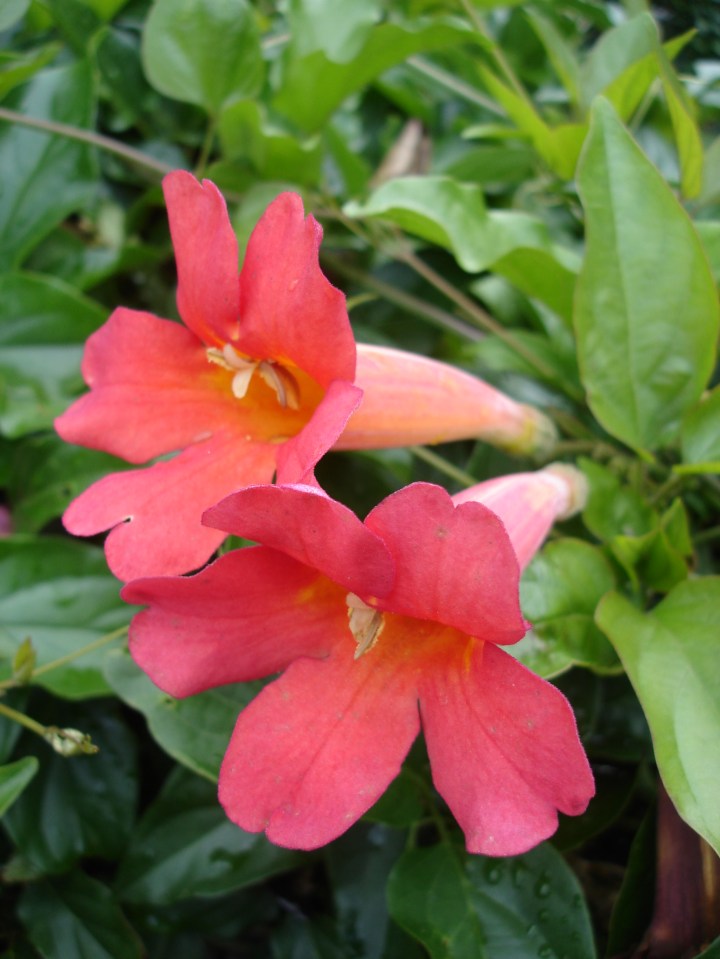 Red trumpet vine, Distictis buccinatoria, is more green than red. The tubular orangish red flowers with yellow throats are pretty while weather is warm, but not too abundant. Slightly distressed plants tend to bloom more abundantly. Each evergreen compound leaf is a pair of leaflets with a sneaky central tendril that will grab onto anything while holdfast discs get a more permanent grip.
 Pink, red or white are the only choices. There happens to be a darker shade of red. Yellow throats are more conspicuous in white flowers. Otherwise, there is not much variation of color amongst the various mandevillas. The flowers are very similar in both color and form to those of related oleander, but are larger. Some are as wide as three inches. Small flowers can have pointed petals.
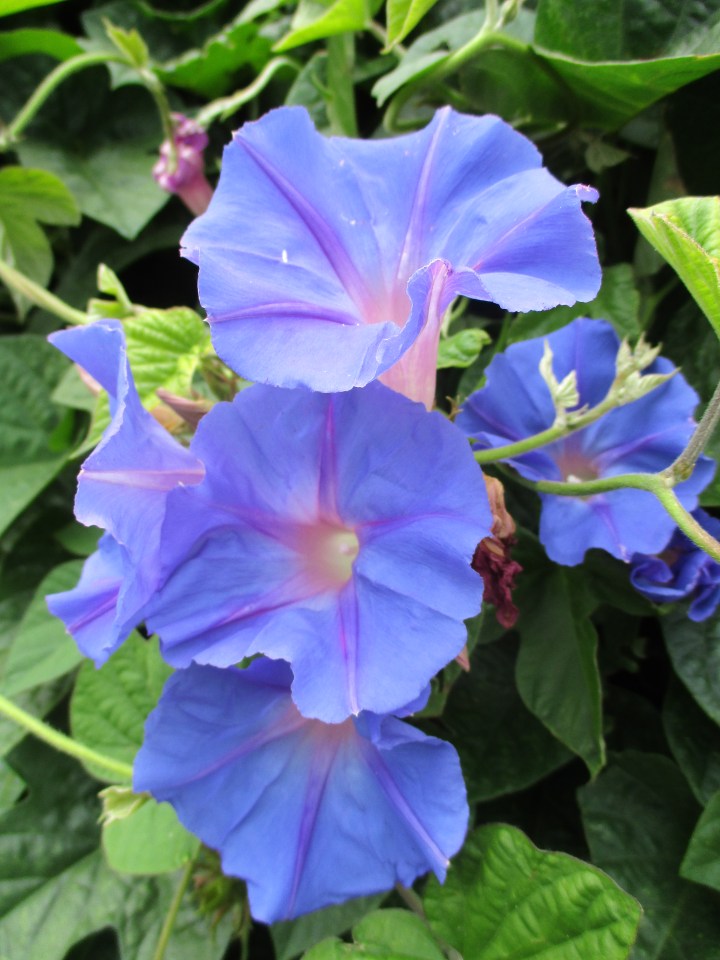 Even within its native range, blue dawn flower, Ipomoea indica, can be a problem. There are not many other plants in some coastal regions of Peru that can avoid getting overwhelmed by the aggressive wiry vines. These vines grow roots where they touch soil, so can spread indefinitely over the ground. Vines that succumb to frost over winter regenerate as if nothing ever happened.
 Like Ginger and MaryAnn, choosing between the flashier hybrids of clematis and the anemone clematis, Clematis montana, might not be so easy. The fancier hybrids have the bigger, bolder and richly colored flowers that the genus is known for. Anemone clematis has smaller and more subdued flowers in soft pastel hues, but is more prolific, more vigorous, and blooms for nearly a month.
 Tony Tomeo