
There are not many flowers as blue as those of plumbago, Ceratostigma plumbaginoides. Individual flowers are not much more than half an inch long, but can be quite abundant until autumn. Each of the many terminal flower clusters is on a rather reliable schedule, so that new flowers begin to open as older flowers begin to fade.
Thin stems stand only about half a foot to a foot above underground rhizomes. Individual plants get about 3-feet wide, but realistically, will slowly spread farther if conditions are right. They do not spread fast enough to be invasive, but can get into some unexpected spots if not controlled. The simple leaves are about two inches long.
The main problem with plumbago is that it is deciduous, so it dies back to the ground in autumn. The weather is too mild here to produce the good fall color seen where autumns are cooler. Plumbago is a popular bulb cover because new growth, although slow to develop, emerges just in time to obscure fading foliage of early spring bulbs like daffodil and tulip.
Plumbago also works well with stone, since the stone is still appealing without the foliage through winter. The wiry stems weave nicely through otherwise bare cobbles, or spill slightly over low stone walls. Even though shade inhibits bloom, plumbago makes a nice informal ground cover under open shrubbery.


 Bearded iris can bloom in almost any color. It is expected of them. There is not much they can do to surprise us.
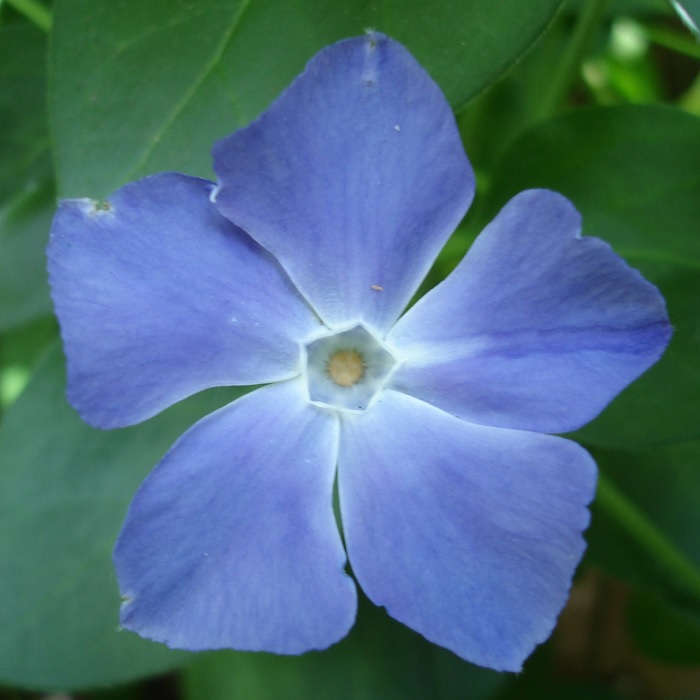
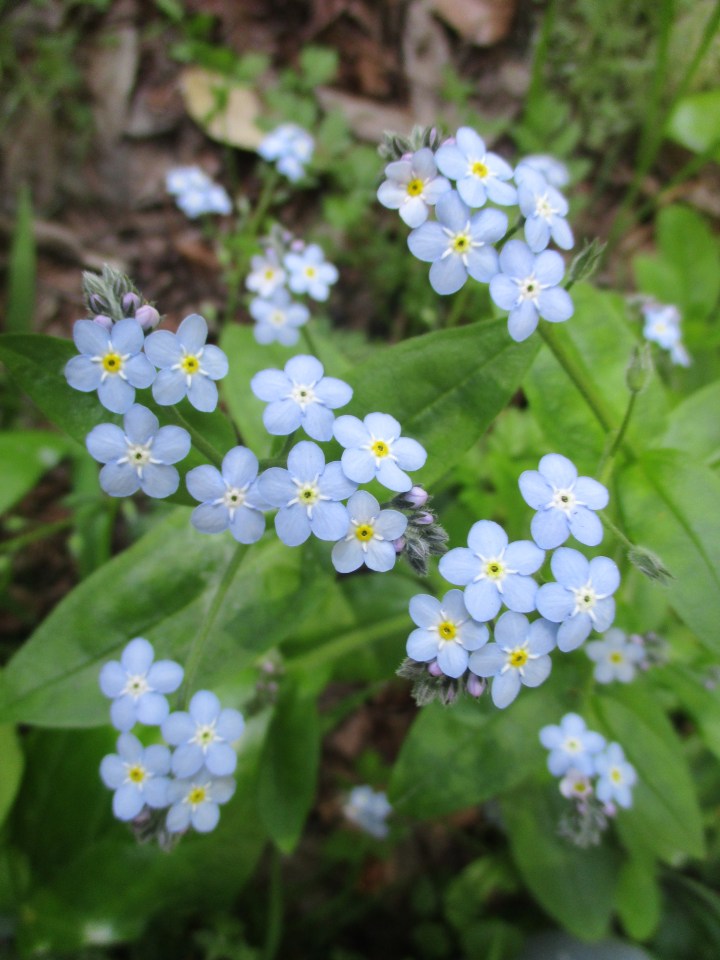
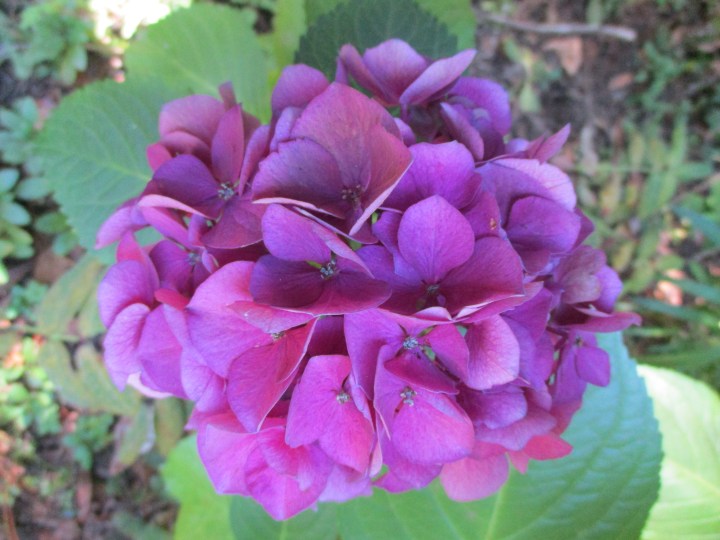
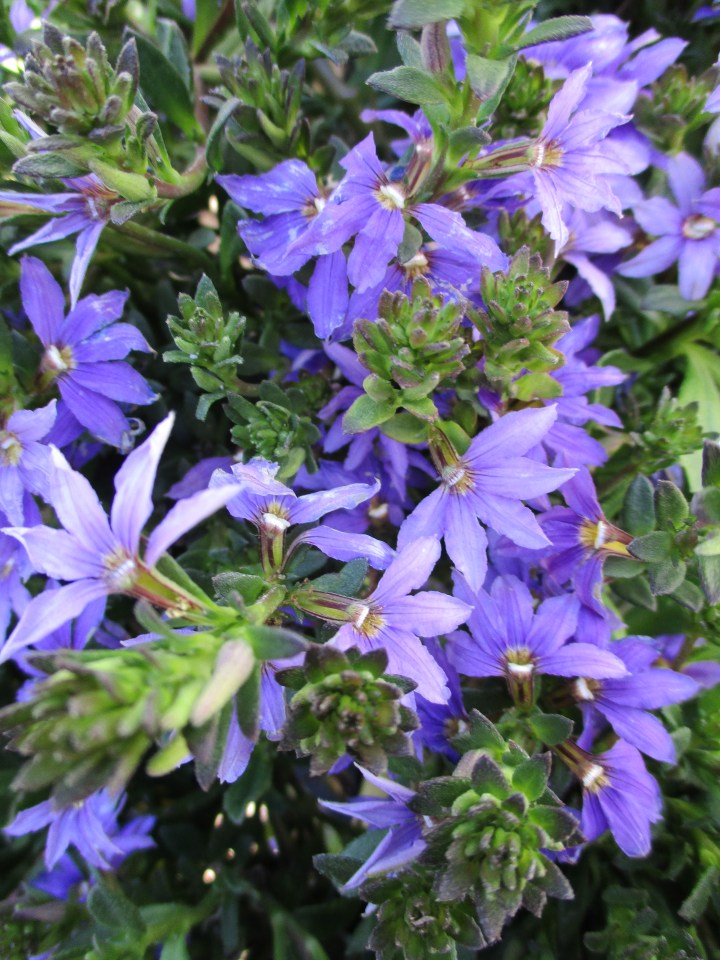 Only a few flowers are true blue. A few more are nearly blue, but slightly blushed with lavender. Of the latter group, fan flower, Scaevola albida, which is usually more lavender than blue, can be quite convincingly blue if conditions are just so. The semi-circular flowers (which are actually wide bilateral flowers) are most abundant in spring and summer, but can bloom sporadically all year.
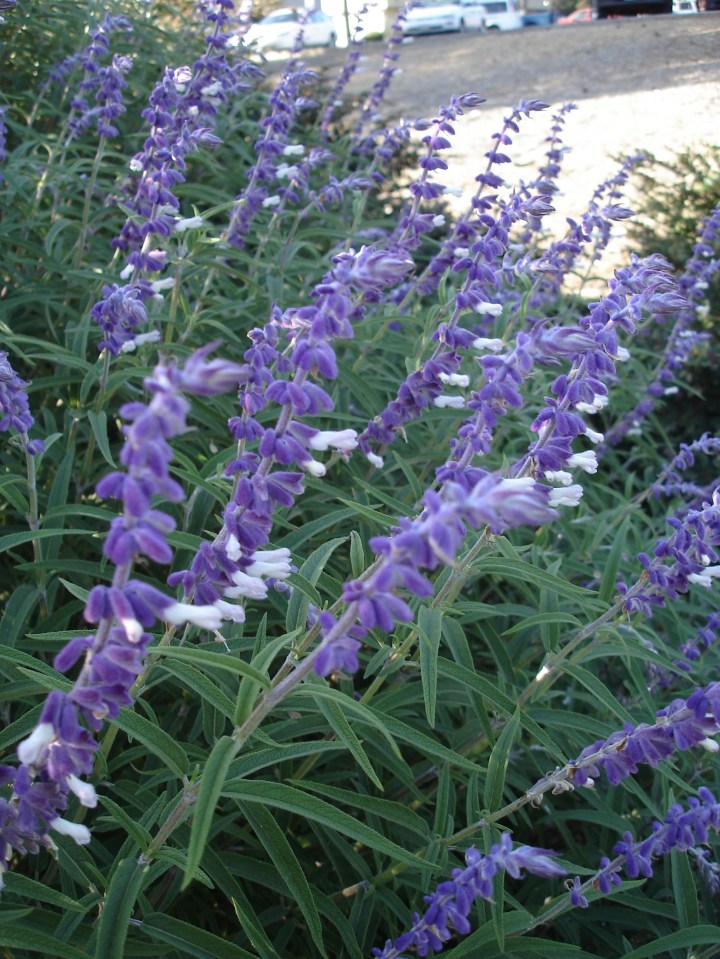 In the first year, Mexican bush sage, Salvia leucantha, does not get very big. Then it gets cut back to the ground at the end of winter. It gets about twice as big in the second year, only to get cut back again as winter ends. By the third or fourth year, healthy maturing plants can grow to five feet tall and seven feet wide each season. While cut back, big clumps can be divided to propagate.
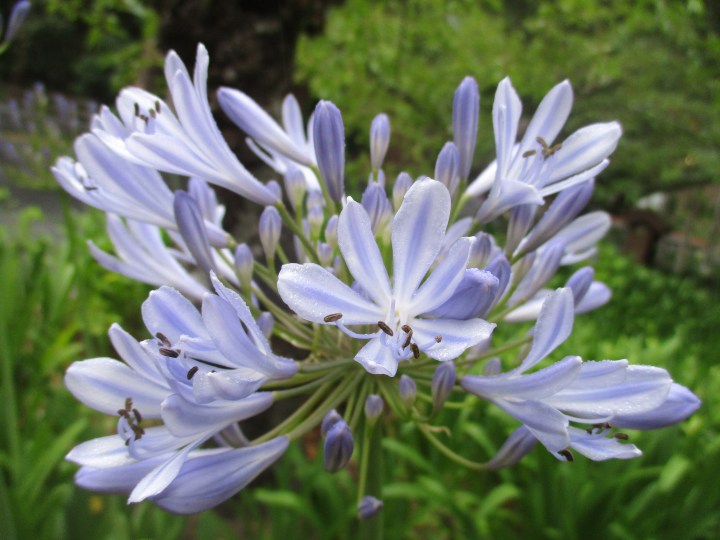
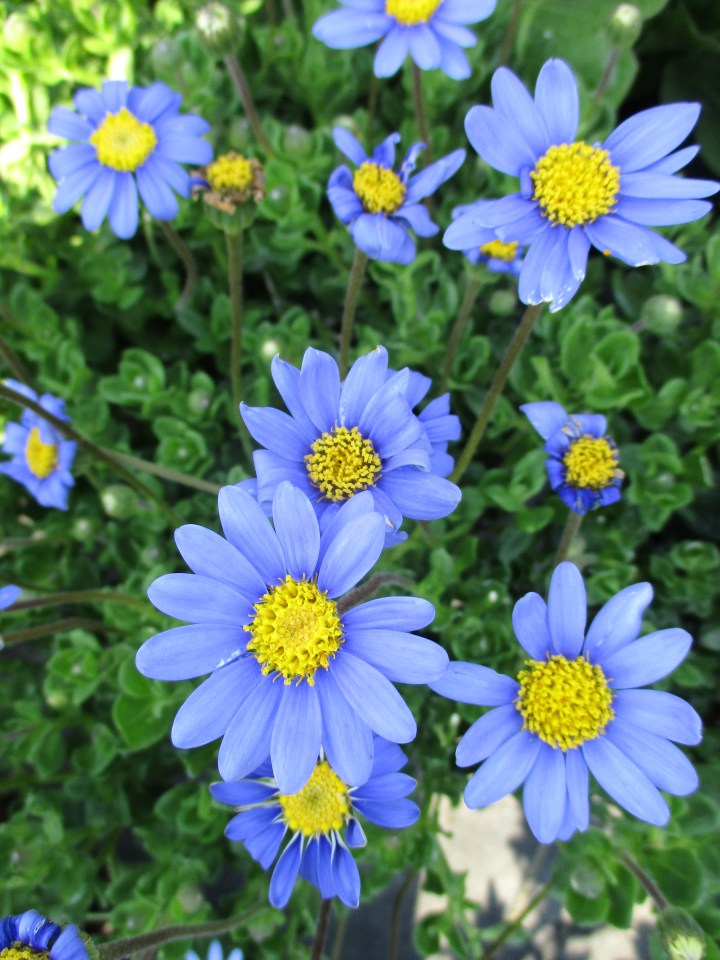 Most blue flowers are blushed with purple to some degree. Except for lily of the Nile, true blue flowers are quite uncommon. Even with their yellow centers, the tiny daisy flowers of blue marguerite, Felicia amelloides, seem to be too blue to be real. They are almost expected to fade to lavender. Bloom may not be as full as it was a month ago, but continues as long as the weather is warm.
 Tony Tomeo