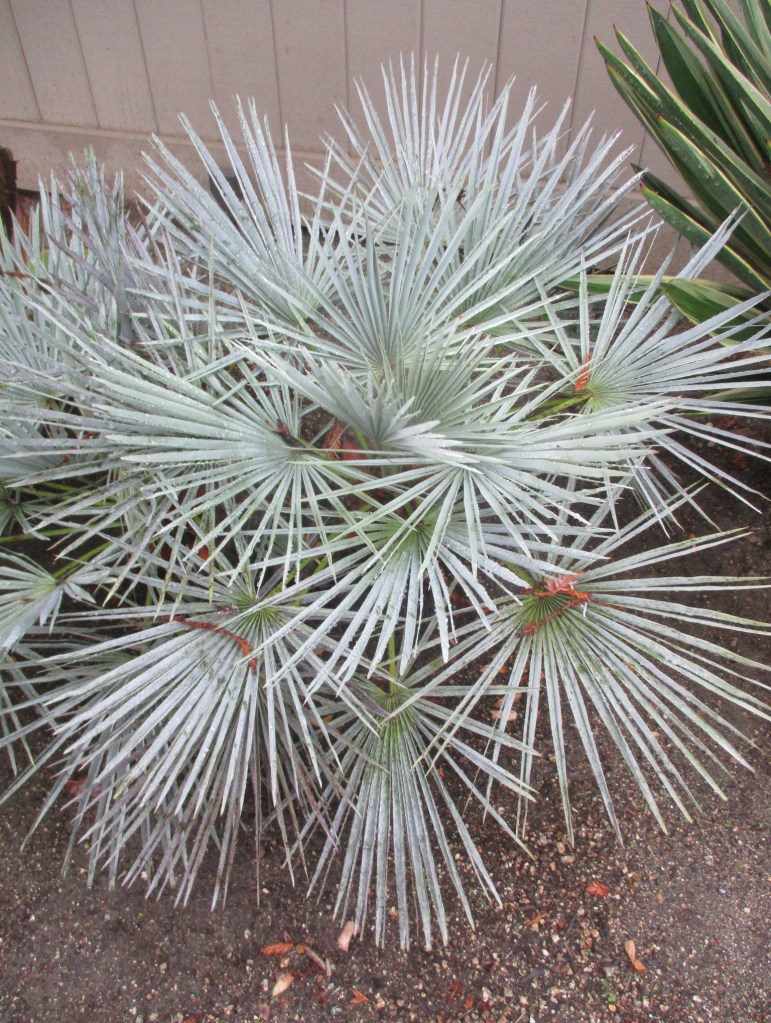
Mediterranean fan palm is a shrubby palm, with a few small trunks. Atlas Mountain palm, Chamaerops humilis var. argentea, is an even shrubbier variety. Mediterranean fan palm can grow slowly to about twenty feet tall. Atlas Mountain palm grows even slower to only about eight feet tall. Its several trunks become strikingly sculptural only after many years.
The primary allure of Atlas Mountain palm, though, is its distinctly silvery gray foliar color. Individual fan shaped leaves may be nearly two feet broad, with deep and narrow clefts. Petioles are so nastily thorny that grooming and pruning can be painfully difficult. Mature trunks can be six inches wide with dense coats of petiole bases. Bloom is not prominent.
Atlas Mountain palm is notably undemanding. Once established, it does not crave much water or fertilizer. Nor is it finicky in regard to soil quality. It is resilient to both extremes of heat and cold. After several years, it might benefit from thinning of superfluous trunks and pups. Like many palms, Atlas Mountain palm should perform well within big pots or tubs.




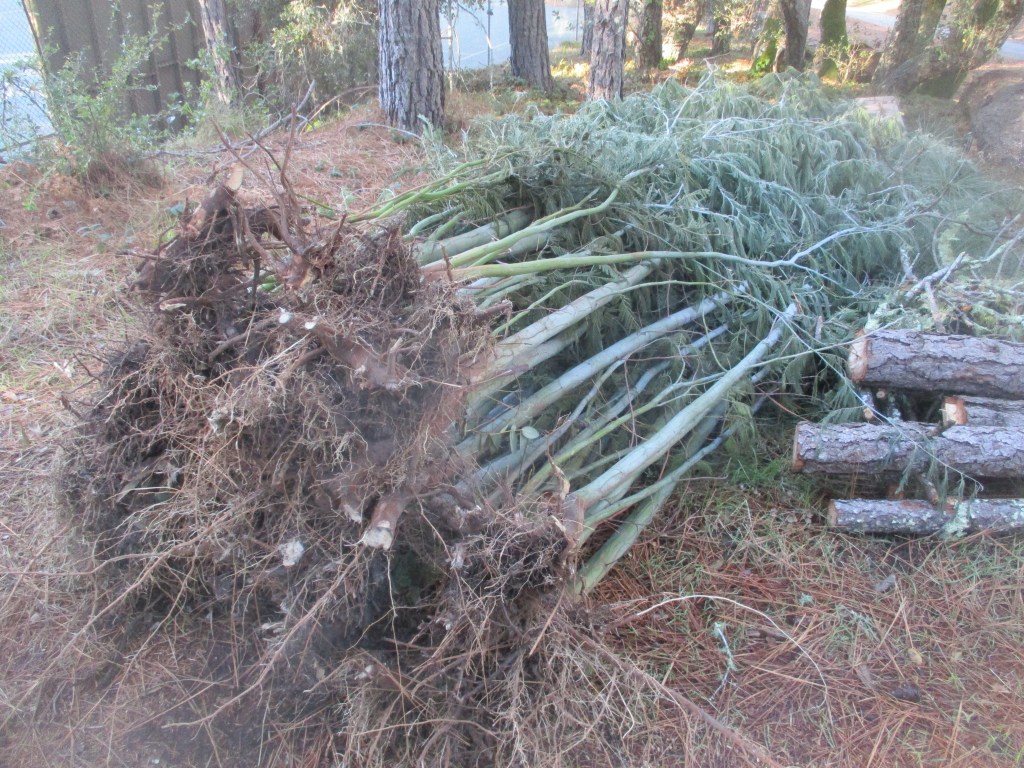


 For a tree that is native to the upper elevations of the Rocky Mountains, blue spruce, Picea pungens, does surprisingly well here. It only wants to be watered a bit through summer to compensate for the lack of rain and humidity in chaparral climates. It does not seem to miss a more pronounced chill through winter. Disease and insect infestation are uncommonly noticeable or damaging.
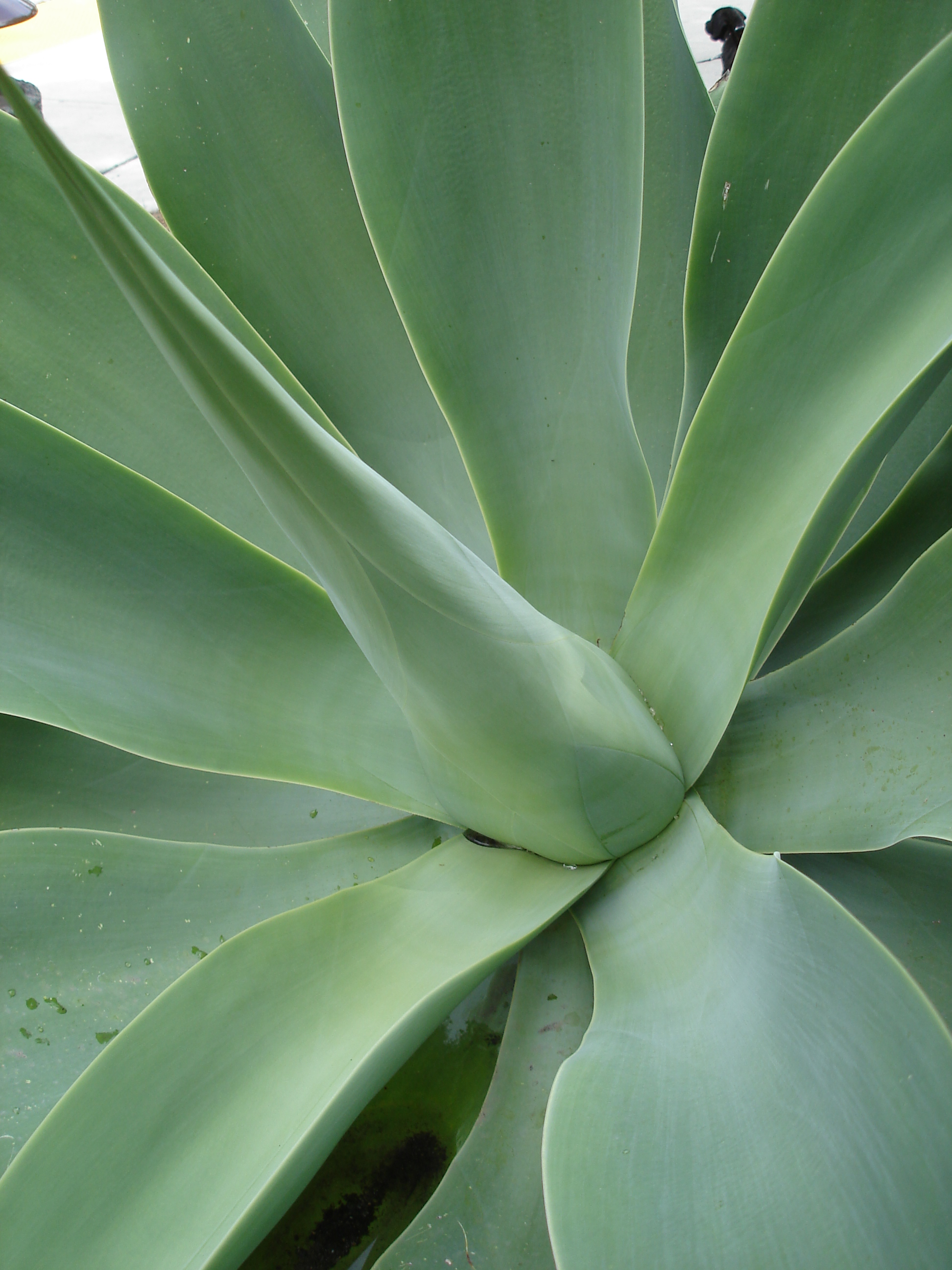 Agaves are innately tough and undemanding. The main reason that they are not more popular in home gardens is that they are outfitted with nasty foliar spines. The worst of these spines are the distal tips of the large succulent leaves. Most agaves are also armed with shorter recurved spines on the margins of their leaves. Gardening with such well armed perennials can be dangerous.
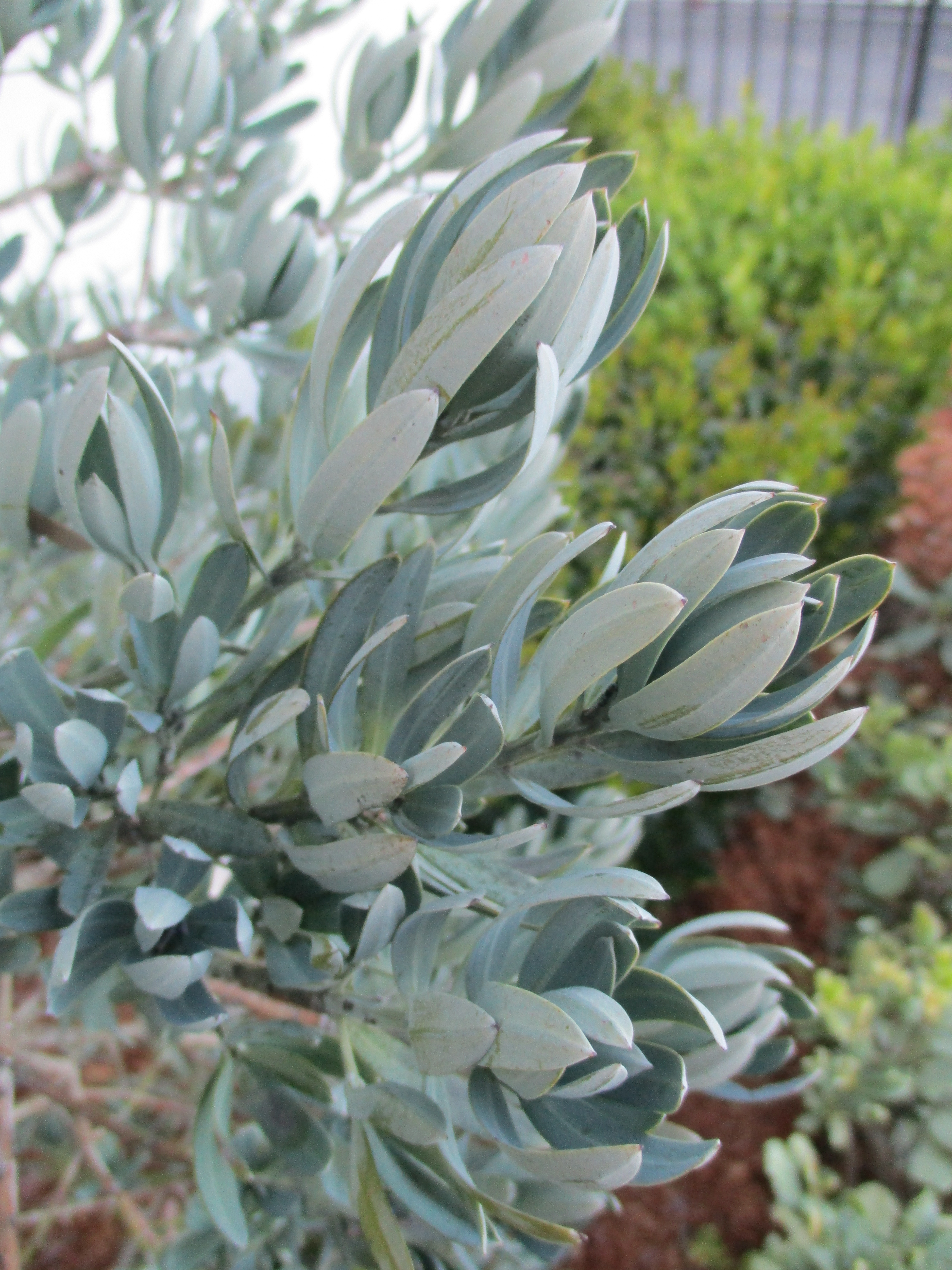 No, it is not an oxymoron. ‘Yellowwood’ is the common name for a few specie of Podocarpus. The evergreen (or ‘everblue’) foliage of ‘Icee Blue’ yellowwood, Podocarpus elongatus ‘Monmal’, really is as silvery grayish blue as the name implies. It can be as striking as some cultivars of Colorado blue spruce. It grows slowly in narrow columnar form to only about fifteen or twenty feet tall.
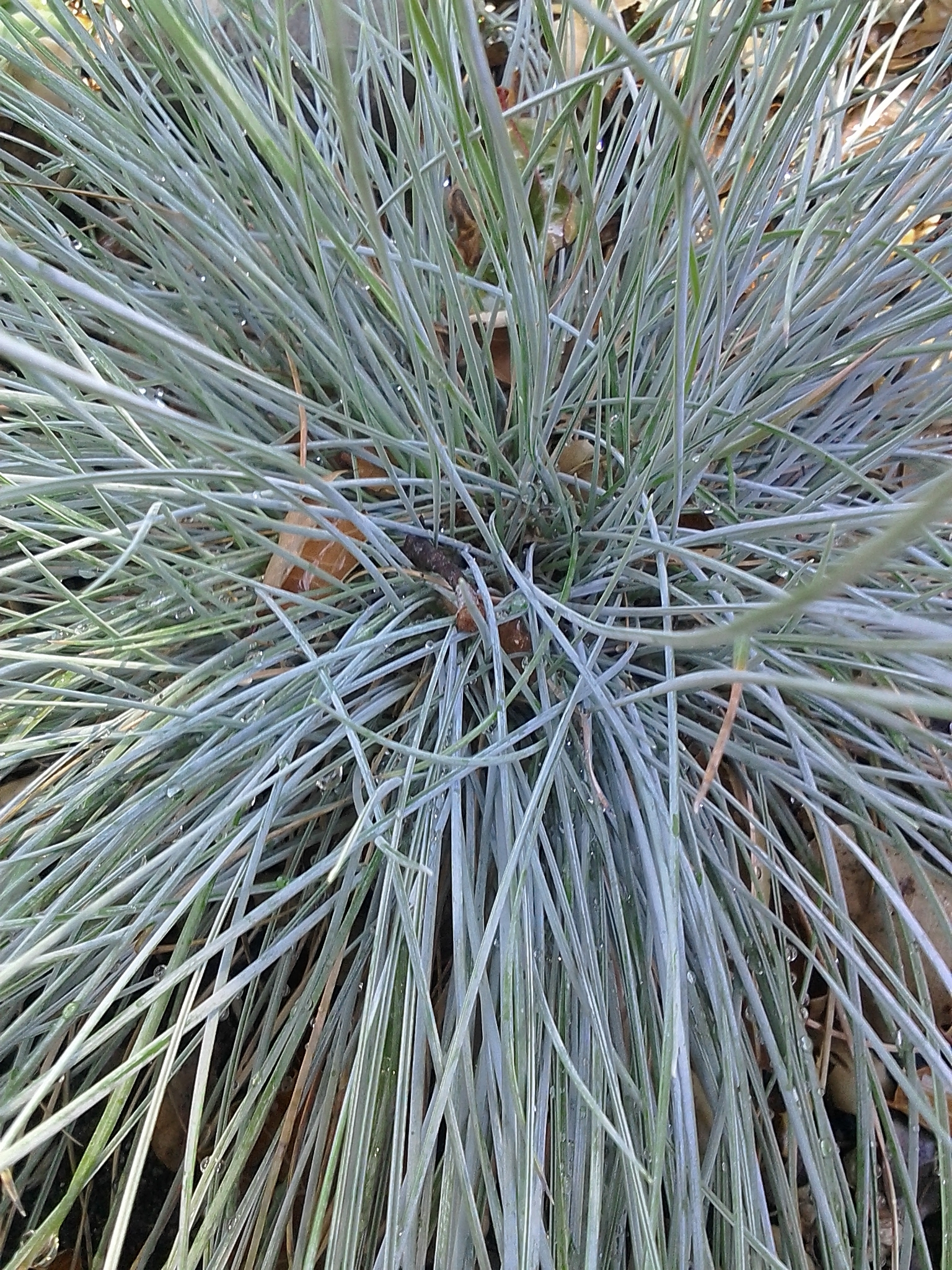 To avoid confusion with dwarf fescue blue turf grass, Festuca ovina glauca is more familiarly known as blue festuca. If planted close together and left to spread as a small scale ground cover, it is much lumpier and mounding than uniformly spreading turf. It is a clumping perennial that is more popularly grown as distinct tufts of finely textured blue gray foliage that looks like gray sea urchins.
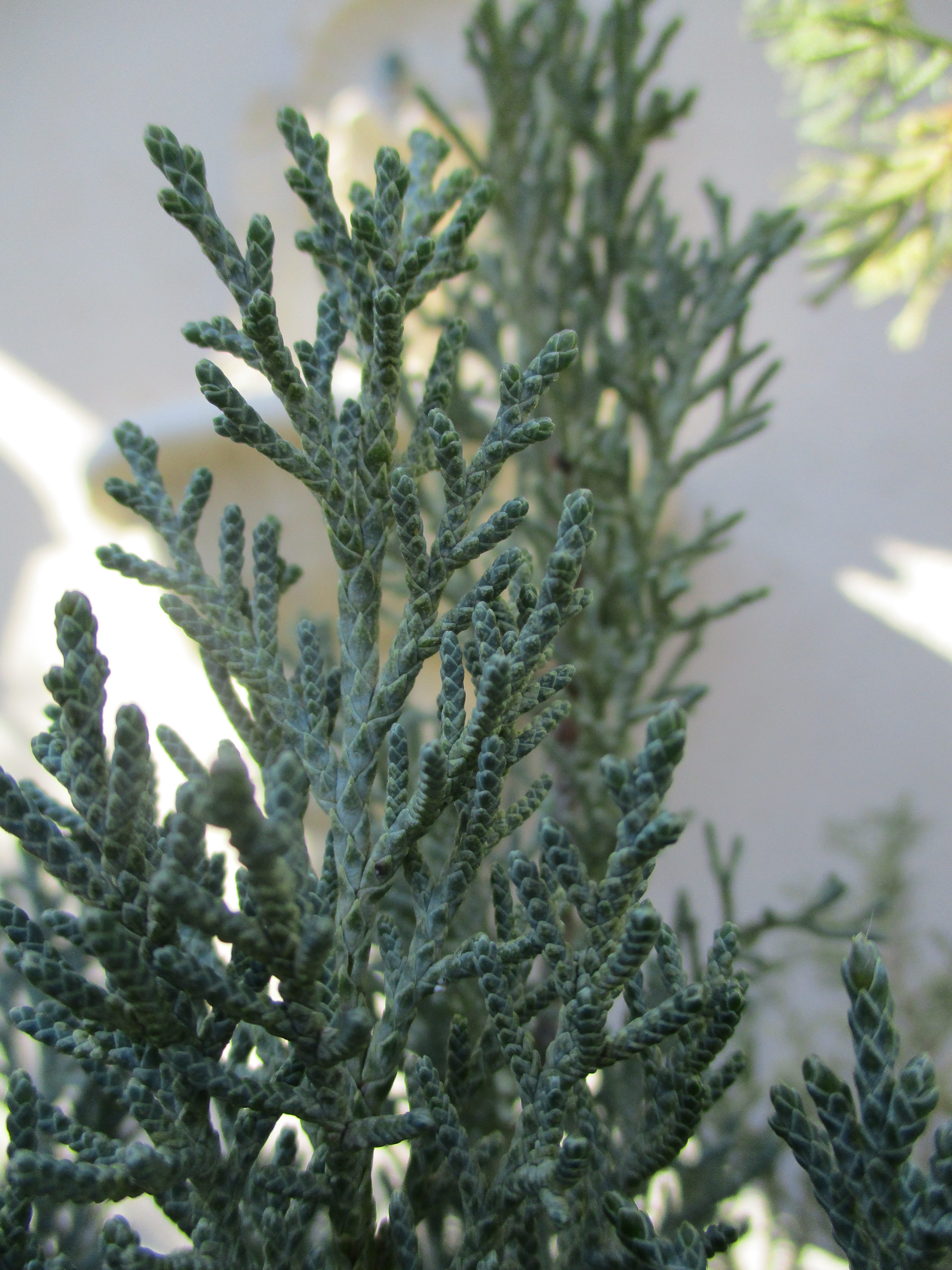 It is no coincidence that many plants with gray foliage are from mountains or deserts. Gray foliage is ‘glaucous’, which, like glaucoma, diffuses light. This helps to protect it from desiccation and scald when sunny weather is also hot, windy or arid. The glaucous foliage of Rocky Mountain juniper, Juniperus scopulorum, is what distinguishes it most from related North American junipers.
 Tony Tomeo