Autumn Planting Of Spring Bulbs

Spring bulbs start now.

Some of the most familiar flowers to bloom in the earliest of spring get planted now as bulbs. They sit and wait in the garden to finish their dormancy, perhaps get a bit of a chill through winter, and get an early start to their bloom cycles as soon as weather permits. Because winters are so mild here in the Santa Clara Valley, some do not even bother to wait for spring, but are instead happy to start bloom before winter ends.

Bulbs become available in nurseries when they can be planted. Those that are not available yet will become available when it is time to plant them for later spring or summer bloom. The first to become available are generally the first to bloom; although bearded iris seem to know when they want to bloom, regardless of when they get planted.

As long as they do not get stored too long or get planted too late, bulbs do not need to be planted immediately, and actually extend their performance if planted in phases. The earliest phases to get planted will bloom earliest. Phases of the same bulbs planted a few or many days later should bloom about the same amount of time later.

With proper planning, later phases bloom as earlier phases finish. For example, because crocus flowers do not last very long, different phases of bulbs can be planted only a few days or a week apart, so that more flowers start to bloom in time for earlier flowers to fade. Freesia flowers last a bit longer, so different phases can be planted two weeks or so apart.

Narcissus and daffodil bulbs are not so discriminating about how deeply they get planted, so various phases can be put in the same spots. As long as they do not get planted too deep, the earliest phases can be planted deep and covered with only a bit of soil, so that later phases can be planted above. If similarly covered with only a shallow bit of soil, later phases of the same bulbs can be stacked, as long as the last and shallowest phase still gets planted deep enough.

Not many bulbs are actually real bulbs. Most are corms, tubers, rhizomes or tuberous roots. They all do the same thing though; store resources through dormancy to sustain quick bloom as weather allows. Although many bloom reliably only once in their first season, some naturalize to bloom at about the same time each year. Tulips are capable of naturalizing, but rarely get enough chill in winter to bloom after their first season.

Anemone (windflower), hyacinth, lily, rananculus, tulip and small colorful callas are the less reliable of spring bulbs after their first year. Crocus, freesia, hymenocallis and harlequin flower can be more reliable if they get what they want. Grape hyacinth, narcissus, daffodil, watsonia, bearded iris and the old fashioned white callas are the most reliable of bulbs that get planted about now.

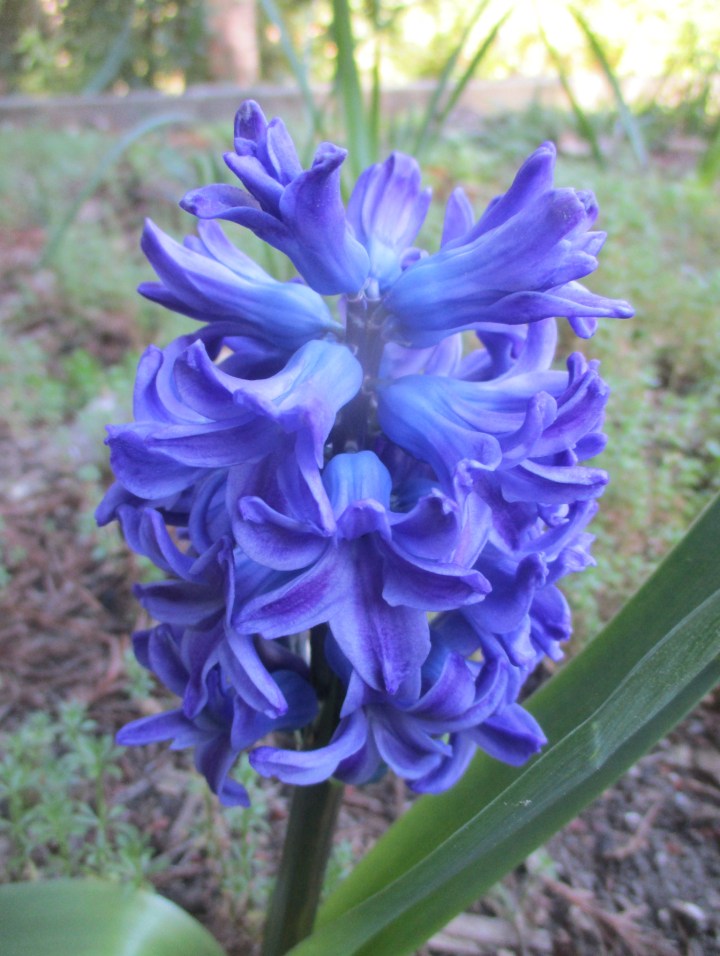
Hyacinth

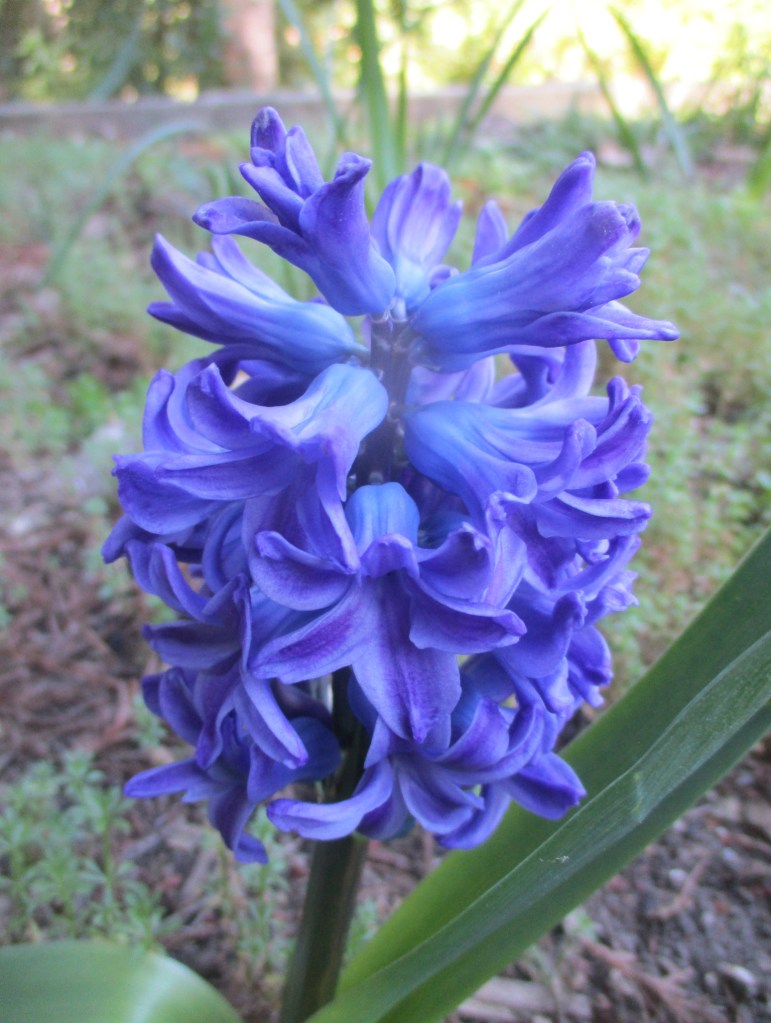
Hyacinth are both colorful and fragrant.

Most flowers that must attract pollinators do so with either color or fragrance. Hyacinth is an exception that does both. It is as fragrant as it is colorful. Its intensely rich fragrance is supposedly comparable to that of lilac. Its floral color range includes many hues and tints of most colors but green. It blooms for very early spring along with many types of daffodil.

Dormant hyacinth bulbs go into their gardens about now, but do nothing until after winter. They then bloom with several narrowly tubular florets on stoutly cylindrical trusses. Each floral stem is only about half a foot tall, but stands above its narrow leaves. Foliage lasts for merely two months or so after bloom. It eventually withers with the warmth of summer.

Hyacinth crave rich soil, sunny exposure and regular irrigation after the winter rain stops. They can work nicely with cool season annuals, such as pansies or violas. They appear and bloom just before pansies and violas finish their seasons. Alternatively, hyacinth are conducive to forcing. Unfortunately, they like more winter chill than they experience here after prechilling.

Bulbs For Spring Start Now

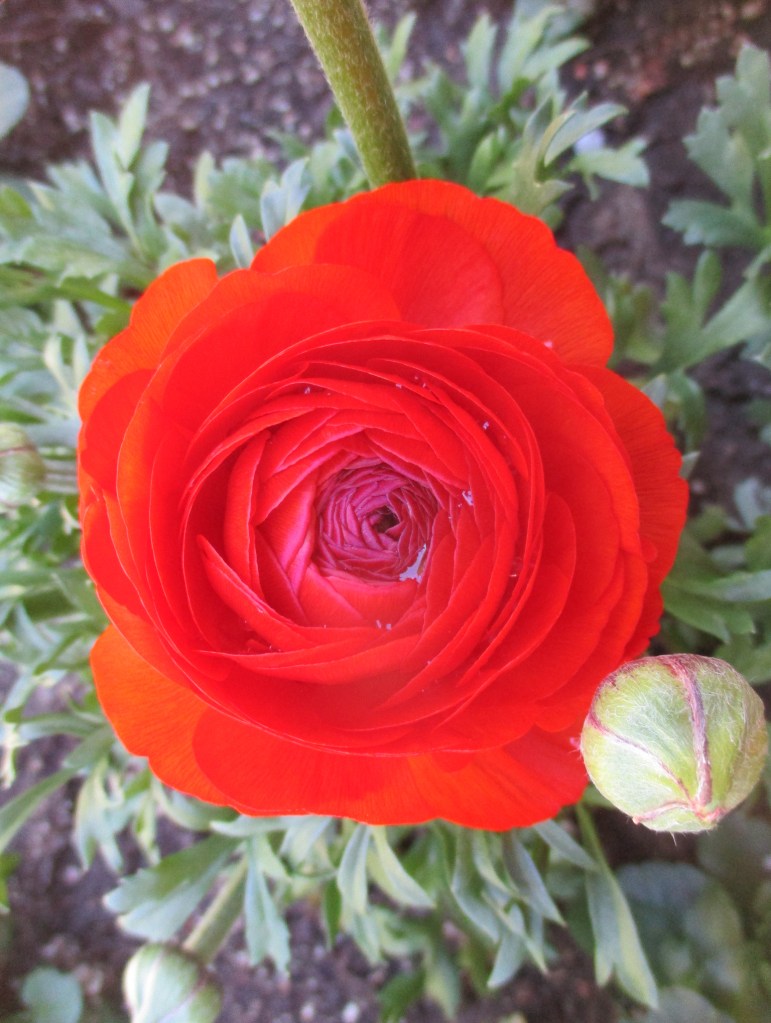
Ranunculus will bloom for early spring.

Summer bulbs, such as canna, calla and dahlia, can wait until spring. They do not enjoy winter chill during their dormancy like spring bulbs do. Spring bulbs become available at nurseries now because this is the time to plant them. They wait patiently for winter to end before blooming. A bit of winter chill actually helps them to maintain their strict schedule.

That certainly does not mean that their strict schedule is not adjustable. Most early bulbs prefer interment into their shallow graves within weeks of Halloween. However, they can wait as late as New Year’s Day. This allows for successive planting, which prolongs their ultimate bloom. Early planting promotes early bloom. Late planting promotes late bloom.

Most spring bulbs from nurseries are prechilled because winters are relatively mild here. They are therefore less reliant on significant winter chill. However, some of such bulbs in several of the milder climates may bloom only once. They lack the winter chill they need to bloom for subsequent springs. Avid garden enthusiasts compensate with refrigeration.

That requires major diligence, though. Most who enjoy gardening do not want to dig and refrigerate dirty spring bulbs. Consequently, most who grow them enjoy them as annuals or disposable perennials. Unfortunately though, spring bulbs do not bloom for very long, and are not inexpensive. That is why they are not as prevalent here as in other climates.

Freesia and narcissus, including daffodil, do not need much chill. They can settle in and bloom for many years after their initial planting. Ranunculus and anemone may not need much chill either, but are less likely to regenerate from year to year. Dutch iris and Dutch crocus are unpredictable. They might become reliably perennial, but may not cooperate.

Tulip and hyacinth may be more disappointing, since they require significant winter chill. If they can not experience such chill naturally from the weather, they require refrigeration. Otherwise, they bloom only once for their primary season, and only after prechilling. Yet, both are among the most popular of spring bulbs. Their blooms are simply too appealing.

Naked Lady

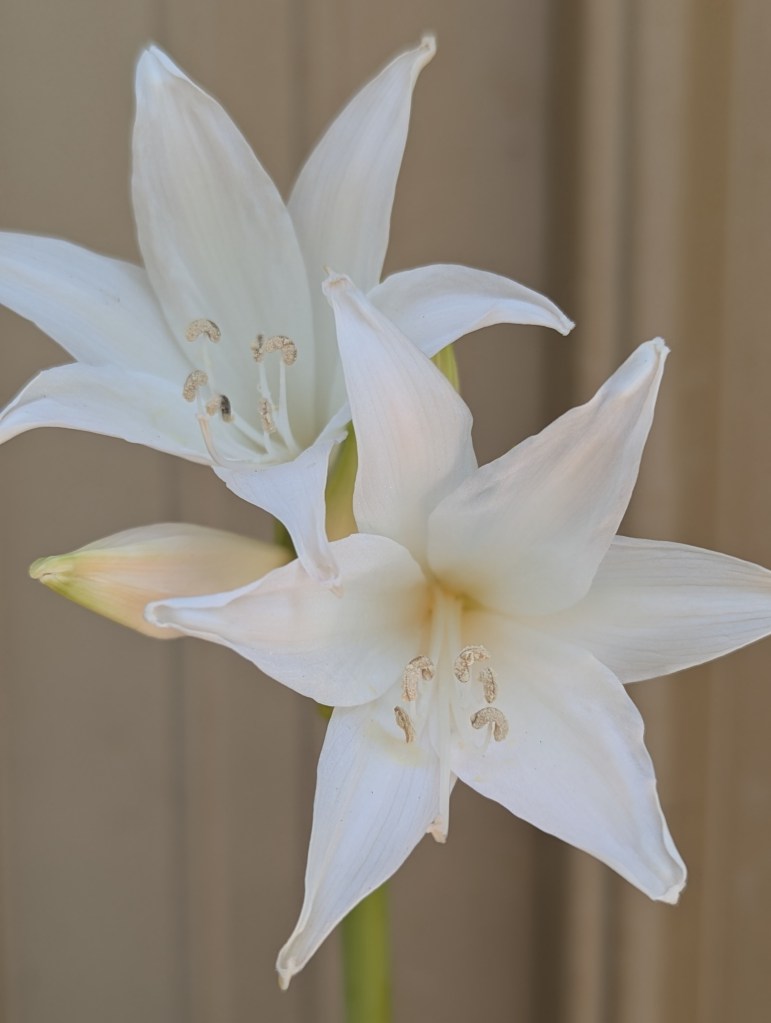
Naked lady is only rarely white.

From scarcely exposed tops of seemingly dead bulbs, floral stalks unexpectedly appear. Foliage only appears after bloom finishes. This is why Amaryllis belladonna is known as naked lady. It blooms unfoliated. Various varieties of the same species bloom with about the same vivid pink color. White variants are very rare. Floral fragrance is mild but sweet.

Naked lady flowers are about two feet tall on simple brown or green stalks. Fleshy seeds that develop after bloom are viable only while fresh and plump. Foliage begins to appear by later summer, and grows more with autumn rain. It resembles foliage of lily of the Nile, but is more fragile, and shrivels by late spring. Then, bulbs lay dormant through summer.

Naked lady bulbs are impressively resilient, but also quite sensitive. If possible, the best time to relocate them is supposedly between bloom and foliation. However, relocation is likely easiest during complete summer dormancy. Unfortunately, though, such relocation can interfere with subsequent bloom. Naked lady needs full sun exposure to bloom well, but requires no water.

Tulip

A single tulip flower seems lonely.

As diverse as they are, popular varieties are a minority of countless hybrids of the genus. Most common and popular hybrid tulips qualify as the neo-species of Tulipa gesneriana. In other words, they are not an actual species. Most but not all are descendants of Tulipa suaveolens. More sustainable varieties of simple species are becoming more available.

The most popular of tulip are early spring bulbs that went into their gardens last autumn. Floral color ranges through pink, red, orange, yellow and white, mostly with dark centers. Their basal foliage is rather light green or perhaps almost grayish, with a rubbery texture. Most tulips stand singly on straight stems about a foot tall, but some can grow a bit taller.

Tulip bulbs enjoy organically rich soil with regular irrigation throughout their bloom cycle. They should get all the moisture they want from rain through their winter dormancy cycle. Tulip prefer a bit of chill in winter, so may not be as reliably perennial here as elsewhere. They are most spectacular in herds or large beds, but mix nicely with other spring bulbs. Simple tulips are among the most popular of cut flowers.

Grooming Deteriorating Bloom Conserves Resources

Daffodil are tidier with timely grooming.

Spring bulbs are now blooming, and some are already done. Summer bulbs will bloom a bit later, and some will continue until autumn. Annuals, perennials, shrubbery, vines and all sorts of other vegetation also bloom. Most simply shed their deteriorating flowers after bloom. Some may benefit from grooming to remove such flowers before they go to seed.

Grooming to remove lingering deteriorated flowers, or deadheading, is obviously neater. Flowers that continue to bloom are more prominent without their decaying predecessors. Camellias may not need such grooming, since their flowers fall away as they deteriorate. However, removal of fading flowers, before or after they fall, eliminates their mess below.

Perhaps more importantly, grooming to remove fading flowers conserves vital resources. Although most bulbs are sterile hybrids, some try to generate fruiting structures for seed. This consumes substantial resources. Removal of fruiting structures before they develop diverts resources to other growth. Canna diverts such resources into subsequent bloom.

For some species, grooming to remove fruiting structures stimulates subsequent blooms. After all, seed production is their priority, and the objective of bloom. If they perceive any deprivation of seed, they are compelled to produce more. Several dahlias bloom initially with single flowers. After grooming, the stems below branch for a few secondary flowers.

For a few potentially invasive species, grooming eliminates unwanted seed. Montbretia, which is famously invasive, is less so if deprived of its seed. African iris might disperse a few unwanted seed and get shabby without grooming. Summer snowflake and common grape hyacinth often disperse their seed. Both are too small and numerous for grooming.

Fortunately, summer snowflake and common grape hyacinth are true to type. Freesia are not. Without grooming, they can produce feral progeny that are similar to their ancestors. Such feral progeny are more prolific with seed for more of the same. Eventually, they can displace the desirable original varieties. Although more fragrant, they are not as colorful.

Harlequin Flower

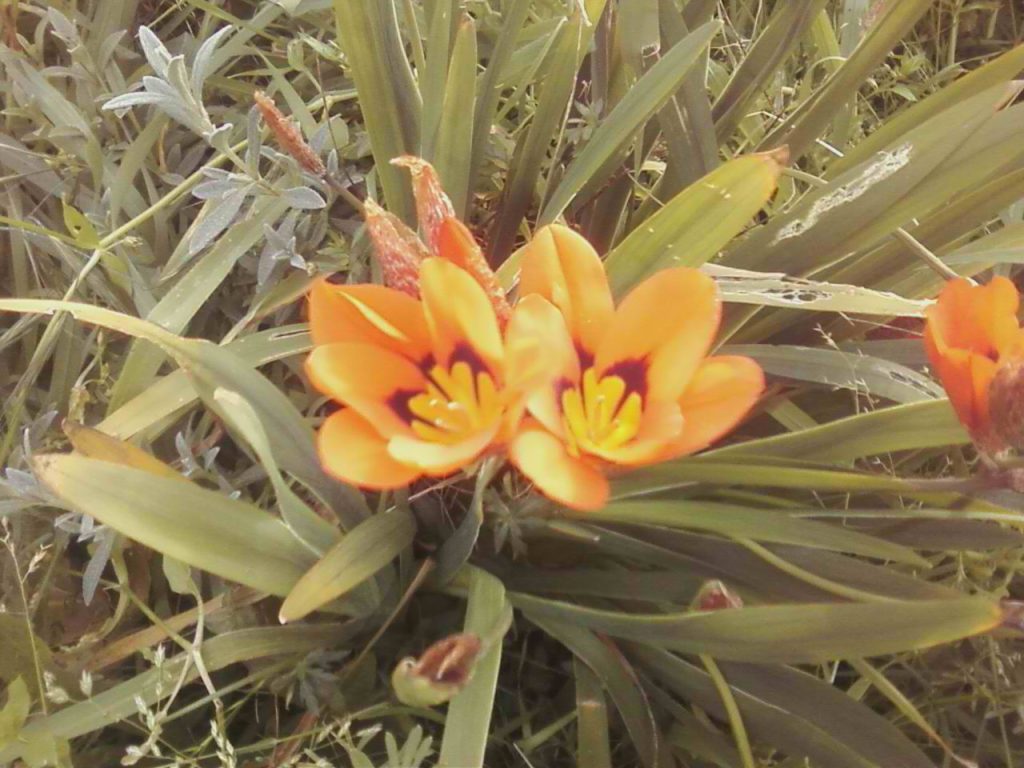
‘Tricolor’ (obviously) means ‘three colors’.

Even though bulbs for harlequin flower, Sparaxis tricolor, are no longer commonly found in nurseries when it is time to plant them in autumn, naturalized bulbs are somewhat common in some older gardens. Where winters are mild and soil does not get too dry and compacted, they are happy to slowly multiply and bloom every spring. They seem to be blooming a bit early this year, since they typically wait until later in spring. The upright narrow leaves resemble those of gladiolus, but get no taller than a foot. Each flower stems rises a bit higher to display a few flowers that are about an inch and a half wide. Each flower has a yellow center surrounded by a narrow rusty brown pattern, which is also surrounded by a third color; which is orange, red, pink or purple.

Onion

Onions grow easily from onion sets.

Leek, garlic, shallot and other species of the genus have more distinct growing seasons. Technically, onion, Allium cepa, is a cool season vegetable. It grows through winter to be ready for harvest before summer dormancy. Alternatively, it can grow through spring for a later summer harvest. In cool situations, it can grow through summer for autumn harvest.

Onions do not actually mature within a single season anyway. Most grow from onion sets which are simply small onions that grew from seed earlier. They simply finish growing for another season once plugged into a garden. Those that grow from seed in autumn might go dormant through the middle of winter. Spring is actually their second growing season.

The most popular onions are yellow or brown, red or purple, or white. Each type exhibits a distinct flavor. All develop a few hollow bluish green leaves that stand about a foot tall. Their foliage shrivels as they mature enough for harvest. They are useless if they bloom. Green onions are merely juvenile onions which have not yet developed distended bulbs.