Down On The Corner

Yucca elephantipes at Taco Bell in San Luis Obispo in 1968.

Down on the corner, or at least next door to the western corner of Olive Street at Santa Rosa Street in San Luis Obispo, Creedence Clearwater Revival stopped at Taco Bell, supposedly about the second of August of 1968, on their way from Palo Alto to Santa Monica. They were famous for such horticultural songs as ‘Run Through The Jungle’, ‘Have You Ever Seen The Rain’, ‘Cotton Fields’ and ‘I Heard It Through The Grapevine’, which I incidentally remember playing on the radio as I drove over the Grapevine Highway on my second trip to Los Angeles sometime in about 1987. This particular Taco Bell is conveniently located for travellers, since its corner location is also the interchange of southbound Highway 101 and Highway 1. The two highways are concurrent to the south. The original Taco Bell building has been replaced with a larger modern building that also occupies the parcels to its left and right, so that it really is down on the corner now. A bit more than eighteen years after the picture above was taken, in autumn of 1986, Brent and I became very familiar with the original. It was the scene of one of his more notorious adventures, which is too naughty for me to describe here. Another tamer incident involved the relatively small giant yucca, Yucca elephantipes, to the lower right in the picture. It was larger by 1986, and prior to one of our visits to Taco Bell, it had suspiciously deposited a few small limbs onto the sidewalk. Upon closer inspection, we found bits of pulverized chrome plated plastic and an emblem from what was likely a relatively new Cavallier of the early 1980s. Of course, we could not just leave the yucca canes there on the sidewalk to eventually be disposed of. We loaded them into the trunk and took them back to our dormitory, where we shared them with neighbors. The smallest shoot grew in a can of soil in our dorm room until it matured enough to also be given away. Because I sort of enjoyed it while it was there, Brent gave me a larger and more impressive specimen with an even more scandalous history a few years later. I have grown hundreds of giant yucca specimens since then, but the original that Brent gave me before 1990 is still here. I wonder if any of the others survive.
Sugarless

‘Pele’s Smoke’ is an ornamental sugarcane that should bronze with better exposure.

The internet is surprisingly deficient. It contains an amazing abundance of information, including a majority of information that most of us should not want. No one can filter out all the previews to disturbingly violent cinema, disturbingly idiotic political scandal, disturbingly aberrative sexual content, and so on. Yet, some of the simplest information remains mysteriously elusive.

I grow ‘Pele’s Smoke’ sugarcane only because it is what I obtained first. I grew it from scraps that I pruned from a specimen in the garden of a colleague in the Los Angeles region. It grows like a weed. I happen to enjoy growing it. It is primarily an ornamental cultivar though. With its bronze foliage, it is intended to be prettier than it is functional. Although it is considered to be productive, the canes are small and relatively tough.

I would like to grow a variety of sugarcane that is more utilitarian than ornamental. There are many varieties within three types of sugarcane that I should be able to choose from. Chewing cane is the sort that develops a soft and chewable pulp within its canes that can be chewed like a confection, leaving less inedible fibrous pith than other varieties. I do not want to bother growing chewing cane. Syrup cane may produce a bit more fibrous pith, but generates an abundance of sugar syrup, which unfortunately does not crystalize as readily as that of other varieties. I do not want to bother growing syrup cane. Crystal cane is the sort that produces the most sucrose, which should crystalize more readily than the combinations of sugars that other varieties produce. That is what I am still trying to find! Several varieties of sugarcane are available online, but very few are classified as chewing, syrup or crystal canes! I am still searching!

Raising Cane

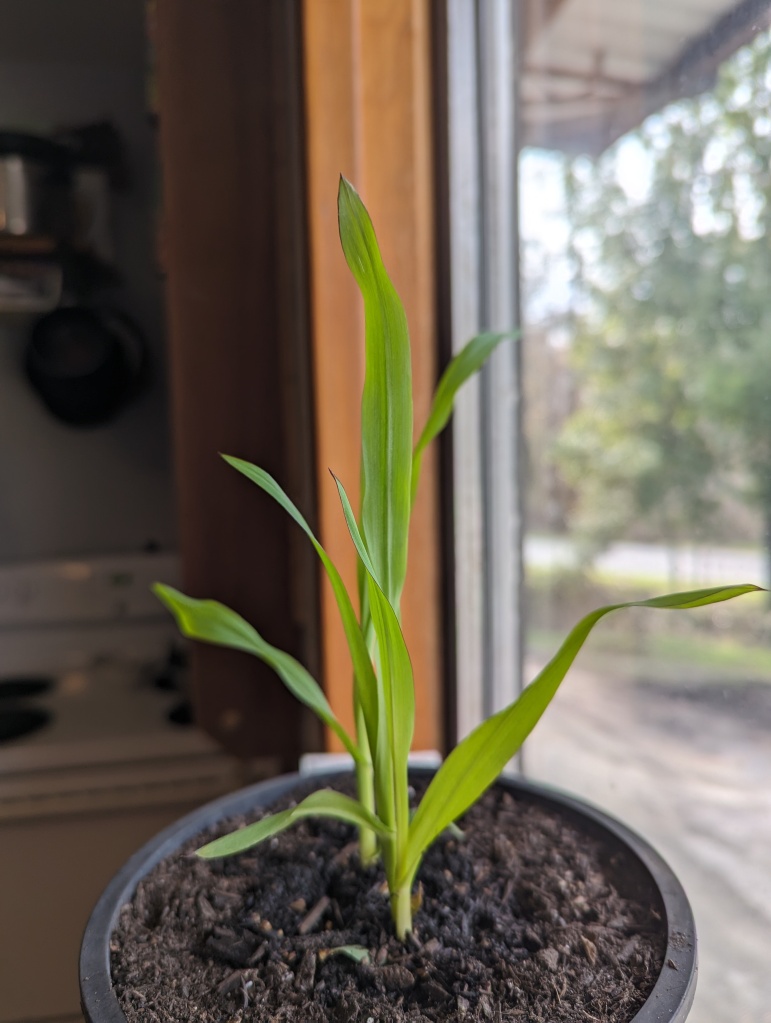
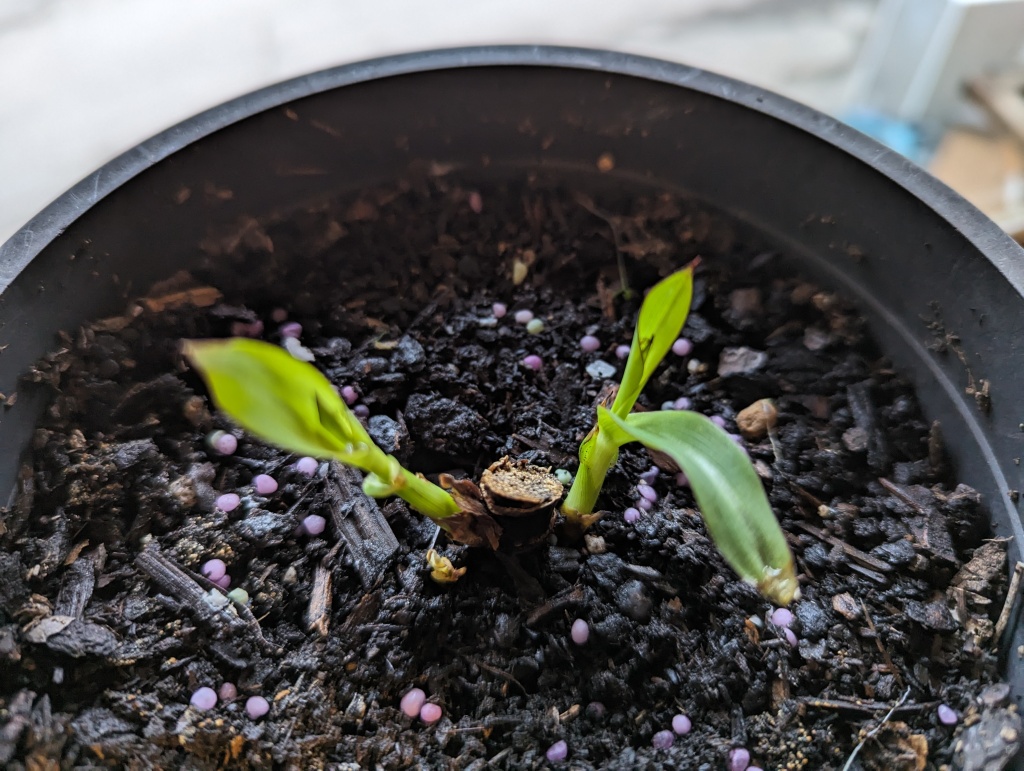
Sugarcane has been disturbingly easy to grow. This pair of pictures were taken about a day apart. The picture with smaller growth was taken yesterday morning, and posted with my Six on Saturday post at midnight. The picture with larger growth was taken this morning. If sugarcane grows this fast as a rooting cutting during winter, what will it do in the landscapes? Will it become an invasive weed? I suppose that I should be pleased with such healthy growth, but I am also concerned.

This particular sugarcane is likely ‘Pele’s Smoke’, which is more of an ornamental cultivar that should stay relatively compact. The original specimen from which I got the cuttings was not much more than six feet tall after at least two years, with bronzed foliage that is about the color of smoky topaz. It lives in Brent’s front garden. I pruned and groomed it while I was there for the first few days of November. Of course, I could not merely discard the scraps. I brought them back here and processed them into cuttings. I hoped that a few might take root.

The problem now is that most of the cuttings are beginning to grow. Only the softest of the terminal cuttings did not survive. Sugarcane is a tropical grass, so should not be growing much at all while the weather is cool. The many cuttings are stuffed into a pair of #5 cans, so may need to be separated prior to spring. I thought that only a few would survive at this time of year, and that they would grow too slowly to need separation until late next winter. Of course, I can not discard any surplus as I should. Only a few will go into the landscapes. Perhaps I can share some with neighbors.

Cane Berries Require Diligent Maintenance

Without proper pruning, cane berries become wicked thickets.

Given the opportunity, blackberry and raspberry canes become rampant thickets. The trick is to keep them contained and controlled so that they can produce berries without conquering the garden. Besides, proper pruning promotes production. Properly maintained canes are therefore both better behaved and more productive

Berry canes are certainly not low maintenance, and should be selectively pruned a few times through the year. The type of pruning needed is determined by the type of growth that the canes exhibit in particular seasons. Spent canes or upper portions of everbearing raspberry canes that produced berries through summer and early autumn will need to be removed by the end of winter while new canes that grew through this year get trained to replace them.

Pruning and thinning of new canes should be delayed until the end of winter; but removal or pruning of spent canes can begin as soon as their fruit gets depleted. Spent canes of traditional summer bearing raspberries like ‘Willamette’, ‘Tulameen’ and ‘Canby’ can be pruned to the ground. ‘September’, ‘Heritage’, ‘Summit’, ‘Fallgold’ and other everbearing raspberry canes should be pruned only as low as their fruit was produced. Lower portions that did not produce fruit should be left to bloom and produce berries next spring.

Just like raspberry canes, new blackberry canes that grew this year do not need to be pruned until late winter. However, the canes that grew last year and are finishing berry production this year can be pruned to the ground as their last berries get taken. There is no rush for this procedure, but getting it done early makes later pruning of new canes for next year a bit easier.

Of course, every different cultivar (cultivated variety) of raspberry and blackberry behaves differently. Some finish producing and are ready to be pruned sooner than others. Their behavior is also affected by climate and environmental conditions, so that the same variety may be earlier or later in different areas, or even different parts of the same garden.

Favorite berry canes are very easy to propagate by division of superfluous new shoots during winter. Alternatively, spent canes that should be removed can be ‘layered’ instead. They simply need to be bent down and partially buried, and can be dug and separated as they develop roots.

The top few inches of cane should extend above the soil. At least a few inches of cane below the top should be buried a few inches below the surface of the soil. The length of cane between the buried portion and the base of the parent plant can remain exposed.

Layering can be done at any time of year if the layer (buried section of cane) gets watered while developing roots. Layering this time of year is easiest though, because layers get plenty of water from rain through winter, and develop roots most efficiently as they come out of dormancy late in winter or early in spring. If layers are buried where new plants are desired, they do not need to be dug and moved next year.

Hydrangeas Perform Better With Proper Pruning

Pruning of one season affects bloom of another.

After decades of breeding, most modern cultivars of hydrangea are much more compact and a bit stockier than old fashioned hydrangeas that had long, limber stems that could bend downward from the weight of their own blooms. They stand up to proudly display their modern, vibrant color, even when their billowy blooms get heavy with rain. Yet, even with all their genetic improvements, they should still be pruned properly and annually to promote continued bloom. Without pruning, even modern cultivars can get floppy and lanky.

Because most hydrangeas bloom on stems that developed during the previous year, they should not be pruned too much while dormant through winter. Instead, solitary (generally unbranched) stems that grew from the base last year and bloomed this year should be pruned back to a pair of buds about a foot high as their blooms deteriorate. Even though some blooms continue to develop late into autumn, most are finishing about now. Therefore, pruning stems back while also removing spent blooms gets the pruning done early enough for the side buds to start to grow into secondary stems.

These secondary stems should not get pruned again, even when they go dormant through winter. They do not grow much before winter, but should be mature enough to bloom during the following spring. Thinning these branched stems through winter by cutting some of the smaller stems to the ground should produce fewer but significantly larger blooms, as well as prolong the blooming season. (However, many modern cultivars naturally bloom sporadically after their primary bloom phase until autumn anyway.)

New canes that develop from the ground to replace older branched stems may not bloom their first year, but can be left unpruned through winter to bloom early the next spring, which starts the process over again. Old stems should be cut to the ground after their third year (second bloom season). Leaving a few spent blooms on the plants long enough to dry (as dried flowers) should not interfere too much with proper pruning.

Blackberry

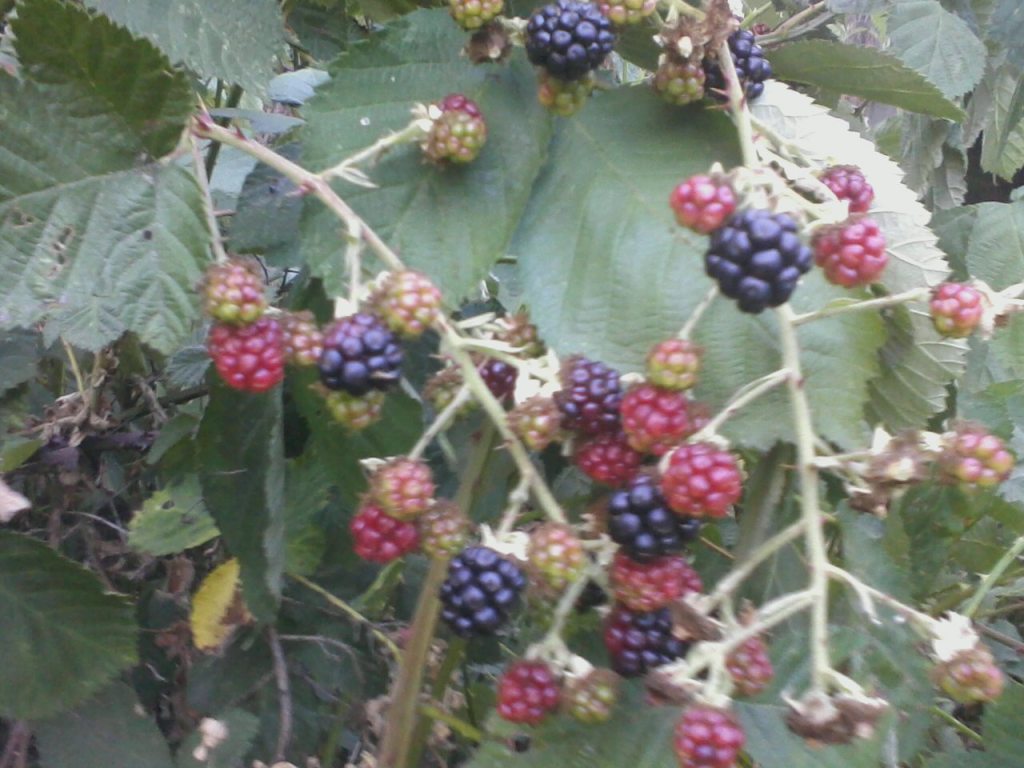
Blackberries are ripening slowly this year because of the mild weather.

Rampant brambles of feral blackberry, Rubus fruticosus, canes are much too common and give blackberries a bad reputation. Yet, with regular selective grooming and pruning, their biennial stems that emerge from woody perennial roots are both more productive and easier to contain than one would guess. ‘Primocanes’ grow rapidly to six to sixteen feet in the first year. In the second year, they become ‘floricanes’, which do not grow longer, but instead develop lateral stems that bloom and fruit. Only a few modern ‘fall bearing’ or ‘everbearing’ cultivars fruit on primocanes.

Canes are trailing, semi-trailing or erect. As the names imply, trailing types like ‘Marion’, ‘Boysen’ and ‘Olallie’, need support. They are the most popular locally because they are more productive. Erect types that need no support, like ‘Navaho’, ‘Choctaw’ and ‘Arapaho’, are less productive, but because they are more tolerant to frost, are more popular where winters are colder. Old classic blackberry varieties are quite prickly. Modern thornless varieties are becoming more popular as more varieties are developed. All have palmately compound leaves with five or seven leaflets. Simple small white or pale pink flowers that bloom late in spring are followed by the familiar blackberries that are ripening now.

Blackberries And Raspberries Are Expensive For A Reason.

Cane berries need aggressive pruning, but are no fun to prune.

All the raspberries and blackberries that are now ripening do not come without a price. The canes that produce them may grow like weeds, and in many gardens really are weeds, but they need quite a bit of work. Like the deciduous fruit trees that need such meticulous pruning while dormant in winter, berry canes need winter pruning while dormant, as well as summer pruning as the berries finish.

Blackberry canes that have produced fruit should be cut at the ground as the fruit gets depleted. Then, for ‘trailing’ varieties, about a dozen of the new canes that grew since spring should be selected, pruned to about six feet long, and trained onto the same supports that the removed canes used. ‘Semi-erect’ varieties need only about half as many canes, and get cut about a foot shorter. (‘Erect’ varieties that get cut even shorter are not common locally.) All other canes should be cut to the ground. Through the rest of summer, the pruned canes develop side branches which should eventually get pruned to about a foot long in winter to bloom and produce fruit next year; but that part must wait.

Summer bearing raspberries, like ‘Willamette’, ‘Tulameen’ and ‘Canby’, do not need to develop side branches to produce fruit next year, so do not necessarily need to be groomed of spent canes and pruned just yet, and can actually wait until winter. Everbearing raspberries like ‘September’, ‘Heritage’ and ‘Fallgold’, are not nearly so simple, although canes that were selected while young last winter and allowed to grow through summer likewise need no pruning just yet. The top portions of these canes will produce fruit later in autumn, and later in winter, get pruned down as low as fruit developed. However, the lower portions of older canes that fruited the previous year and got their tops pruned down last winter are now finishing their second and last phase of fruit production, so should get pruned out as they finish.

Cecile Brunner Rose

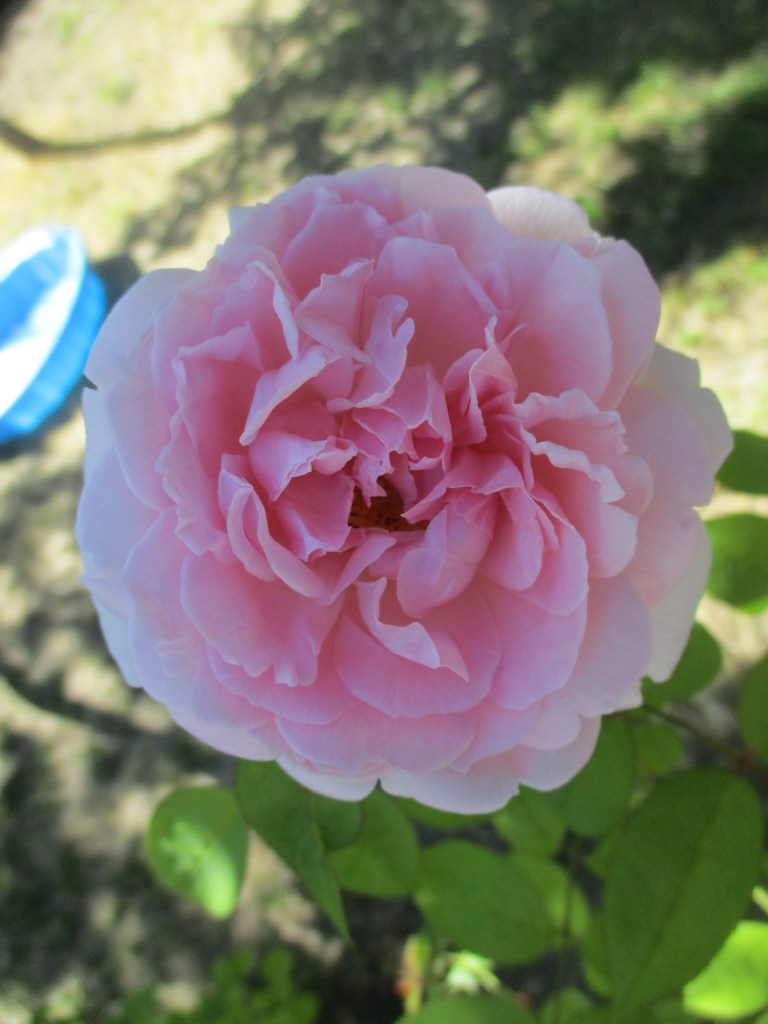
Cecile Brunner rose is elegantly simple.

Few modern rose cultivars are as tolerant of neglect as Cecile Brunner rose. Furthermore, few recover as efficiently from renovation after many years of neglect. Old overgrown thicket growth that might be unsightly while bare through winter can be spectacular in bloom. Alternatively, it does not mind aggressive pruning, even if only stumps remain. It easily regenerates with fresh new canes.

Bloom is nicely profuse early in summer. The individual fluffy pink flowers are not much more than two inches wide, but are rarely alone. They develop in big and possibly billowy clusters. The faint fragrance is easy to ignore, but appealing to some. After primary bloom, subsequent bloom is sporadic. Green stems are less prickly than stems of most other roses. Foliage is rather light green.

Shrubs are vigorous but compact. They may not get much taller than two feet. Most stay less than four feet tall. However, there are actually a few cultivars that are known as ‘Cecile Brunner’. Those that are most familiar are climbing types that can easily get higher than twenty feet. Their bloom is sparse after profuse early summer bloom. Some might bloom rather profusely again for autumn.

New Canes Replace Old Canes

50916thumb
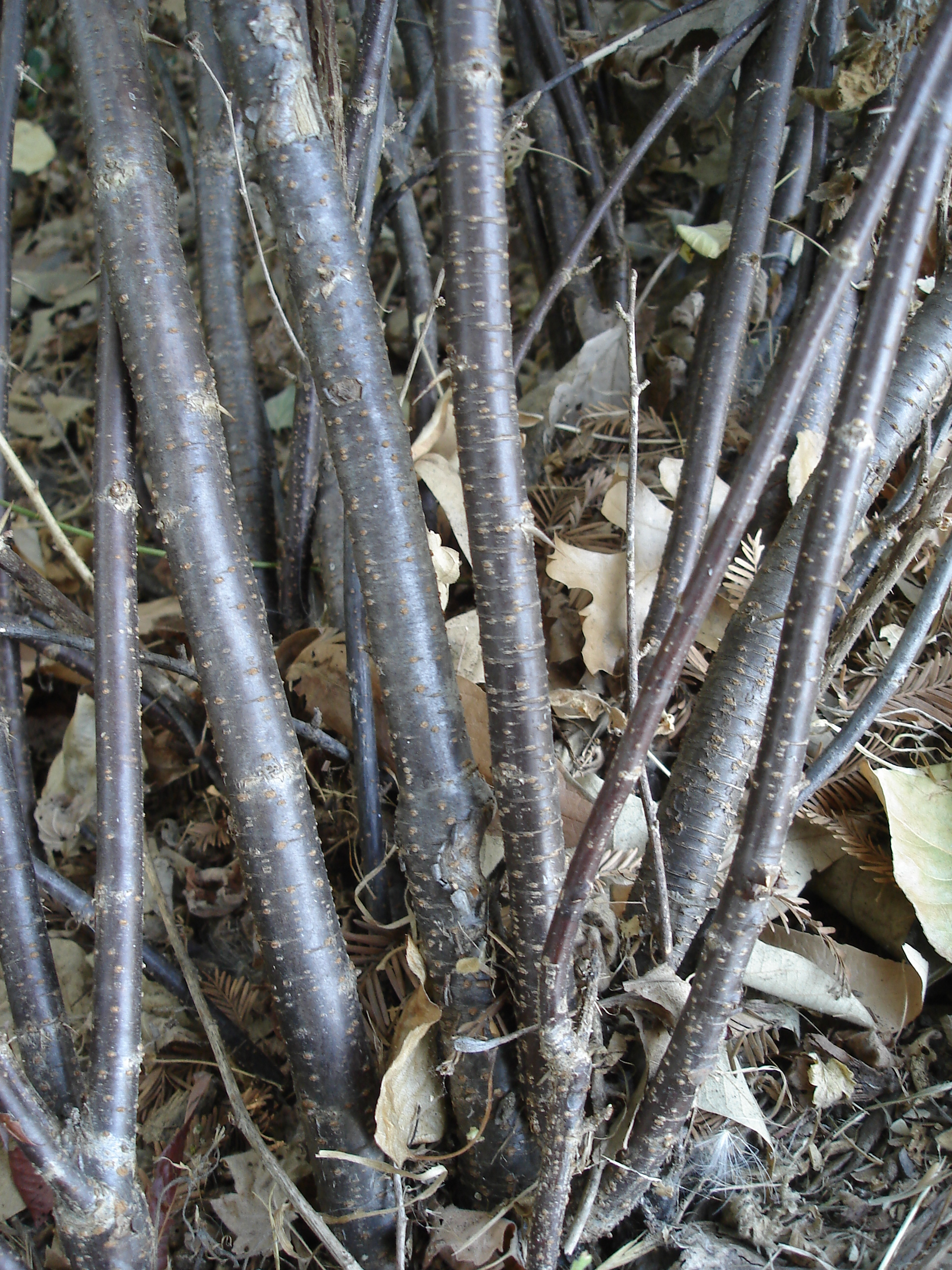
Well groomed canes are not overgrown.

Heavenly bamboo, or simply ‘nandina’, is one of those many plants that almost never performs like it should. The intricately lacy foliage is so appealing while plants are young, and changes color with the seasons. The red berries can be comparable to those of holly. Unfortunately, healthy plants grow, and then ultimately get shorn into globs of disfigured leaves and stems.

The same abuse afflicts Oregon grape (mahonia), mock orange (philadelphus), forsythia, lilac, abelia and all sorts of shrubby plants that really should be pruned with more discretion. Their deteriorating older stems should be pruned to the ground as new stems grow up from the roots to replace them. It is actually not as complicated as it seems.

This pruning process, known as ‘alternating canes’, prunes the plants from below. It is a standard pruning technique for maximizing production of blackberries, raspberries and elderberries. It is similar to grooming old stalks from bamboo and giant reed, even if it does not prevent them from spreading laterally.

The deteriorating older stems, or ‘canes’, are easy to distinguish from newer growth. Old canes of Heavenly bamboo and Oregon grape become heavy on top, and flop away from the rest of the foliage. Old canes of mock orange and lilac get gnarled and less prolific with bloom. Aging abelia and forsythia canes become thickets of crowded twigs.

The newer stems are likely a bit lower, but are not so overgrown. Since the foliage is not so crowded, it is displayed on the stems better. Their blooms or berries are more abundant. By the time new growth becomes old growth, there will be more newer growth right below it. In fact, the regular removal of aging canes stimulates growth of new canes.

This is the time to prune Heavenly bamboo and Oregon grape, just because the oldest foliage is as bad as it will get after the warmth of summer. Mock orange, forsythia and lilac should get pruned while dormant through winter, but are commonly pruned just after they finish bloom early in spring. Abelia should probably wait until spring because new growth can look sad through winter.

Dago Wisteria

P00607
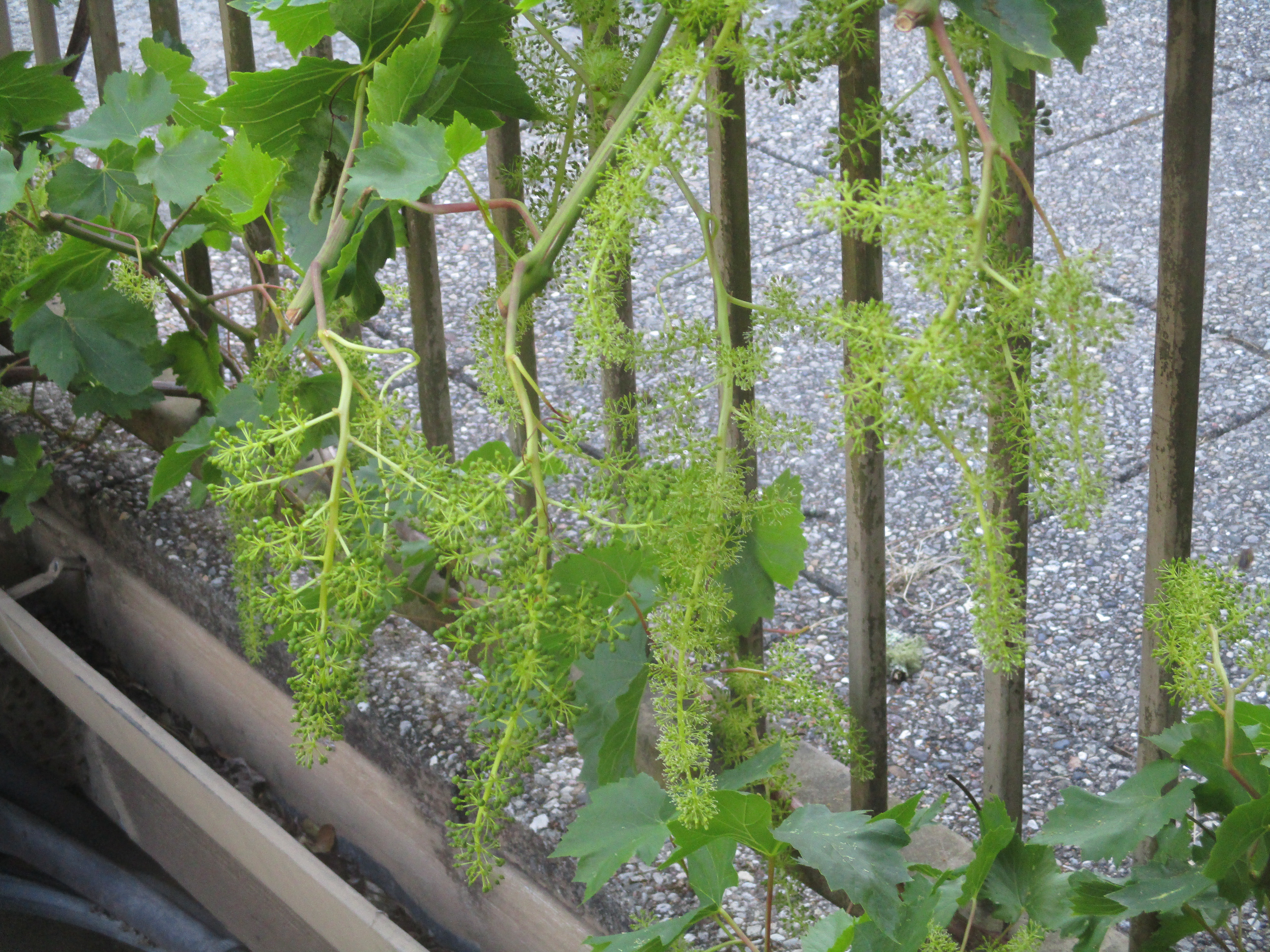
All this bloom will eventually be fruit.

My colleague down south and I have completely different gardening style. He is a renowned landscape designer, so his home garden is as elaborate as the landscapes he designs for his clients. I am primarily a farmer of horticultural commodities, so my home garden is very strictly utilitarian, with few items that are grown just because they are pretty.

My colleague’s garden is outfitted with a very well built pergola over the patio at the rear of the home. Six common Chinese wisteria were installed to climb the six supporting post and sprawl above. Their cascading spring bloom is both spectacular and alluringly fragrant.

Of course, when I saw that pergola while the wisteria were still young, I thought that it would be ideal for Dago wisteria, which most of us know simply as grapes. They climb like Chinese wisteria. They bloom with somewhat pendulous floral trusses that . . . sort of resemble wisteria bloom. Although they lack color and fragrance, they provide an abundance of fruit.

Now I get to work with some real Dago wisteria. It was planted years ago by someone who did not stay to maintain it. It got rather overgrown and gnarly before I pruned it into submission. Without a pergola, I extended vines from the rail fence that the main vines climb, over to a banister on the upper floor of an adjacent building. It works something like a pergola.

Because I do not know what cultivar of grape the vine is, I do not know what pruning technique it prefers. I happened to leave long canes last winter, just because they reached the banister on the opposite side so well. Now, the bloom is so profuse that I am concerned about the weight of the subsequent fruit pulling the rail fence over!